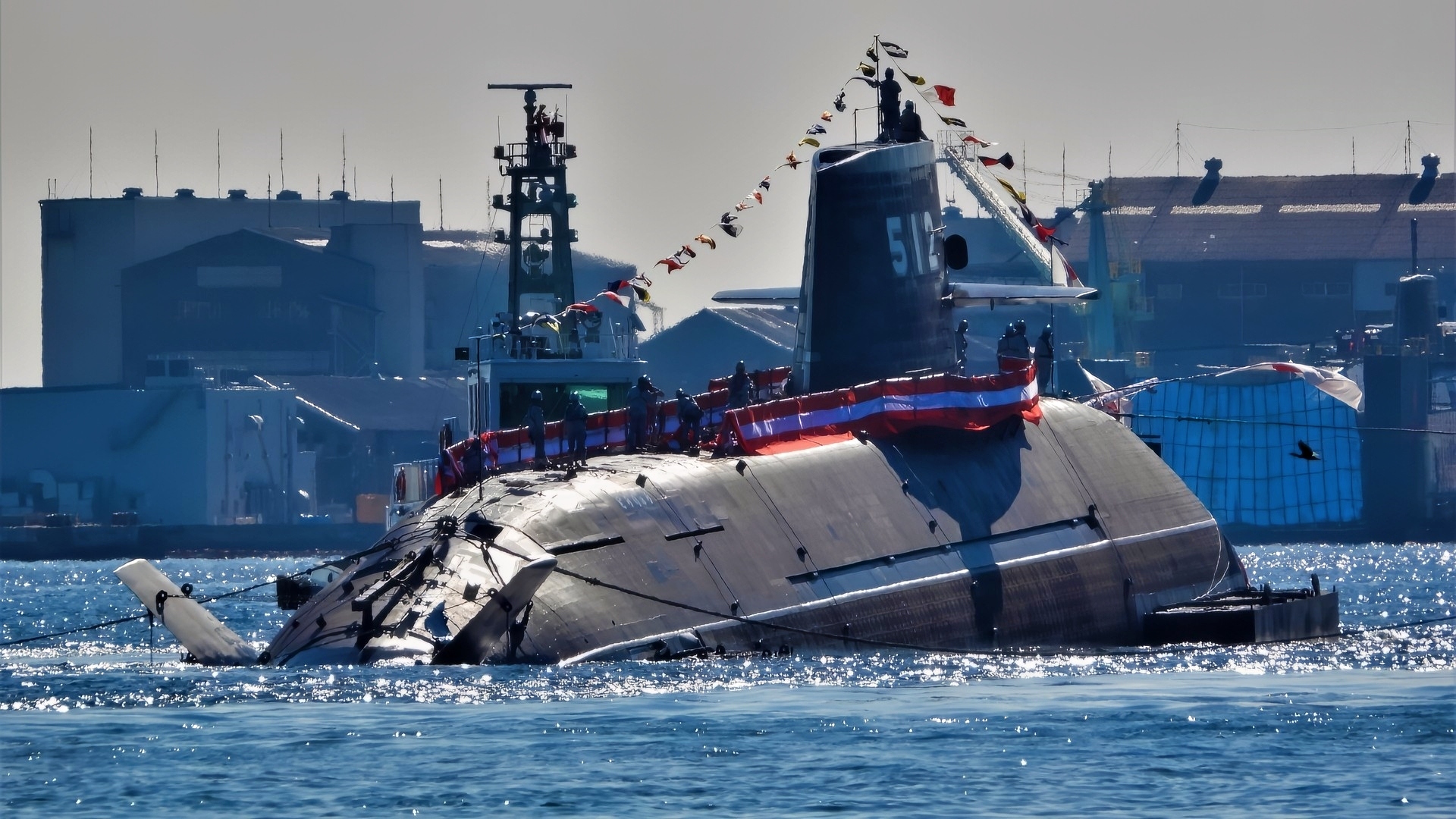
Summary and Key Points: The Sōryū-class is a serious attack submarine designed to hold the First Island Chain, with the US security umbrella no longer taken for granted. These stealth subs got a major upgrade as the last of the class was being built.
Soryu-Class: One of the Best Submarines on Earth
As the world system careens toward instability and global warfare, with the United States in relative decline and the People’s Republic of China (PRC) rising, Japan sits in an uncomfortable position.
After World War II, a succession of Japanese leaders crafted an anti-war postwar democracy.
A peace constitution governs Japan that expressly forbids militarization. Tokyo does not even call its armed forces a military.
Instead, it calls it a “Self-Defense Force.”
With the US military security umbrella retracting everywhere, especially in light of the failing Iran War, Tokyo has been making slow-but-steady moves to remilitarize and use its technological prowess to create a military that might still be smaller than China’s, but more technologically advanced than what China currently possesses.
That’s where Japan’s Sōryū-class attack submarine comes in.
A Serious Sub
A sophisticated, conventional submarine developed for Japan’s Maritime Self-Defense Force (JMSDF), these submarines combine diesel-electric propulsion with sophisticated underwater sensors, powerful heavyweight torpedoes, and US-made anti-ship missiles.
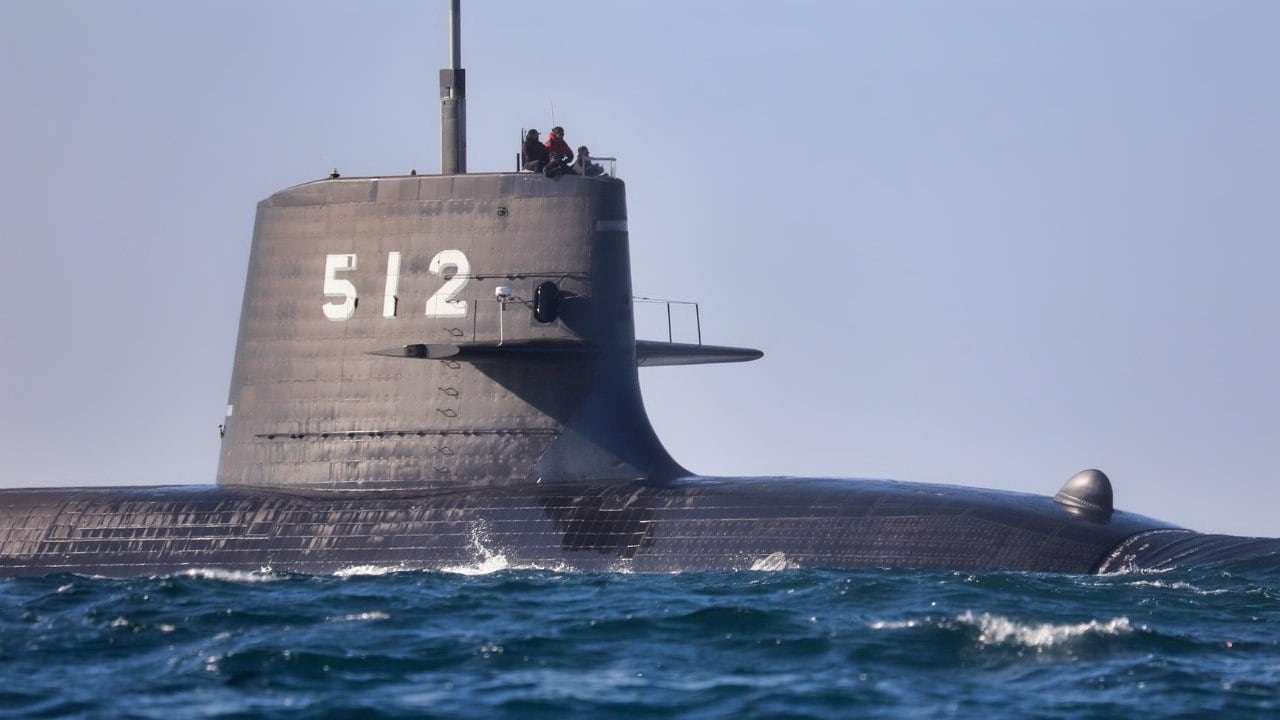
Soryu-Class Japan Submarines. Image Credit: Creative Commons.
These submarines use an advanced air-independent propulsion (AIP) system with lithium-ion batteries.
While their endurance is shorter than that of nuclear-powered submarines, these submarines are ideal for the JMSDF to defend Japanese territorial interests throughout the First Island Chain (the territories extending from the Kamchatka Peninsula through Japan and Taiwan, down to the Philippines).
The JMSDF designed twelve units of this submarine class.
Mitsubishi Heavy Industries and Kawasaki Heavy Industries were the principal Japanese contractors who built the submarines.
The first vessel of this class, the JS Sōryū, entered service in March 2009, and the final submarine of this class, the JS Tōryū, was commissioned in March 2021.
Each Sōryū-class attack submarine measures about 275.6 feet long, with a beam of 29.9 feet and a draft of 27.9 feet.
These dimensions are much larger than those of typical attack submarines elsewhere.
Each submarine of this class displaces up to 4,200 metric tons when submerged.
Again, that figure means that the Sōryū-class has a significantly larger submerged displacement than the typical attack submarine.
Sōryū-class boats are made of high-tensile steel.
They also have sound-absorbing anechoic coatings, which help maintain the submarines’ stealth. Engineers also installed isolated machinery to further reduce detection by enemy sonar.
To operate in shallower littoral waters, the Japanese built the submarines with a unique X-shaped rudder.
A crew of 65 (including nine officers) runs the submarine.
The AIP-powered diesel-electric engines can propel the Sōryū-class attack submarine to around 13 knots on the surface and 20 knots submerged.
The National Security Journal projects the Sōryū-class range at around 6,100 nautical miles (if traveling at slower speeds to conserve power).
In One Word: Unque
What makes this submarine interesting is that the class employs two different conventional propulsion technologies.
The first ten boats in this class all employ diesel-electric propulsion supplemented by the aforementioned Stirling-engine AIP technology.
The first ten of twelve Sōryū-class attack submarines use two Kawasaki 12V 25/25 SB diesel engines and four Kawasaki-made, Kockums-licensed V4-275R Stirling engines.
Stirling AIP engines operate, as the name suggests, independently of atmospheric air. Instead, they use stored liquid oxygen and diesel fuel to generate electricity underwater.
The diesel engines provide power for charging batteries whenever atmospheric oxygen is available.
With these systems onboard, the Sōryū-class can remain underwater for up to two weeks at low patrol speeds.
Because these systems are inherently quieter than even nuclear reactors, if the Sōryū-class operates at slower speeds when submerged, rival sonar operators will find these subs very difficult to detect.
Of course, there are downsides.
One is that AIP systems cannot sustain a submarine’s maximum speed underwater for long periods because of their power consumption rate.
However, the Japanese changed the propulsion design for the final two submarines in this class. JS Ōryū (SS-511) and JS Tōryū (SS-512) replaced the Stirling AIP machinery and traditional lead-acid batteries with high-capacity lithium-ion batteries.
Lithium-ion batteries are important in electrical power generation.
These batteries will give the final two Sōryū-class submarines more usable electrical energy and improved charging.
Unlike the Stirling AIP, lithium-ion batteries cannot generate electricity on their own. They must be recharged using the submarine’s diesel generators.
Weapons
As for the submarine’s arsenal, its main weapon is Japan’s Type 89 heavyweight torpedo, designed to attack both enemy submarines and surface warships.
The Type 89 incorporates wire guidance and active/passive acoustic homing.
These weapons have a range exceeding 27 nautical miles (depending on operating conditions).
The US-made UGM-84 Harpoon anti-ship missile can also be fired from the submarine’s torpedo tubes. A capsule carries the missile to the surface before its rocket booster fires.
Once aloft, the missile uses radar guidance and sea-skimming techniques to attack surface vessels while reducing its detectability before impact.
The Sōryū-class can also deploy naval mines through its torpedo tubes.
Running Silent
These boats utilize Japan’s powerful ZQQ-7 integrated sonar system.
That includes a bow-mounted sonar, flank arrays, and a towed sonar array meant to detect and track submerged and surface contacts.
The ship also has the ZPS-6F surface-search radar and ZLR-3-6 electronic support measures.
Together, these systems give the Sōryū-class submarine an impressive passive acoustic surveillance and navigation system.
Japan is taking its self-defense seriously, especially as the United States’ security umbrella appears to be retracting (possibly permanently).
The Sōryū-class is a necessary offset to the rapid, fundamental changes occurring worldwide.
While Tokyo has shifted its focus to developing the Taigei-class submarine, that newer class builds on the lessons learned from the Sōryū-class.
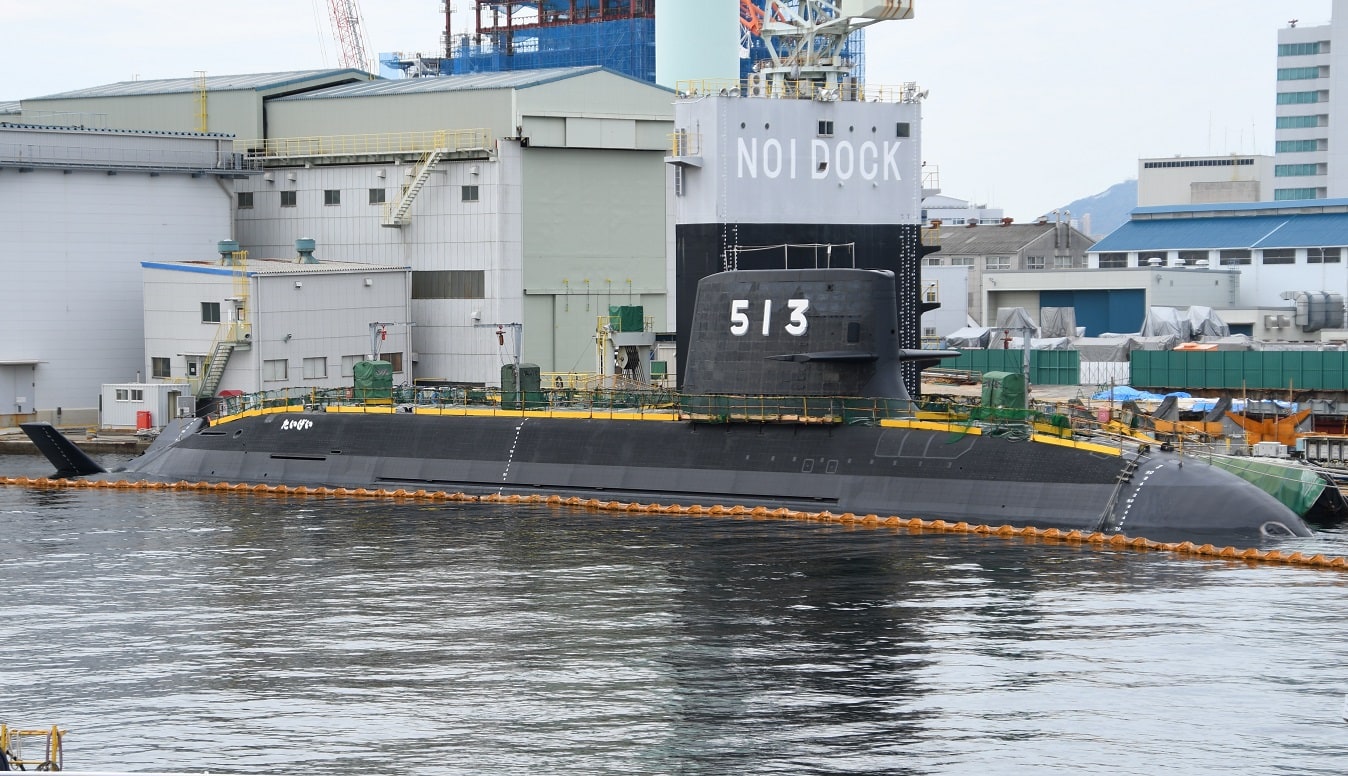
Taigei-class. Image Credit: Creative Commons.

Image: Creative Commons.
About the Author: Brandon J. Weichert
Brandon J. Weichert is the Senior National Security Editor at 19FortyFive.com. He also manages The Weichert Brief on Substack. Weichert is the co-host for The Mario Nawfal Show on Twitter/X. He is the author of four bestselling national security books, most recently A Disaster of Our Own Making: How the West Lost Ukraine (Encounter Books). His next book, Fortress Americas: A New Monroe Doctrine (Tucker Carlson Books), is due out December 8. Follow him via Twitter/X @WeTheBrandon.