
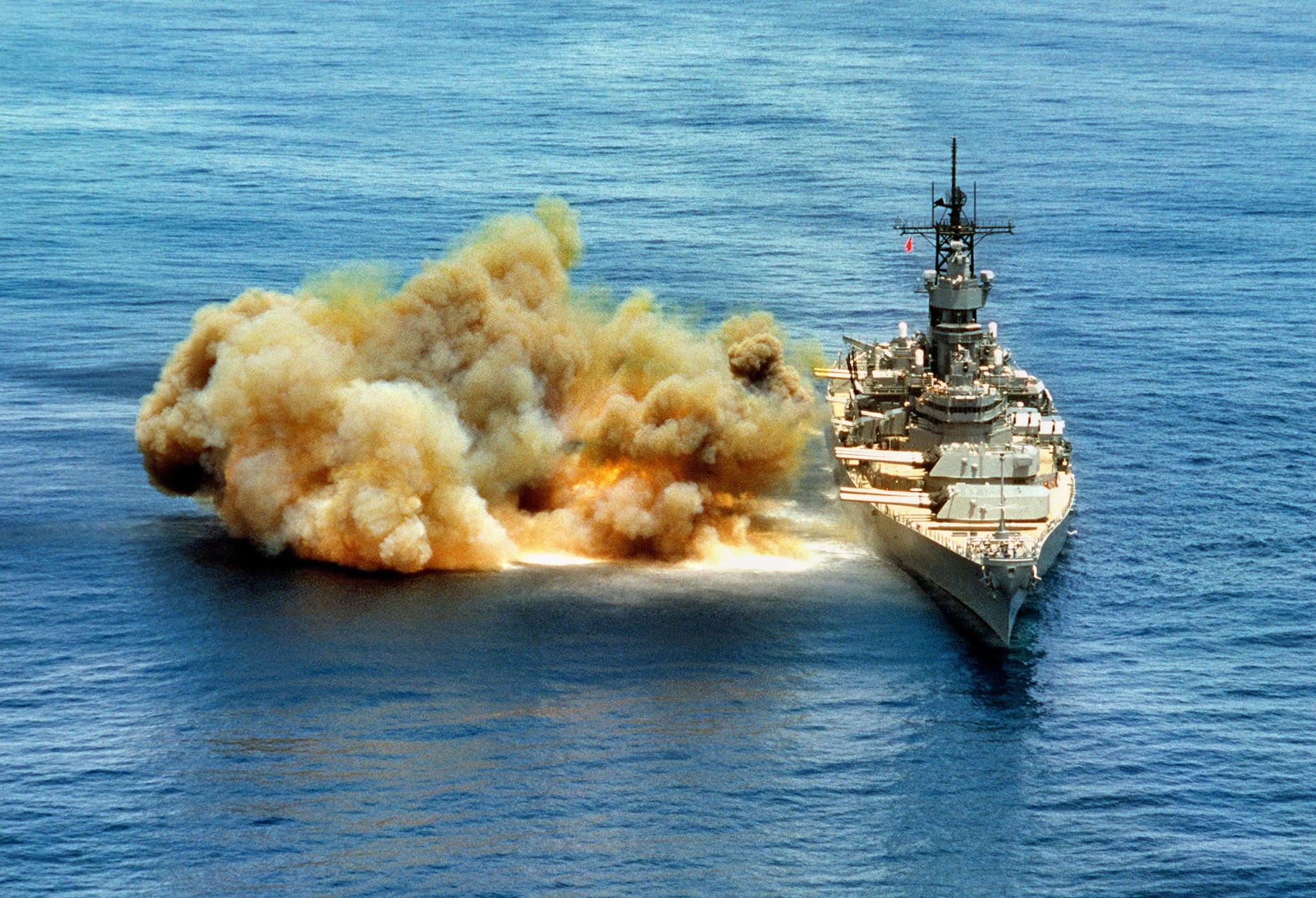
President Donald Trump’s plan to build a new generation of American battleships, yes, called the Trump-class, is facing a potentially serious setback during the week of the midterm elections.
Following Democratic victories in the midterms, the proposed Trump-class battleship could lose crucial congressional support.
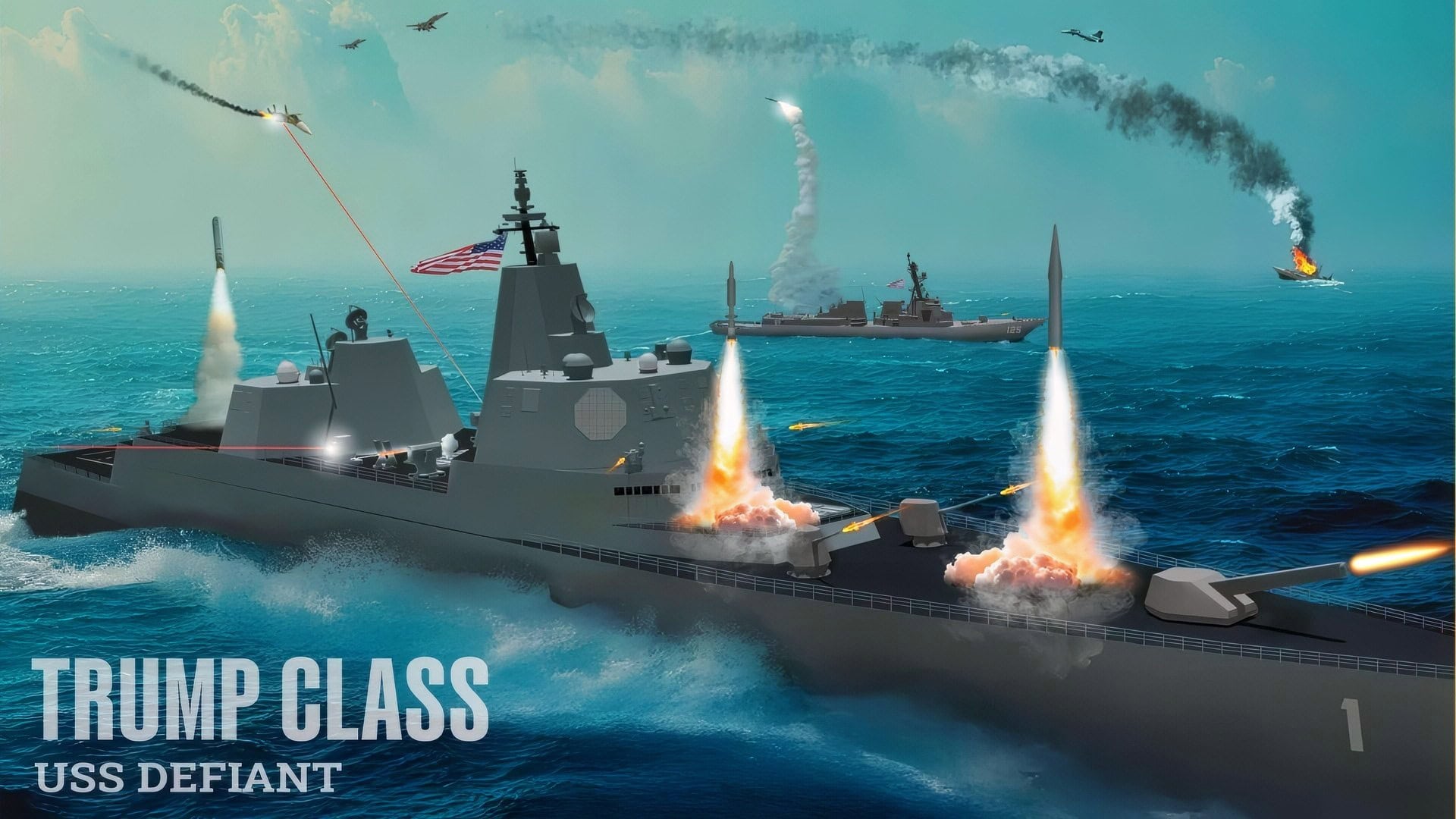
Trump-Class Battleship USS Defiant. Image Credit: Creative Commons.
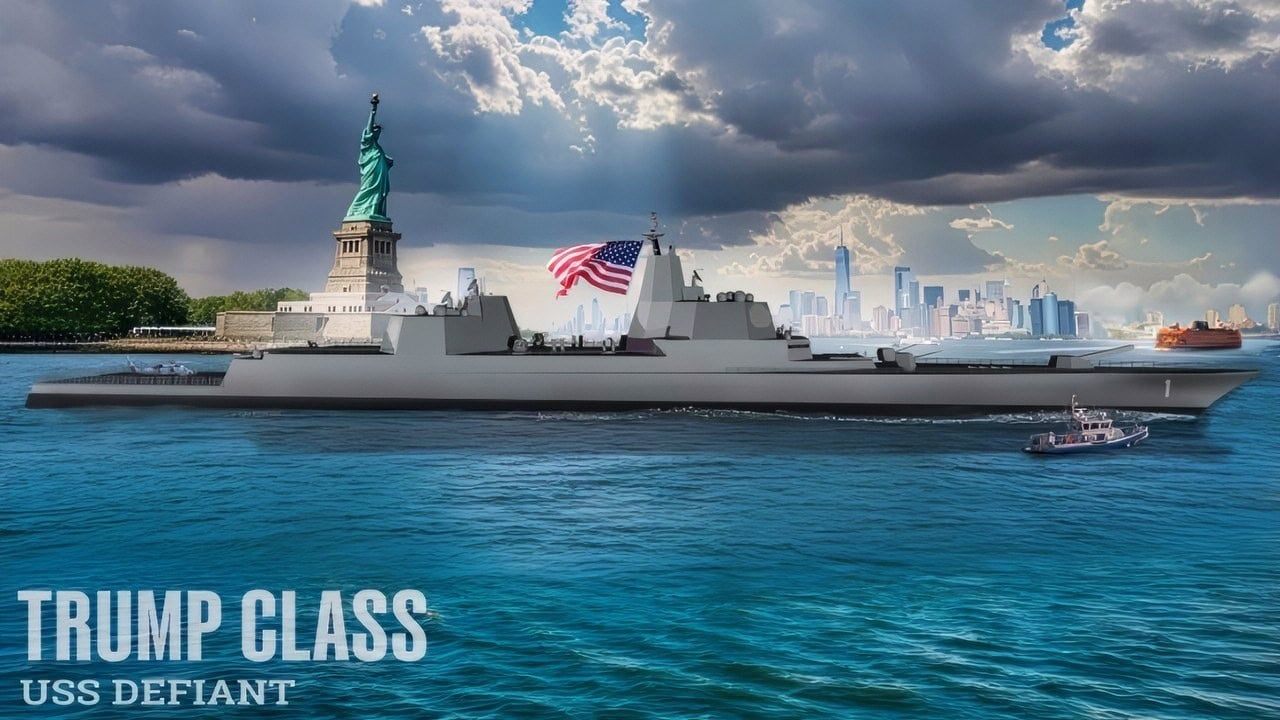
Trump-Class Battleship. Image Credit: Creative Commons/White House.
According to Naval News, Senate appropriators have proposed eliminating nearly all near-term funding of the project.
If the warship were to proceed, it would be among the most expensive surface combatants ever constructed.
But with its future now uncertain, it seems an appropriate time to ask a larger, more important question: Did the Navy actually need a nuclear-powered battleship that would cost more than an aircraft carrier in the first place?
What is the Trump-class
Trump unveiled the proposed battleship in December 2025, making it a centerpiece of his planned “Golden Fleet.” The Navy designated the concept BBG(X), with the proposed lead ship named USS Defiant (BBG-1).
Unlike World War II battleships, this proposed vessel would not depend primarily on enormous naval guns. Instead, it was envisioned as a floating missile arsenal and fleet command center.
The proposed specifications included a displacement of about 35,000 tons, a nuclear propulsion system, a missile capacity that included 128 vertical launch cells and 12 larger hypersonic missiles, and the potential addition of high-energy lasers, an electromagnetic railgun, and nuclear-armed cruise missiles.
The concept was also planned to accommodate command facilities and aviation assets. Of course, many of these features remained ambitious, proposed capabilities and not finalized design specifications.
Why the Navy Wanted It
The underlying problem that motivated the Navy to procure such a massive warship is real: modern warships are running out of room for increasingly sophisticated weapons and sensors.
The Arleigh Burke-class destroyers, for example, typically carry 96 vertical launch cells.
More powerful radars, electronic warfare systems, and defensive lasers require additional electricity and cooling.
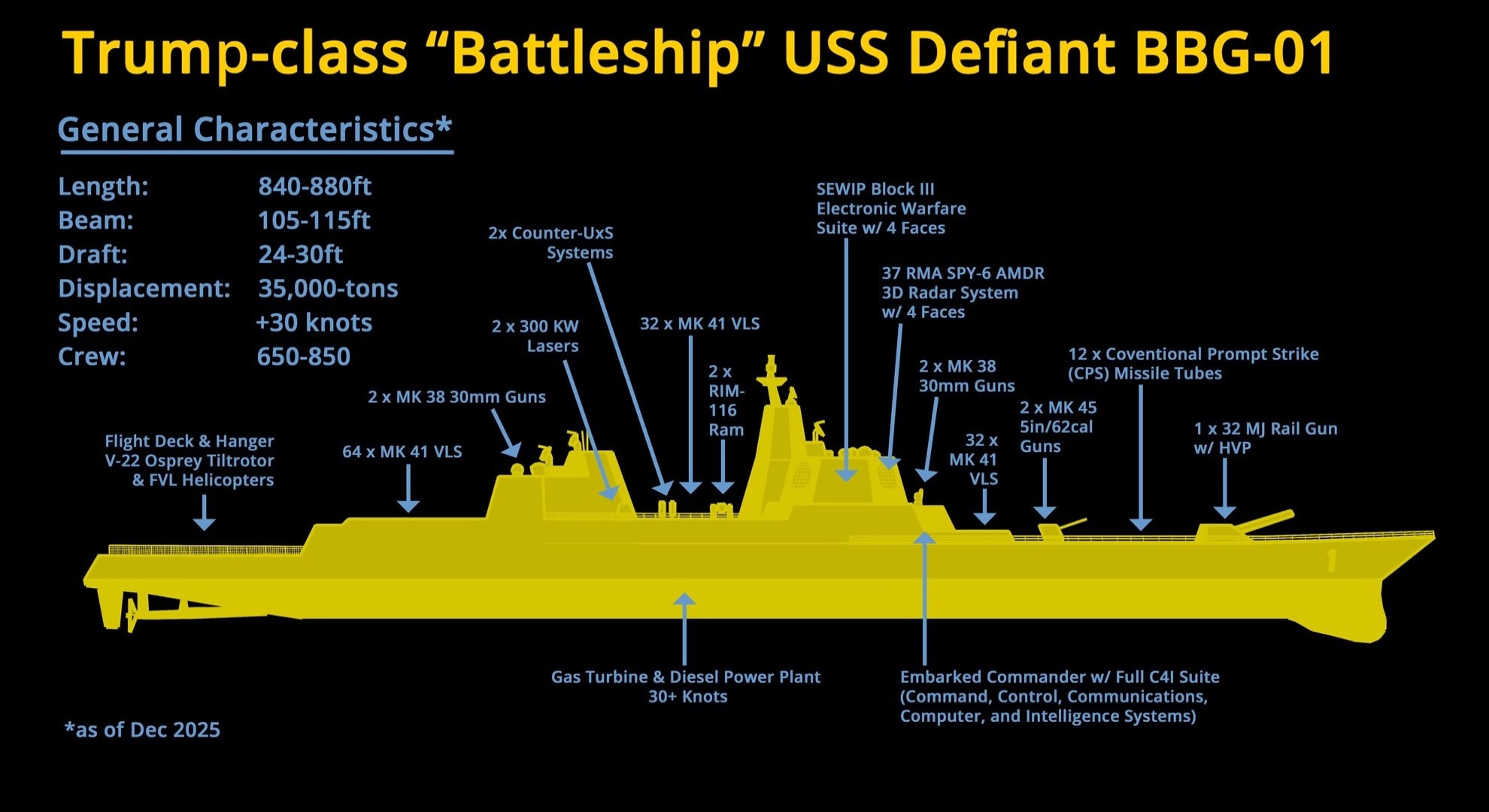
Trump-Class Battleship Creative Commons Photo
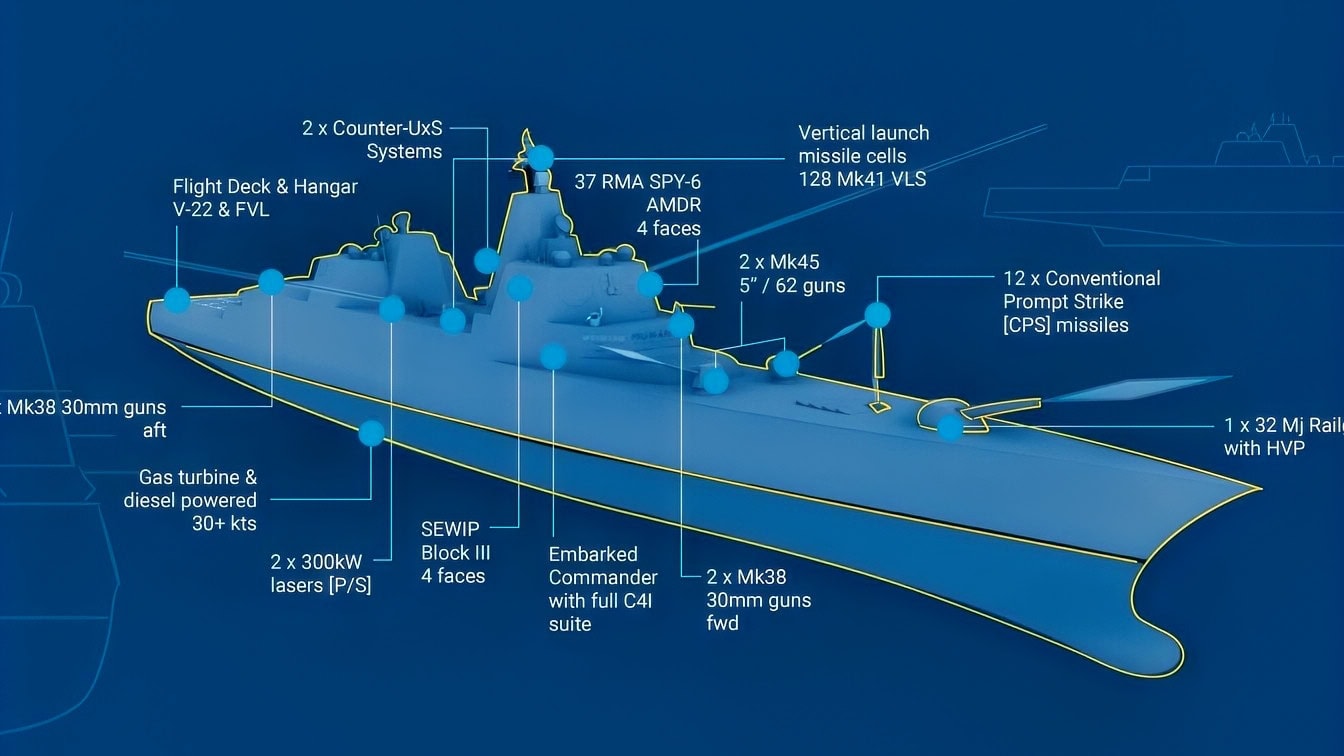
Trump-Class Battleship Creative Commons Image
A larger ship could accommodate more missiles, larger power-generation equipment, and future upgrades.
Accordingly, the Trump-class concept was intended to carry more weapons than existing destroyers, launch large hypersonic missiles against distant targets, coordinate naval operations and air defenses, and help replace command capabilities lost as older Ticonderoga-class cruisers retire.
But the Cost
While the design concept was ambitious and improving, the program’s greatest obstacle may have been its extraordinary price tag. According to an August 5 Congressional Budget Office estimate, a fleet of 15 Trump-class battleships would cost approximately $275 billion.
The first ship alone was estimated at $23.4 billion, with subsequent vessels reportedly averaging around $18 billion each. For comparison, the existing Ford-class nuclear-powered aircraft carrier—currently the most expensive warship in the world—costs roughly $13 billion to procure.
The proposed battleship would be smaller than the Ford-class, yet cost significantly more.
At a time when warfighting systems and capabilities are dispersing among smaller, cheaper platforms, does it really make sense for the Navy to concentrate so much capital and capability in one platform?
Congressional Resistance
The November midterms have further complicated the battleship’s prospects. Reportedly, the Senate Appropriations Committee’s proposed fiscal 2027 defense spending bill would eliminate $1 billion requested for advanced procurement of the battleship and $836.9 million for research, development, and preliminary design.
Representative Adam Smith, a Washington Democrat positioned to lead the House Armed Services Committee, has reportedly argued for a more affordable mix of survivable naval systems.
With Democrats taking control of Congress in January 2027, they would gain additional leverage over Navy spending priorities.
Yet the proposed cuts are not the same as canceling the program outright; final appropriations remain subject to negotiation.
Too Many Eggs
Beyond the cost, the Trump-class battleship presents a fundamental strategic dilemma.
The Navy’s Distributed Maritime Operations concept emphasizes spreading combat power across multiple platforms of prevent an adversary from destroying a large portion of American power with a single successful attack.
A battleship carrying an enormous missile arsenal would concentrate substantial military capability in one expensive vessel.
This is a problem, especially against China, where a ship could face sophisticated anti-ship missiles, submarines, and persistent surveillance—and, in effect, face a very real threat of being destroyed.
So while the Trump-class battleship meets genuine Navy requirements for greater capacity, electrical power, and capabilities, the program’s immense cost and concentrated firepower raise questions about whether it represents the best use of limited resources.
Congressional opposition could ultimately force the Navy to pursue the desired capabilities through smaller and less expensive programs.
About the Author: Harrison Kass
Harrison Kass is a writer and attorney focused on national security, technology, and political culture. His work has appeared in Tablet, City Journal, The Hill, The Spectator, and The Cipher Brief. He holds a JD from the University of Oregon and a master’s in Global & Joint Program Studies from NYU—more at harrisonkass.com.