
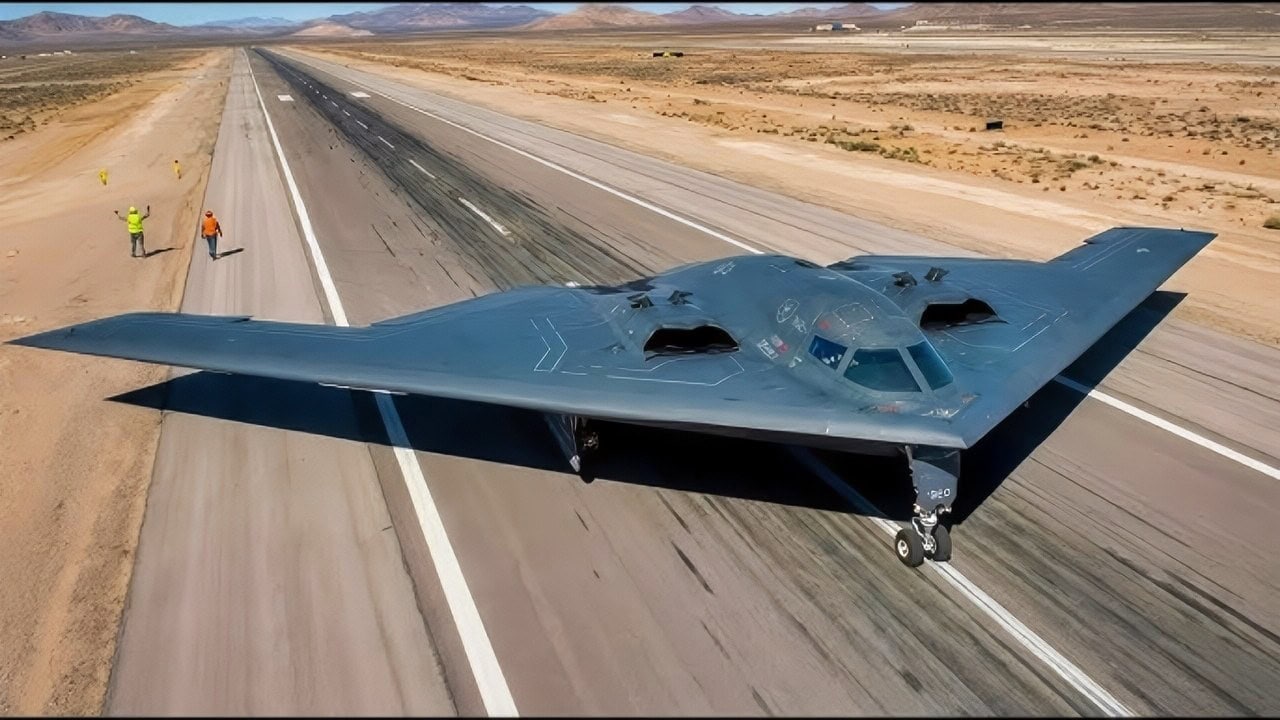
Summary and Key Points: Expert Steve Balestrieri reports the first publicly acknowledged B-2 Spirit launch of an AGM-158C LRASM, fired June 27, 2026, during Exercise Valiant Shield off Guam at the decommissioned Austin-class USS Juneau (LPD-10). The 509th Bomb Wing jet loaded the missile at Whiteman and staged through Andersen; the 200-plus-nautical-mile, 1,000-pound-warhead weapon joined Harpoons from a New Zealand P-8A, a Japanese torpedo, and Reagan Super Hornets in sinking her. A 6,000-mile stealth bomber with internal LRASMs menaces China.
The B-2 Spirit Stealth Bomber Can Do It All
On June 27, 2026, more than 200 nautical miles off the coast of Guam in the Philippine Sea, a U.S. Air Force B-2 Spirit stealth bomber opened its bomb bay doors and fired an AGM-158C Long Range Anti-Ship Missile at the decommissioned amphibious transport dock USS Juneau.
It was the first publicly acknowledged instance of a B-2 launching an LRASM, and it occurred during Exercise Valiant Shield 2026, the biennial multinational live-fire drill the Pentagon has run in the Western Pacific since 2006 to sharpen joint targeting skills against exactly the kind of maritime threat China now poses.
The Juneau did not survive the day.
Background On The Operation
The B-2, assigned to the 509th Bomb Wing and loaded out by the 393rd Bomber Generation Squadron, took on its LRASM at Whiteman Air Force Base, Missouri, on June 22 and flew it forward through Andersen Air Force Base, Guam.
The missile flies more than 200 nautical miles, uses GPS and onboard sensors to find a target, and carries a 1,000-pound penetrating blast-fragmentation warhead.
Its low-observable shaping is designed to blend into a cluttered radar picture right up until impact.
The B-2 is the only stealth aircraft (for now) that can carry the LRASM internally, tucked inside a bomb bay rather than slung under a wing. That combination makes the story so significant.

B-2 Elephant Walk US Air Force Photo
The USS Juneau Served One More Purpose After Its Retirement
USS Juneau was not some hulk towed out for target practice on a whim.
The Austin-class amphibious transport dock, hull number LPD-10, was commissioned in 1969, carried Marines home from Vietnam in 1970, responded to the 1989 Exxon Valdez oil spill in Alaska, and sailed in Operations Desert Shield and Desert Storm in 1990.
The Navy decommissioned her in 2008 and scrubbed her clean of hazardous materials before towing her out for the SINKEX.
She went down alongside strikes from two AGM-84 Harpoons fired by a New Zealand P-8A, a Japanese torpedo, a Hellfire missile, a Type 90 anti-ship missile, and an ASM-2, with a Japan Maritime Self-Defense Force submarine and F/A-18 Super Hornets from USS Ronald Reagan’s Carrier Air Wing 5 also in on the kill. The LRASM shot from the B-2 was one strike among many. However, it was also the one that mattered most.
Why a B-2 Built To Drop Nukes Firing An LRASM Is Significant
The B-2 Spirit was designed in the 1980s to do one thing above all others: slip past Soviet air defenses undetected and deliver a nuclear payload deep inside enemy territory.
Everything about the airframe, from the flying-wing shape to the radar-absorbent coating, exists to keep the bomber invisible long enough to get the weapon to the target.
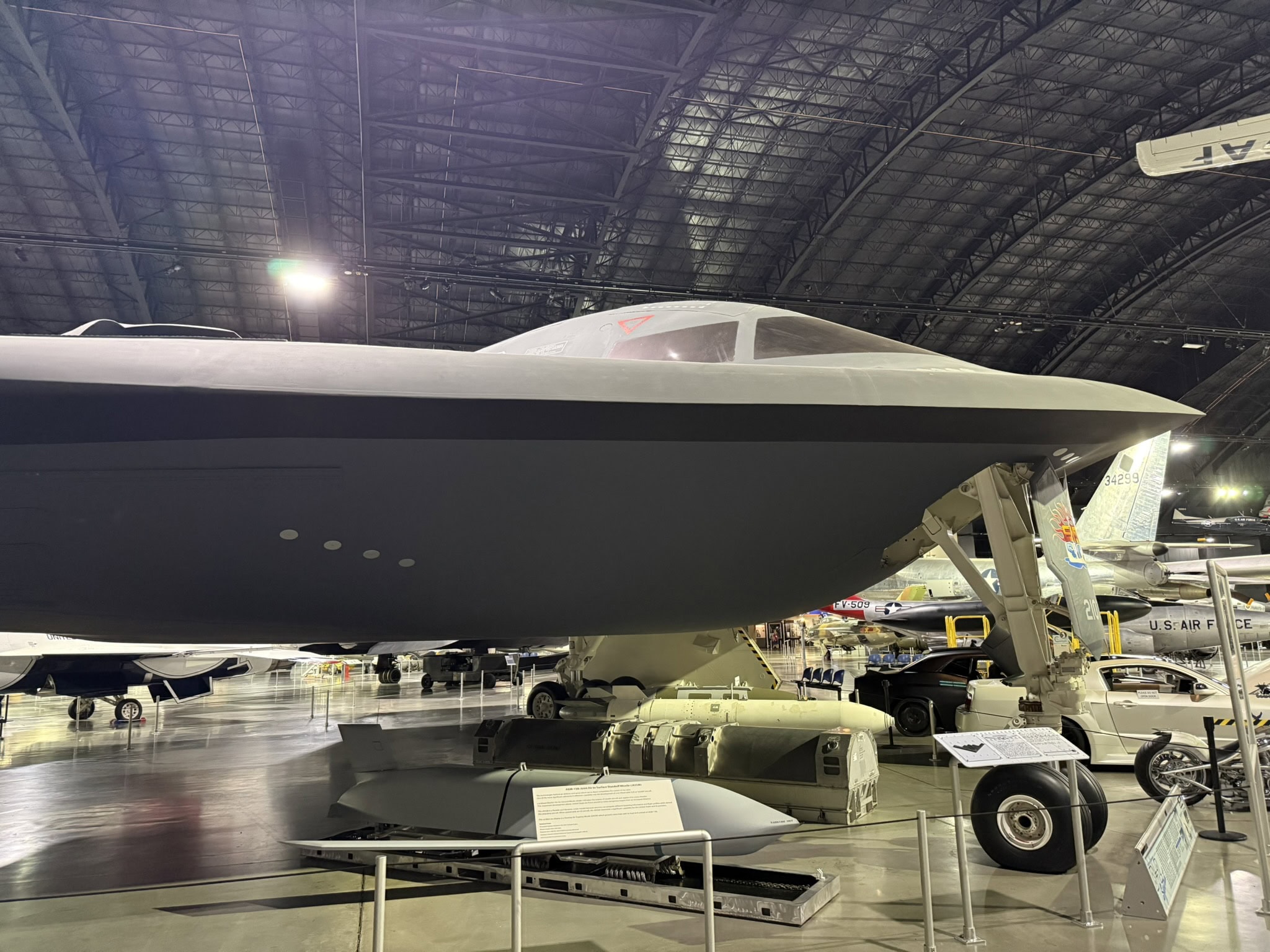
B-2 Spirit Bomber 19FortyFive Image from the National Museum of the U.S. Air Force
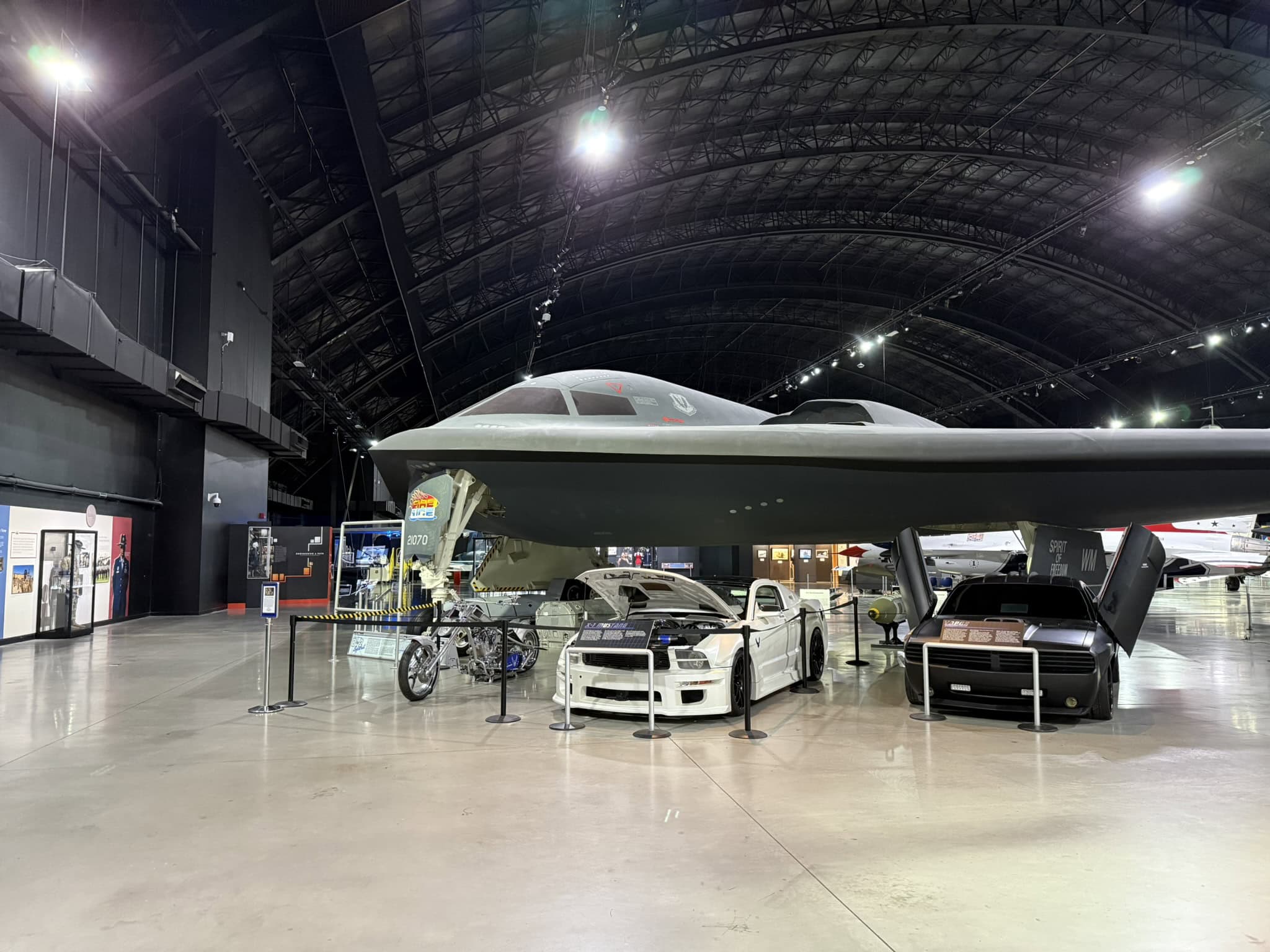
B-2 Spirit Bomber 19FortyFive Image from the National Museum of the U.S. Air Force
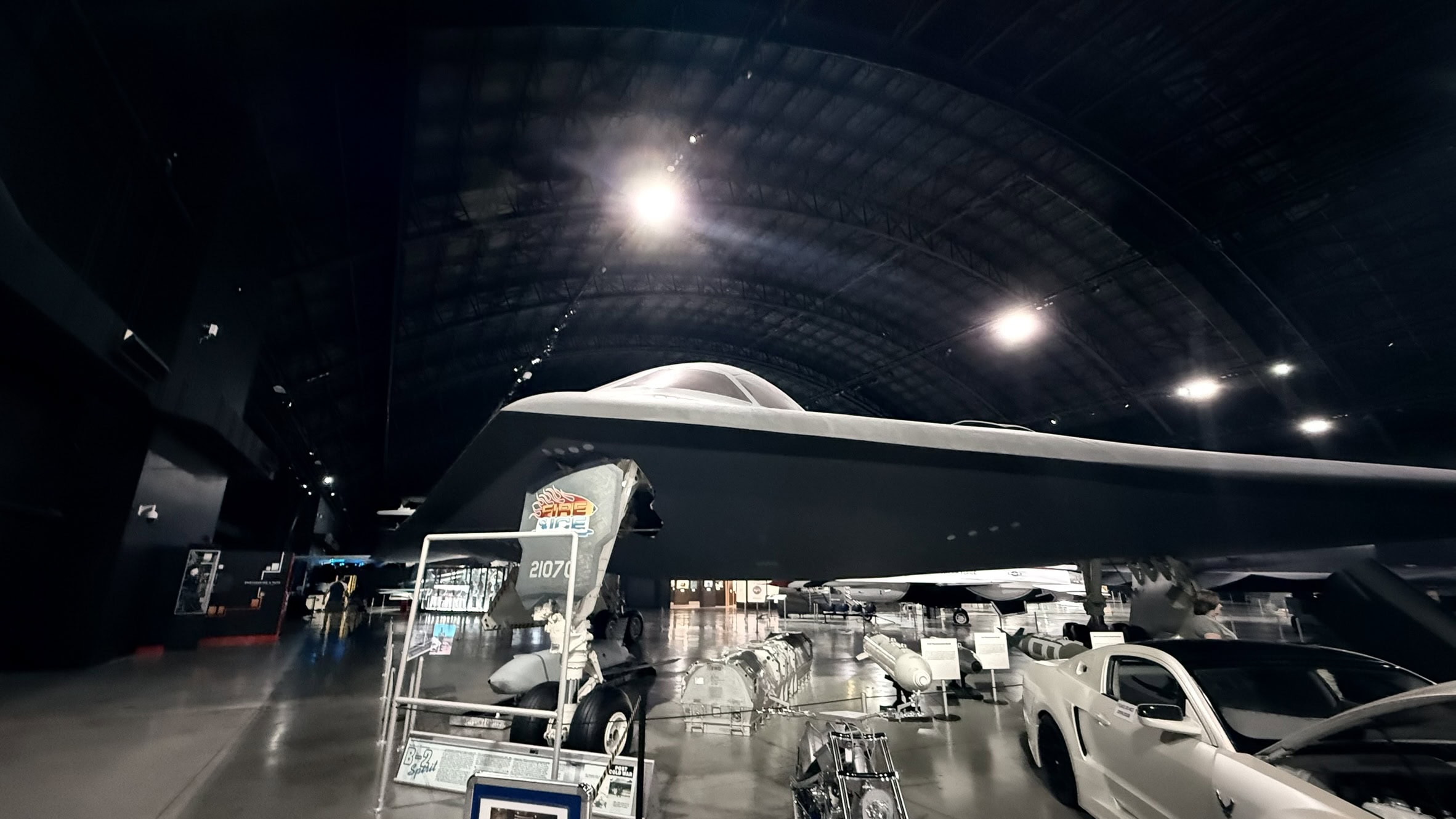
B-2 Spirit Bomber 19FortyFive Image from the National Museum of the U.S. Air Force
For most of its service life, that meant gravity bombs and, later, precision-guided munitions dropped on fixed targets: airfields, command bunkers, air defense sites. A moving warship at sea was never really envisioned.
The LRASM changes that math.
It was built on the JASSM-ER airframe specifically to hunt ships in contested waters, using semi-autonomous guidance algorithms that reduce its dependence on GPS links and external targeting data that an adversary might jam or spoof.
Pair that missile with a bomber that most air defense radars struggle to see coming, and the Air Force now has a way to put a warship at risk from a launch point the target may never detect until the missile is already inbound.
The B-2 and the soon-to-be-active B-21 Raider do not need to get anywhere near a fleet’s air-defense envelope to do it.
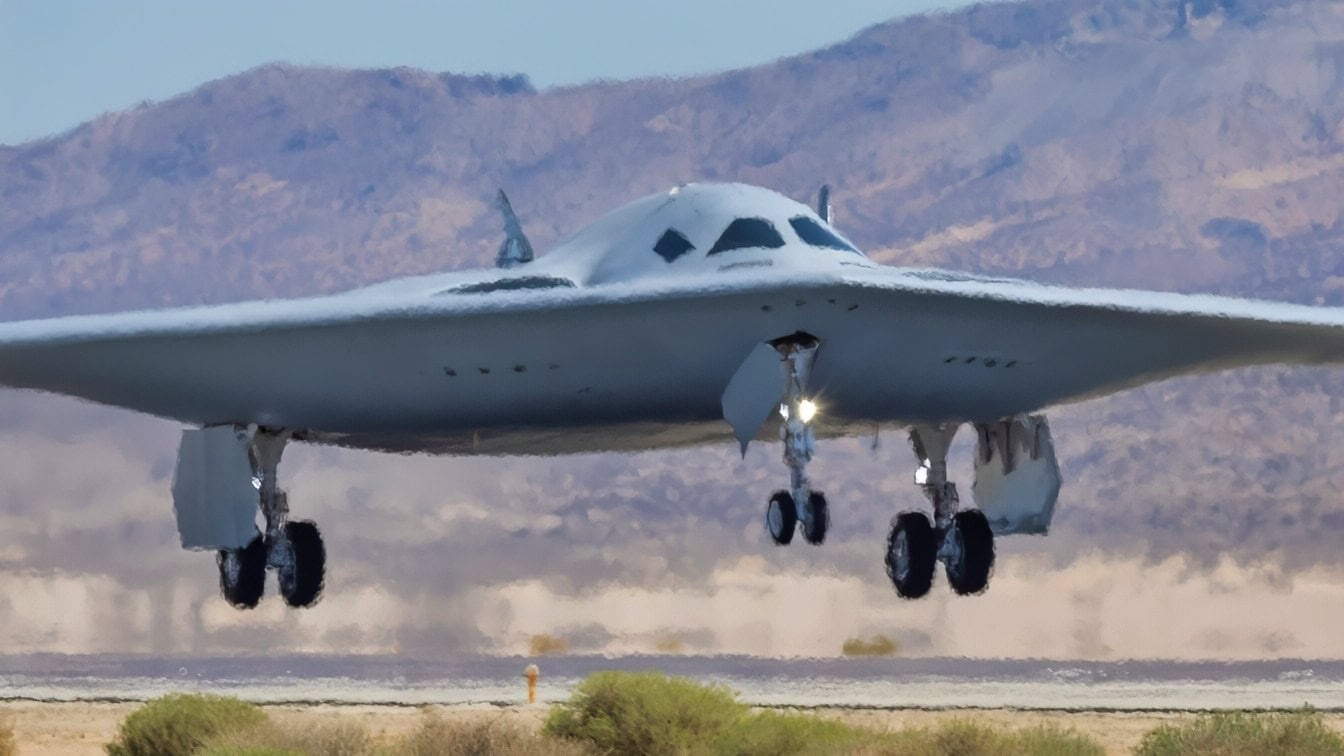
A B-21 Raider test aircraft lands at Edwards Air Force Base, Calif., during ongoing developmental flight testing, Sept. 11, 2025. The B-21 will be the backbone of the bomber fleet; it will incrementally replace the B-1 Lancer and B-2 Spirit bombers. (U.S Air Force photo by Todd Schannuth)
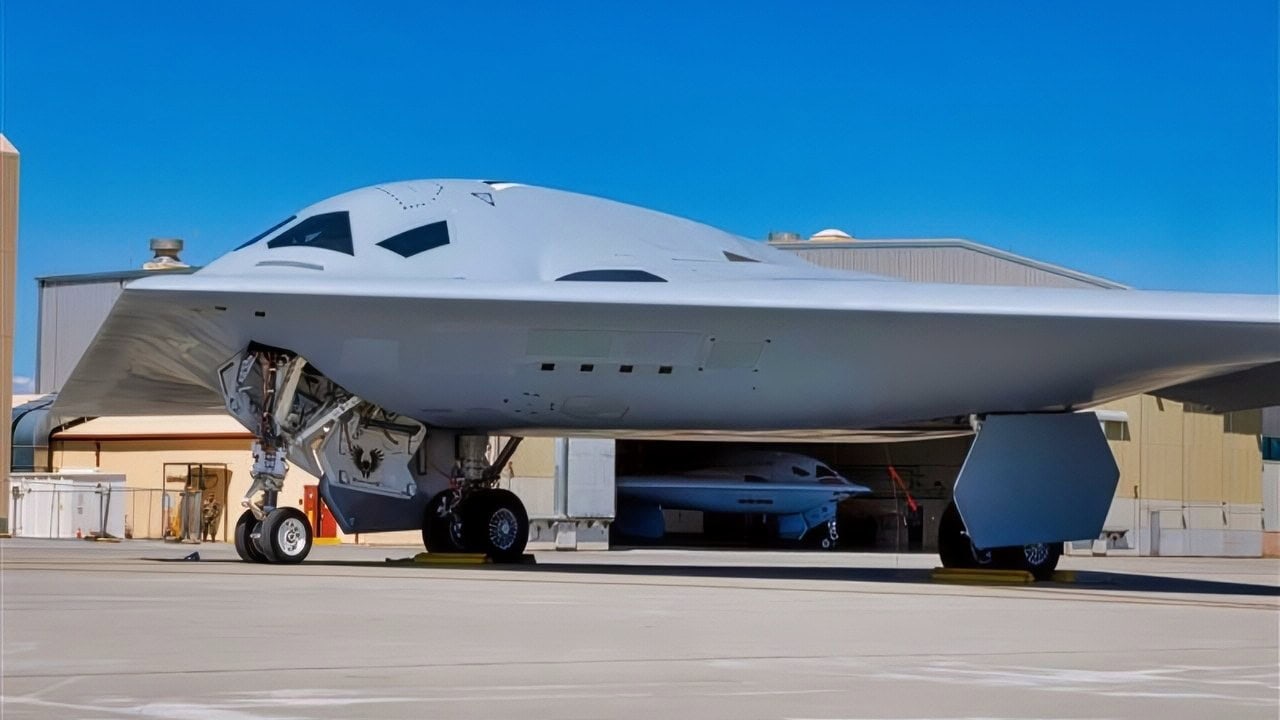
A second B-21 Raider, the world’s sixth-generation stealth bomber, test aircraft arrives at Edwards Air Force Base, Calif., Sept. 11, 2025. The addition of the second test aircraft expands mission systems and weapons integration testing, advancing the program toward operational readiness. (Courtesy photo)
It only needs to get within 200-plus miles, and its own unrefueled range runs past 6,000 miles.
The SINKEX Was Sending A Message Aimed Squarely at Beijing
None of this happened in a vacuum. China now operates the world’s largest navy by hull count, and its surface fleet is the centerpiece of the anti-access strategy Beijing has built around the first and second island chains.
A stealth bomber that can keep that fleet at risk from standoff range, without first fighting through layered air defenses, complicates every targeting calculation a PLA Navy commander must make.
The missile can find, track, and destroy Chinese warships without relying on GPS or human control.
General Kevin B. Schneider, commander of Pacific Air Forces, put it plainly: the B-2’s performance “underscores the U.S. military’s commitment to adaptability and flexibility” as the Pentagon leans harder into the Indo-Pacific.
The LRASM already flies on the B-1B Lancer and the F/A-18 Super Hornet, with integration onto the F-35, F-15E, and P-8A Poseidon still underway according to Lockheed Martin.
The B-2 is simply the version an adversary is least likely to see coming. And the B-21 is also believed to carry the missile internally once it comes online.
USS Juneau spent nearly four decades in service and eighteen years rusting in mothballs before anyone found a use for her again.
It took a stealth bomber and a missile that did not exist when she was commissioned to finally put her under.
About the Author: Steve Balestrieri
Steve Balestrieri is a National Security Columnist. He served as a US Army Special Forces NCO and Warrant Officer. In addition to writing on defense, he covers the NFL for PatsFans.com and is a member of the Pro Football Writers of America (PFWA). His work was regularly featured in many military publications.