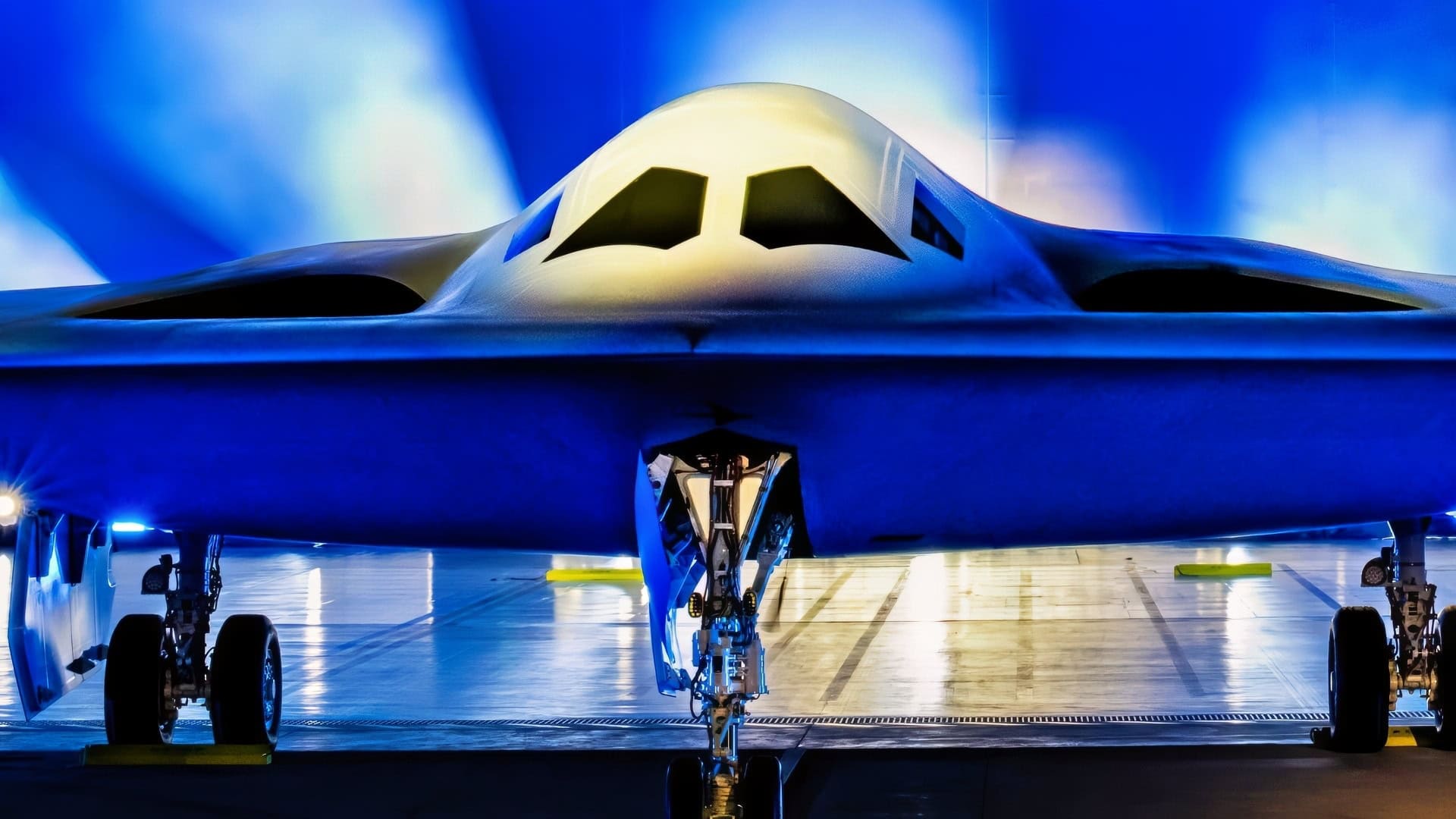
The B-2 Spirit, while being one of the most impressive aerospace engineering achievements of the last century, is also the ultimate example of how bad timing can have disastrous effects on defense procurement.
When the B-2 was just entering production, the Cold War was winding down, and one of the big questions during a period when “the peace dividend” was the buzzword of the day was: how many B-2s do we need now that the bad guys lost?
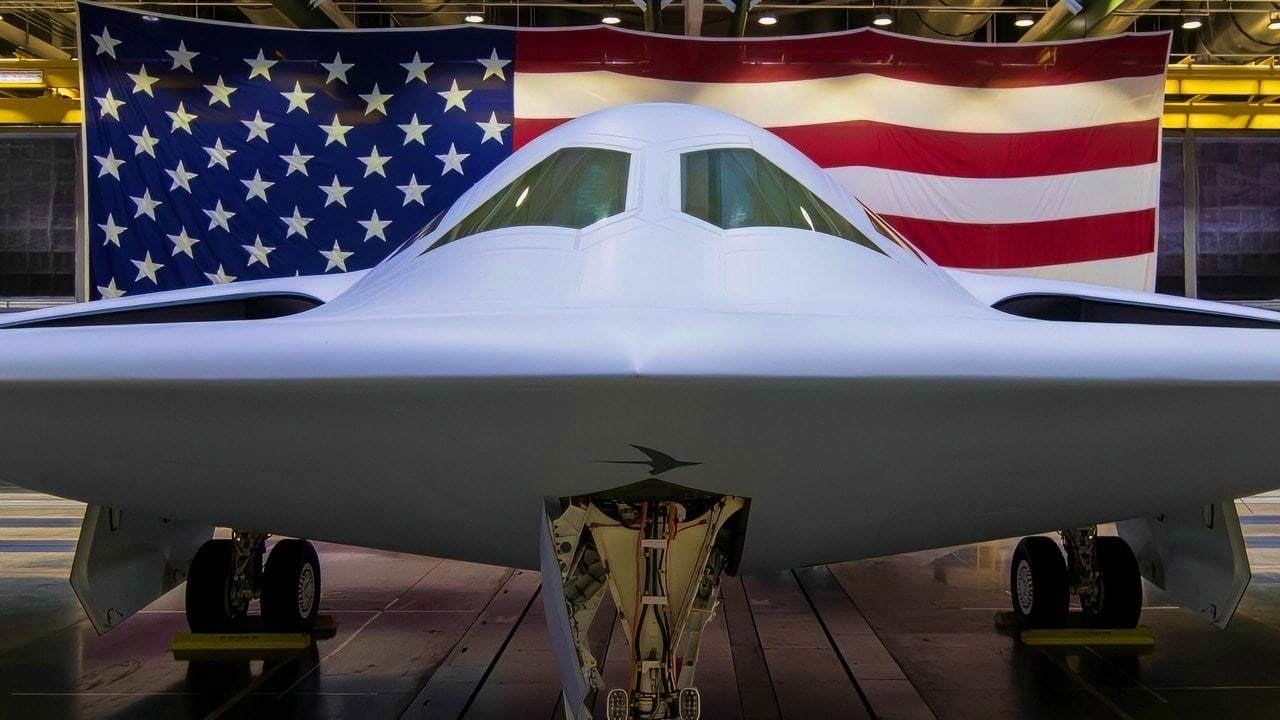
The B-21 Raider was unveiled to the public at a ceremony December 2, 2022 in Palmdale, Calif. Designed to operate in tomorrow’s high-end threat environment, the B-21 will play a critical role in ensuring America’s enduring airpower capability. (U.S. Air Force photo)
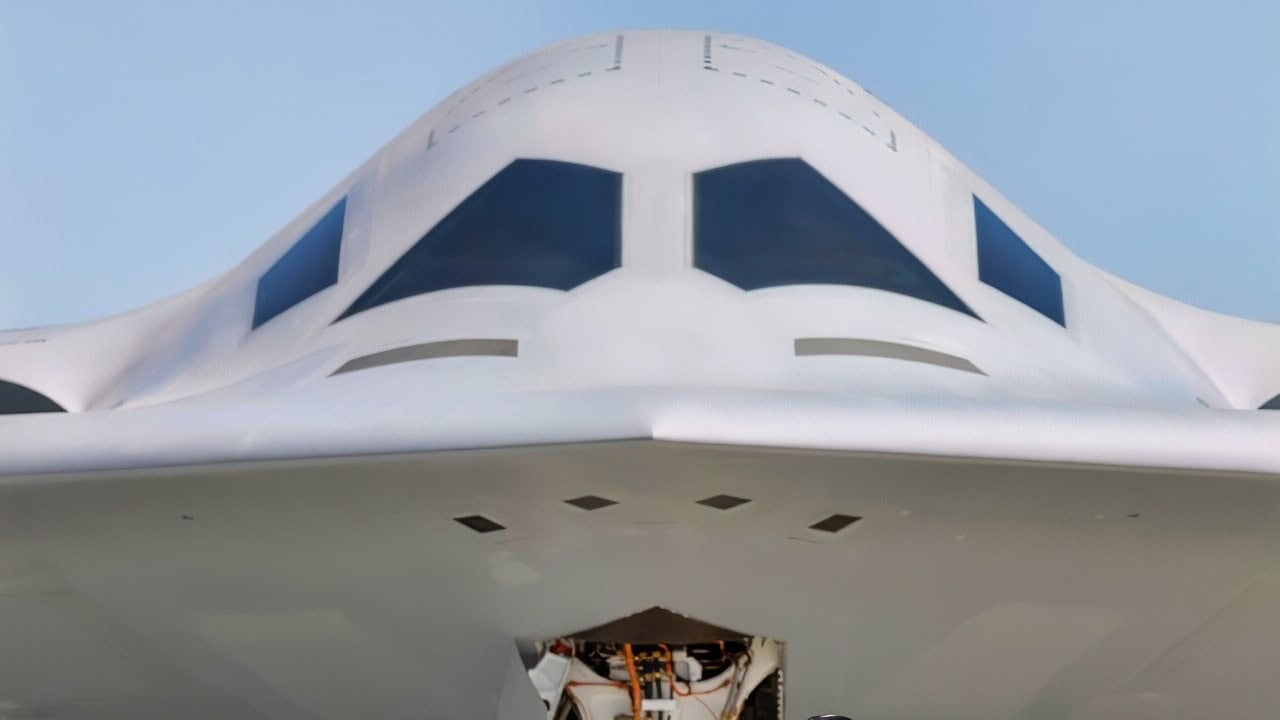
U.S. Air Force Airmen with the 912th Aircraft Maintenance Squadron prepare to recover the second B-21 Raider to arrive for test and evaluation at Edwards AFB, Calif., Sept. 11, 2025. The arrival of a second test aircraft provides maintainers valuable hands-on experience with tools, data and processes that will support future operational squadrons. (U.S Air Force photo by Kyle Brasier)
Now, the same question is being posed about the B-21, the aircraft that will replace it. How many do we really need to build now?
As an example of what not to do today, the original 1981 plan for the B-2 acquisition proposed that the US Air Force (USAF) buy 132 B-2s.
Then-Secretary of Defense Dick Cheney, facing Congressional opposition in 1990 as the Soviet Union teetered on the edge of implosion, cut the number to 75.
Then, in 1992, the B-2 program was slashed again to just 20 aircraft, with one additional B-2 later added back in, bringing the total buy to 21.
Only a few years later did the defense policy community realize the folly of this drastic cutback.
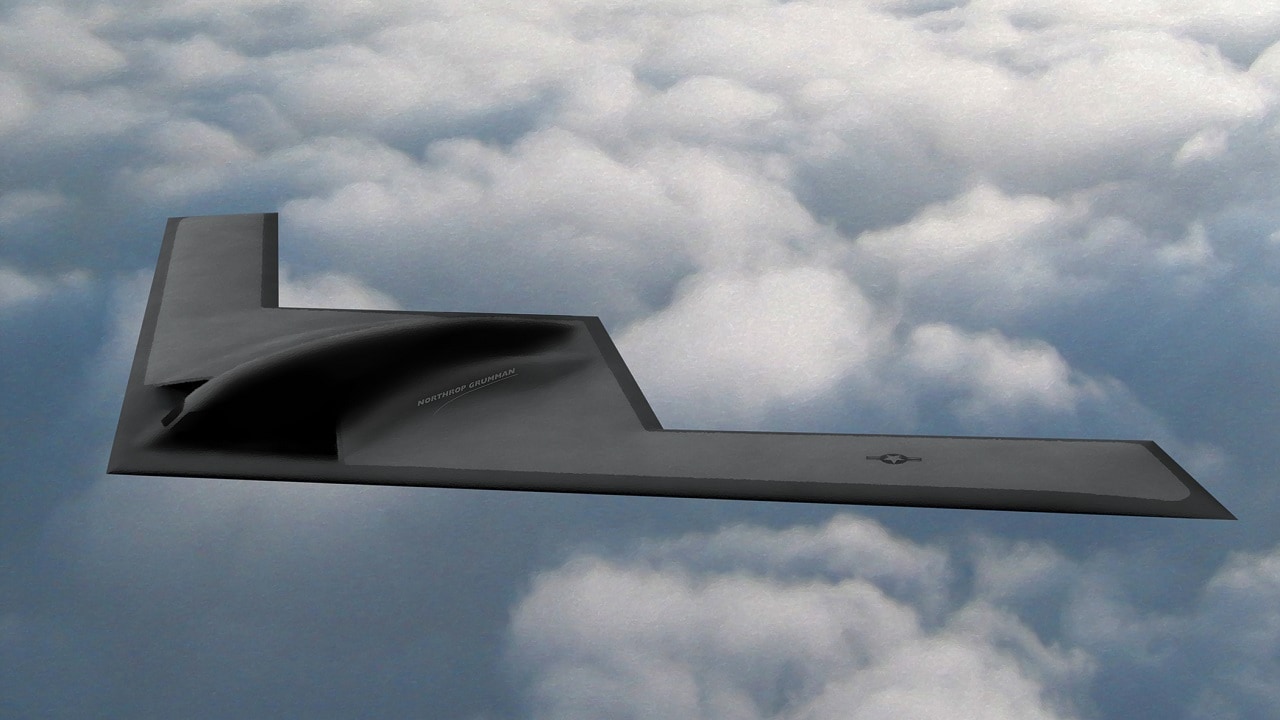
B-21 Raider bomber. Image Credit: Creative Commons.
In January 1995, and to no avail, seven former Pentagon chiefs: Melvin Laird, James Schlesinger, Donald Rumsfeld, Harold Brown, Caspar Weinberger, Frank Carlucci, and even Cheney himself wrote to then-President Bill Clinton.
They advised him to purchase more B-2s while there was still a chance to do so. The B-2, their letter said, “remains the most cost-effective means of rapidly projecting force over great distances.”
So today, more than a few people are asking, “Gee, how could we have been so stupid?” Facing the possibility of having to someday engage adversaries in multiple regions of the world and with a requirement for a long-range stealthy strike platform in each and every one of them comes down to one indisputable fact: the USAF bought not even a fraction of the number of B-2s it needs to have on hand to carry out its mission.
We Need “A Lot More” B-21s
In the defense policy-planning world, it is always a wise option to learn from the mistakes of a previous administration. It is unsurprising that the current US Secretary of War, Pete Hegseth, said on 30 April that the Pentagon should consider buying “a lot more” of the B-21 Raider next-generation stealth bombers.
The original plan was to procure 100 B-21s, but the last two heads of the US Strategic Air Command have both advocated increasing the buy to at least 145 aircraft. There have also been proposed plans for a second production line to be established for the new-age flying wing bomber.
“We have to invest in more capabilities to include the B-21, which is ahead of schedule,” Hegseth told the Senate Armed Services Committee this past April. “We believe we will require a lot more—over 100—in the future.”

B-2 Spirit Stealth Bomber 19FortyFive Image. Taken By Harry J. Kazianis at U.S. Air Force Museum in 2025.
The head of the US Indo-Pacific Command, Adm. Samuel Paparo – himself a career naval aviator – goes even further than the US SecWar. “I would favor 200 B-21 bombers, not just for the nuclear deterrence mission, but for penetrating strike capabilities,” he said 9 days before Hegseth laid down his own marker.
Mark Gunzinger, a former deputy assistant secretary of defense and onetime B-52 pilot, was equally adamant: “One hundred [B-12s] is a floor; it’s absolutely not a ceiling,” he said. “Demand for bombers in peacetime and in conflict has been in one direction: up. And today’s bomber force is about one-third the size of the force we had at the end of the Cold War.” (Today Gunzinger is the Director of Future Concepts and Capability Assessments at AFA’s Mitchell Institute for Aerospace Studies.)
Near Air Crew Composition
Another lesser-noticed but no less important reorientation in thinking about the B-21 is the USAF decision that the aircraft will now operate with a two-pilot crew.
The USAF announced in an official press release that a two-pilot configuration is the best option for the B-21 “mission profile,” given US national defense requirements.
Accordingly, the USAF is also creating a pilot transition program where the “second pilots” will be selected and trained from the ranks of weapons system officers, or WSOs, and combat systems officers, or CSOs.
Officers chosen to participate in the training program are then expected to receive a follow-on assignment to the B-21.
The idea is that with a two-pilot crew, the aircraft will be fully capable of long-endurance missions. The two pilots can trade off with each other to prevent pilot fatigue.
“This deliberate talent management strategy secures the future of global strike capabilities, ensuring the Air Force remains postured to execute extended-duration, long-range strike missions in highly contested environments,” reads the service’s release on this decision.
About the Author: Reuben F. Johnson
Reuben F. Johnson has thirty-six years of experience analyzing and reporting on foreign weapons systems, defense technologies, and international arms export policy. Johnson is the Director of Research at the Casimir Pulaski Foundation. He is also a survivor of the Russian invasion of Ukraine in February 2022. He worked for years in the American defense industry as a foreign technology analyst and later as a consultant for the U.S. Department of Defense, the Departments of the Navy and Air Force, and the governments of the United Kingdom and Australia. In 2022-2023, he won two awards in a row for his defense reporting. He holds a bachelor’s degree from DePauw University and a master’s degree from Miami University in Ohio, specializing in Soviet and Russian studies. He lives in Warsaw.