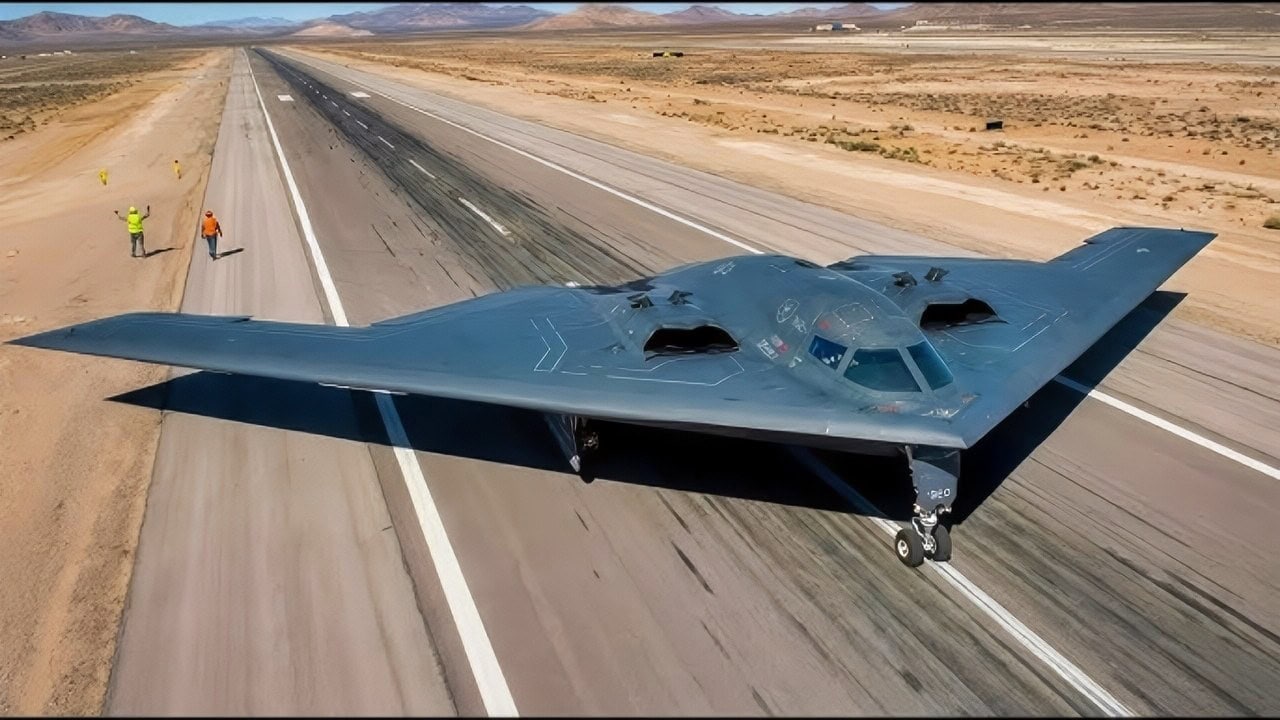
Summary and Key Points: The recent $4.5 billion allocation from the One Big Beautiful Bill Act is set to accelerate the Northrop Grumman B-21 Raider program, increasing annual production capacity by 25%.
-While the U.S. Air Force currently maintains a program of record for 100 stealth bombers at Plant 42, STRATCOM’s Admiral Richard Correll is advocating for a fleet of 145 units.
-This expansion may necessitate a second production line to replace aging B-52, B-1, and B-2 fleets. Despite the Raider’s smaller payload compared to the B-2 Spirit, its sixth-generation stealth and open architecture are critical for penetrating contested PRC airspace.
The 145-Bomber Goal: Why STRATCOM Demands More B-21 Raiders
An additional $4.5 billion has been allocated to increase the rate of production of the new B-21 Raider stealth bomber. A U.S. Air Force statement on the increased funding specifies this “agreement accelerates the approved acquisition profile by increasing annual production capacity by 25 percent, compressing delivery timelines while preserving cost and performance discipline.”
The B-21’s production rate remains classified, but several sources place it at about seven aircraft per year. An increase of 25 percent would work out to an additional two bombers per year. That number would only be achieved, however, once the assembly line progresses from low rate initial production (LRIP) and reaches full-scale tempo. During LRIP, there are plans for 21 of the new stealth bombers to be built over five lots.
The next decision is whether to open a second production line for this program, which would allow production of at least 145 total units of the sixth-generation stealth bomber.
This would be nearly a 50 percent increase over the 100 originally planned aircraft. Additionally, these B-21s would be delivered in a shorter time frame.
Calls for Increased Production
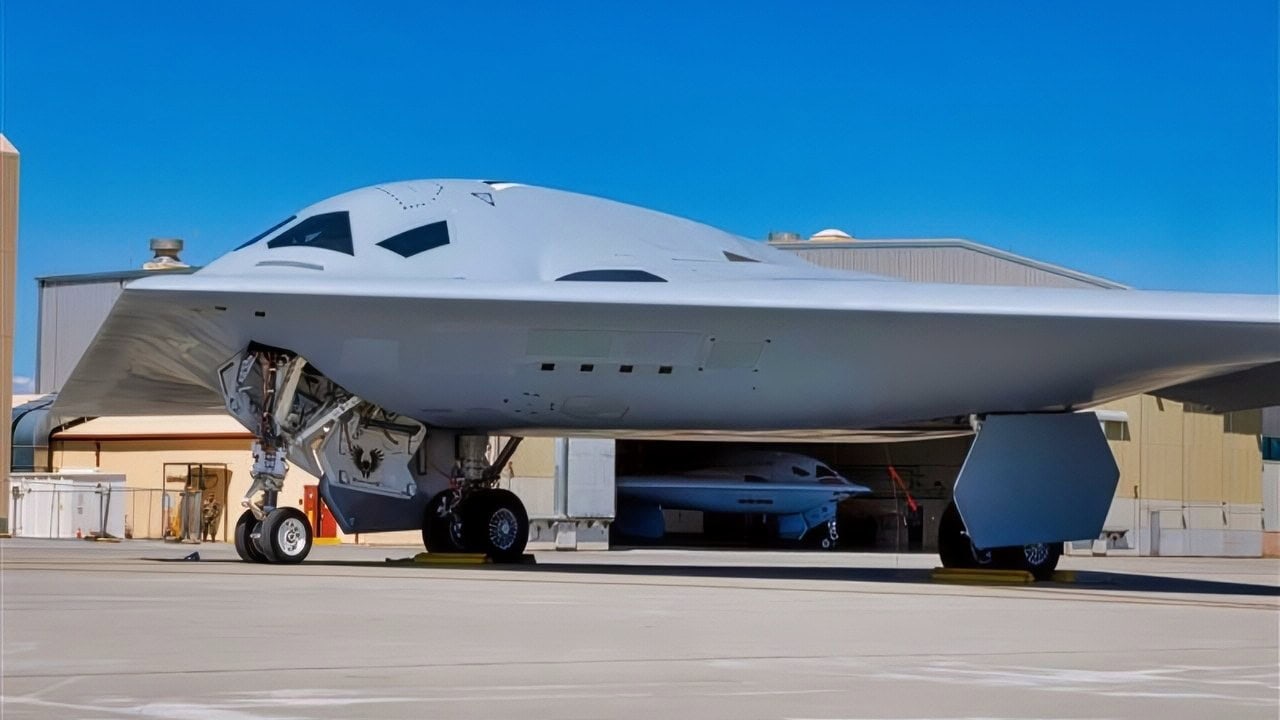
A second B-21 Raider, the world’s sixth-generation stealth bomber, test aircraft arrives at Edwards Air Force Base, Calif., Sept. 11, 2025. The addition of the second test aircraft expands mission systems and weapons integration testing, advancing the program toward operational readiness. (Courtesy photo)
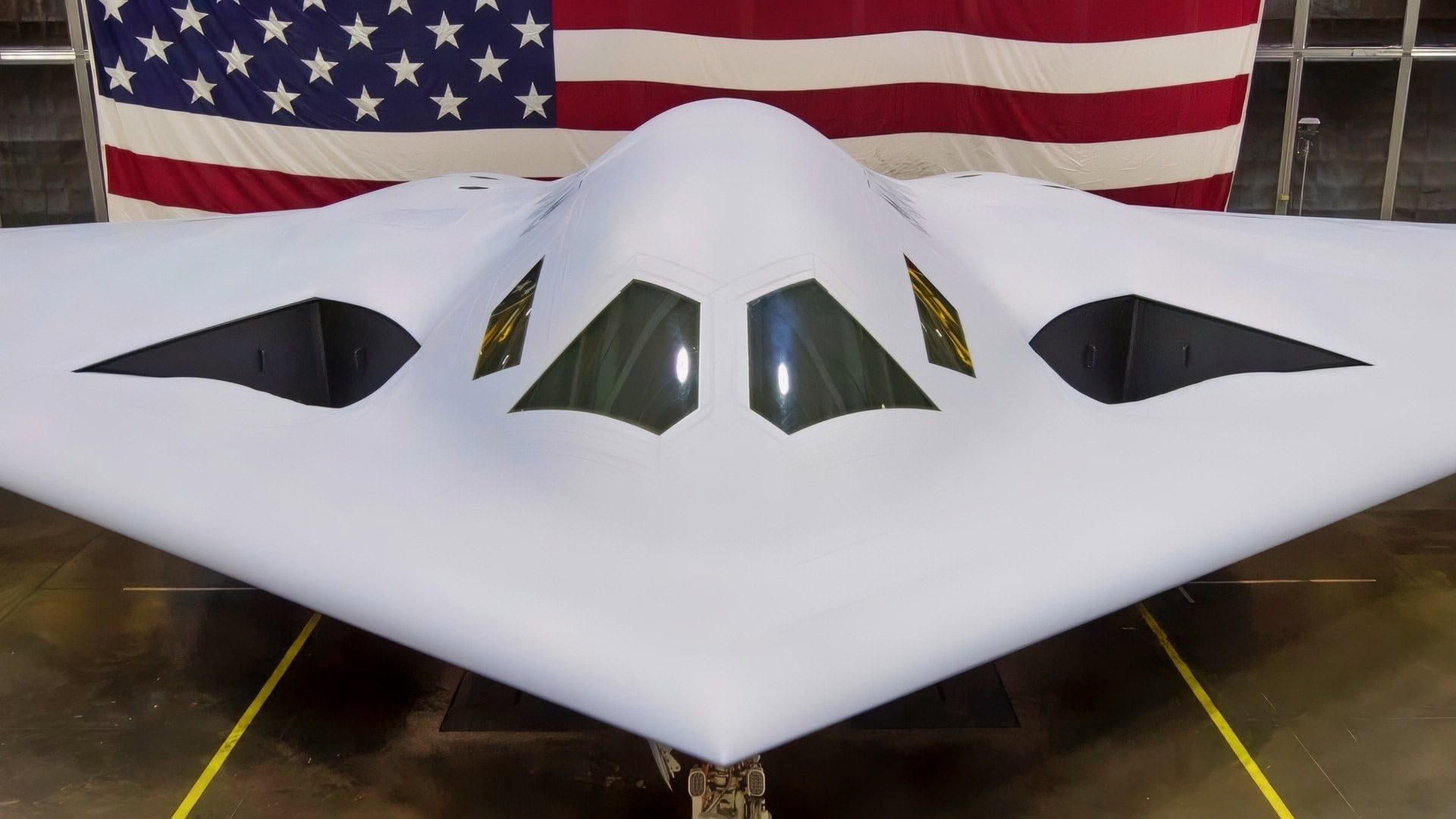
The B-21 Raider was unveiled to the public at a ceremony Dec. 2, 2022 in Palmdale, Calif. The B-21 will provide survivable, long-range, penetrating strike capabilities to deter aggression and strategic attacks against the United States, allies, and partners. (U.S. Air Force photo)
Admiral Richard Correll, head of the U.S. Strategic Command, told Congress on March 17 that his command still wants 145 Raiders. His predecessor, Air Force General Anthony J. Cotton, called for the same last March.
At present, the Air Force program of record specifies that a minimum of 100 B-21s would be built by Northrop Grumman. Production would take place at Air Force Plant No. 42 in Palmdale, California.
The Air Force then announced an agreement with Northrop Grumman on February 23 to ramp up B-21 production by 25 percent. Funding would come from the One Big Beautiful Bill Act passed last summer. What this announcement did not reveal, however, was a timeline for increased production.
The Arguments for More B-21 Raider Stealth Bombers
Most Air Force personnel and observers will argue for producing more than 100 of these aircraft, because the current inventory of U.S. bomber aircraft is one of the oldest in history of the Air Force.
The prime example is the B-52 Stratofortress. In 1980, Sen. Barry Goldwater (R-Arizona) famously joked that “some of those aircraft are so old I think they fought with Custer.” That was nearly 50 years ago.
The B-1 Lancer and B-2 Spirit bombers are also aging and will have to be retired sometime in the 2030s. None too soon, the first pair of B-21s are currently engaged in flight testing at Edwards Air Force Base, California. The first operational Raider aircraft is then scheduled to be delivered in 2027 to Ellsworth Air Force Base, South Dakota.
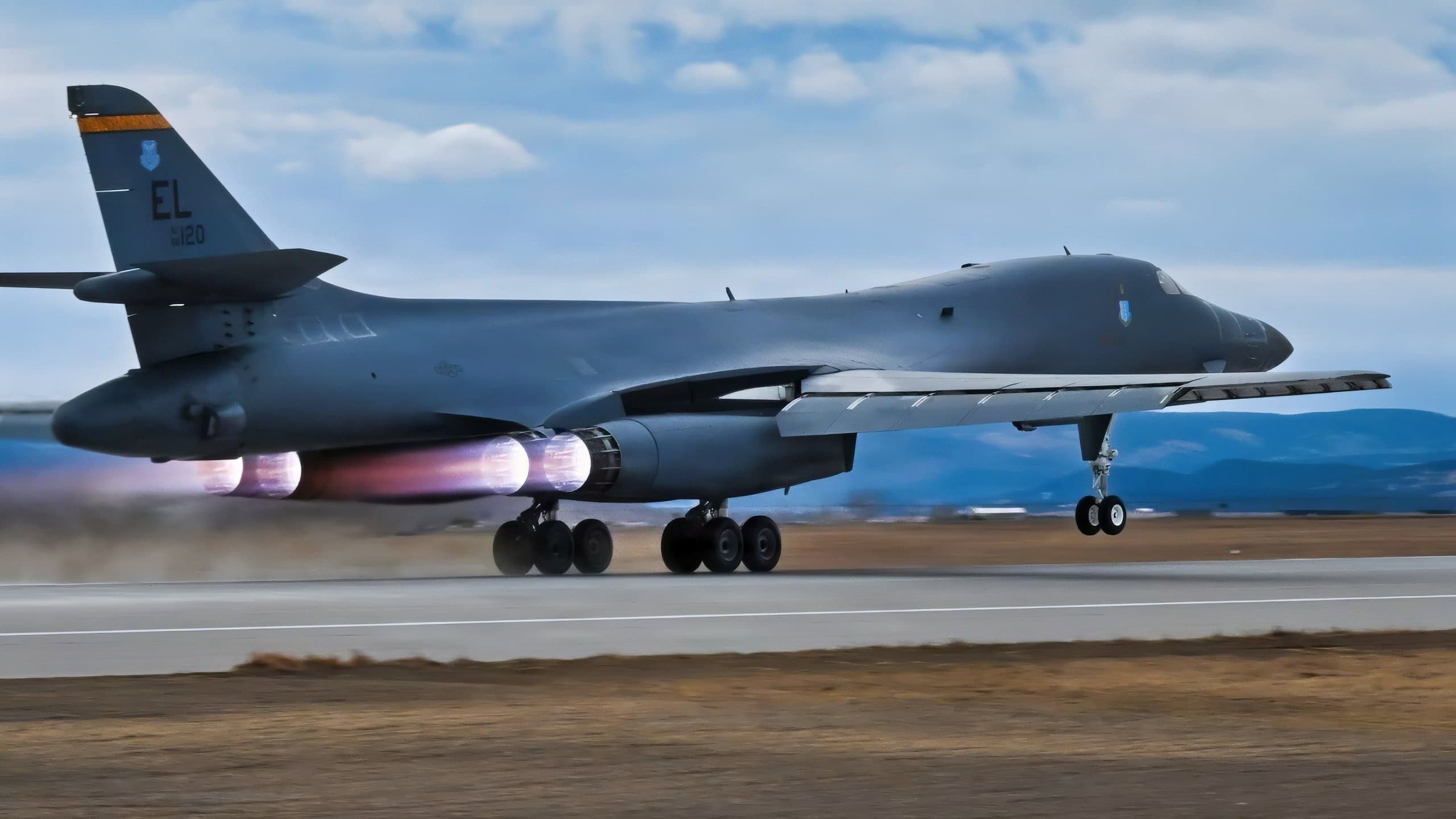
A U.S. Air Force B-1B Lancer assigned to the 34th Bomb Squadron takes off as part of a routine training exercise at Ellsworth Air Force Base, S.D., Feb. 24, 2026. Repeated training ensures mission and combat readiness, helping maintain peaceful world affairs. (U.S. Air Force photo by Airman 1st Class Austin Mooneyham)
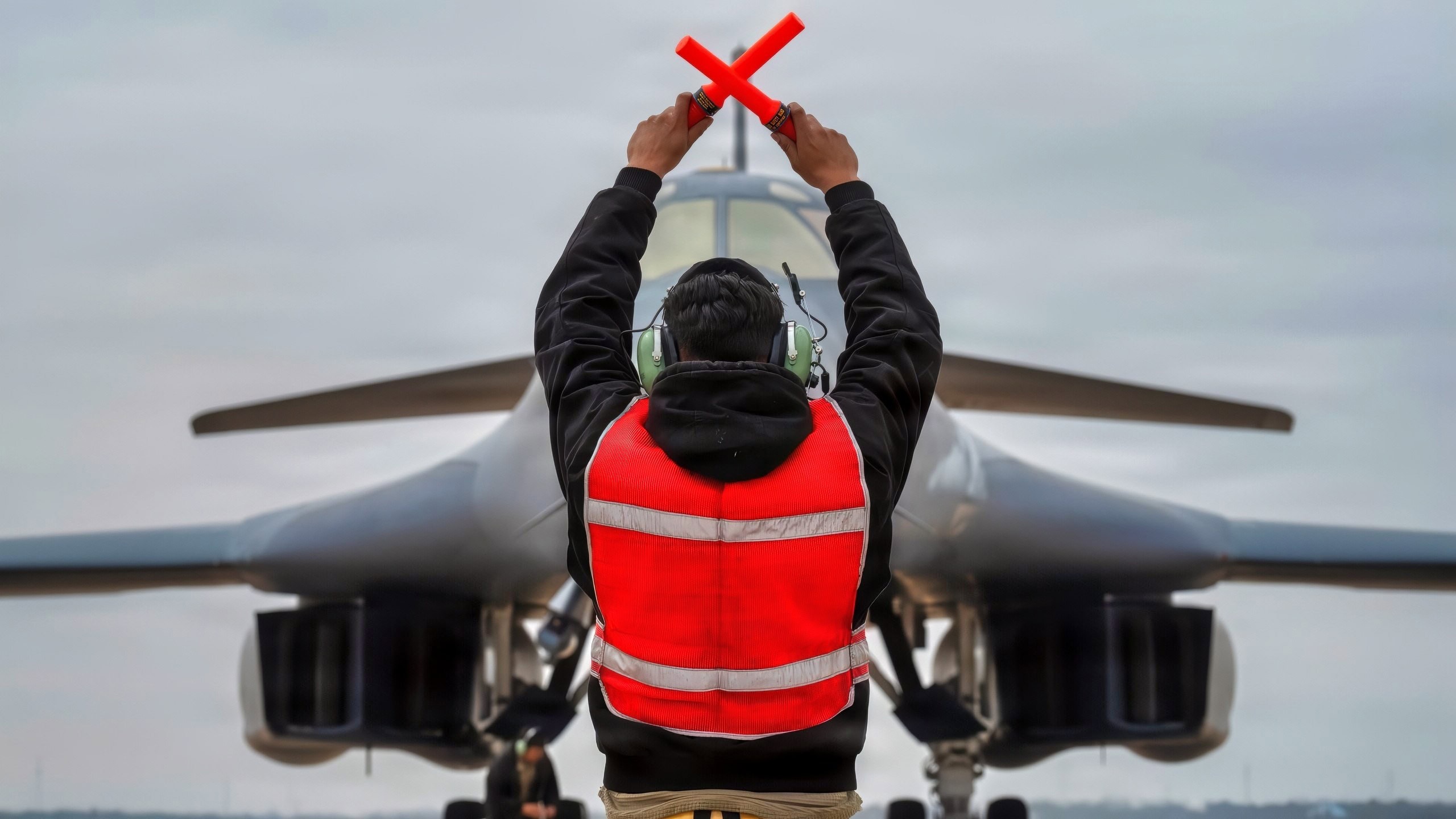
A U.S. Air Force B-1B Lancer crew chief marshals a B-1 after returning from a CONUS-to-CONUS mission in support of Operation Epic Fury, March 4, 2026. The B-1B is a long-range, multi-role bomber that carries the largest payload of precision guided and unguided munitions in the Air Force inventory. (U.S. Air Force photo)
The B-21 has a flying-wing configuration that is similar to the B-2, but it is a much smaller aircraft than the original stealth bomber.
“Put simply,” said a retired Air Force flag officer who spoke to 19FortyFive, “you need two B-21s to equal the payload capacity of one B-2. The reason for the smaller size is that with the B-21 you are able to hit a larger number of targets that are located further away from base and inside the hinterlands of the People’s Republic of China (PRC). But numbers matter and you are going to need a lot more of them—more than 100 for sure.”
B-2 Spirit Payload
- Capacity: Roughly 40,000 lbs, but can carry more in special configurations.
- Key Weapons: Known for carrying two 30,000-lb GBU-57 Massive Ordnance Penetrators (MOP).
- Focus: Heavy conventional/nuclear bomber designed for maximum payload in the 1990s.
B-21 Raider Payload
- Capacity: Estimated around 20,000–30,000 lbs.
- Key Weapons: Designed for modern precision-guided bombs (JDAMs), nuclear bombs (B61-12/13), and future weapons like the Long-Range Stand-Off (LRSO) missile.
- Focus: Smaller, more sustainable, and technologically advanced stealth designed for modular weapons integration.
Then there is the issue of the B-2’s low numbers.
“The original buy for that first stealth bomber was supposed to be 100 aircraft,” said the same retired general. “Except—and in another example of how the so-called ‘Peace Dividend’ was a joke from the get-go—the Cold War ended and someone decided that only 21 B-2s would be enough.
“Two of those aircraft were later lost in accidents leaving only 19. So to calculate how many are available at any one time for unplanned, discretionary missions you have to delete from that quantity the number of B-2s held back and always at the ready for the nuclear mission.
“Then you subtract the number being used for training, the number down for maintenance or being upgraded. What that leaves you with is a handful—maybe enough aircraft to run another Midnight Hammer-type one-time raid, but nothing left over to do anything else.”

B-2 Spirit Stealth Bomber 19FortyFive Image. Taken By Harry J. Kazianis at U.S. Air Force Museum in 2025.
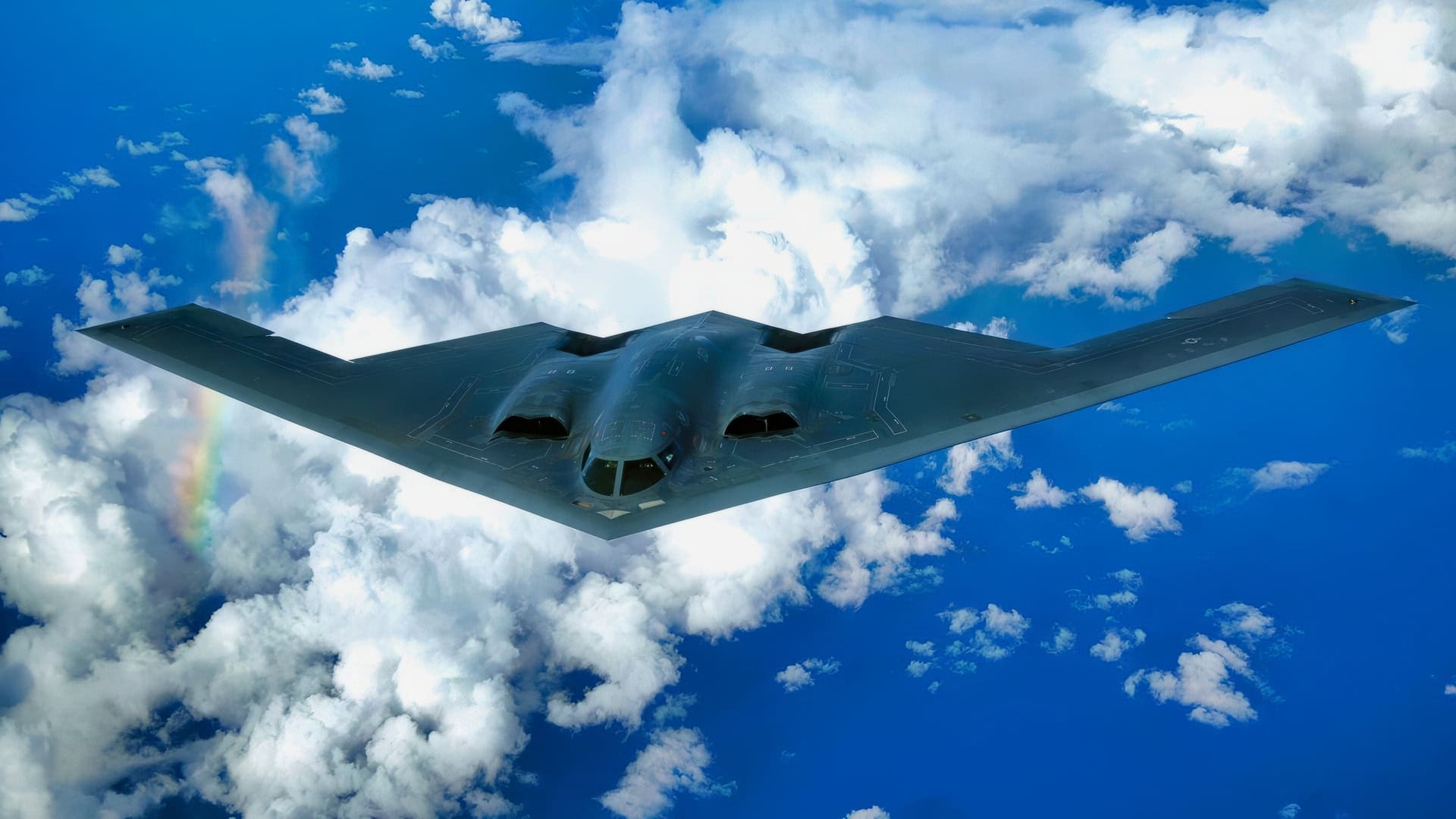
A B-2 Spirit soars after a refueling mission over the Pacific Ocean on Tuesday, May 30, 2006. The B-2, from the 509th Bomb Wing at Whiteman Air Force Base, Mo., is part of a continuous bomber presence in the Asia-Pacific region. (U.S. Air Force photo/Staff Sgt. Bennie J. Davis III)
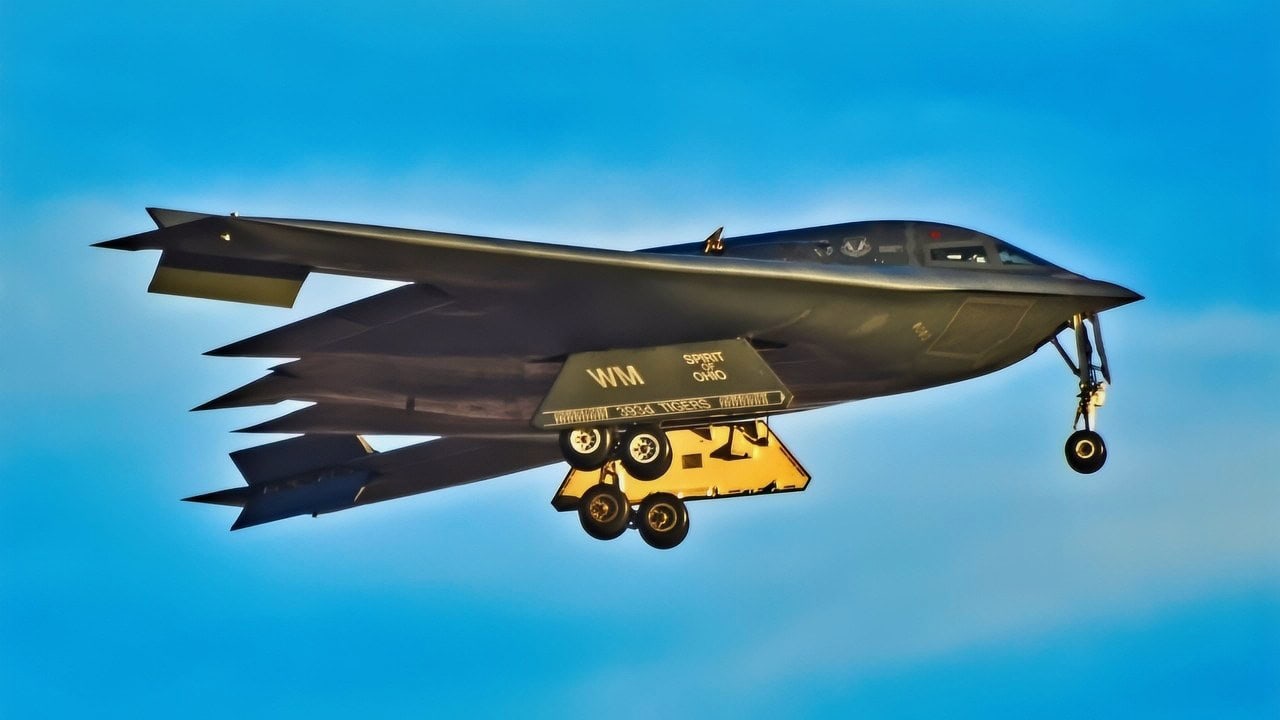
B-2A Spirit Stealth Bomber. Image Credit: Creative Commons.
Those familiar with both aircraft models’ performance also point to the B-21’s next-generation stealth properties. Those should enable the aircraft to strike deep into enemy territory without being detected, whether they are carrying conventional or nuclear weapons.
Northrop Grumman officials also claim that the B-21’s low radar cross-section (RCS) makes it the first “sixth-generation” aircraft. But the Raider, they claim, also deserves the sixth-generation label for its open-systems architecture and data-sharing technology.
A Mitchell Institute policy paper published in February argues that even 145 aircraft is not enough. That think tank advocates doubling production to 200.
“A war-winning strategy must also use long-range penetrating airpower to deny sanctuaries to the PLA and degrade its ability to launch air and missile salvos that could cripple U.S. operations in the Western Pacific,” the paper explains. “Multiple studies have recommended procuring at least 200 B-21s to meet operational demand for penetrating strikes.
“Stealthy F-47s and F-35As are also required at scale, but delaying or truncating their acquisition for budgetary reasons would create a future force that cannot take the fight to China—a less-capable force cannot achieve peace through strength or win should deterrence fail. This is a strategic choice for the nation, not just the Air Force.”
Lack of Enthusiasm for a Second Production Line
General Dale White, the Air Force’s direct reporting portfolio manager for critical major weapon systems, has the B-21 as one of his top-level responsibilities. He said on March 17 that the service is adhering to the original objective of at least 100 Raiders. White during a recent speech appeared to be in favor of a second assembly line.
He explained that increased production capacity would “allow us that decision space that we didn’t have before” to increase production when and if desired.
But even if the Air Force is not lobbying for an increase in the planned B-21 fleet size, the call does have support in Congress. Reps. Don Bacon (R-Nebraska) and George Whitesides (D-California) are in bipartisan agreement about the need for more Raiders.
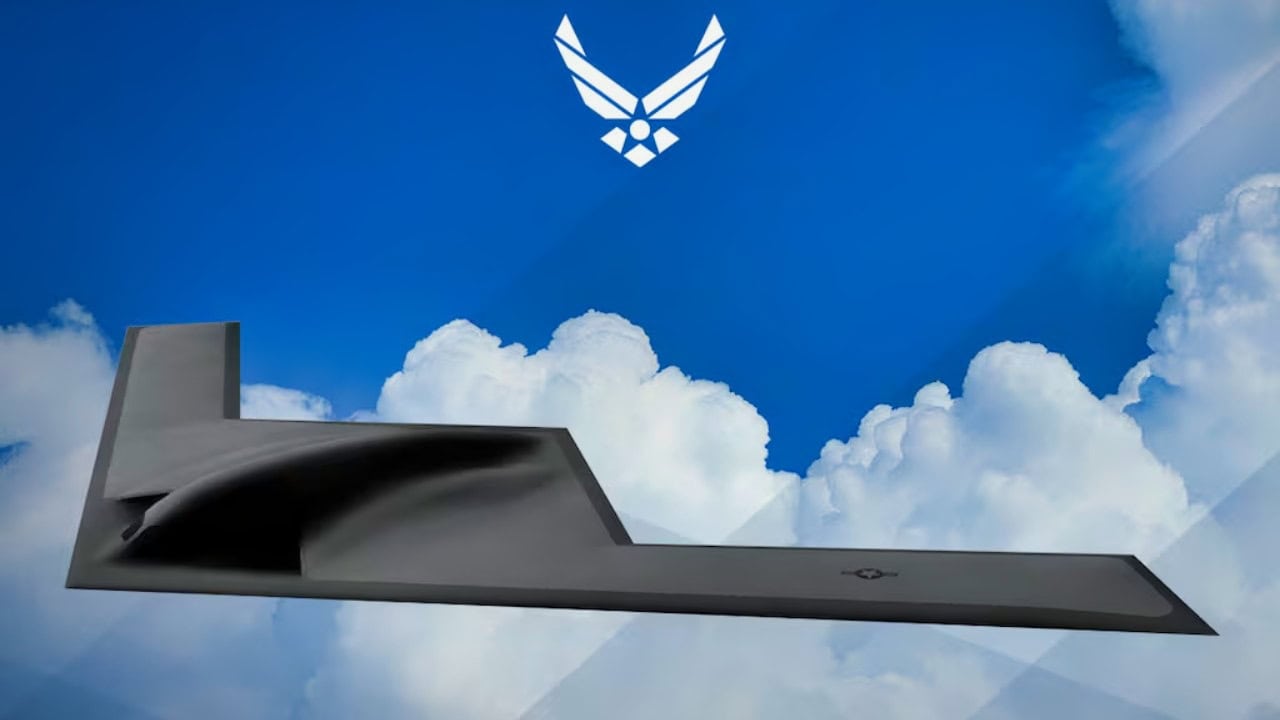
B-21 Raider Bomber.
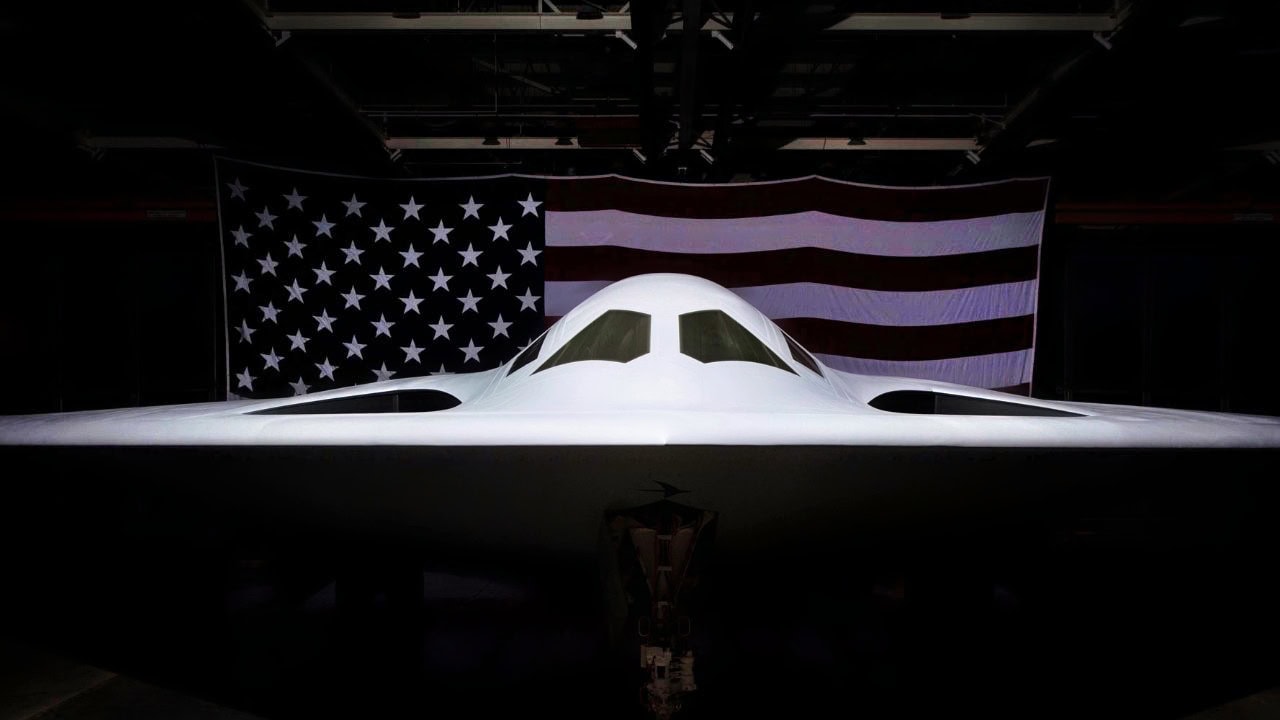
B-21 Raider Bomber. Image Credit: Creative Commons.
Correll also said acquiring more B-21s would strengthen the nation’s ability to execute more complex military operations.
“For the joint force, it’s a sixth-generation stealth capability with … stand-off precision distance strike, or stand-in precision strike, and the ability to maneuver within a contested electromagnetic spectrum,” Correll said. “The sooner we field that capability and the sooner we ramp up in delivery of that capability, the stronger position that puts the joint force in, to address the strategic environment, from deterrence to any spectrum of conflict that we would contemplate.”
History of Second Production Lines
History offers lessons on establishing second production lines in the aerospace industry. Some of them are not terribly encouraging.
In the 1980s, the U.S. Navy decided to establish a second production line for the GE-designed F404 engine used in the F/A-18A/B/C/D Series of aircraft. That task was given to Pratt & Whitney, but the results were less than spectacular.
In the end, the company produced a small percentage of the number of engines that the General Electric plant in Lynn, Massachusetts did, but “the PW product was never competitive,” said a long-time GE design engineer the writer spoke to years later.
“PW’s price was not worth the expense of creating the second production facility, to begin with” he said. “And in theory they should have been able to perform on this effort. Since the US Government paid for our design they owned it, so PW received everything that GE knew about the engine’s design and production with the single exception of our own proprietary processes.
“But in the end, it was not enough, because it was not their design. Not being involved in the creation of the engine kept them from achieving results better than or at least equal to the GE product.”
Establishing a second production line is also a resource-intensive proposition.
In 1988, Boeing rolled out its newest version of the 747 jumbo jet. But by that point, every fuselage for every 747 since 1966 had been built not by Boeing, but by Northrop. In December 1987, Northrop had already shipped its 700th fuselage for the 747 program to the Boeing main assembly facility.
But this was not some simple print-to-build process. It required significant time, money, and training to build the fuselages for the Boeing aircraft at a non-Boeing facility.
Just building the fuselages was only half the battle, as it turned out. The only way they could be transported to Boeing was to be shipped disassembled in a kit of 27 panels that would then be assembled in Everett. The transport of just one kit required nine large railroad boxcars. Boeing ended up having to design and contract for more than three dozen of these specialized configuration railcards to support the program.
Any program to build the B-21 in a distant location separate from the Northrop Grumman Palmdale facility would require even more complicated arrangements. Whatever the company decides, and whether or not the Air Force intends to support it, will be difficult.
About the Author: Reuben F. Johnson
Reuben F. Johnson has thirty-six years of experience analyzing and reporting on foreign weapons systems, defense technologies, and international arms export policy. Johnson is the Director of Research at the Casimir Pulaski Foundation. He is also a survivor of the Russian invasion of Ukraine in February 2022. He worked for years in the American defense industry as a foreign technology analyst and later as a consultant for the U.S. Department of Defense, the Departments of the Navy and Air Force, and the governments of the United Kingdom and Australia. In 2022-2023, he won two awards in a row for his defense reporting. He holds a bachelor’s degree from DePauw University and a master’s degree from Miami University in Ohio, specializing in Soviet and Russian studies. He lives in Warsaw.