
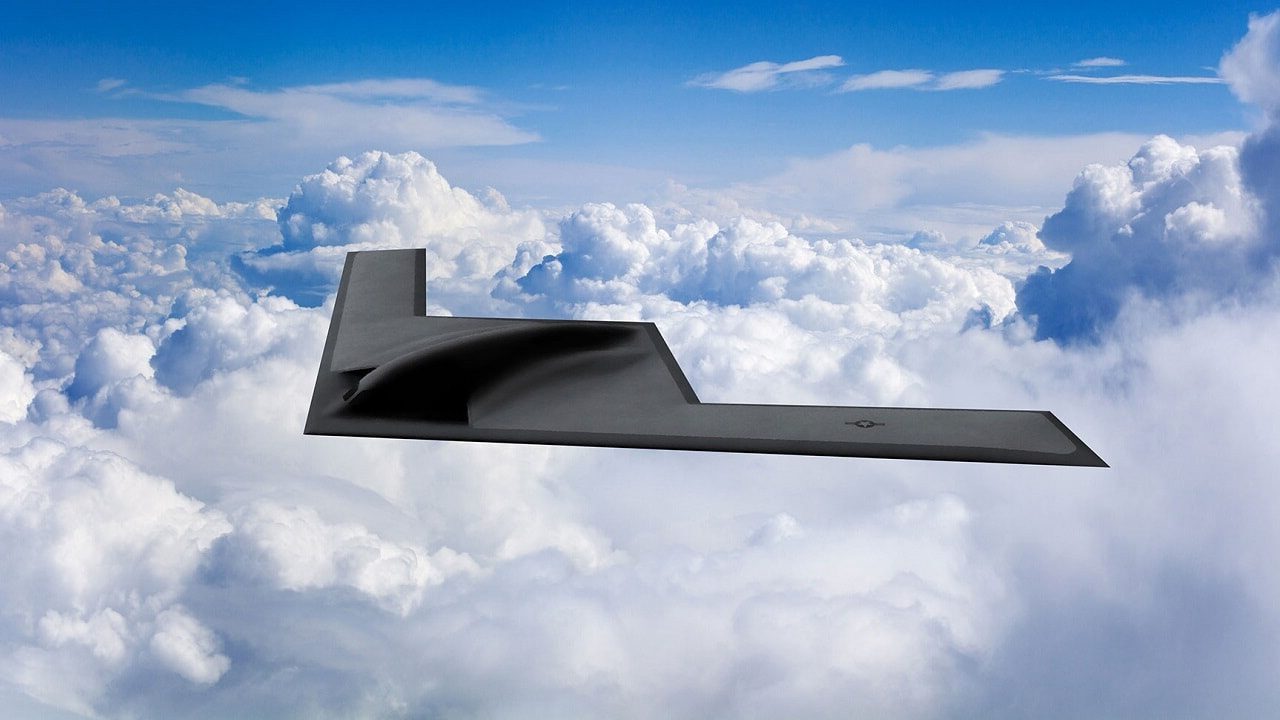
Summary and Key Points: Christian D. Orr — former Air Force Security Forces officer, Pentagon contractor, USC International Relations graduate, and American Military University intelligence studies master’s — reports on Northrop Grumman’s accelerated B-21 Raider production following a February 23, 2026 announcement by CEO Kathy Warden.
-With over $5 billion invested in digital engineering and manufacturing infrastructure at its Palmdale, California, facility, Northrop Grumman and the U.S. Air Force are fast-tracking the sixth-generation stealth bomber toward an initial target of at least 100 airframes.
-Orr contextualizes the production ramp against the current U.S. Air Force strategic bomber fleet — 19 B-2 Spirits, 45 B-1B Lancers, and 76 B-52 Stratofortresses — arguing the Raider must ultimately replace 64 aging B-1B and B-2 airframes, with the first completed B-21 on track for delivery to Ellsworth Air Force Base, South Dakota, in 2027.
The B-21 Raider Is Being Built Faster Than Anyone Expected — Here Is What That Means
The up-and-coming B-21 Raider, a 6th-generation stealth bomber, is not a supersonic warplane, nor is its immediate predecessor, the B-2 Spirit (the original stealth bomber). Nor is the septuagenarian B-52 (unofficially AKA the “Stratosaurus”).
Indeed, the only member of the US Air Force’s strategic bomber triumvirate that does break the sound barrier is the B-1B Lancer (AKA “the Bone“).
However, though the B-21 “ain’t no Mach buster” and therefore won’t be known for its acceleration capabilities, one aspect of the Raider that *is* accelerating and garnering headlines is the effort to build it.
B-21 Buildup Bottom Line Up Front (BLUF)
As noted in a February 23, 2026, press release from the Raider’s manufacturer, Northrop Grumman, “Northrop Grumman and the US Air Force are accelerating production capacity of the B-21 Raider, delivering unmatched combat capability faster.
The B-21 program showcases Northrop Grumman’s proven performance and relentless commitment to fielding advanced technologies and capabilities at the speed of need.”
Northrop Grumman Executives Chime In
—Kathy Warden, chair, chief executive officer and president, Northrop Grumman: “The strong performance of the B-21 program has our Northrop Grumman and Air Force team ready to accelerate production of this game-changing capability for our nation…Northrop Grumman has invested more than $5 billion in digital engineering and manufacturing infrastructure, and we are ready to produce B-21 faster.”
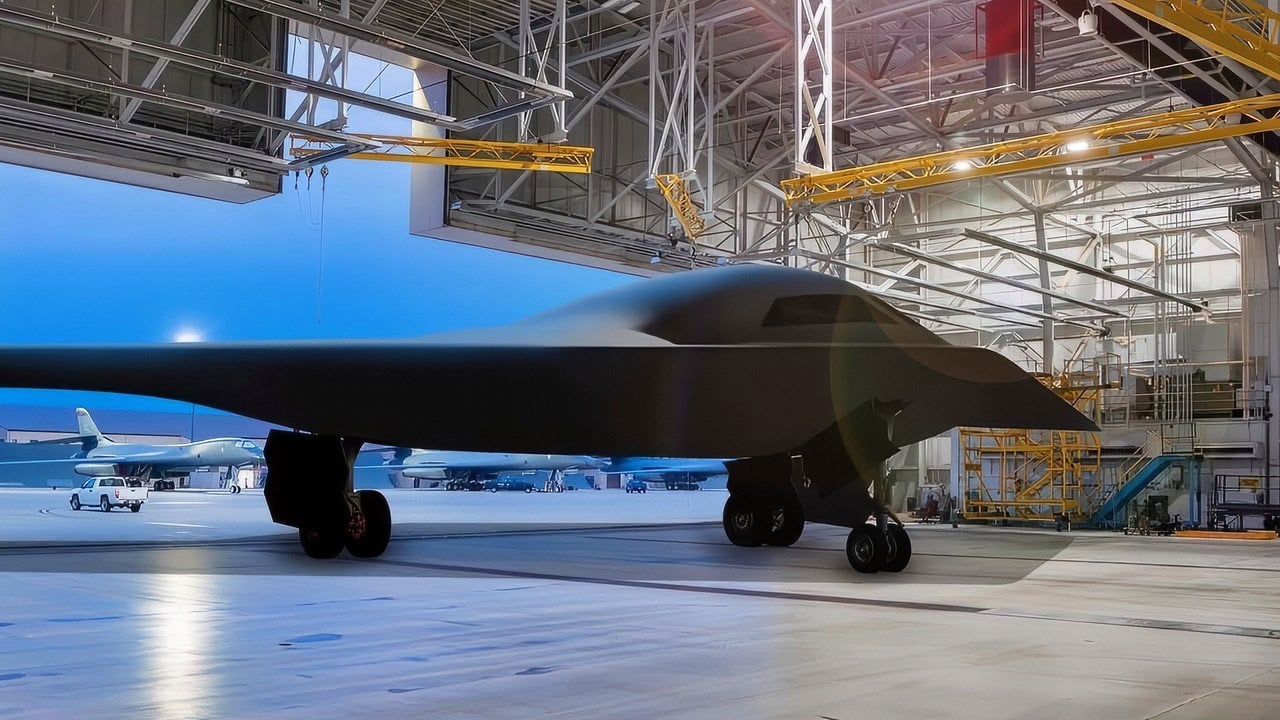
Artist rendering of a B-21 Raider in a hangar at Ellsworth Air Force Base, South Dakota, one of the future bases to host the new airframe. AFCEC is leading a $1 billion construction effort at Ellsworth to deliver sustainable infrastructure to meet warfighter demands for bomber airpower. (U.S. Air Force graphic)
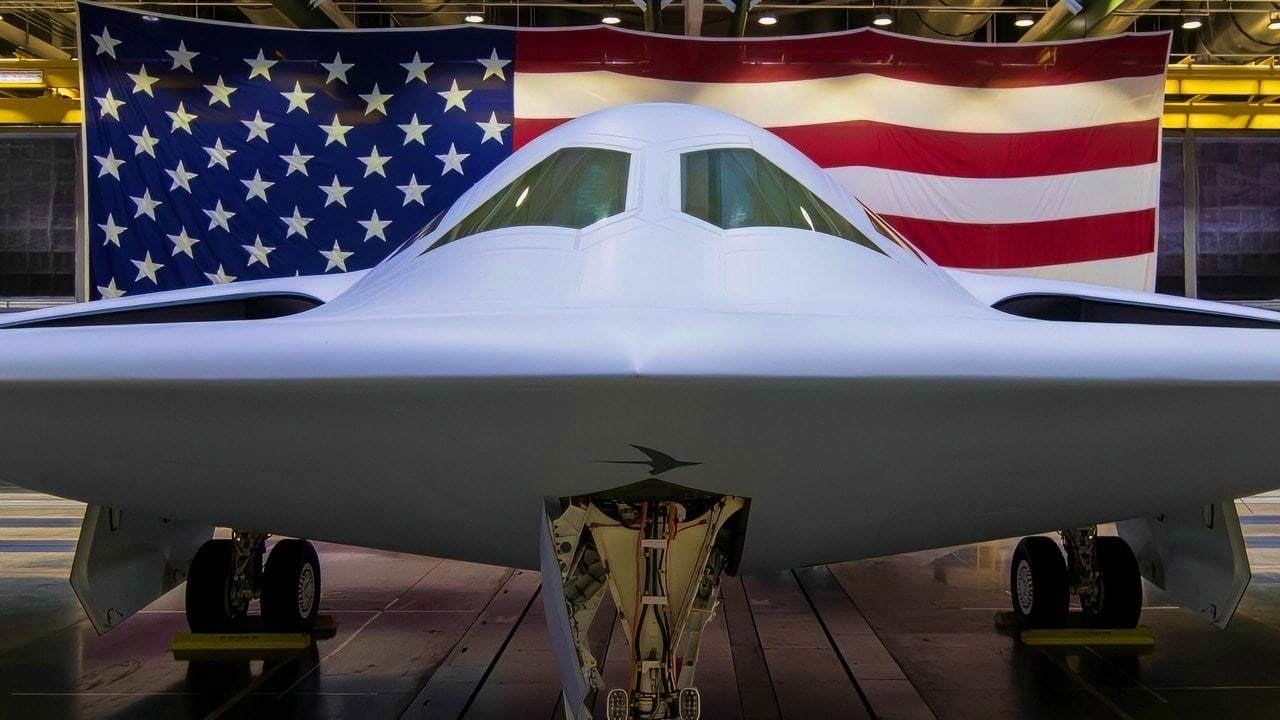
The B-21 Raider was unveiled to the public at a ceremony December 2, 2022 in
Palmdale, Calif. Designed to operate in tomorrow’s high-end threat environment, the B-21 will play a critical role in ensuring America’s enduring airpower capability. (U.S. Air Force photo)
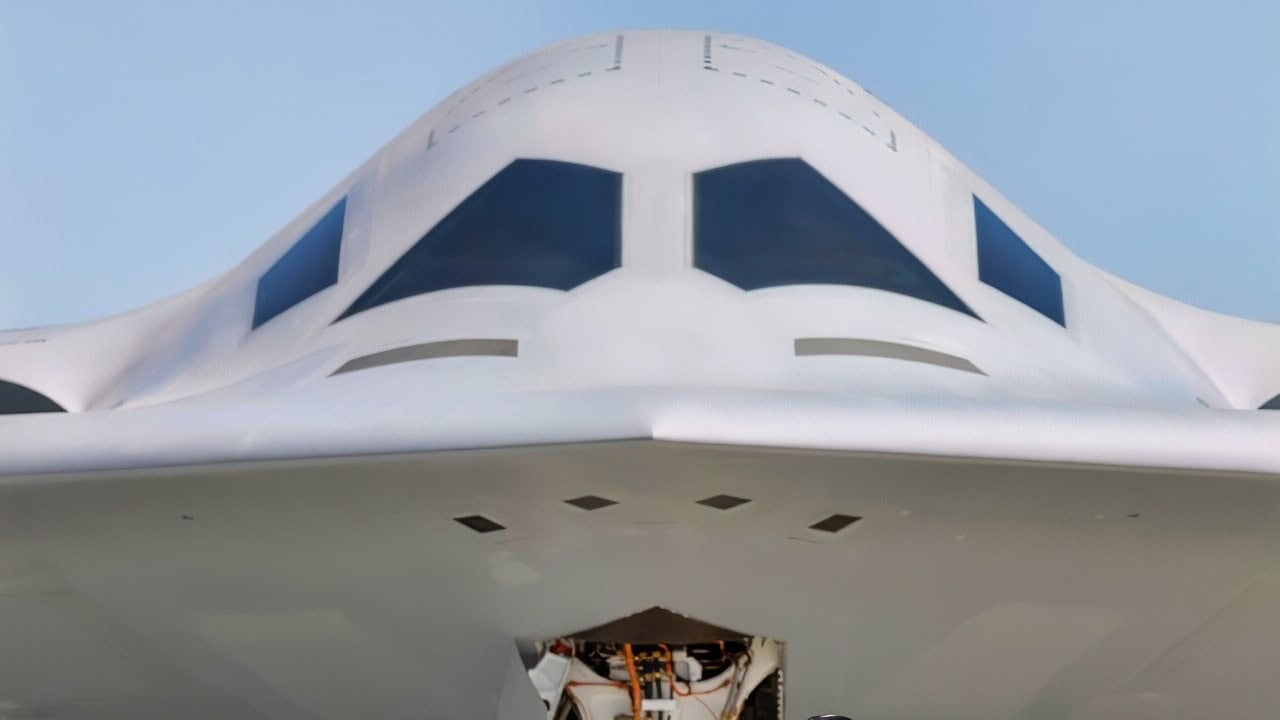
U.S. Air Force Airmen with the 912th Aircraft Maintenance Squadron prepare to recover the second B-21 Raider to arrive for test and evaluation at Edwards AFB, Calif., Sept. 11, 2025. The arrival of a second test aircraft provides maintainers valuable hands-on experience with tools, data and processes that will support future operational squadrons. (U.S Air Force photo by Kyle Brasier)
—Tom Jones (not to be confused with the famous crooner), corporate vice president and president, Northrop Grumman Aeronautics Systems:
Okay, But How Many B-21s?
Thus far, the USAF has only said its B-21 production target is “at least 100 aircraft.” But does that truly reflect the service’s (and the nation’s) needs?
According to the World Directory of Modern Military Aircraft (WDMMA), the US Air Force currently has 19 B-2s, 45 B-1s, and 76 B-52s.
So then, if we were to use the current aggregate bomber fleet size as a yardstick for measuring the numerical needs for B-21 production, that would equate to 140 Raider airframes.
However, it should be remembered that it is *NOT* intended to be a replacement for the B-52; the “BUFF” isn’t going away anytime soon, and is indeed undergoing major upgrades via the B-52J program (as well as a recently announced nuclear rearmament).
That still leaves us with the combined total of 64 B-1Bs (which first entered service in 1985) and B-2s (maiden flight July 17, 1989) waiting their turn to be replaced by the Raider.
The Way Forward
The current batch of B-2s is in final assembly at Northrop Grumman’s Palmdale, California, facility and at other manufacturing operations across the US. The first B-21 completed specimen is on track to arrive at Ellsworth Air Force Base, South Dakota, in 2027.
About the Author: Christian D. Orr, Defense Expert
Christian D. Orr is a Senior Defense Editor. He is a former Air Force Security Forces officer, Federal law enforcement officer, and private military contractor (with assignments worked in Iraq, the United Arab Emirates, Kosovo, Japan, Germany, and the Pentagon). Chris holds a B.A. in International Relations from the University of Southern California (USC) and an M.A. in Intelligence Studies (with a concentration in Terrorism Studies) from American Military University (AMU). He is also the author of the newly published book “Five Decades of a Fabulous Firearm: Celebrating the 50th Anniversary of the Beretta 92 Pistol Series.”