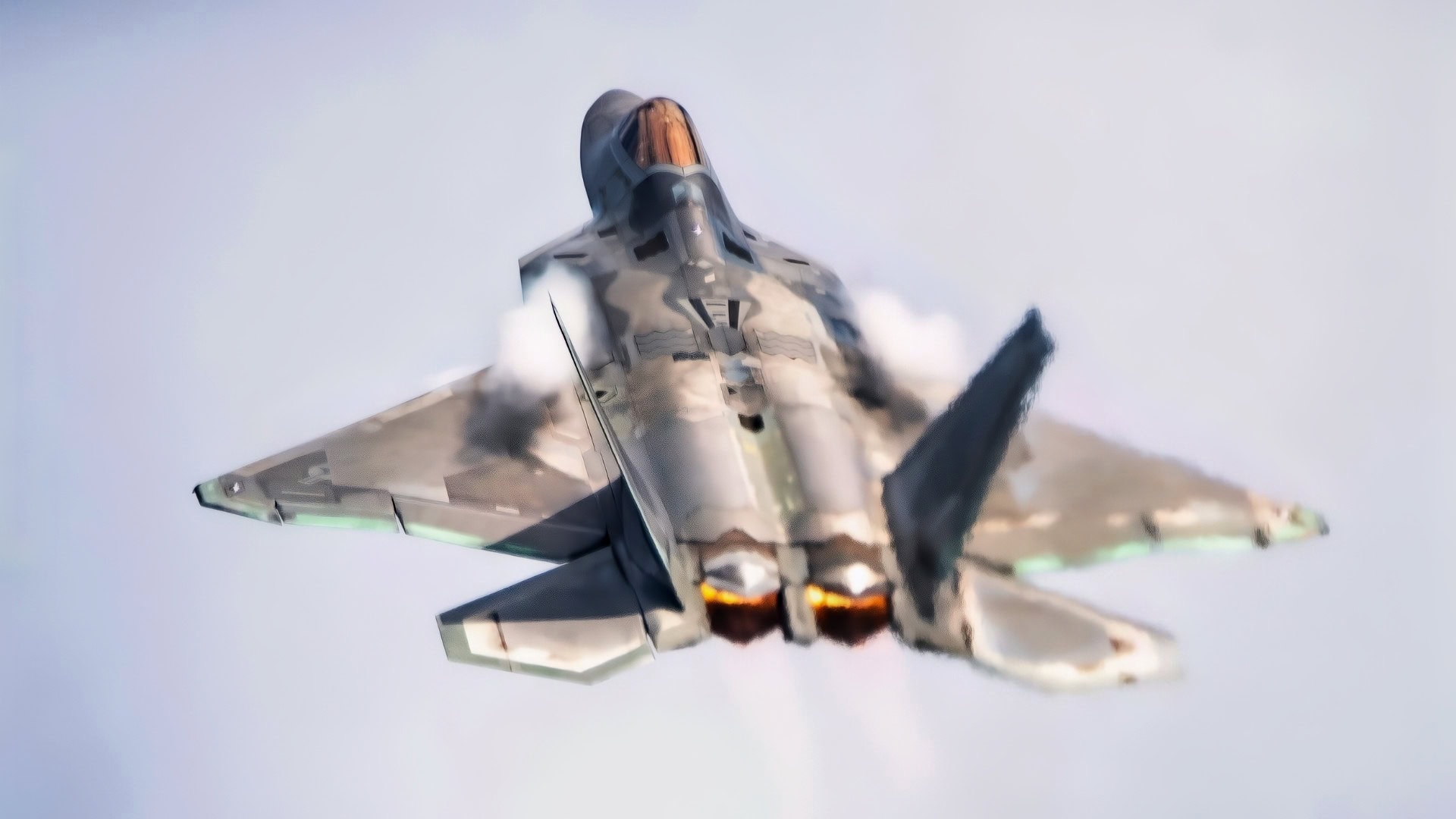
The U.S. Air Force just sent F-22 Raptors to Basa Air Base in the Philippines—a deliberate move to remind China that, despite the war in Iran, America’s deterrence posture in the Pacific is alive and well. Mach 2.25 stealth supremacy, just a few hundred miles from the contested South China Sea.
The F-22 Raptor Heads Towards China
Launching the famous F-22 Raptor from the Philippines makes tactical and strategic sense, particularly given that the islands are merely a few hundred miles from the highly contested South China Sea.
Forward U.S. Naval presence can bring F-35Cs and F-35Bs well within the operational range of the island region, yet the ability to project 5th-generation stealth air attack power from land right near the South China Sea adds an additional component to U.S. deterrence strategy.
Proximity is the key here, as the F-22 has a range of 1,840 miles, which would enable Philippine-launched F-22s to gain quick access and substantial dwell time over contested portions of the South China Sea.
A recent Pentagon video showed an F-22 taking off from Basa Air Base in the Philippines during military exercises, a move perhaps intended to remind China that, despite the war in Iran, the U.S. has not relinquished its deterrence posture in the Pacific.
Growing U.S.-Philippine Military Ties
The F-22 is a solid choice to project air power from land in the Pacific, and it would make sense if the U.S. considered basing land-launched F-35As there as well, given that the U.S. has in recent years been massively increasing its military presence in the Philippines with new bases and stepped-up military cooperation.
Launching the high-speed F-22 air supremacy platform brings something to the Pacific that is not necessarily found in the F-35, as the Raptor has Mach 2.25 speed, potentially unparalleled agility, and the ability to project power to offset, rival, or outperform China’s fast-growing fleet of 5th-generation J-20 aircraft.
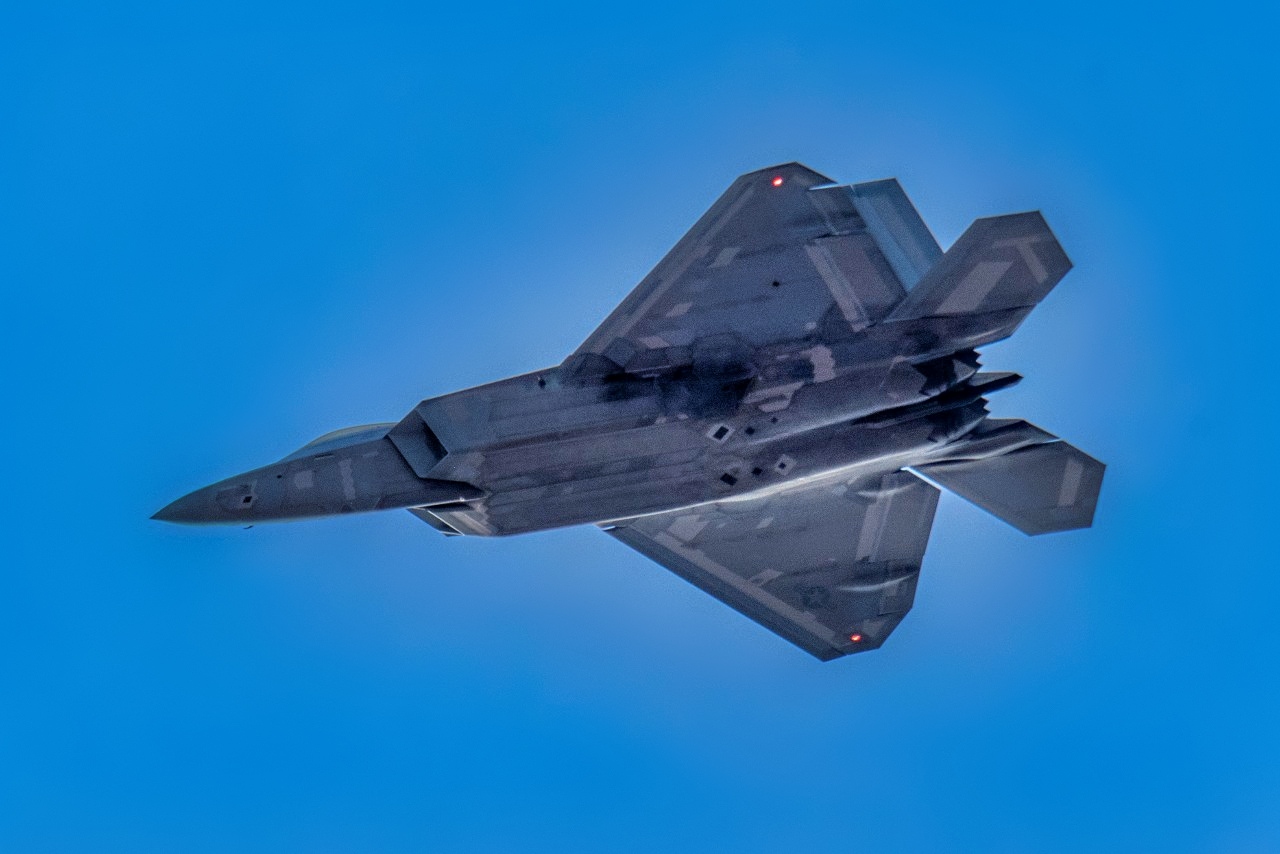
A U.S. Air Force F-22 Raptor assigned to the 3rd Wing conducts aerial practices at Joint Base Elmendorf-Richardson, Alaska, March 28. The F-22 is an American twin-engine, all-weather, supersonic stealth fighter aircraft and provides power projection across the Indo-Pacific region. (U.S. Air Force photo by Airman 1st Class Tala Hunt)
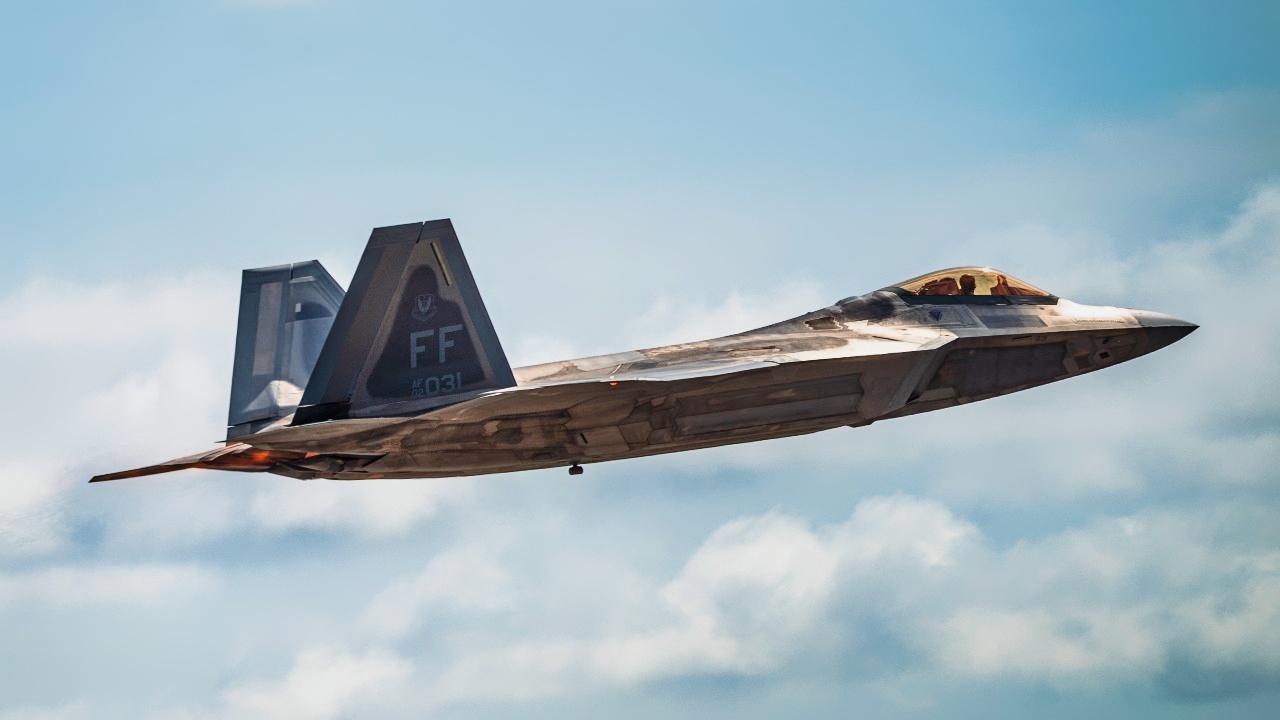
A U.S. Air Force F-22 Raptor assigned to the 71st Fighter Squadron, Joint Base Langley-Eustis, Virginia, takes off during Checkered Flag 25-2 at Tyndall Air Force Base, Florida, May 8, 2025. Air Combat Command’s Checkered Flag exercise simulates the full mobilization and deployment cycle, ensuring unit readiness for contingency operations. (U.S. Air Force photo by Airman 1st Class Zeeshan Naeem)
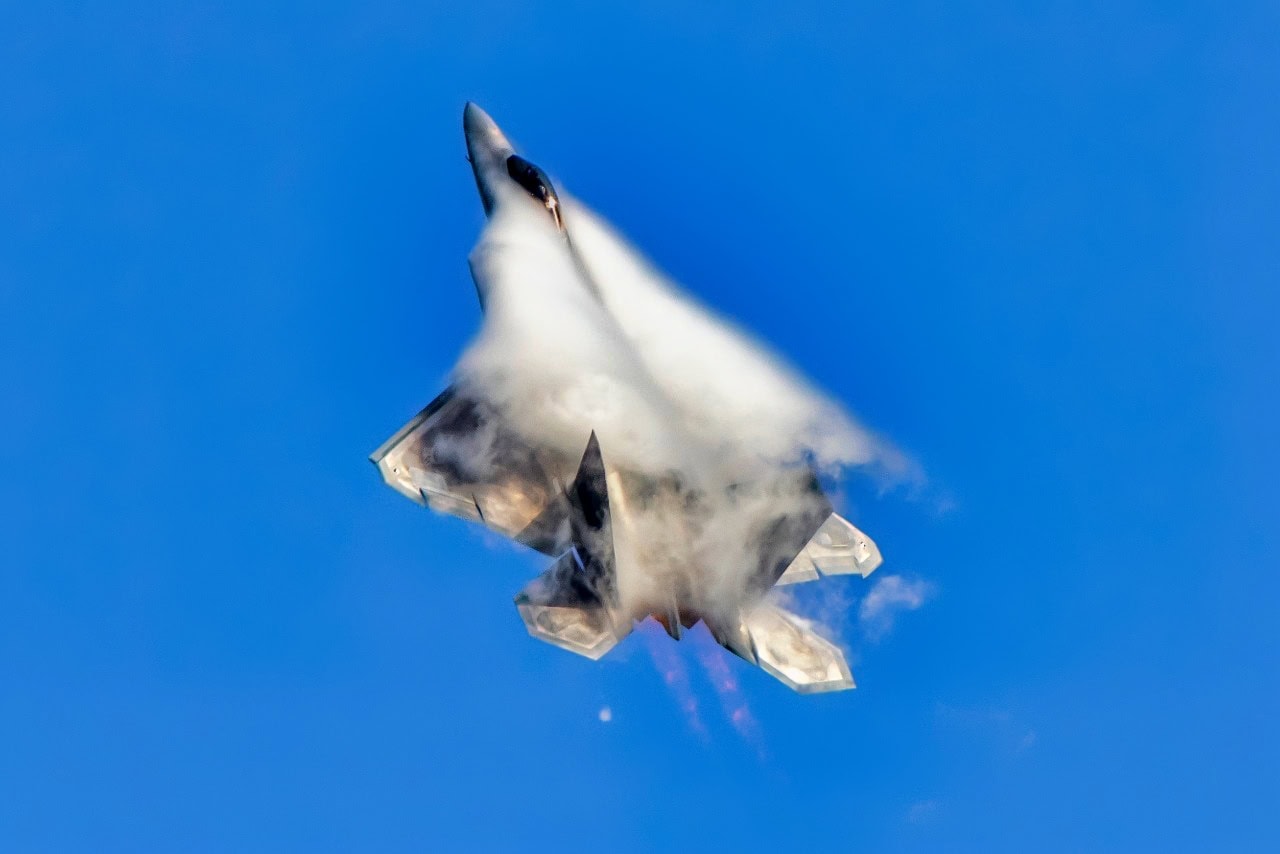
A U.S. Air Force F-22 Raptor performs a sharp aerial maneuver above the flight line during the 2024 Marine Corps Air Station Miramar Airshow in San Diego, Sept. 28, 2024. The F-22 Raptor Demonstration Team performs precision aerial maneuvers at airshows across the world to demonstrate the unique capabilities of the world’s premier 5th generation fighter aircraft. America’s Airshow 2024 is a unique and incredible opportunity to witness Marine and joint aviation capabilities, civilian performers, and the world-famous Blue Angels; to interact first-hand with Marines, other service members, and first responders; and to see first-hand the innovative spirit of the Marine Corps through emerging technologies and forward-thinking. (U.S. Marine Corps photo by Lance Cpl. Seferino Gamez)
F-22 to the 2060s
The US Air Force has for years intended to fly its F-22 Raptor well into the 2050s and even the 2060s through an ambitious, ongoing modernization program, an effort likely gaining even more traction now as the fate of the service’s 6th-gen stealth fighter comes into focus.
Proponents of the F-22 have for decades argued that indeed the Raptor is the best air-supremacy platform in the world due to its stealth, speed, aerial maneuverability, and weapons systems. Years ago, the potential superiority of the F-22 seemed to lodge itself in the minds of senior weapons developers for several key reasons. With round nozzles, the F-22 reportedly flies with the best “thrust-to-weight” ratio in the world at 1.37. This means it can vector, accelerate, and maneuver in the air like no other aircraft.
Does the F-22 Have a Rival?
The closest competitor in this area would appear to be Russia’s upgraded Su-27 called the Su-35, which has a “thrust-to-weight” ratio of 3.0. However, even the advanced Russian Su-35, which has been upgraded with 4th-gen “plus” technologies, is not as stealthy as an F-22.
At Mach 2.25, the F-22 appears tied with the very capable Su-35 for speed, yet differences in sensing and weapons capacity are hard to determine.
First Shot-First Kill
Regarded as the ultimate “first shot – first kill” weapons platform, the F-22 had its combat debut against ISIS in 2014 and has consistently been deployed worldwide as a forward-deployed, rapid-response attack platform.
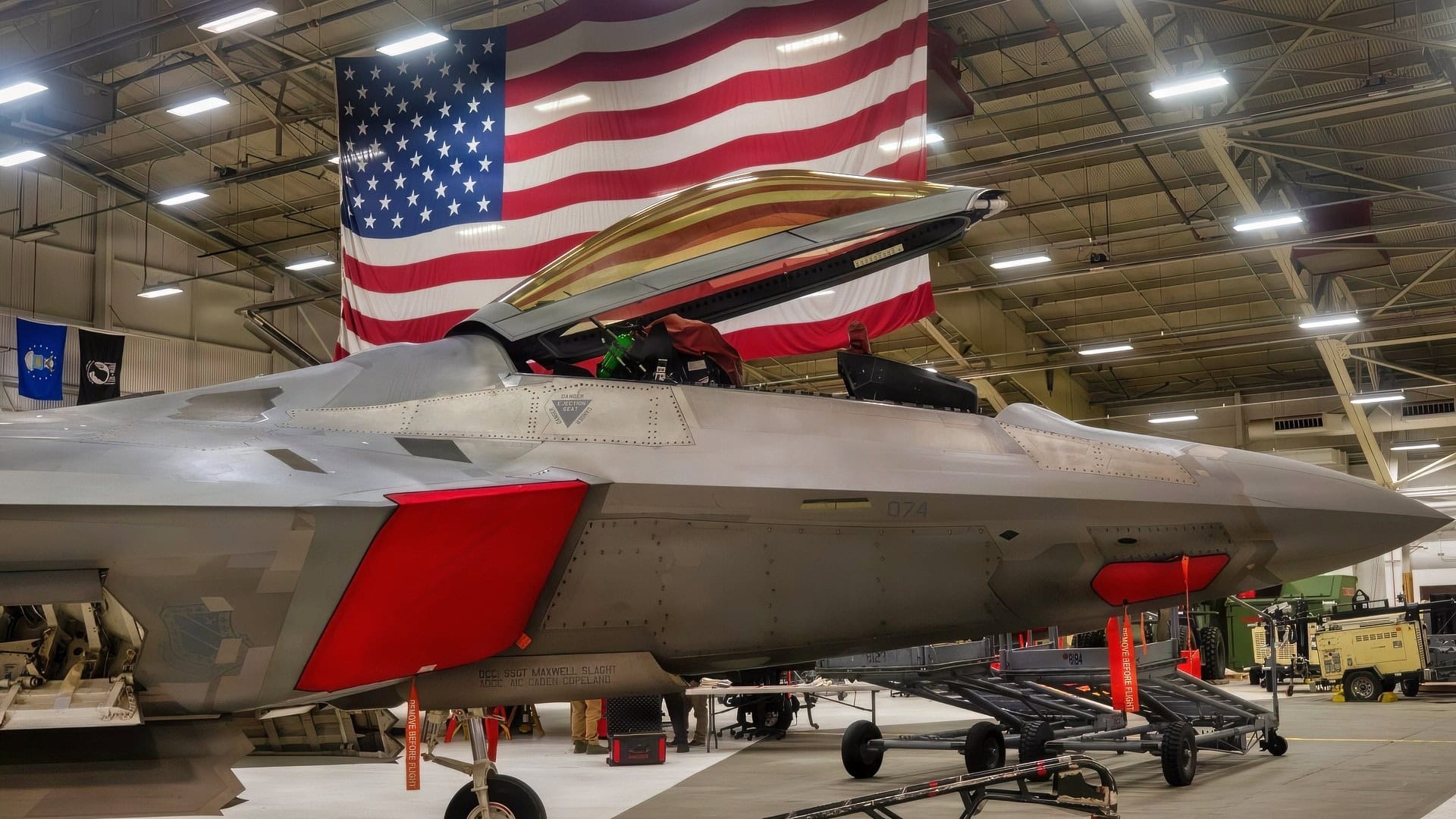
An F-22A Raptor sits in a hangar during a load competition on Joint Base Elmendorf-Richardson, Alaska, Jan. 23, 2026. Load competitions test Airmen’s ability to safely and efficiently build munitions, strengthening readiness for real-world taskings. (U.S. Air Force photo by Airman 1st Class Theodore Gowdy)
Years ago, the Air Force launched an intensive “Rapid Raptor” program, deploying F-22s, crews, and maintenance and sustainment support to strategically vital areas of the world, with the idea that F-22s could reach anywhere in the world within 24 hours in the event of a crisis.
F-22 Modernization
Part of why the F-22 is so valued is its success in large measure due to its long-standing, ambitious modernization program. The Air Force has worked with Lockheed repeatedly over the years to maintain, and even improve, the aircraft’s stealth coating, and has made numerous software, hardware, and weapons upgrades to the plane in recent decades.
One of the largest and most successful F-22 modernization efforts was a now-operational, fleet-wide software upgrade called 3.2b; this initiative improved the Raptor’s avionics, software, command and control, and weapons systems.
In particular, the 3.2b software upgrade greatly enhanced the lethality and combat capabilities of the air-launched AIM-9X and AIM-120D missiles. Range, guidance, and precision were all improved through this upgrade, and the weapons’ guidance system was “hardened” against enemy jamming.
This 3.2b upgrade became operational across the fleet many years ago, and in subsequent years, the Air Force and Lockheed have improved the F-22’s sensors, radar, antennas, and communications technologies. For example, the F-22 can not only exchange two-way information with 4th-generation aircraft but also securely exchange two-way data with F-35s. The F-22 has also received radar upgrades and a next-generation targeting technology called Infrared Search and Track (IRST), which helps sustain targeting in a higher-threat, EW environment.
There is a key lesson here that weapons developers definitely do understand about aircraft modernization, as evidenced by platforms such as the B-52 and F-16. Airframes can remain structurally sound, viable, and effective for decades after a platform is built, yet weapons, software, electronics, computing, propulsion and avionics upgrades can make an aerial weapons platform an almost entirely different aircraft than it was at its inception.
F-22 Networked with F-47 & F/A-XX
As fervor regarding the F-47 and soon-to-emerge F/A-XX surges throughout the military world, the F-22 Raptor is quietly thriving and improving beneath the threshold of visible enthusiasm for 6th-gen platforms.
Placing the Raptor in the Pacific suggests that the F-22 could indeed help network with arriving F-47s in the coming years, as 5th- and 6th-generation stealth aircraft will need to operate together. The existence of the F-22, its history, and perhaps of greatest importance, its modernization, represents a significant element of any US Air Force fighter fleet.
It is a major reason why it is a near certainty that the F-47 and F/A-XX will operate with new generations of networking transport-layer communications technology. The idea is to engineer data links, interfaces, and protocols sufficient to enable otherwise incompatible transport-layer technologies to share information in real time.
This suggests that the F-47 and F/A-XX will be engineered to share real-time information with the Air Force’s current fleet of 169 F-22s. This will be particularly true over the next several decades as the F-47s continue to arrive in impactful numbers and the F/A-XX arrives. The F-22 has been engineered in recent years to fly into the 2050s and beyond.
The ability for F-22s, F-35s, F-47s, and F/A-XXs to share real-time intelligence and targeting data would be extremely critical in a great war scenario in which the Air Force needed to deploy a large, wide formation of attacking stealth aircraft.
About the Author: Kris Osborn
Kris Osborn is the Military Technology Editor of 19FortyFive. Osborn is also President of Warrior Maven – Center for Military Modernization. Osborn previously served at the Pentagon as a highly qualified expert in the Office of the Assistant Secretary of the Army—Acquisition, Logistics & Technology. Osborn has also worked as an anchor and on-air military specialist at national TV networks. He has appeared as a guest military expert on Fox News, MSNBC, The Military Channel, and The History Channel. He also has a Master’s Degree in Comparative Literature from Columbia University.