
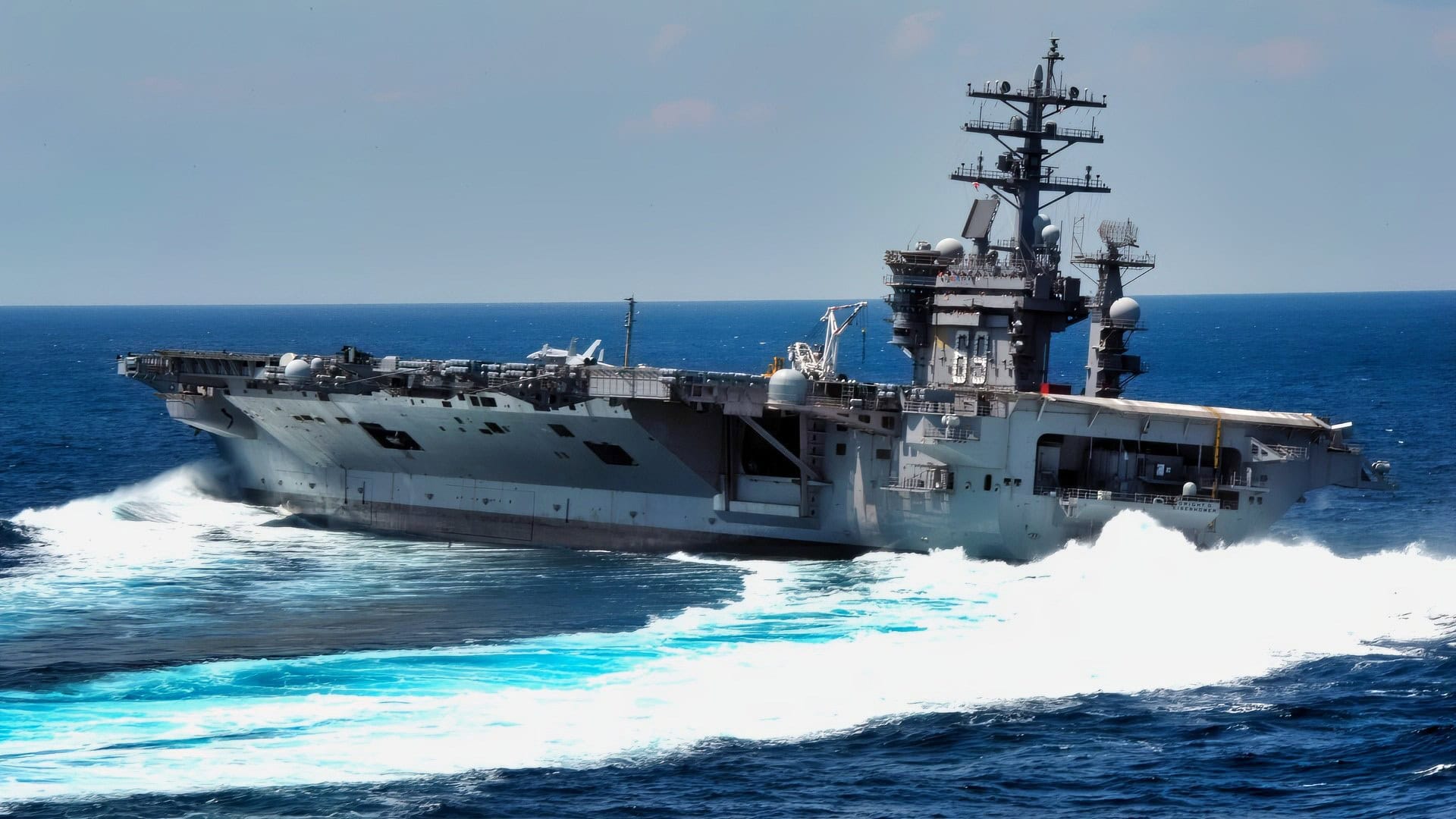
The U.S. Navy destroyer USS Higgins suffered an electrical fire in the Indo-Pacific that knocked out power and propulsion for several hours, leaving the 300-person crew “helpless, electronically blind and immobile” according to a former U.S. Navy captain. It’s the fourth significant Navy ship fire in just over a month—including blazes aboard the USS Zumwalt, USS Eisenhower, and the record-deployed USS Gerald R. Ford carrier.
The U.S. Navy’s Fire Problem Keeps Getting Worse
The USS Higgins, a U.S. Navy warship, caught fire on Tuesday, and it “knocked out electricity and propulsion on the destroyer,” CBS News reported, citing U.S. officials. The destroyer is in Asia, somewhere in the U.S. Indo-Pacific Command (INDOPACOM).
However, whether what took place counts as a “fire” seems to be a matter of dispute.
The fire itself, CBS reported, was “contained to one piece of equipment, and the flames didn’t spread,” although it did knock out electricity for an extended period.
“An electrical fire occurred aboard the USS Higgins while at sea in the Indo-Pacific,” a Pentagon official said in a statement. “The fire was immediately extinguished by the crew, and there are no reported injuries. The situation is under control, and the ship is currently underway. The cause is under investigation.”
The fire was characterized as an “electrical casualty.”
According to a CNN story, published on Friday, the lack of electricity and propulsion would have left the crew of about 300 “helpless, electronically blind and immobile,” said Carl Schuster, a former US Navy captain, told CNN. However, power was eventually restored.
The CNN story quoted Matthew Comer, a spokesperson for the US 7th Fleet, as stating that “initial reports indicate an electrical malfunction, which may have produced sparking or smoke that ceased once power was removed.” The outage lasted “several hours,” CNN said.
As Stars and Stripes noted, Comer did not use the word “fire” in his explanation of the incident.
The cause of what happened remains under investigation.
Another Fire
Just over a week earlier, three sailors had been injured in a fire aboard the USS Zumwalt, which was at HII Ingalls Shipbuilding in Mississippi. The ship has been there for a “modernization period” since August 2023.
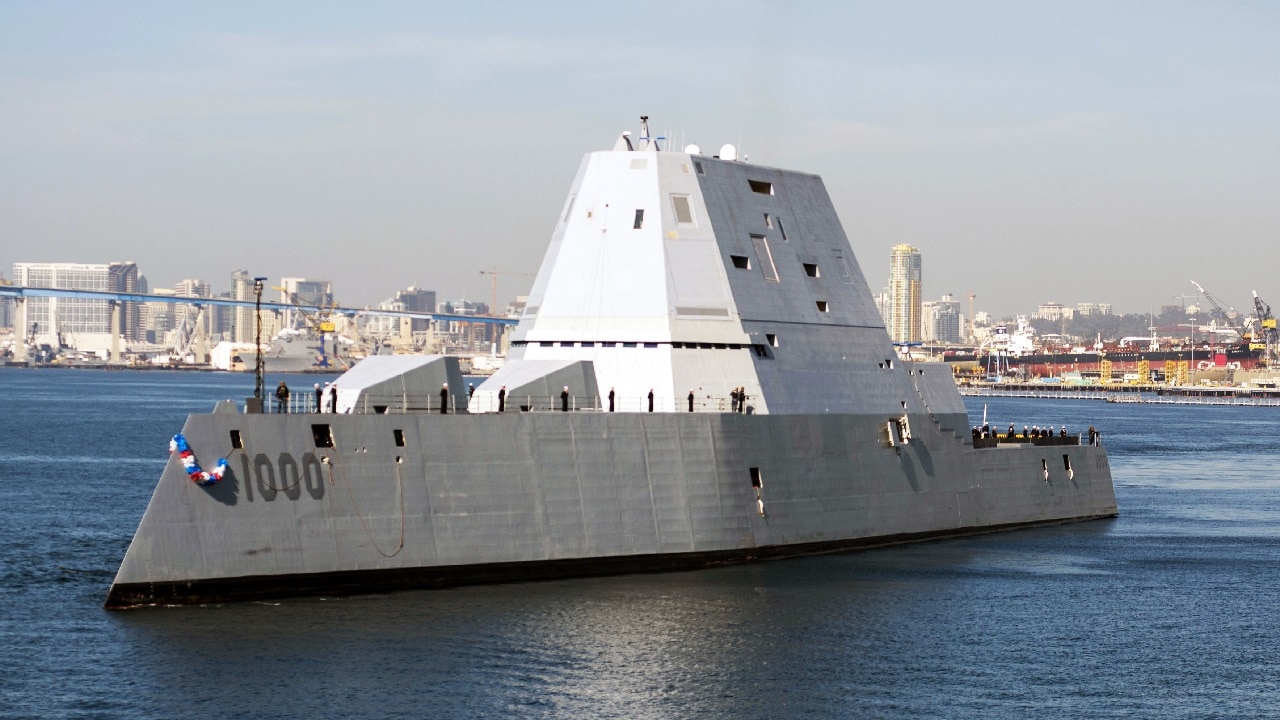
SAN DIEGO (Dec. 8, 2016) The guided-missile destroyer USS Zumwalt (DDG 1000) arrives at its new homeport in San Diego. Zumwalt, the Navy’s most technologically advanced surface ship, will now begin installation of combat systems, testing and evaluation and operation integration with the fleet. (U.S. Navy photo by Petty Officer 3rd Class Emiline L. M. Senn/Released)
“The Navy is investigating the cause of the fire and determining the extent of the damage onboard,” a Naval Surface Force spokesperson told USNI News in a story published on April 22, three days after the fire.
“At approximately 9:45 p.m. PST, Sunday, April 19, 2026, a fire was reported aboard Zumwalt-class guided-missile destroyer USS Zumwalt (DDG 1000) pierside at Pascagoula, Mississippi,” the Surface Force’s full statement said.
“The crew responded immediately and extinguished the fire. Three Sailors received treatment for injuries sustained in the incident and are in stable condition. One was transported to a local hospital, and the two other Sailors received first-aid at the scene. The Navy is investigating the cause of the fire and determining the extent of the damage onboard.”
Eisenhower, Too
Also in April, there was another ship fire, also at a shipyard. This time, it was the USS Dwight D. Eisenhower, which suffered a small fire at the Norfolk Naval Shipyard in Portsmouth, Va. A Navy spokesperson said in a statement to USNI News that three crew members were injured, but that the fire was quickly “contained and extinguished.”
The Dwight D. Eisenhower has been moored in Virginia since January of 2025. It’s unclear whether the fire will delay completion of the maintenance.
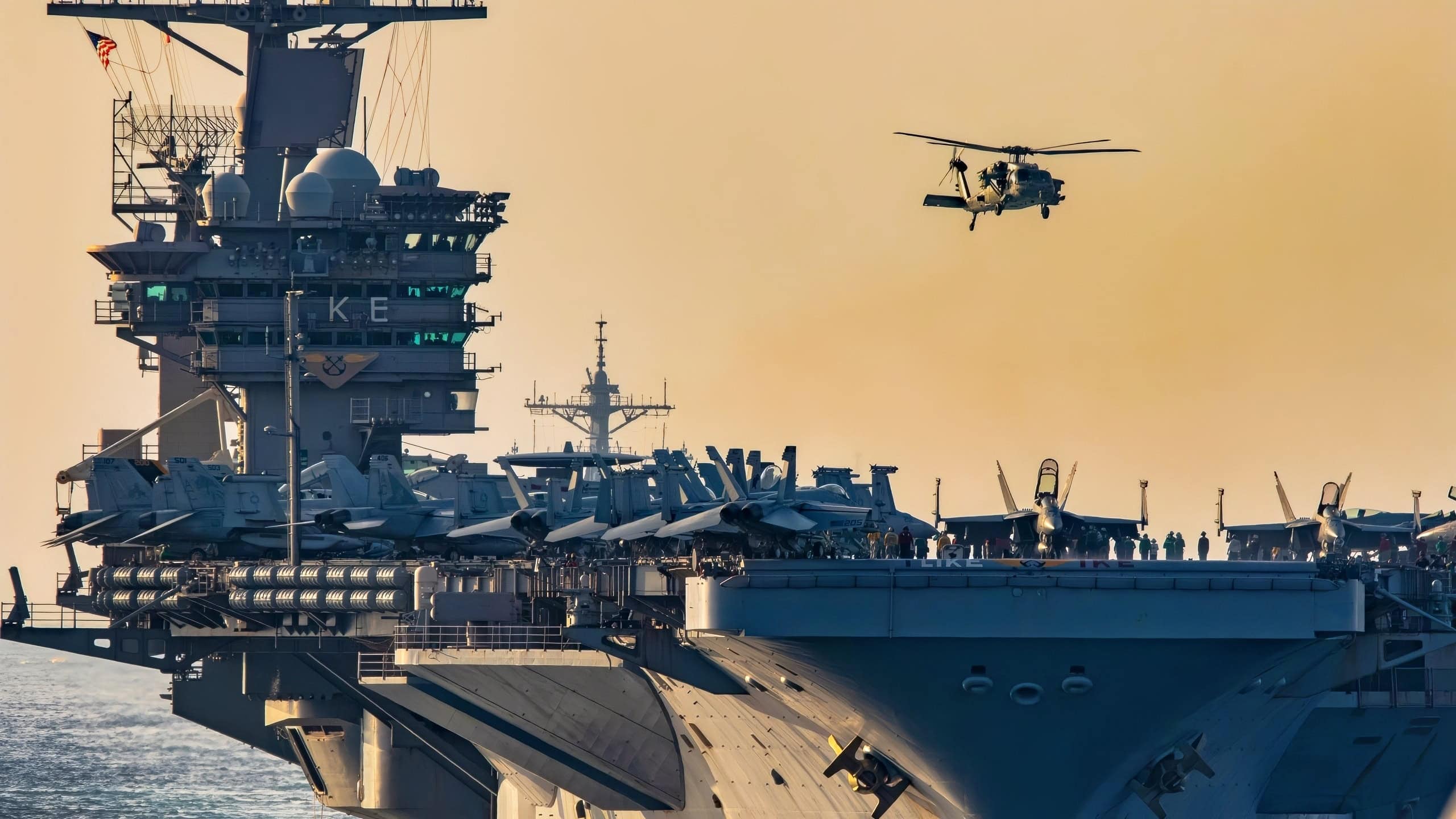
Components of the Dwight D. Eisenhower Carrier Strike Group (IKECSG), guided-missile destroyer USS Stethem (DDG 63) and French Navy frigate FS Languedoc (D 653) transited the Strait of Hormuz. IKECSG is deployed to the U.S. 5th Fleet area of operations to help ensure maritime security and stability in the Middle East Region. (U.S. Navy photo by Electronics Technician 2nd Class Daniel Goodin)
“On April 14, USS Dwight D. Eisenhower experienced a small fire that was immediately contained and extinguished by ship’s force and Norfolk Navy Shipyard personnel, who responded swiftly as trained. Three Sailors were treated by ship’s medical and returned to full duty,” the statement said.
But the most prominent fire to strike the Navy this year was the one that affected the USS Gerald R. Ford, in the Middle East, during its record-long deployment. The Gerald R. Ford is both the Navy’s newest and largest aircraft carrier.
The Ford Aircraft Carrier Fire
That happened in March when, per a statement from the Navy, the Ford “experienced a fire that originated in the ship’s main laundry spaces. The cause of the fire was not combat-related and is contained. There is no damage to the ship’s propulsion plant, and the aircraft carrier remains fully operational.” Two sailors received medical treatment.
The ship was in the Red Sea at the time of the fire, after it traveled from the Caribbean — when it participated in the operation to capture Nicolas Maduro in January — to the Middle East.
The Gerald R. Ford was then sent to Crete for repairs, but on April 2, USNI News reported that it had returned to the Middle East and was once again operating in Central Command.
The following month, CNN reported that as a result of the fire, the carrier “was only able to fly sorties two days after a March 12 laundry fire was extinguished,” which CNN characterized as “the first indication that the blaze hindered combat operations against Iran.”
Rumors had been raised that the fire on the Gerald R. Ford was the result of sabotage, but it doesn’t appear that those suspicions have been in any way substantiated.
Coming Home at Last
Finally, on April 29, the Washington Post reported that the Gerald R. Ford, after 10 months at sea, was finally coming home to Virginia, bringing that record-long deployment to an end.
“The aircraft carrier USS Gerald R. Ford will depart the Middle East and begin the sail for home in coming days, multiple U.S. officials said, an expected relief for roughly 4,500 sailors who have been deployed for 10 months — but a loss of significant firepower as peace talks between the United States and Iran stagnate,” The Post reported.
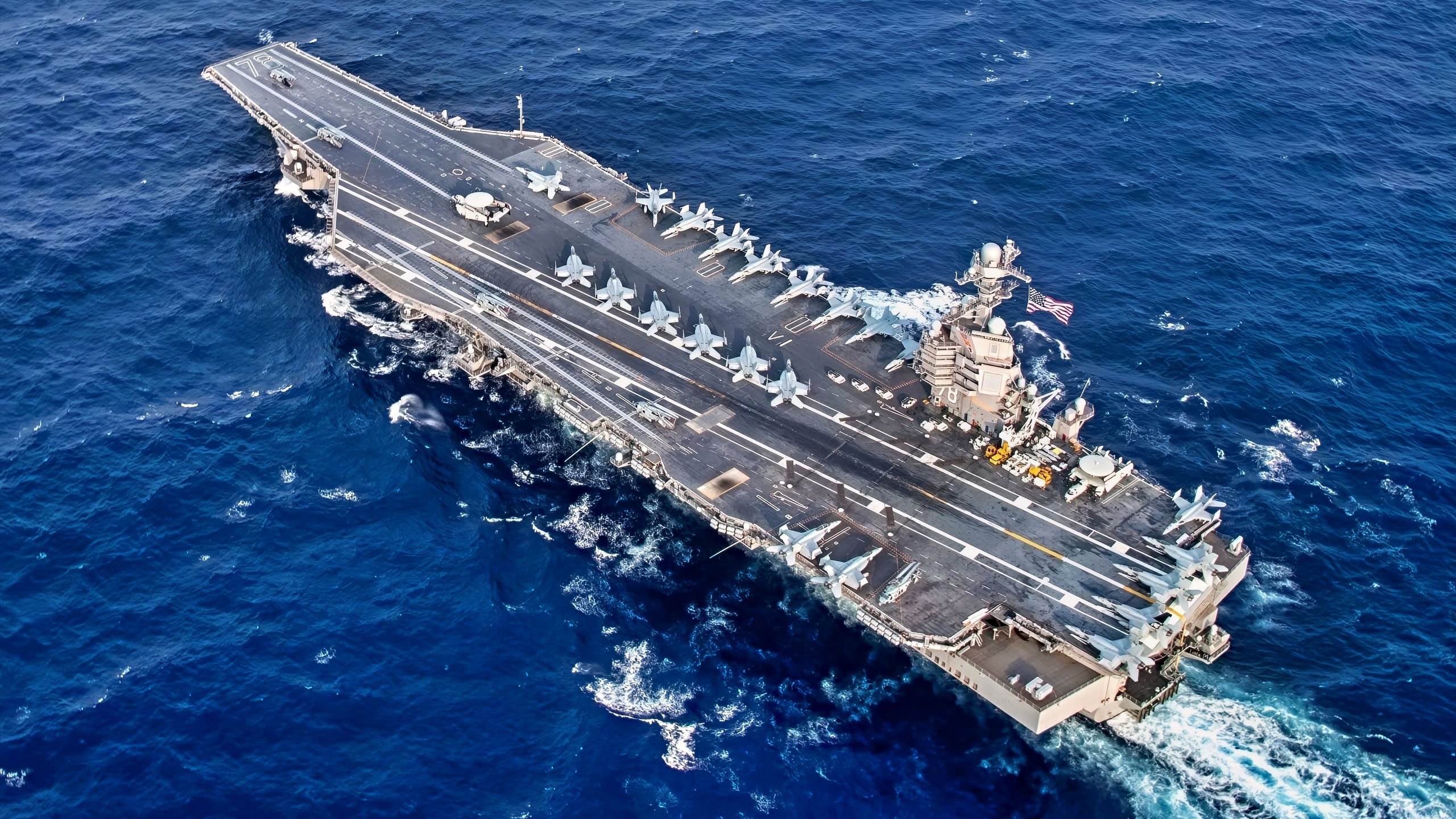
The Ford-class aircraft carrier USS Gerald R. Ford (CVN 78) and the Nimitz-class aircraft carrier USS Harry S. Truman (CVN 75) transit the Atlantic Ocean June 4, 2020, marking the first time a Ford-class and a Nimitz-class aircraft carrier operated together underway. Ford is underway conducting integrated air wing operations, and the Harry S. Truman Carrier Strike Group remains at sea in the Atlantic as a certified carrier strike group force ready for tasking in order to protect the crew from the risks posed by COVID-19, following their successful deployment to the U.S. 5th and 6th Fleet areas of operation. (U.S. Navy photo by Mass Communication Specialist Seaman Riley McDowell)
The carrier is expected to return to Virginia in mid-May.
Two other carrier groups, the USS George H.W. Bush and the USS Abraham Lincoln, remain in the region, with the military campaign still in limbo.
The ship’s long deployment was raised earlier this week during Secretary of Defense Pete Hegseth’s testimony before a Congressional committee.
“I worry about the USS Ford,” Rep. Gil Cisneros (D-CA) said during the secretary’s testimony. “What trade-offs are we making?”
“A tough decision-making process led to the extension,” Hegseth replied, “in consultation with the Navy,” as reported by the Post.
About the Author: Stephen Silver
Stephen Silver is an award-winning journalist, essayist, and film critic, and contributor to the Philadelphia Inquirer, the Jewish Telegraphic Agency, Broad Street Review, and Splice Today. The co-founder of the Philadelphia Film Critics Circle, Stephen lives in suburban Philadelphia with his wife and two sons. For over a decade, Stephen has authored thousands of articles that focus on politics, national security, technology, and the economy. Follow him on X (formerly Twitter) at @StephenSilver, and subscribe to his Substack newsletter.