
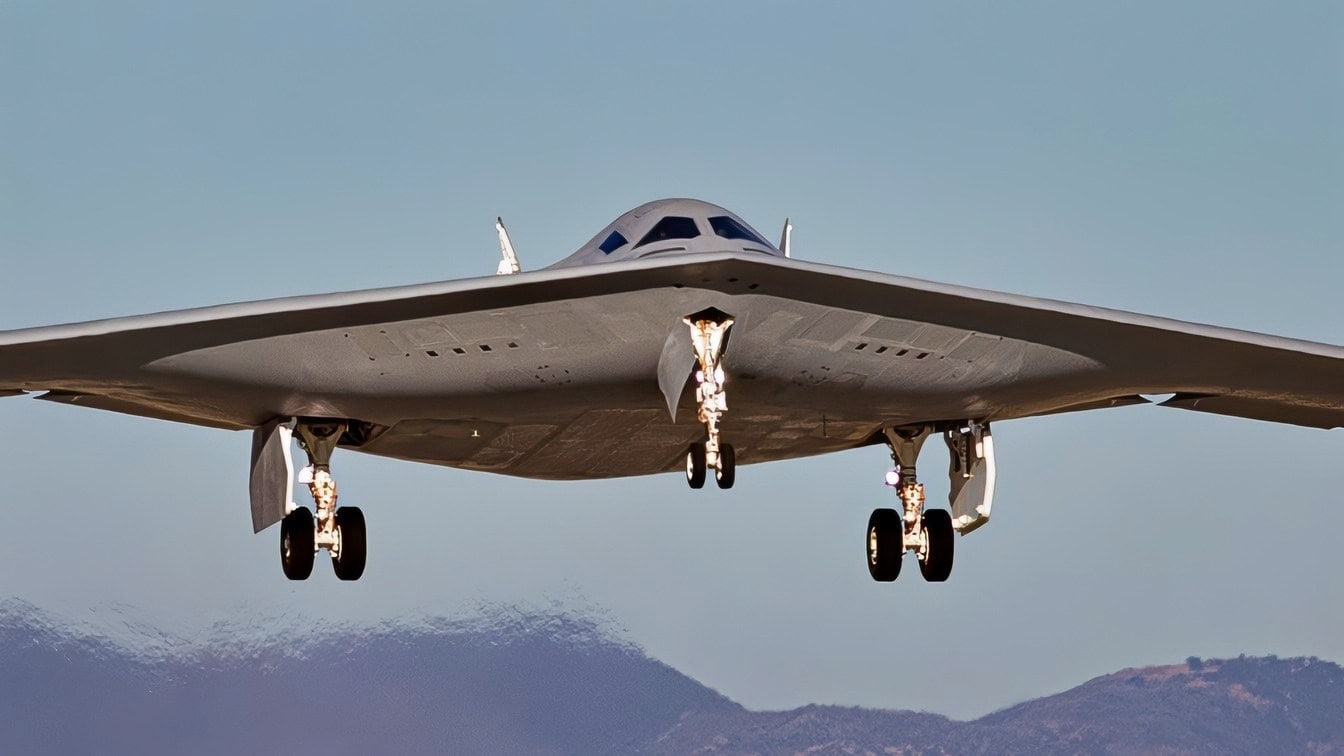
Summary and Key Points: Steve Balestrieri, a national security columnist and former U.S. Army Special Forces officer, evaluates the “stealth bomber deficit” exposed by recent campaigns in Iran and why the B-21 Raider is now vital to the U.S. Air Force.
-While the B-2 Spirit successfully utilized the GBU-57 MOP to neutralize hardened targets, Balestrieri argues that a 19-unit fleet cannot sustain a high-intensity war against China or Russia.
-This 19FortyFive report analyzes the transition to the B-21 Raider, exploring the Mitchell Institute’s recommendation for a 225-unit fleet.
-Balestrieri concludes that the B-21’s open-systems architecture and “extremely low” observability are essential for penetrating China’s A2/AD bubble before 2027.
Beyond 100 Raiders: The Strategic Case for a 225-Unit B-21 Fleet to Deter China and Russia
With the events of last June and the ongoing bombing campaign that the United States is conducting against Iran, the B-2 Spirit stealth bomber has more than proved its worth again.
In those two separate bombing campaigns, the B-2 Spirit flew to Iran from its home base in Missouri; the aircraft has a 7,000-mile range before needing to refuel.
The B-2 Spirit Has Unique Capabilities
The B-2 Spirit is powered by four General Electric F118-GE-100 engines, each with over 17,000 pounds of thrust. Its ceiling is 50,000 feet, and it can carry conventional or nuclear weapons.
In the June campaign against Iran’s nuclear weapons enrichment facilities, one of the weapons carried by the B-2 Spirit stealth bomber is the GBU-57A/B Massive Ordinance Penetrator, a 30,000-pound bunker-buster weapon.
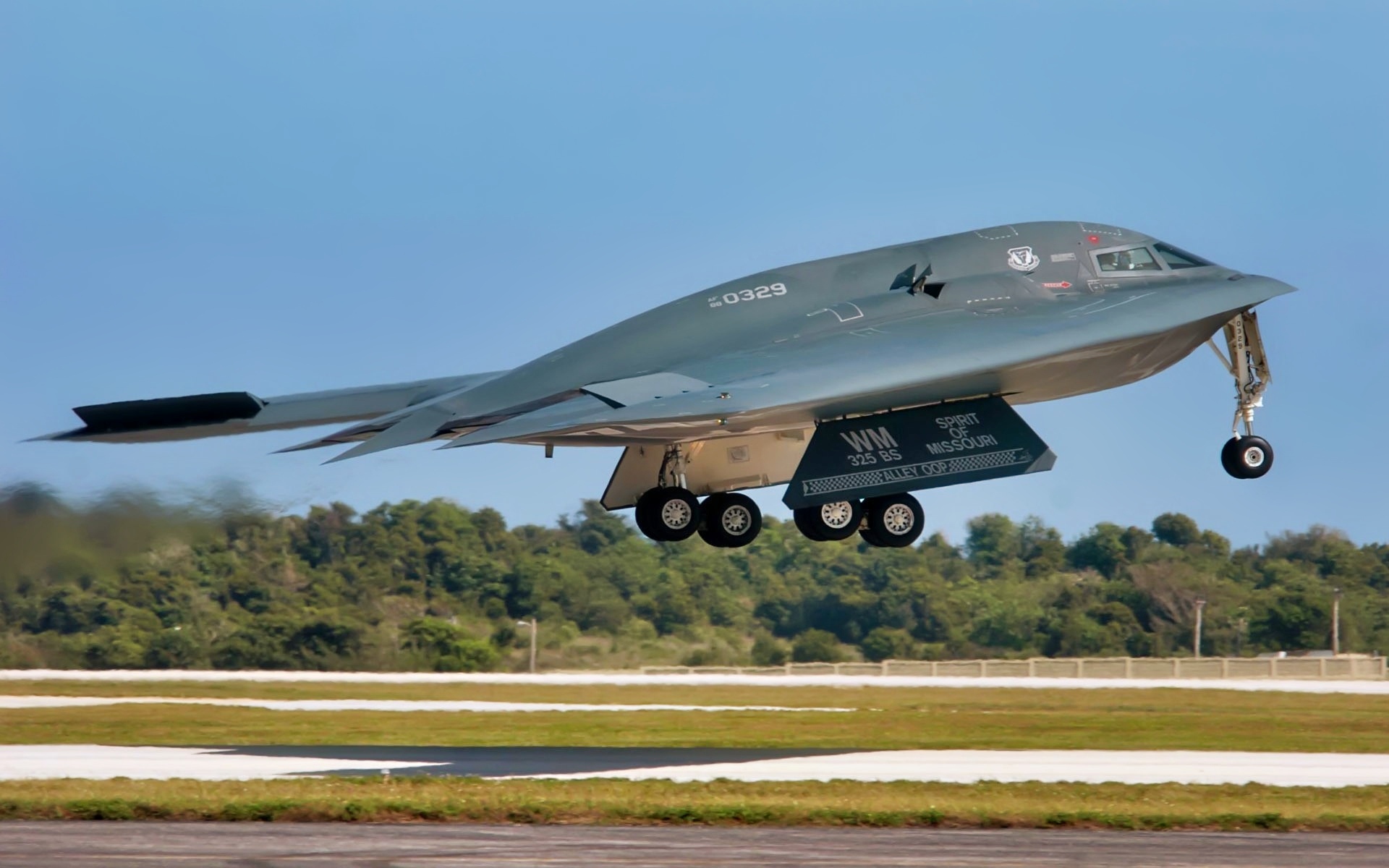
B-2 Bomber. Image Credit: Creative Commons.
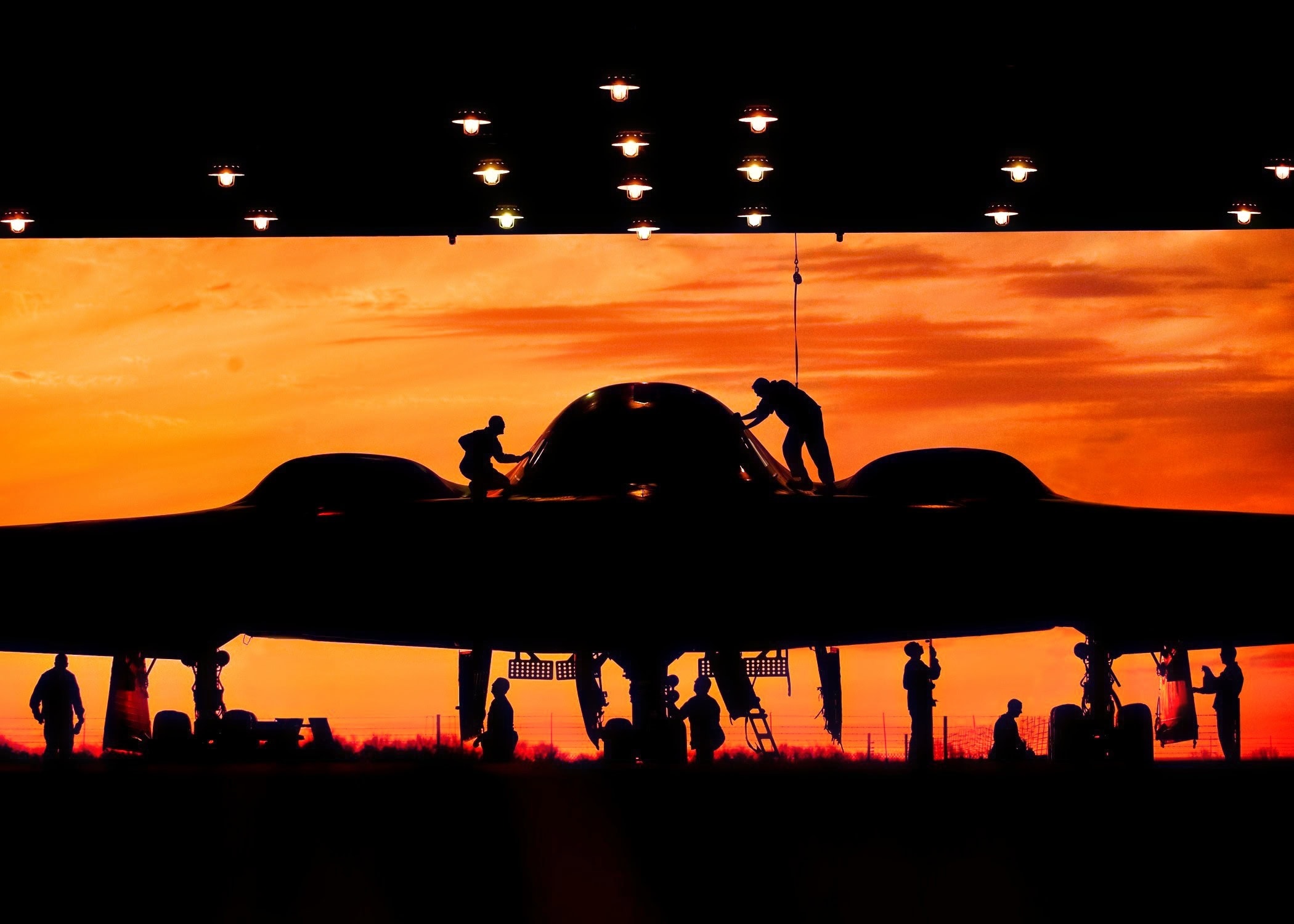
B-2 Spirit Bomber. Image Credit: Creative Commons.
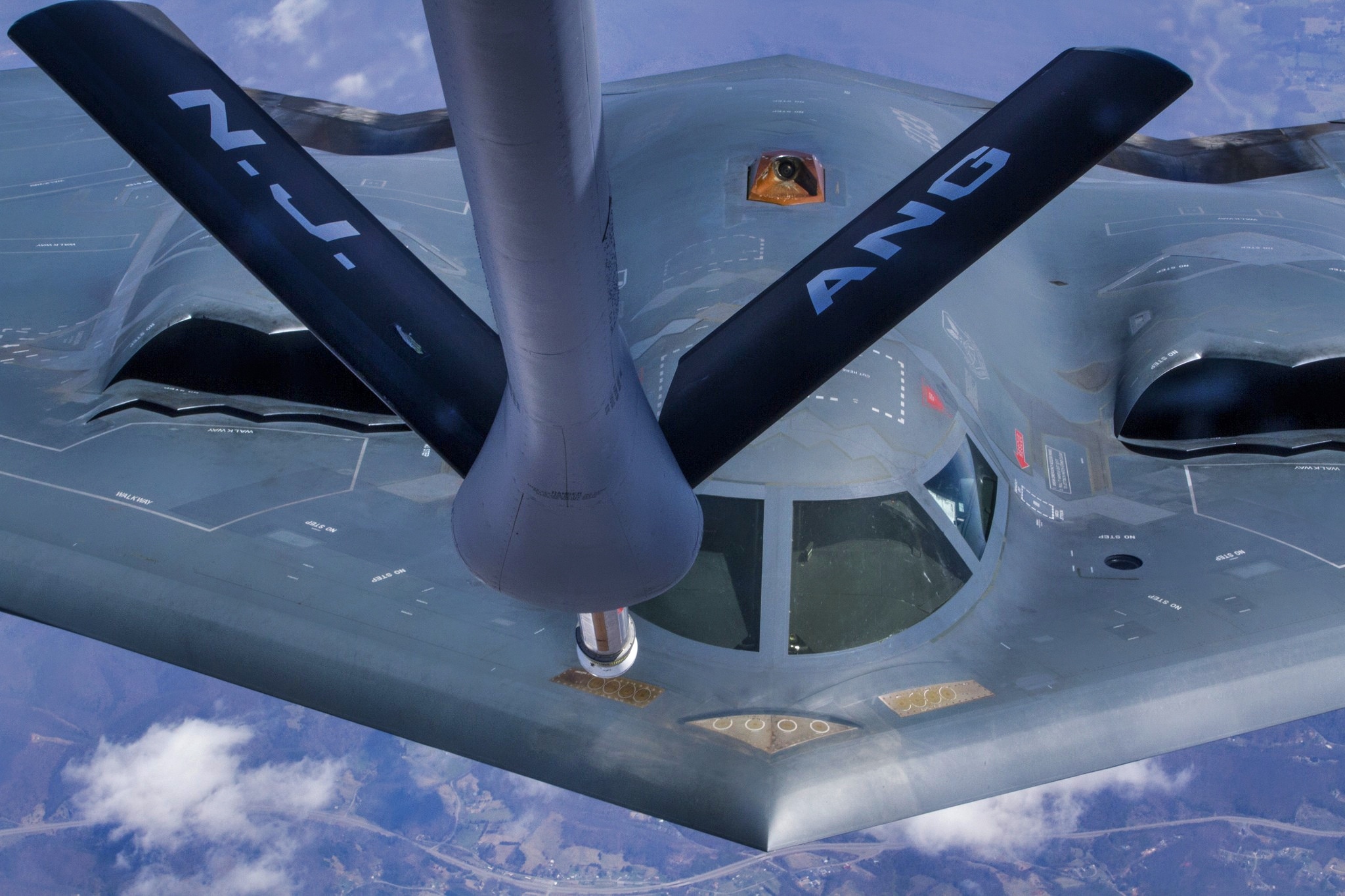
B-2 Spirit Stealth Bomber. Image Credit: Creative Commons.
That weapon’s unique capabilities significantly enhanced the effectiveness of an American strike against Iran’s nuclear facilities, and each B-2 bomber can carry two of the bunker-buster bombs. And its stealth allowed it to penetrate Iranian airspace undetected.
The Air Force Needs More Than 19 B-2 Spirit Stealth Bombers
The US Air Force currently has only 19 B-2 stealth bombers, a number it likely regrets, as the short-sightedness of high-ranking service and government officials has left the Air Force with a bomber deficit.
Initially, the plan was to build 132 B-2s; that number was later reduced to 75, and after the end of the Cold War, to 21. Since then, the number has been reduced further, with two aircraft lost in accidents.
With belligerent actions by China, Russia, and now with the bombing campaign of Iran, the demand for the B-2 is going up.
Not Enough B-2s For a War With China, or Even Russia
The B-2 is still one of, if not the, stealthiest bombers in the world (not counting the B-21 Raider, its replacement). However, the Air Force only has 19, which isn’t nearly enough, especially if the US is going to war with China.
This reduction, stemming from budget cuts and the end of the Cold War, leaves the Air Force with fewer stealth bombers than initially envisioned, which affects its ability to conduct large-scale, long-range strikes against potential adversaries such as China and Russia.
A significant air attack campaign against an advanced near-peer adversary would require a large number of attacking bombers spread across a wide combat envelope to achieve the desired effect. Russia and China are vast countries with extensive air defenses dispersed across their territories, protecting vital assets.
An initial high-altitude bombing strike would need to cover a wide area to disable a dispersed yet increasingly interconnected network of air defenses, thereby ensuring the establishment of air superiority.
And with just a handful of B-2 bombers, that isn’t nearly enough to conduct a dedicated air campaign where the air superiority the US currently enjoys over Iran will not be as easy against China or Russia.
The B-21 Raider Is The Future, But 100 Isn’t Going To Be Enough
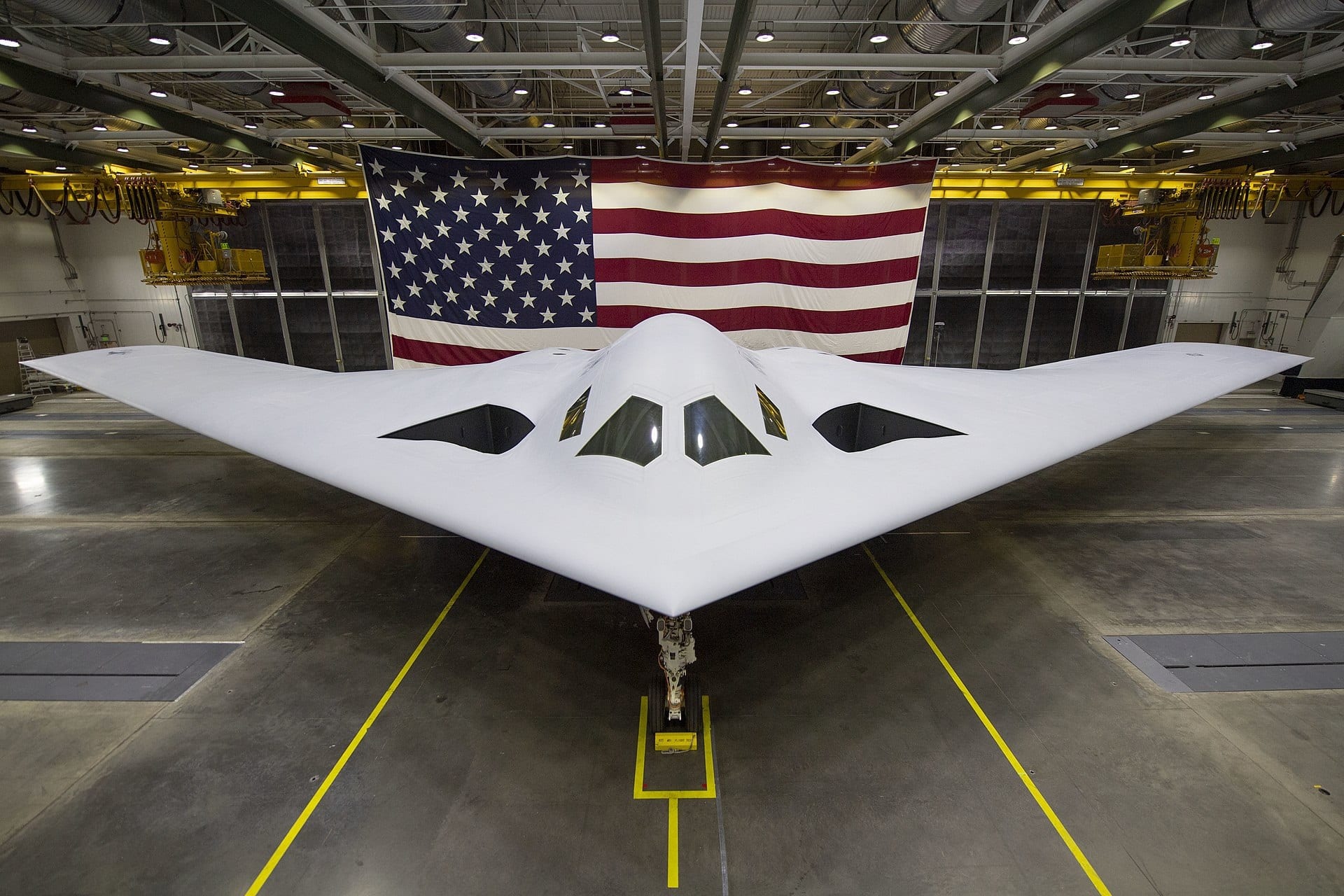
The B-21 Raider was unveiled to the public at a ceremony December 2, 2022 in..Palmdale, Calif. Designed to operate in tomorrow’s high-end threat environment, the B-21 will play a critical role in ensuring America’s enduring airpower capability. (U.S. Air Force photo)
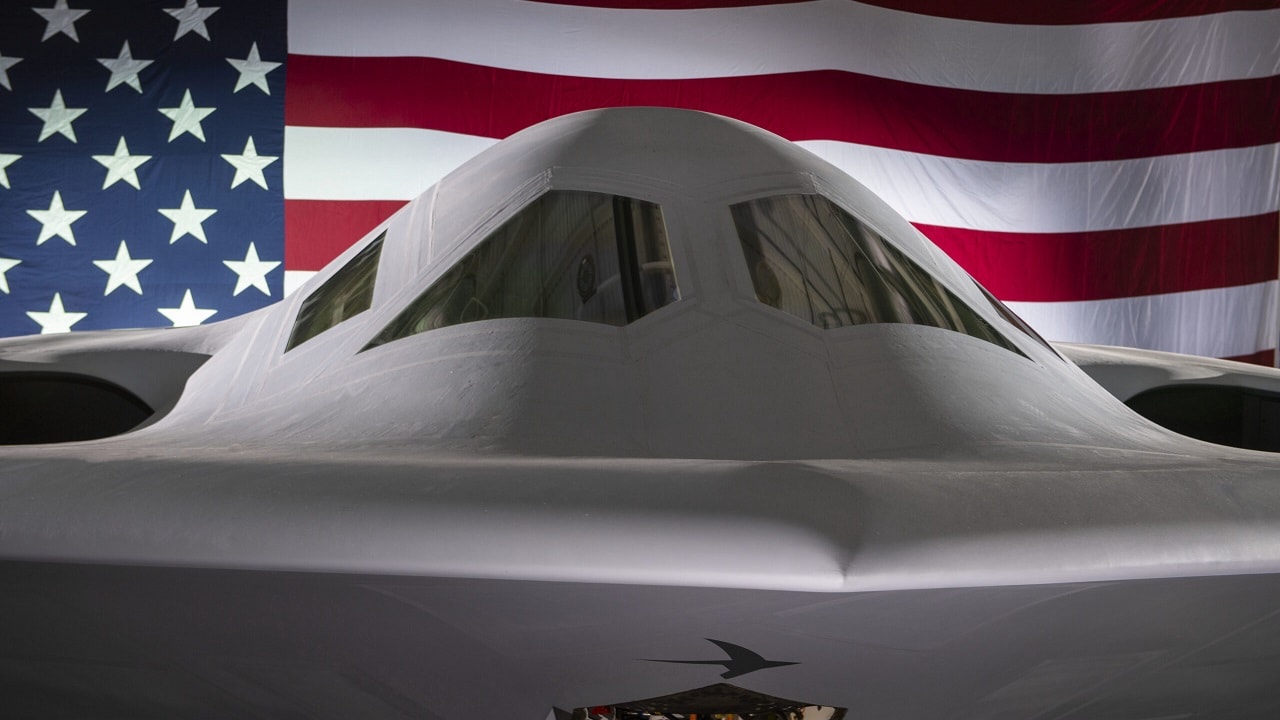
The B-21 Raider was unveiled to the public at a ceremony on December 2, 2022, in Palmdale, Calif. Designed to operate in tomorrow’s high-end threat environment, the B-21 will play a critical role in ensuring America’s enduring airpower capability. (U.S. Air Force photo)
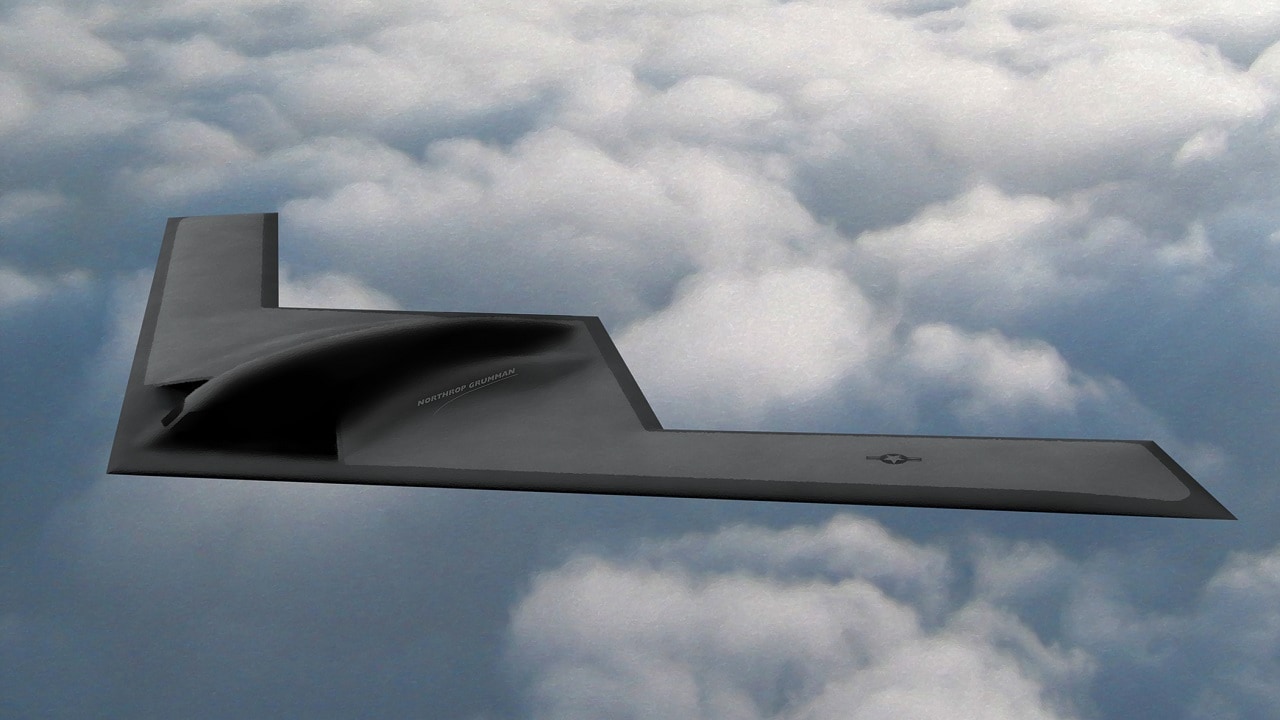
B-21 Raider bomber. Image Credit: Creative Commons.
The Northrop Grumman B-21 Raider, the next-generation stealth bomber, is set to replace the aging B-2 Spirit and B-1 Lancers as the backbone of the US Air Force’s strategic bomber fleet.
It is expected that, although China and Russia pursue advanced bomber designs of their own, the B-21 Raider’s technology will keep it a step ahead of its opponents for the next generation of air warfare.
However, the issue facing the Air Force isn’t the bomber itself, but the number of B-21s the US plans to purchase. Currently, the official US policy is to buy just 100 Raiders.
This is not sufficient to win a protracted war with China or Russia in the near future. The United States may need up to 200 to 250 B-21s.
War Is Coming, And It Could Be Over Taiwan And Oil
The Chinese Communist Government told its soldiers to be ready for war by 2027, and that comment may not be mere saber-rattling. They’ve made their intentions clear on Taiwan and their designs on the South China Sea, where they claim nearly all of it.
Not only that, but look towards the oil factor. China has now lost two of its main oil suppliers, Venezuela and Iran. While that is good for the short term, choking the Chinese oil supplies too far would no doubt push it towards war. Look no further than what happened 85 years ago, when the US cut Japan’s oil flow off, and the Japanese responded with war operations to get it.
China has been aggressively stockpiling oil reserves and has about a 6-12 month supply of heavily discounted crude oil. If its supply is threatened, then kinetic military action to get oil could easily follow.
The unfortunate truth is that if war breaks out between the US and China, it wouldn’t be shocking if the Russians joined in, too. Russia and China have long tried to weaken the US on the world stage.
However, Russia is in no shape to engage the US in a conventional conflict. Their failures in Ukraine have been costly in terms of personnel, arms, and equipment, and they are well-documented.
But Russia will no doubt attempt to exploit a war between China and the US to reacquire some of the Baltic states that were once part of the Soviet Union.
China has been on a major rebuilding swing for decades of its armed forces, and it may feel that a stretched-thin US won’t be able to stop its Navy from owning the seas in the Indo-Pacific.
Even 100 B-21 stealth bombers won’t be enough if this scenario unfolds.
The US Is Rethinking Its Acquisition of 100 B-21s
The Center for Strategic and Budgetary Assessments recommends 288 B-21s, suggesting a significantly larger fleet is necessary.
A larger fleet would provide a credible deterrent, enable suppression of advanced air defenses, support continuous operations, and hedge against potential attrition.
Northrop Grumman CEO Kathy Warden recently stated she believed that the possibility of expanded orders was “exactly what the Air Force is looking at,” with the former Secretary of the Air Force Frank Kendall having “been open about looking at the various options they have for increasing their force size, and has talked specifically about NGAD, and we know that B-21 is in the mix, as well.”
The future of America’s NGAD (Next Generation Air Dominance) sixth-generation fighter program is highly uncertain due to its tremendous projected costs. Analysts have repeatedly raised the possibility that funds saved from the program could enable more significant B-21 acquisitions if the Air Force pauses the NGAD project.
Thus, the B-21 is set to be the first intercontinental-range stealth bomber widely fielded. Its development comes as China is developing its own comparable aircraft under the H-20 program.
Would 200 B-21s Even Be Enough?
The Mitchell Institute for Aerospace Studies think tank has published a paper strongly advising the U.S. Air Force not to cut costs at the expense of quantity on its B-21 stealth bomber program.
The report, authored by former U.S. bomber pilot Mark Gunzinger, stressed that the U.S. would need to neutralize a large number of targets deep within Chinese and Russian airspace in the event of war.
He claimed that the bomber would be the most reliable means to do so and would be more cost-effective and dependable than relying on standoff cruise-missile strikes. Gunzinger believes the Air Force needs at least 225 B-21 Raiders to take on China and Russia in a potential conflict.
Maintaining The US’ Nuclear Triad
Maintaining the nuclear triad is as crucial as ever, and the Air Force can deliver on these needs with the 225 B-21s, he said in his report detailing the Chinese threat.
“The Air Force’s penetrating bombers exist to provide weapons and sensor density at range that enable theater commanders to achieve a wide spectrum of effects against the most difficult target sets.
“More Air Force long-range, penetrating strike capacity is now required to defeat Chinese aggression in the Indo-Pacific and meet other force sizing requirements. To a significant extent, the need for more long-range penetrating strike capacity is driven by theater commander requirements to counter China’s operational advantages in a conflict that occurs along its periphery,” he wrote.
The B-21, Smaller, More Flexible, Survivable
The B-21’s compact design will enable it to penetrate China’s area-denial strategy, known as Anti-Access/Area Denial (A2/AD) defenses, more effectively, ensuring it can deliver precision strikes or gather intelligence in high-threat environments where the larger B-2 might face greater risk.
The B-21’s smaller size also translates into greater operational flexibility. The B-2 Spirit, with its massive wingspan and heavy payload capacity, was designed for long-range, high-payload missions, often carrying large nuclear or conventional munitions over intercontinental distances.
The B-21 Raider also provides a generational leap in stealth over the B-2 Spirit, advancing from “very low” to “extremely low” observability across the entire electromagnetic spectrum.
Key upgrades include more durable, next-generation radar-absorbent materials (RAM), optimized 360-degree stealth shaping, and superior infrared heat management.
One potential force multiplier is that the B-21 could play a key role in multi-domain operations, integrating with space, cyber, and ground-based assets to provide a comprehensive, coordinated response to threats, including the CCA “loyal wingman” program.
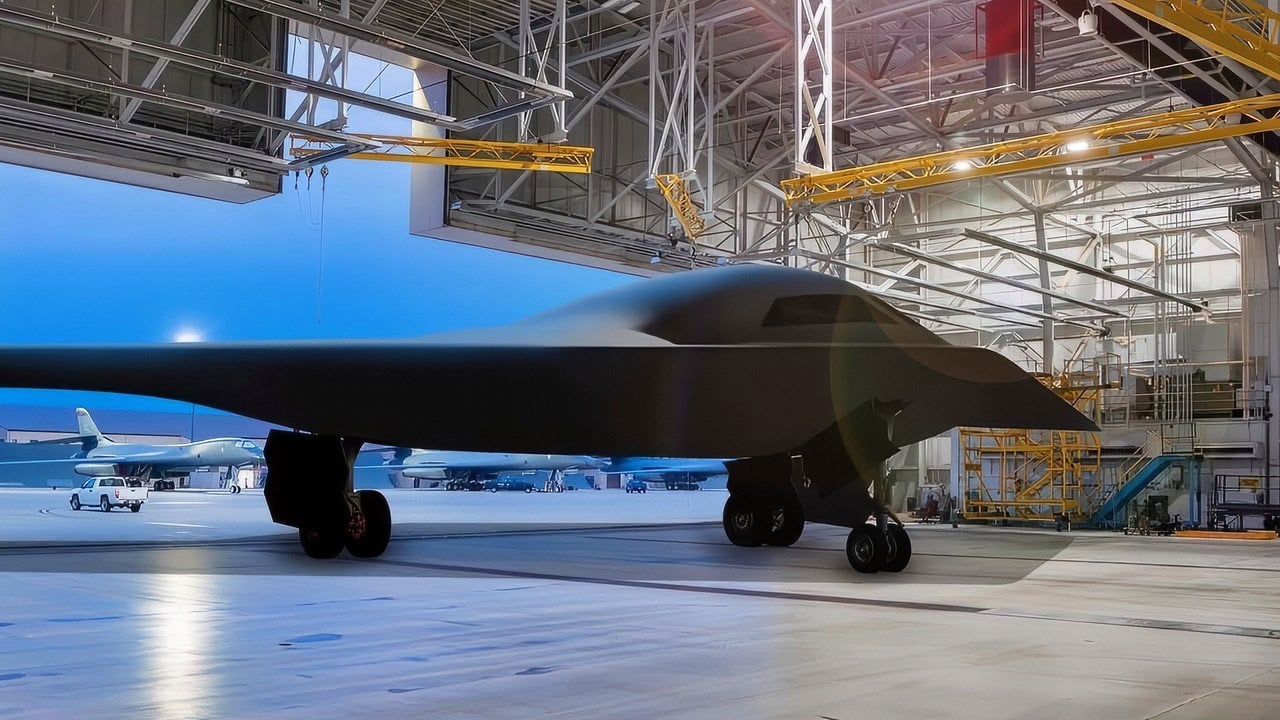
Artist rendering of a B-21 Raider in a hangar at Ellsworth Air Force Base, South Dakota, one of the future bases to host the new airframe. AFCEC is leading a $1 billion construction effort at Ellsworth to deliver sustainable infrastructure to meet warfighter demands for bomber airpower. (U.S. Air Force graphic)
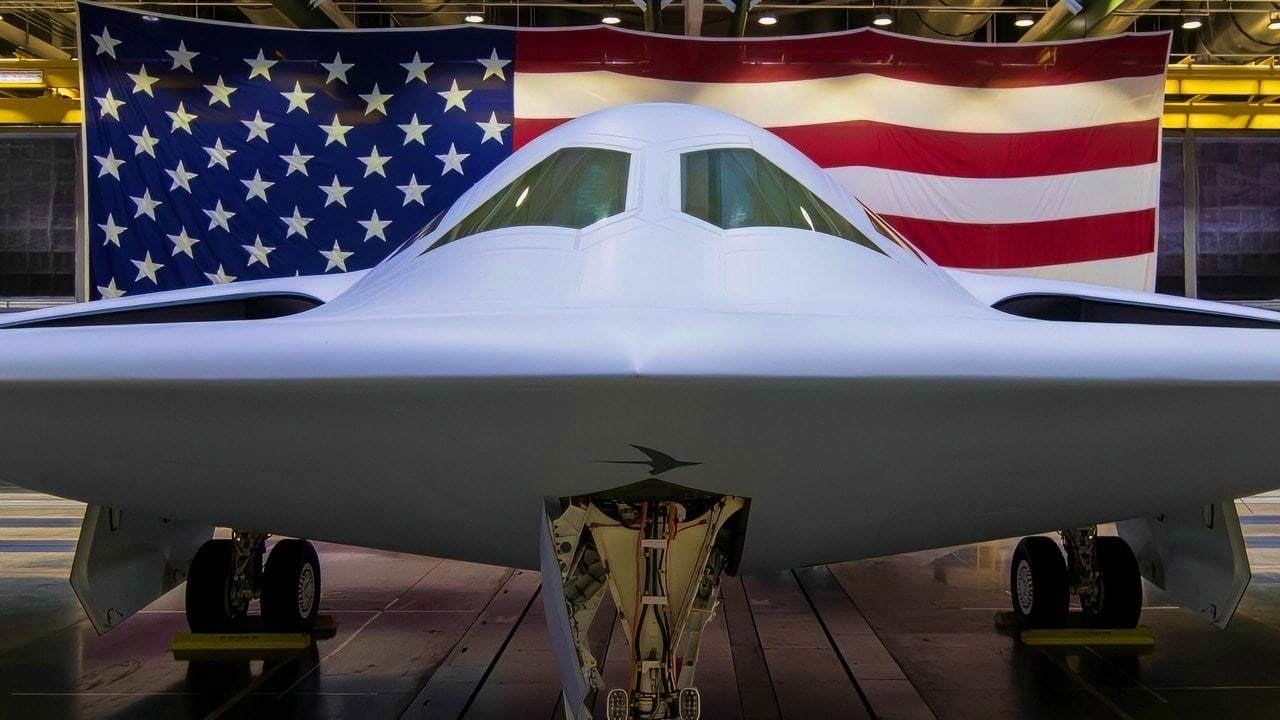
The B-21 Raider was unveiled to the public at a ceremony December 2, 2022 in Palmdale, Calif. Designed to operate in tomorrow’s high-end threat environment, the B-21 will play a critical role in ensuring America’s enduring airpower capability. (U.S. Air Force photo)
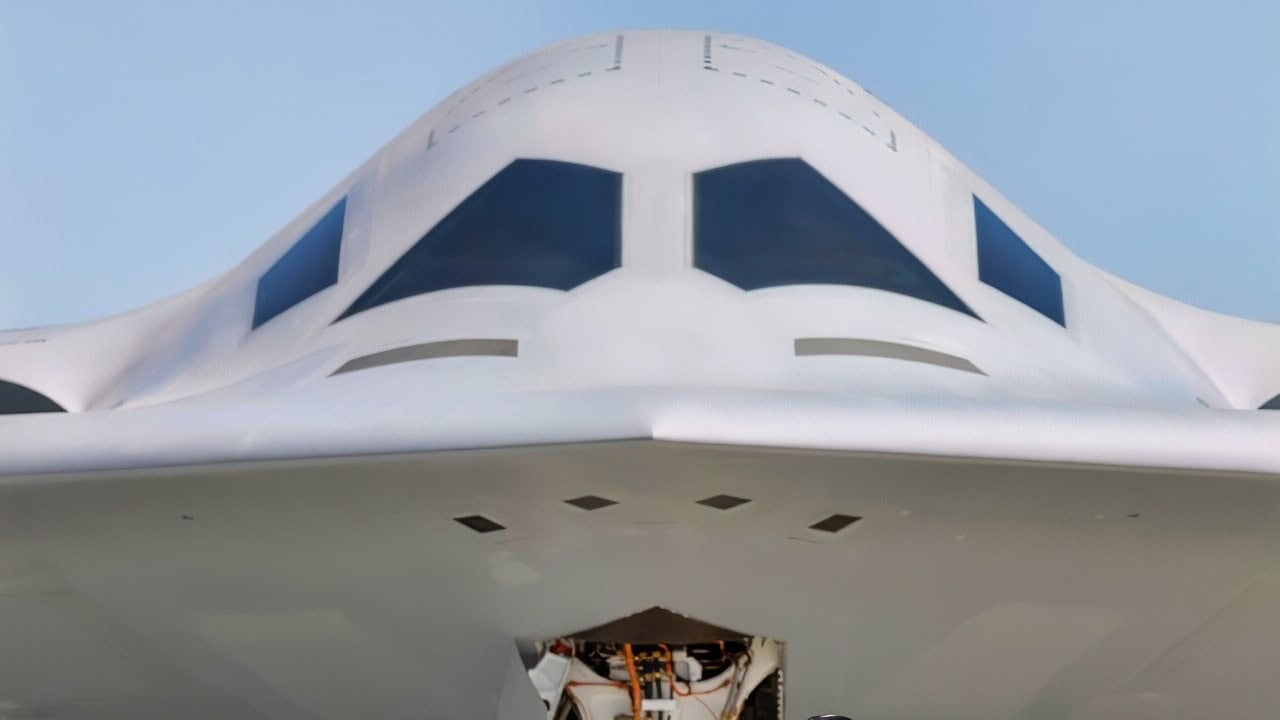
U.S. Air Force Airmen with the 912th Aircraft Maintenance Squadron prepare to recover the second B-21 Raider to arrive for test and evaluation at Edwards AFB, Calif., Sept. 11, 2025. The arrival of a second test aircraft provides maintainers valuable hands-on experience with tools, data and processes that will support future operational squadrons. (U.S Air Force photo by Kyle Brasier)
The B-21’s open-system architecture will allow frequent updates to its onboard systems, not only affecting the types of weapons it can carry but also making it easier to upgrade the bomber’s avionics.
It has been reported that the B-21 can take off and land from smaller, more austere airfields. The aircraft will not require climate-controlled hangars like the B-2s. Therefore, the long flights from Missouri won’t be necessary, as the Air Force could forward-deploy the Raiders to the theater.
The Costs Of The B-21 Raider Will Be High
Gen. Thomas A. Bussiere, the commander of the Air Force Global Strike Command (AFGSC), testified before Congress that a fleet of 220 bombers would likely be needed to meet the Air Force’s requirements. Given the current plan to retain 75 upgraded B-52Js, this would require a fleet of at least 145 B-21s.
“It’s a force mix discussion within the Department of the Air Force, and it’s a resource and priority question within the Department of Defense and the nation,” Bussiere added.
The budget will be challenging to achieve, but the Air Force needs between 200 and 250 B-21 Raider stealth bombers to protect our forces during a war with China. I recently wrote about the issue with refueling tankers for the B-21; this will also require even more of those.
The cost per unit of the B-21 Raider is expected to decrease as more units are produced, driven by economies of scale, streamlined manufacturing, and advanced digital engineering. Initial projections showed procurement costs dropping by nearly 28 percent for early production lots, with the Air Force aiming to build at least 100 bombers. It will decrease further if the Air Force purchases more.
The B-21 Raider is a weapon of war that will help maintain peace. The deterrent effect of a next-generation stealth bomber is invaluable. And having enough of the B-21s that can fly and penetrate any enemy’s A2/AD defenses will give those enemies pause should they decide to go to war with the US.
There will continue to be discussion about the cost of building so many of these stealth bombers. Ultimately, the cost of not building them will be much higher for the country in the long run. Something we learned the hard way after the Cold War with our aircraft and Navy.
Our Air Force and Navy lost out on full fleets of F-22 Raptors, B-2 Spirit stealth bombers, and Seawolf submarines.
About the Author: Steve Balestrieri
Steve Balestrieri is a National Security Columnist. He served as a US Army Special Forces NCO and Warrant Officer. In addition to writing on defense, he covers the NFL for PatsFans.com and is a member of the Pro Football Writers of America (PFWA). His work was regularly featured in many military publications.