
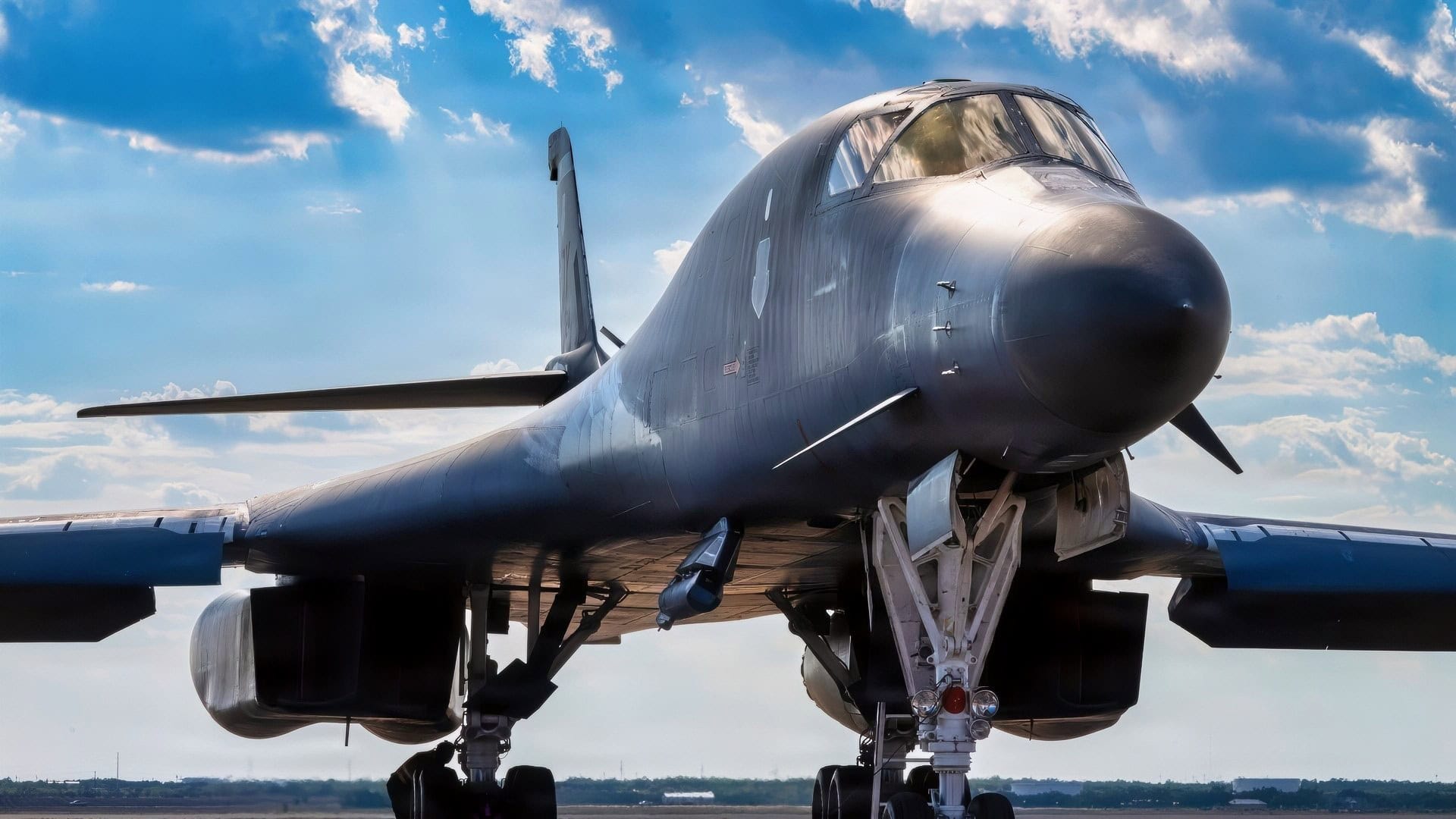
Summary and Key Points: Christian D. Orr, a senior defense editor and former Air Force Security Forces officer, evaluates the B-1B Lancer’s aggressive entry into the 2026 Iran War.
-As CENTCOM confirms strikes on ballistic missile sites, the “Bone” is proving its worth through Mach 1.2 supersonic delivery and the new Load Adaptable Modular (LAM) pylon system, which increases its missile capacity to 36.
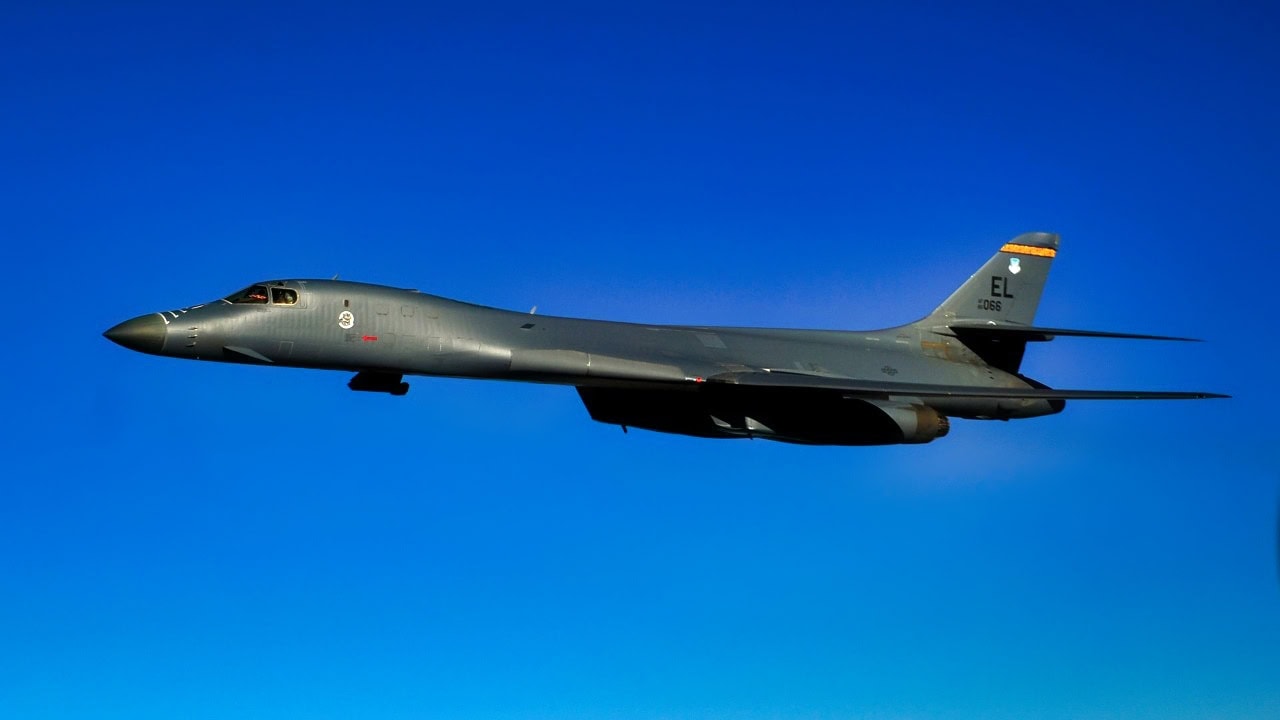
B-1B Lancer Bomber. Image Credit: Creative Commons.
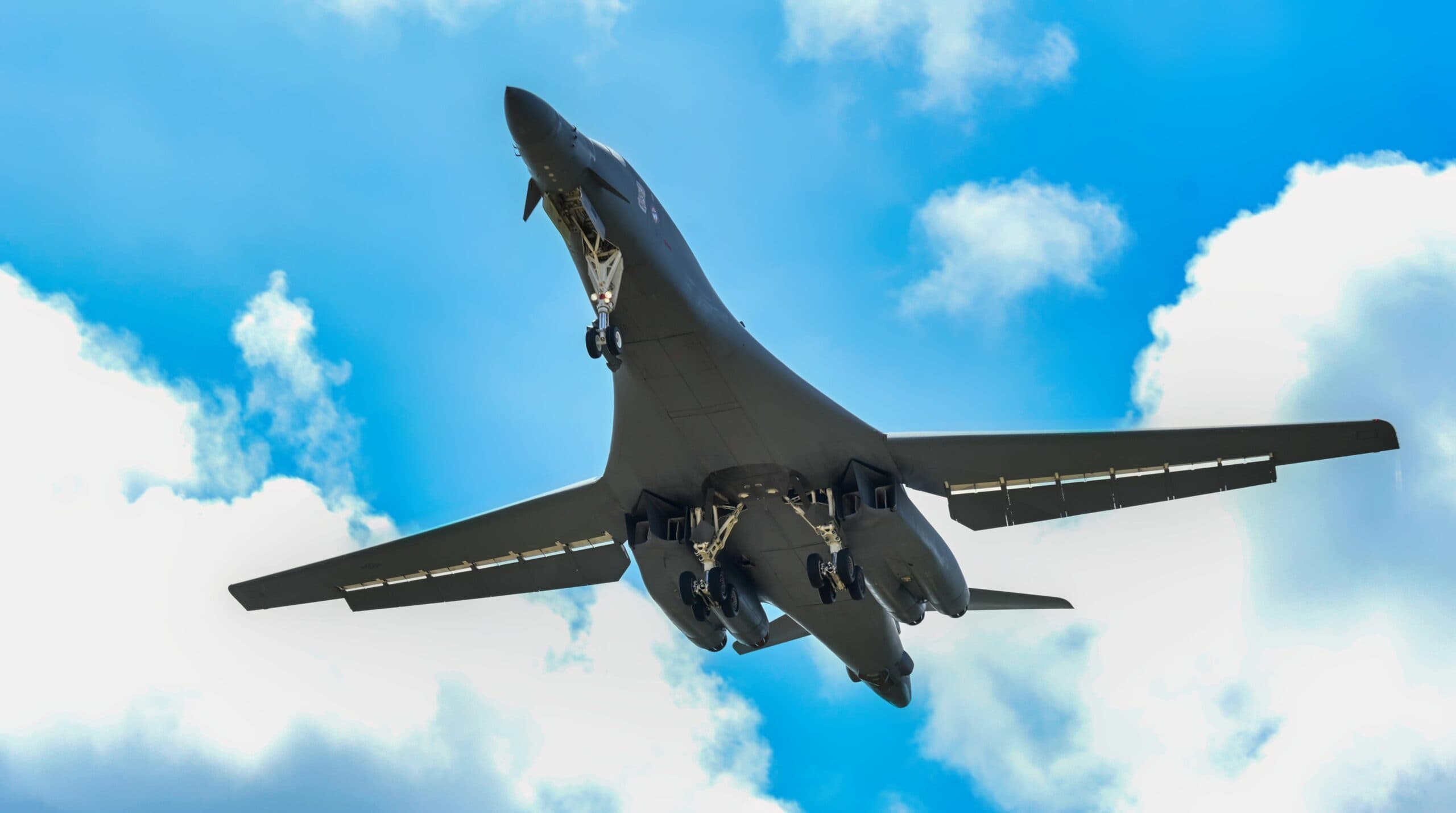
A U.S. B-1B Lancer assigned to the 34th Expeditionary Bomb Squadron, Ellsworth Air Force Base, S.D., ascends into the sky after conducting a “touch and go” maneuver during Bomber Task Force 25-1 at Andersen Air Force Base, Guam, Feb. 24, 2025. Bomber Task Force missions provide opportunities to train and work with our Allies and partners in joint and coalition operations and exercises. (U.S. Air Force photo by Airman 1st Class Alec Carlberg)
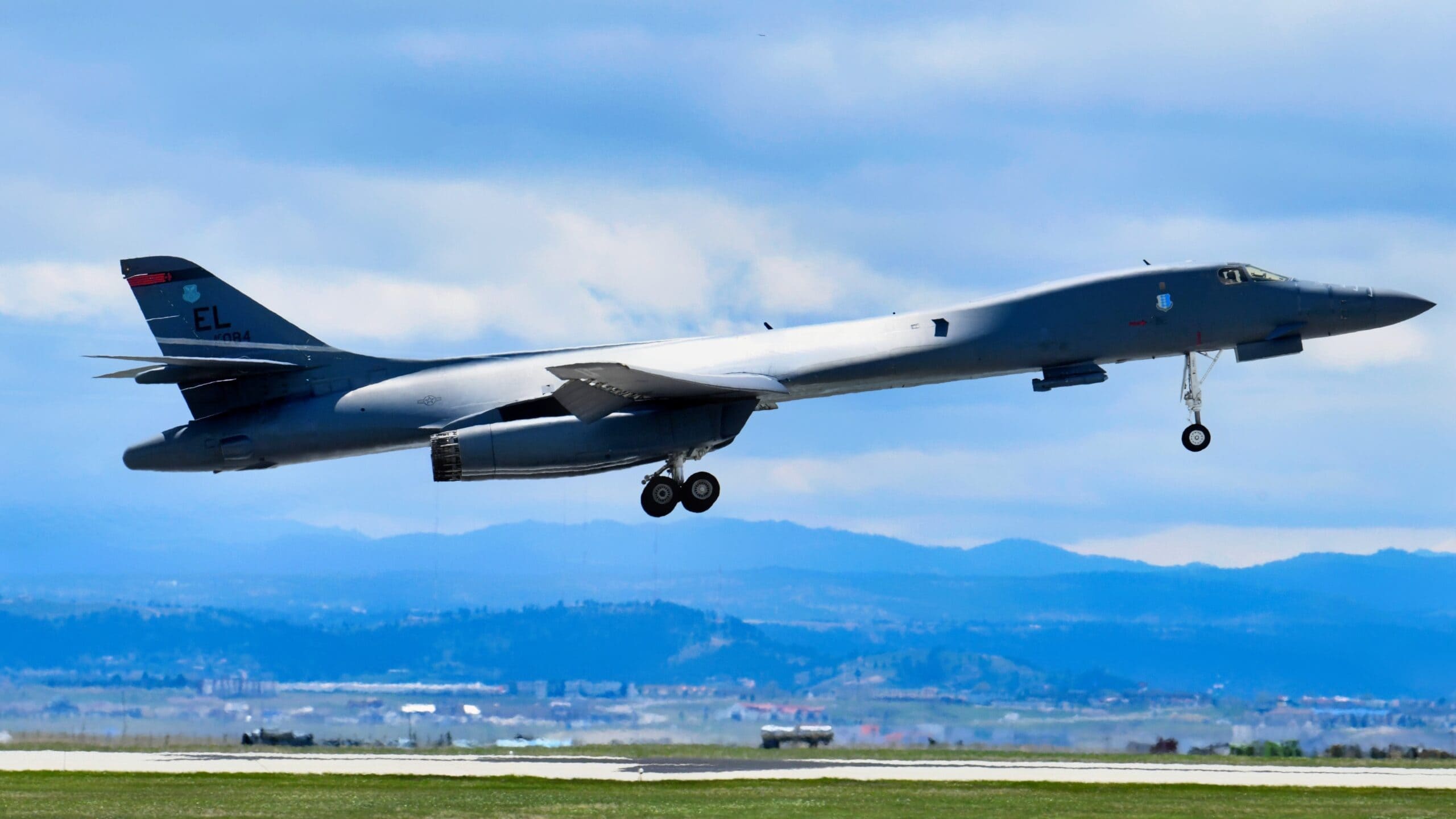
B-1B Lancer Bombers. Image Credit: Creative Commons.
-This report analyzes Secretary Pete Hegseth’s plan to use the B-1B as a hypersonic testbed.
-Orr concludes that with the New START treaty’s expiration, the B-1B remains a critical, dual-capable asset in the “Apocalypse” against the IRGC.
The Bone Returns: Why the B-1B Lancer is Striking Ballistic Missile Sites Deep Inside Iran
Though not as old as the septuagenarian Boeing B-52 Stratofortress AKA the “BUFF” (“Big Ugly Fat F****r” in the unplugged, unedited world, or “Big Ugly Fat Fellow” if you’re in polite company), the Rockwell B-1B Lancer strategic bomber, AKA the “Bone,” is no spring chicken either, as the plane will celebrate the 40th anniversary of its official operational service debut this coming October 1.
Meanwhile, the original variant, the B-1A, made its maiden flight all the way back on December 23, 1974, but was cancelled by the Jimmy Carter Administration in 1977…two years before ol’ Jimmuh abandoned an old ally, the Shah of Iran and left that country to the ravingly ruthless radical ravages of the Islamofascist Ayatollah Khomeini and his many minions Islamic Revolutionary Guard Council (IRGC).
Well, fast-forward to the present day, and we’re finally coming full circle, with the U.S. unleashing of some (47 years overdue) truly Epic Fury of the theocratic tyranny of Tehran, and appropriately, the “BONE” is joining the other two member of the U.S. Air Force’s strategic bomber triumvirate—namely the BUFF and the B-2 “Spirit” stealth bomber—in opening the aerial gates of the Apocalypse upon the IRGC.
Here Comes the B-1B Lancer Into the Iran War
This latest exciting development comes to us courtesy of Leo Feierberg Better, reporter for The Jerusalem Post, in a March 4, 2026, article titled “US used B-1 ‘Lancer’ strategic bombers to strike targets inside Iran, CENTCOM confirms.”
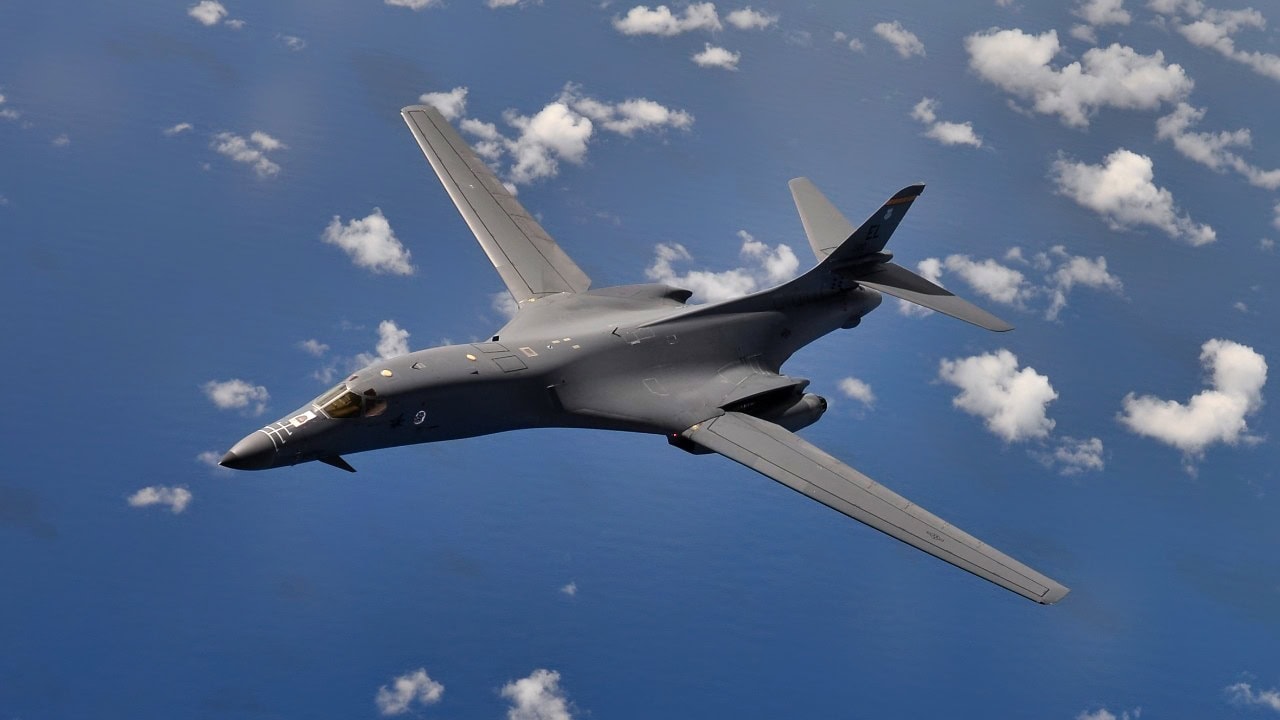
A U.S. Air Force B-1B Lancer assigned to the 37th Expeditionary Bomb Squadron, deployed from Ellsworth Air Force Base, South Dakota, flies over the Pacific Ocean during a training sortie that included practicing low-level bomb runs, low-level maneuvering and high-altitude standoff weapons employment August 9, 2017. The strategic global strike capability of these aerial platforms deters potential adversaries and provides reassurance to our allies and partners that the United States is capable of defending its national security interests in the Indo-Asia-Pacific region. (U.S. Air Force photo by Senior Airman Alexa Ann Henderson)
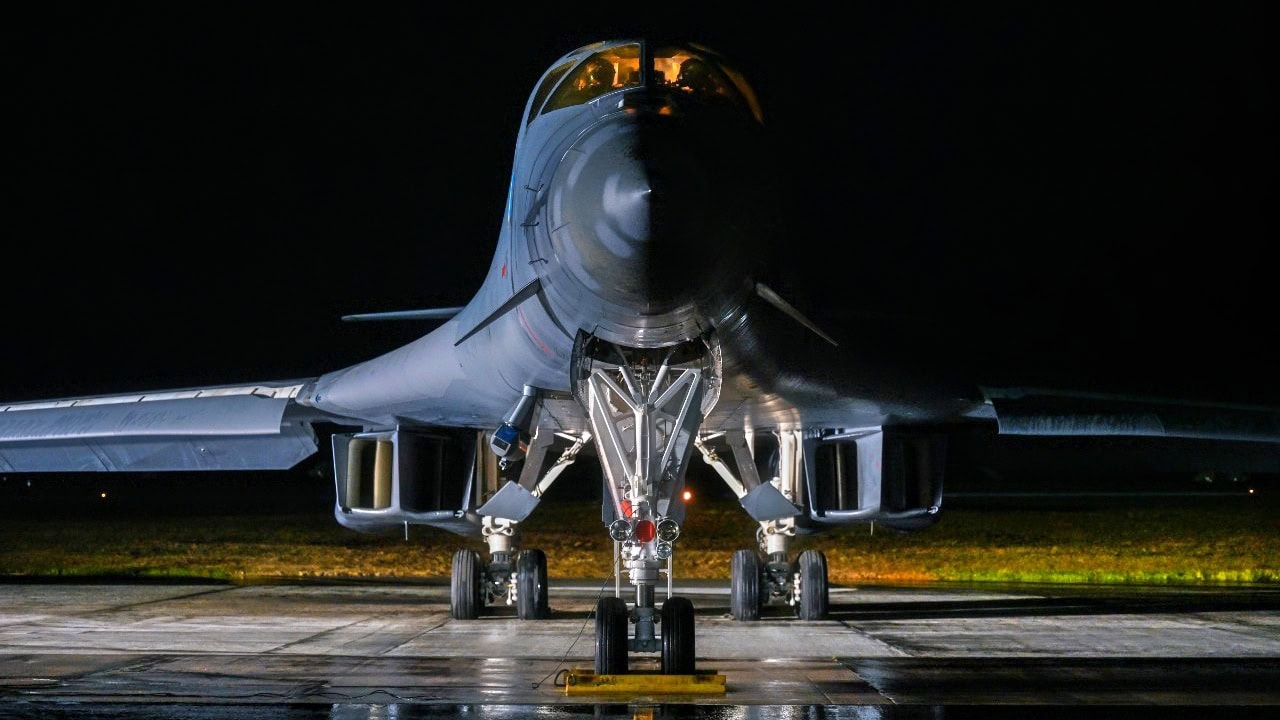
A U.S. Air Force B-1B Lancer assigned to the 34th Expeditionary Bomb Squadron, prepares to taxi onto the runway at Andersen Air Force Base, Guam, prior to a mission in support of Bomber Task Force 25-1, Feb. 27, 2025. Bomber missions demonstrate the credibility of U.S. Air Forces to address a complex and uncertain security environment. (U.S. Air Force photo by Airman 1st Class Alec Carlberg)
To wit: “The United States Air Force used B-1 ‘ Lancer’ strategic bombers to attack targets in Iran during the first days of the war, the US Central Command (CENTCOM) confirmed on Monday…In a post on X/Twitter on Monday, OSINT account DefenseGeek reported that three B-1 bombers had participated in attacks against Iran. Accompanied by a total of nine KC-46 Pegasus tankers, the bombers reportedly flew from the Ellsworth Air Force Base in South Dakota and back without stopping…Hours later, CENTCOM verified the claim in another X post, stating that B-1 bombers ‘struck deep inside Iran to degrade Iranian ballistic missile capabilities.’ Additionally, the post included a video showing the bombers taking off at night, but did not mention from where they took off.”
No Mere (B-)One-and-Done Deal
The U.S. Department of War’s senior leadership is making that abundantly clear, which should make the surviving members of the now kaput Khameini’s cabal quake in their sandals.
For one thing, in a press conference this Wednesday, Secretary of War Pete Hegseth indicated that the warbirds could see expanded use for the remainder of the war.
Piggybacking onto the SECWAR’s comments in that same press conference, Chairman of the Joint Chiefs of Staff (CJCS) Gen. Dan “Raizin” Caine said that “B-2s, B-52s, B-1s, Predator drones, [and fighter jets] controlling the skies and selecting targets” could become the new normal for Iran.”
Digging Deeper
It reflects the degree of confidence U.S. aerial warfare planners have in the air superiority they have gained in the skies over Iraq, as the B-1 lacks the stealth capability of the B-2 Spirit.
The Lancer does have one major advantage over both the B-2 and the big lumbering B-52, that being supersonic speed (Mach 1.2 / 800 knots / 920 mph,/ 1,481 km/h). However, that’s still slower than the surface-to-air missiles (SAMs) and even the aging fighter fleet of the Islamic Republic of Iran Air Force (IRIAF; Nirvi-ye Hevayi-ye Artesh-e Jimhuri-ye Eslâmi-ye Iran), which consists of F-14 Tomcats and F-4 Phantom IIs, F-5 Tigers IIs (American-made, ironically enough, MiG-29 “Fulcrums” (Soviet-made), Dassault F1 Mirages (French-made), and J-7 “Fishcans” (Chinese-made).
However, American and Israeli forces have so utterly dominated the Iranian air defense systems that the BONEs and BUFFs alike are operating with impunity (thus far, knock on wood).
The Way Forward for the B-1B
The CENTCOM report doesn’t specify what type(s) of ordnance the Lancers used for this raid. However, one can make some educated guesses based on recent reporting we’ve done on B-1B upgrades.
The Bone is receiving a new weapons pylon, known as the Load Adaptable Modular (LAM), which enables the Bone to carry up to 12 missiles externally by installing six pylons. This would supplement the 24 already carried in its internal weapon bays, acting as a major force multiplier.
Boeing (which inherited the B-1 program from Rockwell, thereby giving Boeing ownership of two of the three strategic bombers in the USAF arsenal) added that the missiles would be of two types: boost-glide vehicles and air-breathing missiles.
As Jennifer Wong, Senior Director, Bombers Programs at Boeing, explained, ‘The whole point of this is for the B-1 to become the Air Force’s hypersonic testbed. “Because of all the modernization efforts on the B-52, we cannot take away from what we’re doing on the B-52 today to have it test hypersonics. So, we will be doing hypersonics testing on the B-1.”
The B-1’s external hardpoints had originally been designed during the Cold War for the “doomsday mission,” i.e., penetrating deep into the heart of Mother Russia [the “Rodina”] and deploying nuclear cruise missiles.
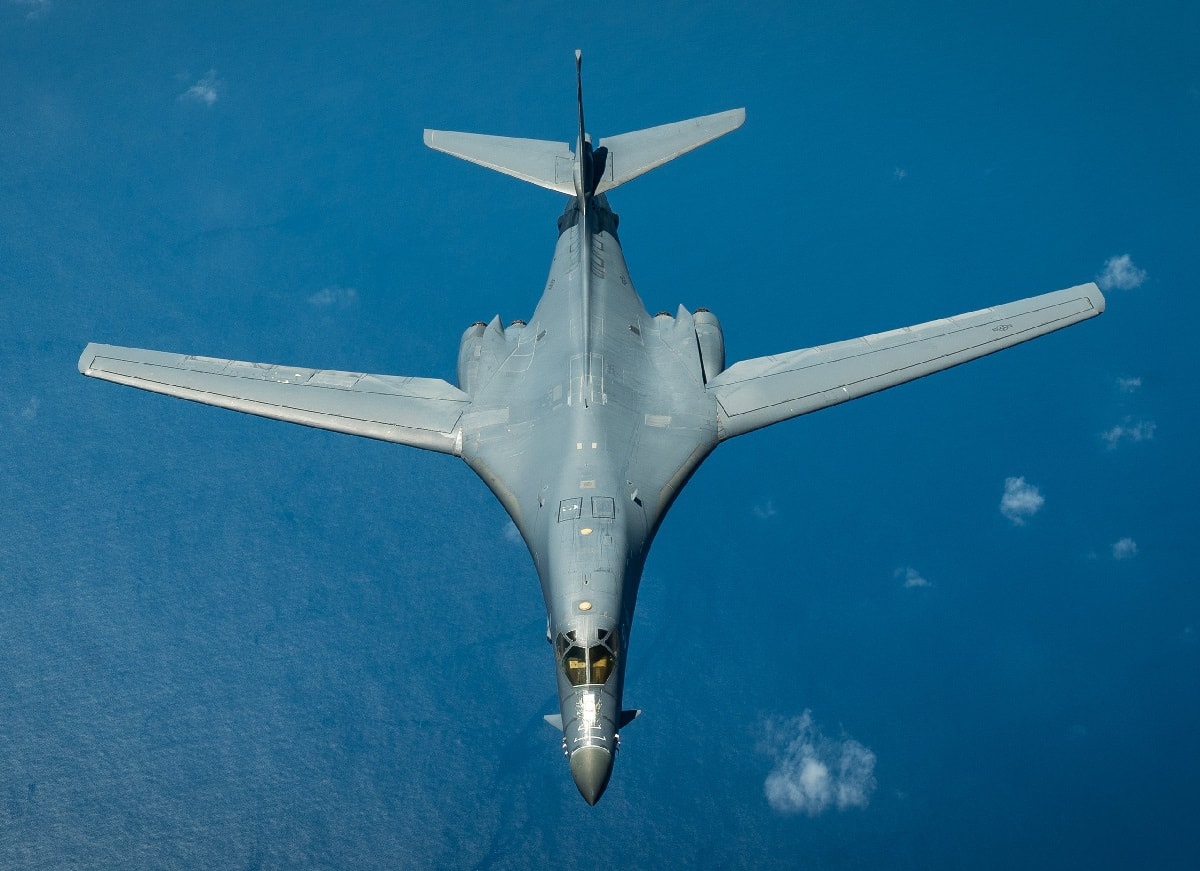
A U.S. Air Force B-1B Lancer assigned to the 37th Expeditionary Bomb Squadron, deployed from Ellsworth Air Force Base, S.D. to Andersen AFB, Guam, flies a training mission over the Pacific Ocean Aug. 16, 2017. During the mission two B-1s were joined by Japan Air Self-Defense Force F-15s in the vicinity of the Sankaku Islands. These training flights with Japan demonstrate the solidarity and resolve we share with our allies to preserve peace and security in the Indo-Asia-Pacific. (U.S. Air Force photo/Staff Sgt. Joshua Smoot)
However, these were decommissioned in 1994 under treaty agreements as part of the so-called “peace dividend” from the collapse of the Soviet Union, necessitating the conversion of the Bone to a conventional bombing role to remain viable.
Thus far, as far as this writer can ascertain, there is no discussion of reconverting any of the BONEs back to the nuclear role.
By contrast, the B-52 is about to start reliving the “Dr. Strangelove” years of its youth. Air Force Global Strike Command [AFGSC] recently declared that it is prepared to restore nuclear weapons capability to the entire B-52 bomber fleet, as elaborated upon anonymous AFGSC spokesperson stated: “’ Although we will not comment on the posturing of our forces, Air Force Global Strike Command both maintains the capability and training to MIRV the Minuteman III ICBM force and convert its entire B-52 fleet into dual capable long range strike platforms if directed by the President.’”
With the New START treaty—officially known as The Treaty between the United States of America and the Russian Federation on Measures for the Further Reduction and Limitation of Strategic Offensive Arms—having expired last month, don’t be surprised if the B-1B also gets a new nuke makeover, especially in light of the IRGC’s unholy alliance with Russia.
About the Author: Christian D. Orr, Defense Expert
Christian D. Orr is a Senior Defense Editor. He is a former Air Force Security Forces officer, Federal law enforcement officer, and private military contractor (with assignments worked in Iraq, the United Arab Emirates, Kosovo, Japan, Germany, and the Pentagon). Chris holds a B.A. in International Relations from the University of Southern California (USC) and an M.A. in Intelligence Studies (concentration in Terrorism Studies) from American Military University (AMU). He is also the author of the newly published book “Five Decades of a Fabulous Firearm: Celebrating the 50th Anniversary of the Beretta 92 Pistol Series.”