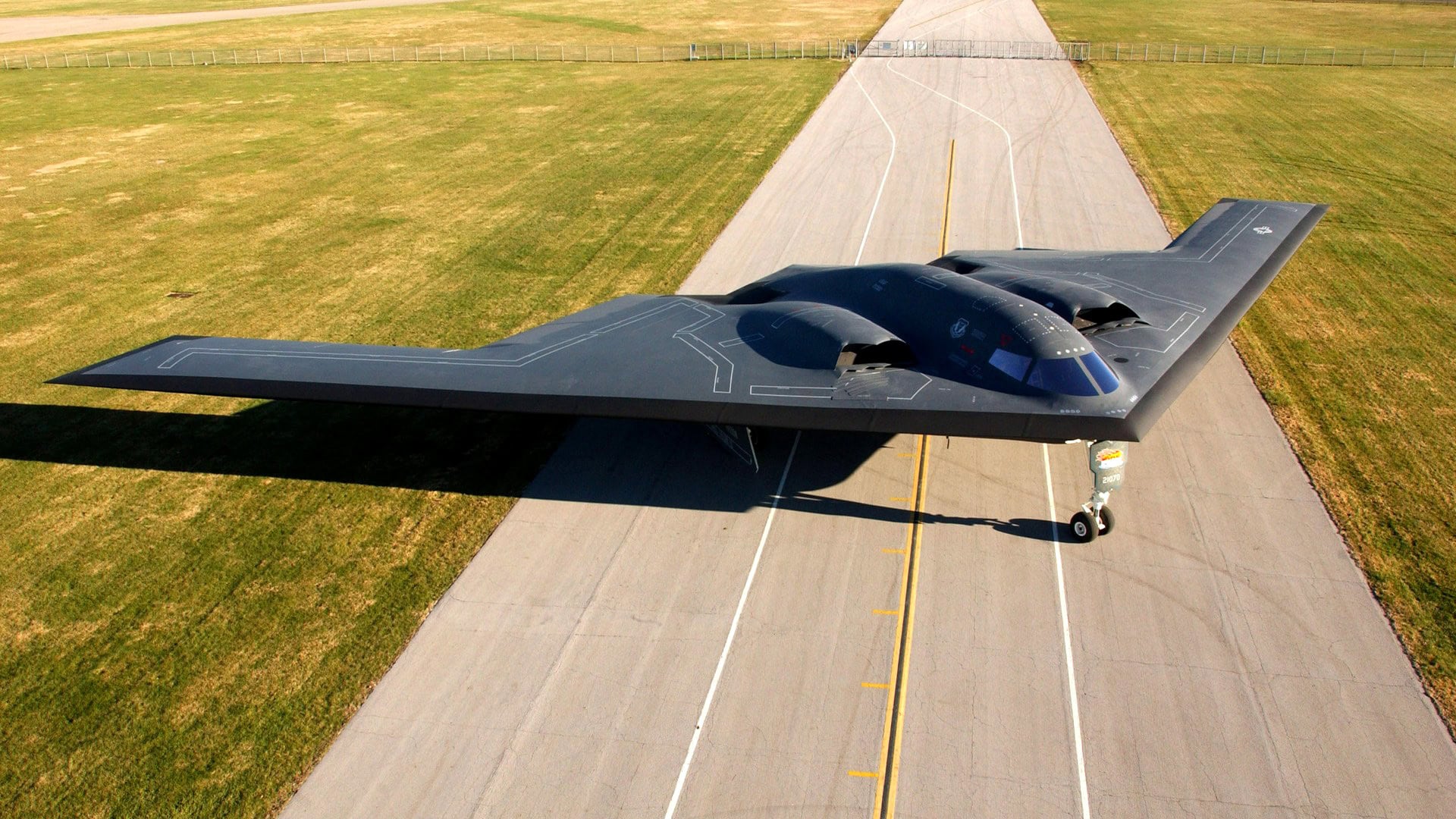
Summary and Key Points: Brandon J. Weichert, Senior National Security Editor and iHeartRadio host, analyzes the strategic “scarcity” of the Northrop Grumman B-2 Spirit following its successful use of the 30,000-pound GBU-57 Massive Ordnance Penetrator (MOP) against Fordow.
-While the 2025 strike was flawless, the fleet’s reduction to 19 airframes due to the 2022 landing mishap and high maintenance costs creates a dangerous gap in U.S. airpower.
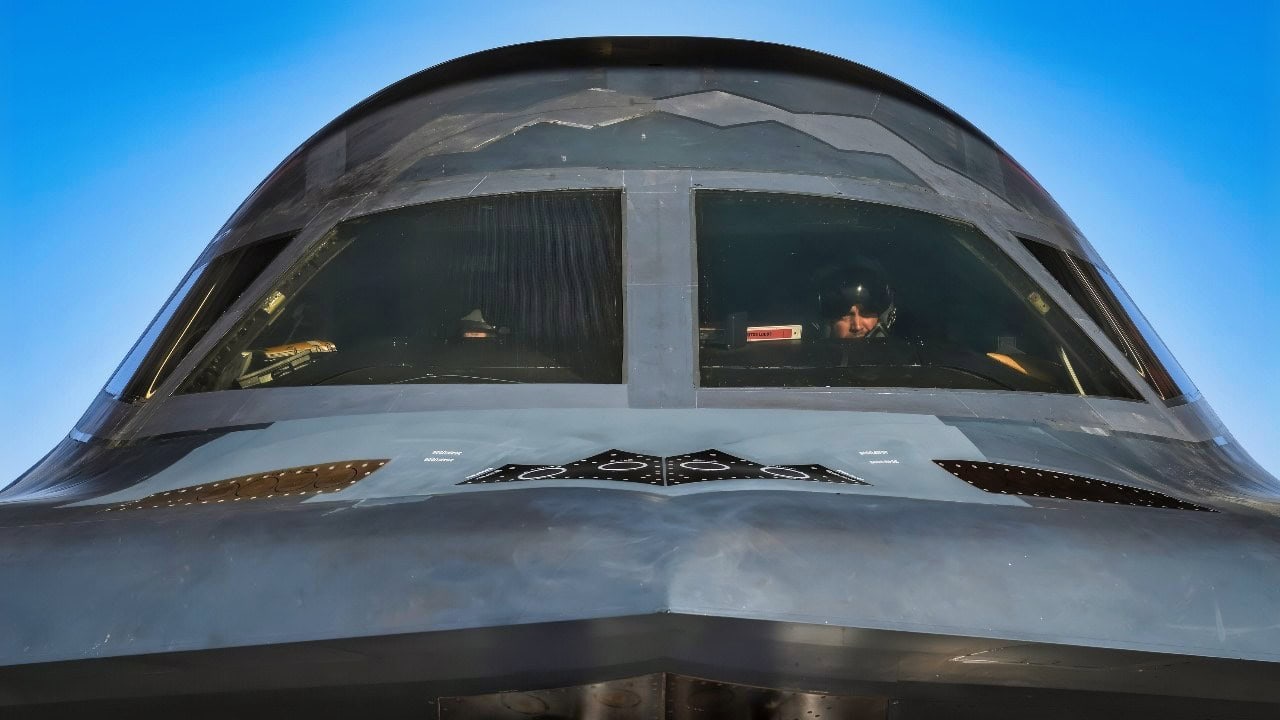
A U.S. Air Force B-2 Spirit aircrew performs pre-flight checks in the cockpit of their aircraft at Whiteman Air Force Base, Missouri, March 8, 2020. The B-2 took off from Whiteman AFB to support U.S. Strategic Command Bomber Task Force operations in Europe. The 131st Bomb Wing is the total-force partner unit to the 509th Bomb Wing. (U.S. Air Force photo by Tech. Sgt. Alexander W. Riedel)
-This 19FortyFive report examines the $2.1 billion-per-plane cost and the B-21 Raider’s delay, evaluating how a lack of strategic foresight has turned a premier stealth asset into a finite national vulnerability.
Why the B-2 Spirit is America’s Only Way to Kill a Nuclear Program
Last summer, the Trump administration shocked the world with its perfectly executed airstrikes on suspected nuclear weapons production facilities in the Islamic Republic of Iran. Those strikes were conducted by two B-2 Spirit long-range, nuclear-capable stealth bombers.
A Flawless Strike That Hid a Bigger Problem
Those bombers, while impressive, were hardly cutting-edge when they orchestrated their flawless attack. In fact, they’d been in service since 1989. And while the attack last summer was flawless, the planes are not perfect.
Indeed, aside from their technical complexity (making them expensive), they are paradoxically old. This is why the United States Air Force is working overtime to produce the B-21 Raider, the replacement vehicle for the B-2 Spirit. But the biggest weakness of these technically impressive planes is that there are only 19 B-2 Spirits. When the B-2 Spirit program was initiated decades ago, the original intent was to have as many as 132 units for the whole fleet.

B-21 Raider Stealth Bomber. Image Credit: Industry Handout.
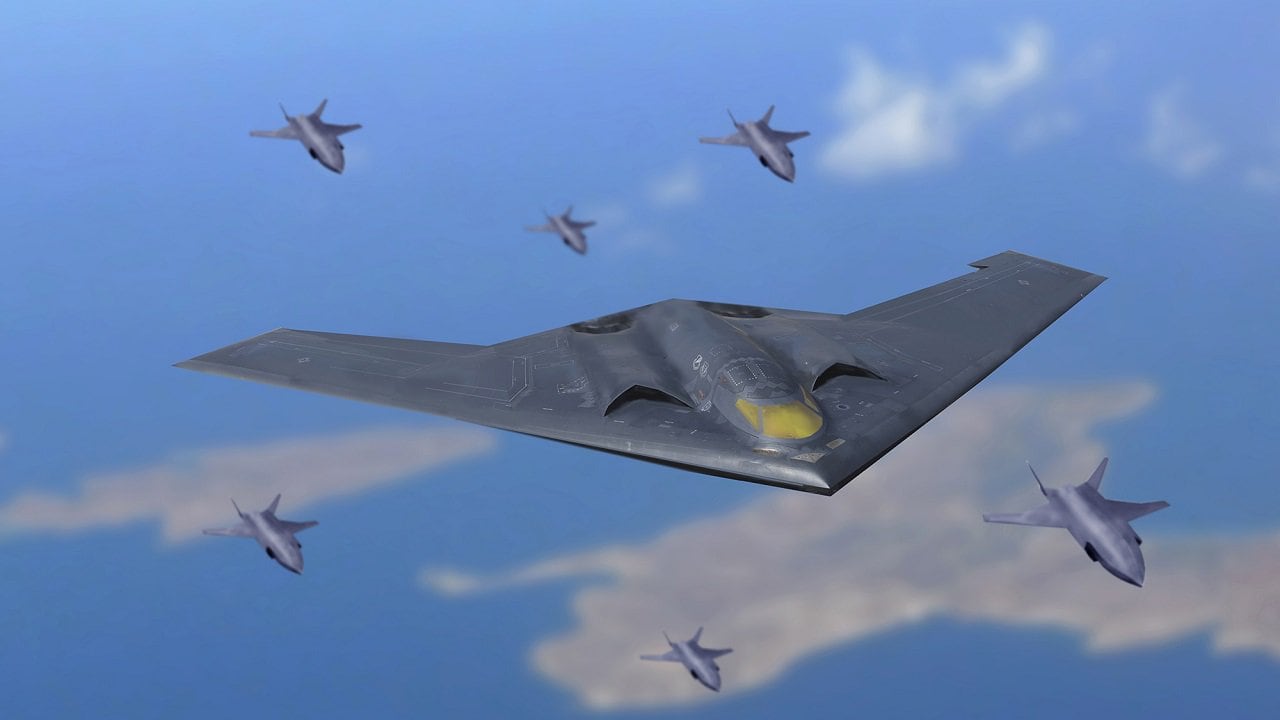
An artist illustration depicts a U.S. Air Force extended-range B-21 Raider escorted on a mission by armed unmanned next generation air dominance platforms. This fictional bomber features longer, wider wings, and a deeper fuselage that accommodates larger fuel tanks and dual weapons bays that enables the bomber to carry a much larger and varied payload. Mike Tsukamoto/staff; Greg Davis/USAF
It was then reduced to 75 due to high costs (around $2.1 billion per plane). As an interesting aside, the B-2 Spirit is so technologically complex that it costs around $200,000 per hour to fly.
A Costly Enterprise for B-2 Spirit Bomber
Maintenance costs top $60 million per aircraft—due to the specialized parts involved in these planes and the fact that their production line was shuttered long ago—just to maintain these birds.
Interestingly, 50-119 hours of maintenance are required for every hour flown. The plane’s unique radar-absorbent skin requires specialized climate-controlled hangars, which further increase costs.
All that money prompted the reduction of the order from 132 to 75 in the early 1990s. The B-2 Spirit was designed to fight what planners believed was the next phase of the Cold War against the Soviet Union.
Just as the Spirit was taking wing, however, the Cold War ended, and the USSR imploded bloodlessly. This only compelled the Americans to enact further, deeper cuts to the costly B-2 Spirit program, assessing that the plane was too complex and expensive to warrant producing even 75 units.
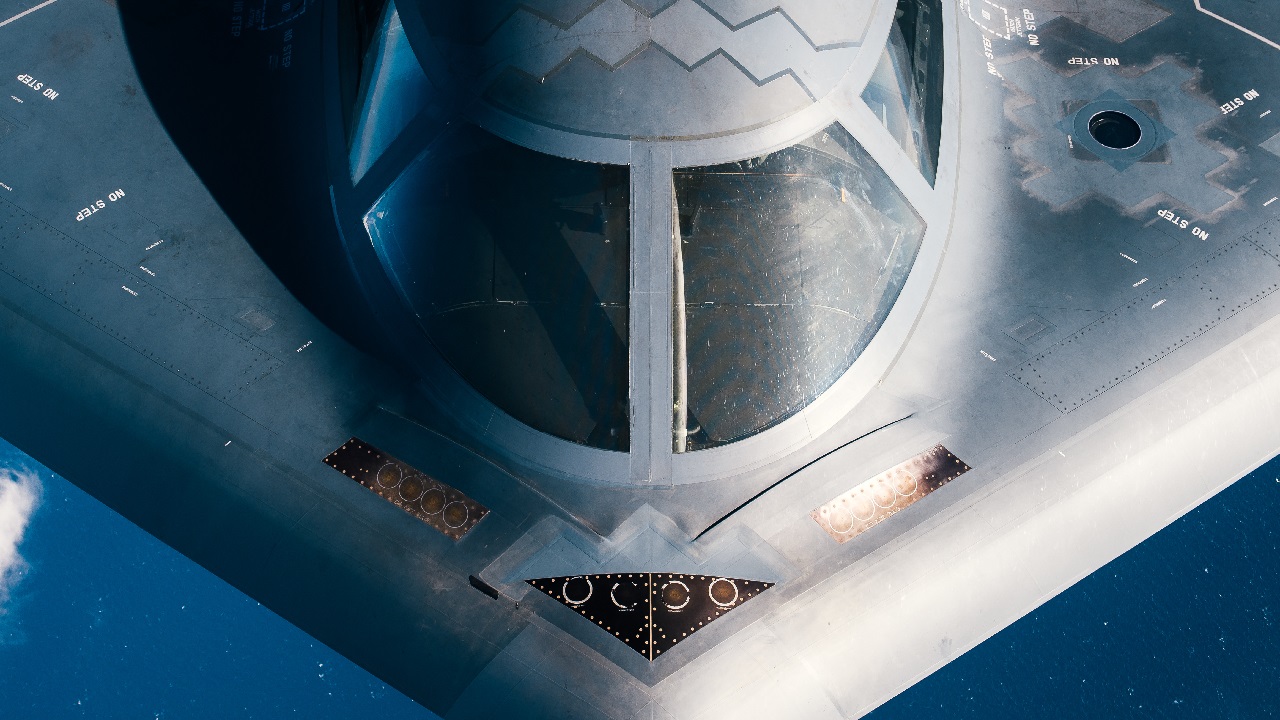
A U.S. Air Force 509th Bomb Wing B-2 Spirit refuels from a 351st Aerial Refueling Squadron KC-135 Stratotanker during the Bomber Task Force training exercise over England, Aug. 29, 2019. The B-2 aircraft will operate out of RAF Fairford, England, and will exercise there at U.S. Air Forces in Europe’s forward operating location for bombers. (U.S. Air Force photo by Staff Sgt. Jordan Castelan)
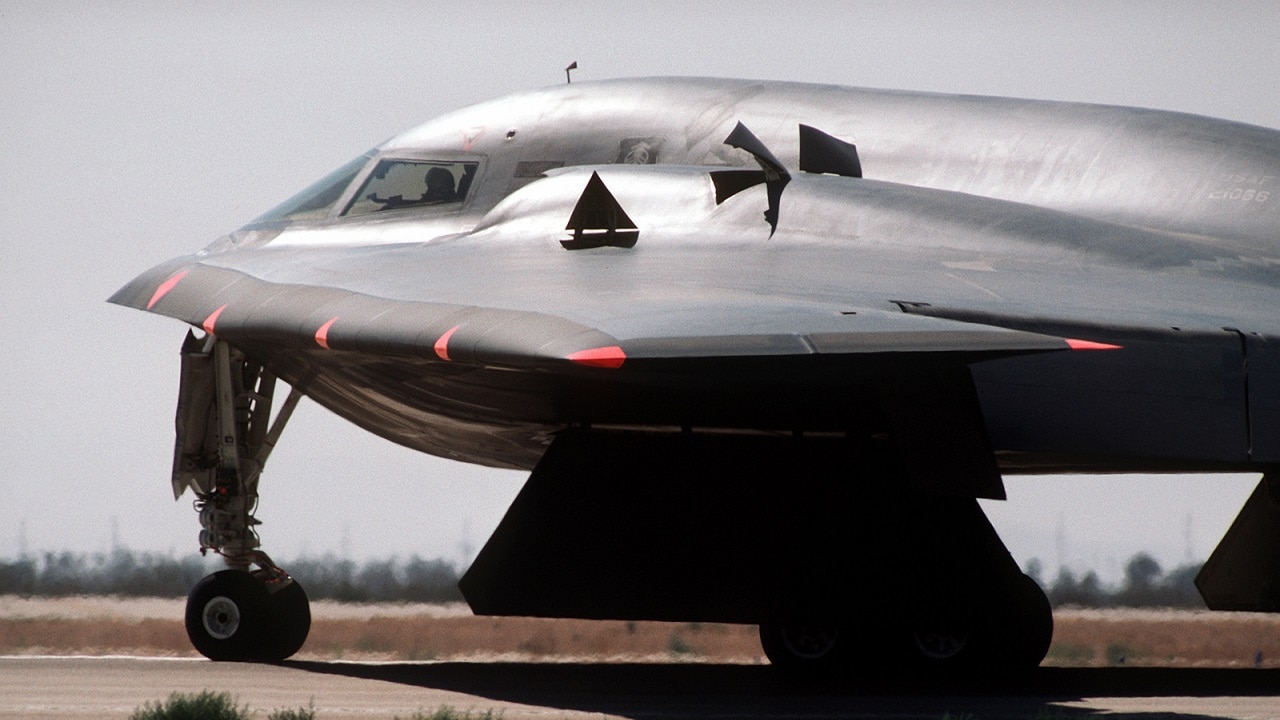
A left side view of the front of a B-2 advanced technology bomber aircraft as it prepares for its first flight, at the Air Force Flight Test Center.
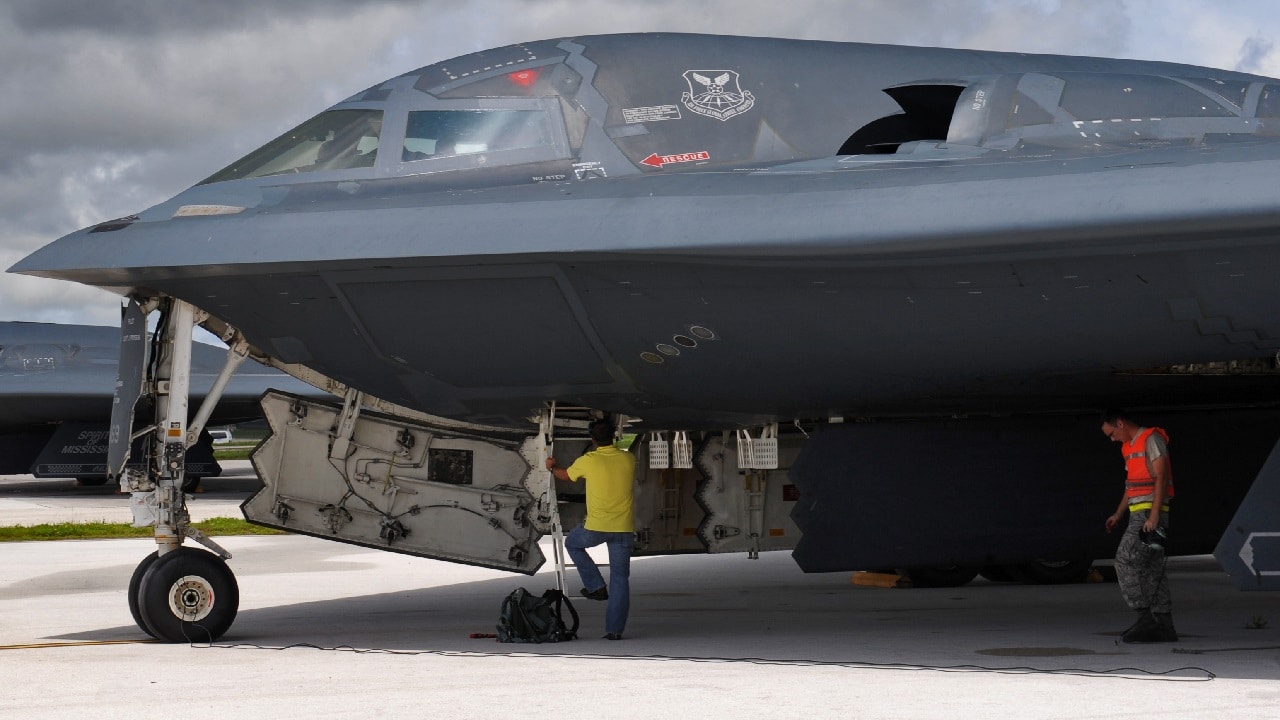
U.S. Air Force B-2 Spirit aircraft undergo pre-flight inspections prior to take off at Andersen Air Force Base, Guam, Aug. 11, 2016. More than 200 Airmen and three B-2s deployed from Whiteman Air Force Base, Mo., to conduct local sorties and regional training and integrate with regional allies in support of Bomber Assurance and Deterrence missions. (U.S. Air Force photo by Tech. Sgt. Miguel Lara III)
Instead, 21 units were made. But then, over the program’s lifetime, only 19 remain today. This small number of planes meant the program’s costs never decreased, and their strategic utility was always hamstrung by the scarcity of these planes.
Sure, these planes can conduct an incredible airstrike.
When Every Airframe is a National Asset
But they’re so expensive that if they are damaged during the mission or suffer the typical wear-and-tear of warplanes, the program could come crashing down due to a lack of replacements.
One of the unique capabilities of the B-2 Spirit, besides being able to deploy nuclear weapons, is the ability for these birds to drop the 30,000-pound Massive Ordnance Penetrator (MOP). This weapon is America’s largest non-nuclear bomb and was used to collapse the Fordow nuclear weapons development facility in Iran last summer.
As global crises mount and the Trump administration seeks dazzling, quick solutions to these mounting security woes, the finite number of B-2 Spirit bombers is now being used at higher levels—straining that small force.
The added complication is that the B-2, until the even more expensive B-21 comes online, is the only plane capable of carrying and dropping certain bombs (like the MOP).
One of the important B-2s was lost in a 2008 crash. While tragic, the worst was yet to come for America’s already tiny B-2 Spirit fleet.
To keep the US Air Force’s long-range stealth bomber capability viable, and since the B-21 is struggling to be mass-produced in a timely and affordable manner, the Air Force has made some tricky moves to boost the numbers of the dwindling fleet.
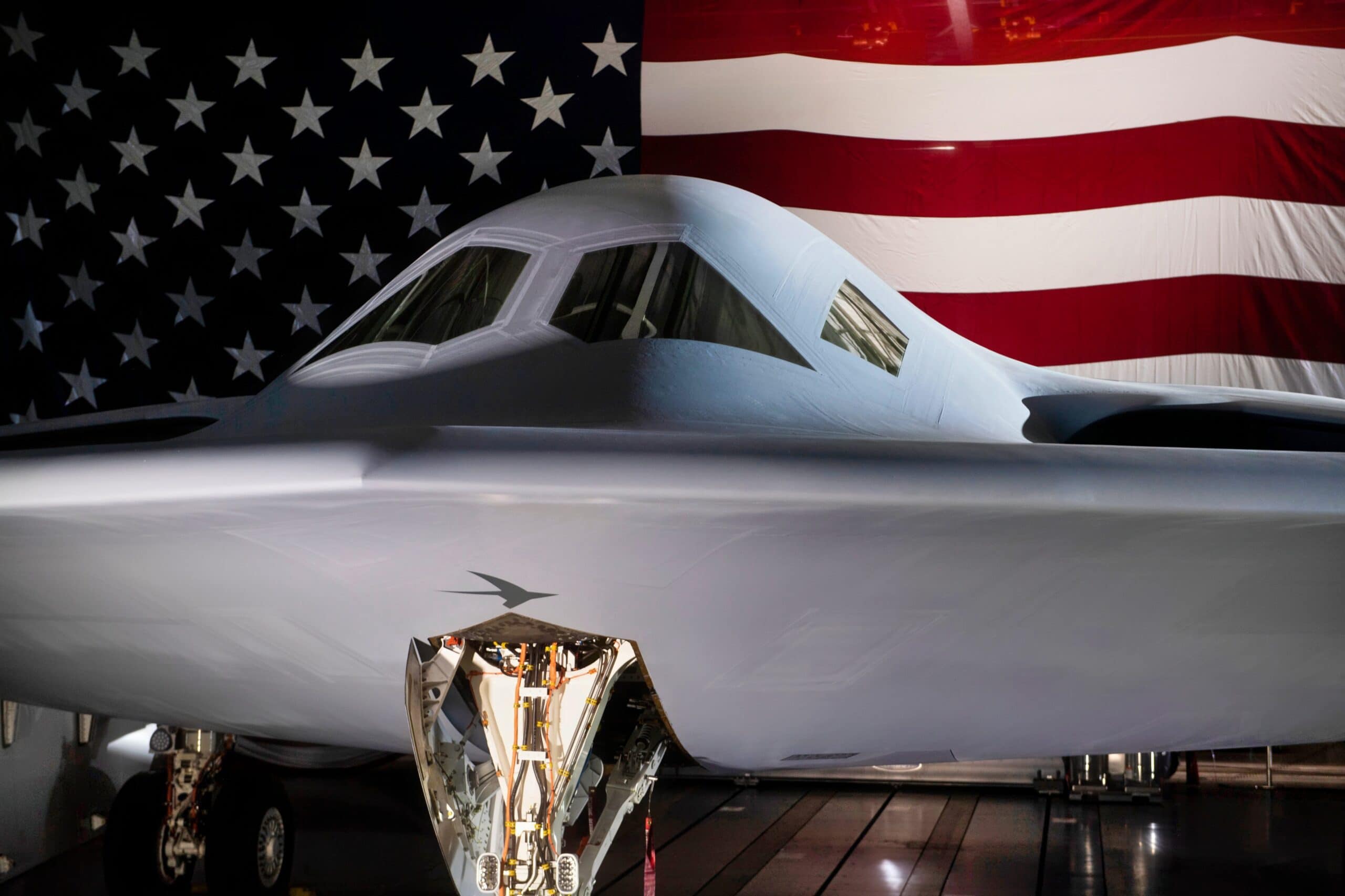
B-21 Raider. Image Credit: Creative Commons.
As the Air & Space Forces Magazine reported, the Air Force revived a damaged B-2 bomber and returned it to service (something engineers originally did not think was possible).
Back in 2021, a B-2 Spirit suffered a landing mishap that cost $23.7 million in a four-year repair job. By November 2025, the plane returned to active service, restoring the fleet to 19 airworthy bombers.
But this experience shows the importance of each B-2 Spirit in the fleet. There are so few available, and their capabilities are unmatched; the Air Force must go to extremes to keep them flying.
Then came another incident one year later, in December 2022. An accident involving one of the B-2s was serious, and the Air Force decided repairs were too expensive. That decision formally reduced the operational fleet to 19 birds.
In fact, this experience in 2022 was one of the deciding factors in the Pentagon’s decision to seek a speedy transition to the even more expensive B-21 Raider.
A Strategic Failure of Foresight
Given how essential the B-2 Spirit long-range stealth bomber has been to American airpower, the fact that there are so few available represents yet another dangerous failure of the US military’s acquisitions team, as well as the inability of US policymakers to anticipate strategic needs beyond two- and four-year political cycles.
The Air Force is today in a quandary, as the B-2s are aging and too few to be of real use. Yet the Air Force absolutely requires this capability until the B-21s come online. But these new planes will not come online until at least the 2030s.
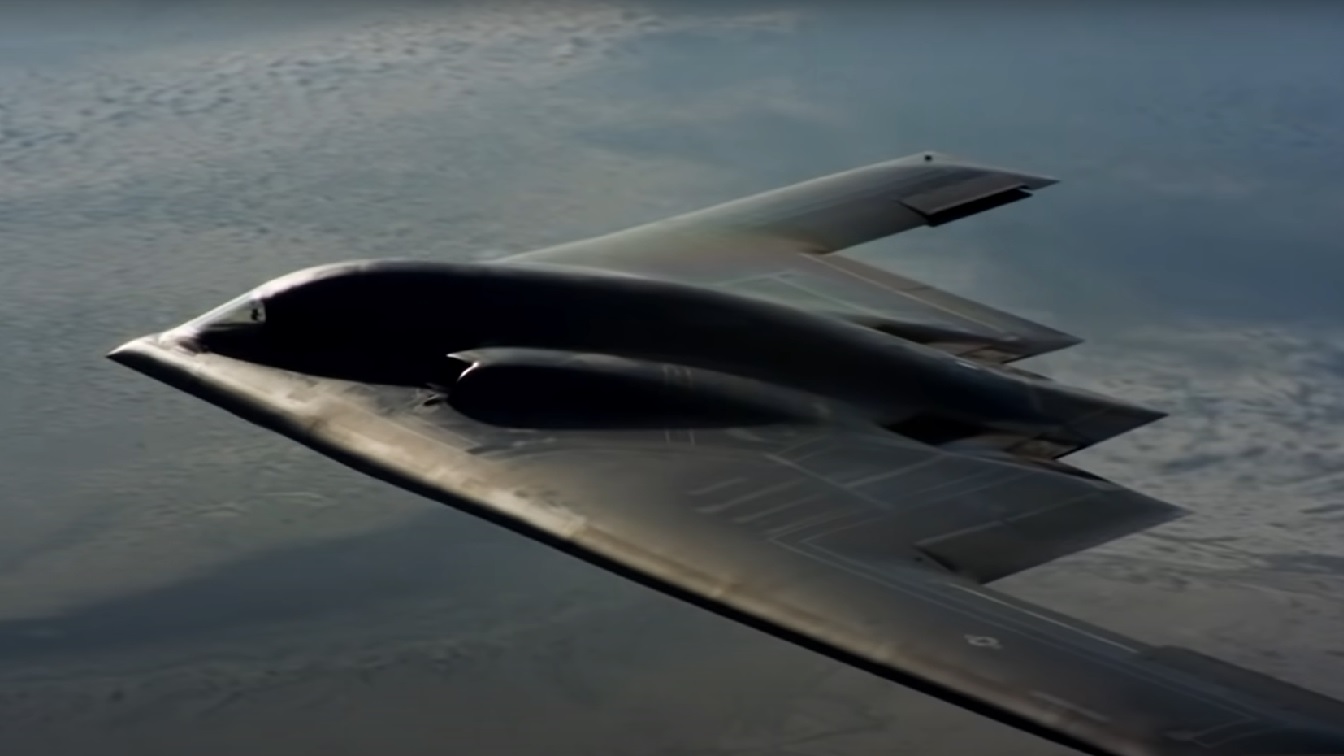
B-2 Spirit. Image Credit: Northrop Grumman.
And considering that those planes are even more expensive than the B-2s, it begs the question of whether the Air Force will face the same problem the B-2 program has struggled with: having too few of these key planes.
About the Author: Brandon J. Weichert
Brandon J. Weichert is the Senior National Security Editor at 19FortyFive.com. He was previously the senior national security editor at The National Interest. Weichert is the host of The National Security Hour on iHeartRadio, where he discusses national security policy every Wednesday at 8pm Eastern. He hosts a companion show on Rumble entitled “National Security Talk.” Weichert consults regularly with various government institutions and private organizations on geopolitical issues. His writings have appeared in numerous publications, among them Popular Mechanics, National Review, MSN, and The American Spectator. And his books include Winning Space: How America Remains a Superpower, Biohacked: China’s Race to Control Life, and The Shadow War: Iran’s Quest for Supremacy. Weichert’s newest book, A Disaster of Our Own Making: How the West Lost Ukraine, is available for purchase wherever books are sold. He can be followed via Twitter/X @WeTheBrandon.