

Summary and Key Points – The B-2 Spirit’s edge is not only stealth and precision strike—it is human endurance engineered into the jet.
-A compact chemical toilet and onboard food and water keep a two-person crew functional on missions that can run 30+ hours, where fatigue and cognitive decline become mission risks.
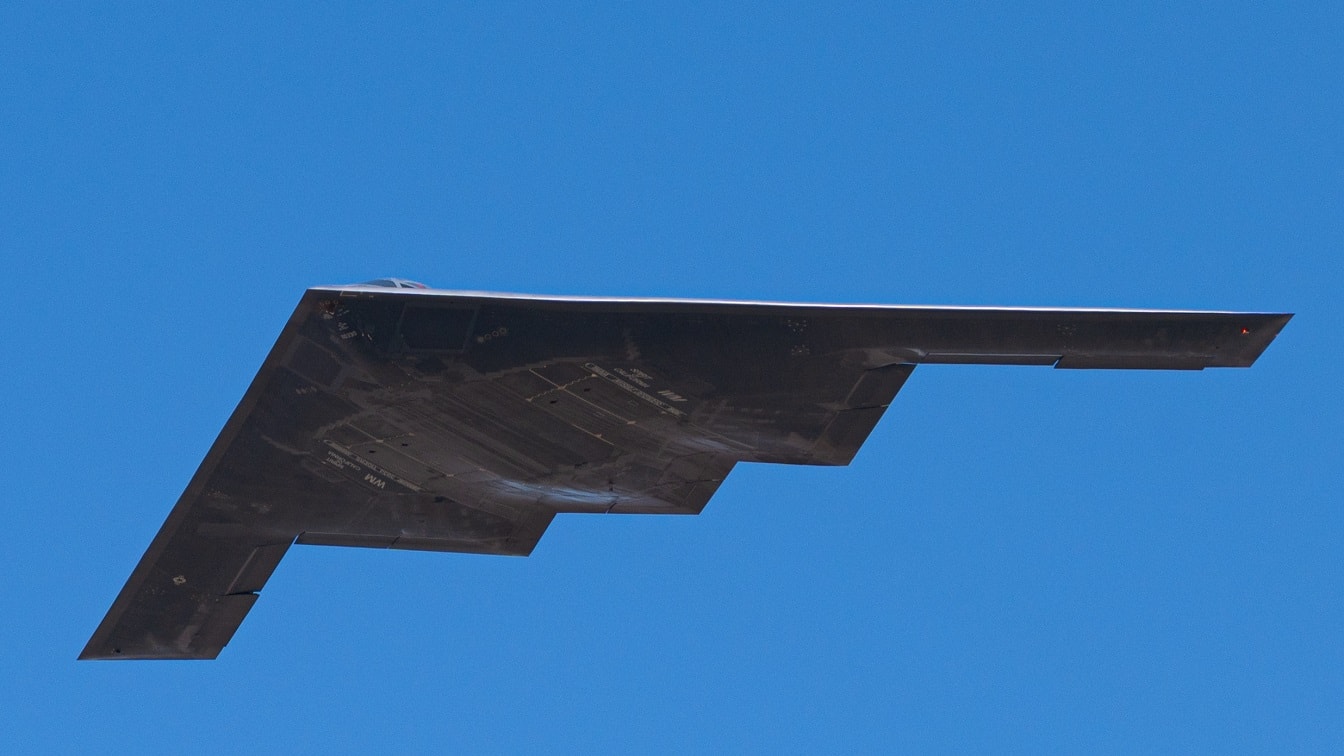
A B-2 Spirit stealth bomber from Whiteman Air Force Base completes a fly-over during the Sound of Speed Airshow at Rosecrans Air National Guard Base, in St. Joseph, Missouri, May 1, 2021. The air show was hosted by the city of St. Joseph and 139th Airlift Wing, Missouri Air National Guard to thank the community for their support. (U.S. Air National Guard photo by Airman Janae Masoner)
-Adjustable lighting, seating, and reduced noise support limited rest and sustained focus during the most critical phase: weapons release.
-At the same time, the bomber’s stealth depends on high-maintenance radar-absorbent coatings and careful handling, while layered redundancies in flight controls and avionics help ensure the aircraft can finish the sortie and get home.
The B-2 Spirit’s “Secret Weapon” Is a Toilet for 30+ Hour Missions
The B-2 Spirit is often discussed in terms of stealth, nuclear deterrence, and precision strike.
But some of the aircraft’s most revealing features are mundane amenities, like a toilet and food storage.
While rare on combat aircraft, these amenities aren’t luxuries but strategic enablers, allowing for extreme endurance and global reach through human sustainability.
The Bathroom
The B-2 includes a compact chemical toilet.
It’s not glamorous—but essential.
Why? Because typical missions can last more than 30 hours.
And because the two-person crew cannot conveniently exit the aircraft or land, the bathroom enables continuous operations, reduces fatigue, and maintains mission continuity. The only other real alternative would be to wear diapers or use astronaut-style bags.
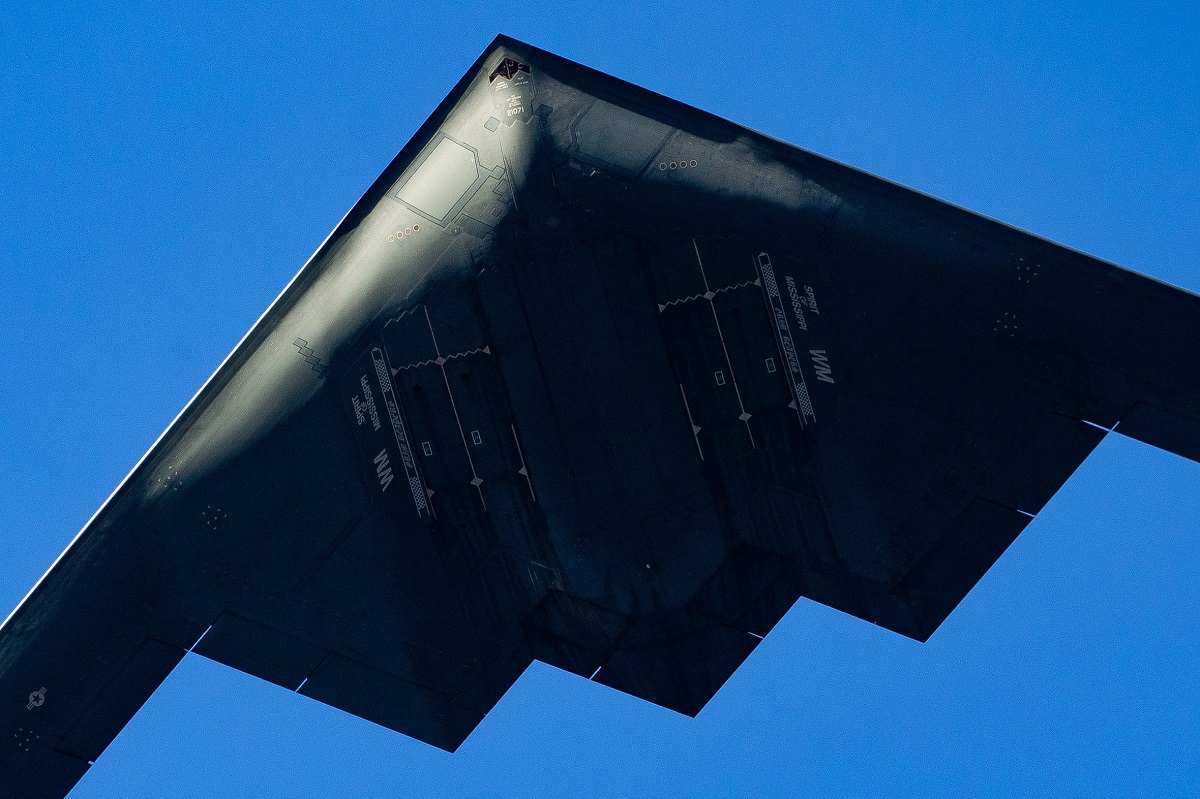
B-2 Bomber. Image Credit: US Air Force.
But these aren’t serious options.
So the toilet is critical; without it, crew endurance would be limited, placing a harder ceiling on the B-2’s strategic value, because the B-2’s operational limits are human, not fuel.
The Food
The B-2 also includes food storage and water supplies. Meals are simple and shelf-stable, not gourmet, but adequate for the sake of sustenance.
The food is critical for maintaining energy and preventing the cognitive decline that could hamper mission effectiveness.
Indeed, long missions can degrade attention and decision-making. Sustenance systems reduce pilot error and mission risk.
So, the food isn’t about comfort or convenience—it’s about late-mission precision, about keeping the crew fed well enough to continue functioning.
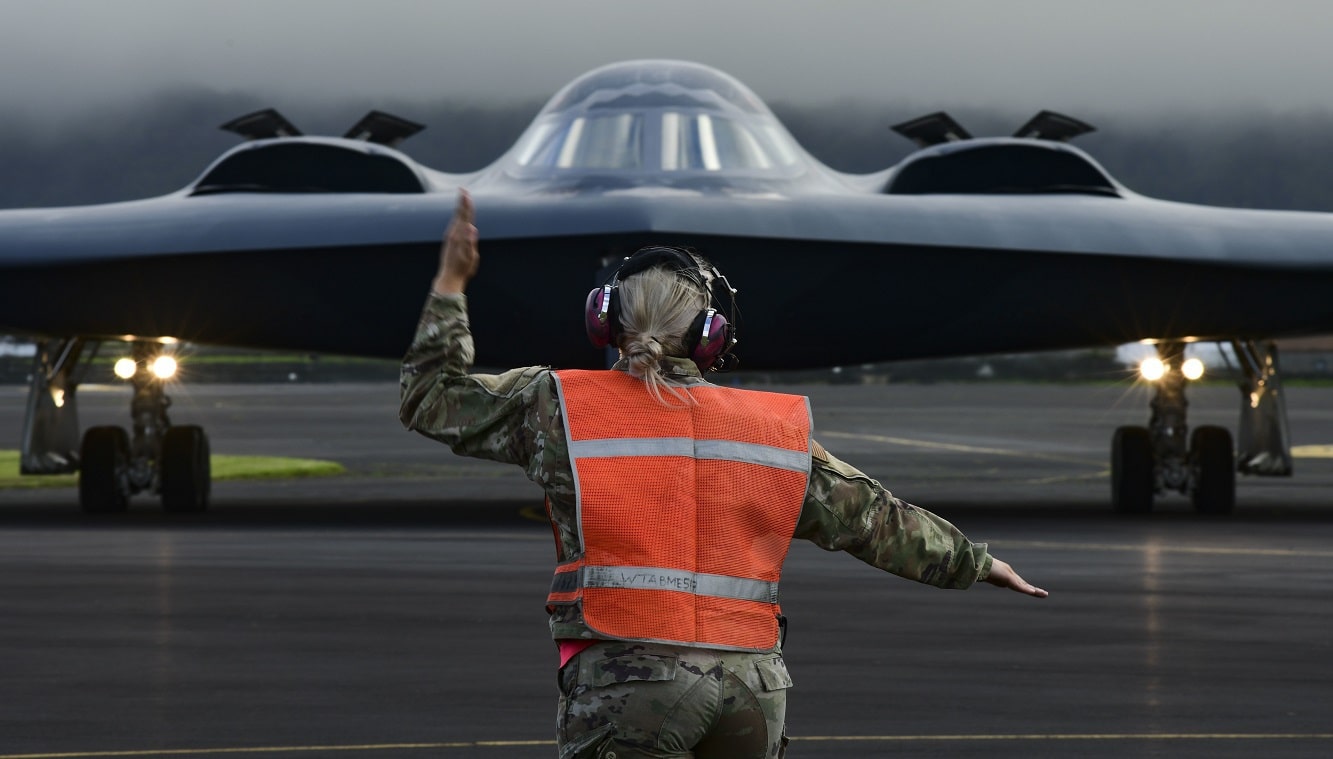
Crew chiefs assigned to the 393rd Expeditionary Bomb Squadron, prep a B-2 Spirit stealth bomber for take off, at Lajes Field, Azores, March 16, 2021. Three B-2s, assigned to Whiteman Air Force Base, Missouri, arrived at Lajes to hot-pit refuel prior to supporting several bomber task force missions in the high north. Strategic bomber missions are conducted periodically to enhance the readiness necessary to respond to challenges, in coordination with partner and allied nations, around the world. Members assigned to U.S. European Command regularly train, fight and live with allies and partners from bases in Europe, to ensure timely and coordinated responses when needed. (U.S. Air Force photo by Tech. Sgt. Heather Salazar)
The Ergonomics
Two pilots share duties, which is critical over multi-day missions. The benefits are enhanced thanks to the B-2’s space for limited rest and adjustable seating. Lighting can also be adjusted to reduce fatigue and preserve night vision.
Noise and vibration are minimized where possible, too. The aircraft’s pressurization has even been optimized for high-altitude comfort.
All of this matters because cognitive performance degrades before physical collapse. Allowing a pilot to turn the lights low and recline in his seat may seem trivial, but it improves mission outcomes; it keeps the pilot sharp during the most critical phase: weapons release.
The Coatings
But of course, the most notable feature of the B-2 is the stealth. The B-2 derives its stealth not just from shape, but from the upkeep of advanced coatings.
Specifically, the B-2 uses radar-absorbent materials (RAM) and specialized coatings. These require climate-controlled hangars and careful handling. Surface imperfections are unacceptable; they degrade stealth performance. Even small damage can increase the radar signature.
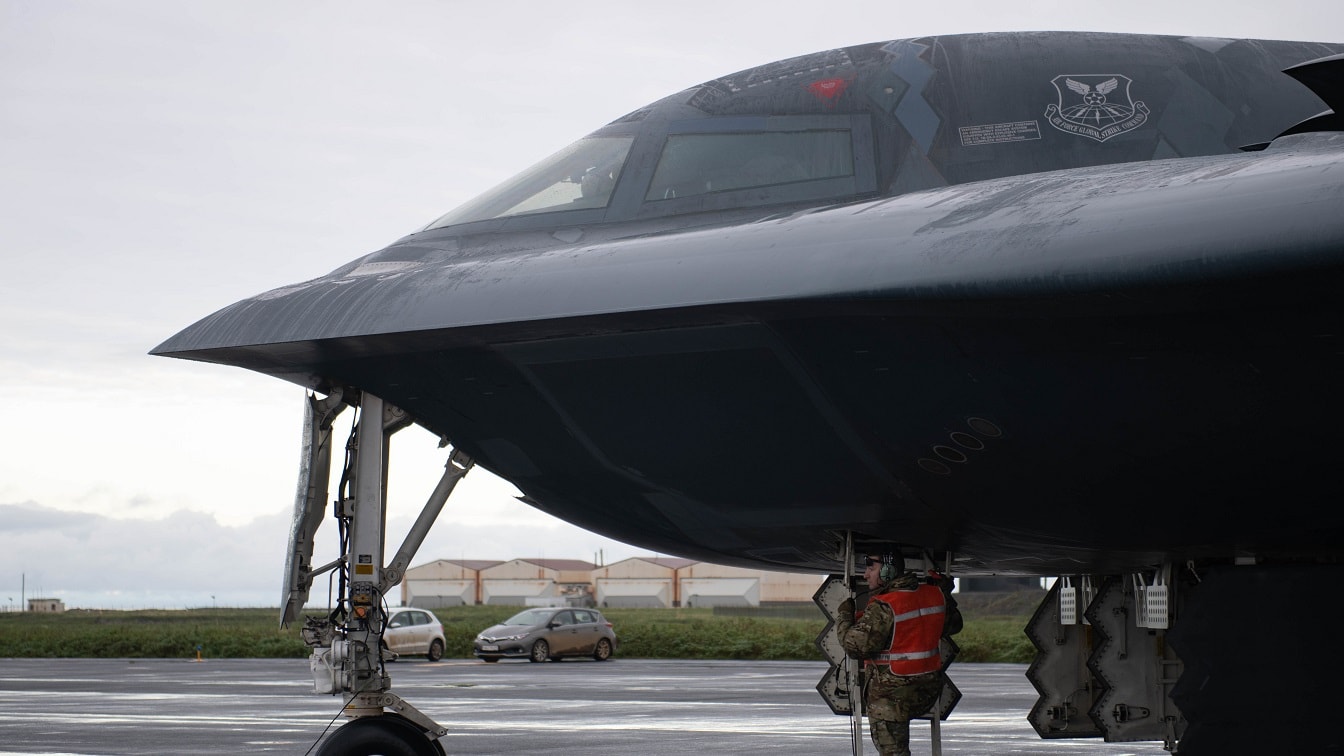
A crew chief assigned to the 110th Expeditionary Bomb Squadron, prepares a B-2 Spirit for departure from Keflavik Air Base, Iceland, Sept. 11, 2021. The stealth bomber provides unique capabilities to combatant commanders with their ability to strike targets without being detected. Operating out of Iceland allows Airmen and the B-2 to assure allies by contributing to security in the European theater. (U.S. Air Force photo by Airman 1st Class Victoria Hommel)
This is why B-2’s operate from select bases, and why the small fleet’s logistics footprint is so large. Stealth is not just a passive feature but something that must be actively maintained through intensive preparation before every mission.
The Redundancies
The B-2 is packed with redundancies in its flight controls, avionics, and power systems. Why? Because aborting mid-mission may not be an option.
The B-2 was designed to operate over hostile territory, where any sort of failure would be catastrophic. Redundant systems ensure continued flight and a safe return.
Redundancies add weight and costs—but this is deemed an appropriate tradeoff for the insurance provided.
The Environment
The B-2 flies at high altitude for long durations. Accordingly, pressurization systems are designed to reduce fatigue and prevent hypoxia. The temperature is carefully regulated. This is deceptively important because small physiological stressors compound over time.
Consider being slightly cold or slightly hot for 30 hours. The B-2 is designed to minimize distractions and stabilize the human environment, freeing up the pilot to focus on the task at hand. In that effect, the B-2 cockpit is less like a fighter cockpit and more like a mobile command pod.
The Application
These features are critical because B-2 missions involve long transits, precise timing, and single-pass strikes.
There are often no diversion airfields and no escorts. The B-2 operates alone in hostile territories at intercontinental distances. Crew endurance is critical, enabling global strike without forward basing. This complicates enemy defense planning by exploiting the advantage of surprise, which the B-2’s features facilitate.
Yes, the toilet and food build endurance, which leads to unpredictability, which in turn yields a strategic advantage. The B-2’s design acknowledges that humans execute strategy and features like toilets and food make deterrence more believable.
In effect, the B-2’s most compelling features aren’t necessarily its weapons, but its amenities; the toilet, for example, and redundancies all suggest that the aircraft is meant to fly alone, for a very long time.
About the Author: Harrison Kass
Harrison Kass is an attorney and journalist covering national security, technology, and politics. Previously, he was a political staffer and candidate, and a US Air Force pilot selectee. He holds a JD from the University of Oregon and a master’s in global journalism and international relations from NYU.