
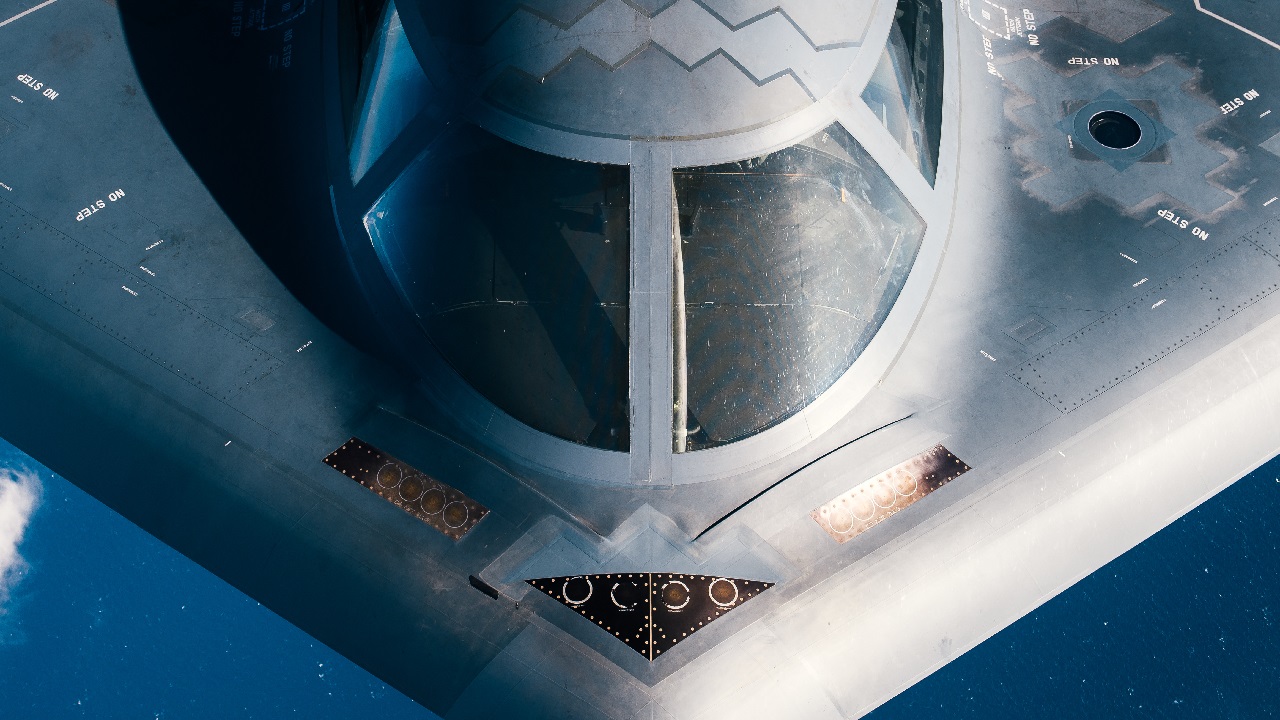
Key Points and Summary – On November 6, 2025, the B-2 “Spirit of Georgia” flew for the first time since a 2021 landing accident at Whiteman AFB nearly ended its career.
-A hydraulic failure and landing gear collapse shredded the bomber’s left wing and stealth skin, prompting early calls to scrap it.
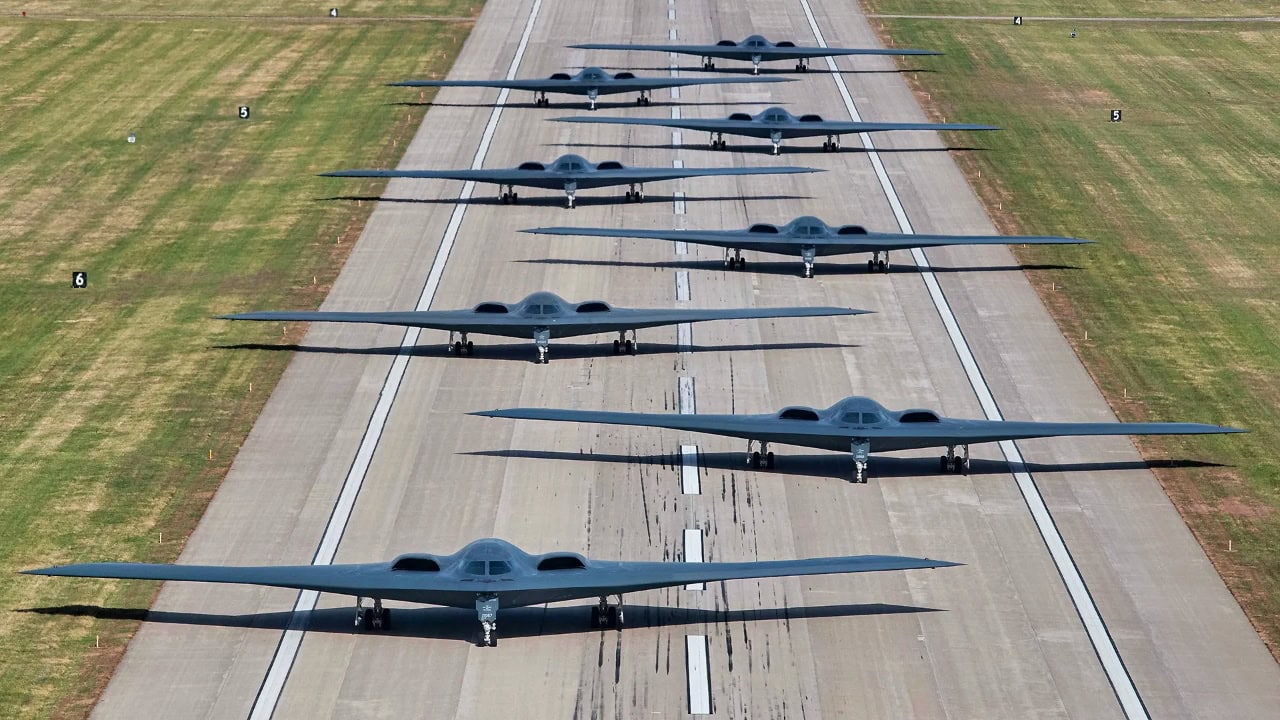
Air Force B-2 Bomb.er Elephant Walk.
-Instead, the Air Force mounted a four-phase rescue: stabilizing the jet with industrial airbags, designing bespoke composite repairs, validating them under simulated loads, and recertifying the aircraft’s structure and low observability.
-Using harvested composite panels and meticulous thermal control, depot teams restored the jet for $23.7 million—returning the B-2 fleet to nineteen airworthy bombers.
The B-2 “Spirit of Georgia” Was Nearly Scrapped. The Air Force Brought It Back From the Dead
On November 6, 2025, the B-2 Bomber “Spirit of Georgia” took to the skies for the first time in four years after it had suffered a landing accident in 2021, which nearly took it out of commission permanently.
Originally planned to be scrapped, the Air Force then invested millions of dollars to the repair and restoration of the bomber.
Despite extensive damage and high costs, the repair team successfully completed its task on the fifth-generation stealth bomber using innovative damage analysis techniques and meticulous engineering.
A B-2 Bomber Crashes
In September 2021, at Whiteman Air Force Base, Missouri, the B-2 Spirit known as “Spirit of Georgia” (tail number 89-0129) suffered a serious mishap that initially raised doubts about whether the aircraft could ever fly again.
According to the Air Force’s account, a hydraulic failure forced an emergency extension of the landing gear, and upon touchdown, a critical mechanical lock on the left main landing gear failed.
The collapse of that gear caused the left wing to grind along the runway, damaging the B-2’s exquisitely shaped composite structures and low-observable surfaces, both of which are essential to the aircraft’s stealth performance and structural integrity.
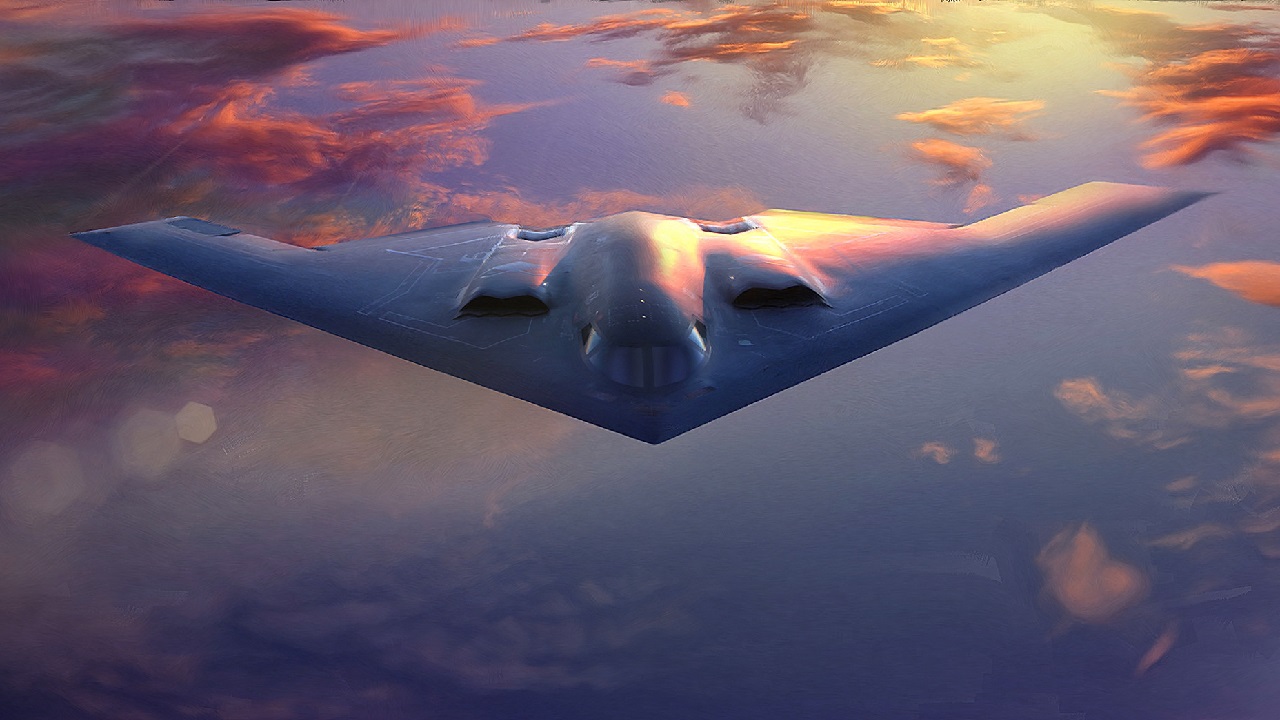
B-2 Spirit. Image Credit: Creative Commons.
The severity of the incident contributed to broader caution across the fleet, ultimately extending the grounding period while the service examined the causes and implications for the small number of B-2s still in service.
The first challenge was to stabilize and secure the aircraft without inflicting further damage. Recovery teams from the 509th Maintenance Group, working alongside engineers from the B-2 System Program Office, implemented a solution that would be more familiar on a construction site than on a flight line: they used large industrial airbags to gently lift the bomber, raising it just enough to lock the main gear manually.
Once the gear was secured, maintainers towed the aircraft into a hangar to begin detailed assessments.
This unconventional lifting method reduced the risk of further structural stress or deformation, especially around load-bearing points in the wing and landing gear bay, and it set the stage for a disciplined forensic.
Immediate Assessment and Repairs
After a thorough damage assessment, the permanent restoration was carried out through a four-phase approach: design, test validation, structural repair, and airworthiness certification. In the design phase, engineers created a bespoke plan tailored to the specific damage profile, which was concentrated around the left main landing gear bay and lower wing areas, all while preserving the aerodynamic and radar-signature fidelity of the B-2’s complex contours.
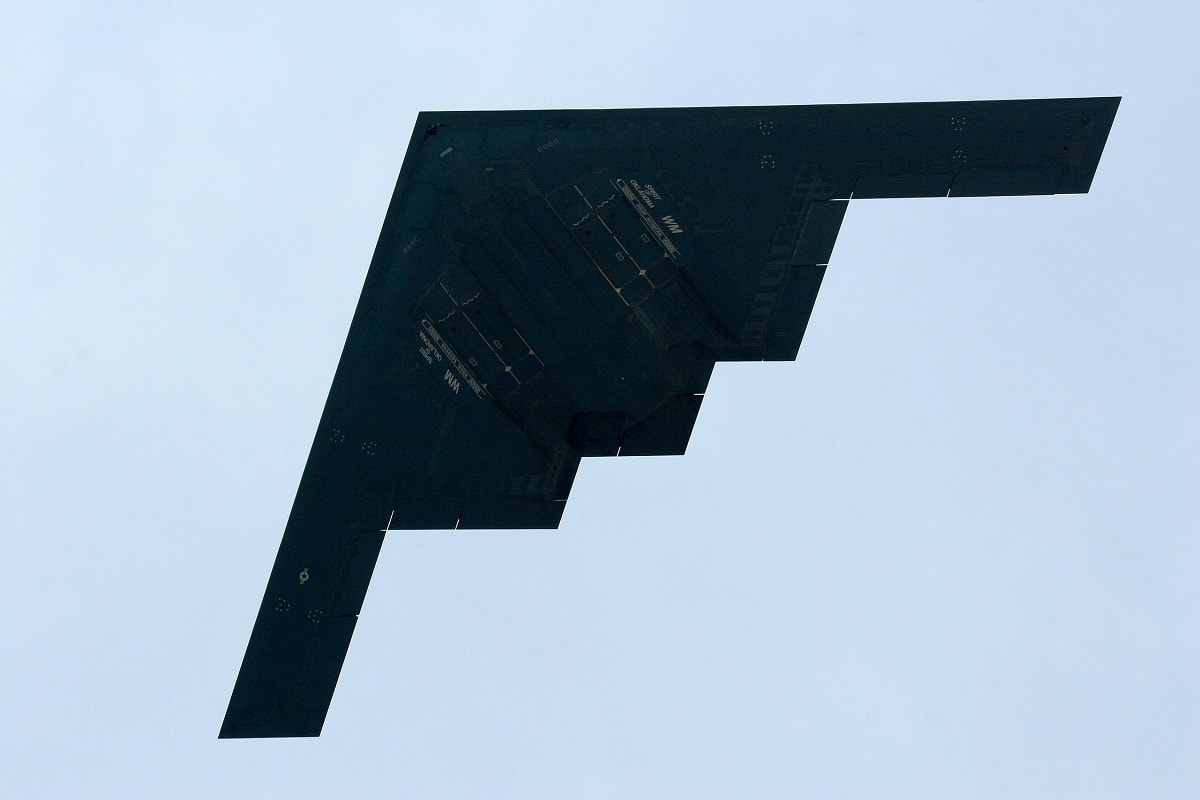
The B-2 Spirit, Spirit of Oklahoma, is silhouetted against the sky during the Thunder Over The Boardwalk Air Show, Atlantic City, N.J., Aug. 23, 2006. (U.S. Air National Guard photo by Tech. Sgt. Mark C. Olsen/Released) (This image was cropped to focus on the subject of the image)
The test-validation phase included proving the repair concepts under simulated load cases, environmental extremes, and operational conditions, ensuring that any replacement skins or structural members would integrate seamlessly with existing composites and carry loads as intended without introducing stealth-compromising discontinuities.
During the structural restoration phase, the depot team replaced major sections of the composite wing skin and swapped damaged landing-gear components, working within tight geometries that complicate conventional composite repair methods.
One notable technique involved harvesting a large composite skin panel from a designated test article, enabling a precise match to the B-2’s complex curvature without the lead time and risk associated with fabricating a brand-new panel.
Achieving proper cure required meticulous control over heat distribution, airflow, and insulation, with thermal surveys conducted to confirm uniformity across the repaired sections. This level of thermal management was essential to maintain structural performance and the integrity of low-observable coatings.
The Spirit of Georgia Takes to the Skies Again
The final phase, airworthiness certification, entailed a rigorous series of structural checks, systems verifications, and documentation reviews to ensure the aircraft met the standards required for safe flight and mission readiness.
Airworthiness encompasses far more than simple structural strength: for a stealth platform, it also includes verifying that the repaired surfaces do not degrade radar-signature control and that all flight-control interfaces behave within expected parameters under a variety of load cases.
According to the Air Force, permanent structural repairs were completed ahead of schedule by mid-May 2025, with subsequent certification work culminating in a return-to-flight on November 6, 2025.
The permanent repairs totaled approximately $23.7 million, which sounds high but is actually dramatically lower than comparable restoration efforts in the past (one B-2 mishap in Guam in 2010 required around $105 million to fix, and other total losses have been valued in the billions).
Given the small fleet, with only twenty B-2s were produced, and fewer than that remain airworthy. returning “Spirit of Georgia” to the flight line was a matter of strategic necessity. With the aircraft’s stealth, payload, and intercontinental range, every recovered airframe contributes materially to U.S. deterrence and power-projection capabilities.
When the B-2 “Spirit of Georgia” lifted off again on November 6, 2025, the return was more than a single aircraft’s comeback; it restored the B-2 fleet to nineteen airworthy bombers and reaffirmed the Air Force’s capacity to recover critical strategic assets from seemingly catastrophic situations.

B-2 Stealth Bomber. Image Credit: Creative Commons.
The project’s relatively modest price tag, achieved through disciplined diagnostics, inventive composite work, and careful certification, underscores the value of marrying innovative engineering with pragmatic sustainment.
In the end, what looked like a total loss in 2021 became a case study in how modern aerospace organizations can rescue, rebuild, and recertify one of the world’s most sophisticated stealth platforms.
About the Author: Isaac Seitz
Isaac Seitz, a Defense Columnist, graduated from Patrick Henry College’s Strategic Intelligence and National Security program. He has also studied Russian at Middlebury Language Schools and has worked as an intelligence Analyst in the private sector.