

Summary and Key Points: The U.S. Air Force’s B-2 Spirit recently executed “Operation Midnight Hammer,” a demanding precision strike on Iran’s nuclear facilities at Fordow and Natanz in June 2025.
-This mission, involving seven bombers flying non-stop from Missouri, marked the combat debut of the GBU-57A/B Massive Ordnance Penetrator (MOP), a 30,000-pound bunker-buster designed to destroy hardened underground targets.
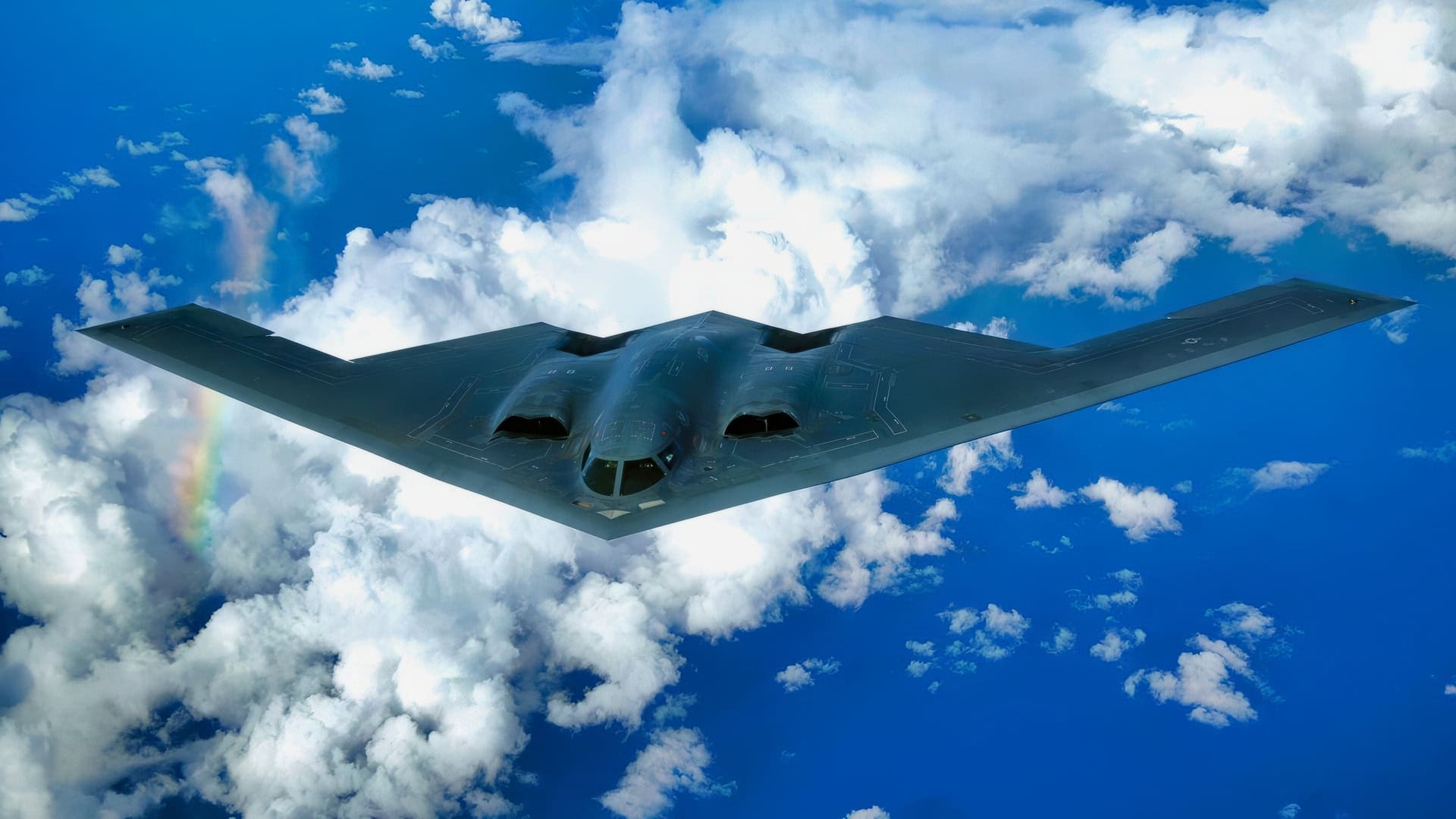
A B-2 Spirit soars after a refueling mission over the Pacific Ocean on Tuesday, May 30, 2006. The B-2, from the 509th Bomb Wing at Whiteman Air Force Base, Mo., is part of a continuous bomber presence in the Asia-Pacific region. (U.S. Air Force photo/Staff Sgt. Bennie J. Davis III)
-While the B-2 originated as a Cold War nuclear deterrent, the aircraft that flew into Iran was “fundamentally different” due to decades of modernization.
The Secret Weapon: Continuous upgrades—including the GPS-Aided Targeting System (GATS), advanced digital networking, and hardened communications—have transformed the stealth bomber into a premier conventional strike platform capable of navigating modern, contested airspace.
The Secret Upgrades Behind the B-2’s 30-Hour Mission to Iran
When the United States Air Force’s B-2 Spirit traveled across continents and dropped massive bunker-buster bombs on Iran’s nuclear sites in June 2025, it didn’t go unnoticed among observers and analysts that it was an aircraft born in the late Cold War that pulled off one of the most demanding precision strike missions in history.
The feat was not the result of relying on the bomber’s original 1980s technology, however; it was only possible because the B-2’s systems, sensors, communications, and weapons have been continuously modernized over more than three decades.
What flew into Iranian airspace on June 21/22 was a fundamentally different aircraft from the B-2 conceived in the 1980s: one with heavily upgraded internals and networking systems.
Cold War Origins
The B-2 began life as the Advanced Technology Bomber, a strategic aircraft designed to penetrate the dense Soviet-era air defenses of the 1980s and deliver nuclear weapons deep into enemy territory.
Engineers shaped the aircraft’s flying wing and coated it with radar-absorbent materials to minimize its radar cross-section, thereby allowing it to evade detection by the large, mechanically scanned air-defense radars of the era. Its purpose was always nuclear deterrence./
In its original configuration, the B-2 lacked the kinds of digital networking, precision conventional weapons, and advanced sensor suites that define modern strike aircraft.
The cockpit displays, communication systems, and, indeed, the onboard computing power were state-of-the-art in the 1980s but dated by the turn of the century. Payload options were limited to gravity nuclear bombs and early GPS-aided munitions. Those capabilities were good for the time, but insufficient for the demands of today’s networked combat environment.
Becoming A Precision Strike Platform
The B-2’s value did not erode entirely at the end of the Cold War because its mission changed. In the 1990s and 2000s, the Air Force invested heavily in transforming the bomber into a conventional precision strike platform.
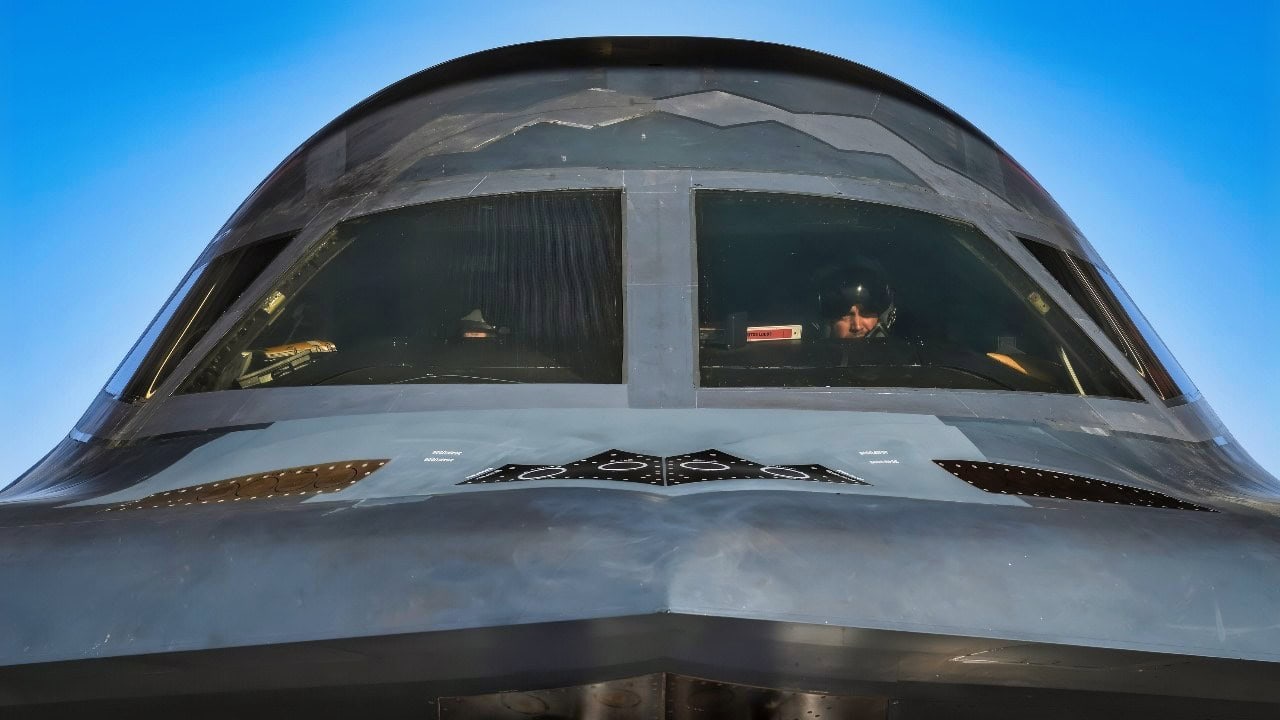
A U.S. Air Force B-2 Spirit aircrew performs pre-flight checks in the cockpit of their aircraft at Whiteman Air Force Base, Missouri, March 8, 2020. The B-2 took off from Whiteman AFB to support U.S. Strategic Command Bomber Task Force operations in Europe. The 131st Bomb Wing is the total-force partner unit to the 509th Bomb Wing. (U.S. Air Force photo by Tech. Sgt. Alexander W. Riedel)

B-2 Spirit Stealth Bomber 19FortyFive Image. Taken By Harry J. Kazianis at U.S. Air Force Museum in 2025.
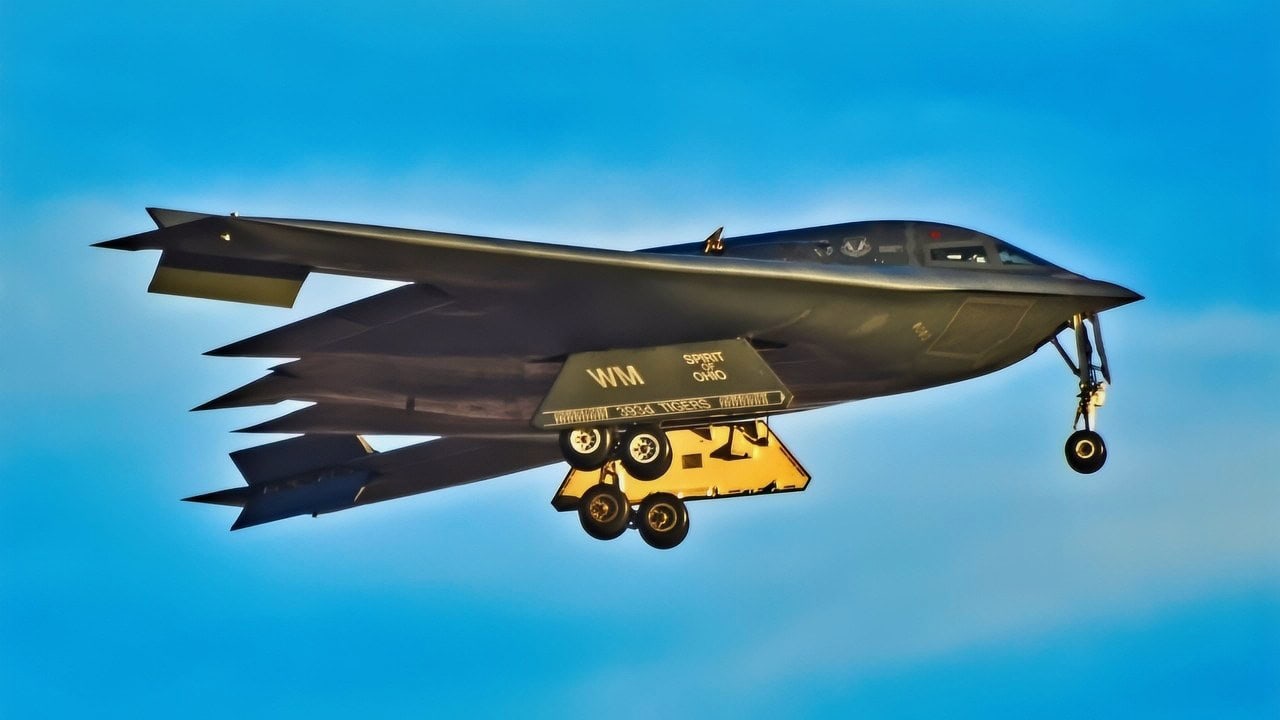
B-2A Spirit Stealth Bomber. Image Credit: Creative Commons.
Crucially, the B-2 was outfitted with the GPS-Aided Targeting System (GATS), allowing its APQ-181 synthetic aperture radar to map targets and guide Joint Direct Attack Munitions (JDAMs) with high accuracy. Early configurations could carry up to 16 JDAMs, and a 2004 upgrade expanded that capacity to 80.
The bomber was later tailored to support operations in Kosovo, Iraq, and Afghanistan, where its stealth and precision capabilities enabled strikes with minimal collateral damage. Then, it began carrying a wider array of conventional munitions, from cluster weapons to sophisticated guided bombs. Those changes then laid the groundwork for the B-2’s employment in complex, modern campaigns.
A New Digital Era for the B-2
What distinguishes today’s B-2 most dramatically from its 1988 predecessor is not its airframe but its digital systems.
Modernization efforts have focused on enhancing the bomber’s ability to operate in contested environments in which GPS signals may be degraded and enemy defenses are networked and mobile. Recent upgrades have improved the aircraft’s capacity to generate and share targeting data even under electronic attack, for example, feeding coordinates into weapons before release and enabling them to function when satellite signals falter.
The B-2 is continually receiving upgrades. In July 2025, reports described how the B-2 Spirit received new communications and survivability upgrades through ongoing software updates that enable crews to “aviate, navigate, communicate, strike their targets, and get home safely.” The U.S. Air Force Life-Cycle Management Center (AFLCMC) revealed that the upgrades were implemented by the B-2 Advanced Programs Branch, and that they “may include acquisition programs that modify either hardware or software.”
Beyond communications and software, the bomber’s defensive systems are also being upgraded to enhance situational awareness and survivability.
Hardware and software updates enhance threat detection, providing crews with a more comprehensive picture of adversary radar emissions (indicating the presence of adversary assets) and battlefield dynamics.
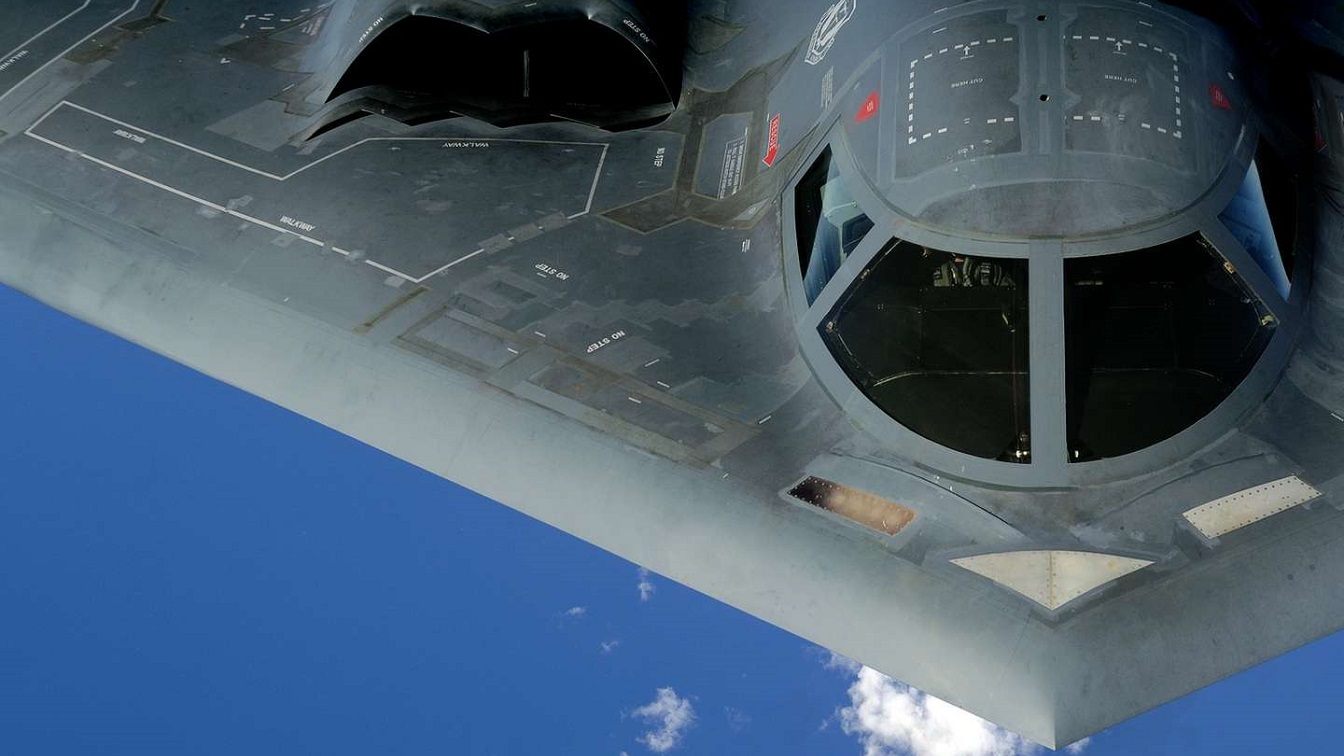
Image of B-2 Spirit stealth bomber. Image Credit: Creative Commons.
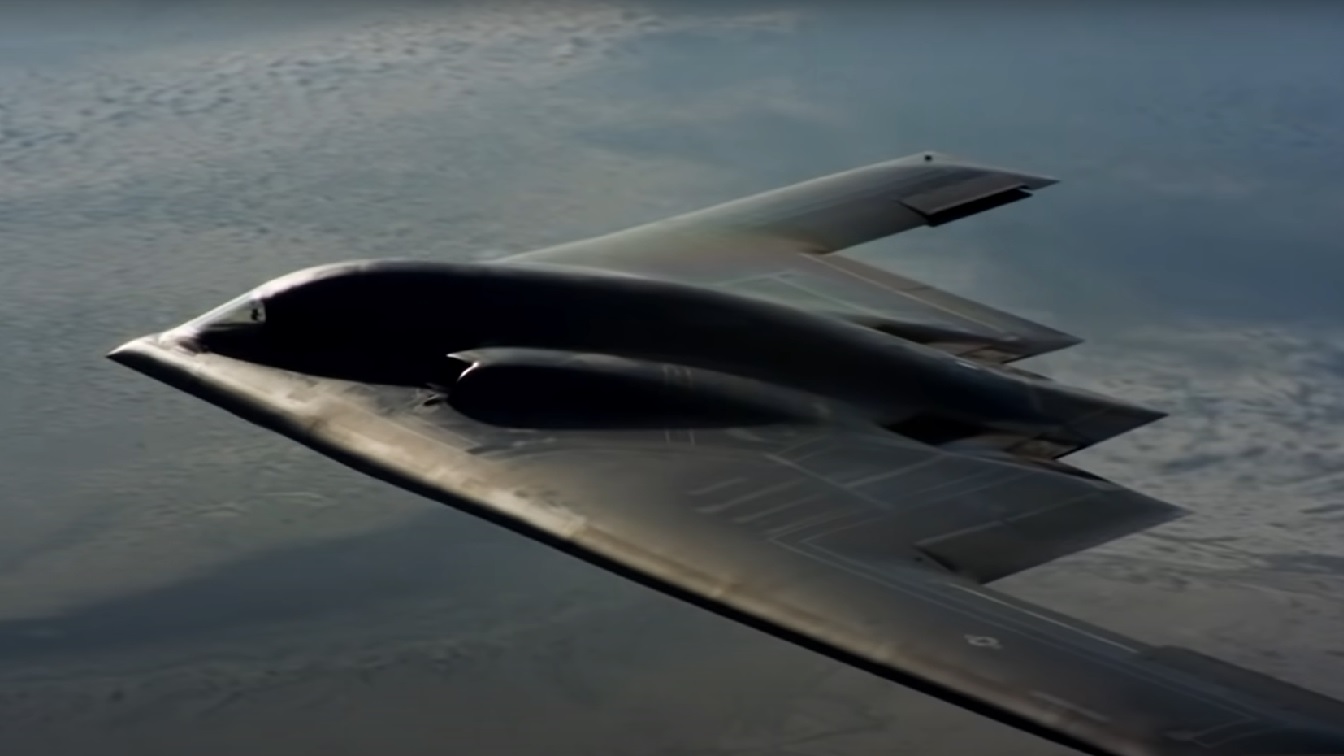
B-2 Spirit. Image Credit: Northrop Grumman.
Those upgrades, while classified in detail, represent a major effort to ensure that the B-2, while the B-21 Raider continues development, remains relevant in a dynamic, data-rich battlespace.
Weapons Integration and the Iran Strike
The June 2025 strike on Iran’s nuclear facilities, known as Operation Midnight Hammer, proved just how far the B-2 has come in terms of its capabilities.
In that mission, seven B-2 bombers flew nonstop from Whiteman Air Force Base in Missouri to Iran, where they dropped numerous GBU-57A/B Massive Ordnance Penetrators (MOPs) on hardened underground targets at Fordow and Natanz.
The use of these 30,000-pound bunker-busting bombs marked the first combat deployment of the weapon, and the mission was one of the longest B-2 sorties ever flown.
Executing a mission like that required stealth, but it also demanded aerial refueling support, secure communications, and the ability to integrate large, modern weapons into the bomber’s arsenal.
It also depended on sophisticated planning and real-time networking with other assets – capabilities that were given to the B-2 through a long series of upgrades that have transformed it, almost, into an entirely new aircraft.
About the Author:
Jack Buckby is a British researcher and analyst specialising in defence and national security, based in New York. His work focuses on military capability, procurement, and strategic competition, producing and editing analysis for policy and defence audiences. He brings extensive editorial experience, with a career output spanning over 1,000 articles at 19FortyFive and National Security Journal, and has previously authored books and papers on extremism and deradicalisation.