
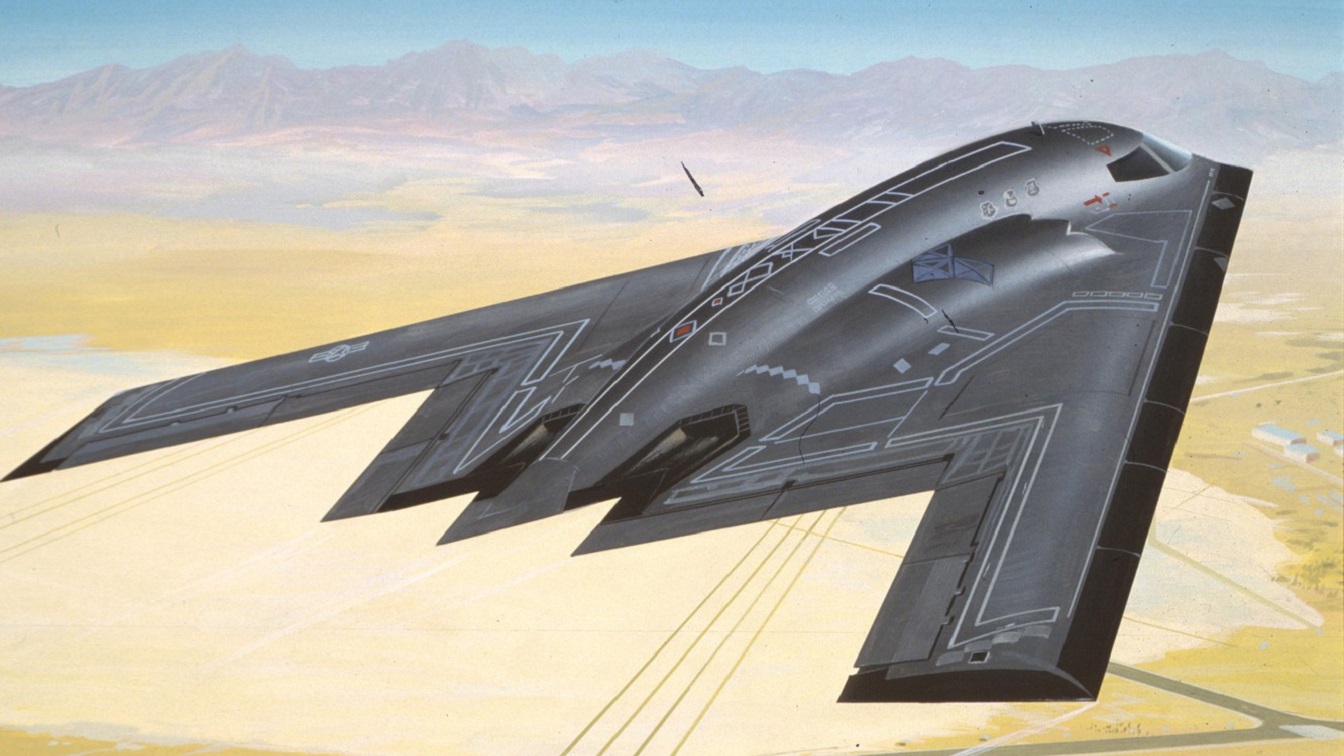
Key Points and Summary – In 2021, the B-2 “Spirit of Georgia” suffered a hydraulic failure and landing gear collapse at Whiteman Air Force Base, grinding a wing along the runway and sidelining one of only 19 operational B-2s.
-Four years and $23.7 million later, the bomber is flying again after an intricate, multi-phase repair effort led by the B-2 System Program Office and Northrop Grumman.
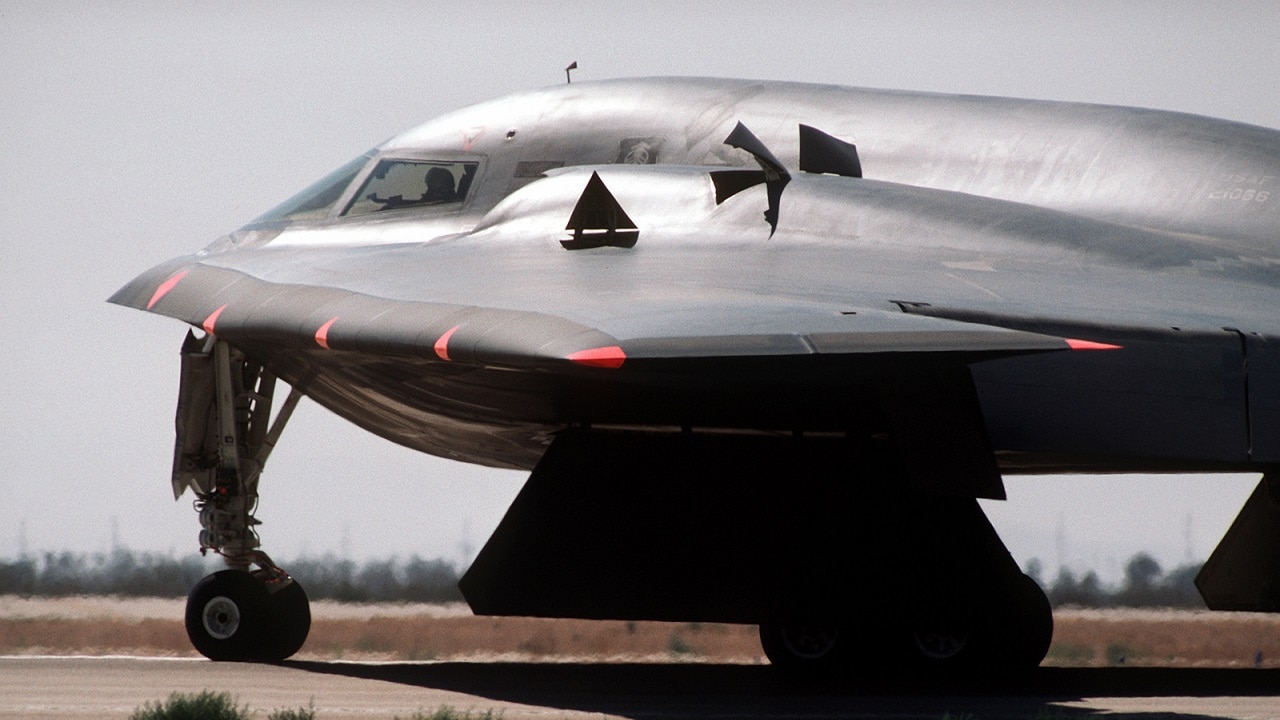
A left side view of the front of a B-2 advanced technology bomber aircraft as it prepares for its first flight, at the Air Force Flight Test Center.
-Engineers replaced major wing structures, landing gear components, and composite skin, overcoming complex heat-control and curing challenges inside confined spaces.
-With B-2 production long closed and demand rising after “Operation Midnight Hammer” over Iran, every recovered airframe is strategically vital.
How the B-2 ‘Spirit of Georgia’ Cheated Death and Flew Again
In September of 2021, a B-2 Spirit suffered a hydraulic failure at Whiteman Air Force Base in Missouri. In November of this year, just slightly more than four years later, that aircraft returned to flight.
Recently, the Air Force Life Cycle Management Center at Eglin Air Force Base laid out the story of the “remarkable display of teamwork, ingenuity, and determination” that enabled its return to flight.
How It Happened
The B-2 in question has the tail number 89-0129 and is known as The Spirit of Georgia. The 2021 accident was described by the Air Force as, “a hydraulic failure forced an emergency gear extension, and upon landing, a critical mechanical lock on the left main landing gear failed. As a result, the gear collapsed, causing the left wing to scrape along the runway.”
The Air Force released a report back in 2021, after the initial crash.
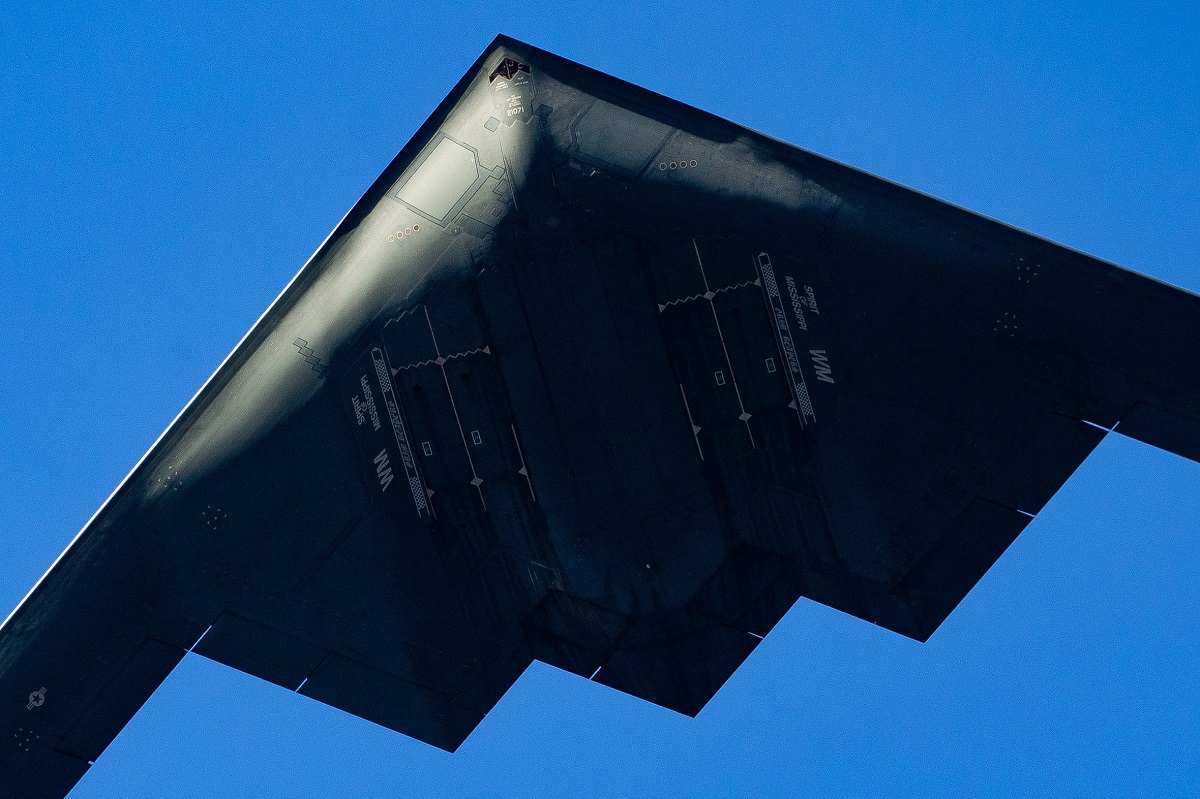
B-2 Bomber. Image Credit: US Air Force.
“The Abbreviated Accident Investigation Board (AAIB) President found, by a preponderance of the evidence, the cause of the mishap was that the MA’s LMLG lock link springs failed to provide sufficient pressure to maintain the lock links in the locked position, which resulted in a LMLG collapse during the MA’s landing,” the report said.
“Further, the AAIB President found, by a preponderance of the evidence, that one factor substantially contributed to the mishap: the failure of a hydraulic CryoFit coupling that drove a rapid a loss of hydraulic fluid in the #1 and #4 hydraulic systems, which isolated the LMLG lock link actuator and prevented its use in assisting the LMLG lock link to remain down and locked.”
The Air Force Life Cycle Management Center’s B-2 System Program Office soon got to work on fixing it.
“The immediate response by the 509th Maintenance and B-2 System Program Office Engineering team was critical,” Col. Jason Shirley, Senior Materiel Leader of the program office, said in the Air Force announcement. “They quickly recovered the aircraft, using airbags to lift it enough to manually lock the main gear and tow it into the hangar. Damage assessments and Non-Destructive Inspections followed, revealing damage primarily concentrated around the left main landing gear bay and lower wing area.”
Four Phases
The repairs required four different steps, the Air Force said, after it was ferried from Whiteman AFB to Northrop Grumman’s facility in Palmdale, Calif. Even making that transport, per the Air Force, “required extensive inspections and temporary repairs.”
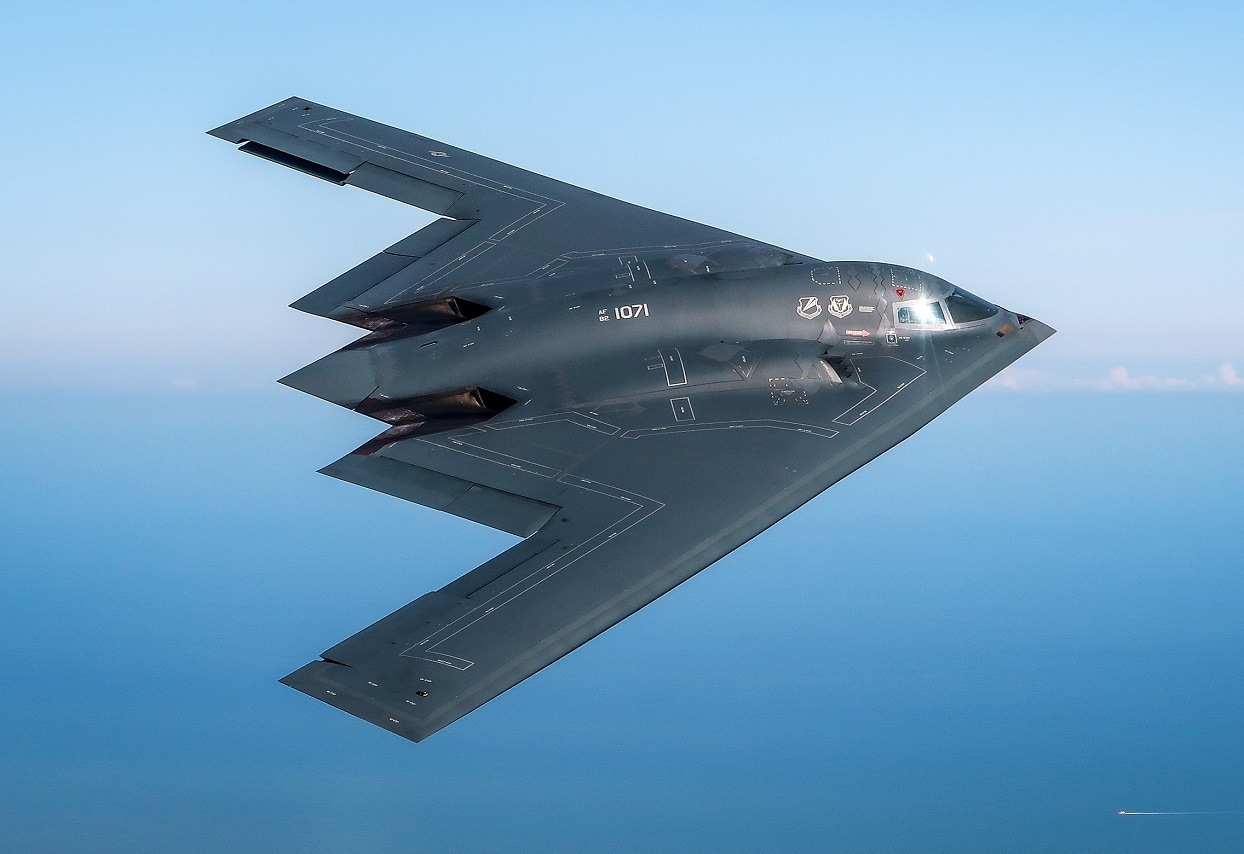
B-2 Bomber. Image Credit: Creative Commons.
The four phases, which cost $23.7 million, were “Design the repair and order long-lead materials, conduct test panels to prove the repair concept, repair the aircraft, and develop airworthiness artifacts to certify the repairs.” The repairs were finished in May.
“This repair restored functionality to 89-0129’s lower wing skin carrying wing loads, airstream, and internal fuel tank pressures,” the Air Force said. “Additional milestones included replacing the left-hand wingtip, the outboard wing major mate skin panel and the left-hand main landing gear door hinges, repairing composite skin disbonds, and rigging the door.”
The process, the Air Force said, included some “engineering challenges,” including finding a way to control heat distribution during the composite repair process.
“The distribution of localized heat to the areas needing cure, while maintaining localized control as repair areas were in enclosed, confined spaces and directly adjacent to critical joints and structure, was a huge challenge,” Matt Powers, Structure Engineer with the B-2 System Program Office, said in the Air Force’s announcement.
“This was overcome by utilizing advanced custom-built heating equipment, performing thermal surveys, and adjusting insulation and cooling air throughout the final cure.”
The process also utilized some new technologies.

Image: Creative Commons.
“Damage to the B-2 AV 89-0129 aircraft was extensive and required unique repairs, including reconstruction of the damaged left wing,” Jerry McBrearty, vice president and B-2 program manager, Northrop Grumman, said in the Air Force announcement. “Our team developed and applied innovative composite repairs using new scarf repair analysis techniques and processes leveraged from other Northrop Grumman programs.”
Why It’s Important
The return of a B-2 is essential, in part because there are so few of them. There are currently just 19 B-2 stealth bombers, and the Trump Administration has made it clear that it’s not planning to order any more. President Trump himself has said that he is ordering more B-2s, but he appears to have confused that with the new B-21 bomber, two of which are already in the air.
“The idea of reviving the B-2 Spirit line is implausible on every level. While the aircraft may superficially resemble the B-21, the two are separated by more than 30 years of technological evolution,” Aerospace Global News reported in October. “It is unclear whether the B-21 has been described to Trump as an ‘updated B-2,’ or whether he used that phrasing for simplicity.”
Per the AGN report, it’s nearly impossible to build more B-2s.
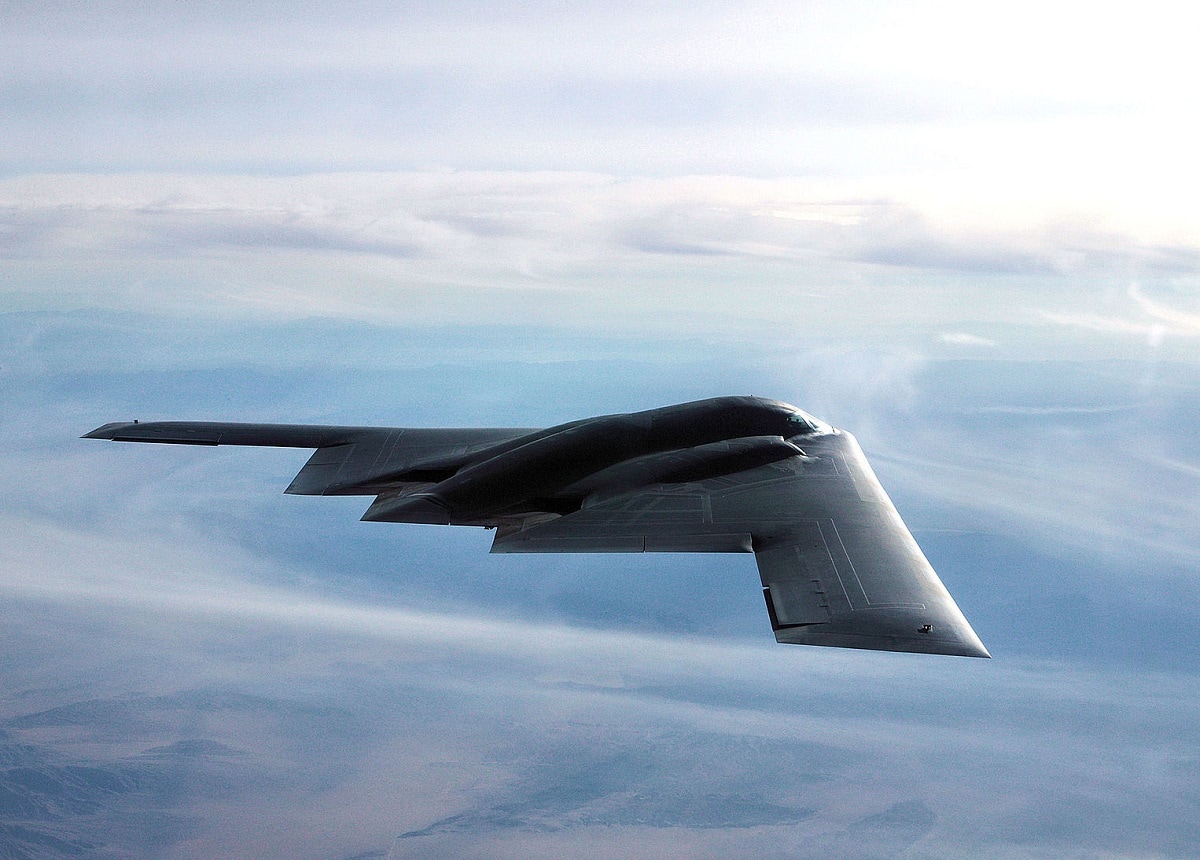
The B-2 Stealth Bomber on a test mission from Edwards Air Force Base, Calif. The polar flight helped ensure that the B-2 maintains its global combat power capability in all environments with new computers for future growth and sustained contributions to the greater Air Force mission. (U.S. Air Force Photo by Bobbi Zapka)
“The B-2 has been out of production for over two decades. Re-establishing the manufacturing line would mean rebuilding it from scratch,” the report said. “Most of the original tooling was destroyed or repurposed after production ceased in the early 2000s. Re-creating the enormous composite moulds used to shape the flying-wing structure would take years and cost billions.”
The B-2 had a moment of the sun this summer, when several of them participated in the attack on Iran’s nuclear facilities, the operation known as “Operation Midnight Hammer.” It was described as the most significant strike involving B-2 bombers in history.
Seven B-2 bombers, all launched from Whiteman Air Force Base, participated in the attacks, and 13 were on the mission, the Pentagon said at the time, with the others sent in the other direction as a decoy. They were among the 125 aircraft involved in the operation.
An Essential Return
“The return of the Spirit of Georgia is essential for maintaining the B-2 fleet’s readiness. It enhances the fleet’s operational capabilities and strategic deterrence,” the Air Force announcement of the return of the aircraft said.
“The availability and effects of deep penetrating strike make the B-2 one of the most important capabilities in our arsenal. The severe degradation of Iran’s nuclear program and ensuing ceasefire post-Operation Midnight Hammer is proof. More B-2 capacity means more strategic and lethal deterrence options for the President of the United States and Secretary of War.”
About the Author: Stephen Silver
Stephen Silver is an award-winning journalist, essayist, and film critic, and contributor to the Philadelphia Inquirer, the Jewish Telegraphic Agency, Broad Street Review, and Splice Today. The co-founder of the Philadelphia Film Critics Circle, Stephen lives in suburban Philadelphia with his wife and two sons. For over a decade, Stephen has authored thousands of articles that focus on politics, national security, technology, and the economy. Follow him on X (formerly Twitter) at @StephenSilver, and subscribe to his Substack newsletter.