
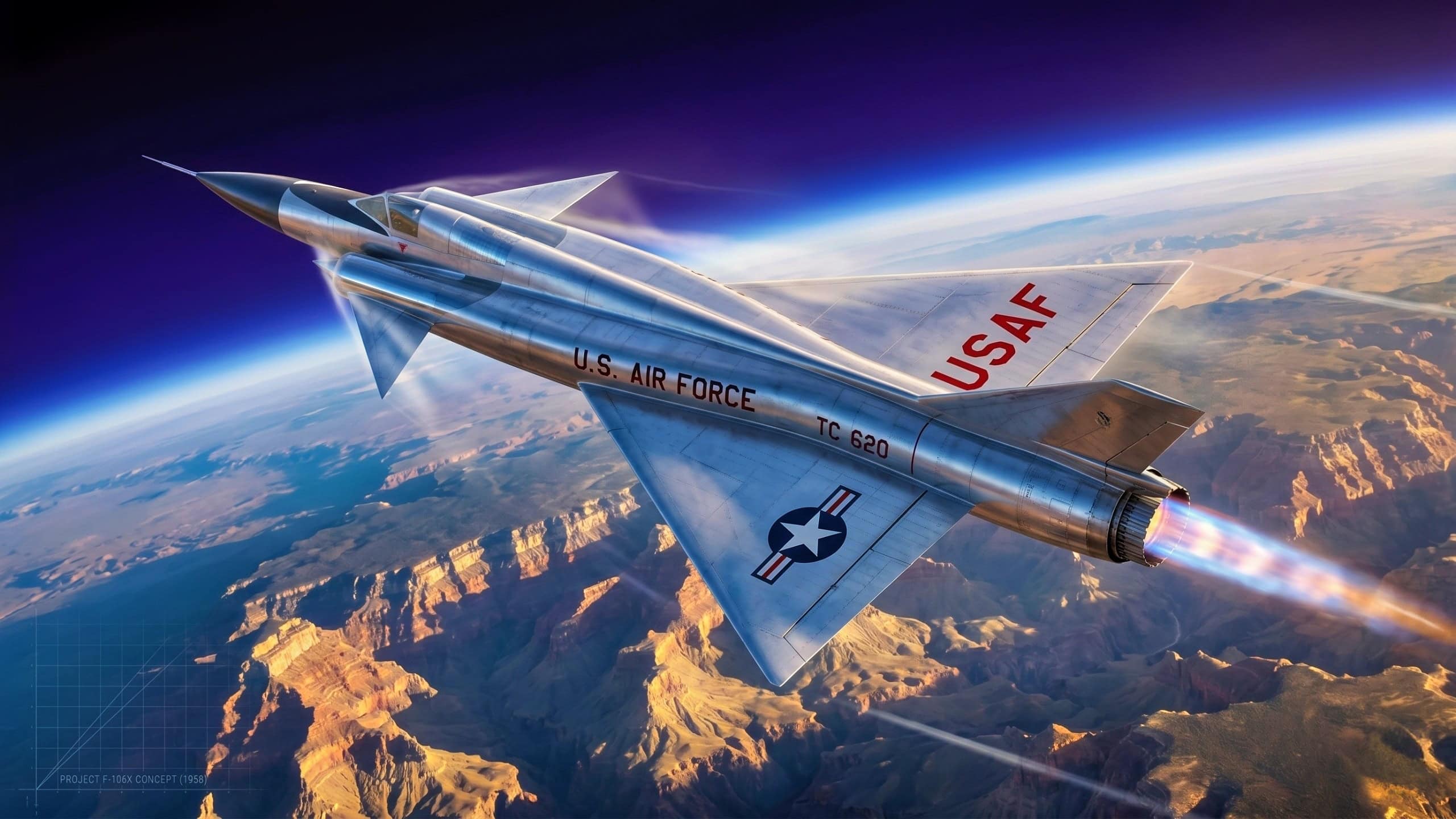
Why the F-106X Never Made It Into the Sky: The U.S. Air Force is betting big on its new generation of airpower. Its advanced F-47 fighter program remains on track for a first flight by 2028, according to senior officials, while the Navy is pressing ahead with its own next-generation F/A-XX carrier fighter despite ongoing budget pressure. The two programs, though unequal in terms of their allocated resources, reflect an objective that is by no means new to Washington: staying ahead of rising Chinese military power with aircraft capable of dominating contested skies
China is pushing hard to narrow the military aviation gap with the United States, fielding advanced fighters, long-range missiles, and increasingly capable naval airpower. But America has faced this kind of strategic pressure before. Decades before stealth fighters existed, and long before sensor fusion or drone wingmen were even concepts, Convair explored one of the boldest interceptor ideas of the Cold War: the F-106X, an unbuilt evolution of the F-106 Delta Dart that some historical sources describe as targeting Mach 5 performance. It never flew, but it showed that Washington’s search for technological overmatch did not begin in the 21st century.
The F-106 Was Built to Take On Soviet Bombers
To understand the F-106X, we must first examine the operational demands – and adversarial pressure – that drove its development.
The Convair F-106 Delta Dart entered U.S. Air Force service in 1959 and became one of America’s premier Cold War interceptors. Unlike modern multirole fighters, it was designed for a narrower and urgent mission: launch quickly, climb fast, race toward incoming Soviet bombers, and destroy them before they could strike North America.
That mission shaped every single part of the aircraft. The F-106 used a delta wing optimized for high-speed flight, carried weapons internally to reduce drag, and integrated with America’s broader continental air-defense system. Through the Semi-Automatic Ground Environment, or SAGE, ground controllers could help direct interceptors toward approaching threats. And its weapons fit the era’s thinking, carrying AIM-4 Falcon missiles and, in some configurations, the AIR-2 Genie, a nuclear-tipped air-to-air rocket intended to destroy bomber formations. By modern standards, it sounds extraordinary – but during the Cold War, it was seen as a practical and necessary deterrence.
Then Came the F-106X
By the late 1960s, threats were changing, and aerospace ambition was growing. Soviet bomber technology was improving, missile technology was advancing, and American engineers were pushing the boundaries of speed. That was the environment in which the F-106X began to emerge.
The proposed aircraft would have gone far beyond a routine upgrade. Historical concept material describes redesigned intakes, canards, larger radar arrangements, improved fire-control systems, and dramatically greater performance potential than the standard F-106.
Some surviving references describe the concept as a Mach 5 interceptor. Had that been achieved, it would have meant an aircraft that flew at roughly five times the speed of sound – the kind of performance associated less with traditional fighters and more with experimental aerospace programs.
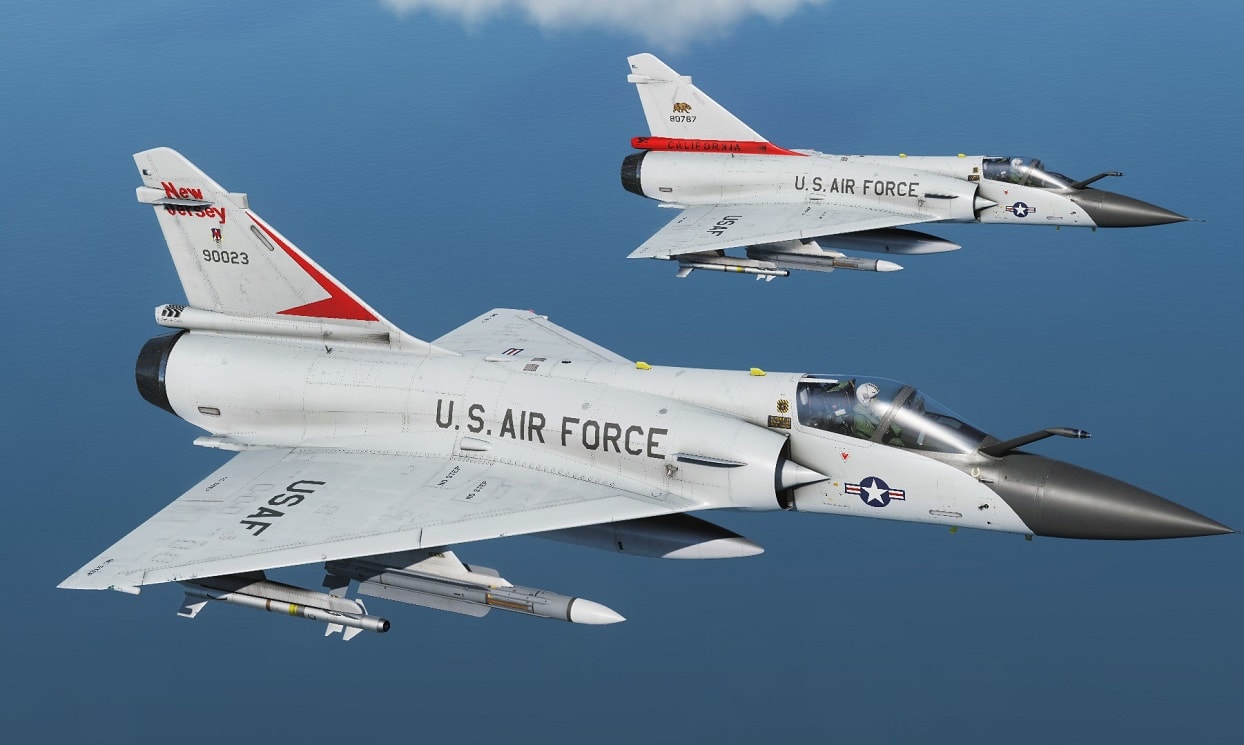
Image: Creative Commons.
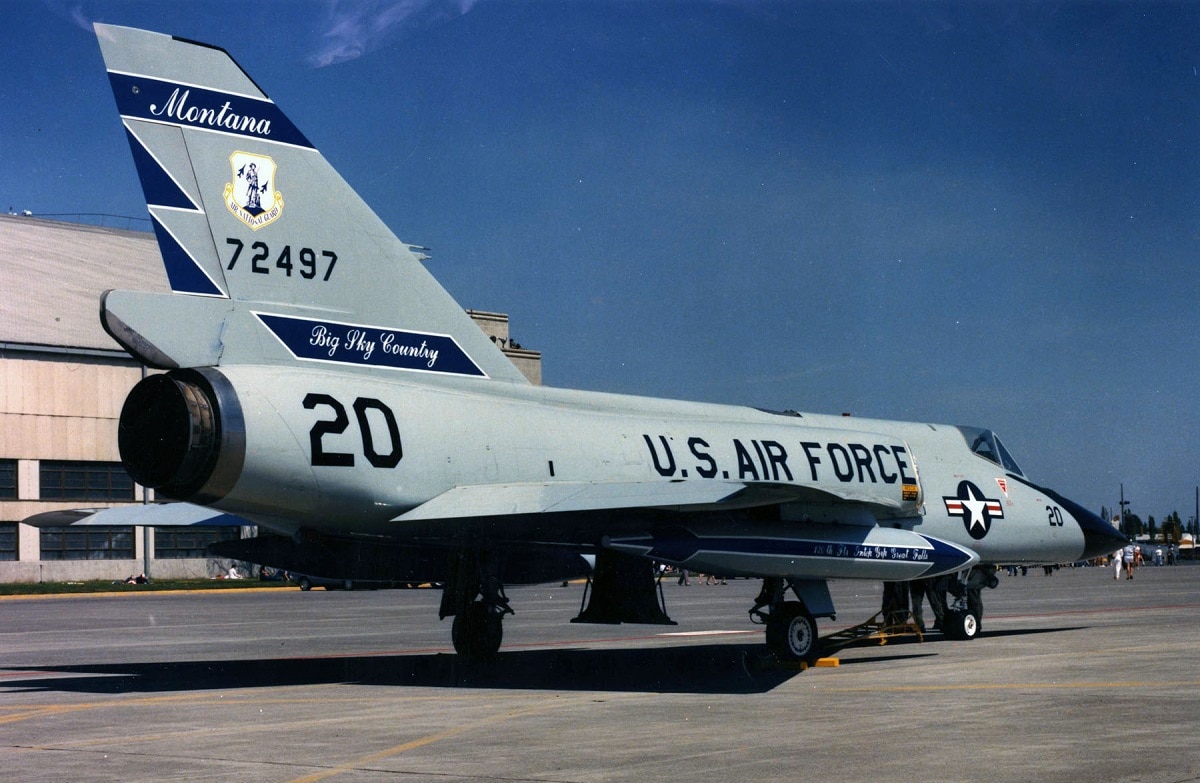
Convair F-106A. (U.S. Air Force photo)
It was dramatic, but it was considered necessary at the time because if bombers or reconnaissance aircraft became faster, the interceptor needed to be faster still. Speed shortened response times and expanded defended territory. It also gave commanders more opportunities to engage threats before they reached critical targets.
Convair was effectively trying to turn a traditional interceptor into something closer to a reusable missile, one flown by a human pilot.
Why It Never Happened
While the F-106X was intended to address a real military problem, its ambitious design couldn’t overcome the realities of the battlefield. First of all, Mach 5 is extremely demanding on both the pilot and the aircraft.
At those speeds, airframe heating reaches incredible levels, and propulsion becomes more complex. And then there is the matter of the maintenance burden. Materials that worked well on Mach 2 aircraft were not necessarily suitable for sustained extreme-speed operations.
Second, the threat environment was changing. Soviet bombers certainly still mattered, but intercontinental ballistic missiles increasingly dominated strategic nuclear planning. A manned interceptor could chase bombers, but it could not solve the ballistic missile problem.
Third, the United States already had other high-speed aerospace efforts underway, including the Lockheed YF-12, which itself was derived from the A-12/SR-71 family. Funding multiple expensive interceptor projects was difficult to justify.
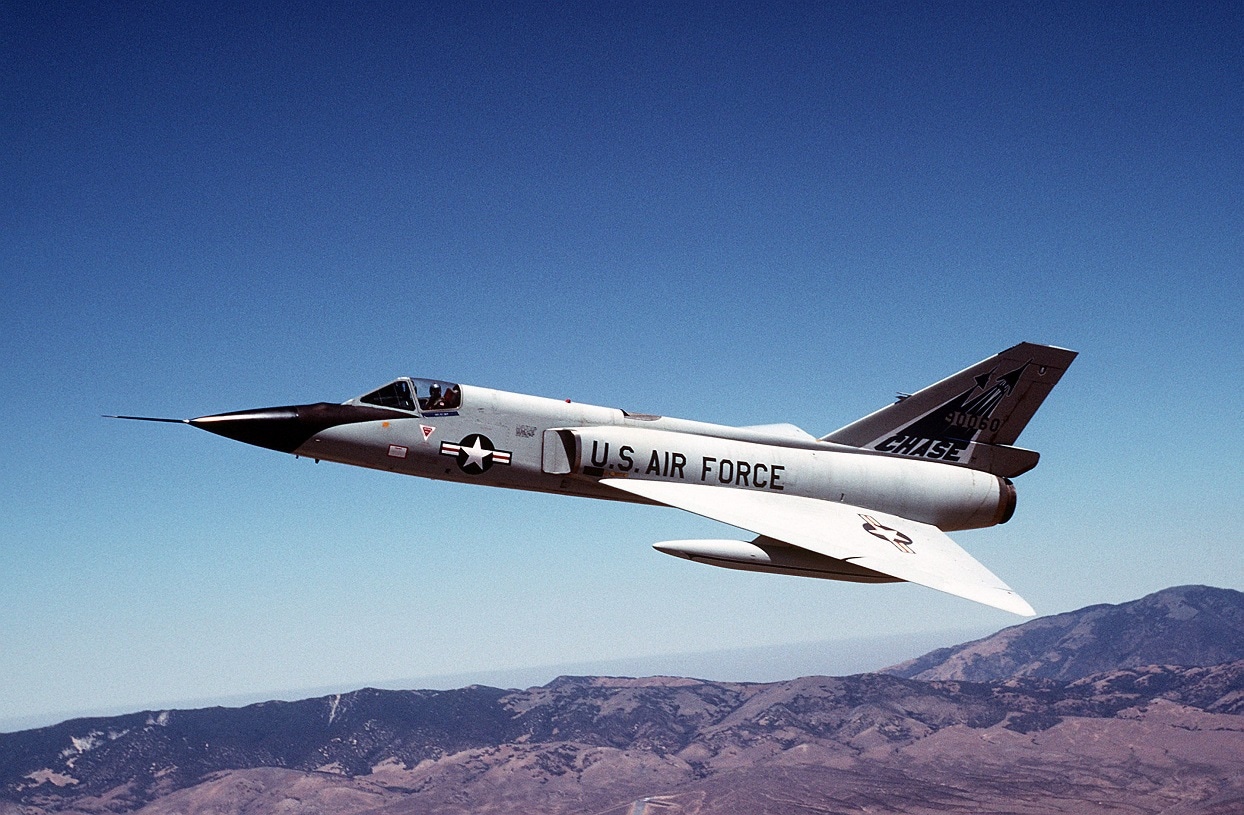
Image: Creative Commons.
And so, the Air Force ultimately stuck with conventional solutions, with the standard F-106 staying in service for decades. Air National Guard units flew the aircraft into the late 1980s.
Even decades after the project ended, the F-106X is interesting again because it reveals something constant in American defense planning. Washington repeatedly returns to the question of how far U.S. airpower can stay ahead of adversarial threats.
And just as the Soviets were attempting to close the gap with the U.S. at the time, the Chinese are building out their fifth-generation airpower, developing sixth-generation fighters, and racing to deploy as many supercarriers as possible.
In the 1960s, the United States’ answer was raw speed, but today it is much broader.
The Air Force’s F-47 fighter will provide longer range and improved stealth. It will be more survivable and adaptable, built on the incredible sensor-fusion technology pioneered by the F-35 platform. The F-47 will also function alongside collaborative unmanned systems.

An air-to-air right side view of an F-106 Delta Dart aircraft after firing an ATR-2A missile over a range. An auxiliary fuel tank is on each wing. The aircraft is assigned to the 194th Fighter Interceptor Squadron, California Air National Guard.
The F-106X may have never left the drawing board, but the F-47 is racing to stay ahead of an increasingly capable China.
About the Author: Jack Buckby
Jack Buckby is a British researcher and analyst specializing in defense and national security, based in New York. His work focuses on military capability, procurement, and strategic competition, producing and editing analysis for policy and defense audiences. He brings extensive editorial experience, with a career output spanning over 1,000 articles at 19FortyFive and National Security Journal, and has previously authored books and papers on extremism and deradicalization.