
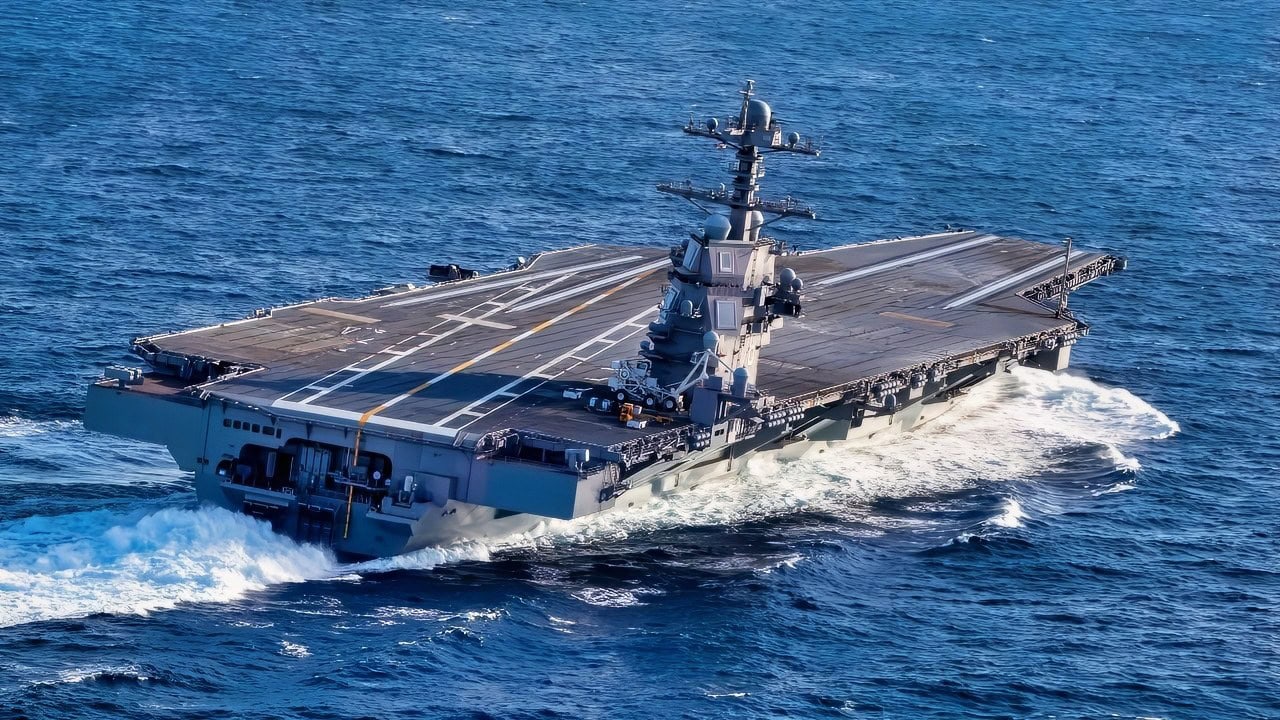
Outgoing Navy Secretary John Phelan confirmed during the Sea-Air-Space symposium in Washington on Tuesday, April 21, that the U.S. Navy is conducting a new review of the cost, design, and long-term value of its future Ford-class aircraft carriers. The result of the review could shape the next generation of American sea power as shipbuilding costs and strategic demand increase.
Phelan said that the service is examining CVN-82 and CVN-83, the next planned Ford-class carriers, to determine whether the program still delivers the right balance of capability and affordability. Phelan was removed from office the following day, with sources familiar with the situation citing his poor relationship with Defense Secretary Pete Hegseth as the reason behind the decision. Sources also indicated that the Pentagon believed he was moving too slowly on shipbuilding reforms.
“We are looking at 82 [CVN-82] and 83 [CVN-83] to review the costs, the designs, the systems, to make sure that they make sense,” Phelan said during the expo.
The review comes as the Navy faces pressure to fund submarines, destroyers, logistics vessels, unmanned systems, and a broader fleet expansion under the Trump administration’s proposed $1.5 trillion fiscal year 2027 defense budget. Navy shipbuilding alone would receive $65.8 billion under that request.
Ford-class: What the Navy May Be Reconsidering
Ford-class carriers are among the most expensive warships ever built – so there’s a lot to review. The lead ship, USS Gerald R. Ford, cost roughly $13 billion to manufacture. That level of spending is significant, not just because of its enormity but because a nuclear aircraft carrier can consume a major portion of annual shipbuilding funds and capacity, limiting how quickly the Navy can add other ships needed for operations in the Pacific and the Middle East.
“I think that it’s a prudent and practical thing for us to do, given the costs of them as a percentage of the budget and how we are thinking about the force design and our needs going forward,” Phelan said.
The phrase “force design” is particularly important here. The Navy is weighing not just whether carriers remain useful, but also how many it needs, how advanced they should be, and the trade-offs required to fund submarines and escorts that would be essential in a potential conflict with China.
The review is expected to conclude by the end of May 2026.
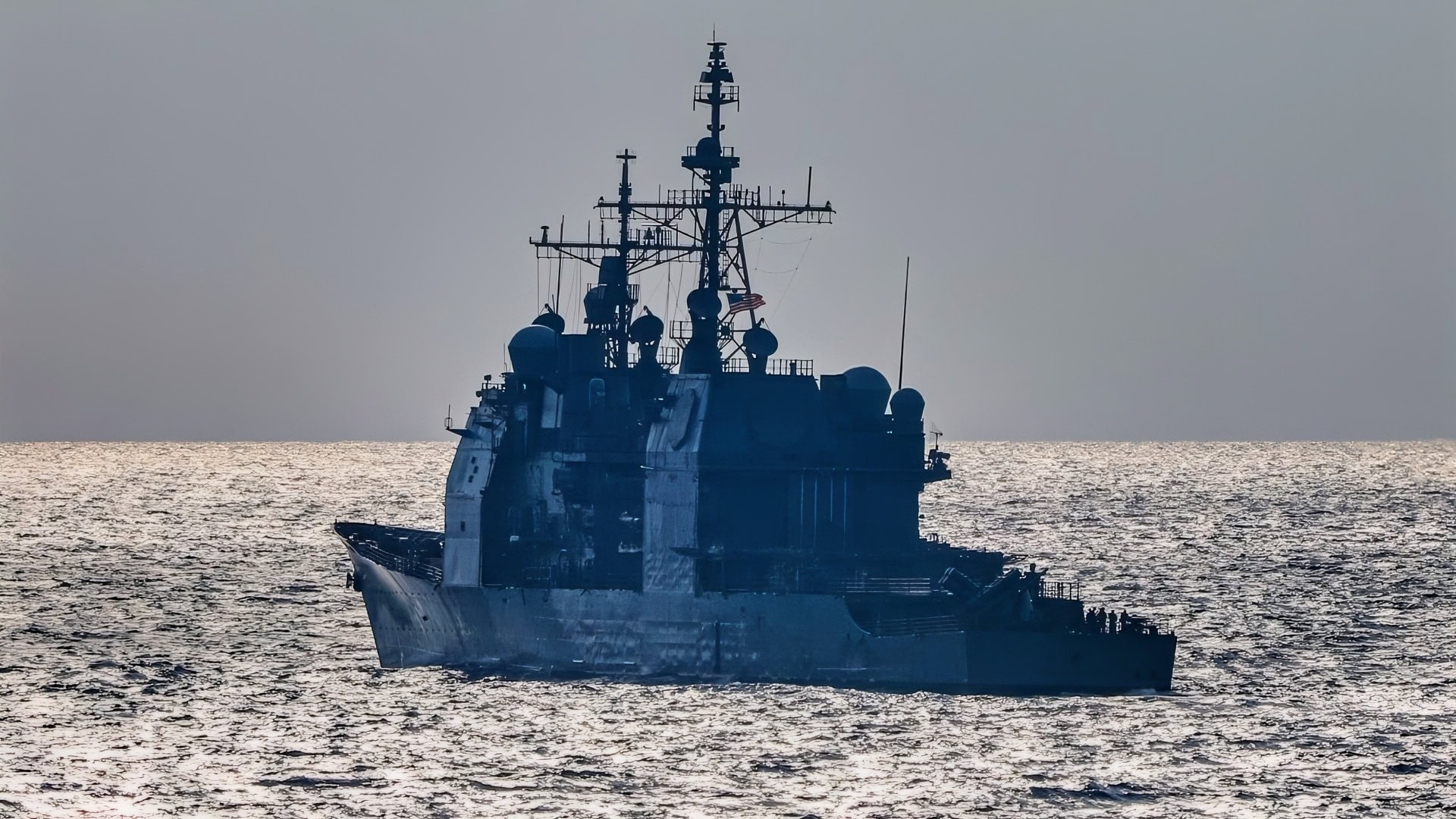
TAIWAN STRAIT (Aug. 28, 2022) Ticonderoga-class guided-missile cruiser USS Antietam (CG 54) transits the East China Sea during routine underway operations. Chancellorsville is forward-deployed to the U.S. 7th Fleet area of operations in support of a free and open Indo-Pacific. (U.S. Navy photo by Mass Communication Specialist 2nd Class Justin Stack)
What the Ford-Class Was Built to Deliver
The Ford-class was designed to replace the aging Nimitz-class carriers with a more efficient, lethal platform. Its most visible change is the Electromagnetic Aircraft Launch System, or EMALS, which replaces traditional steam catapults. The Navy says EMALS launches aircraft with less stress on airframes, requires less maintenance, and can support a higher sortie generation rate.
Ford-class carriers also use Advanced Arresting Gear, redesigned flight deck layouts, new weapons elevators, and reduced crew requirements intended to save money over the ship’s 50-year service life. But the program has faced years of criticism over delays, cost overruns, and technical problems during early construction and testing.
Phelan also suggested that the benefits of the Ford class are being reassessed.
“Is the sortie rate generation that much greater?” Phelan also said. “And then what are the cost implications of this electric catapult? Did it really generate the savings? The Navy would like to say we’ve saved $5 billion by reducing the number of men and maintenance costs. I just need to check that back up.”
The comments clearly suggest that the Navy wants independently verified evidence that the promised gains justify the premium price, not necessarily to cancel the project, but to ensure the Navy doesn’t make any mistakes.
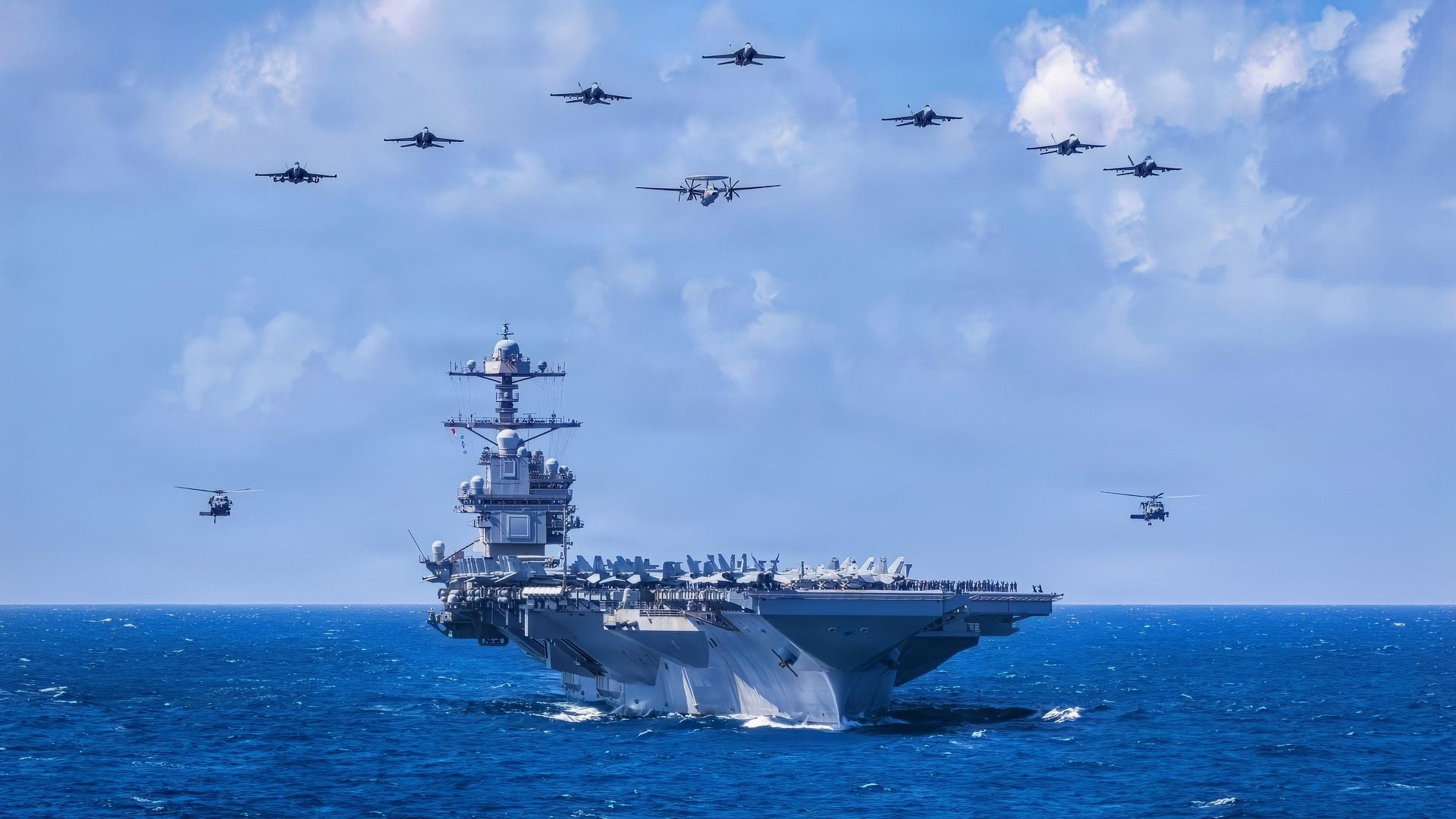
USS Ford Supercarrier U.S. Navy. Image Credit: U.S. Navy.
The two ships now under scrutiny are CVN-82 and CVN-83, which were named in January 2025 as the future USS William J. Clinton and USS George W. Bush. Neither vessel has been fully contracted, giving the Navy room to alter designs, delay procurement, or adjust acquisition strategy before steel is cut.
Aircraft Carriers Still Matter Right Now
The comments should not be interpreted as an indication that the Ford class is on the chopping block.
Despite the review, the Navy’s only operational Ford-class ship is already demonstrating why carriers remain central to U.S. military power and global reach.
The USS Gerald R. Ford has been on a record-setting deployment of more than 300 days since June 2025.
During that deployment, it participated in operations tied to Venezuela and the war against Iran.
Aircraft carriers like the Ford provide the United States with a mobile sovereign air base that does not require host-nation permission – something that is increasingly valuable as the White House continues to express frustration with NATO partners over their broad lack of cooperation and support during the campaign against Iran.
The carriers can launch strike aircraft, conduct surveillance, defend sea lanes, and rapidly respond to crises all over the world – and that remains especially relevant in the Indo-Pacific, where China continues expanding its own carrier fleet.
About the Author: Jack Buckby
Jack Buckby is a British researcher and analyst specializing in defense and national security, based in New York. His work focuses on military capability, procurement, and strategic competition, producing and editing analysis for policy and defense audiences. He brings extensive editorial experience, with a career output spanning over 1,000 articles at 19FortyFive and National Security Journal, and has previously authored books and papers on extremism and deradicalization.