
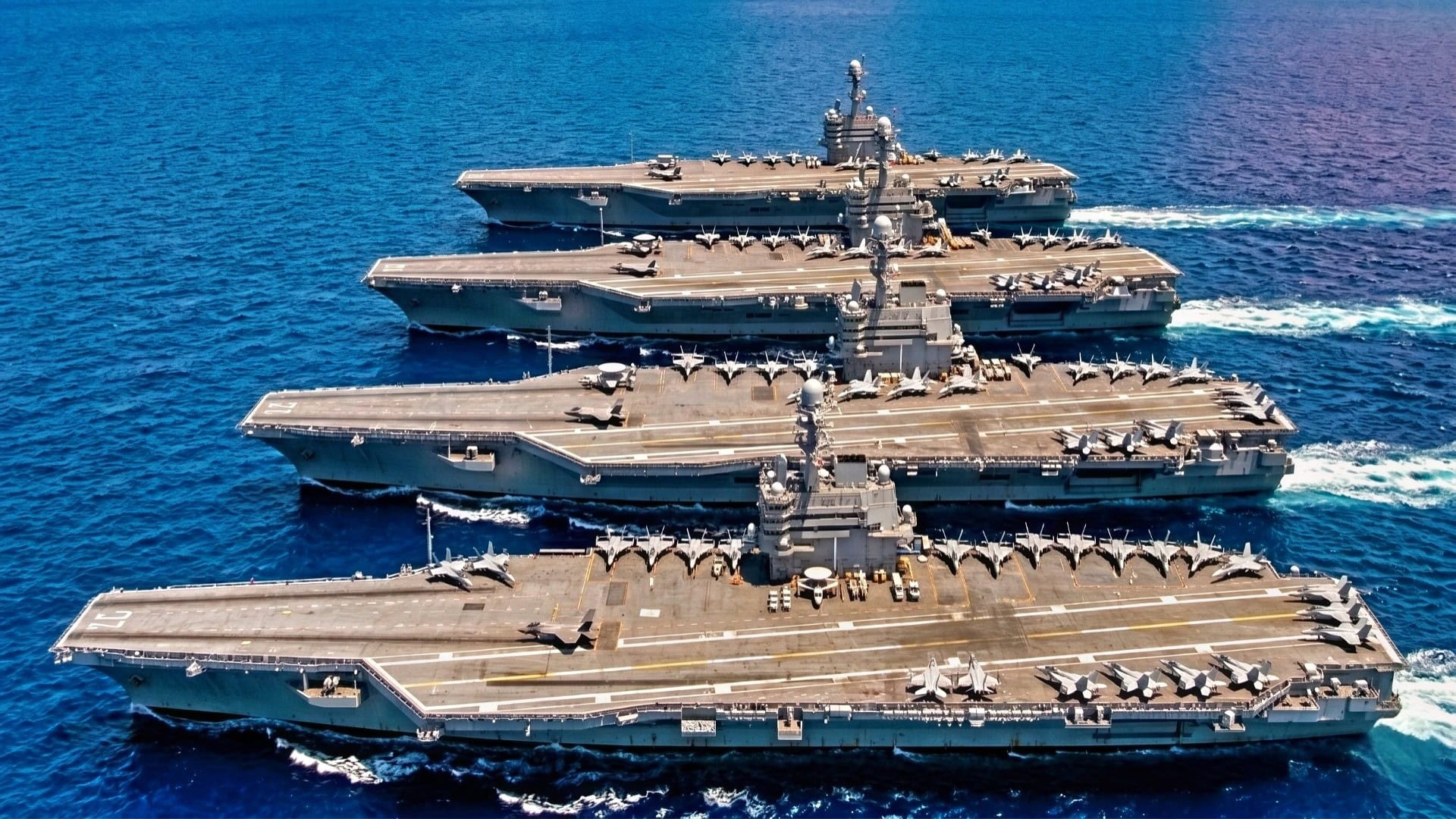
What is the future of the USS Gerald R. Ford-class of aircraft carriers? The Ford has endured its share of schedule slips and cost overruns. It is something of a hard-luck ship with sewage and toilet problems, a fire in its laundry room, and delays to its EMALS catapult, weapons elevators, and Advanced Arresting Gear. The U.S. Navy is taking a long, hard look at the Ford-class to see if the series of carriers is going to be as successful as the Nimitz-class.
Ford-Class: Let’s Put This Program In Review Mode
Former Secretary of the Navy John Phelan ordered a review of the Ford-class, and it will be ready next month or in June. This will be a lessons-learned document on the acquisition strategy for the Gerald R. Ford.
The Navy likely tried to integrate too many technologies at once on the $13.3 billion carrier. There were numerous new systems on board, and the service branch just could not get the carrier to be on time and under budget.
Would the Ford-class Ever Receive a Redesign?
The Navy is considering adopting a new design or making other changes to the way it has been acquired.
The maritime branch is wondering how best to correct mistakes and how to improve carrier acquisition practices for greater efficiency and higher quality control.
No F-35Cs on Board
The study will attempt to reveal if the Ford-class is superior to the Nimitz-class.
For example, the Gerald R. Ford cannot launch and recover F-35Cs. There are hardware and software interoperability limitations for the carrier when deploying the carrier-borne Lightning IIs. A specialized system is also needed to maintain fifth-generation warplanes.
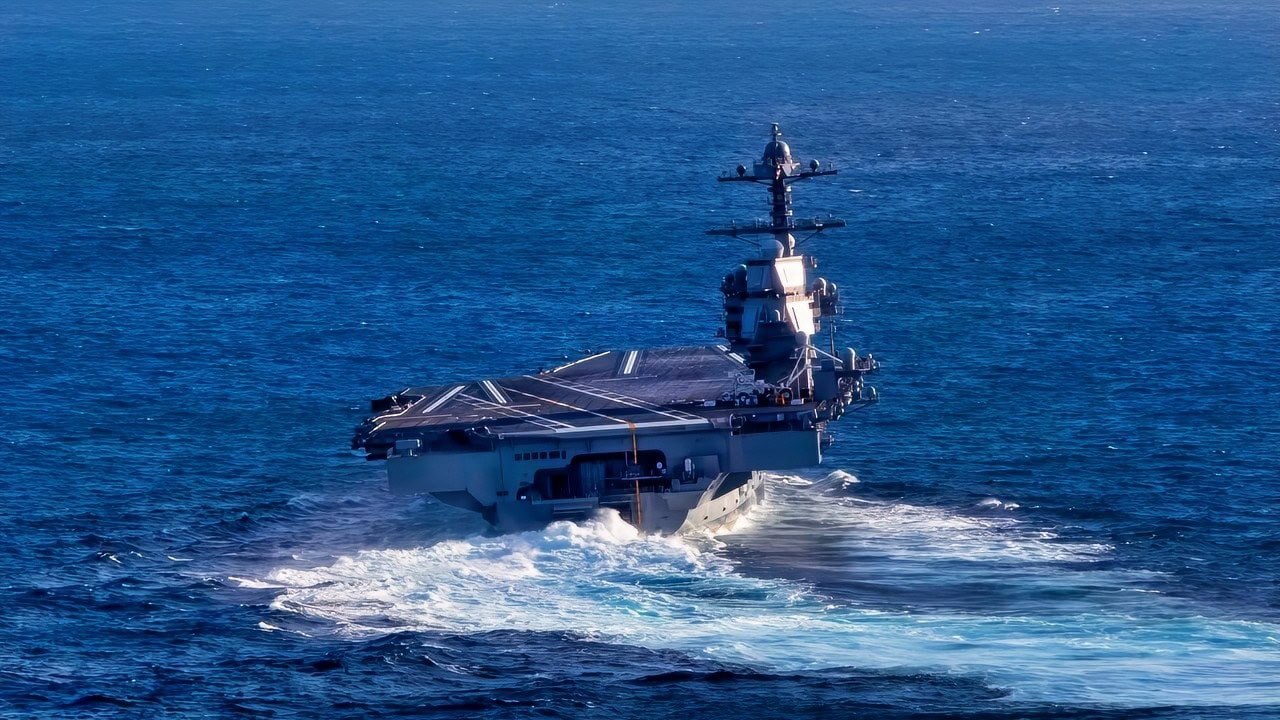
ATLANTIC OCEAN (Oct. 29, 2019) USS Gerald R. Ford (CVN 78) conducts high-speed turns in the Atlantic Ocean. Ford is at sea conducting sea trials following the in port portion of its 15 month post-shakedown availability.(U.S. Navy photo by Mass Communication Specialist 3rd Class Connor Loessin)
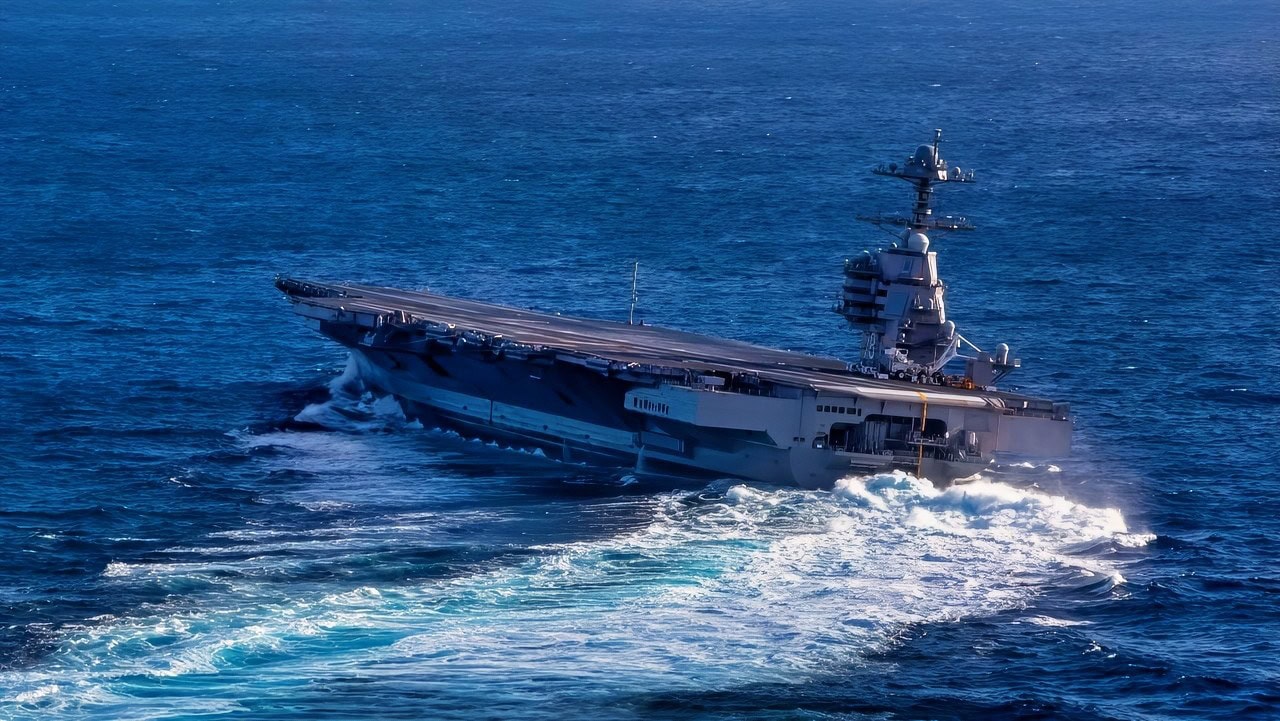
ATLANTIC OCEAN (Oct. 29, 2019) USS Gerald R. Ford (CVN 78) conducts high-speed turns in the Atlantic Ocean. Ford is at sea conducting sea trials following the in port portion of its 15 month post-shakedown availability. (U.S. Navy photo by Mass Communication Specialist 3rd Class Connor Loessin)
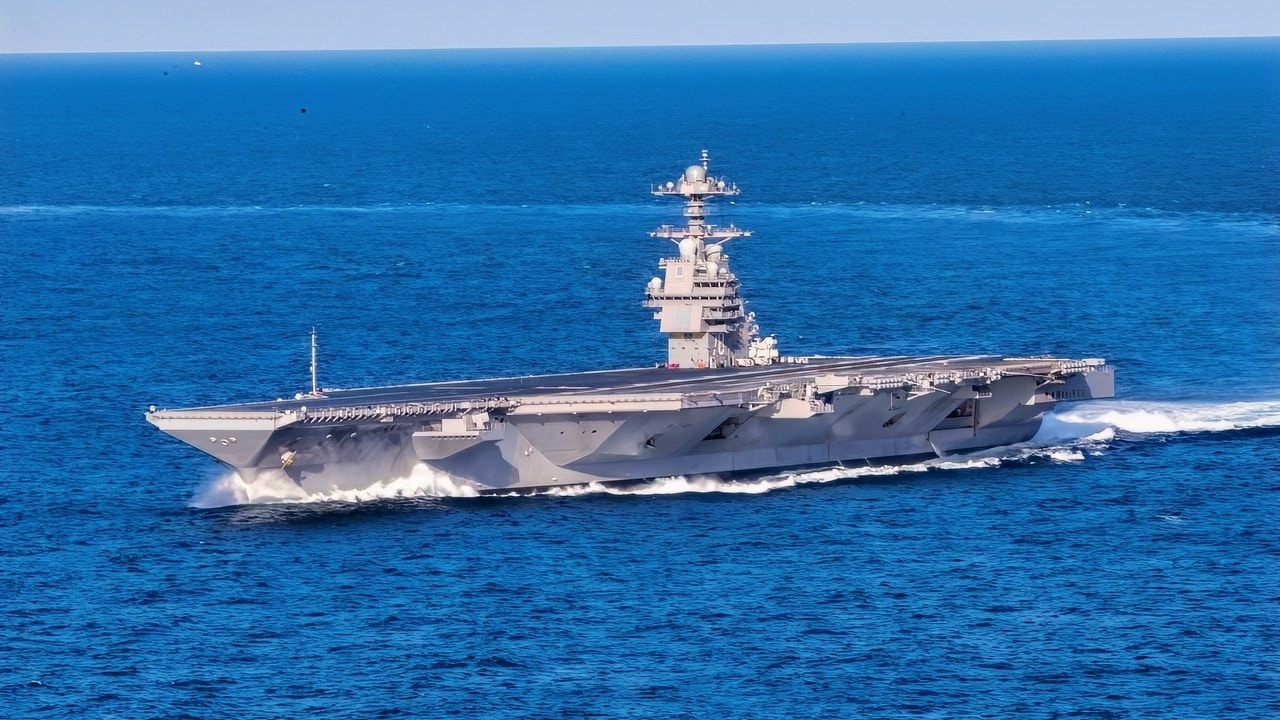
ATLANTIC OCEAN (Oct. 29, 2019) USS Gerald R. Ford (CVN 78) conducts high-speed turns in the Atlantic Ocean. Ford is at sea conducting sea trials following the in port portion of its 15 month post-shakedown availability. (U.S. Navy photo by Mass Communication Specialist 3rd Class Connor Loessin)
This has been a disappointing development for the Navy’s premier stealth fighter.
Trump Is No Fan of the Ford-class
The problems with the Ford-class have not escaped scrutiny from the White House. President Donald Trump is concerned that the EMALS should be replaced with regular steam catapults, and he has mulled an executive order requiring the use of traditional catapults and hydraulic elevators.
Trump has also alluded to making unspecified changes. “We have the Ford-class. We’re going to be upping that to a different class of aircraft carrier.” He did not explain in further detail what he meant. This statement could have prompted Phelan to take a deeper look at the Ford and review its technical issues to identify ways to avoid further delaying the USS John F. Kennedy, the next Ford-class carrier.
The USS John F. Kennedy Has Been Delayed
The John F. Kennedy is delayed for final delivery until 2027. The arresting gear and elevators are again the culprits behind the schedule slip. And the USS Nimitz has been kept from being retired as a result. The lead carrier of the Nimitz-class has been extended for a year and is currently sailing near South America.
Making the Ford-class Smaller with Fewer Technological Innovations
The Navy has considered redesigning the Ford-class. Perhaps making a new class that is smaller with less ambitious new systems and a reliance on aspects of the supercarrier that would make it more similar to the Nimitz-class. This would likely integrate the new carriers with steam catapults and hydraulic elevators.
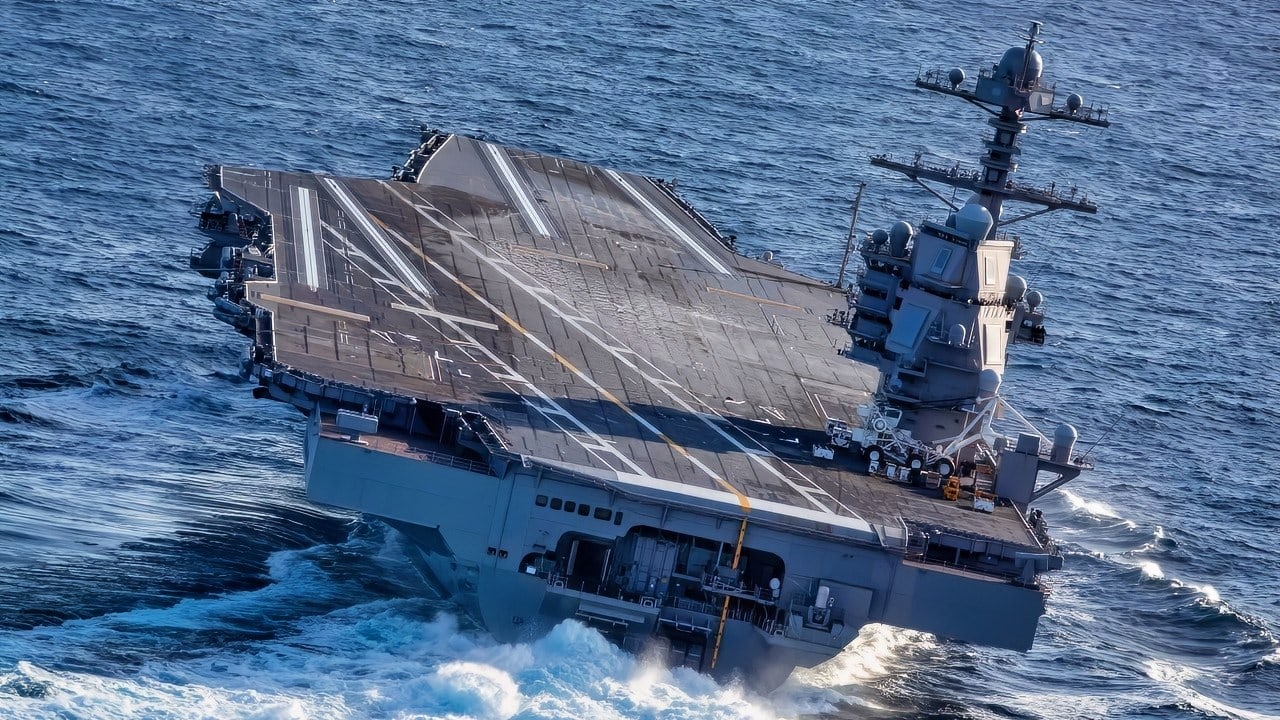
ATLANTIC OCEAN (Oct. 29, 2019) USS Gerald R. Ford (CVN 78) conducts high-speed turns in the Atlantic Ocean. Ford is at sea conducting sea trials following the in port portion of its 15 month post-shakedown availability. (U.S. Navy photo by Mass Communication Specialist 3rd Class Connor Loessin)

ATLANTIC OCEAN (Oct. 29, 2019) USS Gerald R. Ford (CVN 78) conducts high-speed turns in the Atlantic Ocean. Ford is at sea conducting sea trials following the in port portion of its 15 month post-shakedown availability. (U.S. Navy photo by Mass Communication Specialist 3rd Class Connor Loessin)
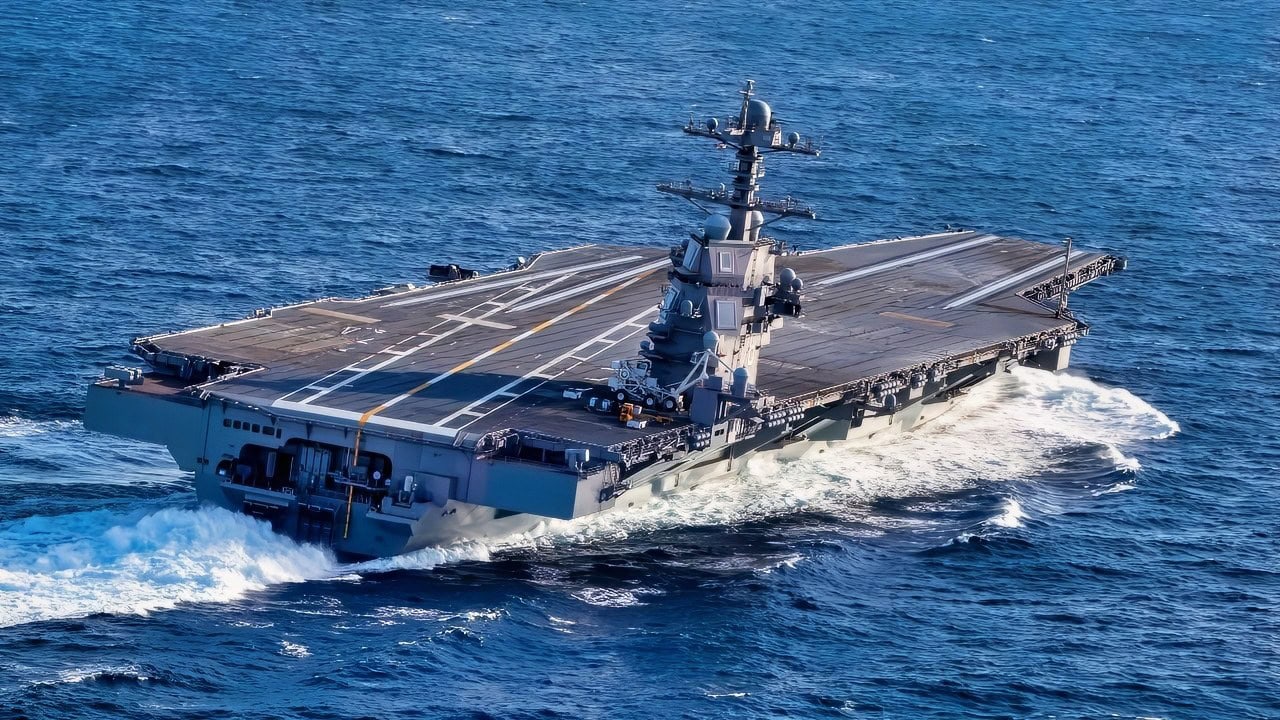
ATLANTIC OCEAN (Oct. 29, 2019) USS Gerald R. Ford (CVN 78) conducts high-speed turns in the Atlantic Ocean. Ford is at sea conducting sea trials following the in port portion of its 15 month post-shakedown availability. (U.S. Navy photo by Mass Communication Specialist 3rd Class Connor Loessin)
Future Ford-class carriers yet to be assigned a defense contractor are the USS William J. Clinton and the USS George W. Bush. Building has not started on these vessels, so it is possible that the Navy could scrap the Ford-class design and adopt a simpler acquisition plan for the new flat-tops that will replace the Nimitz-class flat-tops in the 2030s.
Two Ford-class Carriers Are Still on the Drawing Board
The Navy’s FY2027 budget request includes funding for research and development for the William J. Clinton, but no money for the George W. Bush. This review could draw lessons from the Ford-class and seek to remedy the problems. This makes budgetary sense, as the new carrier must not be delayed or exceed the budget.
This Deployment for the Ford Has Been Hard Duty
The Gerald R. Ford is currently on an extended and difficult deployment. The carrier was patrolling the Caribbean to conduct counter-narcotics missions. Then the Navy decided to extend it to sail in the Central Command area of responsibility. This would keep it in service for 10 months, longer than any other carrier’s deployments since the Vietnam War.
The Ford Has Entered the Showdown Against Iran
Chief of Naval Operations Admiral Daryl Caudle was concerned about the strain on sailors and the potential for low morale among shipmates due to the toilet problems, leading to frustration with the expensive carrier. But the Ford is now serving to thwart the Iranians in the Middle East and will patrol Central Command, allowing three carriers to be deployed there at once.
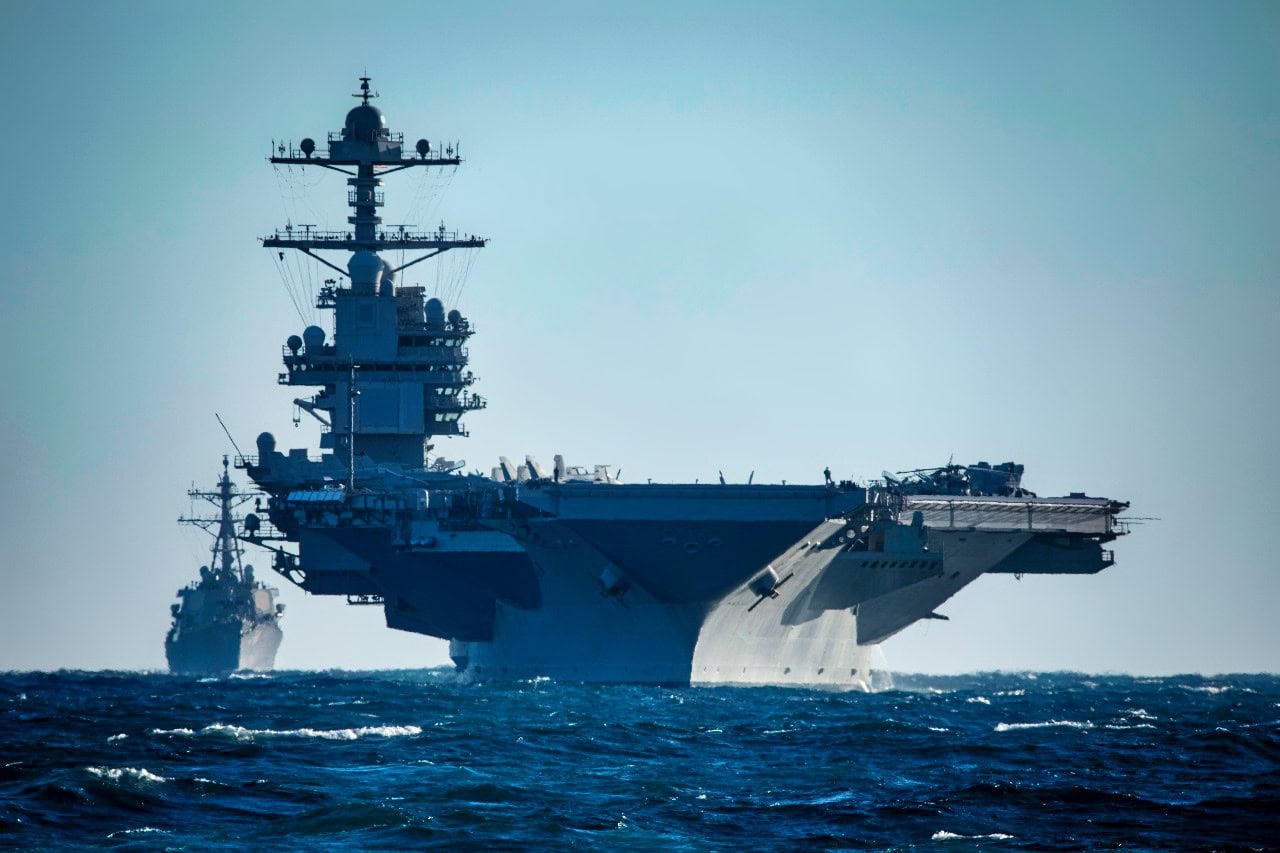
A view from the Ticonderoga-class guided missile cruiser USS Normandy (CG 60) of the first-in-class aircraft carrier USS Gerald R. Ford (CVN 78) and the Arleigh Burke-class guided missile destroyers USS Thomas Hudner (DDG 116), USS Ramage (DDG 61) and USS McFaul (DDG 74) as the ships steam in formation during a drill while underway as part of the Gerald R. Ford Carrier Strike Group March 5, 2023. Ford Carrier Strike Group is underway in the Atlantic Ocean executing its Composite Training Unit Exercise (COMPTUEX), an intense, multi-week exercise designed to fully integrate a carrier strike group as a cohesive, multi-mission fighting force and to test their ability to carry out sustained combat operations from the sea. As the first-in-class ship of Ford-class aircraft carriers, CVN 78 represents a generational leap in the U.S. Navy’s capacity to project power on a global scale. (U.S. Navy photo by Mass Communication Specialist 2nd Class Malachi Lakey)
New Radars for the John F. Kennedy
Meanwhile, the Navy hopes the John F. Kennedy will have fewer problems. The Kennedy will have a different radar system than the one onboard the Ford. The newer carrier has the AN/SPY-6(V)3 radars instead of dual-band models.
Difficult to Reduce the Cost of the Ford-class
The next two carriers in the Ford-class are the USS Enterprise and the USS Doris Miller. Acquisition costs for the Enterprise are $14.25 million, and for the Doris Miller they are $15.2 billion, making the vessels already more expensive than the Gerald R. Ford.
“So the President knows we’re reviewing it [the carrier plans], and wants us to put in a review,” Phelan said. “And I think, like any businessman, he’s – okay, make sure you look at all these programs, understand the capabilities and what they’re doing.”
Increasing the Sortie Rate for Aircraft Launch
Members of the naval acquisition leadership remain enthusiastic about the launch and recovery capabilities of the Enterprise and Doris Miller. There should be a better operational tempo with the aircraft. The Navy expects that the new catapult and arresting gear will create less wear and tear on the fighter jets.
“Trust me, we measure and monitor a lot of things in the Navy, including that – the airframes and how that works. So I think it’s a function of just understanding it, for example, is the sortie rate generation that much greater? And then what are the cost implications of this electric catapult, and did it really generate the savings?” Phelan told the journalists at the roundtable this month. “You know, the Navy would like to say we’ve saved $5 billion in terms of savings in numbers of men and maintenance. I just need to check that back up, and that’s what I mean by that.”
Keeping Maintenance Needs in Mind
The Navy wants to maintain a high level of return on investment with the Ford-class. The maritime branch would also like to minimize costs and downtime during maintenance. This is especially true when the Gerald R. Ford needs a Refueling and Complex Overhaul midway through its service.
Phelan Wasn’t Shy About Ending Faulty Programs
Phelan made some difficult decisions during his tenure. He canceled the Constellation-class frigate program and the troublesome USS Boise, a Los Angeles-class submarine that languished for years in maintenance delays.
Another worry about the Ford-class is whether it will have to compete for money and resources with the new Trump-class battleship. The USS Defiant would also require significant funding if pursued, and this vessel could enter a period of schedule slips and cost overruns. This would mean more ships languishing in production limbo, which would hurt the presidential goal of having a “Golden Fleet” in the future.
Views of the Acting Secretary of the Navy
Despite all the problems, the Navy, after Phelan, could decide to pursue the Ford-class program in its entirety and stick it out with its current design and technological innovations. While Phelan wanted to speed up U.S. shipbuilding, he was still let go from his position this month. The new acting Secretary of the Navy, Hung Cao, served as an Explosive Ordnance Disposal Officer without surface fleet experience.
“We’re going to build ships,” Cao said in a video to Naval personnel. “We need the platforms we need in order to defend this country. And finally, it’s to defend the homeland. Our mission has not changed, and we’re going to keep driving on with the mission.”
It will be up to Cao, should he be confirmed as Secretary of the Navy, to review the Ford-class program and decide the future of this group of new carriers. They have been expensive and filled with problems, but the carriers are desperately needed to serve in the war against Iran and to quell geopolitical flare-ups around the world.
The Ford-class still has significant potential to form the future Golden Fleet and perform an excellent job for the Navy. Cao will have to decide what the Ford-class can still bring to the table and how to increase its ability to cut costs and create manufacturing efficiencies at scale.
About the Author: Dr. Brent M. Eastwood
Author of now over 3,500 articles on defense issues, Brent M. Eastwood, PhD, is the author of Don’t Turn Your Back On the World: A Conservative Foreign Policy and Humans, Machines, and Data: Future Trends in Warfare, plus two other books. Brent was the founder and CEO of a tech firm that predicted world events using artificial intelligence. He served as a legislative fellow for US Senator Tim Scott and advised the senator on defense and foreign policy issues. He has taught at American University, George Washington University, and George Mason University. Brent is a former US Army Infantry officer. He can be followed on X @BMEastwood.