
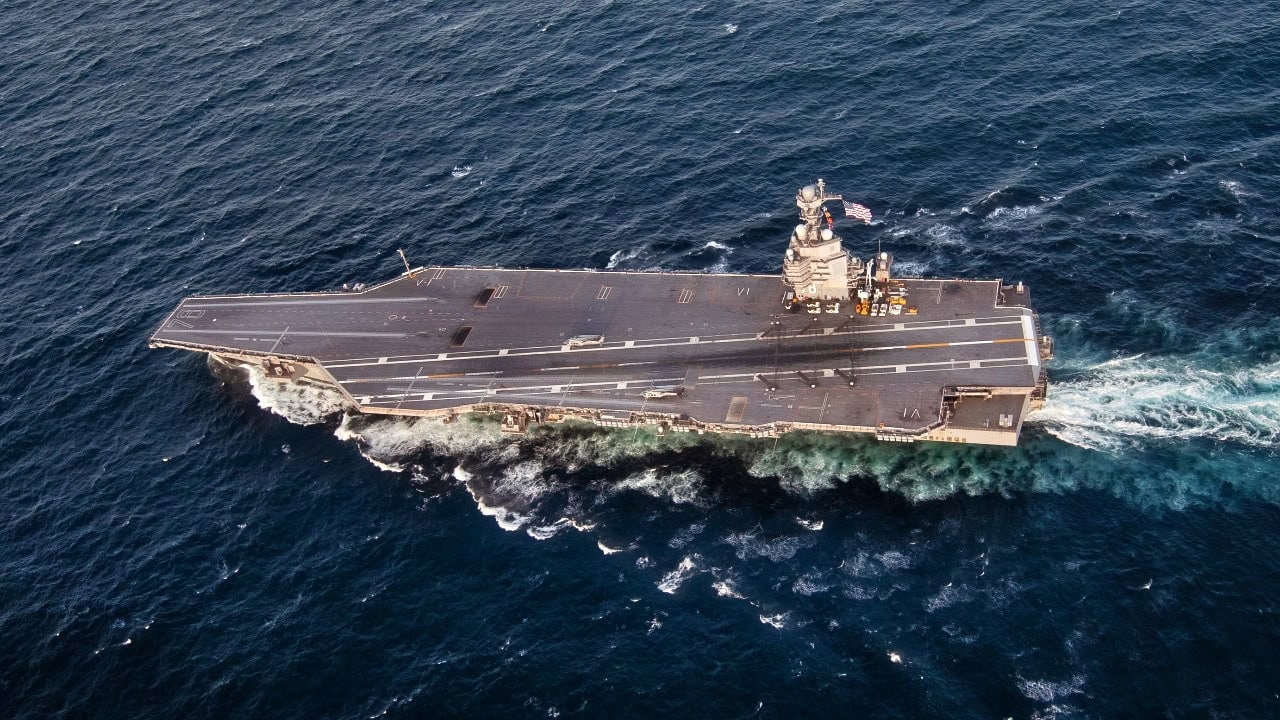
Summary and Key Points: The United States Navy nuclear-powered aircraft carrier USS Gerald R. Ford (CVN-78), operating as the lead ship of the Ford-class of next-generation aircraft carriers intended to replace the aging Nimitz-class fleet, has now been deployed continuously for 295 days across the Atlantic Ocean, the Caribbean near Venezuela, the eastern Mediterranean Sea, the Red Sea, and operations supporting the ongoing war against the Islamic Republic of Iran.
The deployment — the longest continuous U.S. Navy aircraft carrier mission since the Vietnam War — has included a non-combat fire in March 2026 that damaged the carrier’s main laundry facilities and berthing areas while operating in the Red Sea, requiring subsequent repair visits to Souda Bay Naval Base in Greece and Split, Croatia for maintenance, resupply, and crew rest.
USS Gerald R. Ford Aircraft Carrier Has Taken A Beating:
The USS Gerald R. Ford (CVN-78), the U.S. Navy’s newest and most technologically advanced aircraft carrier, has now endured one of the longest and most demanding deployments of the post-Cold War era.
Since departing Naval Station Norfolk on June 24, 2025, Ford has been deployed across multiple theaters, supporting operations in Venezuela, the eastern Mediterranean, the Red Sea, and the recent war in Iran.
This month, the deployment reached a historic milestone of 295 days at sea – the longest post-Vietnam carrier deployment for a U.S. flattop.
And that number just keeps rising
But with the Ford still under pressure, it raises a serious question: what condition is the ship in, and what will it take to bring America’s flagship carrier back to peak readiness?
The Ford-Class and Why It Matters
The USS Gerald R. Ford is not simply another American aircraft carrier rotating through deployment cycles.
It is the lead ship of the Navy’s next-generation carrier class, designed to replace the aging Nimitz-class aircraft carrier fleet over time and serve as the backbone of U.S. naval aviation for decades.
At roughly 100,000 tons and powered by two nuclear reactors, Ford was built to launch more aircraft sorties with fewer sailors while integrating technologies intended to increase combat efficiency and effectiveness.
It is the very best of American naval technology and capability.
Its systems include the Electromagnetic Aircraft Launch System (EMALS), which replaced traditional steam catapults; the Advanced Arresting Gear recovery system; new weapons elevators; and expanded electrical generation capacity.
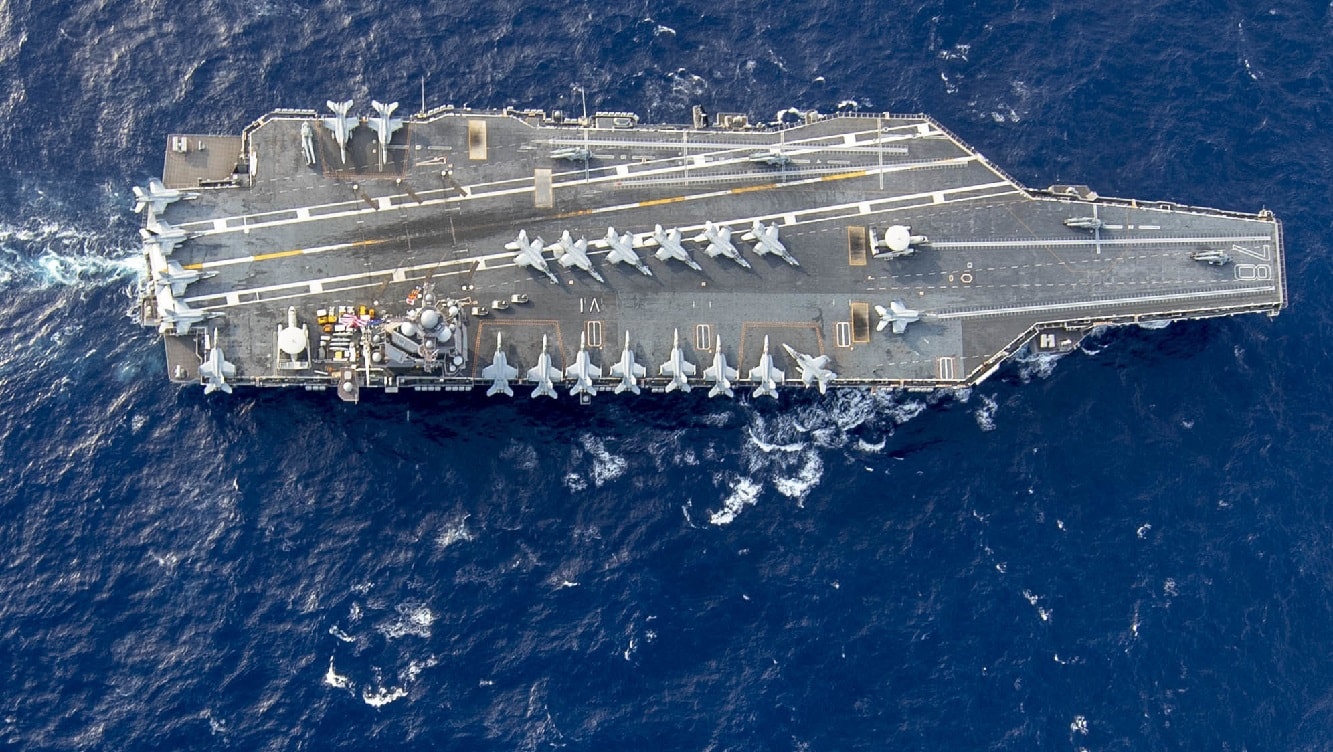
The Ford-class aircraft carrier USS Gerald R. Ford (CVN 78) and the Nimitz-class aircraft carrier USS Harry S. Truman (CVN 75) transit the Atlantic Ocean June 4, 2020, marking the first time a Ford-class and a Nimitz-class aircraft carrier operated together underway. Ford is underway conducting integrated air wing operations, and the Harry S. Truman Carrier Strike Group remains at sea in the Atlantic as a certified carrier strike group force ready for tasking in order to protect the crew from the risks posed by COVID-19, following their successful deployment to the U.S. 5th and 6th Fleet areas of operation. (U.S. Navy photo by Mass Communication Specialist Seaman Riley McDowell)
That improved electrical capacity is an asset now, but it’s also designed for the future, creating the capacity for Ford to accommodate future weapons, including directed-energy systems that are famously energy-intensive.
Because Ford was built to introduce the systems and operating model the Navy wants across future carriers, its condition is of particular importance.
Heavy wear on the USS Gerald R. Ford is not just damage to one overworked ship, but a strain placed on the class Washington expects to form the backbone of American naval power for decades.
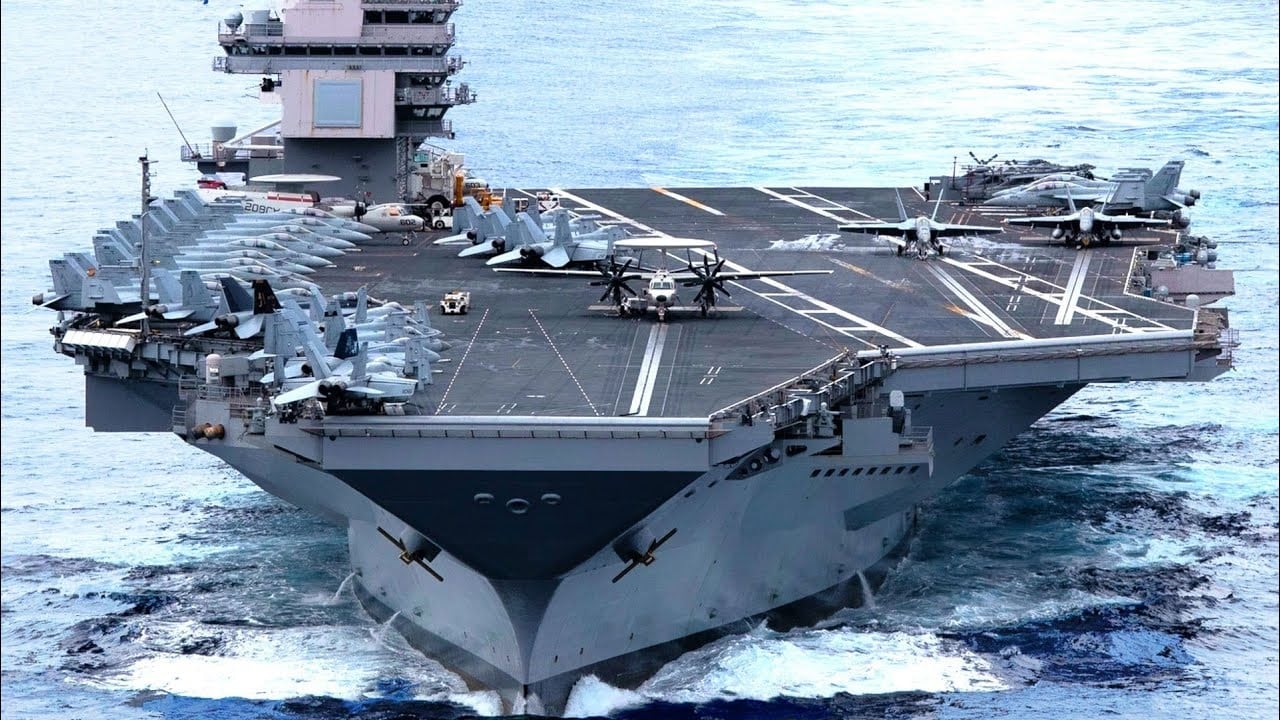
USS Gerald R. Ford. Image Credit: Creative Commons.
And the more damage that’s done, the harder it may be to accurately determine how well a carrier like this performs when properly maintained and on time.
So far, the Ford has been deployed for far longer than expected, and despite recent repair work in Split, Croatia, it has still not undergone its overdue maintenance work.
USS Gerald R. Ford: A Record Deployment With a Price
Ford departed Naval Station Norfolk in June 2025, beginning what was expected to be a standard deployment. Instead, it became an unusually long, multi-theater mission, the result of the Navy’s shortage of available carriers and the rising number of global crises.
Throughout its record-setting deployment, the Ford and its carrier strike group have operated in the Atlantic, Mediterranean, Caribbean, and later the eastern Mediterranean and the Red Sea.
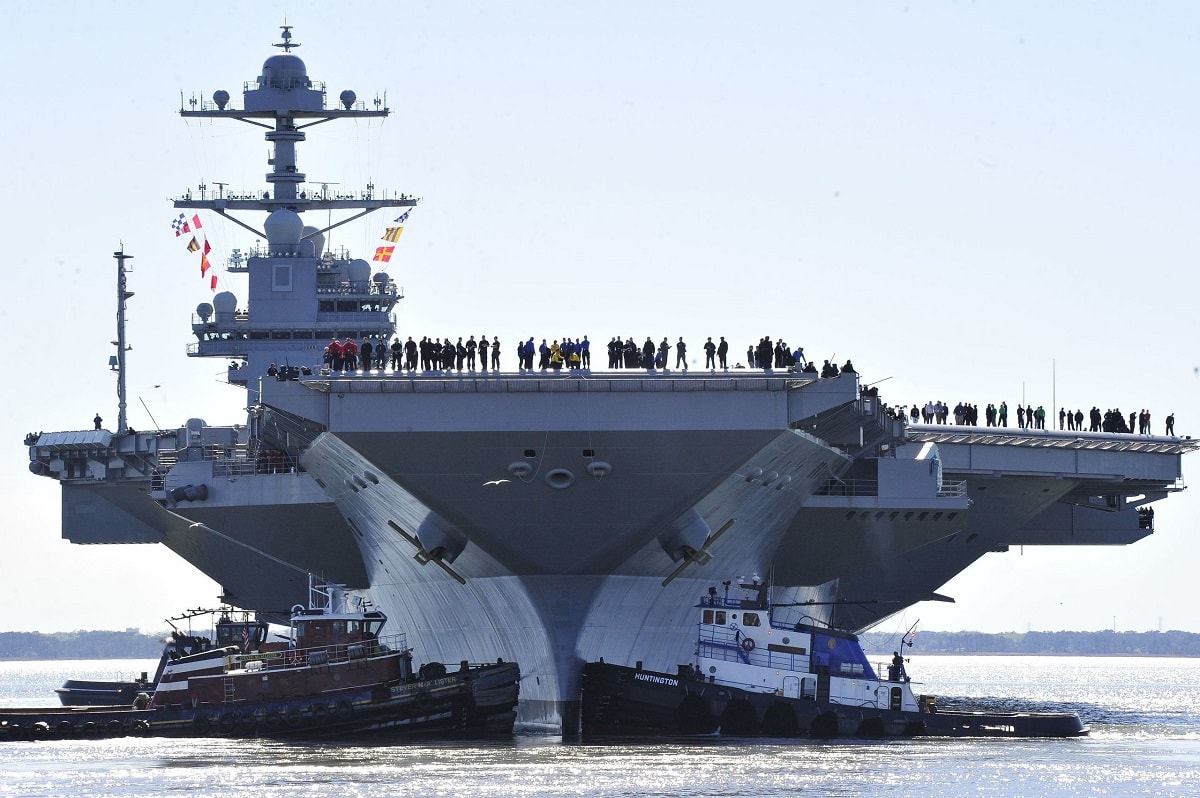
USS Gerald R. Ford. Image: Creative Commons.
It has seen thousands of aircraft launched and recovered, sustained reactor operations, and constant use of radar and command systems. There has been continuous strain on its catapults and arresting gear, nonstop movement on its deck surfaces and elevators, and its supporting crew of more than 4,500 sailors has been put under similar pressure.
Long deployments also produce damage that may be less visible. Saltwater corrosion, for example, accumulates around exposed fittings and aviation spaces. Flight deck non-skid surfaces also degrade under repeated jet blasts, and hydraulic systems age faster under constant use.
Even plumbing, laundry systems, refrigeration, and ventilation machinery become problems when used nonstop for nearly a year.
And the deployment also occurred during an era when Ford repeatedly traveled long distances to address geopolitical events rather than following a predictable schedule. That may be operationally useful in the short term, and Ford has proved its worth, but it is expensive in the long run.
Fire Damage and the Hidden Cost of Extended Sea Time
The strain on Ford became global news in March 2026 when a non-combat-related fire broke out in the ship’s main laundry facilities while the carrier was operating in the Red Sea.
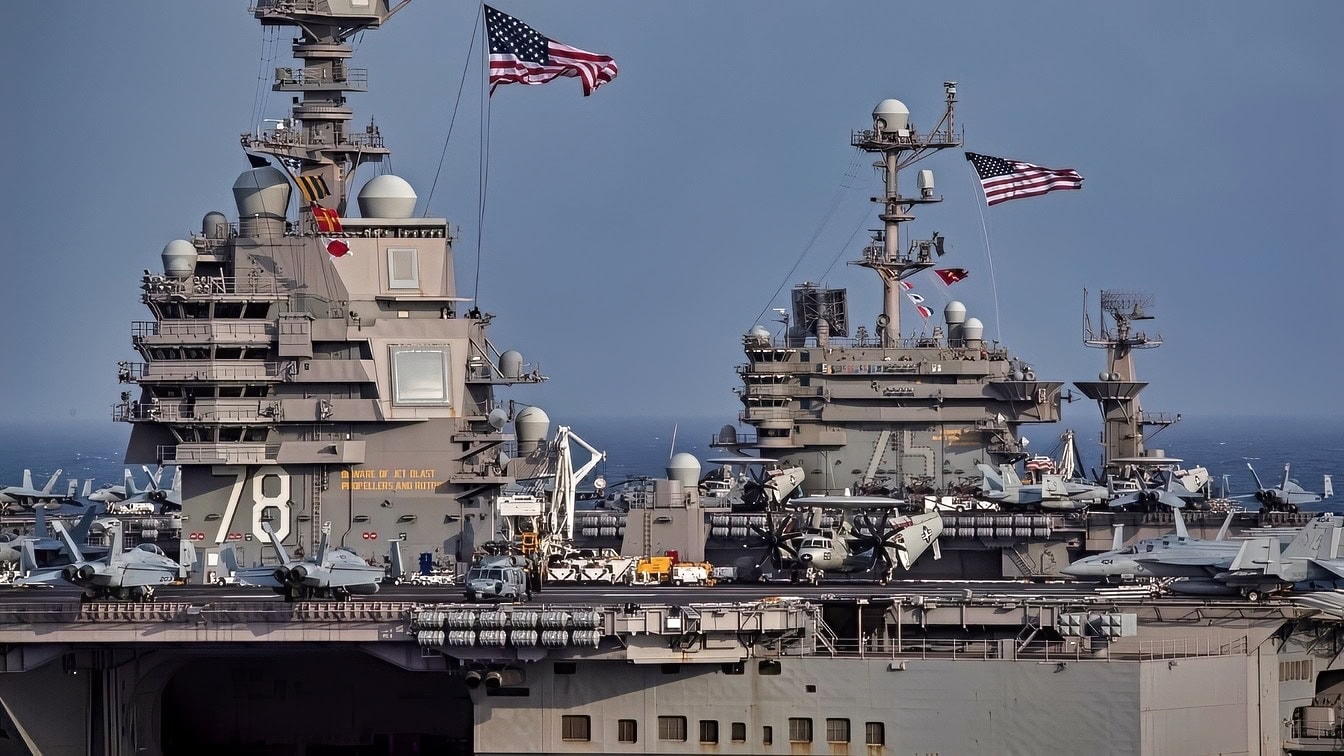
The Ford-class aircraft carrier USS Gerald R. Ford (CVN 78) and the Nimitz-class aircraft carrier USS Harry S. Truman (CVN 75) transit the Atlantic Ocean June 4, 2020, marking the first time a Ford-class and a Nimitz-class aircraft carrier have operated together underway. Ford is underway conducting integrated air wing operations, and the Harry S. Truman Carrier Strike Group remains at sea in the Atlantic as a certified carrier strike group force ready for tasking in order to protect the crew from the risks posed by COVID-19, following their successful Day 295. The Ford’s crew has been at sea since June. The Vietnam-era record is next. A laundry fire forced repairs in Crete and Croatia. Reports say 12-14 months to fix. In 1942, the Yorktown was repaired in 3 days after a 551-pound bomb plunged 50 feet into the ship. Admiral Nimitz demanded it. They delivered.
The Navy said the blaze injured sailors but did not damage the propulsion plant, and that the ship initially remained mission-capable. Later reporting said the fire affected berthing areas and forced repairs before Ford resumed full operations. The ship subsequently entered Souda Bay Naval Base for assessments and repairs before continuing to Split, Croatia, where additional maintenance, resupply, and crew rest were conducted.
Not only has the Ford suffered a fire, but it began its deployment after years of well-documented teething problems involving some of its signature new systems. EMALS suffered reliability shortfalls in early testing, while the Advanced Arresting Gear also required redesign and further development before meeting performance targets.
Separately, the ship’s Advanced Weapons Elevators were the cause of repeated delays.
While many of those issues were progressively corrected, prolonged operations leave less room for deferred maintenance – and the Ford is overdue.
About the Author: Jack Buckby
Jack Buckby is a British researcher and analyst specializing in defense and national security, based in New York. His work focuses on military capability, procurement, and strategic competition, producing and editing analysis for policy and defense audiences. He brings extensive editorial experience, with a career output spanning over 1,000 articles at 19FortyFive and National Security Journal, and has previously authored books and papers on extremism and deradicalization.

