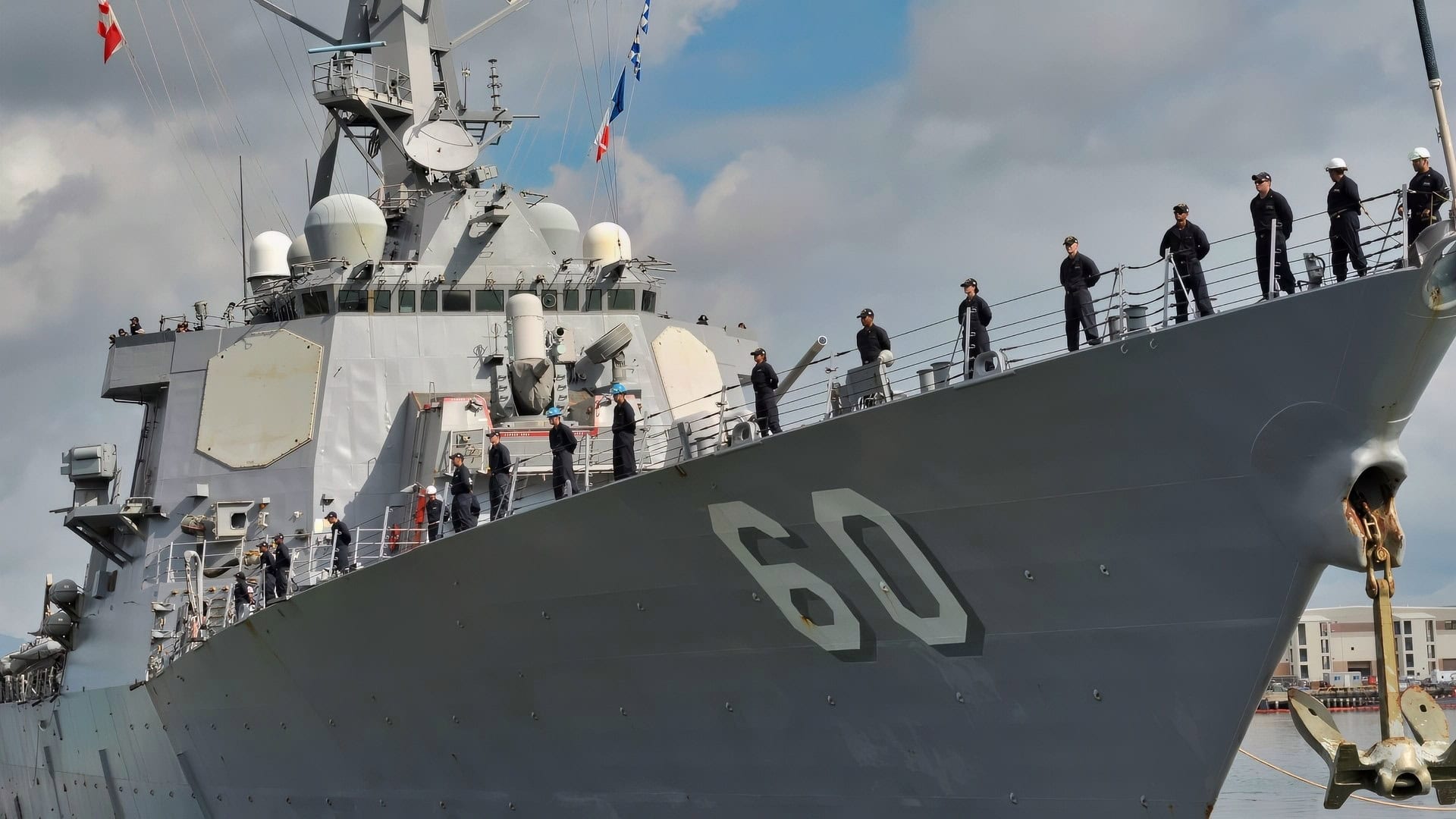
When an Iranian ship attempted to defy the U.S. Navy blockade in the Strait of Hormuz, it was hit hard by an Arleigh-Burke-class Flight IIA DDG-51 destroyer. Despite being in the fleet for decades, these warships have been upgraded for modern warfare and are still being produced by the Pentagon.
The Navy currently operates more than 80 destroyers, and within the next 15 years, the service plans to add as many as 30 DDG 51 Destroyers, including 22 new, high-tech DDG 51 Flight III warships and additional state-of-the-art DDG 51 Flight IIA destroyers.
Upgraded Destroyers
While the U.S. Navy is heavily focused on adding Flight III DDG 51s with new radar and weapons, the successful strike on the Iranian ship indicates that the service is also deeply invested in sustaining and upgrading its existing Flight IIA DDG 51s, some of which are now decades old.
This is part of the reason why existing Navy Flight IIA DDG 51s are being backfitted with newer, far more sensitive AN/SPY-6 radar systems, which enable detection of serious threats at much longer ranges.
The new Raytheon-built radar can detect threat objects at twice the distance and half the size when compared to existing radar.
As part of these upgrades to the legacy fleet, the Navy has been replacing steel structures, revamping on-board electronics, and performing maintenance on the underwater hull of some existing Flight IIA destroyers that have been maintaining a high mission uptempo.
Weapons Upgrades & Aegis Radar
Navy Flight IIA and Flight III destroyers are also being equipped with multiple laser weapons, advanced EW capabilities, and upgraded interceptors, such as SM-3, SM-6, and Tomahawk missiles.
The signature element of the Navy’s Flight III and Flight IIA destroyers is a shipboard combat system called Aegis Baseline 10, which integrates software, radar, computing, and fire control.
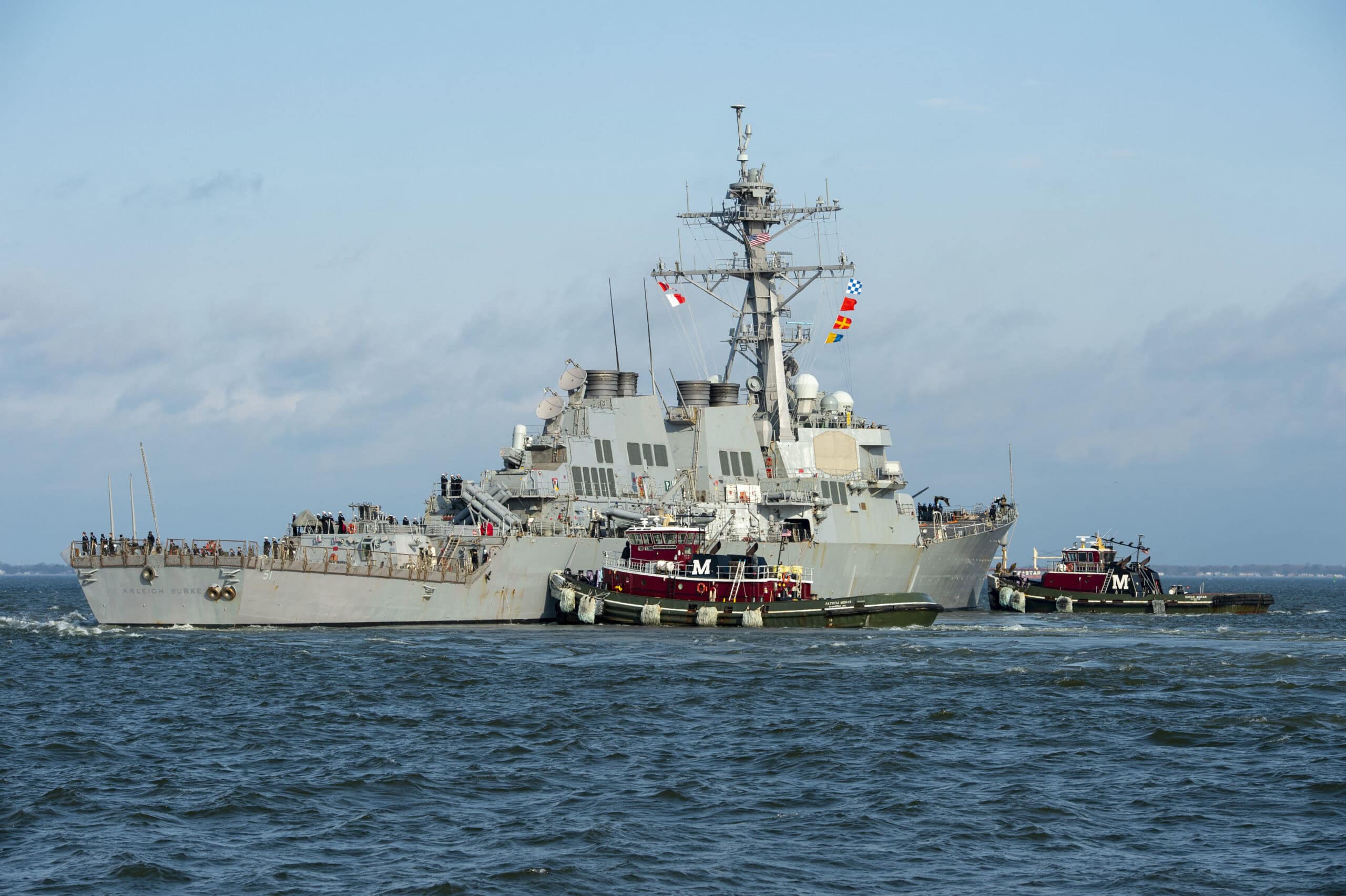
NORFOLK (Mar. 26, 2021) – A tugboat assists the guided-missile destroyer USS Arleigh Burke (DDG 51) in getting underway Mar. 26. Arleigh Burke will replace USS Donald Cook (DDG 75) as one of four forward deployed naval forces (FDNF) located in Spain. Arleigh Burke will join USS Ross (DDG 71), USS Roosevelt (DDG 80), and USS Porter (DDG 78) as the newest member of FDNF Rota. (U.S. Navy photo by Mass Communication Specialist 2nd Class Kris R. Lindstrom)
The centerpiece of the system is a new, extremely precise radar system known as the AN/SPY-6 v1, a technology developers say can detect objects twice as far and 1.5 times as large as those of existing radars.
As part of the integration with Aegis Baseline 10, the radar can return radar renderings with 35 times the precision and fidelity of current technology.
Navy weapons developers explained that new cooling technologies and electricity systems were needed to support the new, much more powerful radar system.
An ability to simultaneously detect multiple incoming threats at much greater ranges and with much improved image fidelity can, of course, give ship commanders a much larger time window with which to determine the optimal countermeasure, response, or attack plan needed to stop an incoming attack.
One advantage of Baseline 10 is that it can integrate ballistic missile defense operations with lower-altitude, closer-in air and cruise missile defense.
Aegis Baseline 10 reduces the hardware footprint by leveraging common technical standards, streamlines functionality, and enables continual performance upgrades via software as new technologies emerge.
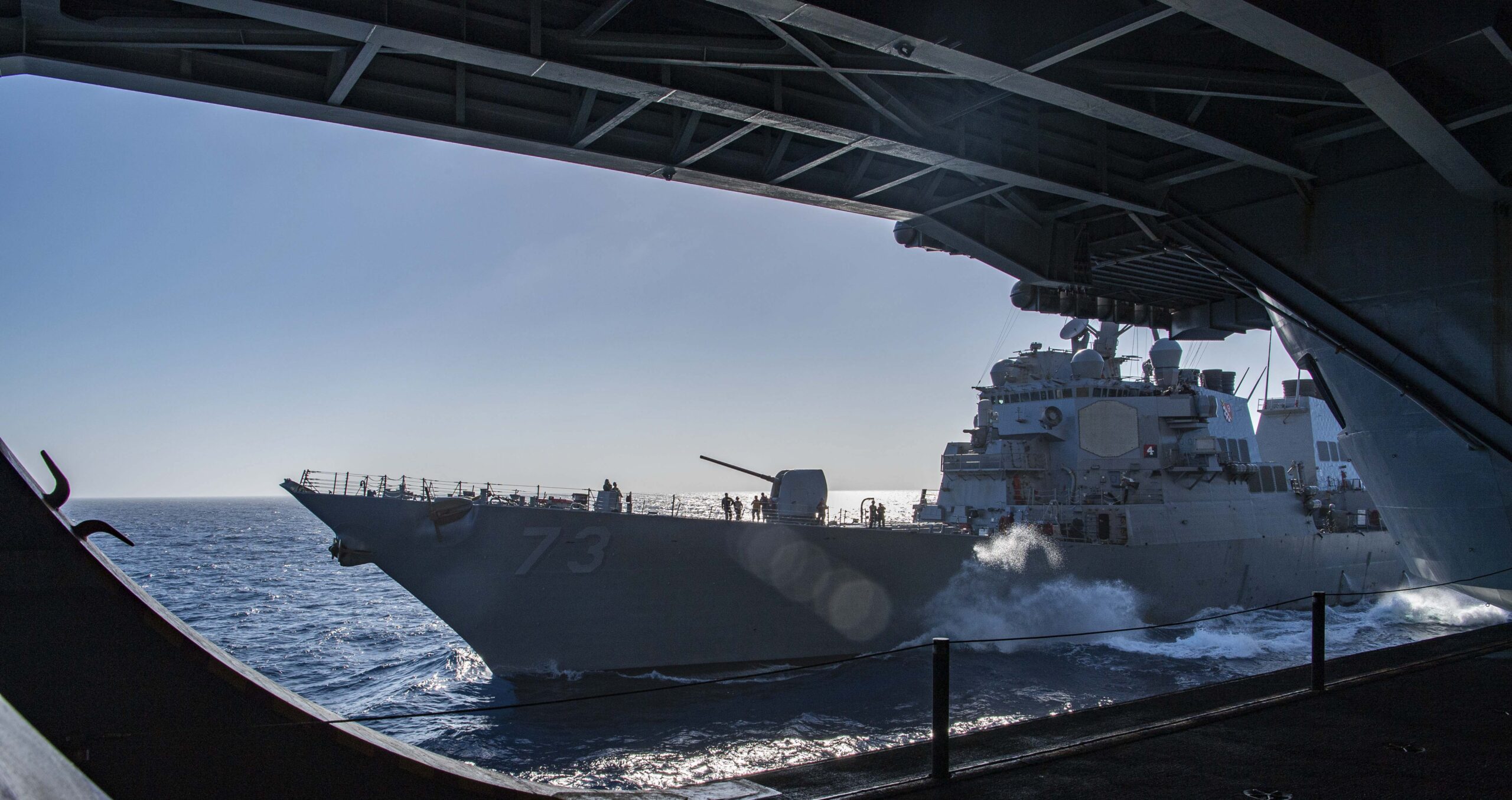
(Aug. 28, 2023) The Arleigh Burke-class guided-missile destroyer USS Decatur (DDG 73) steams alongside the aircraft carrier USS Nimitz (CVN 68) . Nimitz is underway conducting routine operations. (U.S. Navy photo by Mass Communication Specialist Seaman Tomas Valdes)
HELIOS Laser
U.S. Navy Flight IIA and Flight III DDG-51 destroyers are also increasingly armed with the emerging High-Energy Laser with Optical Dazzler and Surveillance (HELIOS). This means that Navy destroyers operate with the ability to incinerate enemy drones with great precision at the speed of light, stunning, burning, or simply disabling them.
Not only are lasers quiet, low-cost, scalable, and precise, but perhaps of even greater significance, they fire at the speed of light. Pure speed, when it comes to ocean warfare, is increasingly vital as new technologies enter the sphere of Naval warfare, greatly changing the tactical equation.
Instead of using expensive interceptor missiles fired from Vertical Launch Systems, commanders will now have the option to merely stun or disable a target without completely destroying or exploding it.
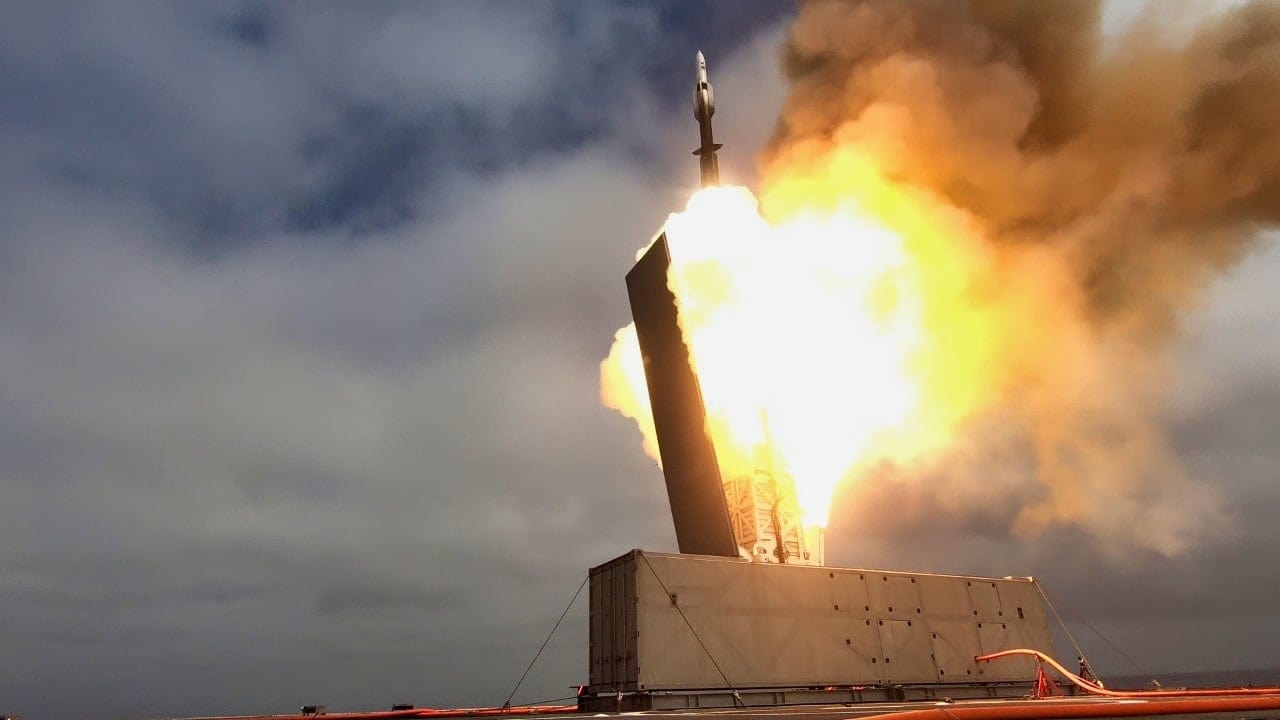
USS Savannah (LCS 28) conducts a live-fire demonstration in the Eastern Pacific Ocean utilizing a containerized launching system that fired an SM-6 missile from the ship at a designated target. The exercise demonstrated the modularity and lethality of Littoral Combat Ships and the ability to successfully integrate a containerized weapons system to engage a surface target. The exercise will inform continued testing, evaluation and integration of containerized weapons systems on afloat platforms.

A Falcon Heavy rocket launches into the sky, surrounded by smoke and fire during takeoff.
Reducing explosive effects, such as those likely generated by SM-2 or SM-6 interceptor weapons, can lower the risk of civilian casualties with bomb debris or fragmentation should a scenario unfold in a highly-trafficked ocean environment.
Lasers such as HELIOS also serve as substantial optical components, enabling them to act as sensors to track targets and support necessary surveillance missions.
Lasers could also, in some instances, enable surface warships to close in more fully on enemy positions, given that deck-mounted guns could be supplemented by laser weapons that attack at the speed of light and are engineered to pinpoint narrow target areas with precision-guidance technology.
About the Author: Kris Osborn
Kris Osborn is the Military Technology Editor of 19FortyFive. Osborn is also President of Warrior Maven – Center for Military Modernization. Osborn previously served at the Pentagon as a highly qualified expert in the Office of the Assistant Secretary of the Army—Acquisition, Logistics & Technology. Osborn has also worked as an anchor and on-air military specialist at national TV networks. He has appeared as a guest military expert on Fox News, MSNBC, The Military Channel, and The History Channel. He also has a Master’s Degree in Comparative Literature from Columbia University.