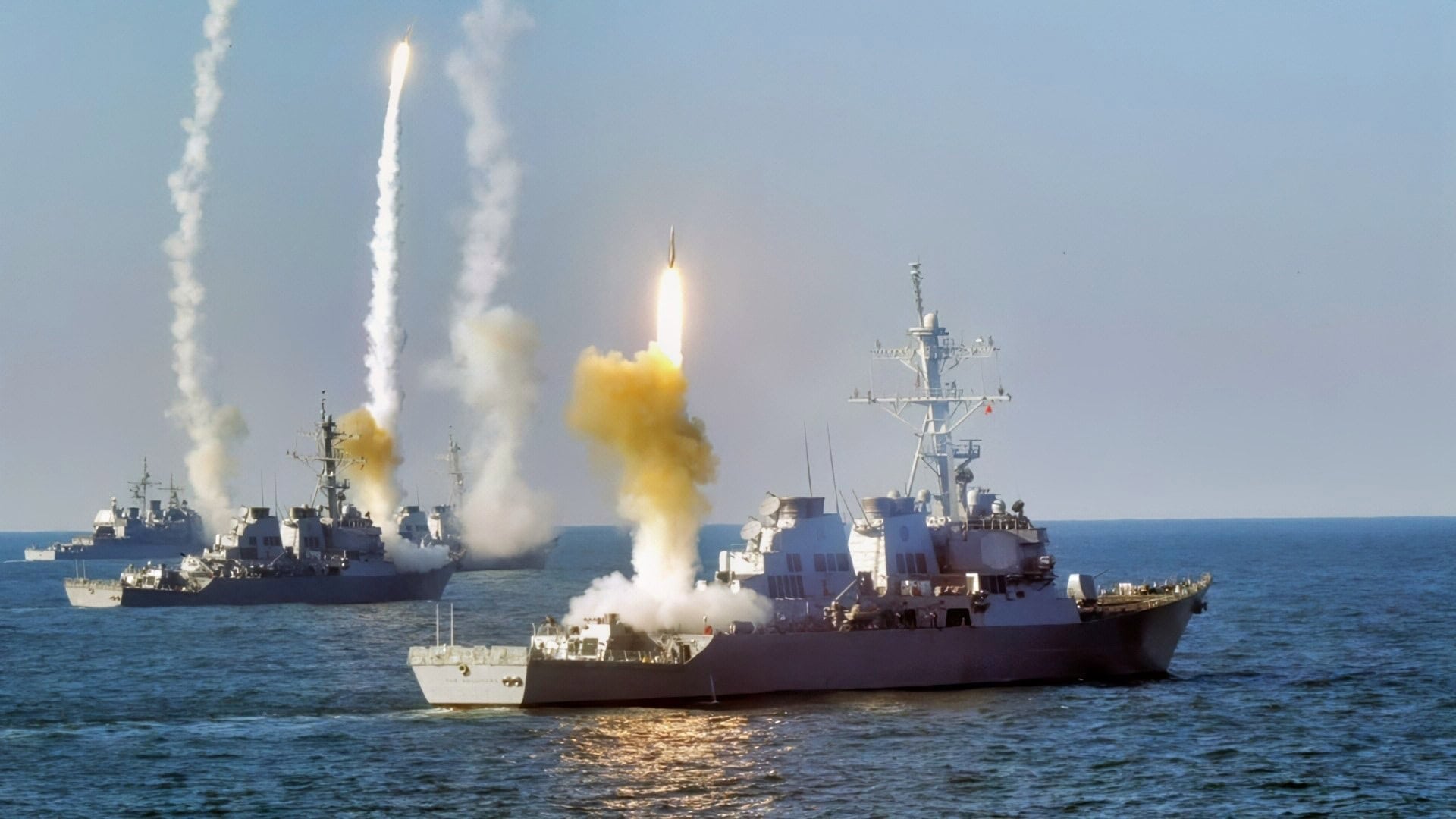
Summary and Key Points: Defense expert Brandon J. Weichert explains that the U.S. Navy is fighting a 21st-century war with a fleet designed in the 1970s — and Iran knows it. In the Strait of Hormuz, Arleigh Burke-class destroyers are spending $2 million per missile to destroy $20,000 drones.
-Two Burke destroyers recently survived a simultaneous barrage of eight Houthi aerial systems, five anti-ship ballistic missiles, and three cruise missiles — only with F-35C assistance.
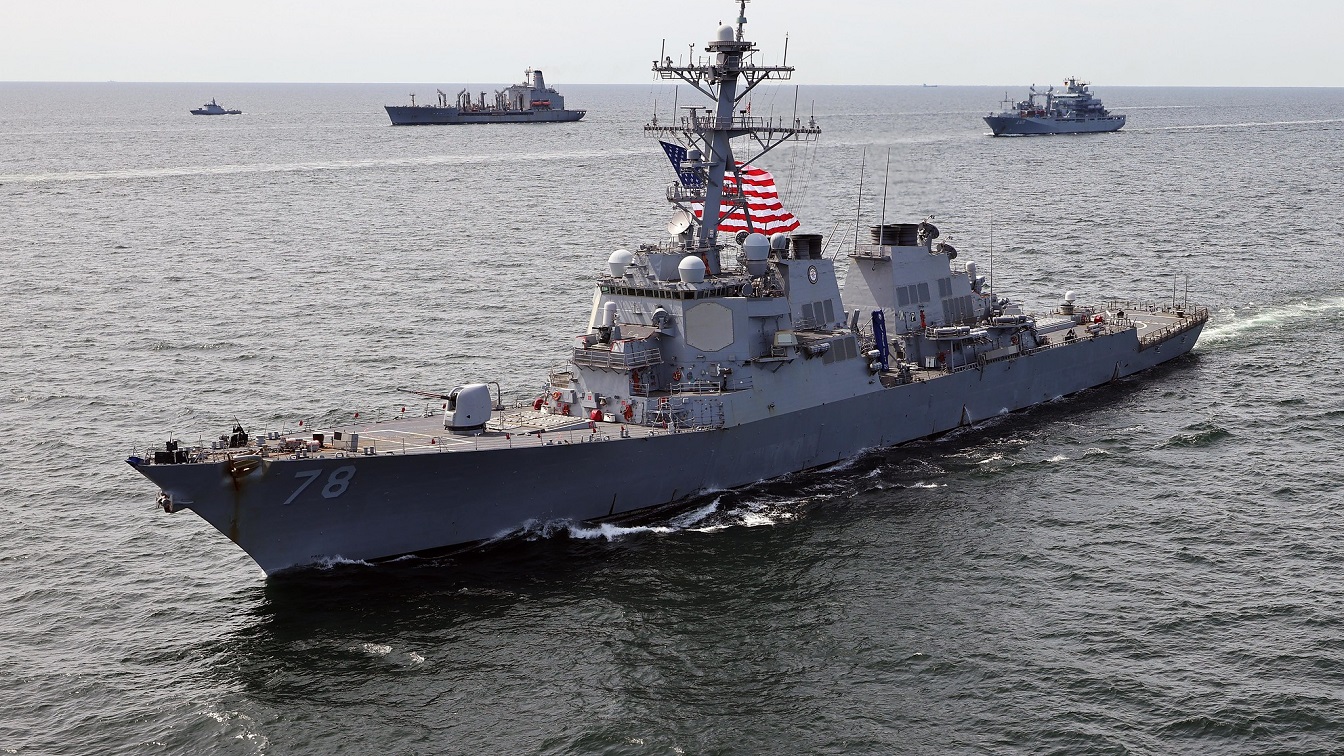
BALTIC SEA (June 6, 2022) The Arleigh Burke-class guided-missile destroyer USS Porter (DDG 78) sails in formation in the Baltic Sea, June 6, 2022, during exercise BALTOPS22. BALTOPS 22 is the premier maritime-focused exercise in the Baltic Region. The exercise, led by U.S. Naval Forces Europe-Africa, and executed by Naval Striking and Support Forces NATO, provides a unique training opportunity to strengthen combined response capabilities critical to preserving freedom of navigation and security in the Baltic Sea. (U.S. Navy photo) 220606-N-NO901-3008
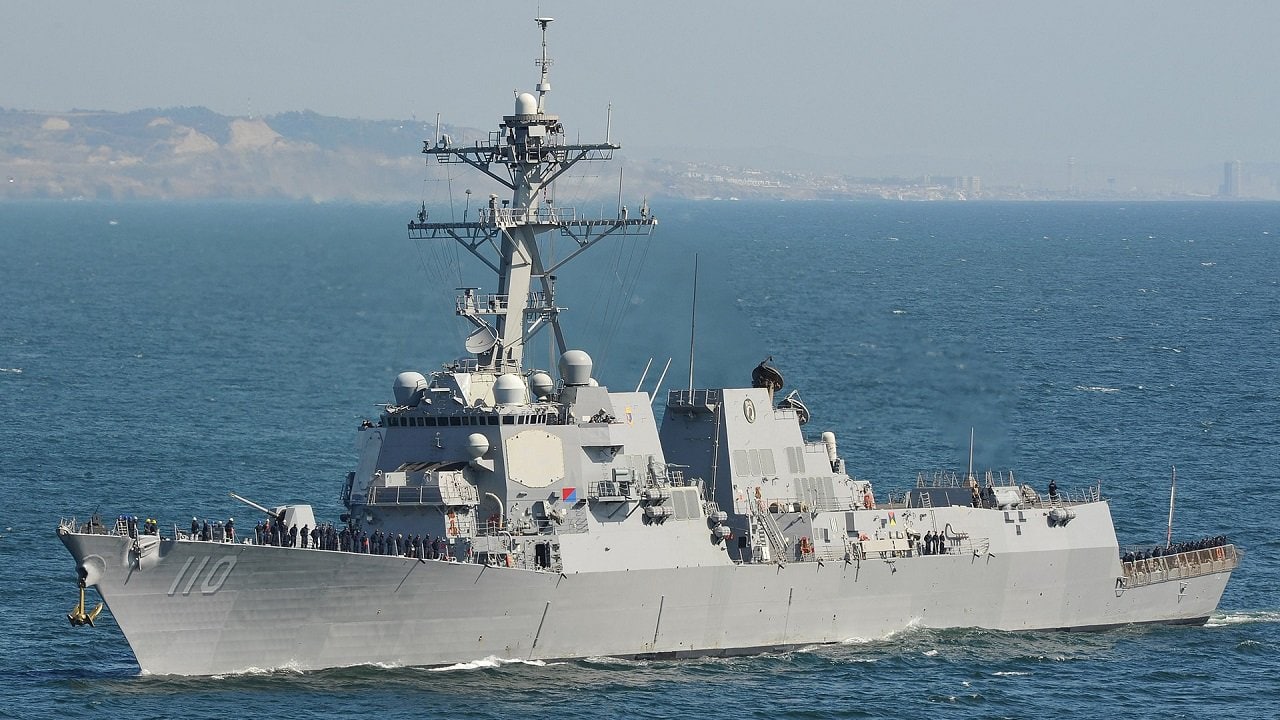
PACIFIC OCEAN (May 4, 2015) – The guided-missile destroyer USS William P. Lawrence (DDG 110) steams toward San Diego Harbor. (U.S. Navy photo by Mass Communication Specialist 3rd Class Nathan Burke/Released)
-The Navy won that exchange. But it cannot win a war of attrition at those exchange rates. The Pentagon’s answer is more Burke destroyers.
-That may be exactly the wrong response to the right problem.
The U.S. Navy Is Firing $2 Million Missiles at $20,000 Drones in the Strait of Hormuz — and Iran’s Asymmetric Strategy Is Working Exactly as Planned
The U.S. Navy finds itself in a strategic position it has not known since the interwar years of the 20th century. Its surface warfare fleet and submarine force are the smallest they have been in decades.
What’s more, the naval shipyards have declined for decades. And all this is happening at a time when the United States is being militarily challenged by powerful peer rivals.
So many of the systems that the Navy relies on are fundamentally based on technology and doctrines developed in the 1970s.
The Navy’s Smallest Fleet Since the Interwar Years
Notions of missile defense and force projection are rooted in theories from a time when bell-bottoms and disco reigned supreme.
That’s why the Navy, on top of its industrial woes, is unwilling to fully engage in the Iran War.
Sure, the Navy managed to clear aside Iran’s conventional navy and air force. But those were never Iranian strengths. In fact, the Iranians never pretended to be capable of matching the US Navy. They preferred an asymmetrical doctrine that prioritized anti-ship ballistic missiles, hypersonic weapons, and advanced yet cheap drones to harass U.S. Navy warships and keep them over-the-horizon. That is precisely what has happened.
The Navy’s Arleigh Burke-class destroyers, equipped with their iconic Aegis defense systems, form the shield behind which U.S. aircraft carriers carry out naval air operations. Unfortunately, the Arleigh Burke-class destroyers no longer enjoy the kind of tactical advantages they once did.

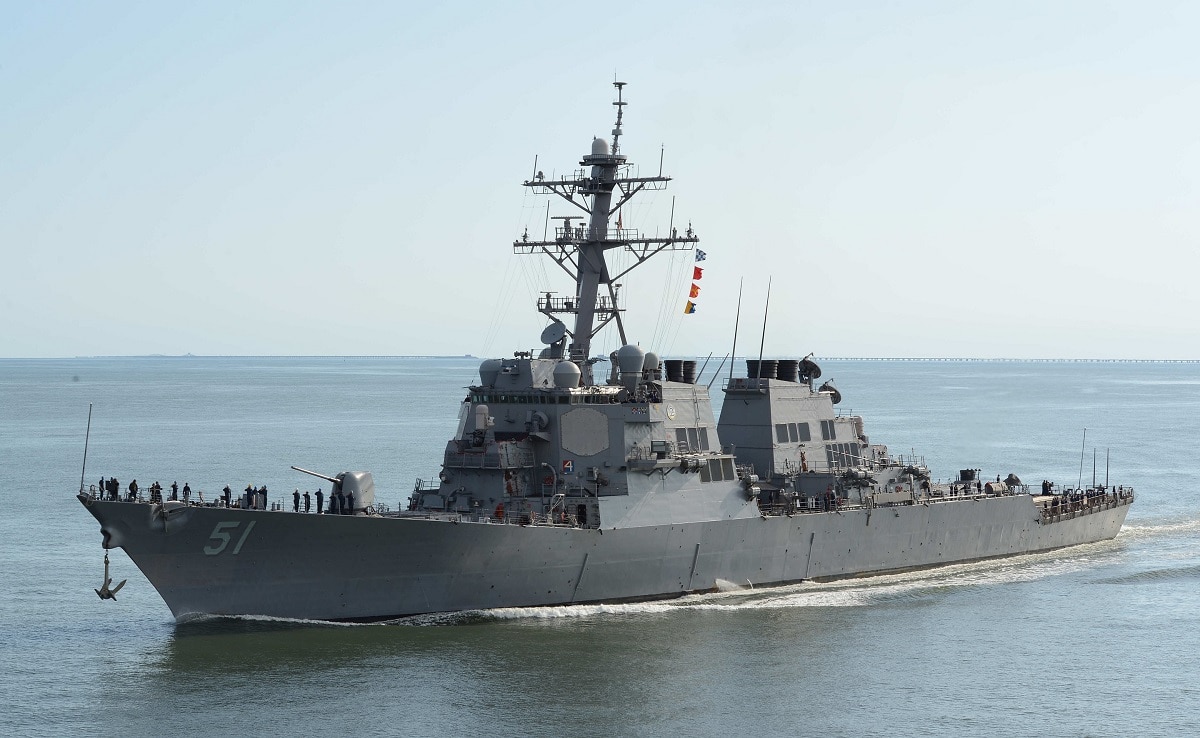
The guided-missile destroyer USS Arleigh Burke (DDG 51) fires its MK 45 5-inch gun during a live-fire exercise. Arleigh Burke is deployed in the U.S. 5th Fleet area of responsibility supporting maritime security operations and theater security cooperation efforts. (U.S. Navy photo by Mass Communication Specialist 2nd Class Carlos M. Vazquez II/Released)
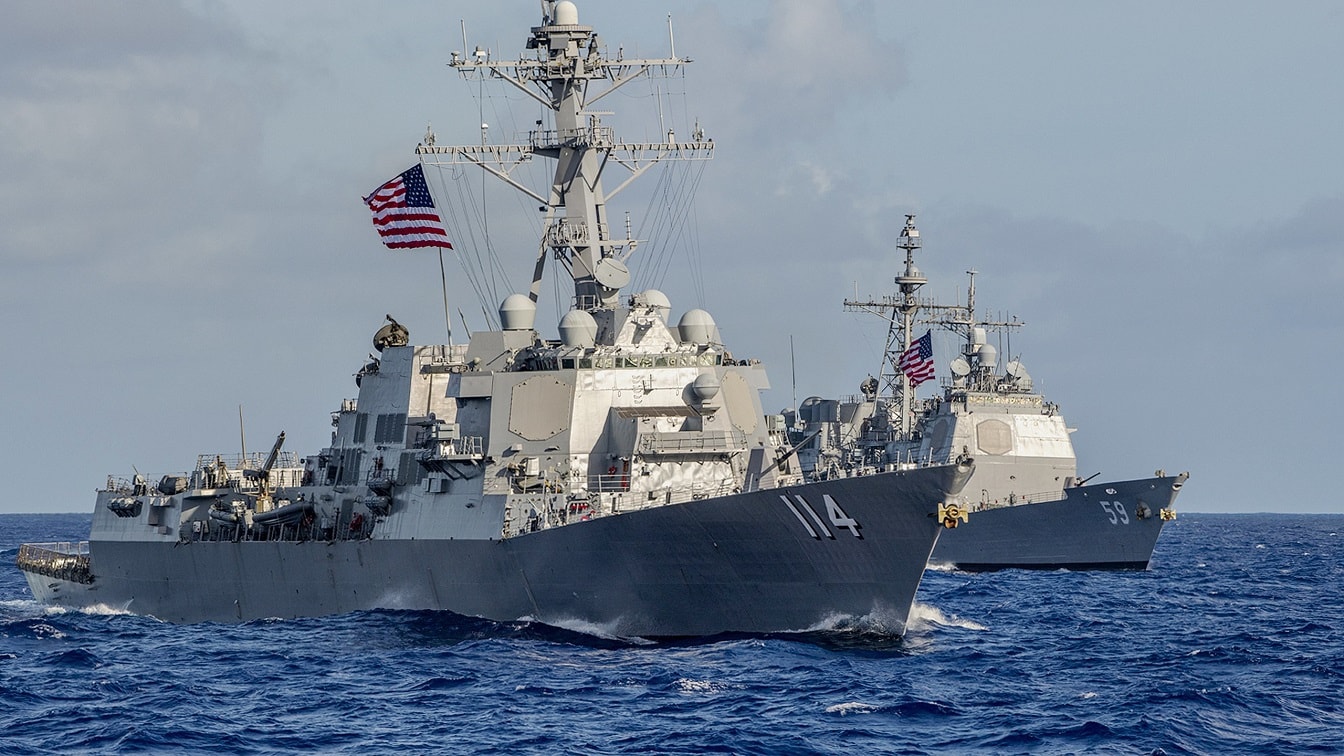
The Arleigh Burke-class guided-missile destroyer USS Ralph Johnson (DDG 114) and the Ticonderoga-class guided-missile cruiser USS Princeton (CG 59) steam in formation during dual carrier operations with the Nimitz and Theodore Roosevelt Carrier Strike Groups (CSG). Dual carrier operations unify the tactical power of two individual CSG, providing fleet commanders with an unmatched, unified credible combat force capable of operating indefinitely. The CSGs are on a scheduled deployments to the Indo-Pacific.
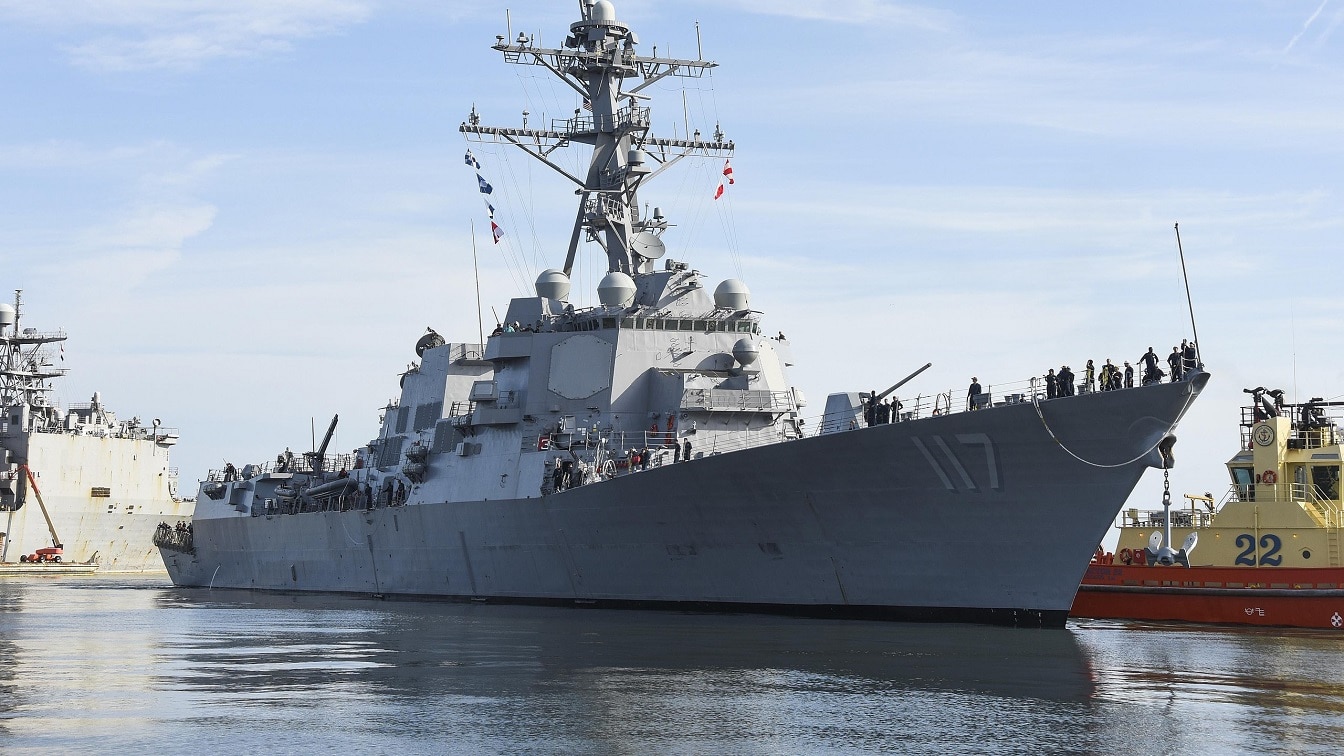
190731-N-ED185-1017 MAYPORT, Fla. (July 31, 2019) The Arliegh Burke-class guided-missile destroyer USS Paul Ignatius (DDG 117) prepares to moor at Naval Station Mayport. Paul Ignatius, the Navy’s newest Arleigh-Burke-class destroyer, was commissioned at Fort Lauderdale, Florida on July 27, 2019 and will call Naval Station Mayport its new home. (U.S. Navy photo by Mass Communication Specialist1st Class Brian G. Reynolds/Released)
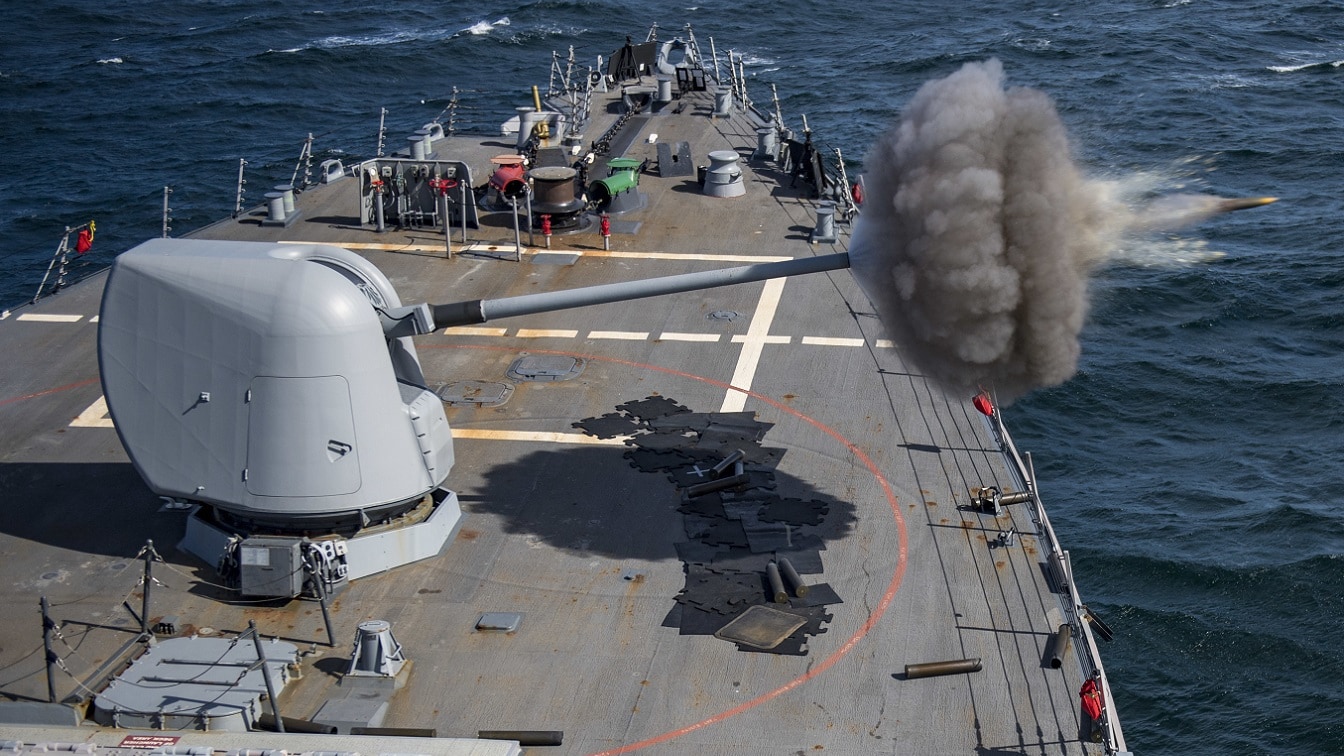
(Jan. 14, 2018) The Arleigh Burke-class guided-missile destroyer USS Ross (DDG 71) fires its 5-inch gun during a naval surface fire support exercise with the Royal Moroccan Navy as part of exercise African Sea Lion. Among African Sea Lion’s objectives is to test and evaluate US and Moroccan ability to conduct coordinated, combined naval surface fire support exercises on the Tan Tan firing range. Ross, forward-deployed to Rota, Spain, is on its sixth patrol in the U.S. 6th Fleet area of operations in support of regional allies and partners and U.S. national security interests in Europe and Africa. (U.S. Navy photo by Mass Communication Specialist 1st Class Kyle Steckler/Released)
Iran’s Asymmetrical Strategy is Working
Yes, these warships have been instrumental in regional missile defense and the protection of the carriers from Iranian missiles and drones. But they are clearly not enough to keep the vital Strait of Hormuz open.
In fact, the Navy is increasingly uninterested in sending any of its warships into the strait, for fear that Iran’s missile and drone overmatch will lead to the damaging or even sinking of one of these pricey warships.
In the battle against the Houthis, there was a specific instance involving two Arleigh Burke-class destroyers attempting to pass through a strait closed down due to the Houthis’ missile threat. The two U.S. destroyers found themselves under serious attack by eight one-way Houthi aerial systems, five anti-ship ballistic missiles, and three anti-ship cruise missiles.
The destroyers, with the aid of F-35C Lightning II fifth-generation warplanes, successfully deflected that barrage.
But just think about the asymmetry of that engagement. The F-35C costs an estimated $42,000 per flight hour. If engaging incoming drones or missiles, the F-35C might deploy AIM-9X Sidewinder short-range missiles or the AIM-120 Advanced Medium-Range Air-to-Air Missile ( AMRAAM).
The AIM-9X Sidewinder costs between $400,000 and $500,000 per unit. The AIM-120 AMRAAM costs from $1 million to more than $2 million per unit.
Arleigh Burke-class destroyers cost around $139.6 million per year to operate. It costs between $7,000 for a short burst of gun ammunition and more than $2 million for a single anti-air missile from an Arleigh Burke-class destroyer, while drones cost a fraction of that.
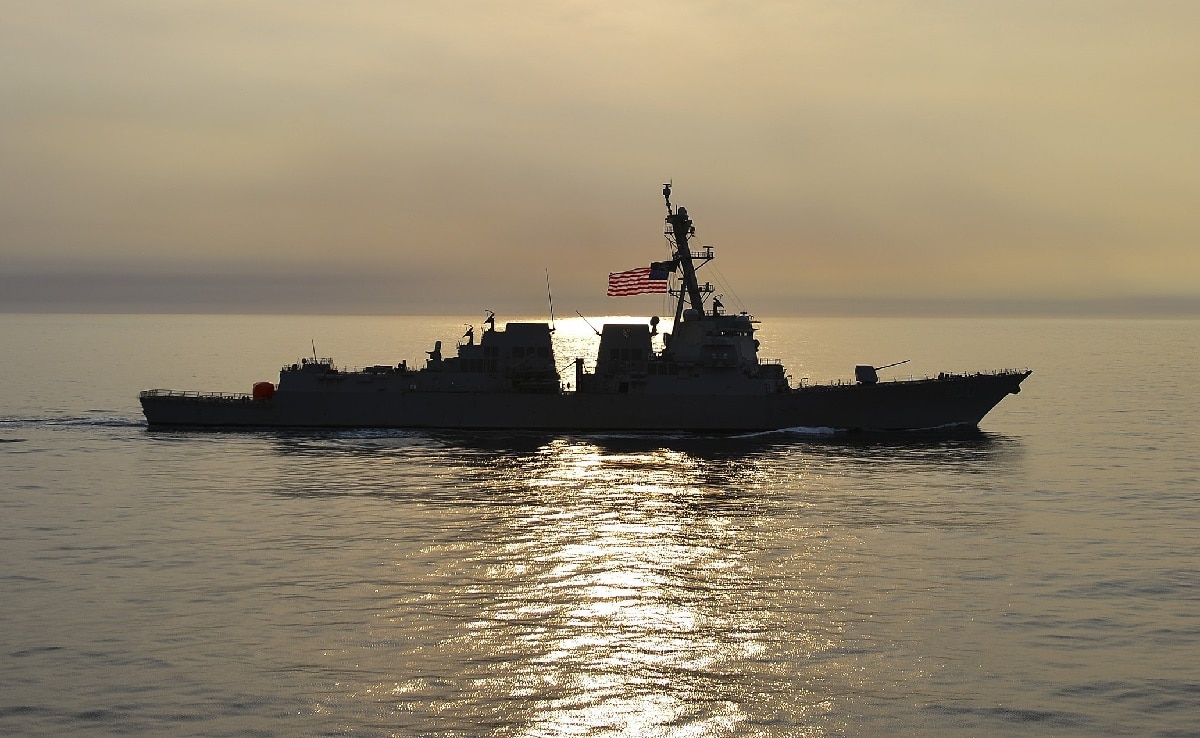
(Dec. 7, 2017) The Arleigh Burke-class guided-missile destroyer USS Kidd (DDG 100) prepares to perform a sea-power demo alongside the aircraft carrier USS Nimitz (CVN 68) during Tiger Cruise 2017, Dec. 7, in the Pacific Ocean. The Nimitz Carrier Strike Group is on a regularly scheduled deployment to the Western Pacific. The U.S. Navy has patrolled the Indo-Asia-Pacific region routinely for more than 70 years promoting peace and security. (U.S. Navy photo by Mass Communication Specialist 3rd Class Cole Schroeder/Released).
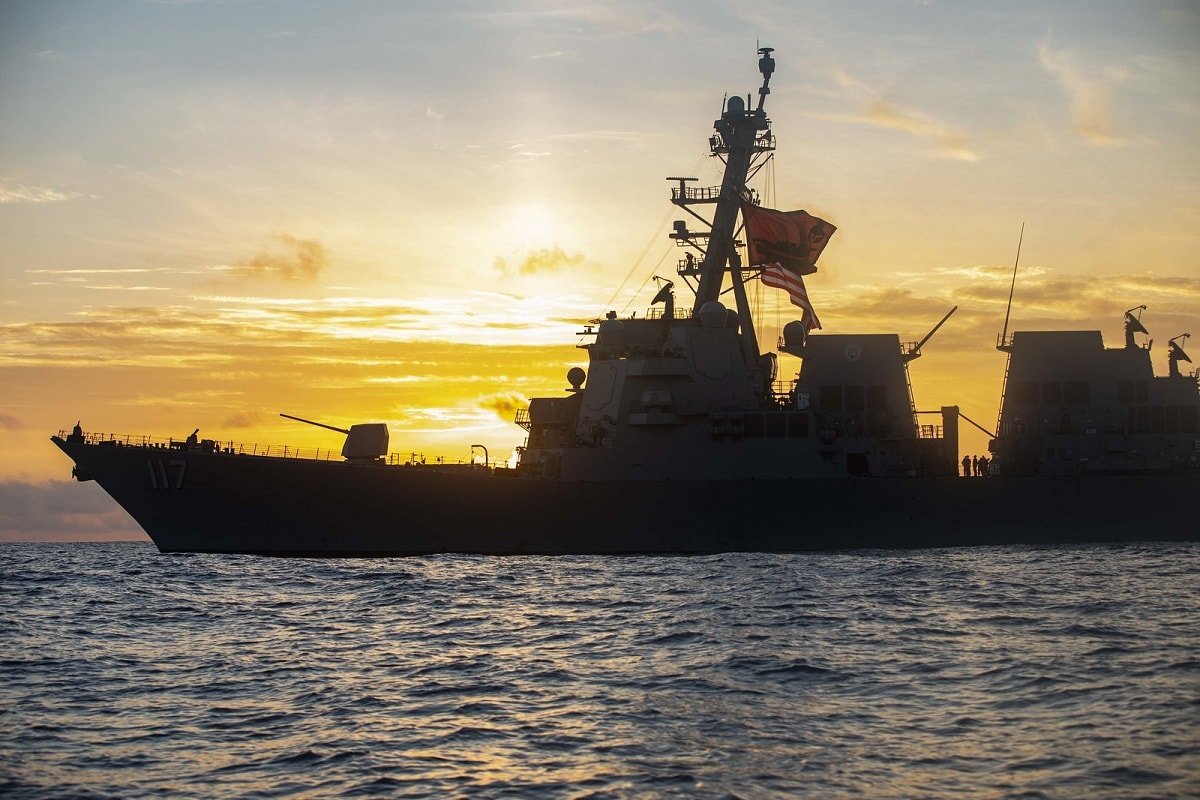
ATLANTIC OCEAN (June 12, 2021) The Arleigh Burke-class guided-missile destroyer USS Paul Ignatius (DDG 117) transits the Atlantic Ocean, June 12, 2021. Paul Ignatius is operating in the Atlantic Ocean in support of U.S. 6th Fleet’s full spectrum of joint and naval operations, often in concert with allied, joint, and interagency, partners, in order to advance U.S. national interests and security and stability in Europe and Africa. (U.S. Navy photo by Mass Communication Specialist 2nd Class Nathan T. Beard) 210612-N-QI061-1430
Arleigh Burke Destroyers
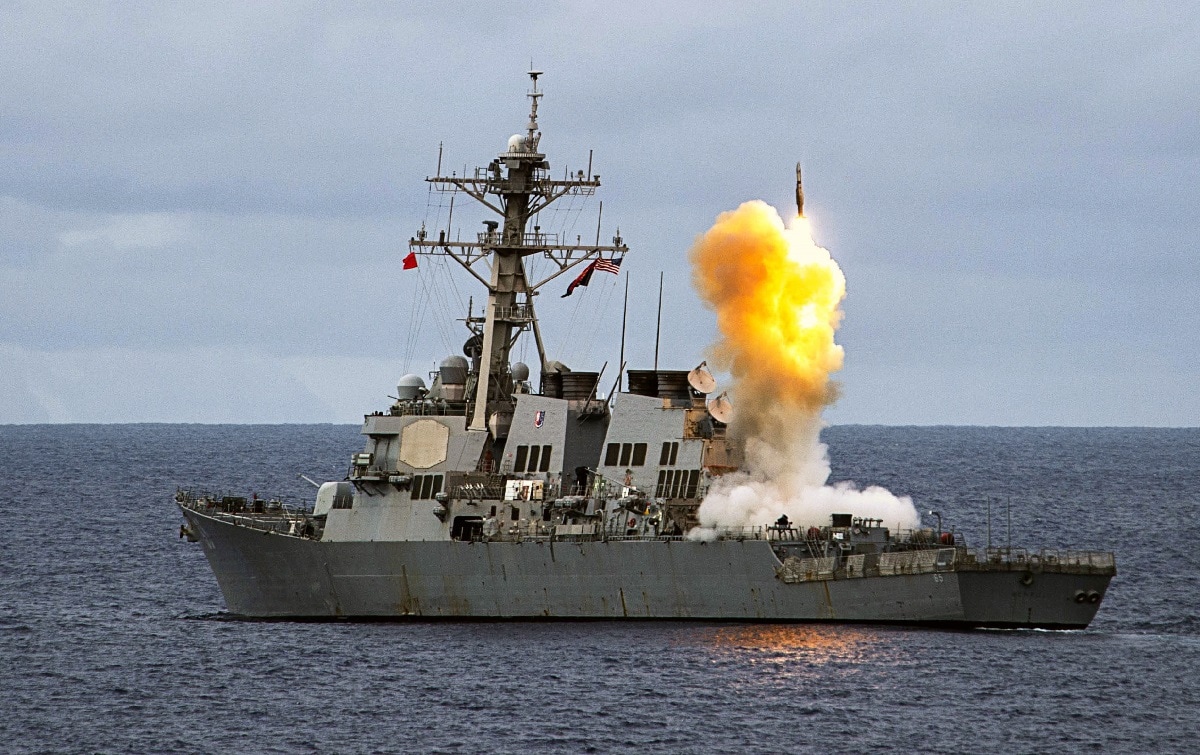
PHILIPPINE SEA (Sept. 19, 2016) The Arleigh Burke-class guided-missile destroyer USS Benfold (DDG 65) fires a standard missile (SM 2) at a target drone as part of a surface-to-air-missile exercise (SAMEX) during Valiant Shield 2016. Valiant Shield is a biennial, U.S. only, field-training exercise with a focus on integration of joint training among U.S. forces. This is the sixth exercise in the Valiant Shield series that began in 2006. Benfold is on patrol with Carrier Strike Group Five (CSG 5) in the Philippine Sea supporting security and stability in the Indo-Asia-Pacific region. (U.S. Navy photo by Mass Communication Specialist 2nd Class Andrew Schneider/Released)160919-N-XQ474-126
Now, the Navy faces an entrenched, well-funded, well-armed rival in the Islamic Republic of Iran. How well does Washington really think the Arleigh Burke-class destroyers will perform?
The Arleigh Burke Destroyer is No Longer Enough
Despite cost imbalances favoring U.S. rivals, the Pentagon is purchasing a new variant, the Block III.
The Pentagon argues that the Flight IIIs are significantly cheaper than the Trump-class battlecruisers that the forty-seventh president is demanding be built. The Navy says the Block IIIs belong to a proven platform, and they are the backbone of the Navy’s surface warfare fleet.
While this is undoubtedly true, given the nature of the war now being fought, a deeper rethink of the utility of Arleigh Burke-class destroyers is required. Rather than building new Block IIIs, the Navy must reassess whether it is strategically wise to fight hardened, asymmetrical foes with such conventional systems.
Surely, more than 20 years of fighting decentralized terror networks across the arc of the Greater Middle East taught us that such strategies will fail.
About the Author: Brandon J. Weichert
Brandon J. Weichert is the Senior National Security Editor at 19FortyFive.com. Recently, Weichert became the editor of the “NatSec Guy” section at Emerald.TV. He was previously the senior national security editor at The National Interest. Weichert is the host of The National Security Hour on iHeartRadio, where he discusses national security policy every Wednesday at 8pm Eastern. He hosts a companion show on Rumble entitled “National Security Talk.” Weichert consults regularly with various government institutions and private organizations on geopolitical issues. His writings have appeared in numerous publications, among them Popular Mechanics, National Review, MSN, and The American Spectator. And his books include Winning Space: How America Remains a Superpower, Biohacked: China’s Race to Control Life, and The Shadow War: Iran’s Quest for Supremacy. Weichert’s newest book, A Disaster of Our Own Making: How the West Lost Ukraine, is available for purchase wherever books are sold. He can be followed via Twitter/X @WeTheBrandon.\
Note: This piece has been updated since publication.