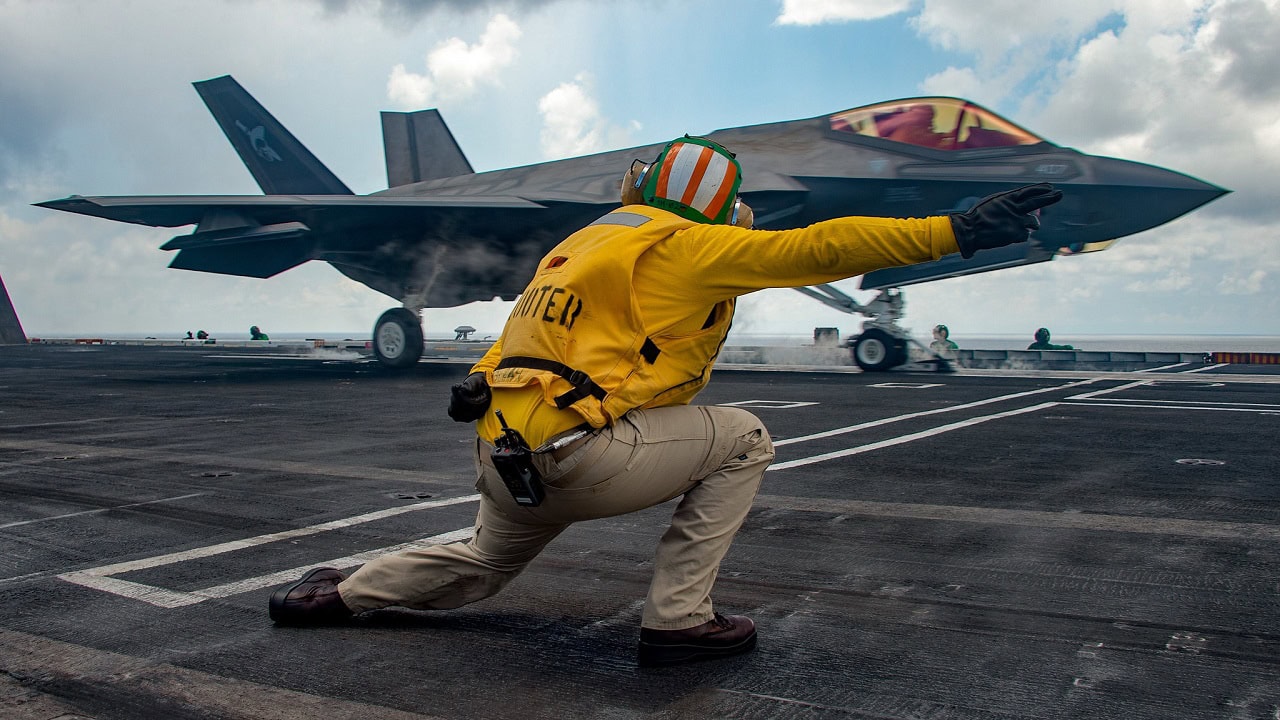
I have been studying U.S. Navy fighter aircraft for decades, and I can tell you firsthand there is nothing like the F-35C stealth fighter. In fact, just last month, this publication was able to get within 10 feet of a real F-35C, and we have some amazing photos of that visit included in this article.
The U.S. Navy’s F-35C has been operational for a decade, and, as the largest of the F-35 family and the one with the longest combat radius, the aircraft is positioned to surge into the future alongside the emerging F/A-XX.
The aircraft features a wide wingspan and reinforced components to handle the demanding maritime environment, where rough seas, wind, rain, fog, and even snow can make landings more difficult.
With a wingspan of 51 feet—the largest among the three F-35 variants—the aircraft’s structure is strengthened to endure the impact forces of carrier landings. Its larger, foldable wings allow for slower approach speeds suited to moving ships, while “aileron control surfaces” provide the control authority needed to roll the aircraft effectively during low-speed approaches.
F-35 Built for Aircraft Carriers
Carrier landings rely on arresting gear systems, where metal cables—positioned several inches above the deck—are connected to hydraulic engines that bring the aircraft to a rapid stop within a short distance. As the F-35C touches down, a tailhook deployed from the rear of the aircraft catches one of these cables, and hydraulic fluid regulates the deceleration to safely halt the plane.
Like the F-35A and F-35B variants, the F-35C depends on advanced sensors and AI-enabled computing to collect, process, and present critical real-time data to pilots. This includes information on altitude, speed, navigation, targeting, and potential threats.
The aircraft carries a full complement of weapons, including 5,000-pound GPS-guided Joint Direct Attack Munitions, along with air-to-air and laser-guided missiles. It can hold up to 19,000 pounds of fuel and 18,000 pounds of ordnance, reach speeds of Mach 1.6, and operate at ranges exceeding 1,200 nautical miles. When configured for maximum stealth using internal weapons bays, it can carry 5,000 pounds of weapons.
Air-to-Air Weapons
The stealth fighter is equipped with two AIM-120 AMRAAM air-to-air missiles and two 2,000-pound Joint Direct Attack Munitions, in addition to the AIM-9X missile and the advanced, all-weather StormBreaker precision glide bomb.
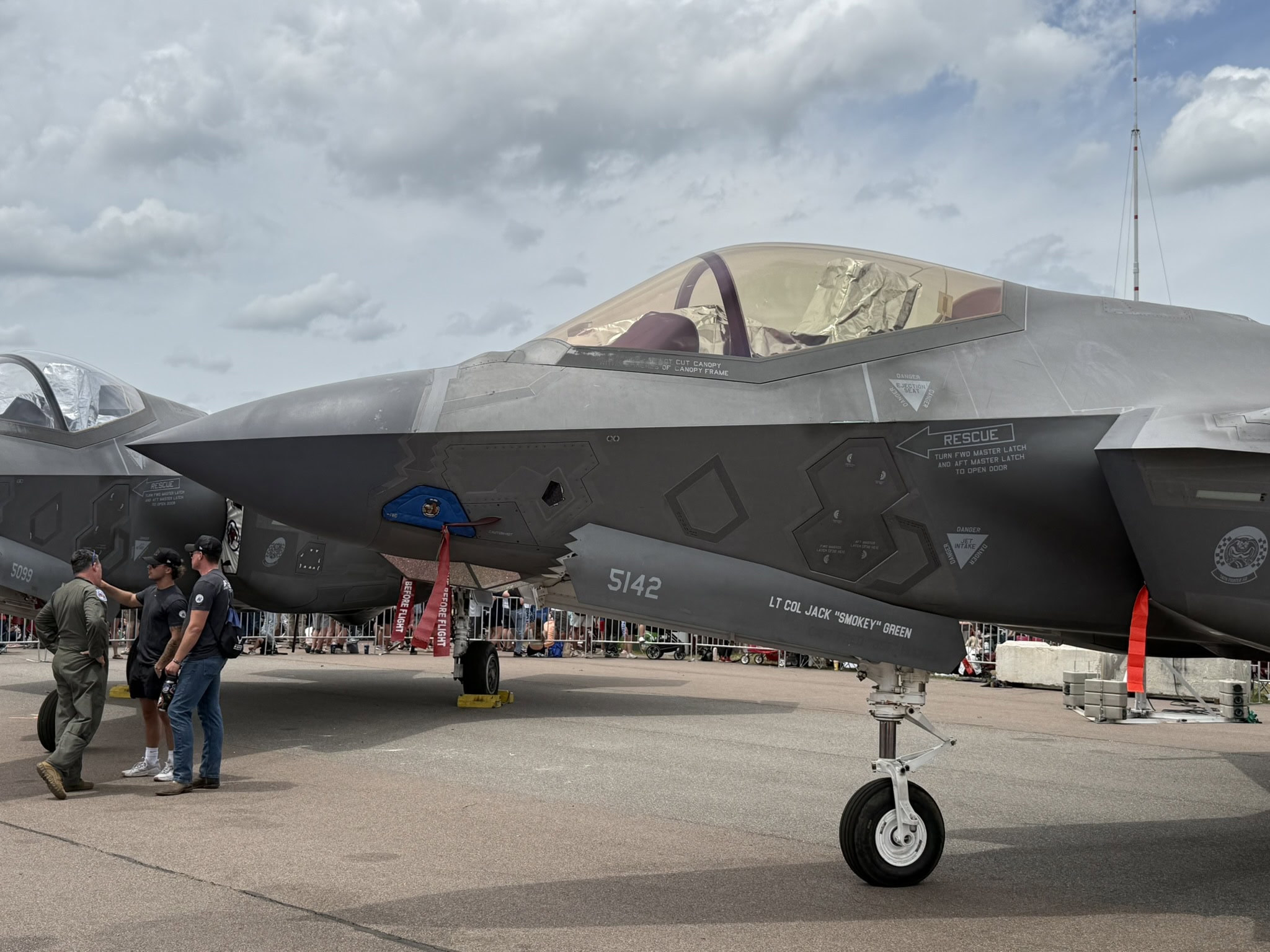
F-35C at Lakeland, Florida Airshow. Image Credit: 19FortyFive.com
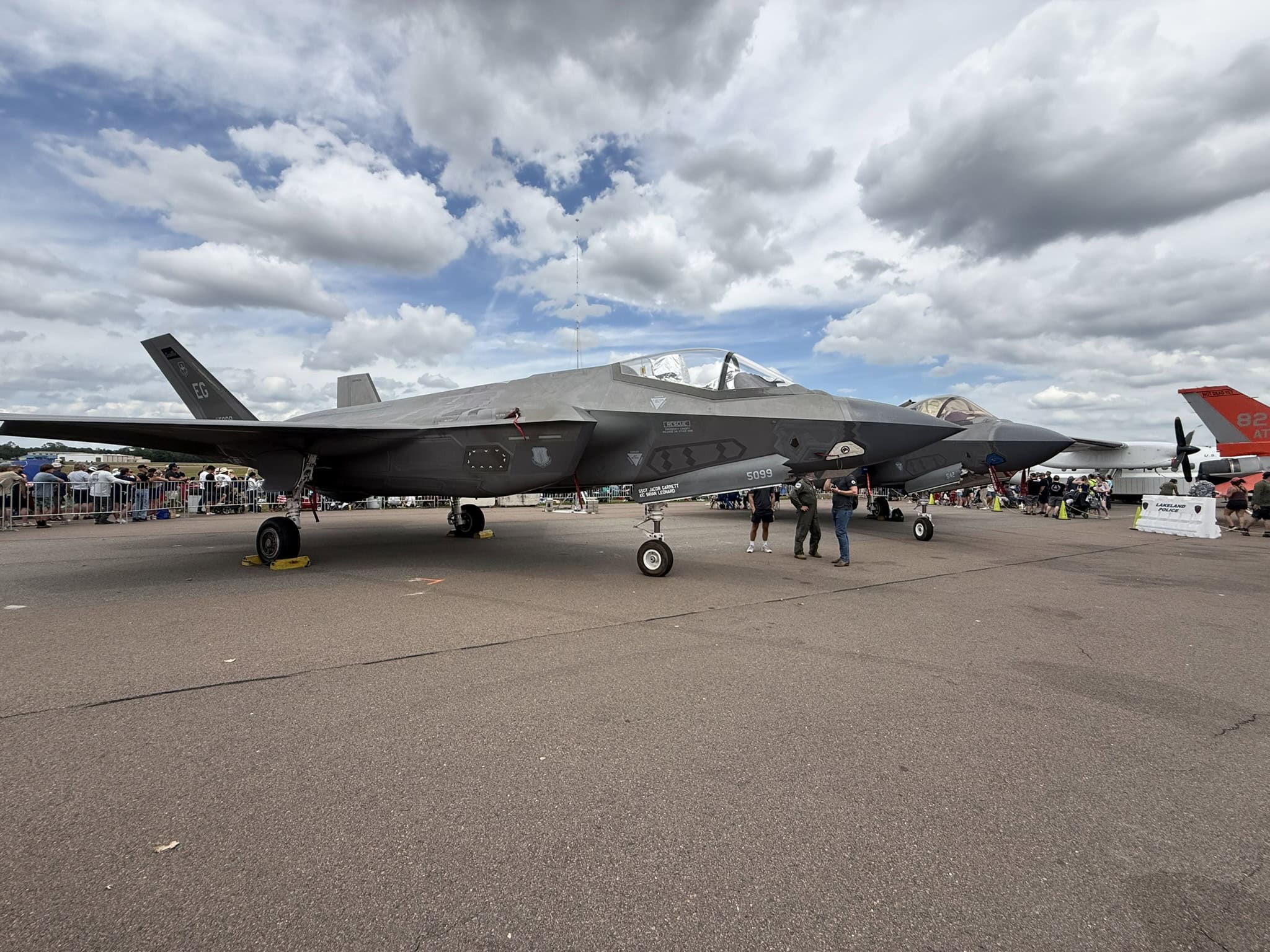
F-35C at Lakeland, Florida Airshow. Image Credit: 19FortyFive.com
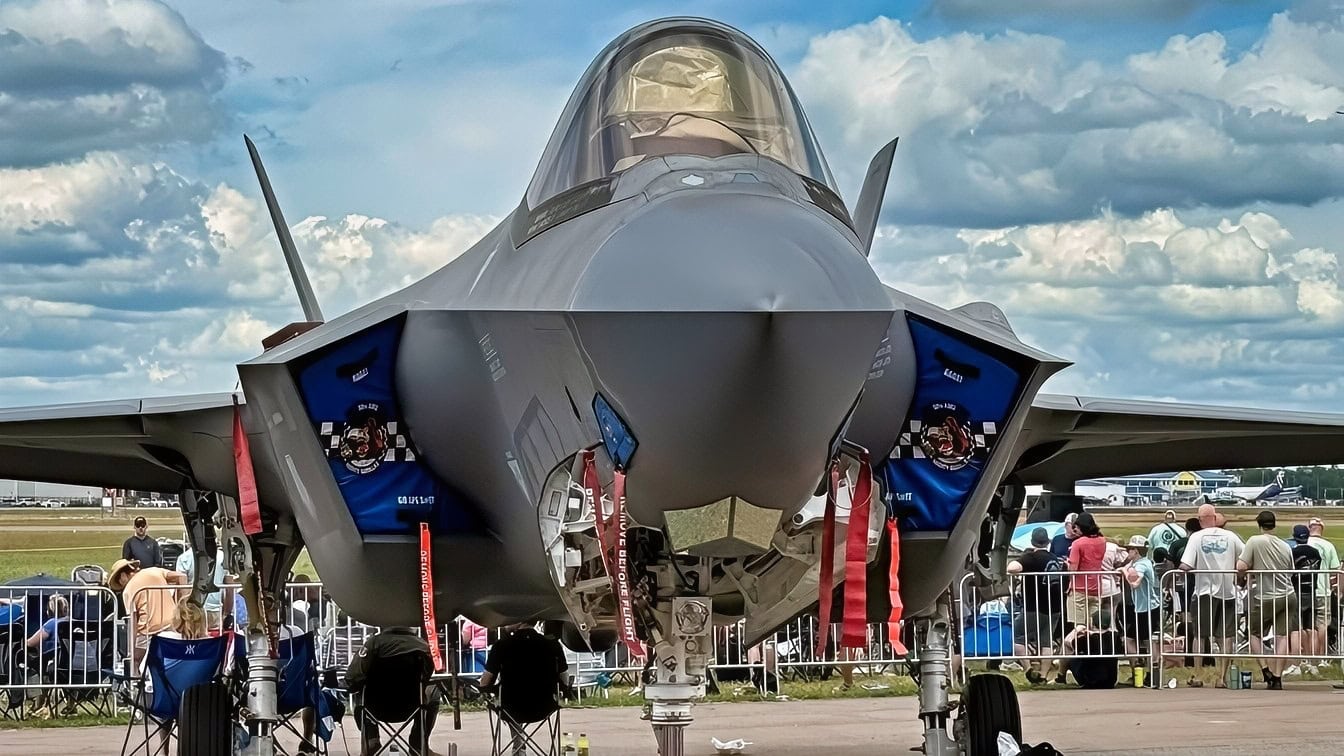
F-35C Lakeland Airshow Photo 19FortyFive Image Taken on 4/19/2026.
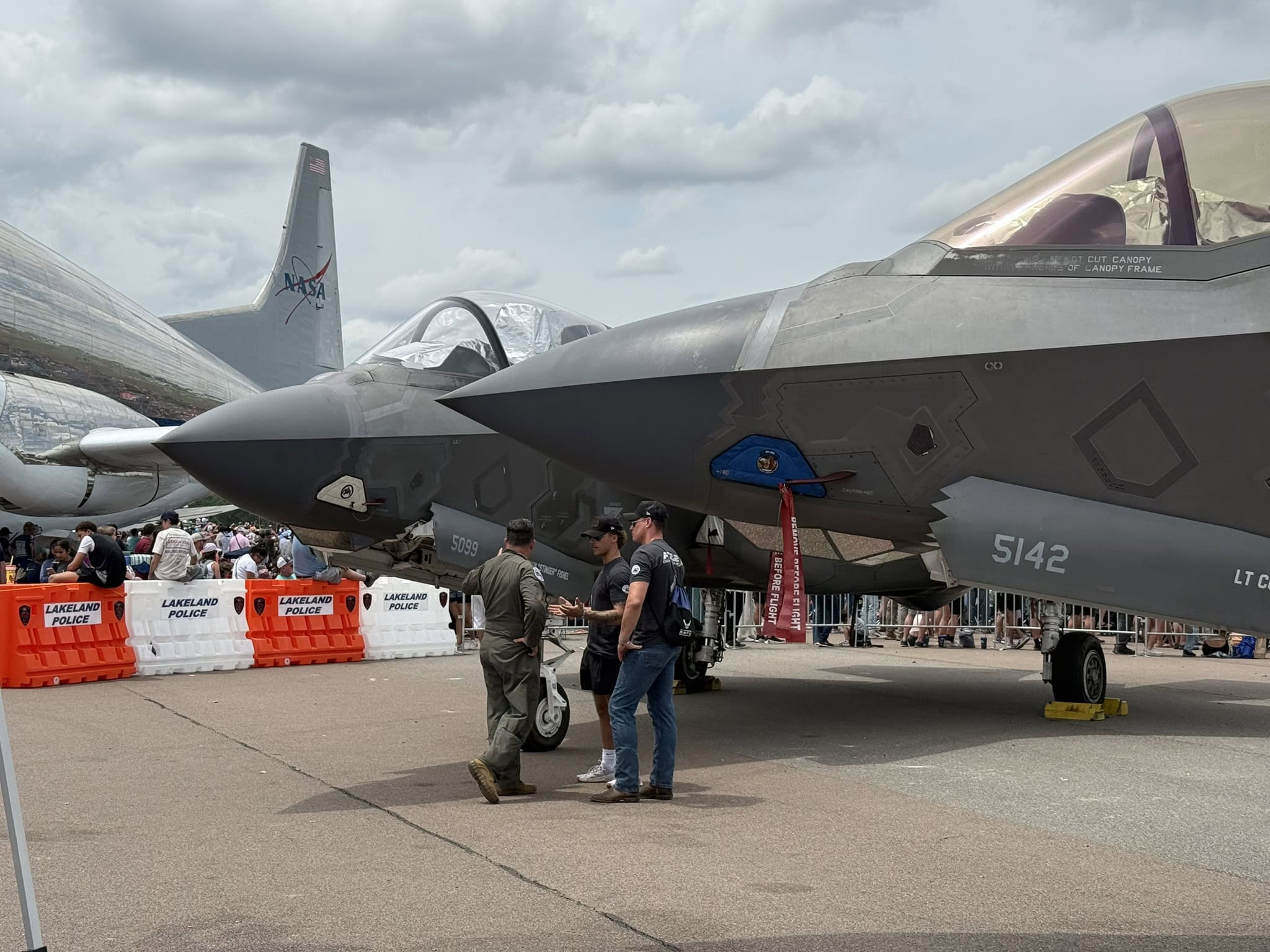
F-35C. Image Credit: 19FortyFive.com taken on 4/19/2026.
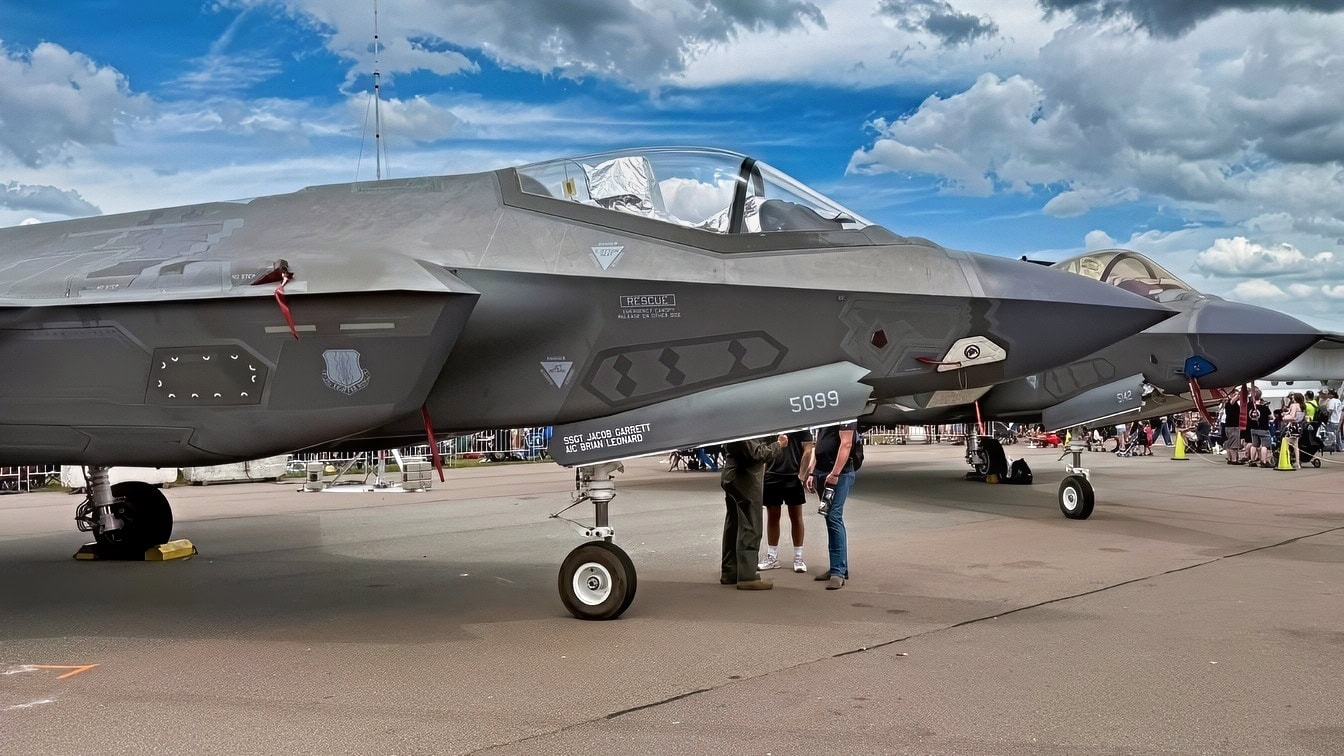
F-35C Lakeland Airshow 19FortyFive.com Image
Developed over many years, the StormBreaker can identify and engage moving targets at long range using a tri-mode seeker that combines millimeter wave radar, laser guidance, and infrared technology.
Another key advantage of the F-35C lies in its next-generation onboard computing, which enhances the safety and precision of carrier landings.
A software system known as Delta Flight Path uses advanced algorithms to reduce pilot workload during approach, improving safety margins and minimizing touchdown dispersion.
This system assists pilots in managing the many variables involved in carrier landings, including wind speed, atmospheric conditions, and ship motion. During final approach, pilots rely on a visual aid called the Fresnel Lens—a yellow light on the flight deck—to maintain the correct glide slope and ensure a precise landing trajectory.
Landing the F-35C
Carrier landings are inherently challenging, as pilots must constantly account for wind speed, atmospheric conditions, and the ship’s movement.
To guide their approach, pilots rely on a yellow light on the flight deck known as the Fresnel Lens, which helps them maintain the correct glide slope and landing trajectory.
The Fresnel Lens system consists of a vertical row of yellow lights positioned between two horizontal rows of green lights. Through a combination of lights and mirrors, the system reflects the aircraft’s approach by showing the position of the yellow light relative to the green lights above and below, indicating whether the aircraft is properly aligned on its glide path.
F-35C Lakeland Airshow 19FortyFive.com Image
Largest F-35
Designed specifically for carrier operations, the F-35C features a 51-foot wingspan, making it larger than the Air Force’s F-35A and the Marine Corps’ F-35B short takeoff-and-landing variants.
The aircraft is configured to carry up to 19,000 pounds of fuel and 18,000 pounds of weapons, while an empty F-35C weighs approximately 3,500 pounds.
It is capable of firing two AIM-120 air-to-air missiles and two 2,000-pound Joint Direct Attack Munitions. The fighter can reach speeds of up to Mach 1.6 and has a range exceeding 1,200 nautical miles.
About the Author: Kris Osborn
Kris Osborn is the Military Technology Editor of 19FortyFive. Osborn is also President of Warrior Maven – Center for Military Modernization. Osborn previously served at the Pentagon as a highly qualified expert in the Office of the Assistant Secretary of the Army—Acquisition, Logistics & Technology. Osborn has also worked as an anchor and on-air military specialist at national TV networks. He has appeared as a guest military expert on Fox News, MSNBC, The Military Channel, and The History Channel. He also has a Master’s Degree in Comparative Literature from Columbia University.