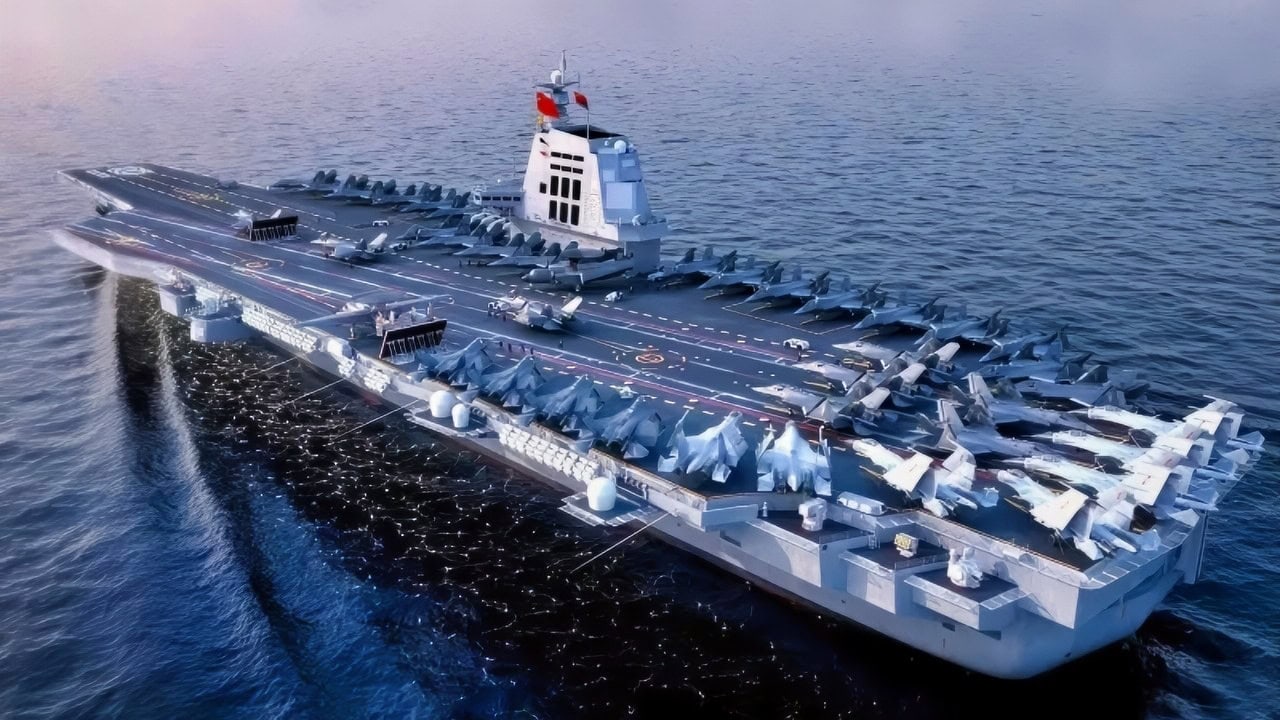
In a relatively short period of time, China has evolved from a rising power with no aircraft carriers to one with three aircraft carriers, each with increasing complexity and capabilities, as well as a fourth carrier under construction. The newest Chinese carrier, the Type 004, will be nuclear-powered and will set the tone for future Chinese carriers.
But, is this a real threat to the United States?
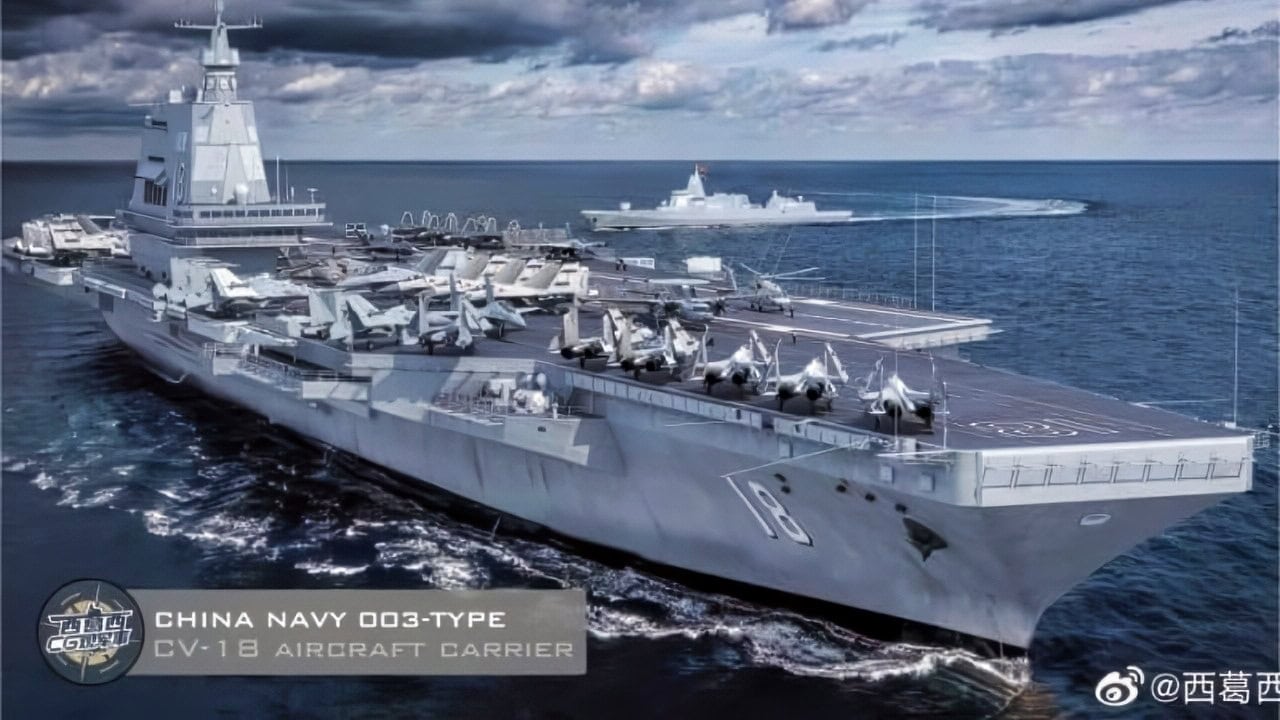
China Aircraft Carrier Type 003 Conventional Supercarrier. Image Credit: X Screenshot.
After all, haven’t we witnessed the decreasing utility of aircraft carriers, thanks to the advent of increasingly advanced anti-access/area-denial (A2/AD) capabilities?
The answer to that question is a resounding “yes.”
So, why would China seek to develop systems like aircraft carriers that are increasingly obsolete?
The A2/AD Umbrella: China’s Real Strategic Advantage
Because China’s current naval warfare doctrine focuses on dominating the First Island Chain (the territories extending from the Kamchatka Peninsula through Japan and Taiwan down to the Philippines), the operational concept behind China’s carrier force is focused on fighting a naval conflict beneath the protective shield provided by China’s A2/AD defenses arrayed across that First Island Chain.
That A2/AD network defends Chinese systems operating in the First Island Chain while simultaneously threatening American ships, bases, and planes–forcing the US to keep their forces out of range, allowing the Chinese forces to have more time to impose their will upon the First Island Chain militarily.
Interestingly, the creation of the Type 004 nuclear-powered aircraft carrier is something more than a regional dominance platform.
Type 004: From Regional Tool to Global Ambition
A nuclear-powered carrier is virtually limitless in its range.
In other words, the Type 004 could be deployed anywhere in the world, much like the way in which Americans deploy their nuclear-powered carriers globally.
Too bad for China that the very same limits that have been imposed on America’s once invulnerable carriers in regions closest to China will be similarly imposed by the United States and its allies in regions closest to their territories.
Beijing aims to have a total of 9 aircraft carriers by 2035, with the Type 004 and all subsequent Chinese carriers nuclear-powered. It’s clear that the Chinese seek a robust blue-water naval capability to match the US Navy’s.
The Limits of Power Projection
While having such capabilities might help China show its flag in the Developed World, in places like Africa or South Asia, where advanced A2/AD networks exist, those same carriers would be vulnerable.
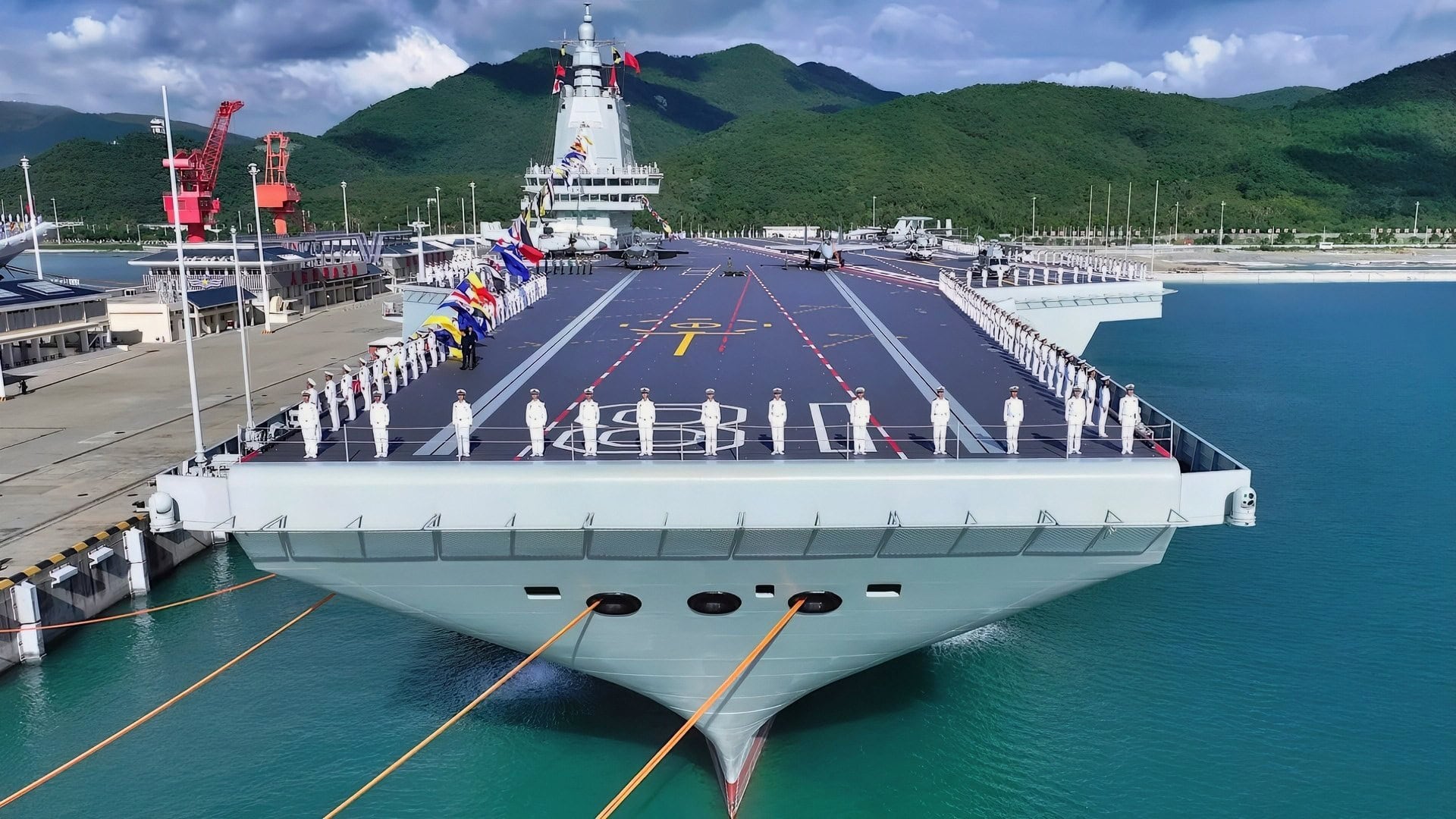
China Aircraft Carrier PLAN Image
That seems like an excessive expense just to show the flag in parts of the world that lack A2/AD capabilities to threaten the carrier.
Still, China is building these systems.
These ships could only be a threat if used in conjunction with the safety provided by their A2/AD networks in the First Island Chain.
Anything beyond that, however, will not pose a threat outside regions protected by A2/AD networks.
China’s carrier buildup is strategic, but only within limits.
Inside the protective shield of its A2/AD network, Beijing’s carriers enhance its ability to dominate the First Island Chain and challenge American intervention.
Beyond that zone, however, these expensive platforms risk becoming liabilities rather than assets.
In the end, China’s carrier fleet reveals a deeper truth about modern naval warfare: power projection still matters, but only where it can be protected.
About the Author: Brandon J. Weichert
Brandon J. Weichert is the Senior National Security Editor at 19FortyFive.com. Recently, Weichert became the editor of the “NatSec Guy” section at Emerald. TV. He was previously the senior national security editor at The National Interest. Weichert hosts The National Security Hour on iHeartRadio, where he discusses national security policy every Wednesday at 8 pm Eastern. He hosts a companion show on Rumble entitled “National Security Talk.” Weichert consults regularly with various government institutions and private organizations on geopolitical issues. His writings have appeared in numerous publications, among them Popular Mechanics, National Review, MSN, and The American Spectator. And his books include Winning Space: How America Remains a Superpower, Biohacked: China’s Race to Control Life, and The Shadow War: Iran’s Quest for Supremacy. Weichert’s newest book, A Disaster of Our Own Making: How the West Lost Ukraine, is available for purchase at any bookstore. Follow him via Twitter/X @WeTheBrandon.