
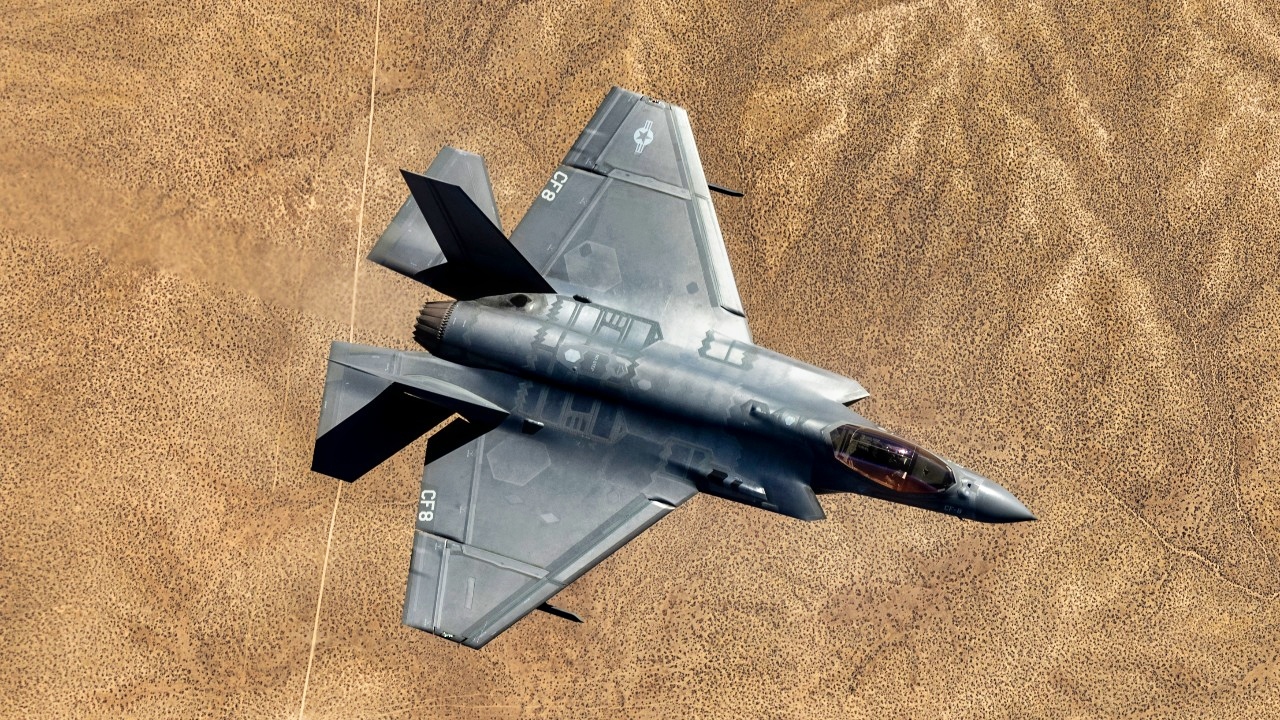
Summary and Key Points: Isaac Seitz, a Defense Columnist and Strategic Intelligence graduate of Patrick Henry College, examines the tactical evolution of the F-35C Lightning II.
-This 19FortyFive analysis explores how the F-35C’s AN/APG-81 AESA radar and sensor fusion enable networking dominance to suppress Russian-made S-400 air defenses and secure air superiority over the Strait of Hormuz.
From Venezuela to Iran: Why the USS Ford is Betting on the F-35C’s Stealth Superiority
The USS Gerald R. Ford (CVN-78) is en route to the Middle East as tensions between Iran and the United States continue to boil over. The carrier is set to join the USS Abraham Lincoln (CVN-72) and her carrier strike group. The Ford is the most advanced carrier in the world, boasting better electronics and allowing for higher sorties rates than its Nimitz-class predecessors.
However, the air wing aboard Lincoln includes a squadron of F-35C Lighting II aircraft, which is a significant step up in capability compared to the F/A-18E/F Super Hornet the Navy previously relied on. So, with a war with Iran looking more and more likely, let us take a look at the F-35C and see just how capable this stealth fighter actually is.
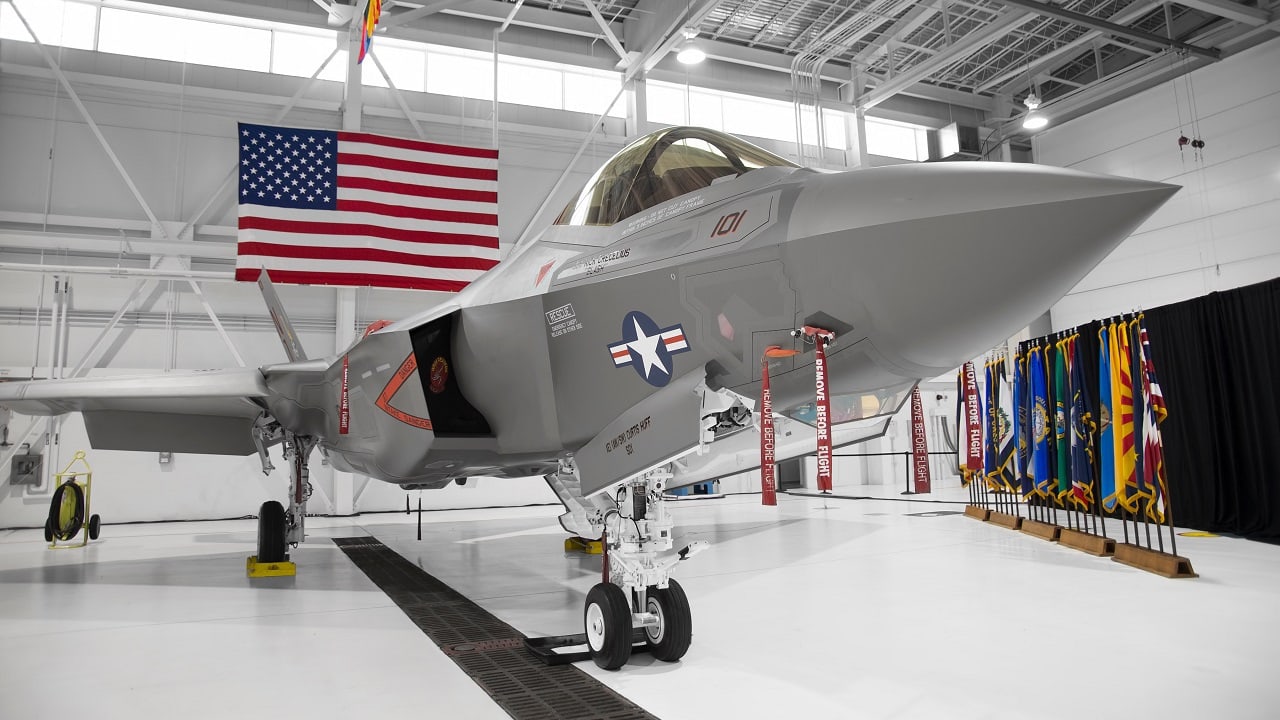
US F-35. Image Credit: Lockheed Martin.
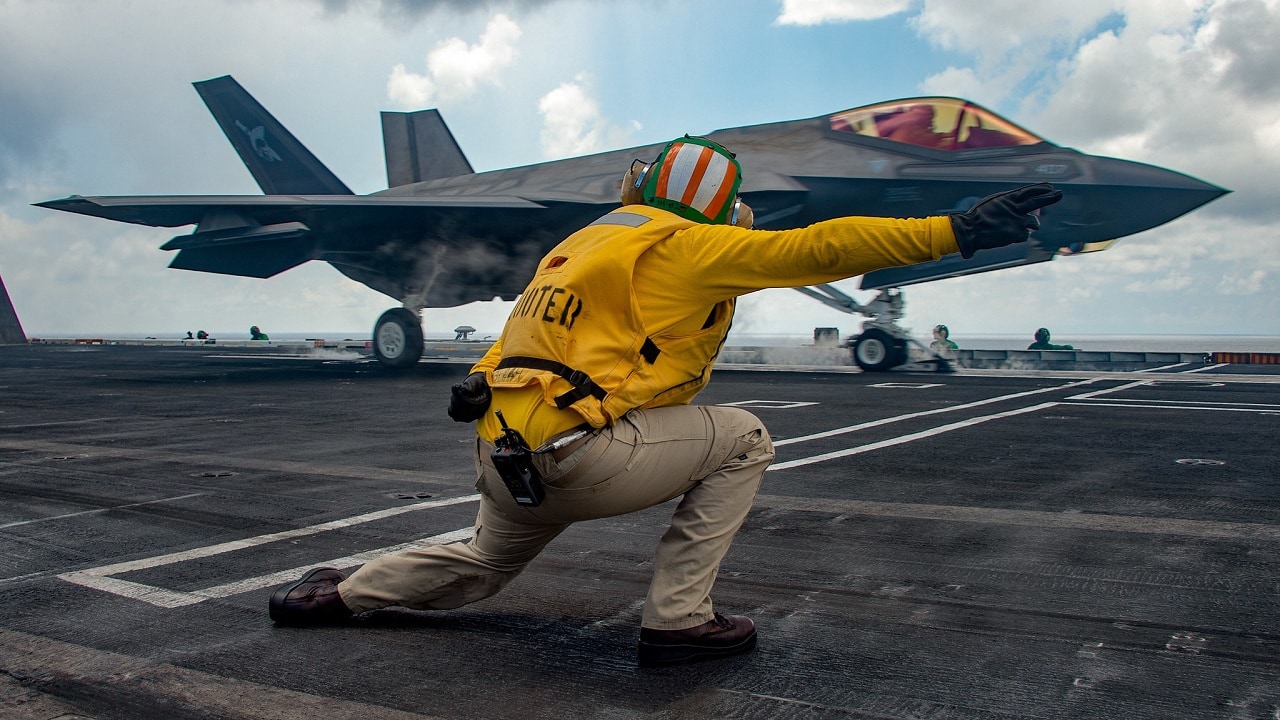
SOUTH CHINA SEA (Oct. 25, 2021) Lt. Nicholas Eppler, from Exeter, Calif., directs flight operations as an F-35C Lightning II assigned to the “Argonauts” of Strike Fighter Squadron (VFA) 147 launches from the Nimitz-class aircraft carrier USS Carl Vinson (CVN 70), Oct. 25, 2021. The Carl Vinson Carrier Strike Group is on a scheduled deployment in the U.S. 7th Fleet area of operations to enhance interoperability through alliances and partnerships while serving as a ready-response force in support of a free and open Indo-Pacific region. (U.S. Navy photo by Mass Communication Specialist Seaman Emily Claire Bennett) 211025-N-TY704-1241
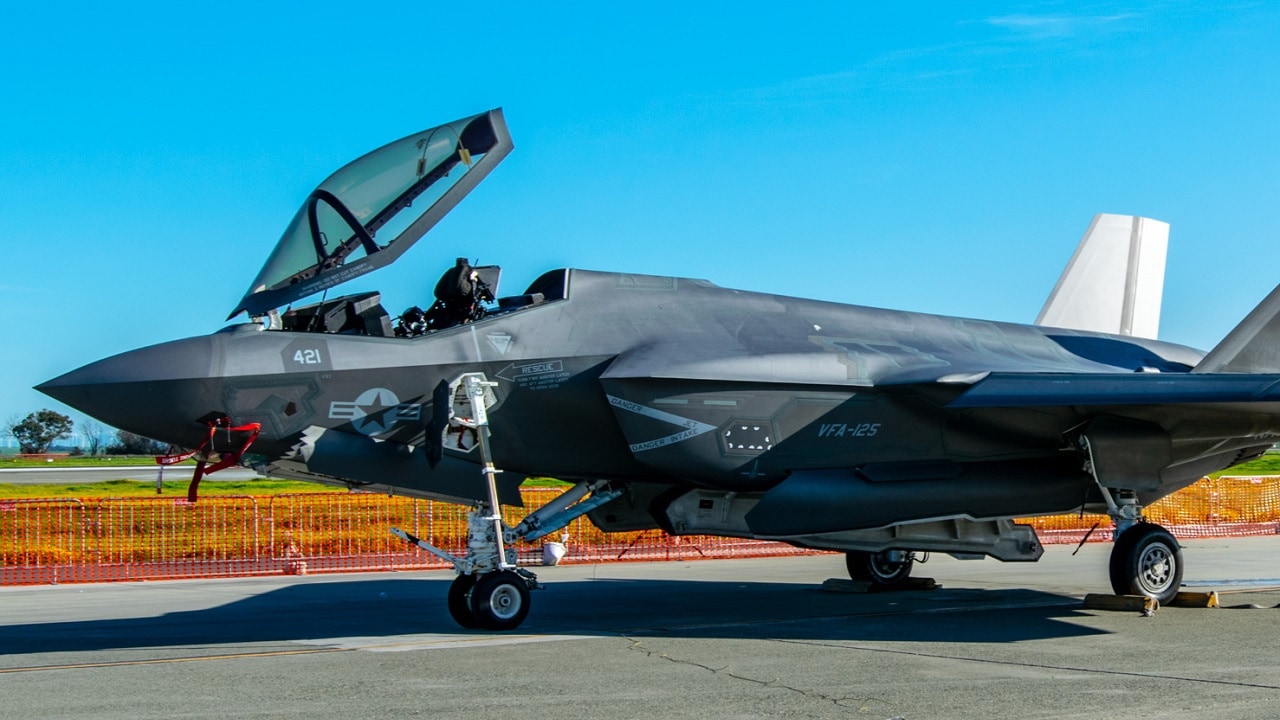
F-35C on Static Display. Image Credit: Creative Commons.
The Masterful Engineering Behind the F-35
The F-35C’s biggest advantage over the Super Hornet is its stealth. The aircraft’s aligned edges, embedded sensors, internal weapons bays, and radar-absorbent materials yield very-low-observable performance that is specifically hardened for the saltwater, high-cycle abuse of carrier life.
This allows the jet to ingress heavily defended airspace with a dramatically reduced radar signature compared to legacy designs. By contrast, the Super Hornet incorporates some radar cross-section reduction measures but was never designed as a stealth platform.
In open-source comparisons, the Super Hornet’s estimated radar cross-section is on the order of square meters, versus the F-35 family’s signature estimates in the thousandths of a square meter. The difference translates directly into greater survivability and first-shot opportunity against modern integrated air-defense systems.
Just as significant is what the F-35C “sees” and how it shares that information. The jet fuses inputs from an AN/APG-81 active electronically scanned array radar (AESA), a 360-degree Distributed Aperture System, the Electro-Optical Targeting System, and a helmet-mounted display that projects the synthesized picture directly onto the pilot’s visor.
This fusion creates a coherent, prioritized understanding of the battlespace that can be distributed across secure datalinks to ships, ground units, and other aircraft, enabling the F-35C to simultaneously act as a stealth fighter, an intelligence, surveillance, and reconnaissance node, and a battle manager. The Super Hornet, especially in Block III guise, employs an excellent AN/APG-79 AESA radar and modern mission computers, but it depends on external support such as the EA-18G Growler to achieve awareness and electronic effects inside dense threat environments.
What the F-35C Offers Compared to Other Naval Fighters
In terms of raw performance, the F-35C is currently the best aircraft in the Navy’s inventory. The aircraft carries nearly 20,000 pounds of internal fuel and advertises an internal-fuel range beyond 1,200 nautical miles, with a combat radius greater than 600 nautical miles.
Admittedly, this could be better, but it works fine for missions against Iran. The Super Hornet, while still perfectly capable of carrying external tanks—and now conformal fuel tanks, in Block III—to extend its reach, still does not match the overall performance of the F-35. In the real world that means more organic reach for the F-35C on day one of a campaign, and more flexibility for the carrier air wing commander to place the carrier farther from threats without surrendering strike options.
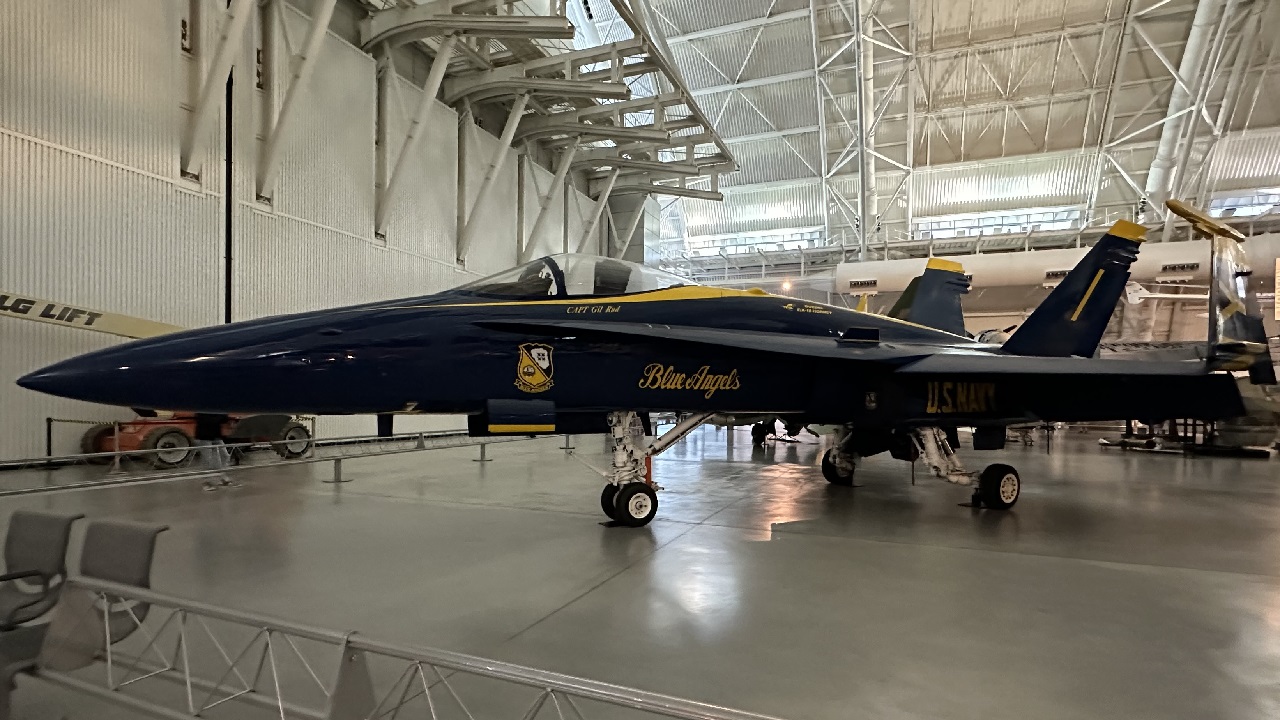
F/A-18 Hornet. Image taken at National Air and Space Museum on October 1, 2022. Image by 19FortyFive.
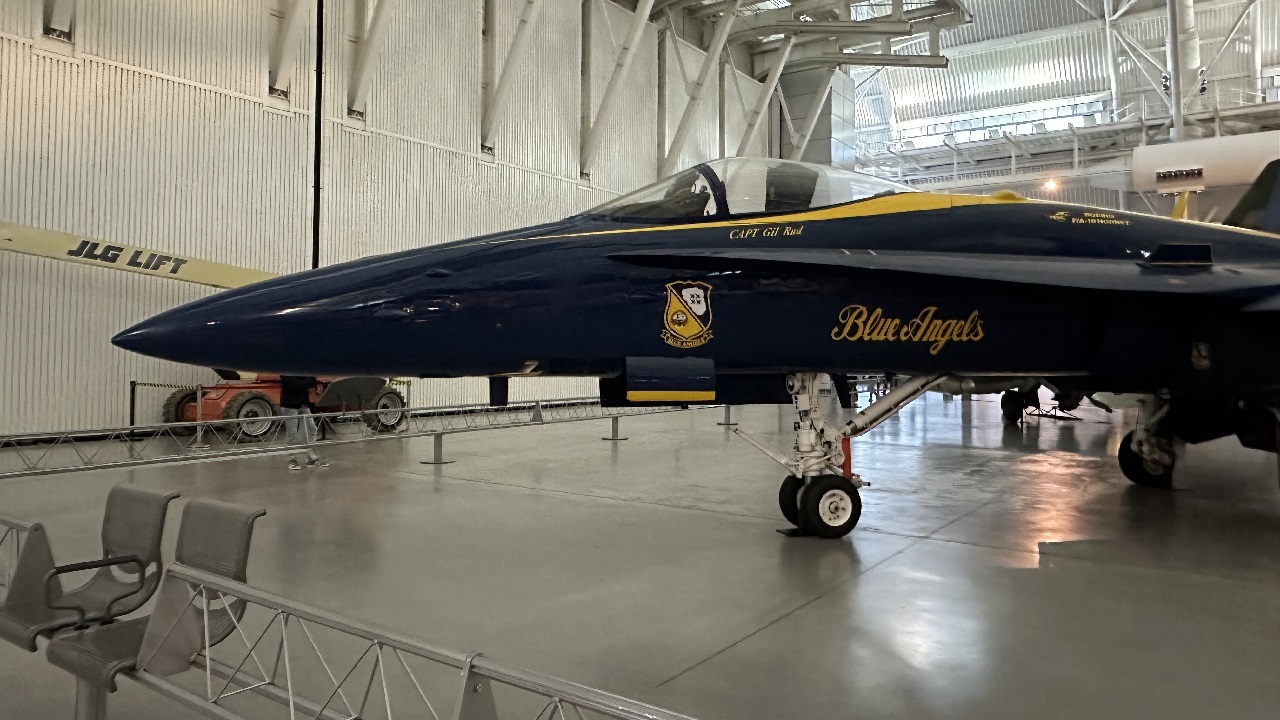
F/A-18 Hornet. Image taken at National Air and Space Museum on October 1, 2022. Image by 19FortyFive.
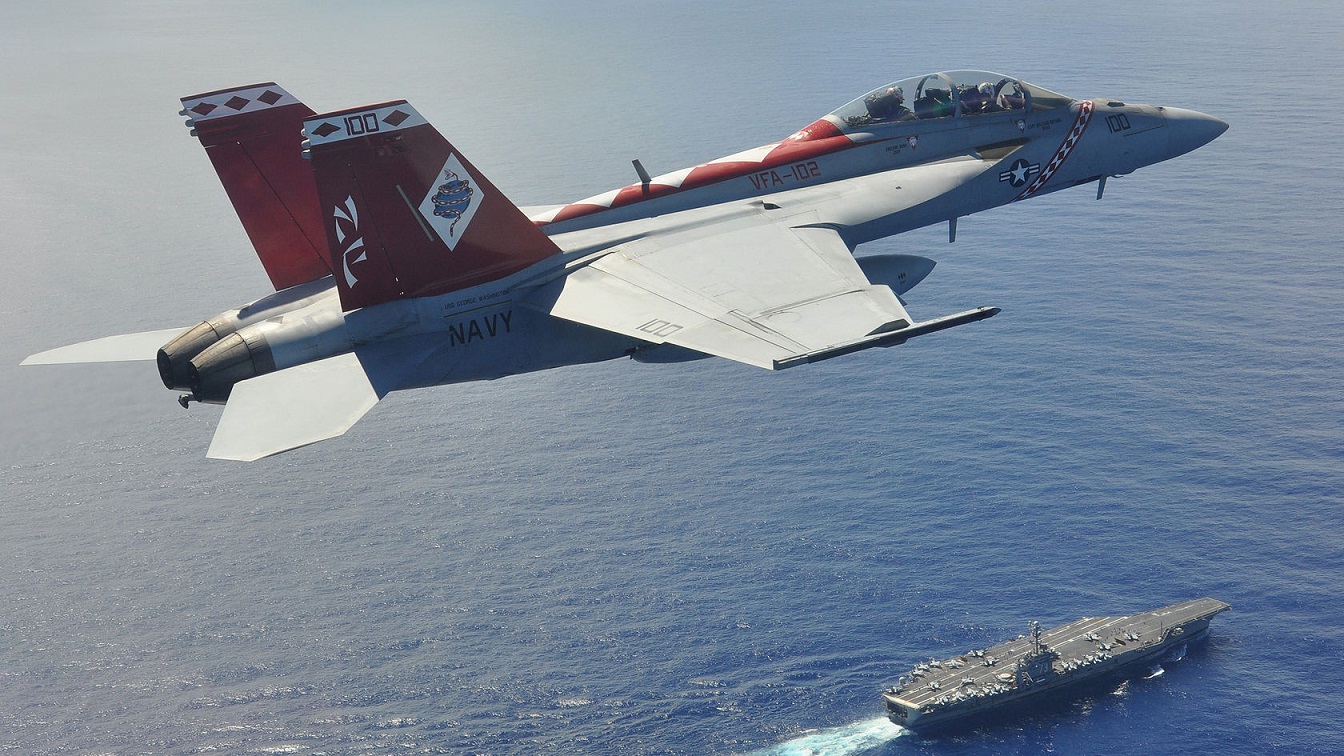
Block III Super Hornet. A U.S. Navy F/A-18F Super Hornet aircraft assigned to Strike Fighter Squadron (VFA) 102 flies past the aircraft carrier USS George Washington (CVN 73) in the Philippine Sea Aug. 21, 2013. The George Washington was underway in the U.S. 7th Fleet area of responsibility supporting maritime security operations and theater security cooperation efforts.
The F-35C can operate in a stealth configuration with roughly 5,000 pounds of precision weapons carried internally, minimizing radar signature and maximizing survivability for first-day penetrations against sophisticated air defenses.
Once air dominance is established and enemy air defenses are suppressed, it can transition to mixed or external carriage to bring a total loadout of more than 18,000 pounds. The Super Hornet, by contrast, is not constrained by internal weapons bays and can carry around 17,750 pounds of munitions, which makes the Super Hornet ideal for non-stealth missions or delivering standoff munitions.
Bad News for Iran…
Where the F-35C most excels is in networking and electronic warfare. Because its sensors are integrated rather than merely collocated, the aircraft can detect, classify, geolocate, and share targets while remaining low-observable, turning each F-35C into a node that increases the whole force’s lethality.
The Super Hornet can host Link-16 and other datalinks and, in the EA-18G variant, deliver world-class electronic attack capabilities, but the F-35C airframe itself embeds more of that capability in every jet, thereby reducing the need to mass support aircraft on the first nights of a war.
The consequence is not that Growlers or Hawkeyes go away—rather, they integrate with the F-35C to create a web of sensors and effectors, with the stealth fighter often acting as the hidden quarterback.
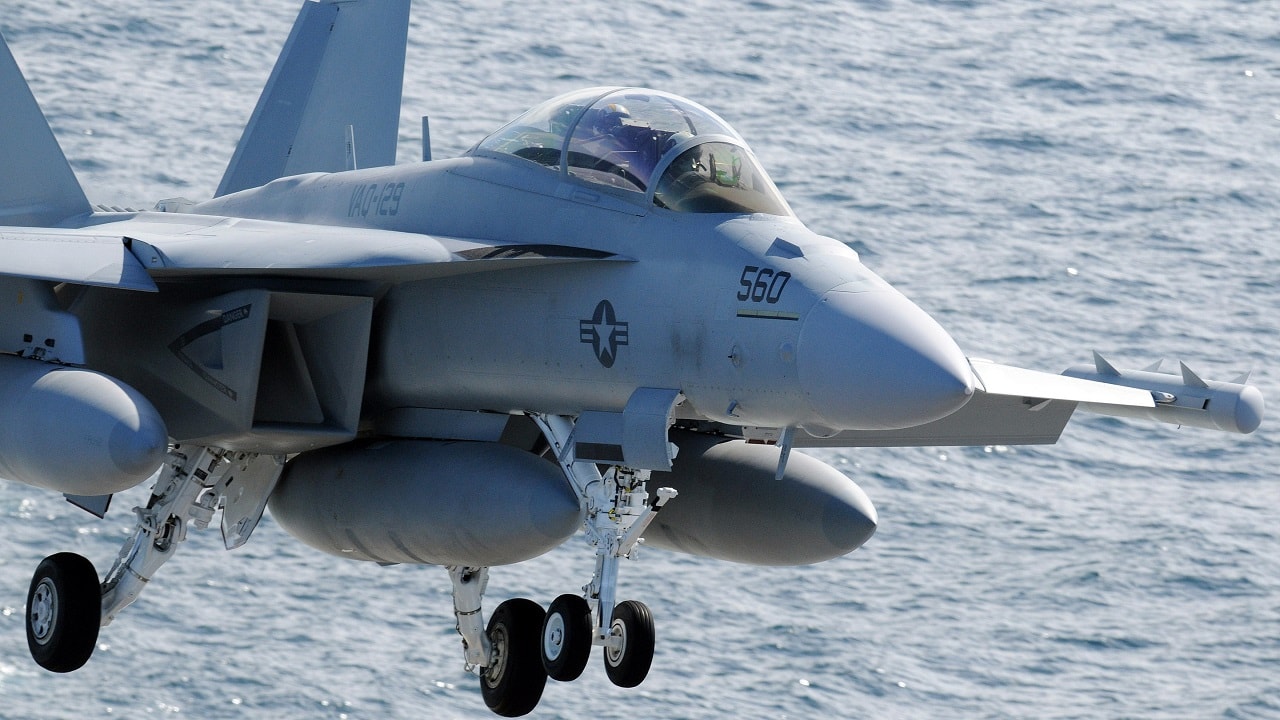
(Feb. 17, 2009) An EA-18G Growler assigned to the “Vikings” of Tactical Electronic Warfare Squadron (VAQ) 129 aligns itself for an at sea landing aboard the Nimitz-class aircraft carrier USS Ronald Reagan (CVN 76). The Growler is the replacement for the EA-6B Prowler, which will be replaced in the 2010 timeframe. Ronald Reagan is underway performing Fleet Replacement Squadron Carrier Qualifications in the Pacific. (U.S. Navy photo by Mass Communication Specialist 3rd Class Torrey W. Lee/Released).
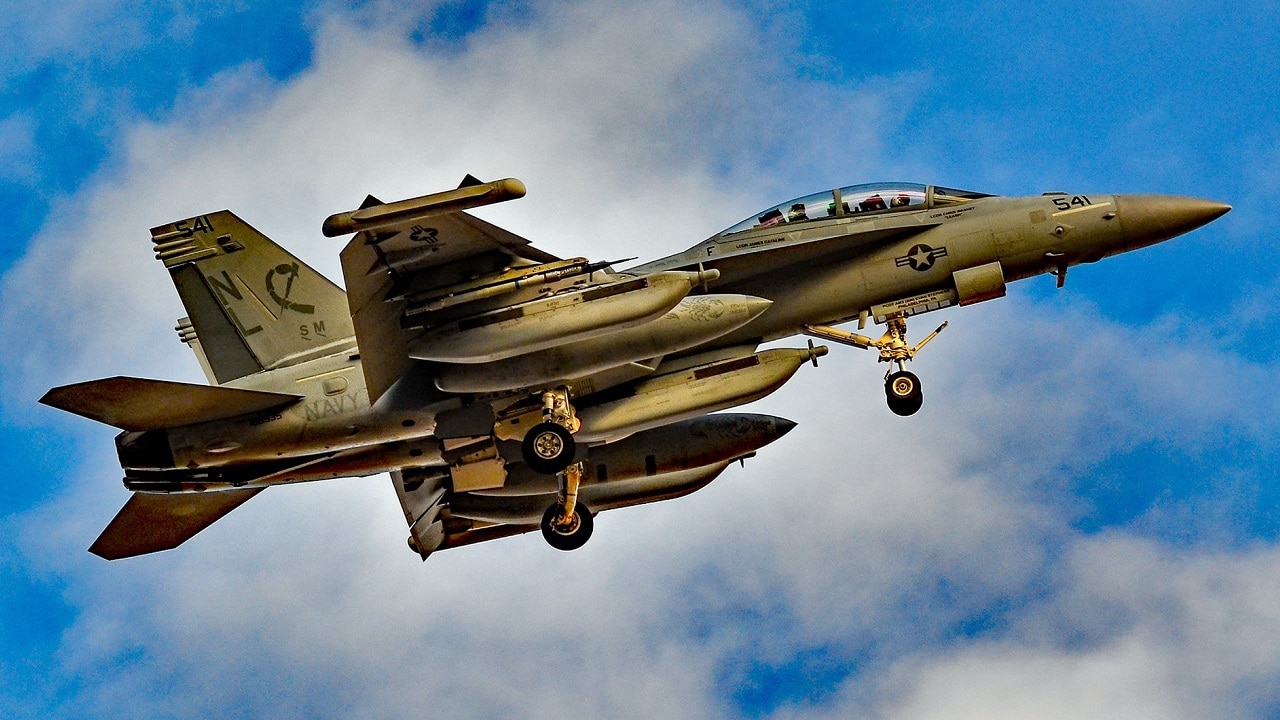
EA-18G Growler. Image Credit: Creative Commons.
For Iran, the F-35 is the harbinger of doom. Israel already used its F-35Is against Iran effectively during the Twelve Day War, even against Russian made S-300 air defenses. According to some sources, Iran has since acquired S-400 air defense systems, but it is unclear whether the S-400 is actually capable of detecting and locking onto an F-35.
If it isn’t, then there is nothing stopping the U.S. and Israel from penetrating Iran’s airspace at will, whittling down its defenses, and striking valuable targets. Once air defense has been adequately suppressed, the Super Hornets will be able to clean up what remains. Air power alone does not win wars, as Afghanistan has shown, but it does help degrade the enemy’s capabilities.
About the Author: Isaac Seitz
Isaac Seitz, a Defense Columnist, graduated from Patrick Henry College’s Strategic Intelligence and National Security program. He has also studied Russian at Middlebury Language Schools and has worked as an intelligence Analyst in the private sector.
NOTE: This has been updated since publication.