
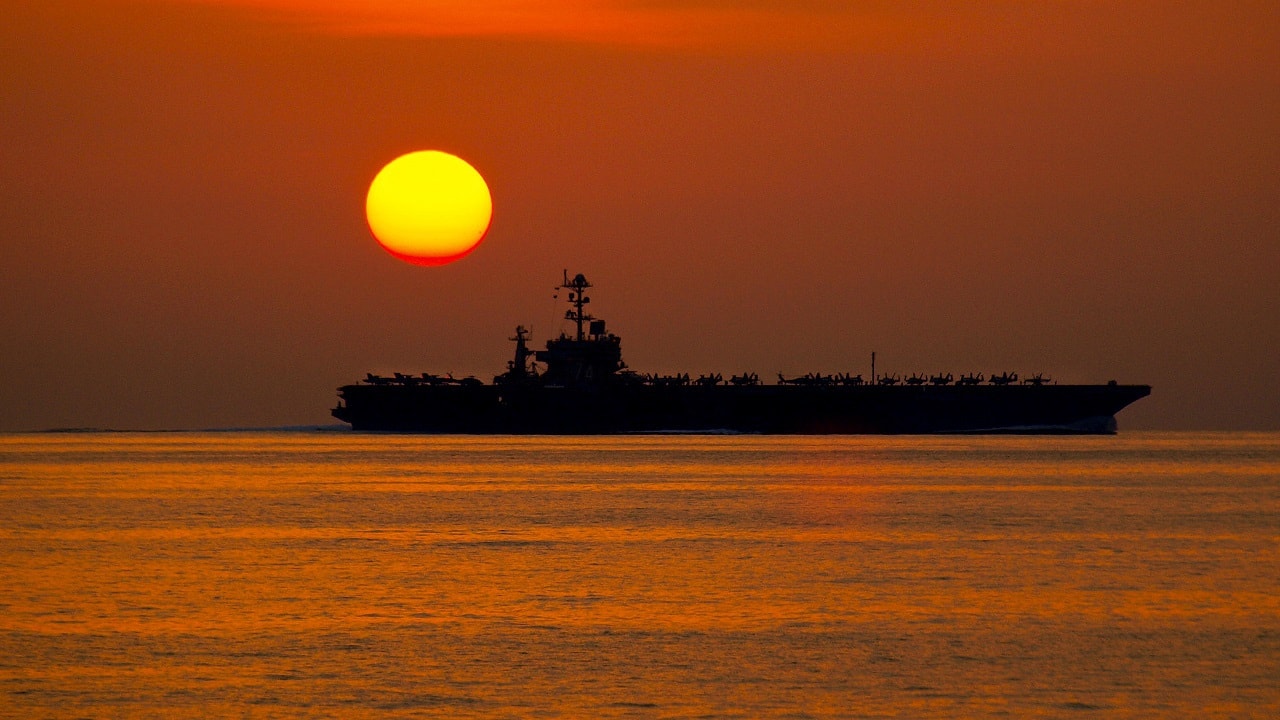
The USS John C. Stennis (CVN-74), a Nimitz-class aircraft carrier, has been in overhaul for five years and counting. The original timeline called for a four-year overhaul. But with the original timeline long since compromised, the new redelivery date is expected to be October 2026, with a full operational return sometime in 2027. However, the Stennis delay is not an isolated issue; it’s a symptom of a deeper industrial and structural problem that hampers US shipbuilding—with strategic consequences.
What is an RCOH?
The Stennis is undergoing a Refueling and Complex Overhaul (RCOH), which is a midlife reset for a nuclear carrier. The nuclear fuel is replaced while the propulsion systems, electronics, and combat systems are all upgraded. Essentially, an RCOH is a partial rebuild that involves cutting into the hull and replacing internal systems. It’s not a quick or cosmetic fix. Four years for an RCOH is entirely normal, as an RCOH is closer to a rebuild than a repair. Still, the Stennis RCOH is now pushing six years.
Why So Long?
Unexpected issues were discovered on the Stennis, pushing the timeline out further. For example, structural corrosion was discovered, along with a degraded steam turbine. Industrial base constraints are also slowing down the rebuild, thanks to a shortage of nuclear-qualified welders, electricians, and pipefitters.
The “silver tsunami” of retirements has contributed to the shortage, as newer workers have proven less efficient.
Also, the supply chain is facing issues due to long lead times for specialized parts. Last, the Navy has competing priorities and has had to shift workers to the USS George Washington, another Nimitz-class ship undergoing upgrades, and submarine programs. So the delay is due to overlapping failures, not a single bottleneck.
And the Washington
The overhaul of the USS George Washington is also severely delayed. This directly impacts the Stennis, which inherited the backlog and the workforce disruption. The reality is that the US has only limited dry-dock space and specialized crews. The result is cascading delays. One delayed carrier creates a ripple effect across the entire fleet.
Nimitz-class Complexity
The Nimitz-class carrier is a complex machine. With two nuclear reactors and steam turbines driving the shafts, this configuration poses a significant overhaul challenge.
The turbines are especially troublesome—they are massive and custom-built. They cannot be swapped quickly; they must be rebuilt and refurbished. Meanwhile, various systems are being upgraded, like radar, combat electronics, and aviation systems. The reality is that nuclear aircraft carriers are among the most complex machines ever built, and there are no easy fixes or shortcuts. The process simply takes years to do right.
Nimitz by the Specs
The Nimitz-class displaces 100,000 tons, measures 1,092 feet, and carries a crew of 5,000 personnel. The Nimitz, in essence, is a floating city and airbase complete with a nuclear plant, airport operations, weapons, storage, and command systems.
The ship is not a single system but thousands of interdependent systems. Nuclear propulsion is arguably the most notable.
Two nuclear reactors generate steam for propulsion and electricity. The RCOH is necessary now because nuclear fuel lasts 25 years, and a midlife refueling is required.
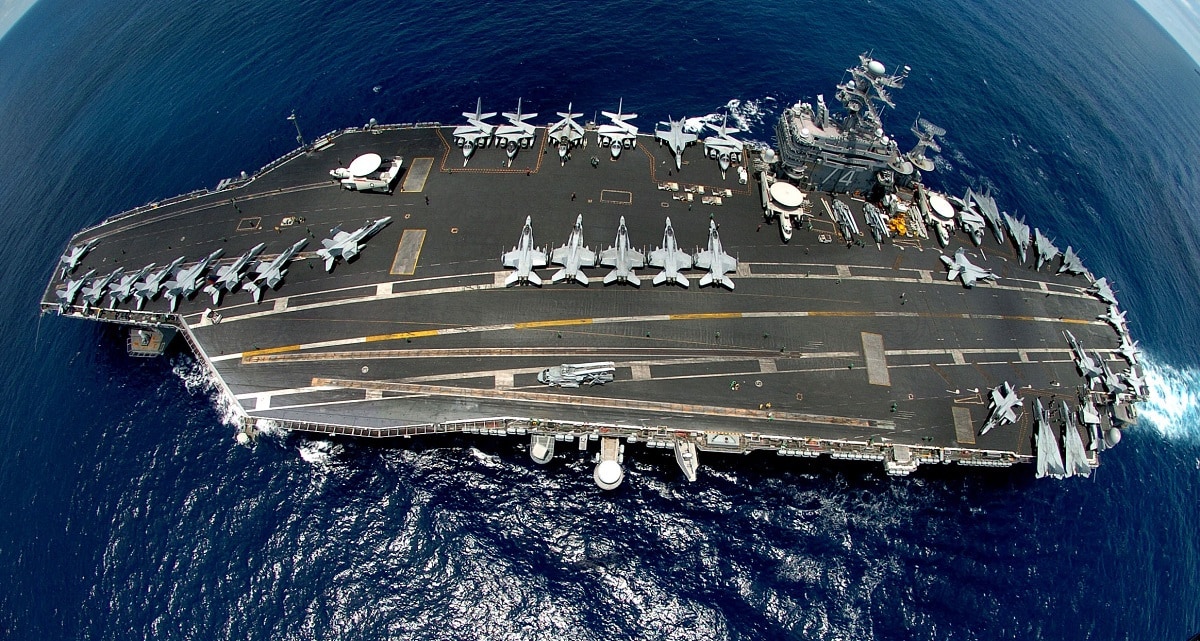
Pacific Ocean (June 25, 2004) – The Nimitz-class aircraft carrier USS John C. Stennis (CVN 74) underway the Pacific Ocean during a multi-national photo exercise. Canada and the United States participated in the eight-ship formation. Stennis and embarked Carrier Air Wing Fourteen (CVW-14) are at sea on a scheduled deployment and is expected to participate in Rim of the Pacific Exercise (RIMPAC) 2004. RIMPAC is the largest international maritime exercise in the waters around the Hawaiian Islands. This years exercise will include eight participating nations; Australia, Canada, Chile, Japan, Peru, South Korea, Britain and the United States. RIMPAC is intended to enhance the tactical proficiency of participating units in a wide array of combined operations at sea, while enhancing stability in the Pacific Rim region. U.S. Navy photo by Photographer’s Mate 2nd Class Jayme Pastoric (RELEASED)
But removing spent fuel is a highly controlled process. Similarly, inserting new cores is precise and demanding. Nuclear safety compliance and inspection cycles are required, further slowing the process. So while nuclear propulsion adds endurance and strategic benefit, it also massively increases the maintenance complexity.
Steam systems are another major failure point. The steam drives the turbines, catapults, and auxiliary systems.
The problem is that the pipelines are aging and corroding. Leaks can be difficult to detect.
And of course, the Stennis exists to launch aircraft. Flight deck operations during combat ops include over 100 sorties per day. Catapult launches, arrested landings, and jet blast—all are structurally stressful, resulting in structural fatigue and deck degradation.
The maintenance demand here is high, requiring constant resurfacing and mechanical inspections. The result is that intensive air operations gradually and consistently wear down the carrier.
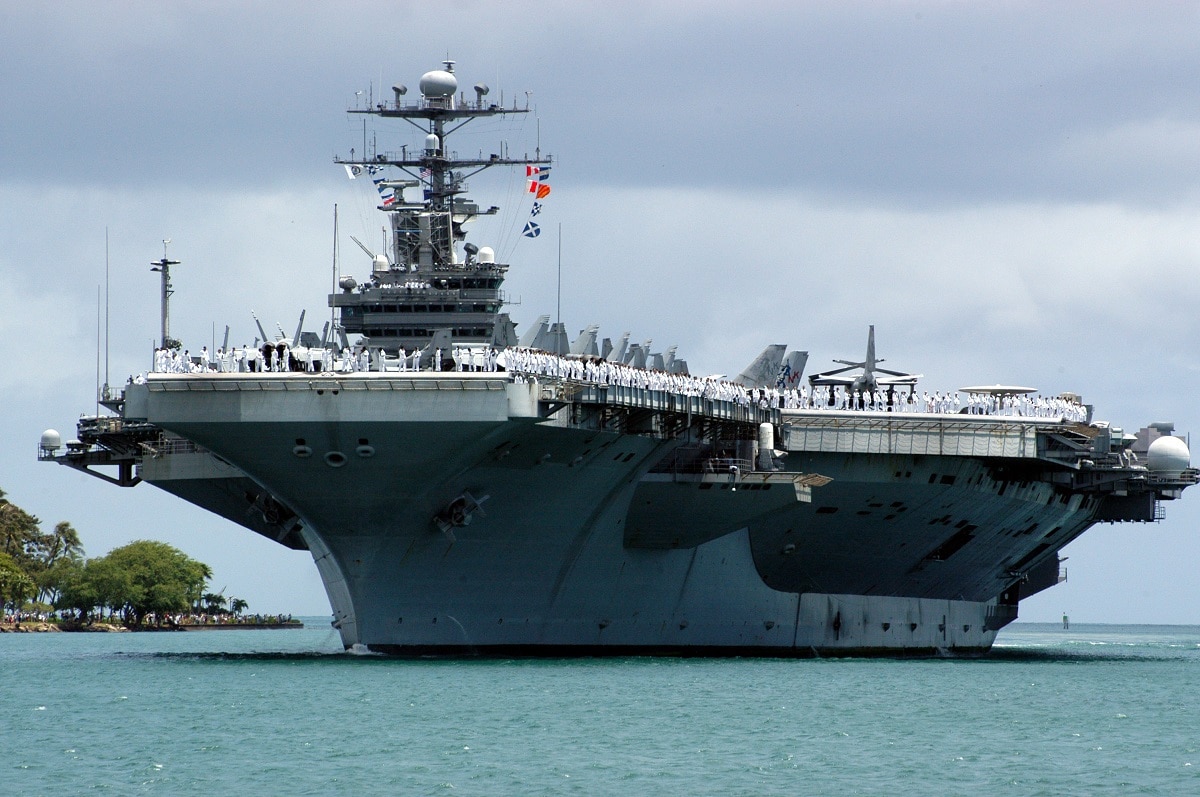
PEARL HARBOR, Hawaii (June 29, 2004)Sailors aboard the Nimitz-class aircraft carrier USS John C. Stennis (CVN 74) Òman the railsÓ as she pulls through the mouth of Pearl Harbor. Stennis arrived as part of RIMPAC (Rim of the Pacific Maritime Exercises), which includes the participation of seven countries. The objectives of the exercises are enhancing combat readiness and exploiting opportunities for cooperation with multinational units. U.S. Navy photo by Journalist Seaman Ryan C. McGinley.
Zero-Sum Shipbuilding
The core problem here is that the US has a finite workforce and a finite amount of shipyard space.
Meanwhile, the Navy has competing priorities—from carriers, to Virginia-class submarines, to Columbia-class submarines. So the Stennis is directly competing against submarine construction for resources, and the submarines have been winning out. Why? Because submarines are a nuclear deterrence priority, the surface fleet takes a backseat and absorbs the delays. But this, of course, creates problems with force readiness.
The Maintenance Crunch
The impact of the overhaul delays is that the US has fewer carriers available.
The available carriers are subject to longer deployments.
This places increased stress on everything, and everyone involved—the sailors, the ship, the aircraft. The remaining carriers are overused, which accelerates wear and accelerates personnel turnover. This leads to more wear, more repairs, more delays, more retirements, more recruitments, and more training. It’s a potential death spiral if left unaddressed.
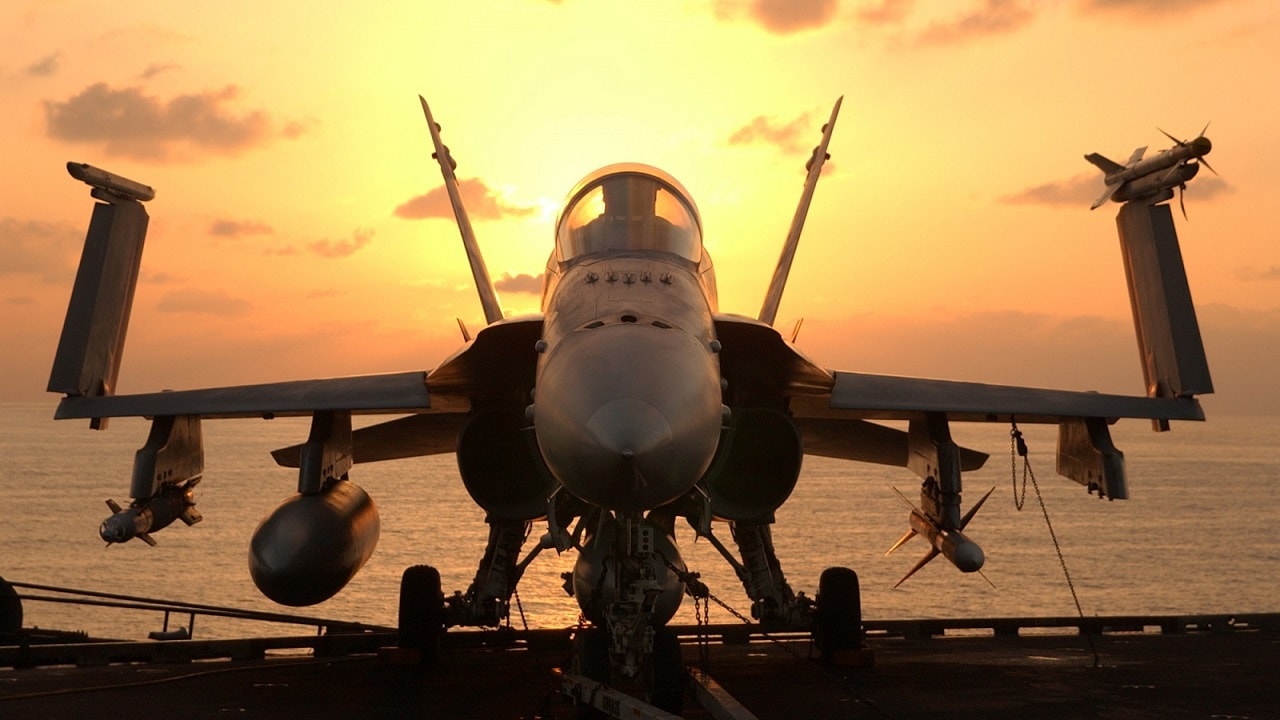
At sea aboard USS John C. Stennis, December 18, 2001 – After an early morning round of flight operations, an F/A-18 Hornet awaits the next round of combat flight operations aboard the USS John C. Stennis (CVN 74). Stennis and her embarked Carrier Air Wing Nine (CVW-9) are supporting Operation Enduring Freedom. U.S. Navy photo by Photographer’s Mate 3rd Class Jayme Pastoric
Industrial Fixes?
The Pentagon is keen to invest $8.7B in shipyard modernization, focusing on dry-dock expansion, workforce training, 3D-printed parts, and digital modeling.
The goal is to reduce delays and surprise repairs—essentially, the sort of situation the Stennis is currently experiencing.
The timeline reality is that the benefits of this industrial investment are still years away; the fix is long-term. Yet, the correlating problems are unfolding as we speak.
Strategic Consequences
With the Stennis in overhaul, the US has fewer deployable aircraft carriers.
This results in reduced rotational capacity and increased operational strain.
China, meanwhile, is building ships faster, emphasizing quantity over quality. The US is struggling to maintain its existing fleet and will struggle to keep pace with China’s shipbuilding tempo. Visible gaps in readiness are already manifesting, which carries a deterrence risk. The implications for the Indo-Pacific are potentially significant.
Industrial Decline
The bigger story here is the specter of industrial decline. During World War II, the US had a massive shipbuilding workforce. Today, the US has fewer shipyards and a smaller specialized workforce.
The supply chain is fragile because of single-source components.
The US lacks the ability to surge quickly or scale up to meet sudden increases in need. Basically, the US industrial base is optimized for efficiency, not for the scale required for wartime.
The Stennis delay is not an anomaly but a warning sign—the US has a critical maintenance capacity bottleneck; the shipbuilding system is clearly constrained.
About the Author: Harrison Kass
Harrison Kass is a writer and attorney focused on national security, technology, and political culture. His work has appeared in City Journal, The Hill, Quillette, The Spectator, and The Cipher Brief. He holds a JD from the University of Oregon and a master’s in Global & Joint Program Studies from NYU. More at harrisonkass.com.