
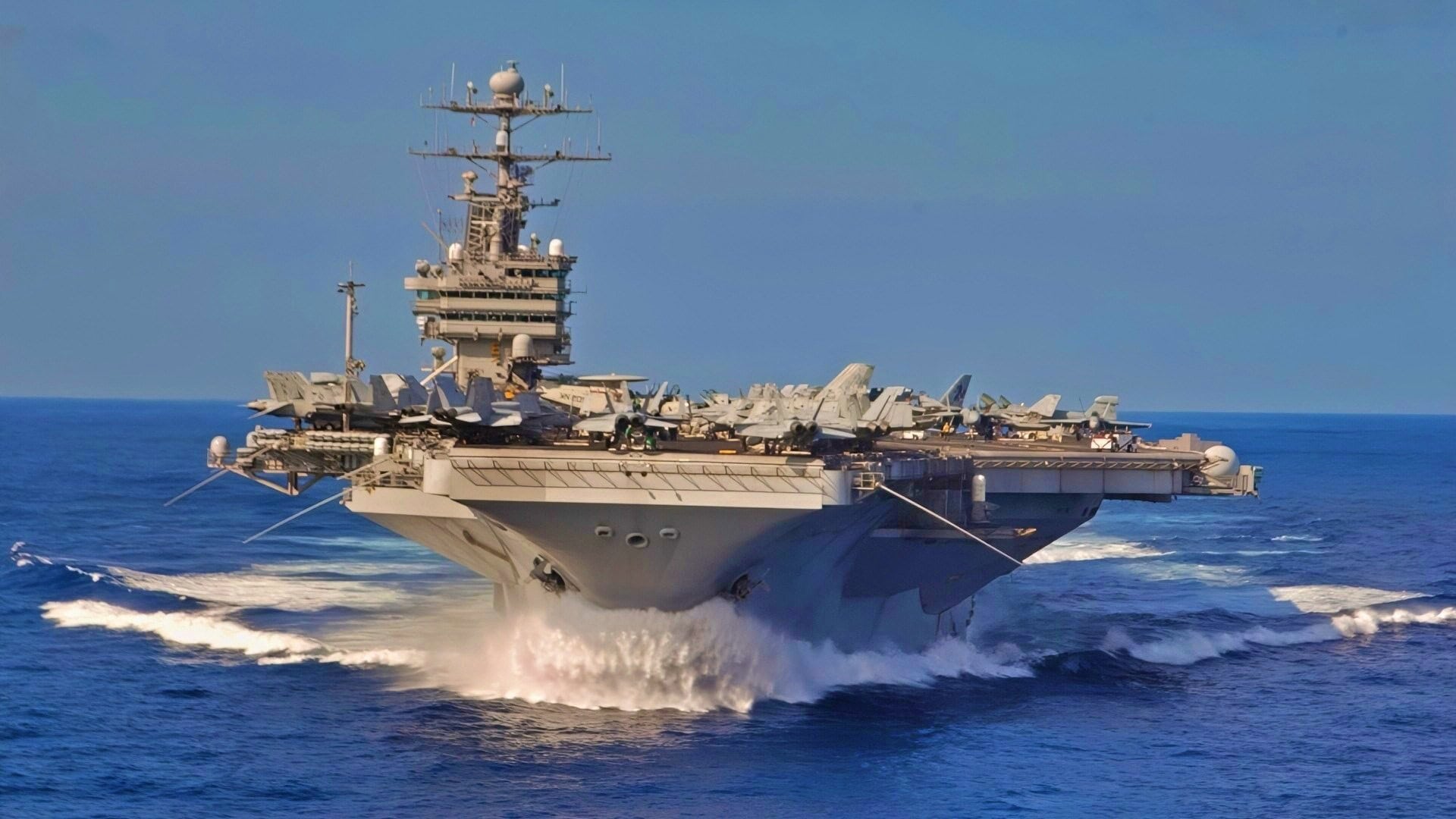
In another blow to the operational readiness of the U.S. Navy’s carrier fleet, the USS John C. Stennis (CVN-74) is still in port for repairs and will remain out of action until 2027. The ship’s Refueling and Complex Overhaul (RCOH) is taking longer than expected, challenging the Department of Defense’s doctrine that focuses on being able to fight two wars at once.
RCOHs are Complicated, Long-lasting, and Expensive
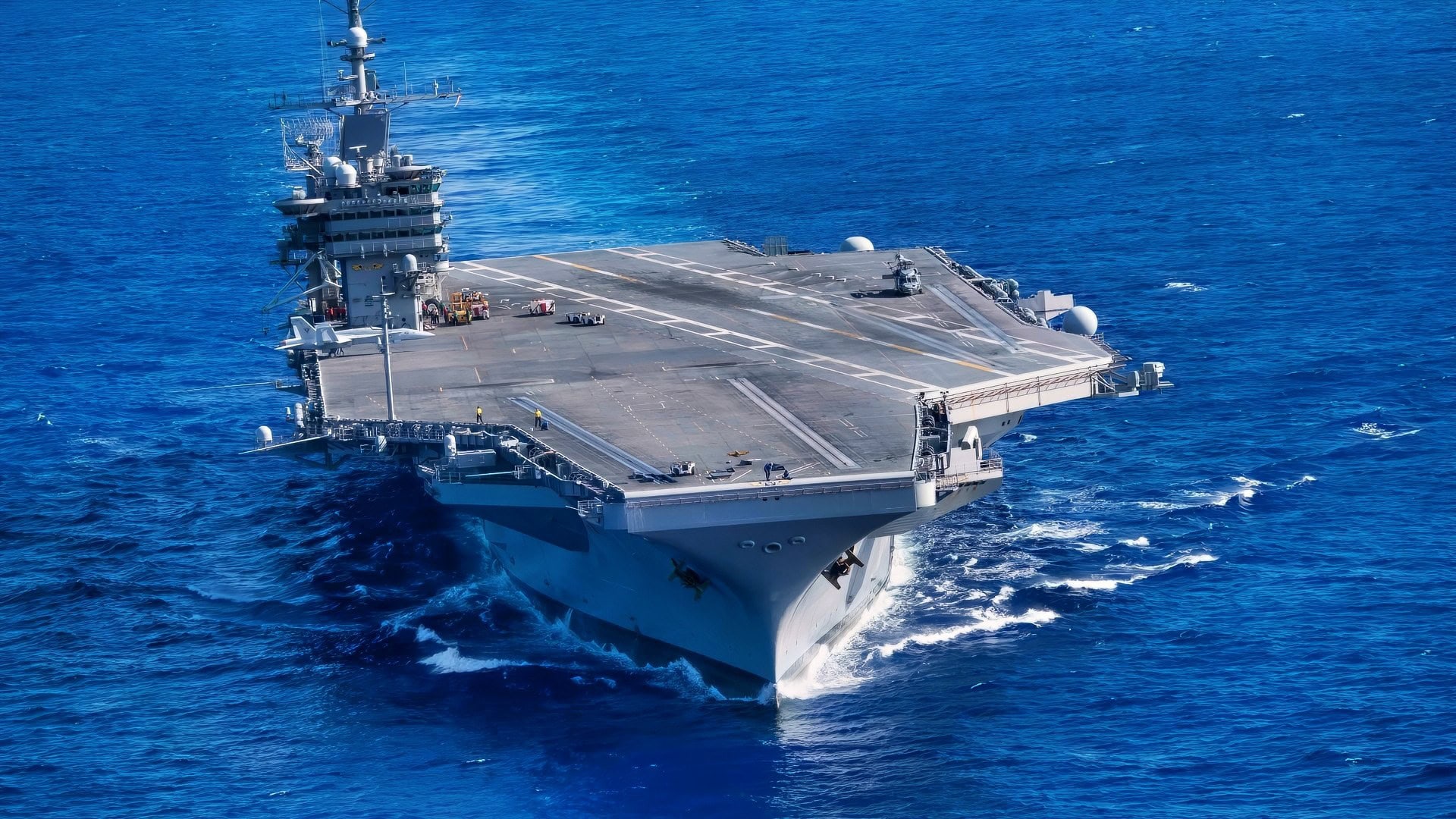
The aircraft carrier USS John C. Stennis (CVN 74) steams through the Atlantic Ocean, Sept. 6, 2019. The John C. Stennis is underway as part of a Commander, U.S. 2nd Fleet ordered sortie ahead of Hurricane Dorian, which is forecasted to bring high winds and heavy rain to the East Coast. Ships are being directed to areas in the Atlantic Ocean where they are best postured for storm avoidance. (U.S. Navy photo by Mass Communication Specialist 3rd Class Grant G. Grady)
It is somewhat understandable when an RCOH is delayed. This is the most difficult process a carrier faces during its service life. Not only does nuclear reactor refueling take substantial time, but other modernizations and updates happen alongside the process.
The electronics must be upgraded. Living quarters are painted and refreshed. Combat systems may be outdated and require refurbishment. The ship’s structural components may need closer maintenance.
The Stennis RCOH Will Eventually Have Taken 5.5 Years
When an RCOH goes according to plan, it takes around three to four years. But the John C. Stennis has seen its major maintenance period extend to 5.5 years. It was supposed to be completed last August, but that date has been pushed back to October of this year.
The Navy has a name for this long delay, and it is a somewhat innocuous-sounding term that puts lipstick on the pig: “growth work.” This is like an auto mechanic working on a routine oil change, who, during the inspection, finds the need for more expensive, time-consuming repairs.
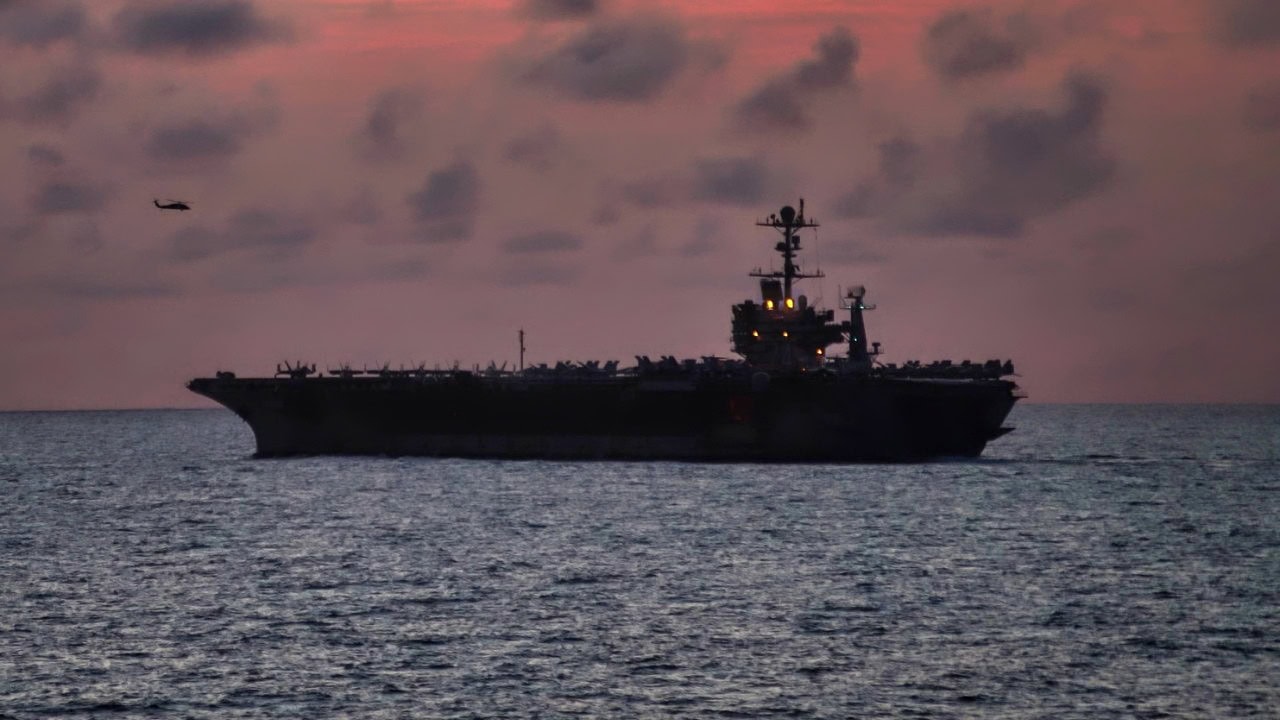
USS John C. Stennis Aircraft Carrier. Image Credit: Creative Commons.
The Navy did not expect to discover additional maintenance needs once it entered the ship and began assessing and observing.
The List of To-Dos Keeps Growing
Workers may have found more extensive structural problems or bad wiring in the power system. The living quarters likely needed more upkeep than a coat of paint. Repairs such as this are often done for safety reasons, but they stretch out the maintenance period.
The Navy also points to more systemic issues with the RCOH process and associated growth work. First, there are just not enough qualified shipbuilders to complete work on time. Shortages began during the pandemic—the loss of personnel due to quarantine was extensive. Many never returned to duty and took other jobs.
Generation Z Does Not Want to Do Dirty Shipbuilding Jobs
Young people are not choosing hazardous careers in the shipyards, and nuclear aircraft carriers require experienced, highly trained specialists. Many of these experts are retiring from the workforce and are not being replaced. The bottom line is that the Navy and shipyards require more electricians, welders, and nuclear engineers.
Domino Effect Hurts Long-Range Planning
Another issue is long-range planning. Shipyards need a predictable timetable. Schedules are concocted years in advance, and a delay in the RCOH for one carrier has knock-on effects for other flat-tops. This increases the time in port and pushes schedules back. Shipyards are strained, and workers are running difficult schedules—sometimes it is not possible to meet deadlines set years earlier. Schedule slips are thus inevitable—and expensive.
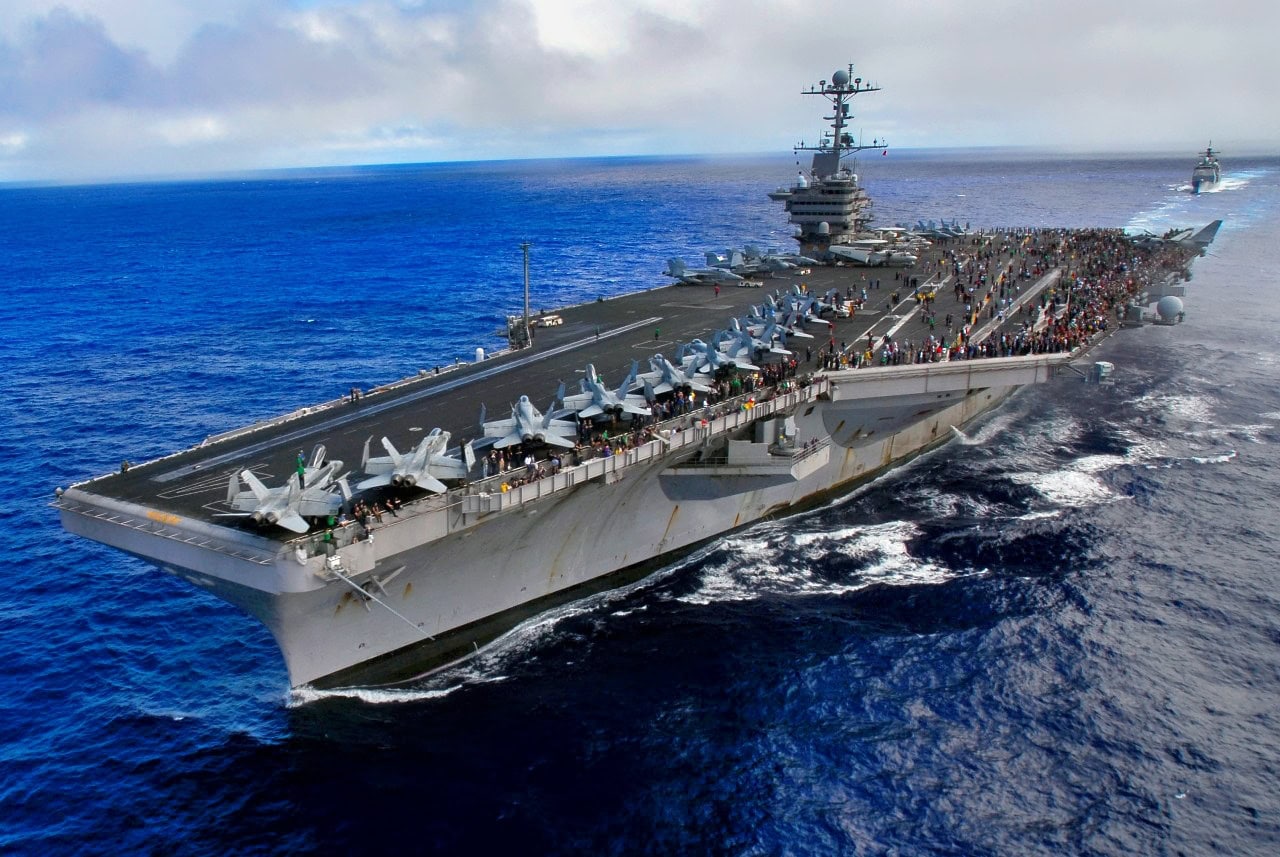
Nimitz class aircraft carrier USS John C. Stennis (CVN 74) leads guided-missile cruiser USS Antietam (CG 54) prior to conducting an air power demonstration. The air power demonstration showed the capability of Stennis and Carrier Air Wing 9 to service members’ family and friends who were invited to get underway with the ship. Stennis is returning to the United States after a 7 month long deployment promoting peace, regional cooperation and stability, and supporting the global war on terrorism.
Sailors Can Suffer, Leading to Tragedies
Delays and strained working conditions affect sailors. Navy personnel must assist the shipyard workers, but since the carrier is being overhauled, and many crew berths are being prepared, the quality of life for sailors may suffer.
In 2022, several sailors committed suicide on the USS George Washington, which was in port for long repairs. This obviously had a tremendous negative effect on the carrier’s morale. The Navy, after an investigation, promised that sailors would have better living quarters, mental health care, and quality-of-life enhancements so that such incidents would never happen again.
The Stennis RCOH required fewer sailors to participate in the work and live on the ship. The Navy also spent more on housing to boost morale and improve mental health.
This Is a Large Transformation
Meanwhile, the Stennis is undergoing a complete overhaul. The radar and sensor system is receiving upgrades. Workers have inspected old technologies and decided to implement time-consuming repairs. This requires testing and evaluation, as well as computer-aided work, which adds to the time required for the RCOH.
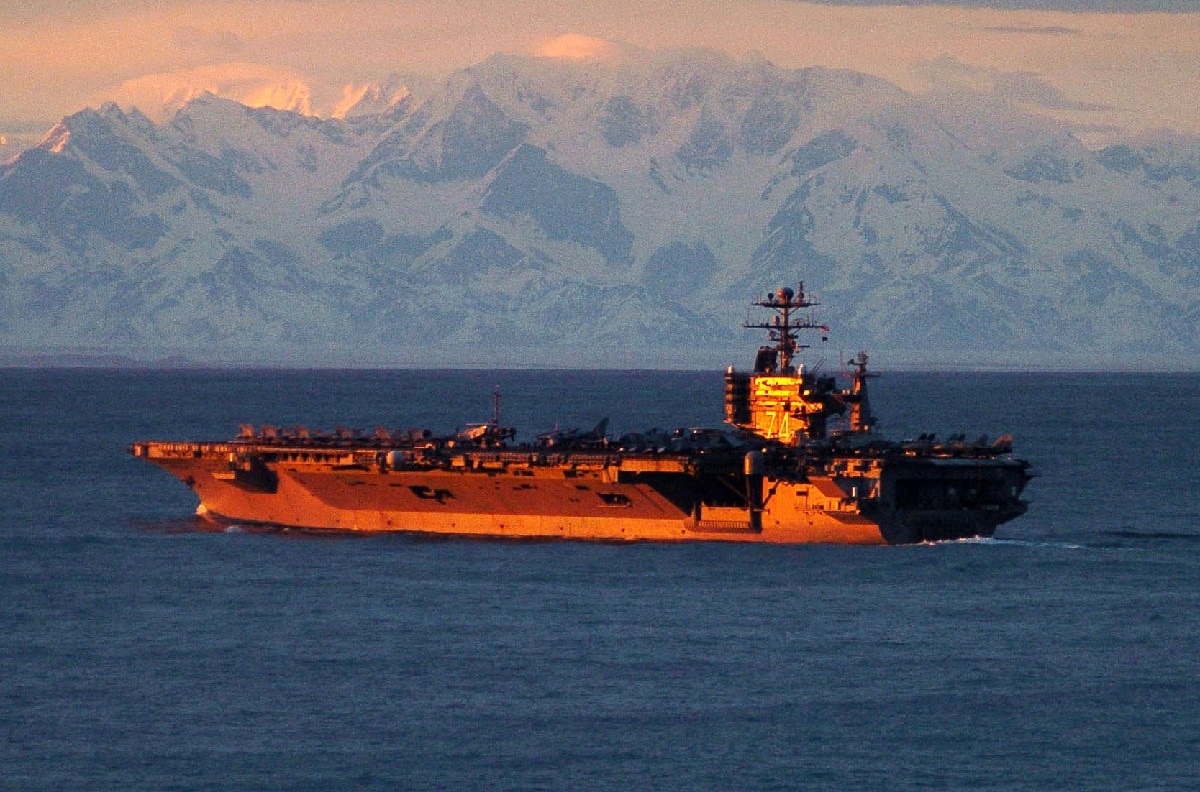
Gulf of Alaska (Jun. 12, 2004) – The Nimitz-class aircraft carrier USS John C. Stennis (CVN 74) steams near the snow capped mountains of the Alaskan coastline during the late Alaskan sunset. Stennis and embarked Carrier Air Wing Fourteen (CVW-14) have just completed Exercise Northern Edge, during a scheduled deployment. U.S. Navy photo by Photographer’s Mate 3rd Class Mark J. Rebilas (RELEASED)
Another aspect is the ship’s age. The Nimitz-class has been sailing for five decades. The lead ship, the USS Nimitz (CVN-68), is on its last cruise before retirement. An extended service life means spending much more time at port.
Sea Trials and Testing Must Still Transpire
Even when John C. Stennis’ RCOH is complete, it will need time for sea trials, testing, and evaluation. That means it could take until early 2027 before it is ready for a full-time combat deployment.
Thus, the Navy is facing the reality that its carriers are not ready to go to sea. Some level of delay is understandable. These are aging ships, and mechanics and technicians need time to “look under the hood.” The Navy must also invest more in shipyard corporations to recruit and retain more skilled workers. Recruitment efforts should focus on high pay, benefits, and job stability.
The John C. Stennis will do an excellent job when it is ready for full-time sea duty.
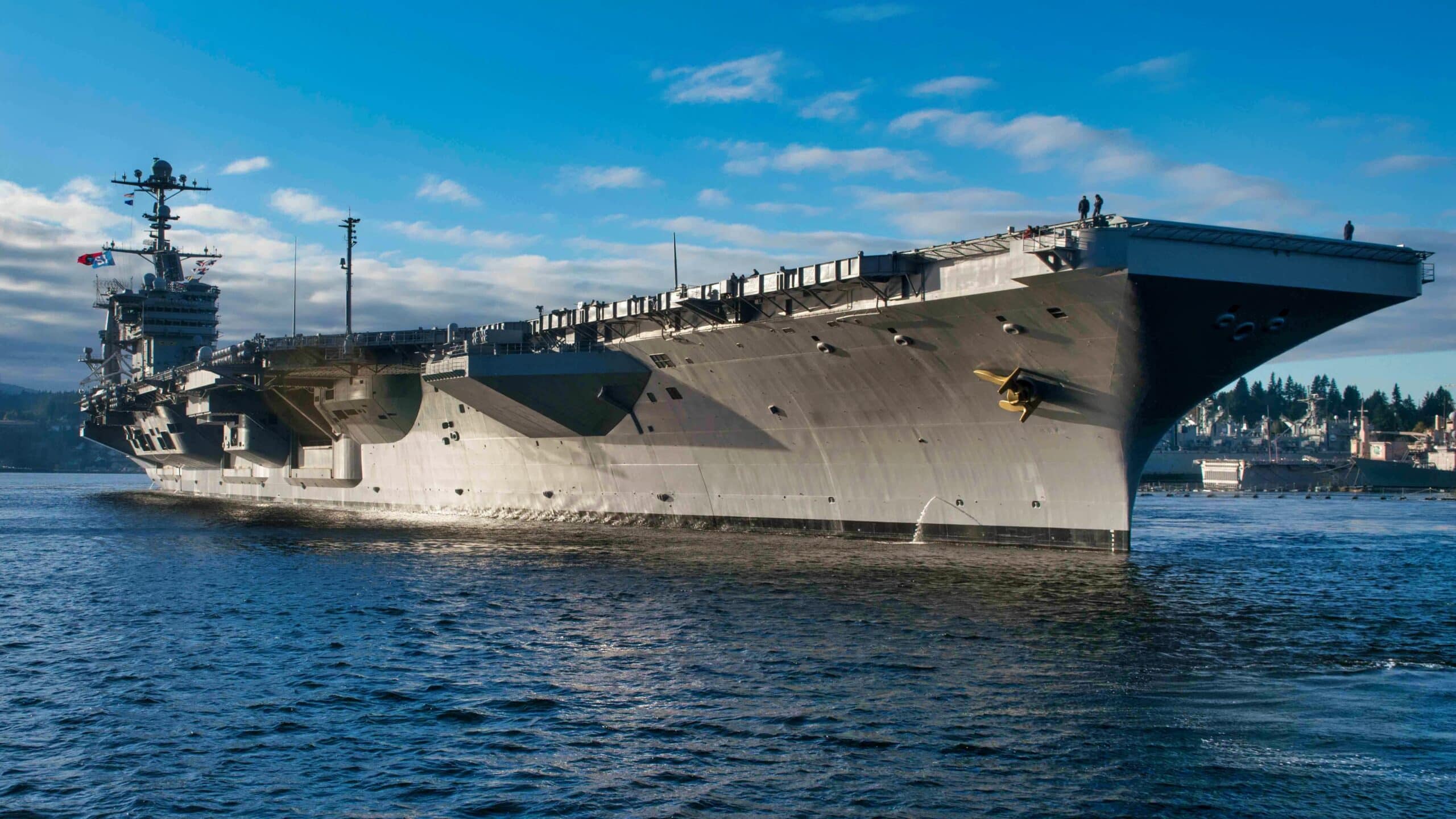
USS John C. Stennis Aircraft Carrier. Image Credit: Creative Commons.
I have high hopes for the crew, which is itching to get out to sea and help in the war against Iran. It will be a welcome addition to the fleet in the coming years, and the Navy can learn lessons from its delays to shorten time at port for other RCOHs. There needs to be a reckoning, and perhaps some government watchdogs should investigate the delays so they don’t happen to other carriers.
MORE – The Israel-Turkey War of 2026 Might Happen
MORE – The A-10 Warthog Is Now a Drone Hunter
About the Author: Dr. Brent M. Eastwood
Author of now over 3,500 articles on defense issues, Brent M. Eastwood, PhD, is the author of Don’t Turn Your Back On the World: A Conservative Foreign Policy and Humans, Machines, and Data: Future Trends in Warfare, plus two other books. Brent was the founder and CEO of a tech firm that predicted world events using artificial intelligence. He served as a legislative fellow for US Senator Tim Scott and advised the senator on defense and foreign policy issues. He has taught at American University, George Washington University, and George Mason University. Brent is a former US Army Infantry officer. He can be followed on X @BMEastwood.