
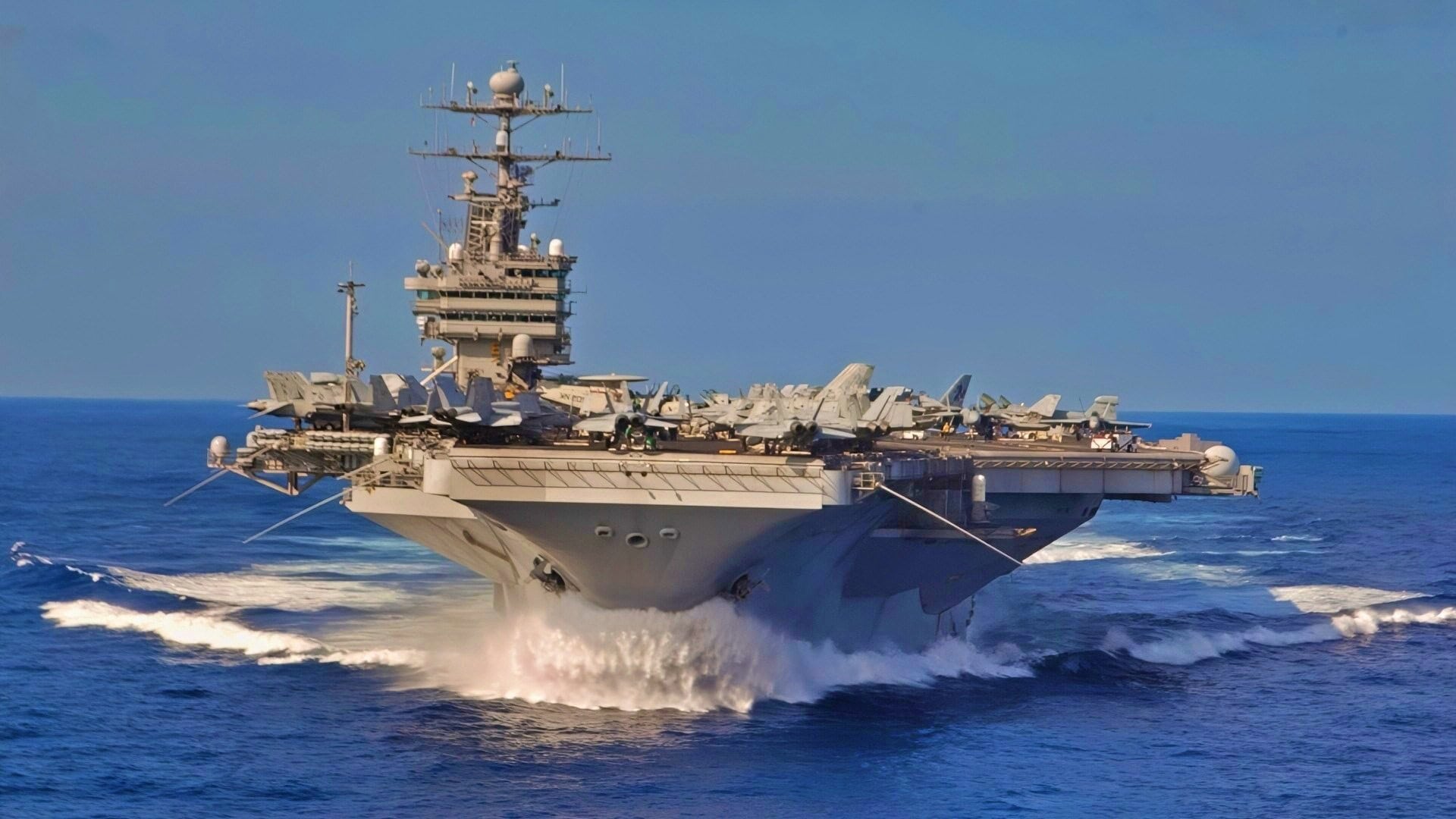
Summary and Key Points: Defense analyst Jack Buckby details the escalating “aircraft carrier crunch” as the USS John C. Stennis (CVN-74) falls 14 months behind its Refueling and Complex Overhaul (RCOH) schedule.
-The Nimitz-class supercarrier, currently at Newport News Shipbuilding, faces a $483 million budget overrun due to engineering failures, including a damaged steam turbine, and chronic labor shortages.
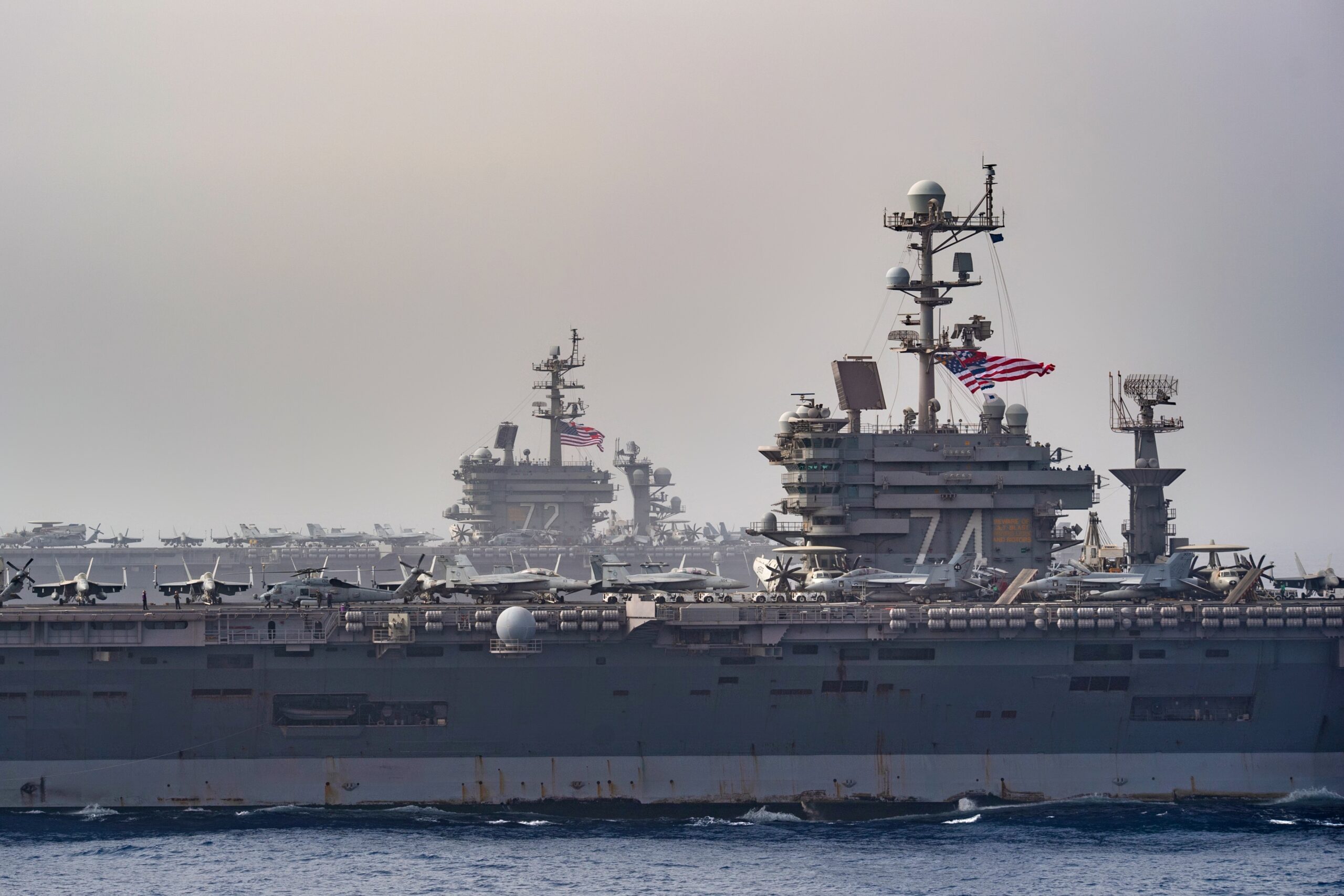
The aircraft carrier USS John C. Stennis (CVN 74) steams alongside the aircraft carrier USS Abraham Lincoln (CVN 72), background, in the Mediterranean Sea, April 24, 2019. The John C. Stennis Carrier Strike Group (CSG) 3 and Abraham Lincoln Carrier Strike Group (CSG) 12 are conducting dual carrier operations, providing opportunity for two strike groups to work together alongside key allies and partners in the U.S. 6th Fleet area of operations. John C. Stennis is underway in the Mediterranean Sea as part of the John C. Stennis Carrier Strike Group (JCSCSG) deployment in support of maritime security cooperation efforts in the U.S. 6th Fleet area of responsibility. (U.S. Navy photo by Mass Communication Specialist 3rd Class Grant G. Grady)
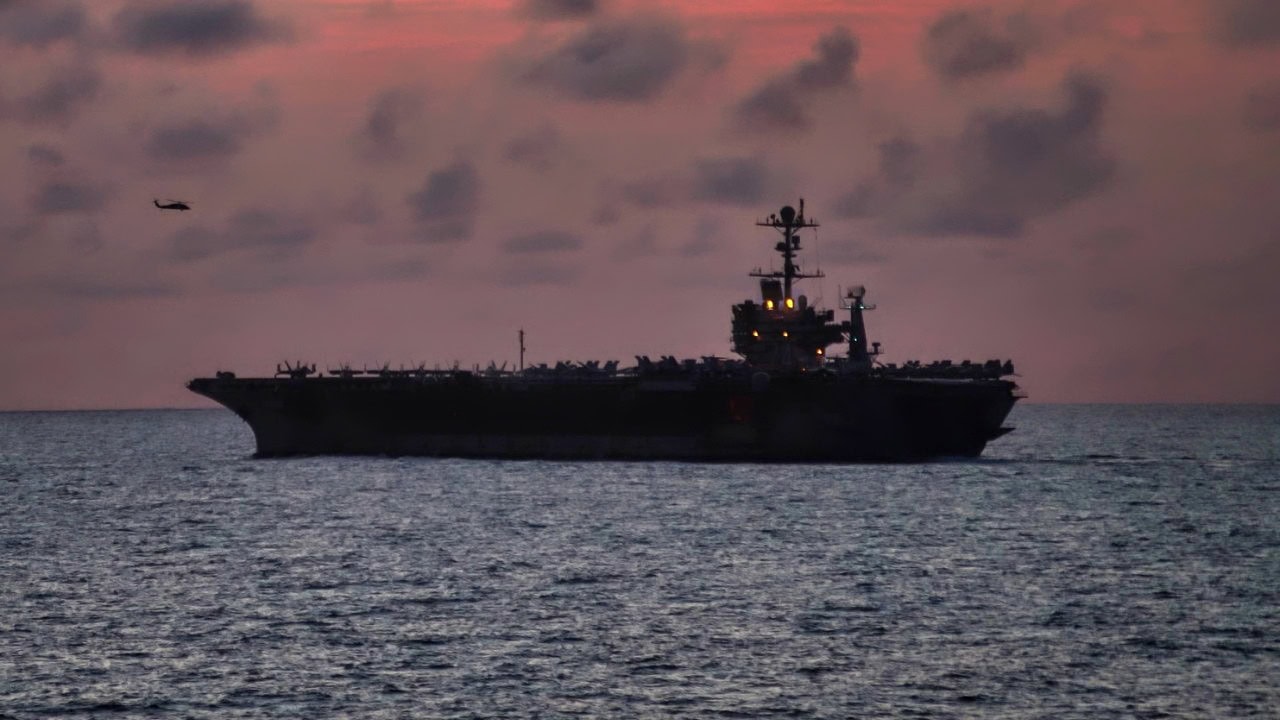
USS John C. Stennis Aircraft Carrier. Image Credit: Creative Commons.
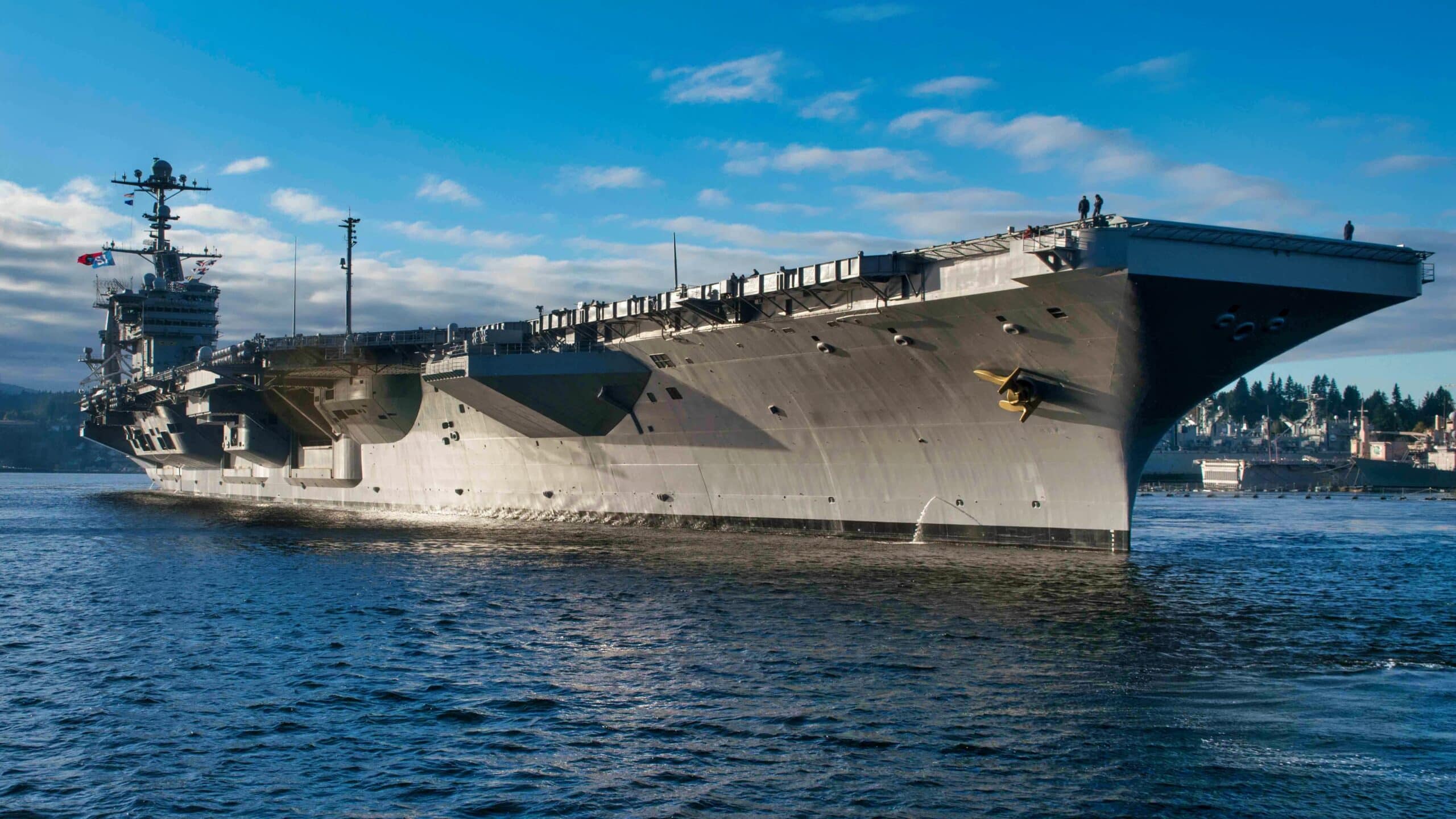
USS John C. Stennis Aircraft Carrier. Image Credit: Creative Commons.
-This bottleneck at the nation’s only nuclear refueling facility threatens the Navy’s statutory 11-carrier requirement, as the Stennis delay overlaps with the USS Harry S. Truman’s upcoming refit.
-With the USS Gerald R. Ford also sidelined, the U.S. presence in the Middle East and Indo-Pacific faces a critical availability deficit.
Aircraft Carrier Strain Deepens as USS John C. Stennis Falls Behind
The U.S. Navy is arguably entering a period of growing aircraft carrier availability problems – and it’s happening at the worst possible time.
Ongoing operations in the Middle East and sustained deterrence demands in the Indo-Pacific are stretching the fleet, while multiple aircraft carriers are either deployed for extended periods or unavailable due to required maintenance.
At the center of all that strain is the USS John C. Stennis (CVN-74), a Nimitz-class nuclear-powered supercarrier that is now more than a year behind schedule in a prolonged overhaul.
And that delay is part of a bigger problem across the industry, demonstrating that the Navy’s carrier readiness is by no means disastrous, but far from ideal at a time of growing strain.
USS John C. Stennis, and Why It Matters
The USS John C Stennis was commissioned in 1995 and is one of the service’s Nimitz-class nuclear-powered aircraft carriers – a 100,000-ton warship designed to act as a mobile airbase anywhere in the world.
Each carrier serves as the centerpiece of a carrier strike group, capable of launching sustained air operations ranging from strike missions and air superiority to intelligence and surveillance. In practical terms, that means dozens of sorties per day without relying on foreign bases—a core pillar of U.S. power projection.
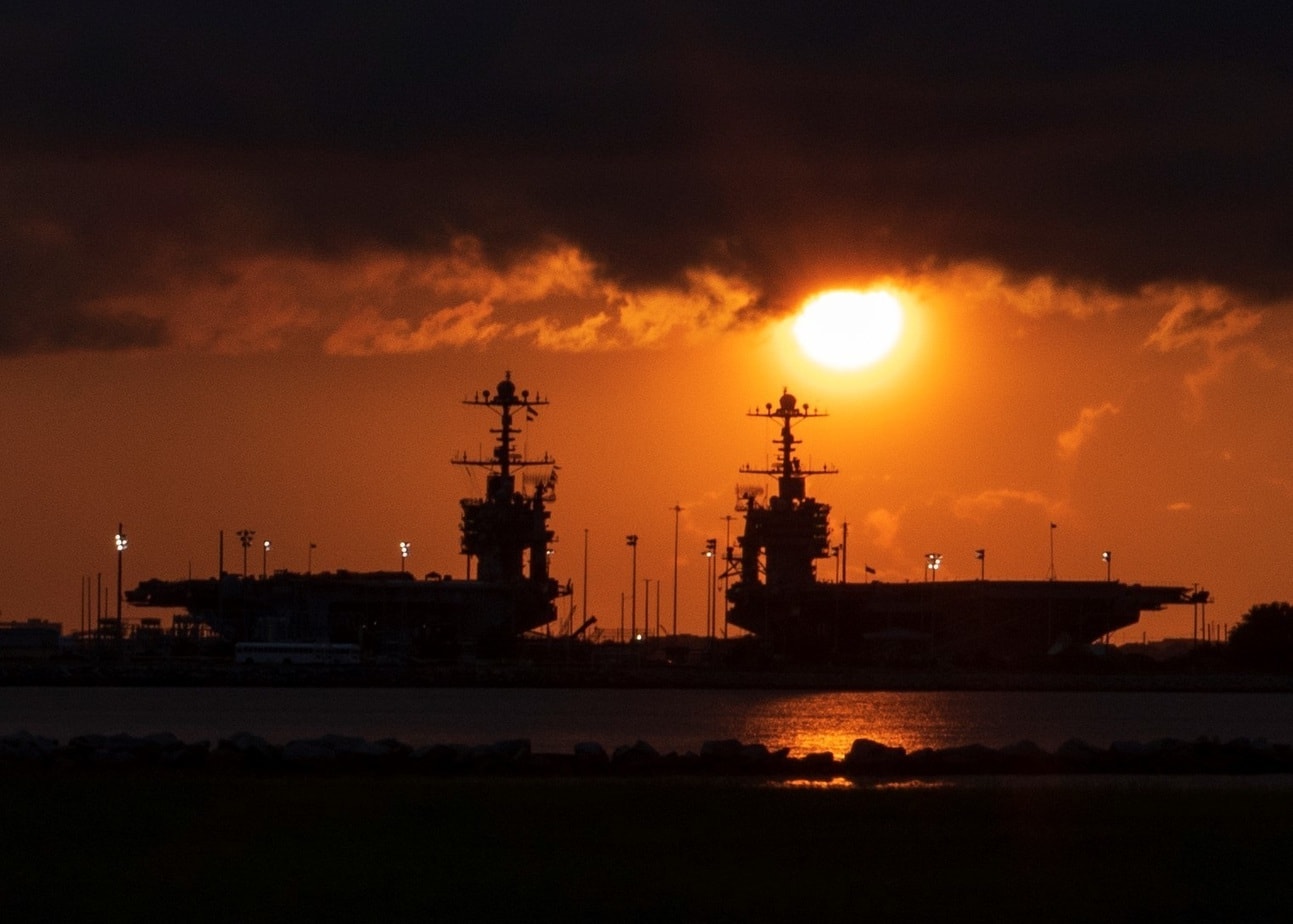
NORFOLK (Aug. 16, 2019) The Nimitz-class aircraft carriers USS Dwight D. Eisenhower (CVN 69), left, and USS John C. Stennis (CVN 74) moored at Naval station Norfolk. Making port at Naval station Norfolk is a routine activity for aircraft carriers.
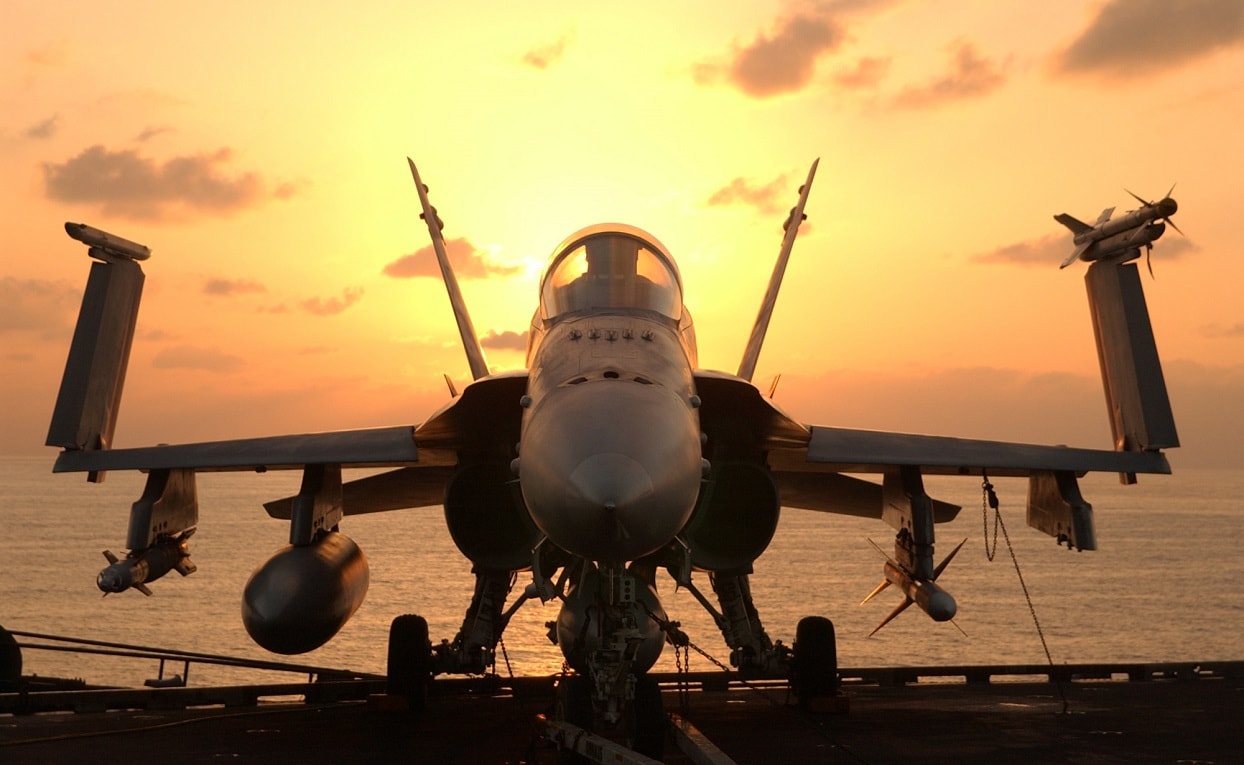
At sea aboard USS John C. Stennis, December 18, 2001 – After an early morning round of flight operations, an F/A-18 Hornet awaits the next round of combat flight operations aboard the USS John C. Stennis (CVN 74). Stennis and her embarked Carrier Air Wing Nine (CVW-9) are supporting Operation Enduring Freedom. U.S. Navy photo by Photographer’s Mate 3rd Class Jayme Pastoric.
Stennis has been used in that role many times. It has supported combat operations in Afghanistan under Operation Freedom Sentinel and conducted strikes in Iraq and Syria as part of Operation Inherent Resolve.
And that history matters because carriers are not simply interchangeable assets – removing one from the rotation directly reduces the Navy’s ability to sustain global air operations at sea, and the more they’re used, the more maintenance and repairs may be required.
The Delay, and What Went Wrong
Stennis entered its Refueling and Complex Overhaul (RCOH) in 2021 at Newport News Shipbuilding, the only U.S. facility capable of performing the work.
RCOH is effectively a midlife reset. It involves refueling the ship’s nuclear reactors, upgrading combat systems, replacing major components, and modernising sensors and electronics.
The process is expected to extend a carrier’s service life by decades, but it is also one of the most complex industrial tasks the Navy undertakes.
Originally, the Stennis overhaul was expected to finish around August 2025. That timeline has now slipped by roughly 14 months, pushing completion to October 2026 and extending the total duration to about five and a half years.
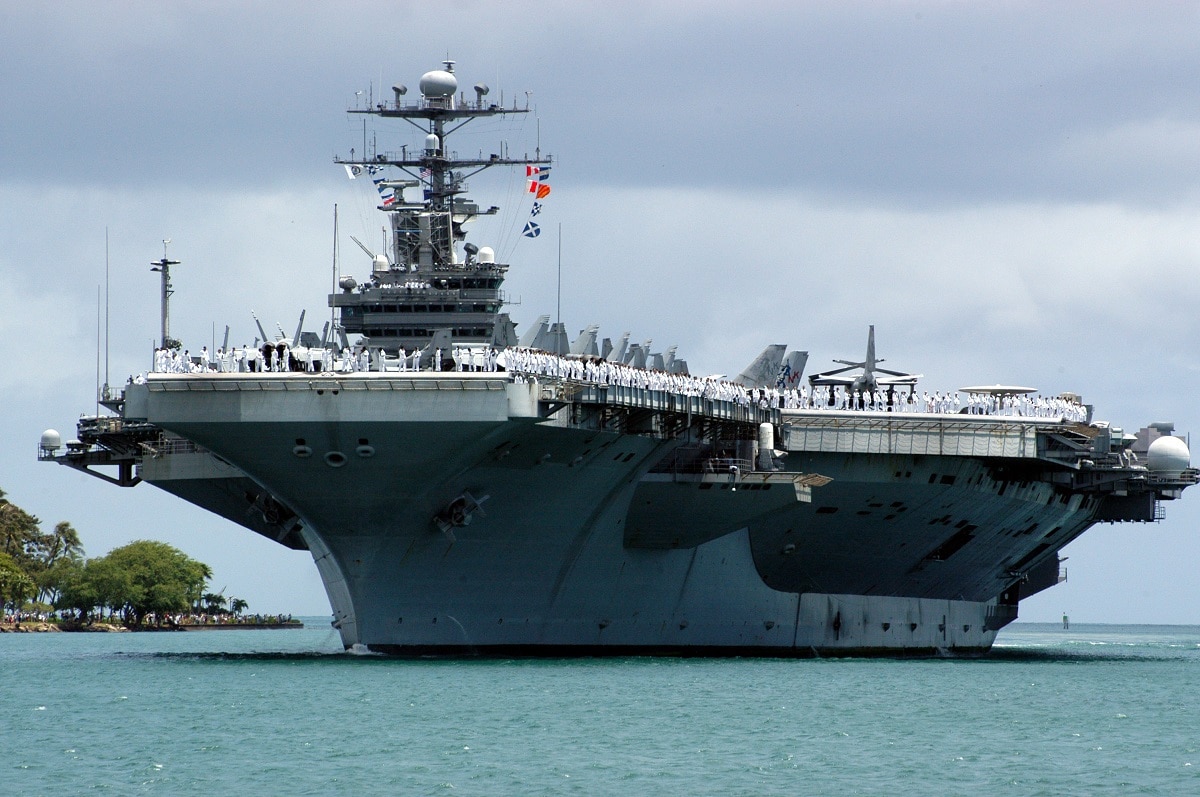
The Nimitz-class aircraft carrier USS John C. Stennis (CVN 74).
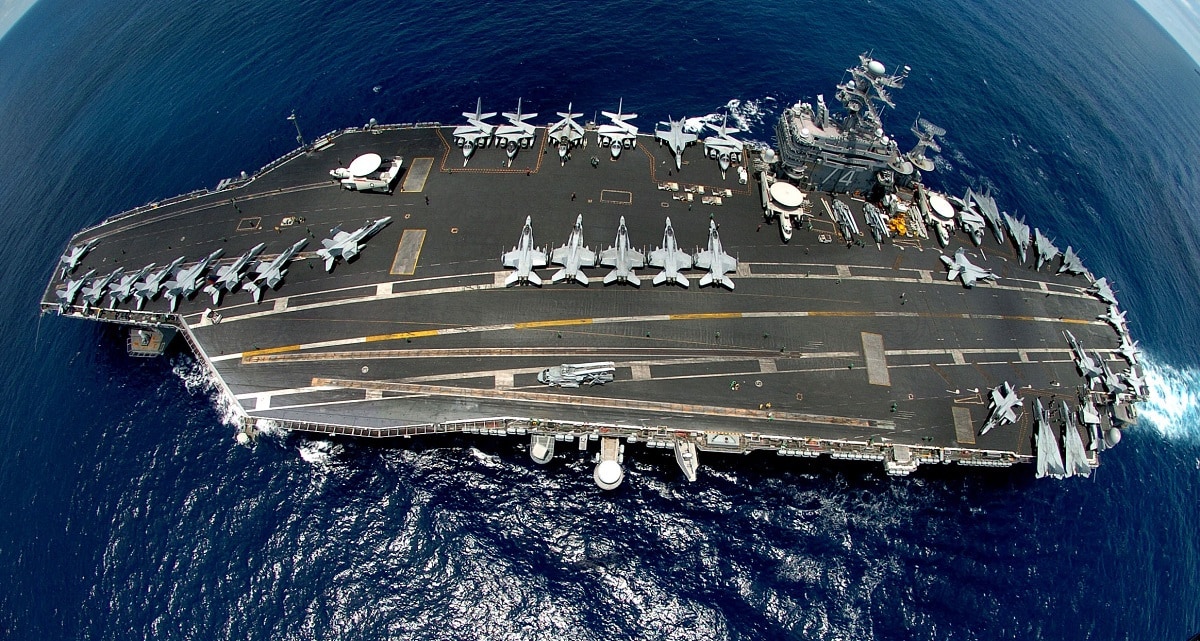
Pacific Ocean (June 25, 2004) – The Nimitz-class aircraft carrier USS John C. Stennis (CVN 74).
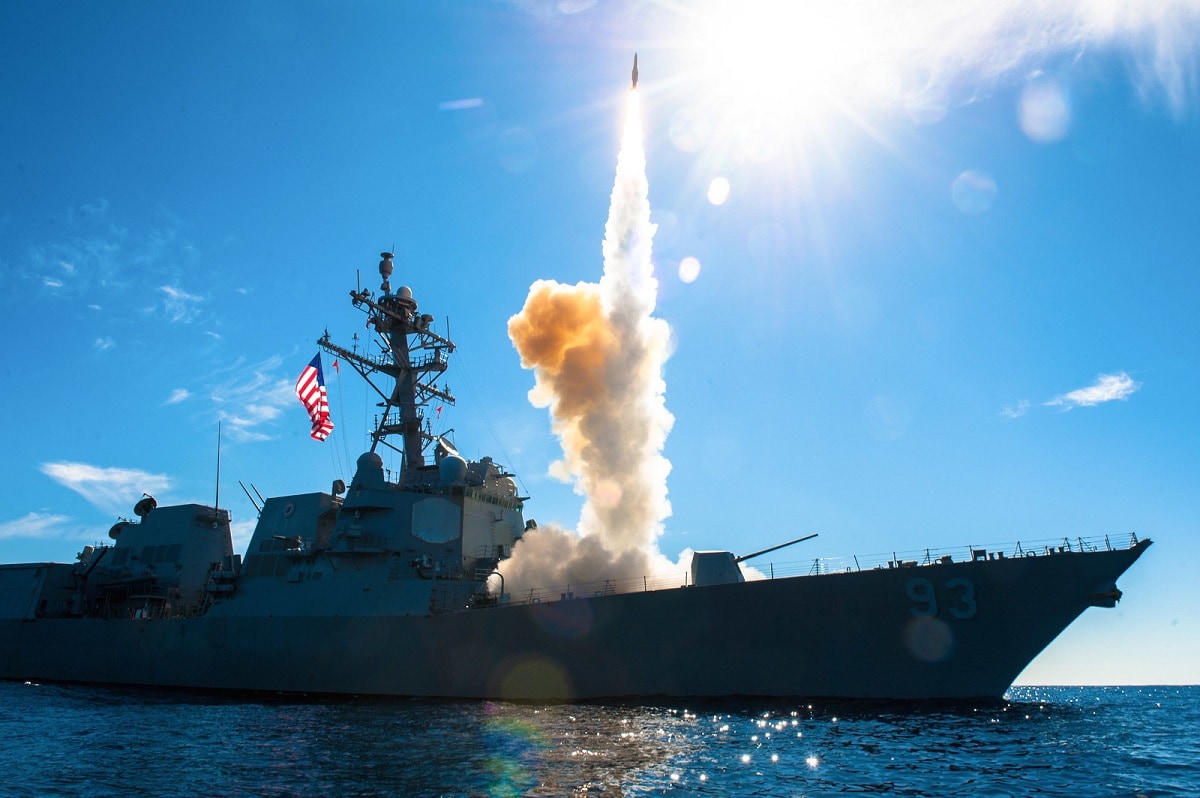
PACIFIC OCEAN (Nov. 10, 2015) – The guided-missile destroyer USS Chung-Hoon (DDG 93) fires an SM-2 missile during a live-fire exercise. Sailors from the John C. Stennis Strike Group are participating in a sustainment training exercise (SUSTEX) to prepare for future deployments. (U.S. Navy photo by Mass Communication Specialist 3rd Class Jonathan Jiang/Released) 151112-N-DA737-424.
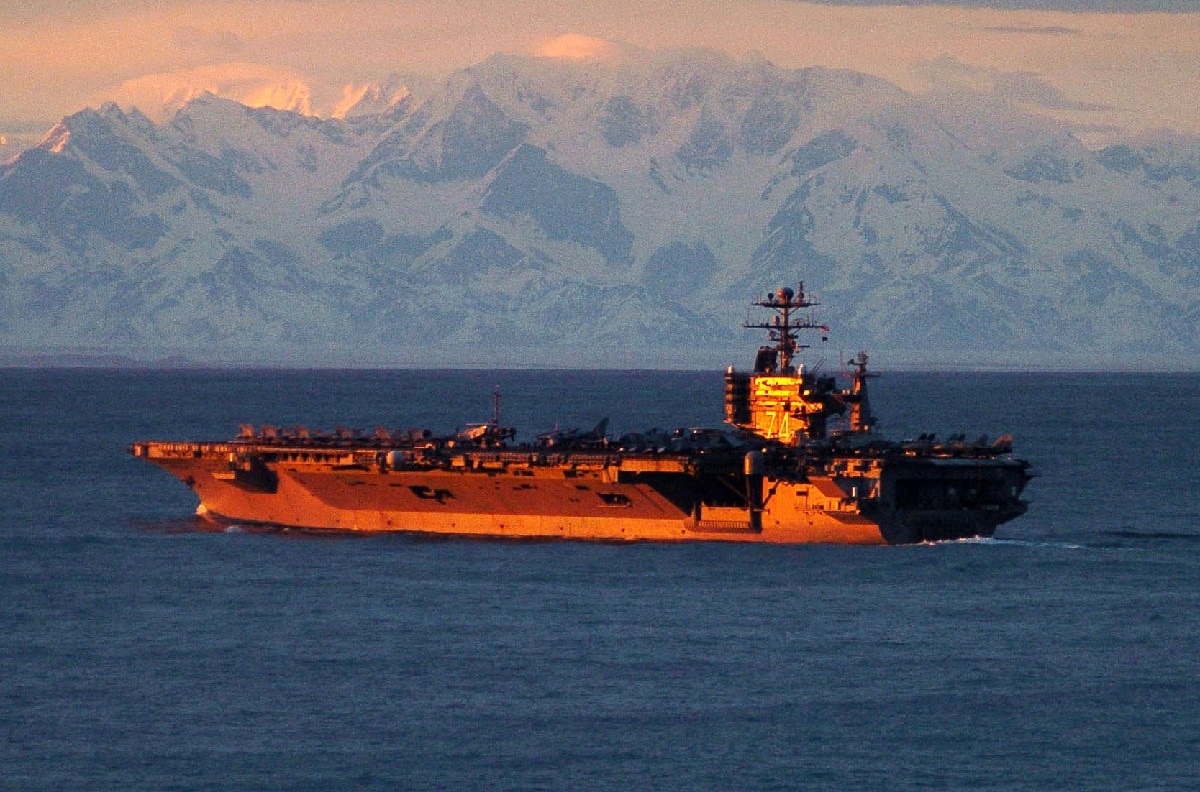
Gulf of Alaska (Jun. 12, 2004) – The Nimitz-class aircraft carrier USS John C. Stennis (CVN 74) steams near the snow capped mountains of the Alaskan coastline during the late Alaskan sunset. Stennis and embarked Carrier Air Wing Fourteen (CVW-14) have just completed Exercise Northern Edge, during a scheduled deployment. U.S. Navy photo by Photographer’s Mate 3rd Class Mark J. Rebilas (RELEASED)
The causes are both technical and systemic, including workforce shortages, supply chain delays, and lingering post-COVID disruptions.
At the same time, unexpected engineering issues—including problems with a steam turbine—have added complexity and cost, driving the program roughly $483 million over budget.
This is part of a bigger problem in which carrier maintenance periods are now stretching beyond their planned timelines, tying up critical assets for longer than originally expected.
Major Shipyard Problems
The structural issues underlying the delays come largely from the fact that the United States relies on a single facility – Newport News Shipbuilding in Virginia – to conduct all nuclear carrier refuelling overhauls.
That creates an obvious bottleneck: when one overhaul slips past its completion date, it pushes back others, causing cascading problems and delays across the fleet. The Stennis delay is already overlapping with the upcoming overhaul of USS Harry S. Truman, which is scheduled to begin its own multi-year refit in 2026.
The result is a compounding availability problem, where multiple carriers are forced out of service simultaneously, with limited ability to accelerate that work or shift capacity elsewhere.
This is all happening amid other industrial base constraints. Workforce shortages and material delays compound with competing shipbuilding priorities (such as the Ford-class carriers and Columbia-class submarines), placing additional pressure on the same limited infrastructure. The Navy’s challenge, then, is not just building ships but maintaining them and doing it on time when each ship’s demands seem to be bigger than originally anticipated.
Why This Matters Now
In ideal circumstances, the Navy manages carrier availability through a rotational model where maintenance and training are factored into deployment cycles to ensure a steady forward presence. That model, however, only works when there is a level of predictability – something that has largely broken down in recent years.
The Stennis delay means one less carrier is now available at a time when demand is rising. At the same time, other ships are either deployed for extended periods or approaching their own maintenance windows. USS Gerald R. Ford is a good example of this: the vessel is headed to Crete for repairs after more than 10 months of deployment.
Even efforts to maintain the Navy’s statutory 11-carrier fleet are becoming difficult, with the decision to delay the retirement of USS Nimitz until 2027 helping preserve that number on paper but preventing the ship from returning to meaningful frontline service. The Strennis delay is just one more example of these compounding problems.
About the Author: Jack Buckby
Jack Buckby is a British researcher and analyst specialising in defence and national security, based in New York. His work focuses on military capability, procurement, and strategic competition, producing and editing analysis for policy and defence audiences. He brings extensive editorial experience, with a career output spanning over 1,000 articles at 19FortyFive and National Security Journal, and has previously authored books and papers on extremism and deradicalisation.