
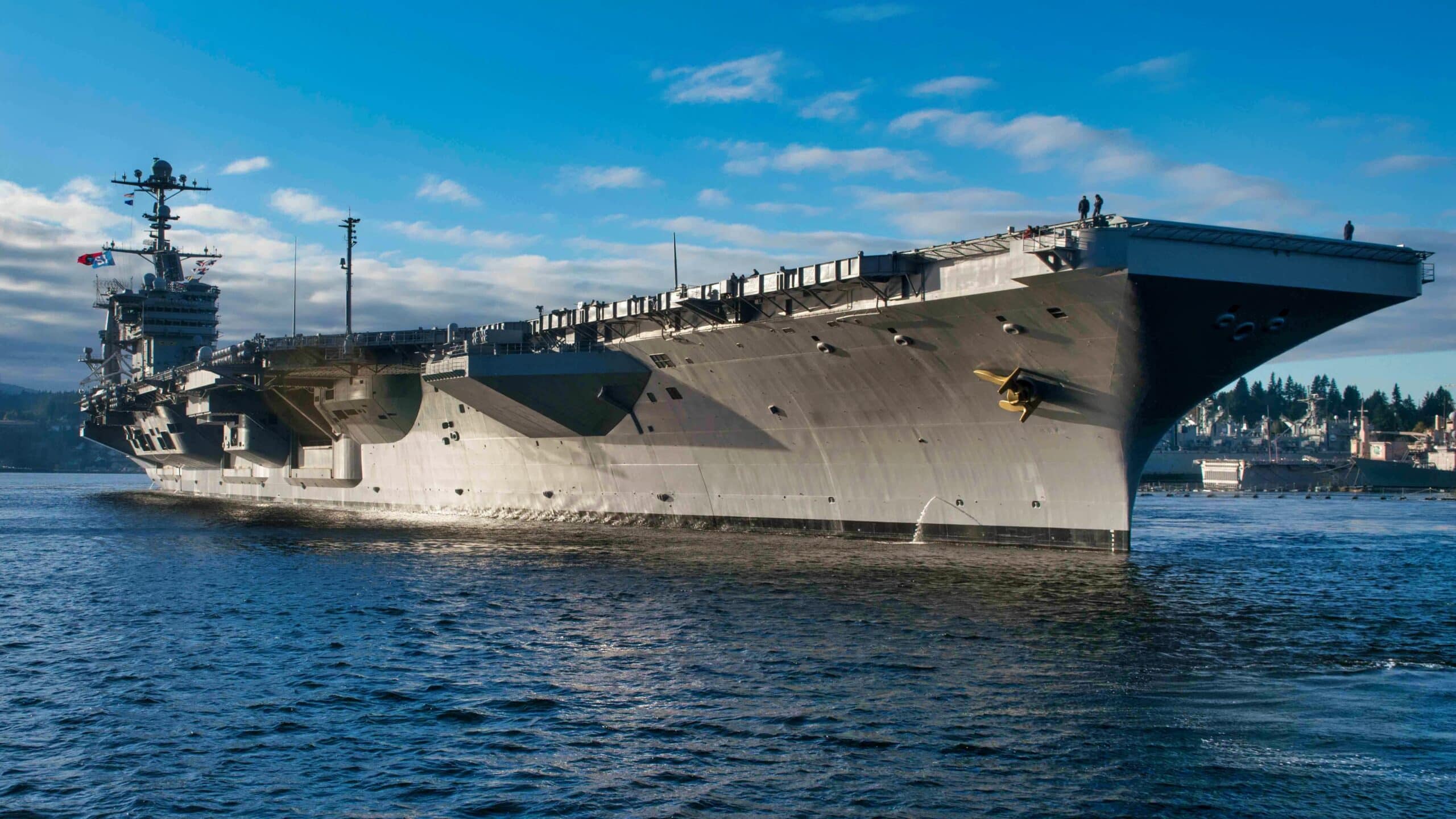
While China continues to add to its aircraft carrier fleet to bully its neighbors and enforce territorial claims in East Asia, the United States has failed to keep all of its carriers in the water.
Look at the USS John C. Stennis, the seventh Nimitz-class aircraft carrier. It is undergoing a midlife overhaul and refueling that will take five and a half years to complete.
This is unacceptable.
How could such a maintenance activity take this long?
Let’s examine why the John C. Stennis has been out of action and how the delayed work period is negatively affecting the U.S. Navy’s force posture.
Maintenance is “Complex”
The overhaul and refueling for the Stennis will last 14 more months than planned and cost billions of dollars.
The Navy calls this maintenance period a refueling and complex overhaul (RCOH). It was supposed to be done in August of last year, but now that delivery date is being pushed to October 2026.
It Took a While for the USS George Washington, Too
This has been caused by previous delays to the RCOH of the USS George Washington, the country’s sixth Nimitz-class nuclear-powered carrier.
The COVID-19 pandemic caused workforce availability to suffer and supply chains to snarl. George Washington completed the RCOH in May 2023, and then attention was finally focused on John C. Stennis.
Aircraft Carrier John C. Stennis Is Only 65 Percent Complete
One promising development about the Stennis is that it left dry dock for delivery to the outfitting birth in July of this year under the watchful eyes of workers at HII-Newport News Shipbuilding (NNS) in Newport News, Virginia.
But it is still only 65 percent complete with the RCOH. The original contract with NNS was worth $3 billion.
Modern aircraft carriers have a 50-year lifespan. Midway through this period, they require “upgrades to propulsion equipment, infrastructure and electronic systems,” according to a Navy news release.
The Extra Work Time Should Be Worth It
Rear Admiral Casey J. Moton, the commander of the Program Executive Office for Aircraft Carriers, optimistically explained the final goal. “When John C. Stennis redelivers, she’ll be the most technologically advanced Nimitz-class aircraft carrier in the Navy,” Moton said. “She’ll bring to the fleet the highest level of capability across all mission sets.”
Moton blamed the delays on the shipyard workforce, which doesn’t have enough employees to expedite the work. HII-Newport News is having trouble recruiting and retaining skilled workers.
Despite these challenges, the Navy believes it performs work on the RCOH as quickly as possible.
Delays Have Become Worse Over the Last Two Decades
However, the delays impede the Navy’s readiness and have worsened over time. In 2001, it took the USS Nimitz carrier only 1,129 days to complete its RCOH. The mid-life maintenance period for George Washington lasted 2,120 days. That’s almost an 88 percent increase. So far, the Stennis has taken 1,990 days.
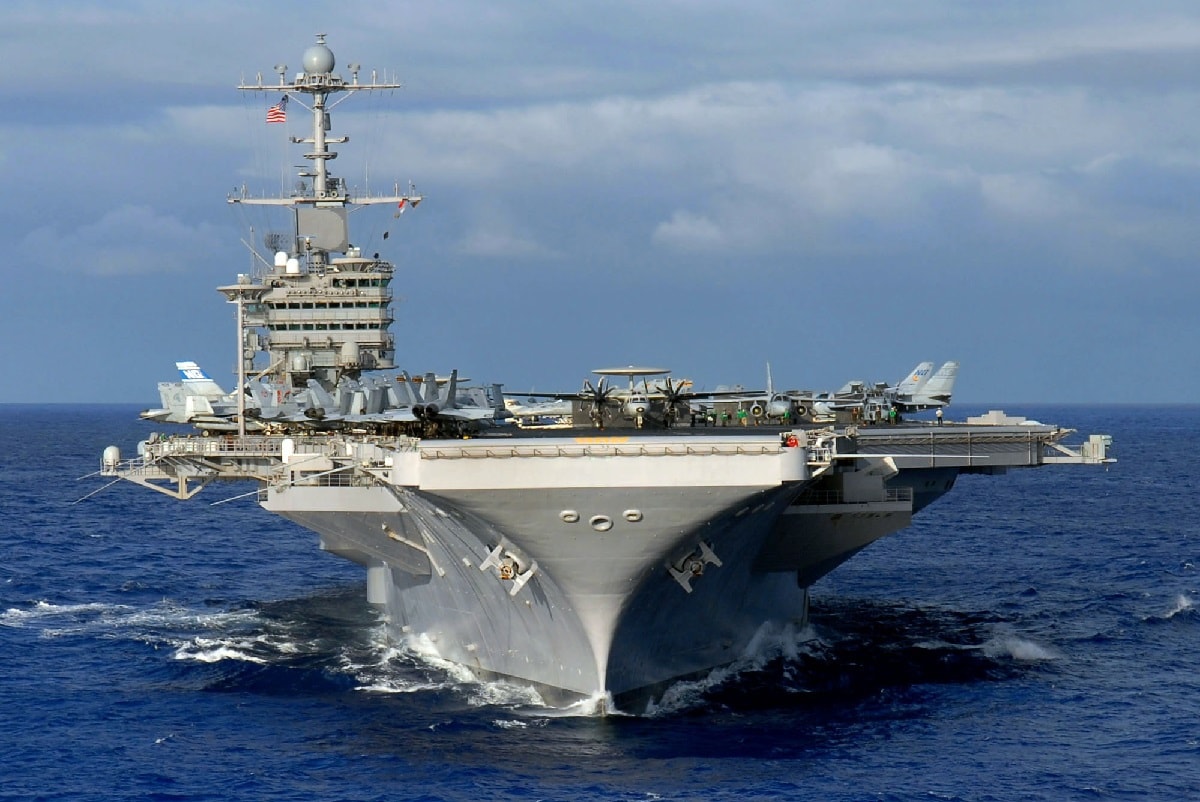
Pacific Ocean (Feb. 6, 2007) – USS John C. Stennis (CVN 74) transits the Pacific Ocean prior to a photo exercise showcasing the entire John C. Stennis Carrier Strike Group (JCSSG) off the coast of Guam. JCSSG is conducting flight and Integrated Strike Group operations off the coast of Guam after entering the 7th Fleet area of responsibility Jan. 31. U.S. Navy photo by Mass Communication Specialist 3rd Class Ron Reeves (RELEASED)
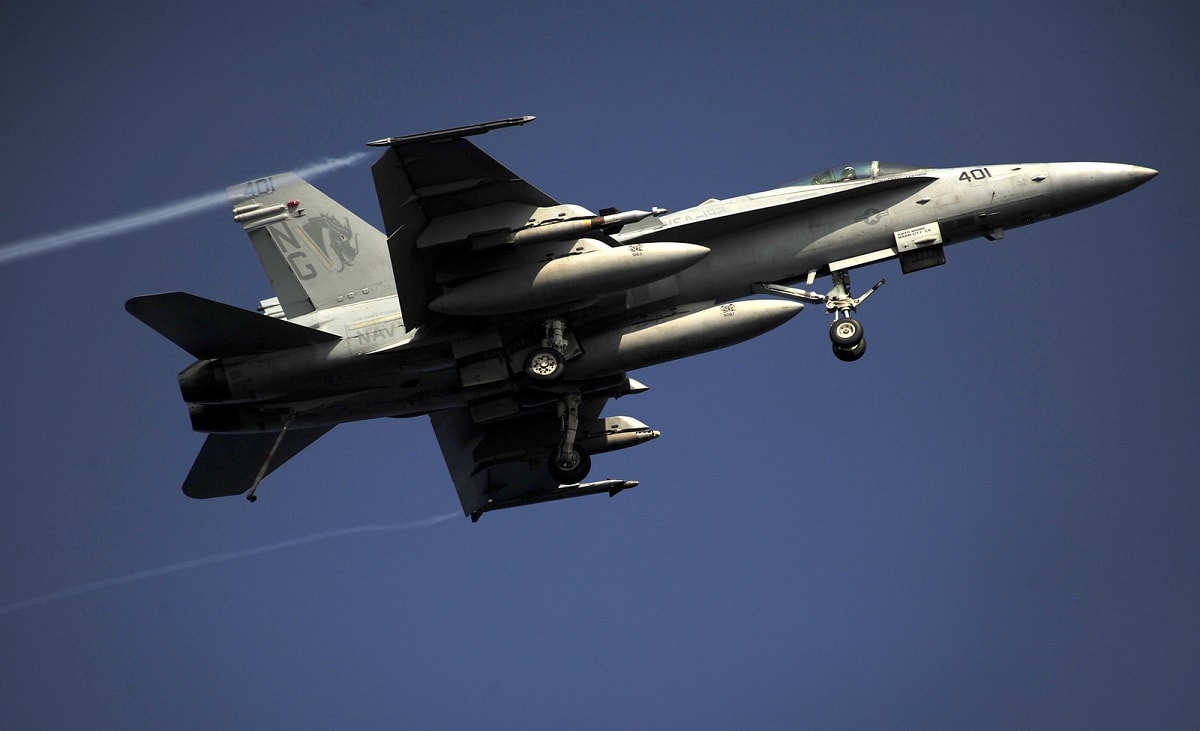
A U.S. Navy F/A-18C Hornet aircraft with Strike Fighter Squadron (VFA) 192 flies over the aircraft carrier USS John C. Stennis (CVN 74) during flight operations in the Arabian Sea Oct. 12, 2011. John C. Stennis deployed to the U.S. 5th Fleet area of responsibility conducting maritime security operations and support missions as part of operations Enduring Freedom and New Dawn. (U.S. Navy photo by Mass Communication Specialist 2nd Class Walter M. Wayman/Released)
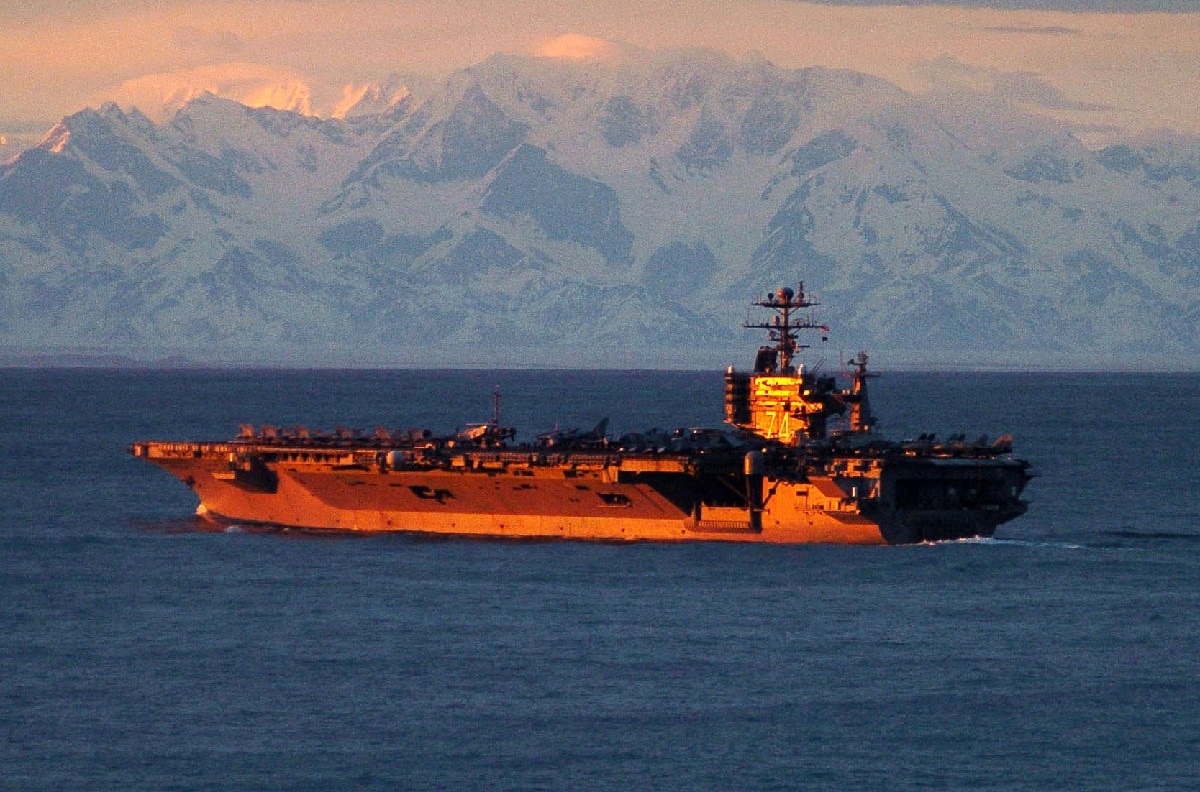
Gulf of Alaska (Jun. 12, 2004) – The Nimitz-class aircraft carrier USS John C. Stennis (CVN 74) steams near the snow capped mountains of the Alaskan coastline during the late Alaskan sunset. Stennis and embarked Carrier Air Wing Fourteen (CVW-14) have just completed Exercise Northern Edge, during a scheduled deployment. U.S. Navy photo by Photographer’s Mate 3rd Class Mark J. Rebilas (RELEASED)
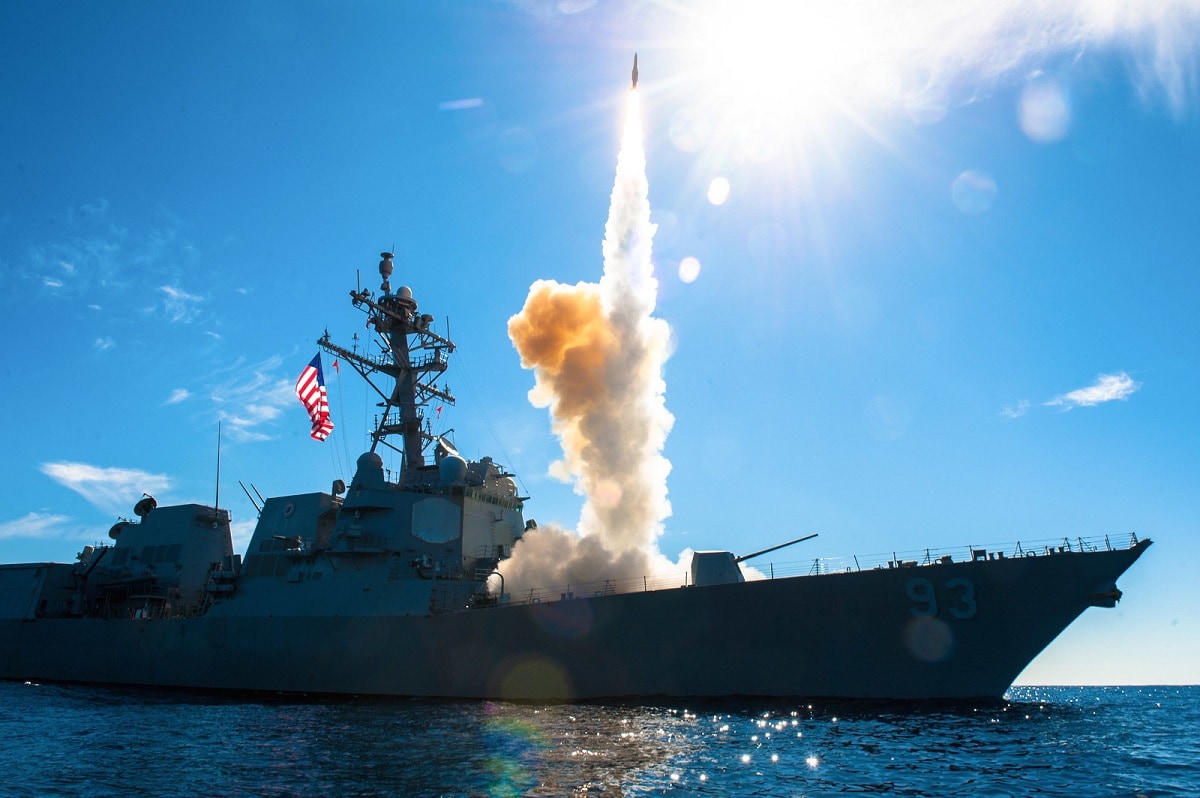
PACIFIC OCEAN (Nov. 10, 2015) – The guided-missile destroyer USS Chung-Hoon (DDG 93) fires an SM-2 missile during a live-fire exercise. Sailors from the John C. Stennis Strike Group are participating in a sustainment training exercise (SUSTEX) to prepare for future deployments. (U.S. Navy photo by Mass Communication Specialist 3rd Class Jonathan Jiang/Released) 151112-N-DA737-424.
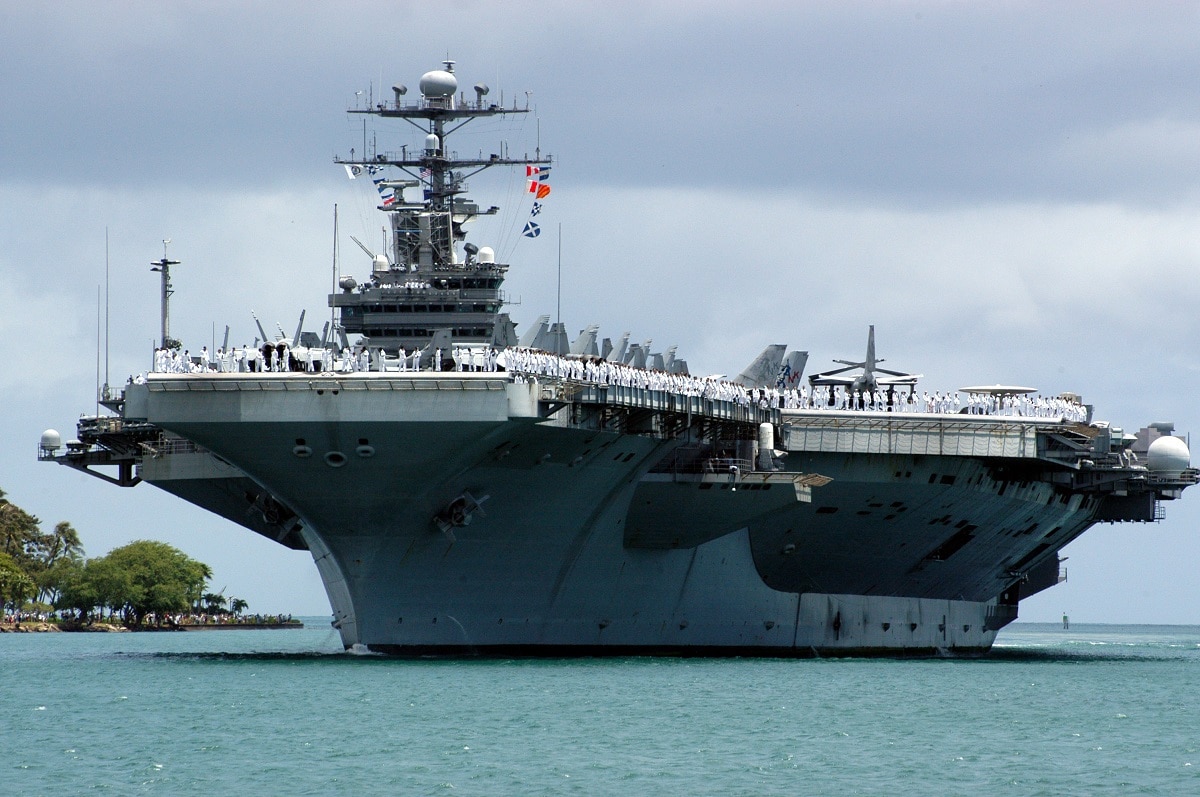
Sailors aboard the Nimitz-class aircraft carrier USS John C. Stennis (CVN 74) Òman the railsÓ as she pulls through the mouth of Pearl Harbor. Stennis arrived as part of RIMPAC (Rim of the Pacific Maritime Exercises), which includes the participation of seven countries. The objectives of the exercises are enhancing combat readiness and exploiting opportunities for cooperation with multinational unties.U.S. Navy photo by Journalist Seaman Ryan C. McGinley.
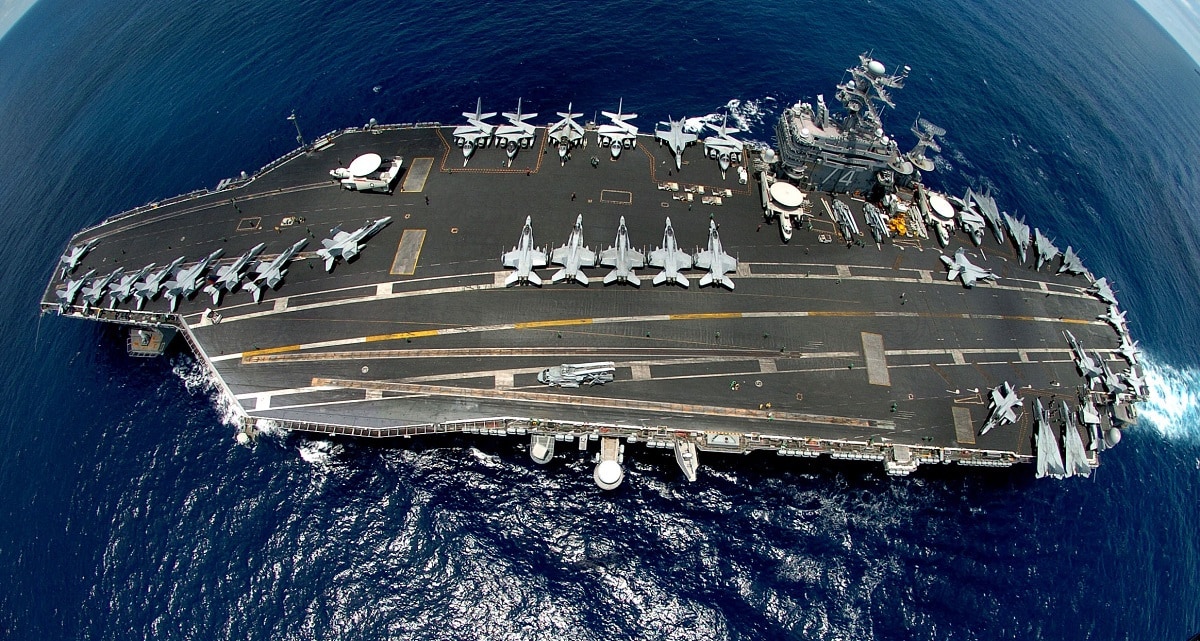
Pacific Ocean (June 25, 2004) – The Nimitz-class aircraft carrier USS John C. Stennis (CVN 74) underway the Pacific Ocean during a multi-national photo exercise. Canada and the United States participated in the eight-ship formation. Stennis and embarked Carrier Air Wing Fourteen (CVW-14) are at sea on a scheduled deployment and is expected to participate in Rim of the Pacific Exercise (RIMPAC) 2004. RIMPAC is the largest international maritime exercise in the waters around the Hawaiian Islands. This years exercise will include eight participating nations; Australia, Canada, Chile, Japan, Peru, South Korea, Britain and the United States. RIMPAC is intended to enhance the tactical proficiency of participating units in a wide array of combined operations at sea, while enhancing stability in the Pacific Rim region. U.S. Navy photo by Photographer’s Mate 2nd Class Jayme Pastoric (RELEASED)
One problem has been quality of life issues with the crew. Some sailors working on the refit for George Washington committed suicide because the living conditions were so bad while they were working. After an investigation, the Navy was forced to allow the sailors to live in better housing off the ship.
USNI News said there was a “lack of parking, adequate housing and other amenities, like reliable Wi-Fi and healthy food options.” The investigation “concluded sailors on The George Washington had the toughest living standards in the U.S. military.”
The difficulties with the George Washington caused delays in the Stennis RCOH, as the Navy had to scramble to solve the quality-of-life concerns for the sailors. The George Washington RCOH took 26 million man-hours of work.
The Navy is making a significant number of excuses for the time it takes to conduct an RCOH. It doesn’t make sense that the mid-life maintenance period for the Nimitz took so much less time. You would think that in 24 years the Navy would have solved many of the issues that crop up during an RCOH.
What Happens Next for These Aircraft Carriers?
Of course, no one could have predicted the pandemic, and those delays are understandable. Still, the Navy must work closer with HII to create an environment with fewer workforce shortages. This could mean providing more resources and ideas to the shipbuilder to incentivize the workers to “live, work, and stay” near the RCOH job site without so much turnover.
Five and a half years is too long for a re-fit, and it allows the nation’s adversaries to have a leg-up on the Navy’s operational readiness.