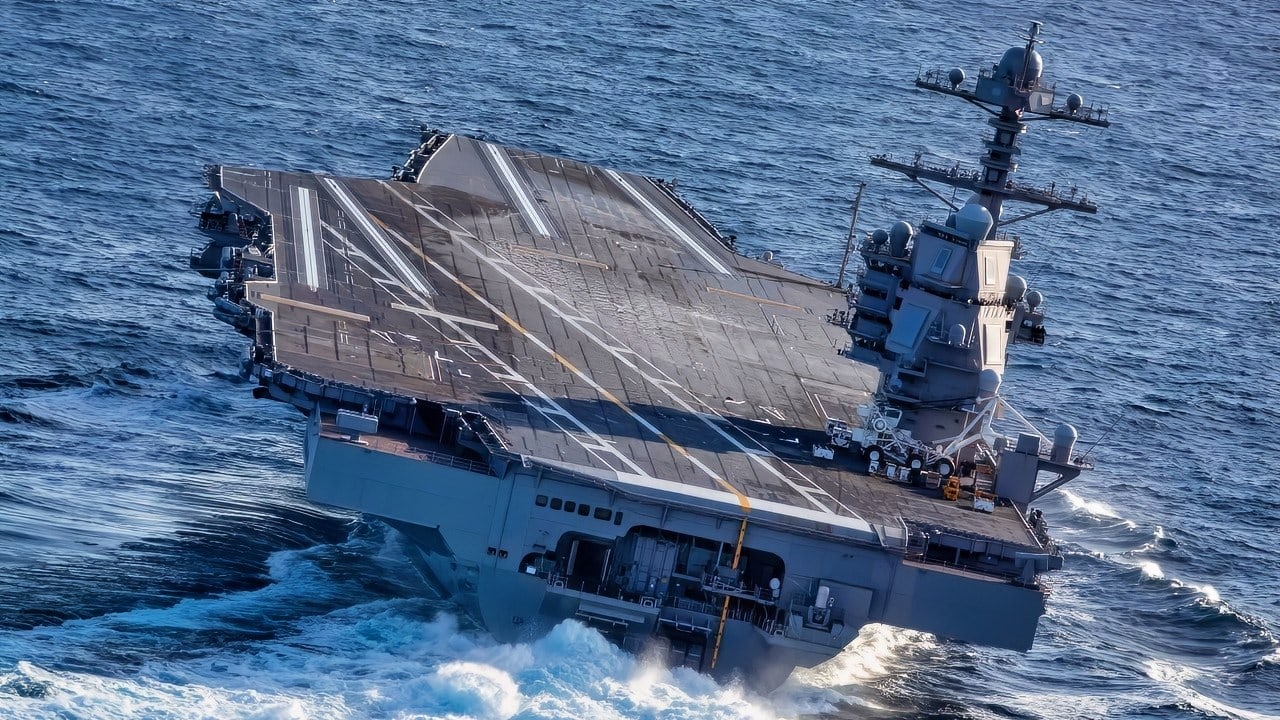
Summary and Key Points: Caleb Larson, a Berlin-based conflict journalist and Master of Public Policy, analyzes the record-breaking 230-day deployment of the USS Gerald R. Ford (CVN-78) U.S. Navy aircraft carrier.
-As the supercarrier transits from Operation Southern Spear in the Caribbean to the Middle East, the crew faces a critical “quality-of-life” bottleneck: a failing $13 billion vacuum sewage system.
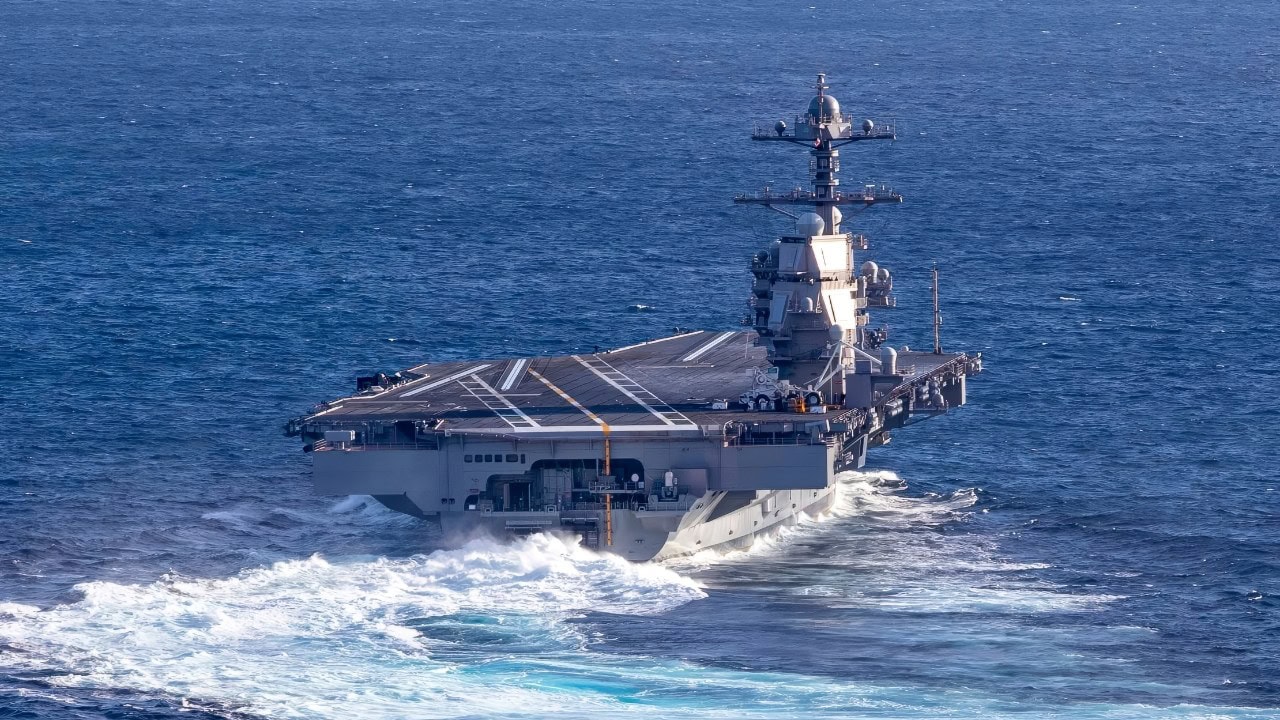
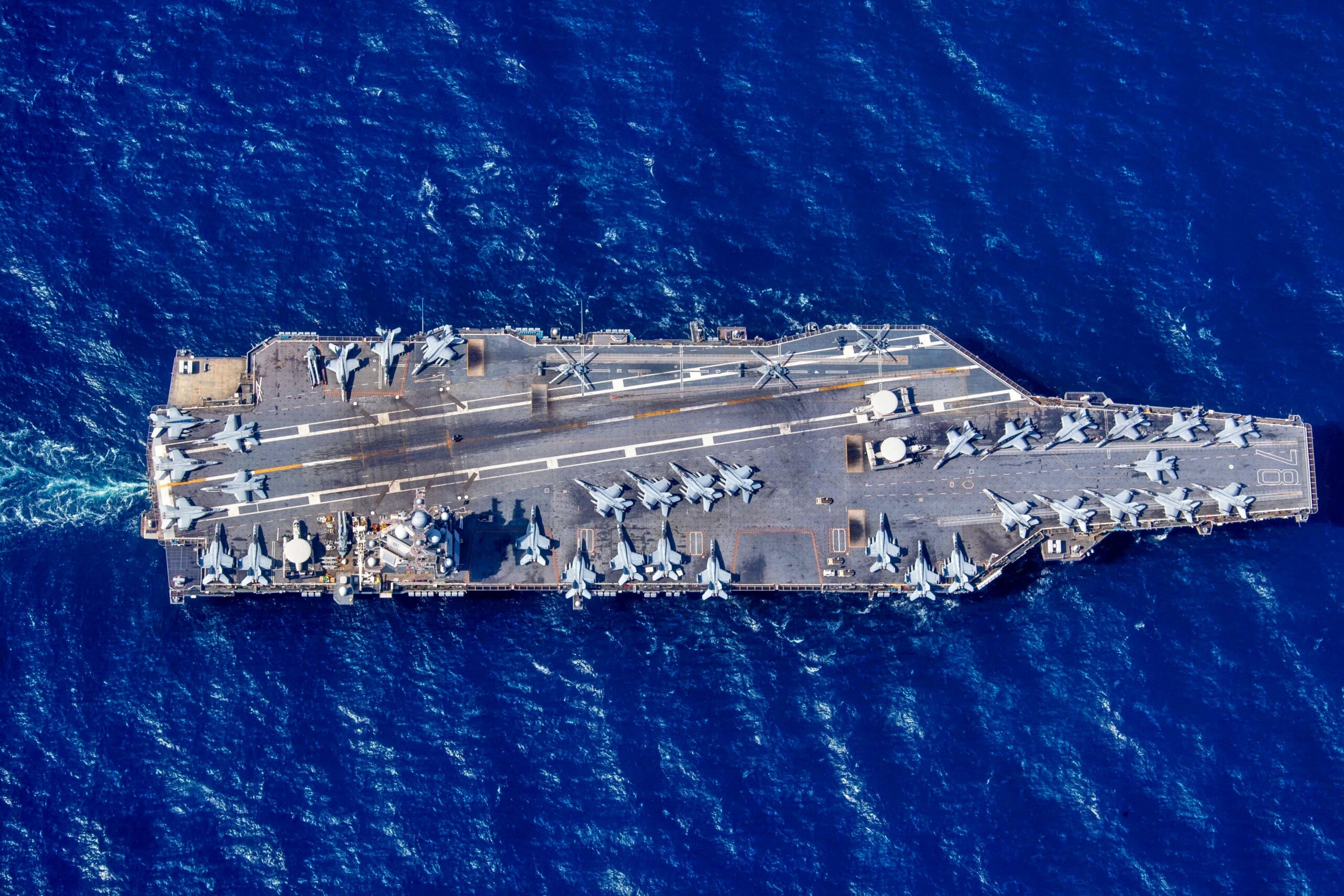
ATLANTIC OCEAN (Oct. 29, 2019) USS Gerald R. Ford (CVN 78) conducts high-speed turns in the Atlantic Ocean. Ford is at sea conducting sea trials following the in port portion of its 15 month post-shakedown availability. (U.S. Navy photo by Mass Communication Specialist 3rd Class Connor Loessin)
-This 19FortyFive analysis scrutinizes the tension between CNO Admiral Daryl Caudle and the Trump Administration over deployment extensions, exploring how deferred maintenance and 19-hour repair shifts impact the long-term readiness of the world’s most advanced aircraft carrier.
230 Days at Sea: Why the USS Gerald R. Ford is the Navy’s “Fragile” Record-Breaker
As U.S. warships steam toward the Middle East, complemented by a diverse array of warplanes and other assets, one of the U.S. Navy’s largest ships is close to making history for the longest deployment on record in the post-Vietnam War era. Should the USS Gerald R. Ford (CVN-78) remain deployed in the Middle East past the middle of April, it will secure that record.
The Ford left Norfolk, Virginia, in June as part of a regular deployment to the Mediterranean. In October, it steamed to the Caribbean in support of the capture of Venezuelan strongman Nicolás Maduro. Now, the supercarrier is in the Middle East, on the precipice of launching sorties against Iran.
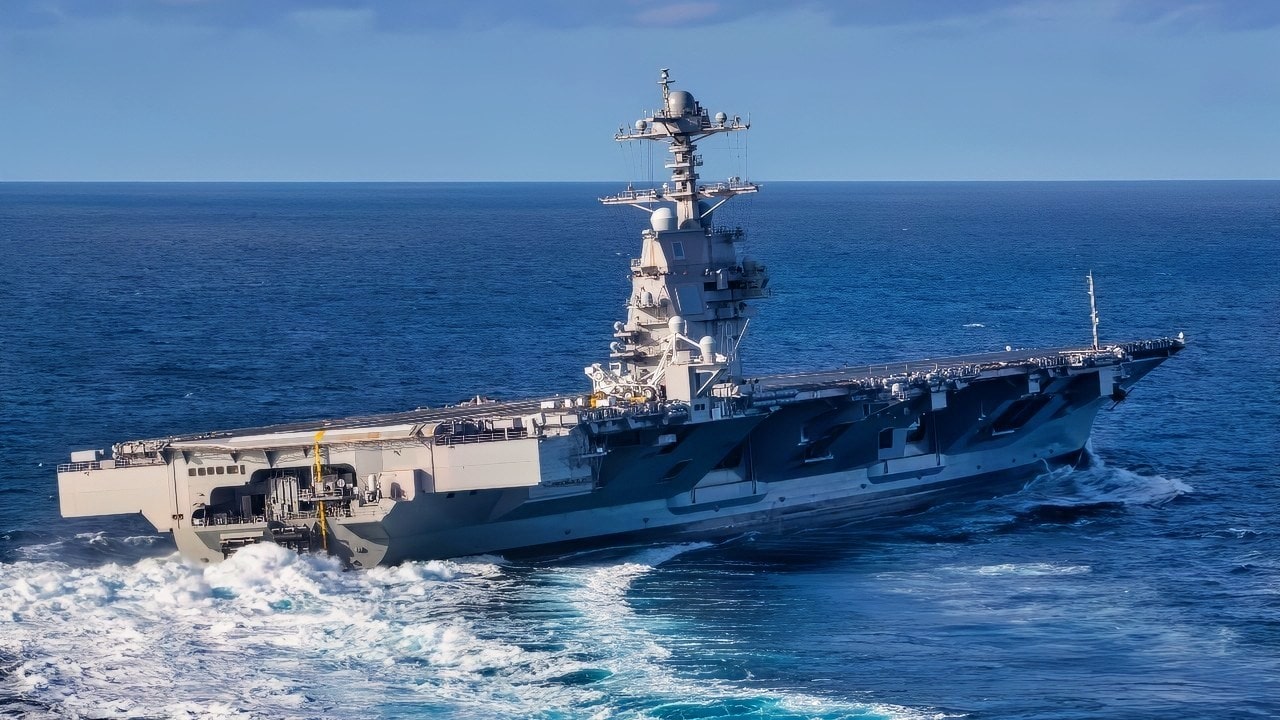
ATLANTIC OCEAN (Oct. 29, 2019) USS Gerald R. Ford (CVN 78) conducts high-speed turns in the Atlantic Ocean. Ford is at sea conducting sea trials following the in port portion of its 15 month post-shakedown availability. (U.S. Navy photo by Mass Communication Specialist 3rd Class Connor Loessin)

ATLANTIC OCEAN (Oct. 29, 2019) USS Gerald R. Ford (CVN 78) conducts high-speed turns in the Atlantic Ocean. Ford is at sea conducting sea trials following the in port portion of its 15 month post-shakedown availability. (U.S. Navy photo by Mass Communication Specialist 3rd Class Connor Loessin)
But accounts from the Ford paint a frustrating picture. Pulled away from their families, embarked sailors have seen their post-deployment plans in shambles, with important family milestones such as weddings, funerals, births, and anniversaries observed without loved ones present.
Though seemingly from a Saturday Night Live sketch, one quality-of-life issue is no laughing matter. A crucial part of sailors’ amenities, which incorporate technology new to the Navy, are often out of order. It has become an issue of troubling proportions.
Captain, We Have a Problem with this Aircraft Carrier
One of the pressing issues facing the Ford supercarrier has nothing to do with weapons, ammunition, or lack of manpower.
Instead, the ship’s toilets are experiencing an acute bottleneck. First reported by a reporter with National Public Radio last month, one sailor explained that many of the supercarrier’s toilets were out of order.
“It’s hard for 4,600 sailors to spend weeks and months on a ship without fully functioning toilets,” NPR reported. “USS Ford is the U.S.’ newest aircraft carrier. It cost $13 billion, and it includes a number of new systems that hadn’t been fully tested on Navy warships. The vacuum sewage system was borrowed in part from the cruise ship industry. It uses less water. But cruise ships are very different from warships, and the crew is struggling to keep up with repairs.”
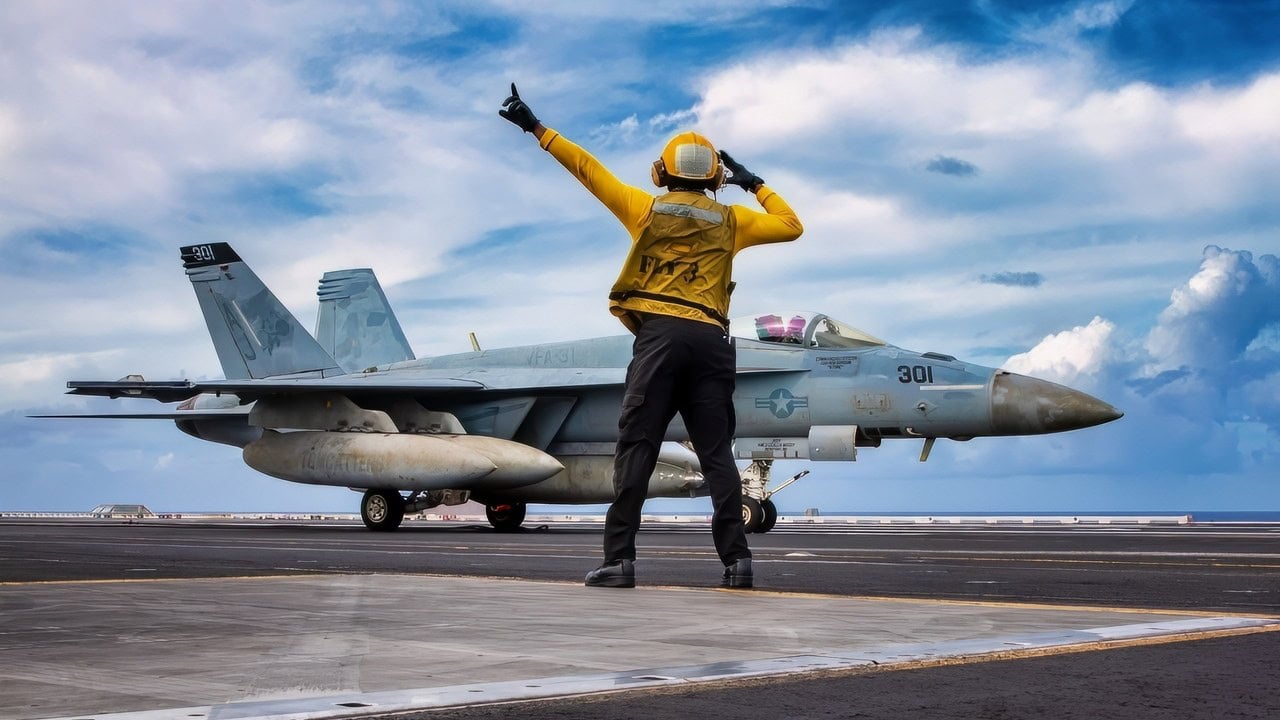
Ford-Class Aircraft Carrier. Image Credit: Creative Commons.
The vacuum technology is supposed to save water but hasn’t been integrated onto warships before—and the system’s upkeep has proven problematic. “According to an email from the engineering department sent in March, sailors were working 19 hours a day to track down and fix leaks,” NPR explained.
“The email references 205 calls in less than four days. Toilets, which the Navy calls heads, can go down for hours in parts of the ship. Once the carrier finally left Norfolk in June, the problem seemed to have gotten worse. In July and August, there are increasingly heated discussions between leadership and the engineering department,” the NPR report detailed.
“Since it’s a vacuum system, a problem with one head can cause all of the toilets in that part of the ship to lose suction, making it difficult for the maintenance crews to isolate a problem. The crews find everything from T-shirts to a four-foot piece of rope clogging the system. But the most common problem seems to be a part of the back of the toilet that comes loose.”
Uncertain Post-deployment Future for this U.S. Navy Supercarrier
The Gerald R. Ford’s commanding officer, Captain David Skarosi, acknowledged that the supercarrier’s extended deployment could be a source of frustration to the embarked sailors. In a letter penned to the families of the ship’s crew members, Captain Skarosi explained that he was also surprised by the carrier’s extended deployment, and that he, too, had to adjust his time-off plans.
“I’ve spoken to many of your Sailors who are coming to terms with missing Disney World plans, weddings they already RSVP’d to attend, and spring break trips to Busch Gardens,” Captain Skarosi told the crew of the USS Gerald R. Ford, The Wall Street Journal reported. But, Captain Skarosi added, “when our country calls, we answer.”
Missed Maintenance Schedules
Aside from the human toll on the sailors who operate the Ford’s systems and aircraft, the twice-extended deployment also threatens the long-term readiness of one of the U.S. Navy’s newest, most high-tech warships.
Extended deployments take a physical toll on the ship as regularly scheduled maintenance is deferred. The ship’s equipment and subsystems accrue longer-than-planned periods of use, which, in the long-term, hurts the ship’s ability to deploy as unanticipated repair work is likely to arise when the ship returns home.
Ford-Class. Image Credit: Creative Commons.
And the longer the ship is in a shipyard, the less time it has available for deployment.
This affects the readiness of other ships, too, as an extended Ford maintenance period takes time, resources, and port personnel away from attending to other warships.
Push-back?
Speaking at the Surface Navy Association’s annual symposium in January, Admiral Daryl Caudle, the Chief of Naval Operations, explained that he would “push back” against a second Ford deployment extension.
“I think the Ford, from its capability perspective, would be an invaluable option for any military thing the president wants to do,” Admiral Daryl Caudle said. “But if it requires an extension, it’s going to get some push back from the CNO. And I will see if there is something else I can do.”
It seems the admiral was not able to push back against the Ford’s second deployment. Will that ship go to war against Iran? That question is unanswerable for now. But what is clearer is that, war or not, the USS Ford will be at port following this deployment—presumably for quite a while. The maintenance implications for other U.S. Navy warships have yet to be seen.
About the Author: Caleb Larson
Caleb Larson is an American multiformat journalist based in Berlin, Germany. His work covers the intersection of conflict and society, focusing on American foreign policy and European security. He has reported from Germany, Russia, and the United States. Most recently, he covered the war in Ukraine, reporting extensively on the war’s shifting battle lines from Donbas and writing on the war’s civilian and humanitarian toll. Previously, he worked as a Defense Reporter for POLITICO Europe. You can follow his latest work on X.