
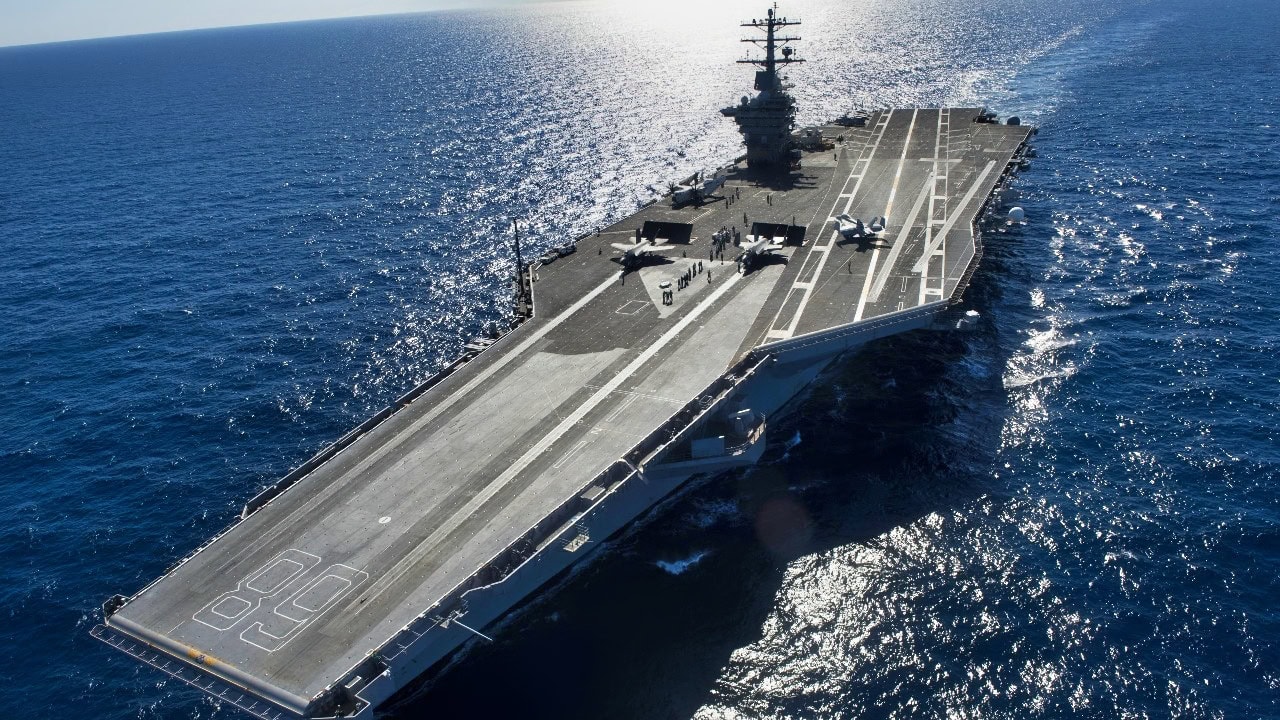
U.S. Navy Supercarrier USS Gerald R. Ford Has A Gross Problem: 42 Sewage Failures Since 2023
The United States Navy’s newest and most expensive aircraft carrier, USS Gerald R. Ford, continues to grapple with recurring sewage system failures, according to internal Navy documents and multiple media reports. The ongoing technical problems with the ship’s Vacuum Collection, Holding and Transfer (VCHT) system have affected shipboard life for thousands of sailors during its recent deployment to the Caribbean, raising questions about the design choices made earlier in the Ford-class program.
The USS Gerald R. Ford, commissioned in 2017 and valued at approximately $13 billion, is the lead ship of a new class intended to modernize the Navy’s carrier fleet. While it features cutting-edge technologies – including electromagnetic catapults and advanced radar systems – its waste handling infrastructure has repeatedly malfunctioned under real-world operational conditions.
According to documents obtained by National Public Radio (NPR), the VCHT system has required external assistance on at least 42 occasions since 2023 to address malfunctions and clogs. Thirty-two of the service calls occurred in 2025 alone, including during the carrier’s current Caribbean mission.
The vacuum-based sewage system used aboard Ford is similar in principle to those found on cruise ships and commercial aircraft. The system uses negative pressure to move waste and a minimal amount of water through a network of narrow pipes. While efficient in controlled environments, the vacuum systems can be highly sensitive to leaks and blockages, especially when scaled up to serve thousands of personnel.
Navy internal emails have also revealed frustration among engineering staff over the problem.
“Our sewage system is being mistreated and destroyed by Sailors on a daily basis. My HT’s are currently working 19 hours a day, right now trying to keep up with the demand,” a March 18, 2025 email from the engineering department reads.
Daily Impact on Sailors
The Ford carries a crew of more than 4,500 sailors, and the frequency of plumbing failures has made daily life challenging in some parts of the ship. Vacuum system issues often cause multiple toilets – referred to in naval terminology as “heads” – to become inoperable simultaneously.
Because the system is divided into 10 separate zones, a failure in one area can render an entire section of heads unusable until technicians can isolate and repair the problem.
Media reports from earlier in the deployment describe situations in which sewage overflowed onto deck surfaces and toilets malfunctioned regularly during the ship’s operations.
The Navy has publicly characterized many of these incidents as the result of “improper materials being introduced into the system,” but has not clarified the materials. Previous reports, however, have indicated that items like t-shirts, mop heads, and other large, unauthorized objects have been found in the vacuum lines – though the physical causes reportedly extend beyond crew behavior alone.
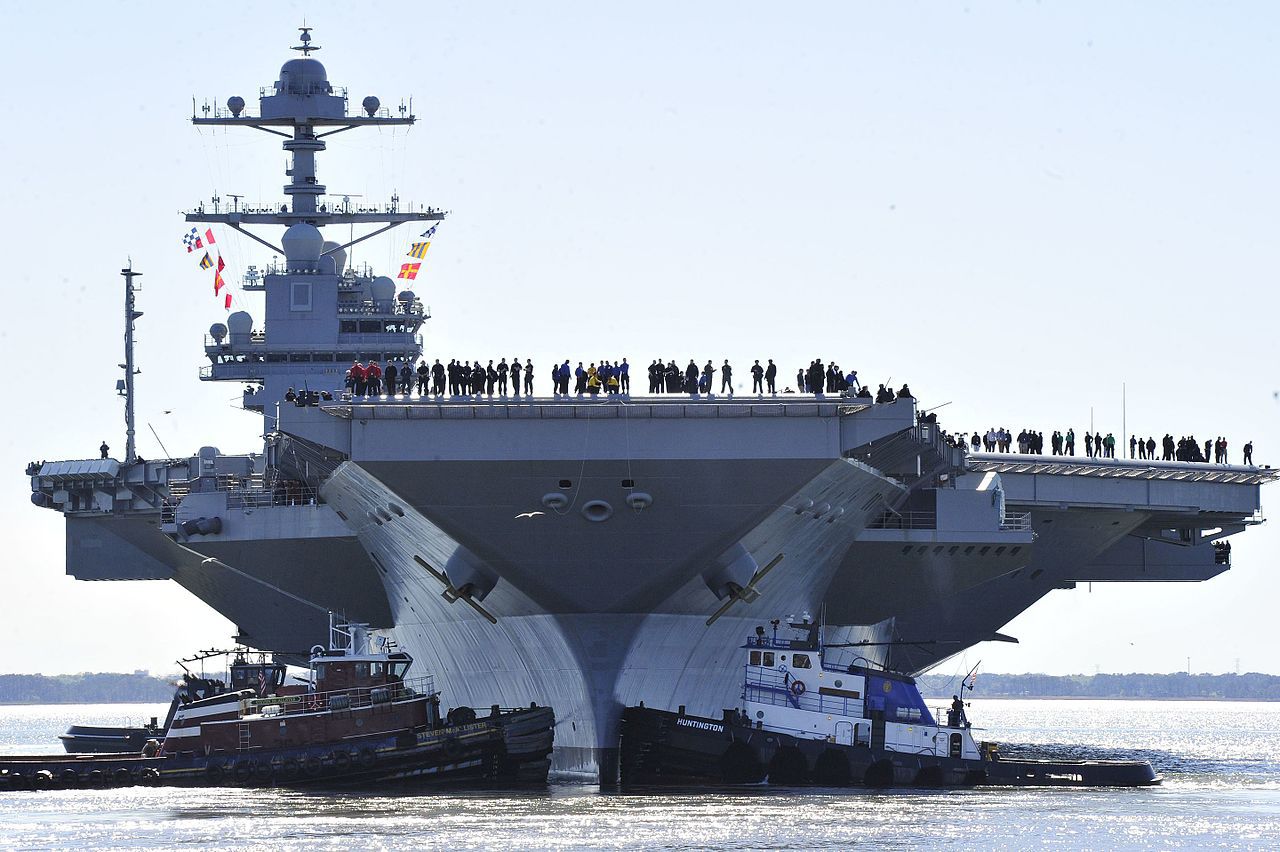
NEWPORT NEWS, Va. (April 8, 2017) – Pre-Commissioning Unit Gerald R. Ford (CVN 78) Sailors man the rails as the ship departs Huntington Ingalls Industries Newport News Shipbuilding for builder’s sea trials off the coast. The first- of-class ship—the first new U.S. aircraft carrier design in 40 years—will spend several days conducting builder’s sea trials, a comprehensive test of many of the ship’s key systems and technologies. (U.S. Navy photo by Chief Mass Communication Specialist Christopher Delano).
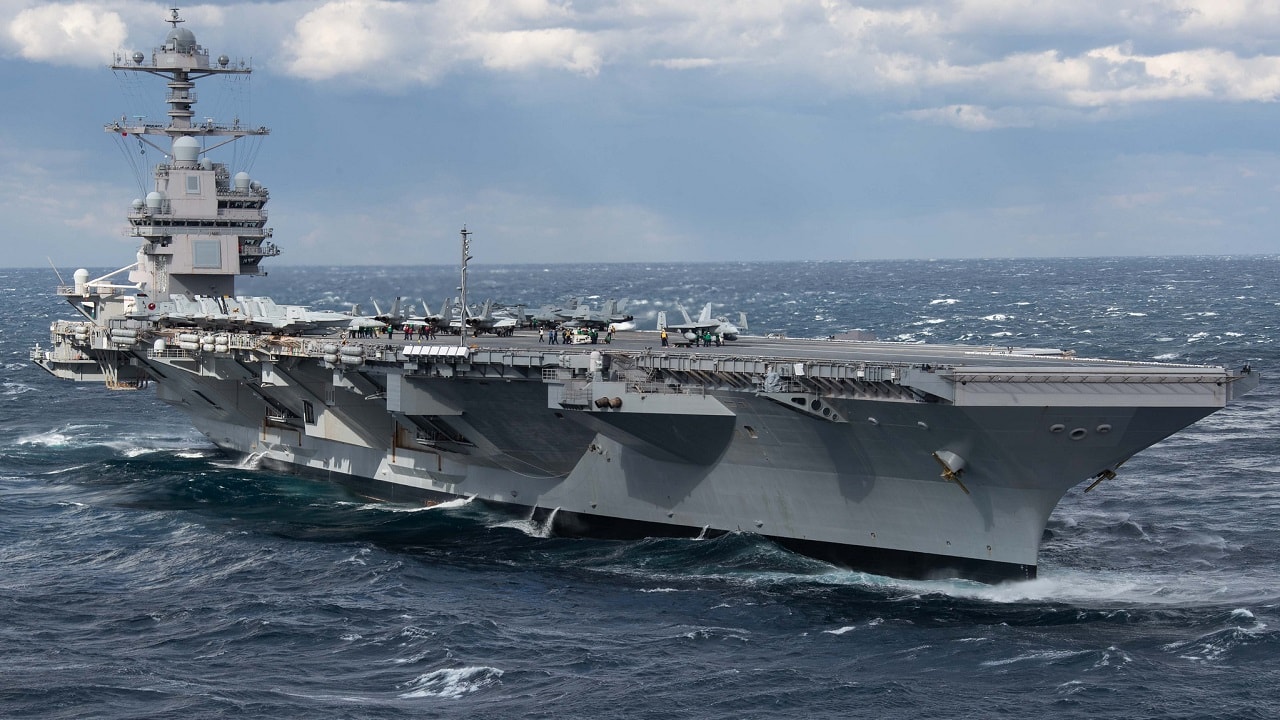
The aircraft carrier USS Gerald R. Ford (CVN 78) transits the Atlantic Ocean, March 26, 2022. Gerald R. Ford is underway in the Atlantic Ocean conducting flight deck certification and air wing carrier qualifications during the ship’s tailored basic phase before operational deployment.
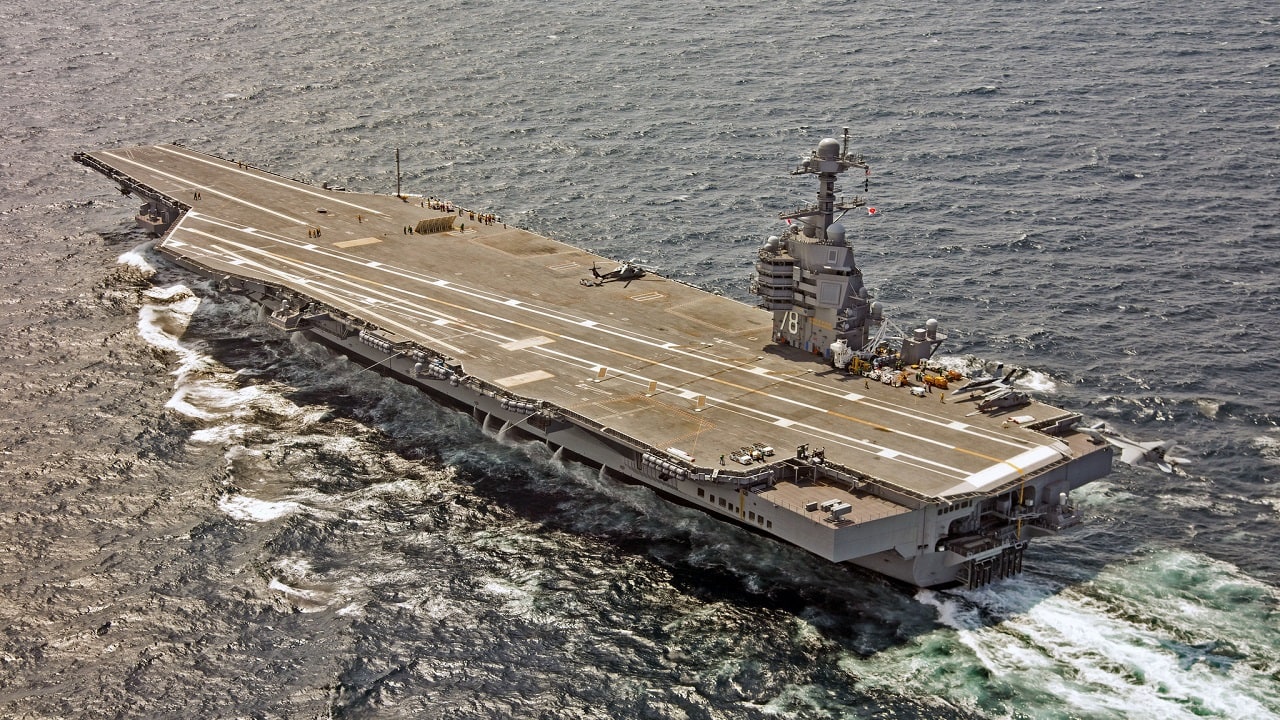
Ford-Class Aircraft Carrier Artist Rendering. Image Credit: Creative Commons.
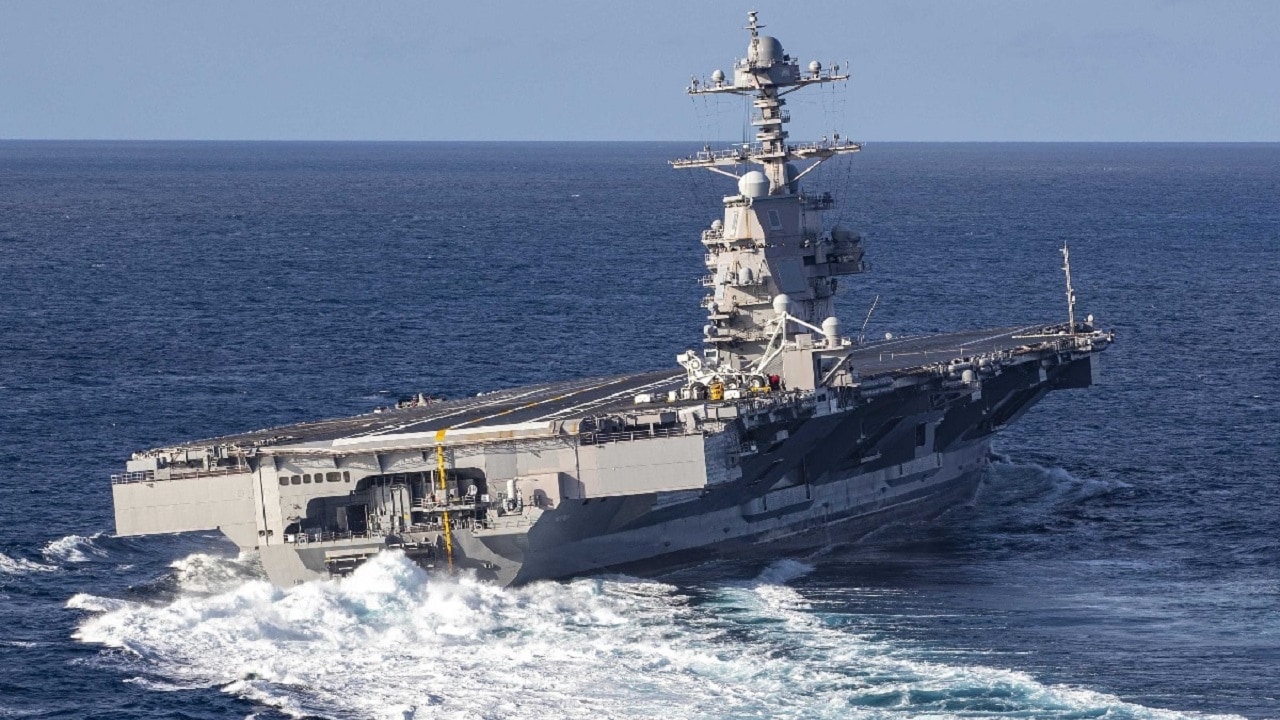
Ford-class Aircraft Carrier. Image Credit: US Navy.
Long-standing Design Concerns
While crew behavior is a major factor in the problem, the underlying challenges with the VCHT system are not new and have been well documented for some time. A 2020 Government Accountability Office (GAO) report highlighted that the vacuum sewage pipes were undersized relative to the volume and usage demands expected aboard a supercarrier, meaning the design of the plumbing system itself may be the cause of problems during heavy shipboard use.
The Ford’s design borrows concepts from commercial maritime sanitation systems but applies them in a military context – and there lies the problem. The demands of a military ship, with sustained operations at sea without frequent port calls, are significantly greater than those of a tourist vessel.
Not only is there more material being moved through the pipes all day, every day, but calcium buildup poses a problem too. With more water moving through the pipes, acid flushes are necessary to dissolve deposits that are constantly building up in the network. These procedures, however, can only be conducted in port and can cost as much as $400,000 each time it is cleaned. Beyond the cost, the problem here is obvious: if a ship does not dock for long periods as a result of being on a long deployment, the acid flushes cannot be conducted.
Despite the plumbing issues, the Navy maintains that the VCHT system’s performance has not compromised the carrier’s operational readiness – but it doesn’t help, and it raises questions about the future of other vessels in the Ford class. Those upcoming vessels, including the USS John F. Kennedy, are slated to use similar vacuum systems unless design changes are implemented quickly. The Navy has not publicly announced any major modifications to the system for future carriers.
According to the Navy’s own statements, the carrier’s VCHT system is divided into 10 independent zones supporting more than 600 toilets, and the ship has averaged about one maintenance call per day for the system during its deployment.
With the USS John F. Kennedy set to enter service with a largely identical sanitation architecture, the Navy must now confront the reality that existing shortcomings will not only persist in the near term but potentially for the decades it takes for this next generation of vessels to be replaced.
About the Author:
Jack Buckby is a British researcher and analyst specialising in defence and national security, based in New York. His work focuses on military capability, procurement, and strategic competition, producing and editing analysis for policy and defence audiences. He brings extensive editorial experience, with a career output spanning over 1,000 articles at 19FortyFive and National Security Journal, and has previously authored books and papers on extremism and deradicalisation.