
Larger Than the Nimitz: Why the Navy Sent Its F0rd-class $13 Billion Supercarrier to Venezuela
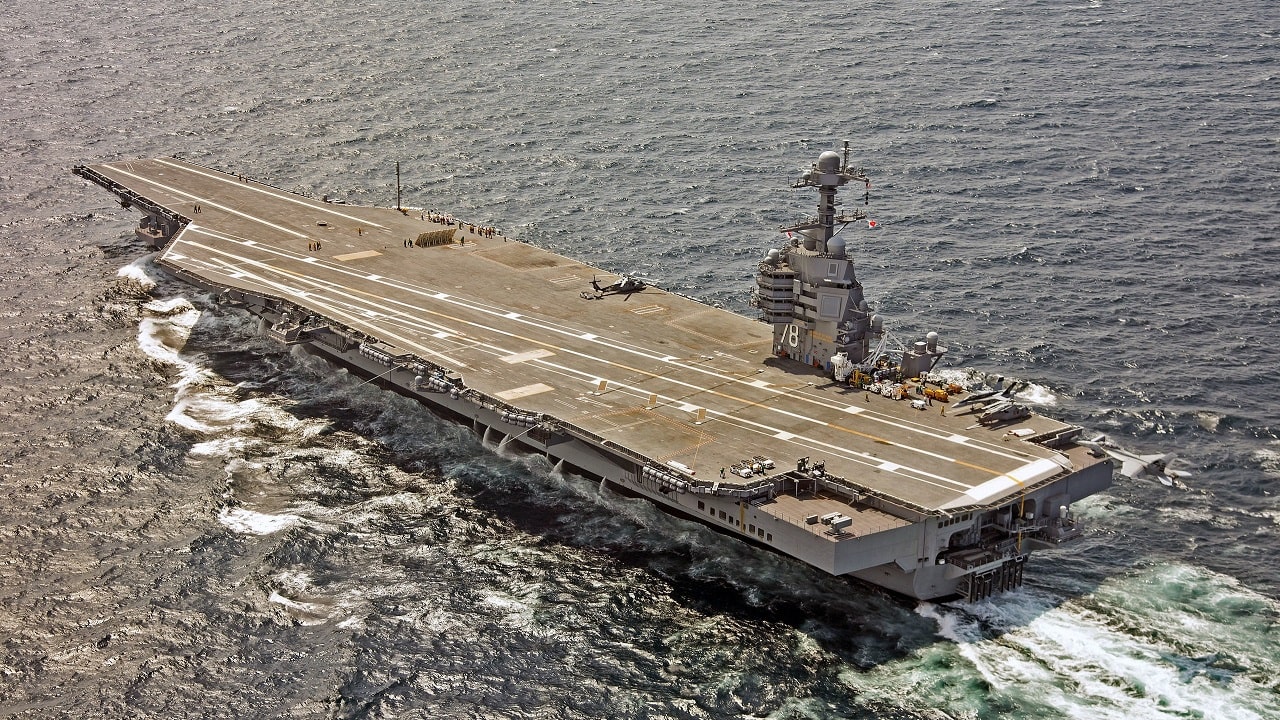
The USS Gerald R. Ford (CVN-78) is the largest warship ever built. It is 1,092 feet (337 m) long, 256 feet (78 m) wide (measured at the flight deck), and 250 feet (76 m) high. It also displaces 100,000 tons at full load.
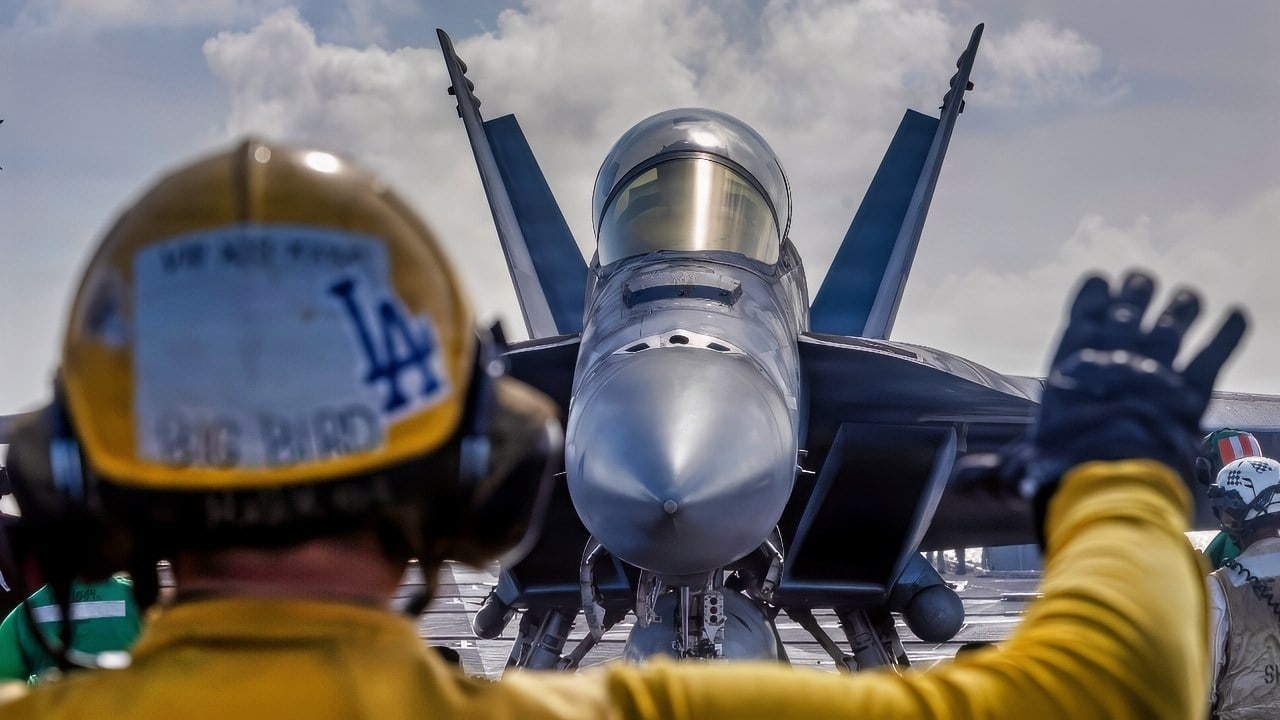
An F/A-18F Super Hornet assigned to Air Test and Evaluation Squadron (VX) 23 approaches the aircraft carrier USS Gerald R. Ford (CVN 78) for an arrested landing. The aircraft carrier is underway conducting test and evaluation operations.
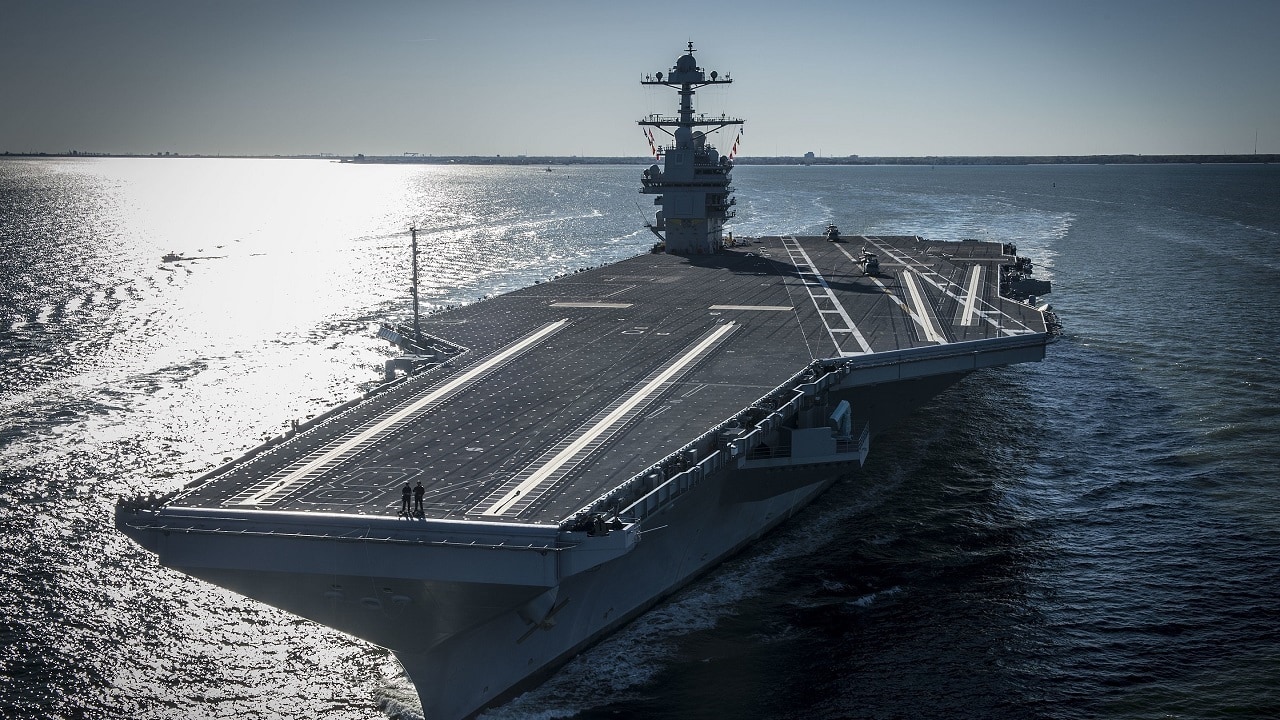
The U.S. Navy aircraft carrier USS Gerald R. Ford (CVN-78) underway on its own power for the first time. The first-of-class ship — the first new U.S. aircraft carrier design in 40 years — spent several days conducting builder’s sea trials, a comprehensive test of many of the ship’s key systems and technologies.
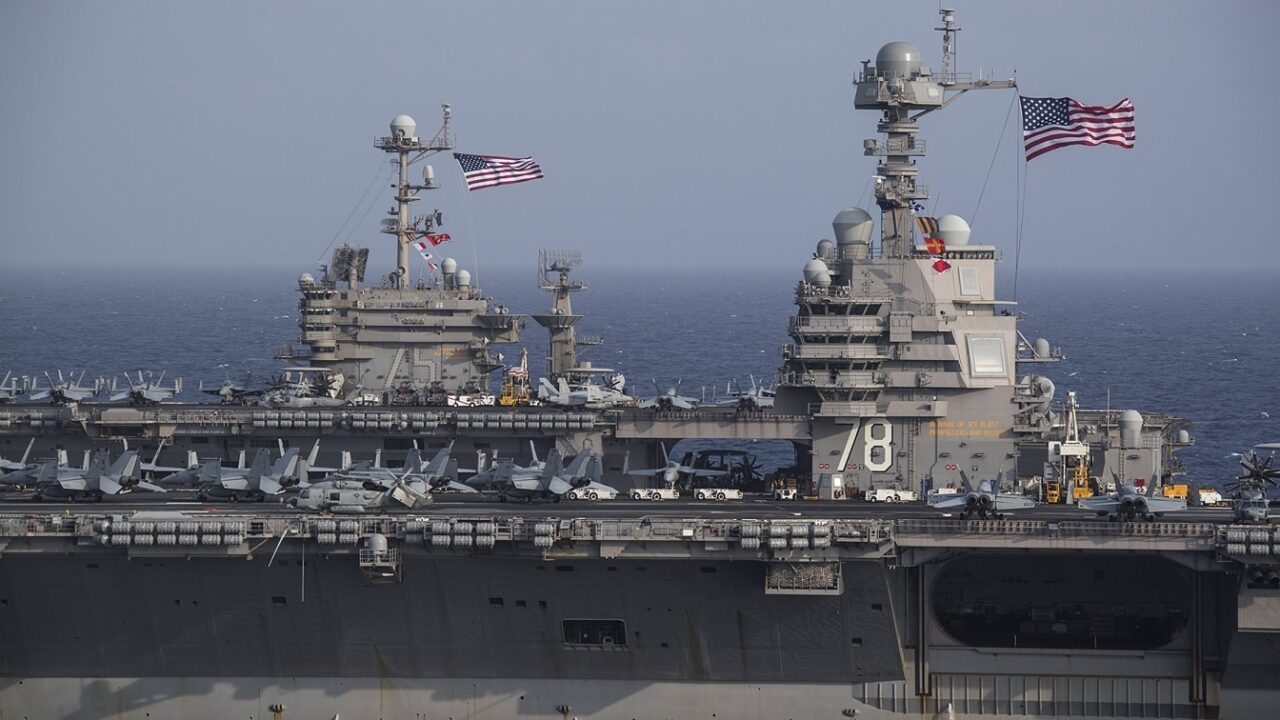
(June 4, 2020) The Ford-class aircraft carrier USS Gerald R. Ford (CVN 78) and the Nimitz-class aircraft carrier USS Harry S. Truman (CVN 75) transit the Atlantic Ocean, June 4, 2020, marking the first time a Ford-class and a Nimitz-class aircraft carrier have operated together underway. Gerald R. Ford is underway conducting integrated air wing operations and the Harry S. Truman Carrier Strike Group remains at sea in the Atlantic Ocean as a certified carrier strike group force ready for tasking in order to protect the crew from the risks posed by COVID-19, following their successful deployment to the U.S. 5th and 6th Fleet areas of operation. (U.S. Navy photo by Mass Communication Specialist 2nd Class Ruben Reed/Released
That dwarfs the size of the Essex-class carriers, which were the main US carriers during World War II, which weighed 36,000 tons. The enormous carrier is powered by the Bechtel A1B PWR nuclear reactors that deliver three times the power of a Nimitz-class carrier.
These nuclear-powered vessels are designed for sustained high speeds, allowing them to keep pace with other warships and maintain operational flexibility. In Venezuela, where the Ford carrier strike group has been interdicting narcotics trafficking boats, it is fast and flexible enough to meet any contingency.
During its recent deployment to the Caribbean, off the coast of Venezuela, the US’s newest and most advanced aircraft carrier has performed admirably, primarily as a show of force and deterrence rather than in active combat.
The Ford did provide troops and aircraft during the operation to locate and arrest Venezuelan strongman Nicolás Maduro, and has taken part in the strikes against narco-trafficking boats carrying illicit drugs from Venezuela. The carrier’s presence aimed to achieve political and strategic goals without engaging in direct conflict, something that did occur in the arrest operation, but it was limited.
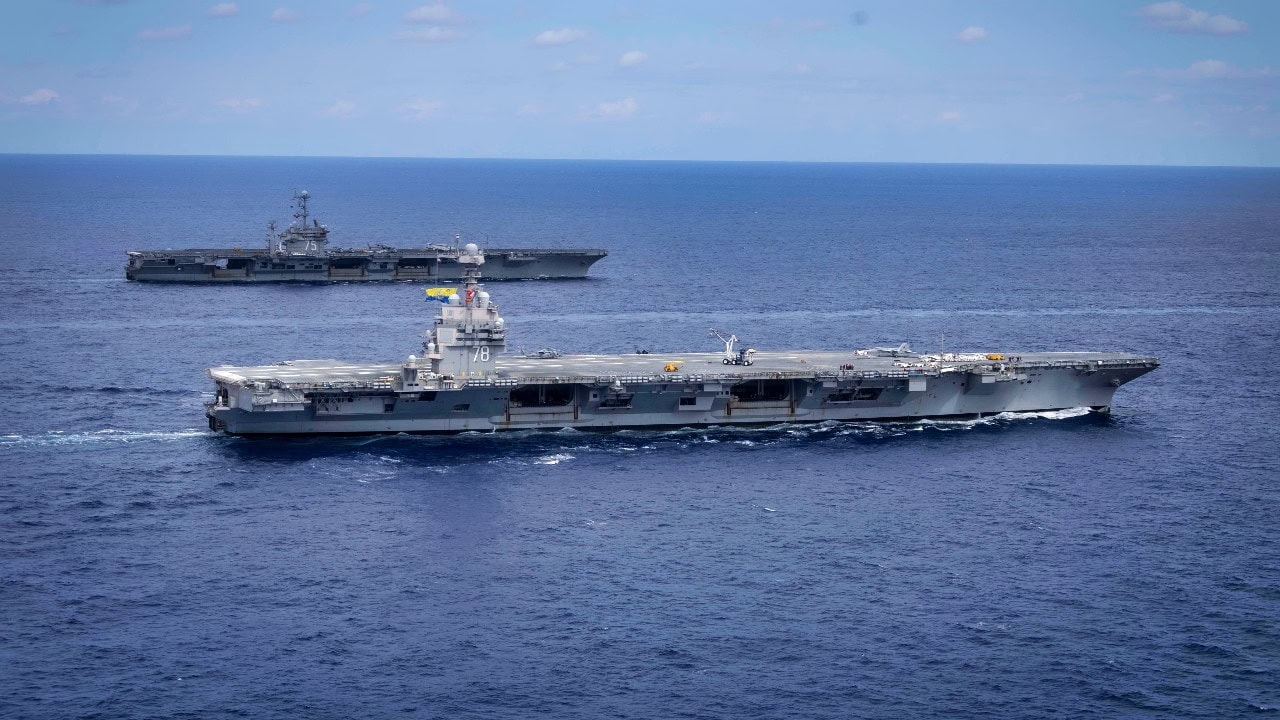
ATLANTIC OCEAN. (Aug. 24, 2024) The Nimitz-class aircraft carriers USS Harry S. Truman (CVN 75), back, and the world’s largest aircraft carrier, USS Gerald R. Ford (CVN 78), sail in formation in the Atlantic Ocean, Aug. 24, 2024. USS Gerald R. Ford is the flagship of the Gerald R. Ford Carrier Strike Group. The aircraft carrier is underway in the Atlantic Ocean to further develop core unit capabilities and skills such as fuels certification and ammunition on-load during its basic phase of the optimized fleet response plan. (U.S. Navy photo by Mass Communication Specialist 2nd Class Maxwell Orlosky).
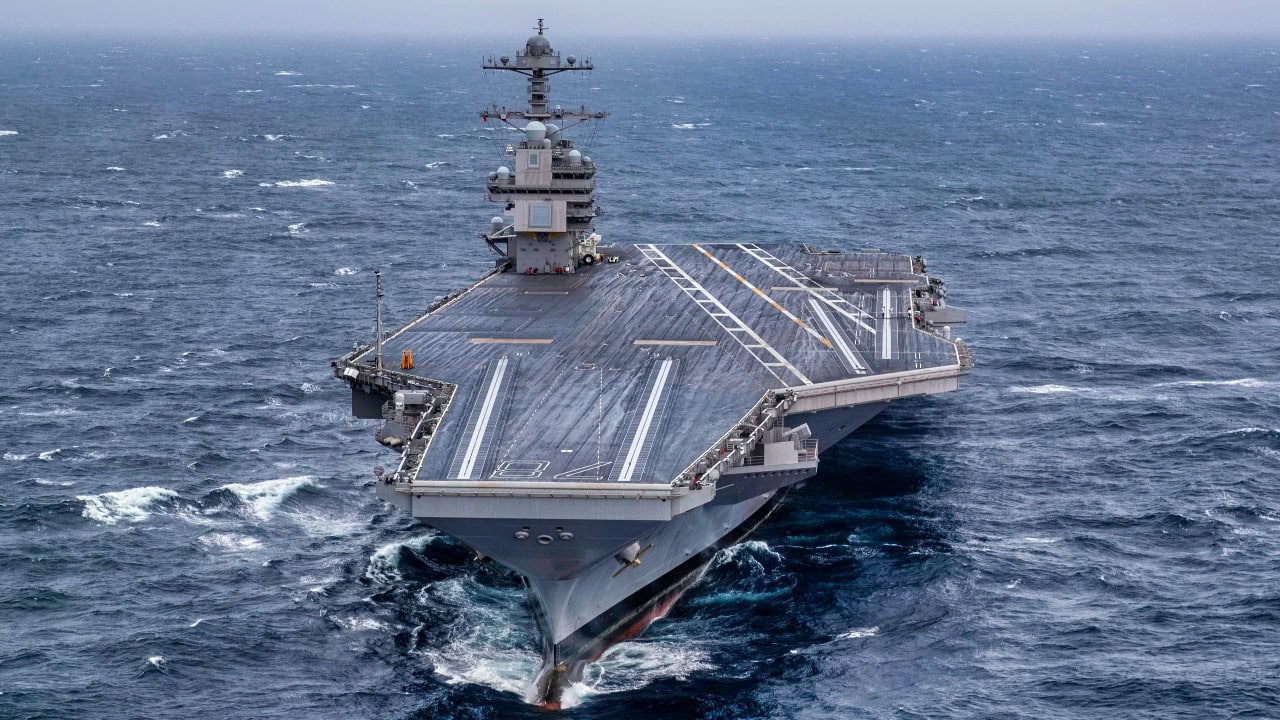
ATLANTIC OCEAN (Oct. 27, 2019) USS Gerald R. Ford (CVN 78) steams in the Atlantic Ocean for the first time since July 2018. Ford is conducting sea trials following its 15 month post-shakedown availability. (U.S. Navy photo by Mass Communication Specialist 3rd Class Connor Loessin)
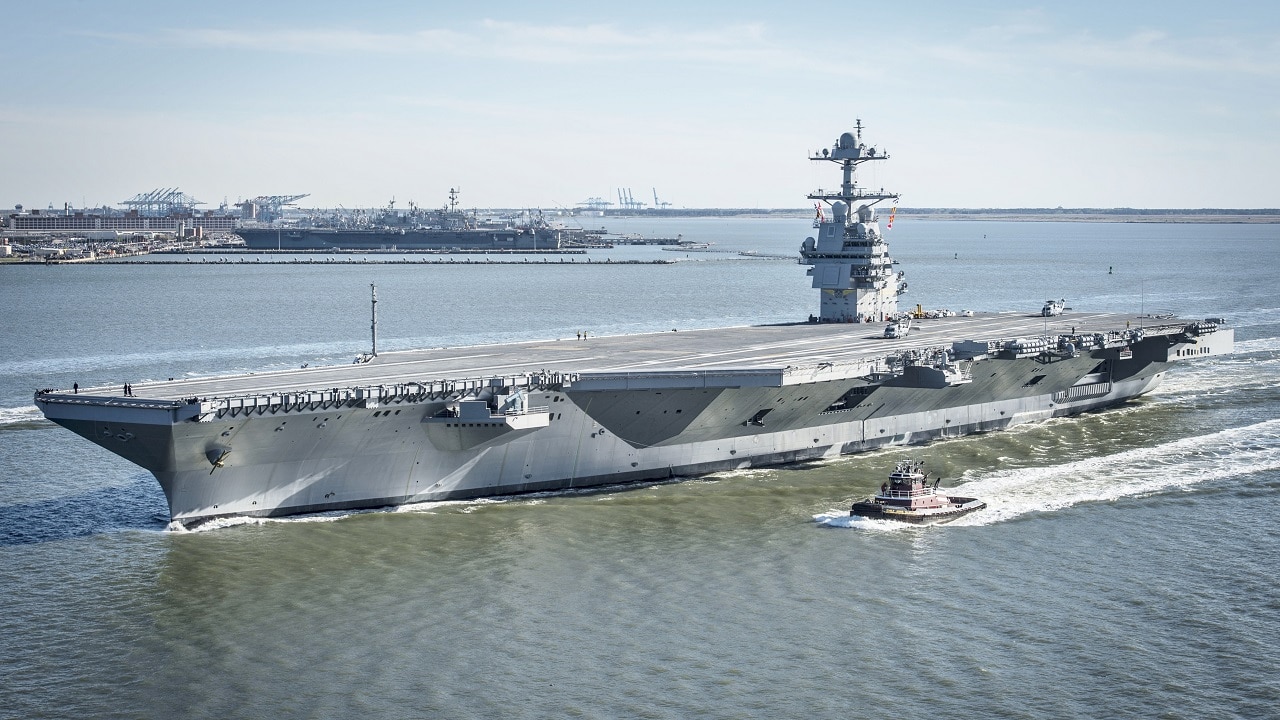
The U.S. Navy aircraft carrier USS Gerald R. Ford (CVN-78) underway under her own power for the first time while leaving Newport News Shipbuilding, Newport News, Virginia (USA), on 8 April 2017. The first-of-class ship – the first new U.S. aircraft carrier design in 40 years – spent several days conducting builder’s sea trials, a comprehensive test of many of the ship’s key systems and technologies. USS George Washington (CVN-73) and the amphibious assault ship USS Kearsarge (LHD-3) are visible in the background.
Was this enough to prove the carrier’s worth? No.
Deterrent and Political Signalling:
The mere presence of the USS Gerald R. Ford, the world’s most advanced and expensive warship, was intended to be an unmistakable signal of U.S. military capability and resolve to the Maduro regime. The consensus among defense analysts was that Venezuela’s military lacked any weapons capable of reliably damaging the carrier.
The deployment cemented that the U.S. is the dominant power in the hemisphere. It provided the Trump administration with a high-visibility tool to pressure the Venezuelan government without engaging in direct hostilities.
Operational Performance Has Been Limited:
The deployment has been a “High-Visibility Test.” The deployment served as a real-world test for the new class of carriers, which had faced criticism for cost overruns and technical issues. Its ability to operate in a sensitive area without major incident was a practical success for the Navy’s newest platform.
The carrier strike group was part of a larger, ongoing “Operation Southern Spear,” which included existing counter-narcotics operations and strikes on alleged drug-smuggling vessels. The Ford’s role is to provide command and control, air cover, and intelligence, surveillance, and reconnaissance (ISR) capabilities, all of which are standard carrier functions.
Ford-class carriers have faced significant issues with EMALS, including reliability failures, complex maintenance (needing specialized skills), and difficulties meeting sortie generation goals, leading to operational delays and high costs.
The Advanced Arresting Gear (AAG) was developed to replace the “legacy hydraulic arresting systems with an electromagnetic turbo-electric engine designed to recover a wider range of aircraft weights.” That includes lighter unmanned aerial systems (UAS). It also aims to reduce the stress loads on the aircraft’s airframes during launch.
However, the Advanced Arresting Gear (AAG) problems center on significant reliability issues, software glitches, and hardware flaws, particularly with the “water twister” shock absorbers, leading to frequent breakdowns, underperformance with lighter aircraft (like drones), complex troubleshooting, and significant cost overruns, delaying full operational capability and requiring costly fixes despite AAG’s promise for gentler, more efficient landings.
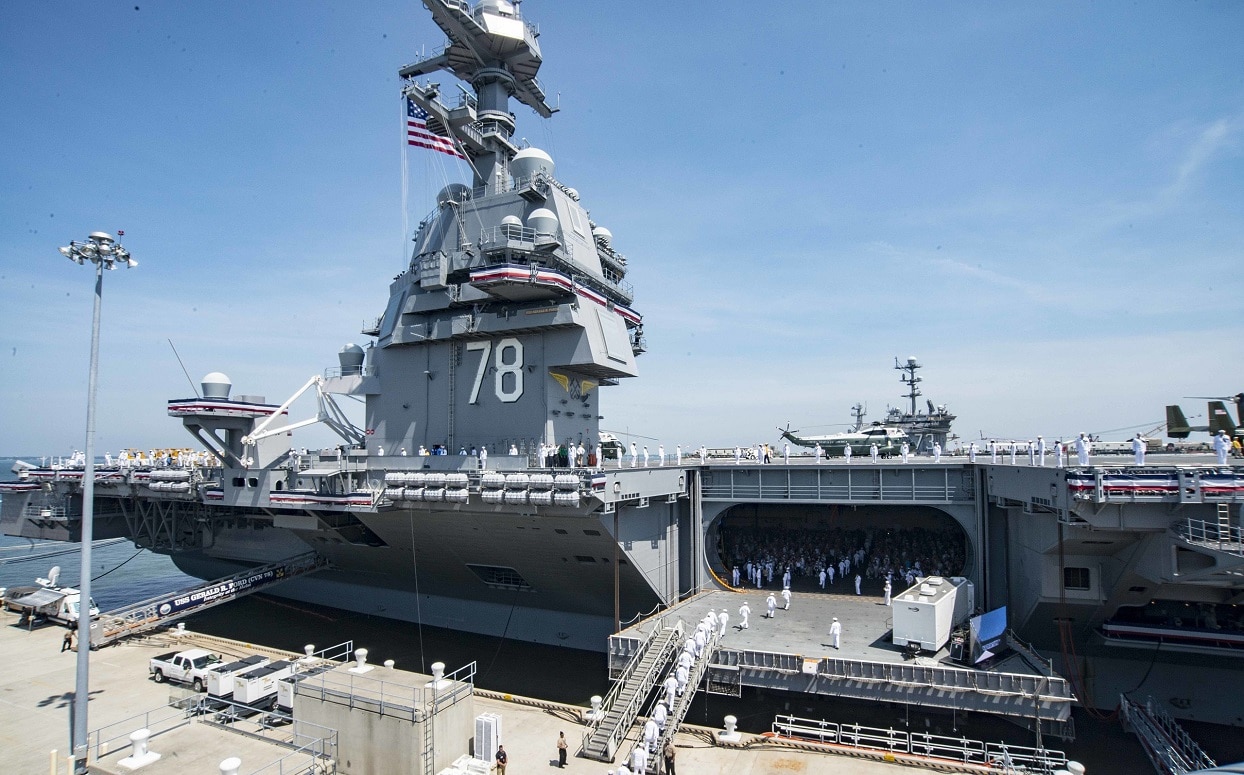
Gerald R. Ford-class. Image: Creative Commons.
The issues with the Advanced Weapons Elevators (AWEs) primarily complex integration problems, software glitches, and installation errors with the new electromagnetic (maglev) system, leading to delays, cost overruns, and reduced operational readiness on the USS Gerald R. Ford, though efforts focused on fixing these for the first ship and applying lessons to subsequent carriers like CVN-79, intending to increase sortie rates.
We have yet to see any reports that these issues have been resolved.
Other Limitations and Criticisms:
The Ford’s mission has not been a “War Stopper.” Some critics argued that a multi-billion-dollar aircraft carrier was an inefficient tool for combating decentralized issues like organized crime and drug trafficking, suggesting it wouldn’t stop those activities.
The deployment was viewed by Venezuelan President Nicolás Maduro as “saber rattling” and “imperialist intimidation,” which prompted Venezuela to mobilize its own forces in response.
The Ford-Class Carrier Carries Plenty Of Punch:
The Ford can carry up to 90 aircraft, including the Boeing F/A-18E/F Super Hornet, Boeing EA-18G Growler, Grumman C-2 Greyhound, Northrop Grumman E-2 Hawkeye, Lockheed Martin F-35C Lightning II, Sikorsky SH-60 Seahawk helicopters, and unmanned combat aerial vehicles.
In addition to the aircraft carried, the Ford carrier is armed with:
2 × Mk 29 Guided Missile Launching Systems, 8 × RIM-162 Evolved SeaSparrow Missile (ESSM) each
2 × Mk 49 Guided Missile Launching Systems, 21 × RIM-116 Rolling Airframe Missiles each
3 × Phalanx CIWS
4 × Mk 38 25 mm Machine Gun Systems
4 × M2 .50 caliber (12.7 mm) machine guns
Other Ford-class Features:
The Ford class also has an integrated active electronically scanned array (AESA) radar system. Raytheon’s dual-band radar (DBR) was being developed for both the Zumwalt-class guided missile destroyers and the Gerald R. Ford-class aircraft carriers.
The island was reduced in size by replacing six to ten radar antennas with a single six-faced radar. The DBR works by combining the X-band AN/SPY-3 multifunction radar with the S-band AN/SPY-4 Volume Search Radar (VSR) emitters, distributed into three phased arrays.
Ultimately, the Ford proved its worth as a formidable symbol of power and a functional operational base in a complex geopolitical scenario, and conducted airstrikes in Venezuela itself as part of the Maduro arrest operation.
The fact that it was chosen for this operation is a good start to conducting complex operations for the Navy in the US’s backyard. However, because Venezuela has no real weapons it can bring to bear against it, it still has a long way to go before proving its worth.
About the Author: Steve Balestrieri
Steve Balestrieri is a National Security Columnist. He served as a US Army Special Forces NCO and Warrant Officer. In addition to writing on defense, he covers the NFL for PatsFans.com and is a member of the Pro Football Writers of America (PFWA). His work was regularly featured in many military publications.