
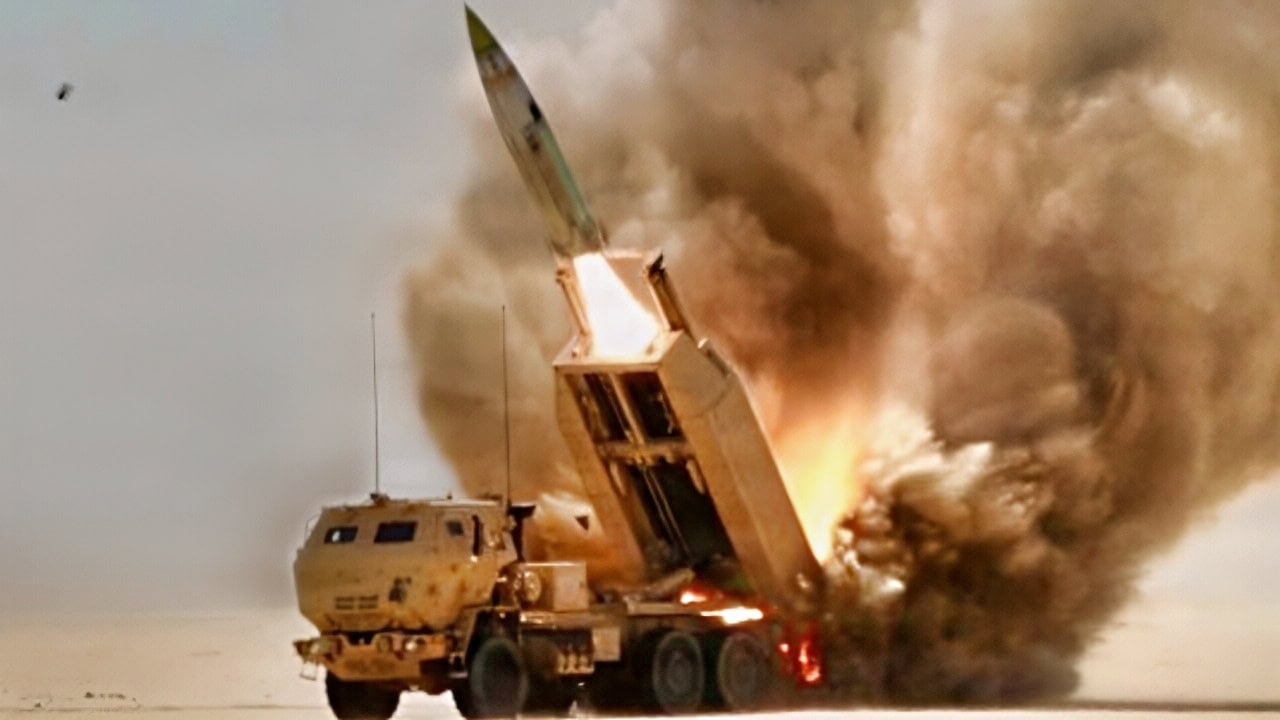
The Iran debate in Washington is about which options Trump has left. That’s the wrong debate. The problem isn’t the menu — it’s that none of the available options produce a decisive result before the political clock runs out. That’s not a targeting problem. It’s not an escalation problem. It’s a structural one, and nothing does.
What replaced the original logic isn’t a new strategy. It’s a grind — and the Strait of Hormuz is where that grind is most honest about what this fight has become.
Iran War: The Logic of Coercion Is Gone
The original theory was straightforward. Maximum pressure — sanctions, blockade, naval presence — would extract Iranian compliance before the costs became unsustainable at home. That theory is dead.
What replaced it is a grind. Mines cleared, laid again, cleared again — each cycle consuming time and resources without moving the strategic needle. Drone harassment locks U.S. forces into a permanent defensive posture while commercial shipping hesitates, reroutes, or simply waits. Munitions expended at a steady rate. Nothing decisive to show for it.
The Strait of Hormuz is where that breakdown is most visible. There is an assumption in Washington — durable and wrong — that the Strait is a problem that yields to enough presence and methodical clearance. It doesn’t.
Mine warfare is slow by nature and never final. Small craft and drone swarms are persistent, low-signature, and require no massed Iranian force.
U.S. operations unfold under continuous Iranian ISR coverage — every clearance run observed, every lane reopened a data point for the next disruption. The cycle repeats: lanes cleared, risk reintroduced, shipping confidence gone again.
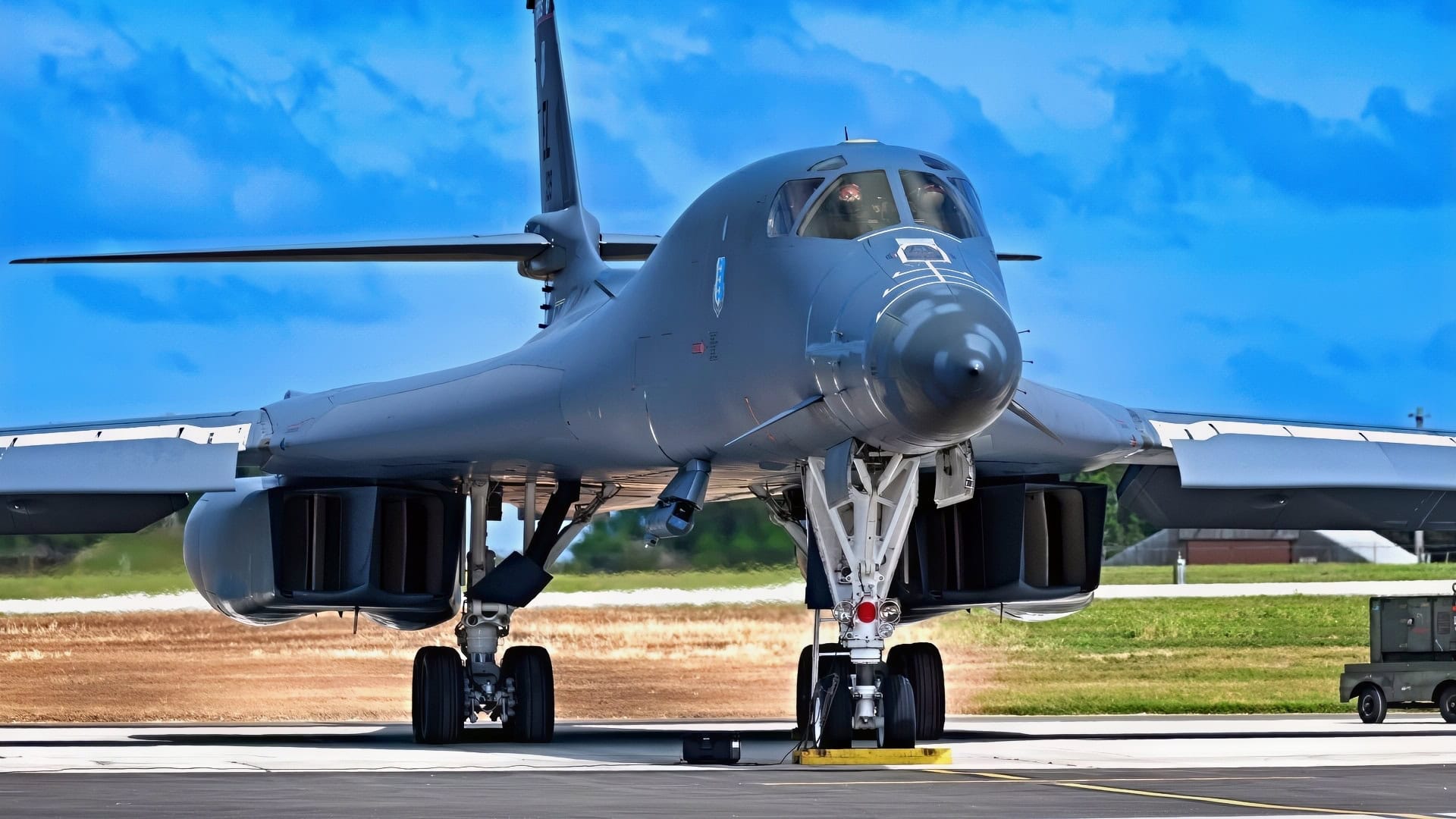
A U.S. Air Force B-1B Lancer assigned to the 34th Expeditionary Bomb Squadron undergoes pre-flight checks prior to a mission in support of Bomber Task Force 25-1, at Andersen Air Force Base, Jan. 31, 2025. The United States will continue to assure Allies and partners while simultaneously deterring opportunistic acts of aggression through forward presence and the ability to rapidly respond to crises. (U.S. Air Force photos by Airman 1st Class Alec Carlberg)
Control in the Strait isn’t measured in naval presence. It’s measured by whether commercial operators believe transit is safe enough to price. They don’t. Washington thinks it’s maintaining access to the Strait.
What it’s maintaining is the appearance of access — a distinction the insurance markets have already priced. Underwriters don’t care about press releases or naval deployments.
They care about whether hulls and cargo come back. Right now, the risk premium says everything the official posture won’t. No clearance tempo changes until the threat is gone, not managed. This is risk management under pressure, counted in cycles. There are no victories here.
What Washington Can’t Do
The constraints on this fight are operational — and they run straight through the Strait problem.
No ground invasion means Iranian shore-based capabilities stay intact. Casualty sensitivity shapes how aggressively mine-clearing — slow, close-in, exposed — actually gets prosecuted. No domestic mandate for a long war limits the appetite for incremental escalation even when escalation might shift the balance.
In practice, clearance moves carefully. Retaliation is calibrated, not punishing. U.S. forces spend as much energy managing escalation as prosecuting the fight — every mine-clearing sortie carrying a political calculation alongside the operational one.
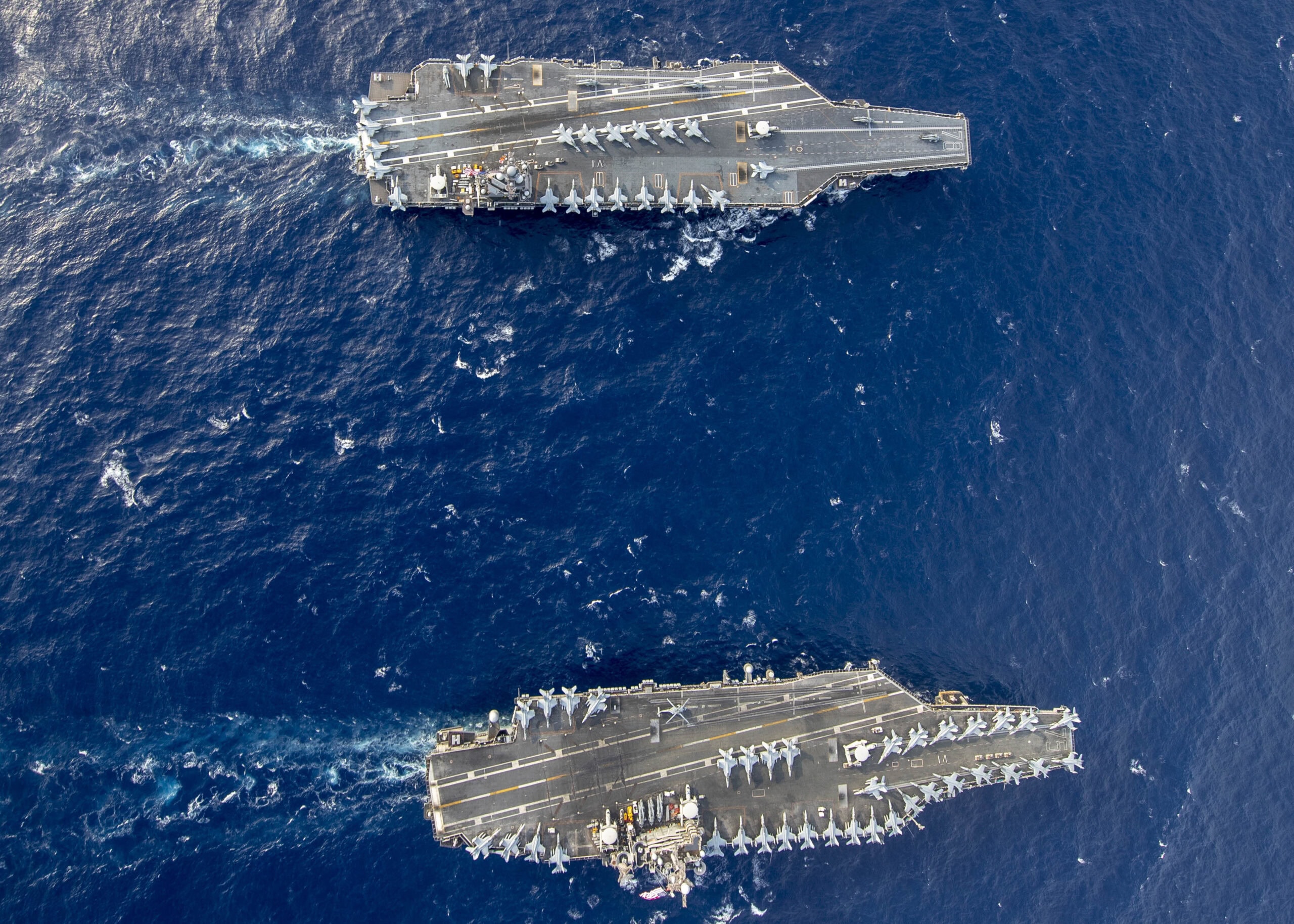
The Ford-class aircraft carrier USS Gerald R. Ford (CVN 78) and the Nimitz-class aircraft carrier USS Harry S. Truman (CVN 75) transit the Atlantic Ocean June 4, 2020, marking the first time a Ford-class and a Nimitz-class aircraft carrier operated together underway. Ford is underway conducting integrated air wing operations, and the Harry S. Truman Carrier Strike Group remains at sea in the Atlantic as a certified carrier strike group force ready for tasking in order to protect the crew from the risks posed by COVID-19, following their successful deployment to the U.S. 5th and 6th Fleet areas of operation. (U.S. Navy photo by Mass Communication Specialist Seaman Riley McDowell)
The bounds slow American tempo considerably while leaving Iran’s disruption model intact.
Tehran doesn’t need to win. It needs to keep the cycle running. Right now, it can. And every week the cycle runs, the implicit message to regional partners watching U.S. staying power grows harder to answer.
The Blockade Is Prolonging This, Not Ending It
With direct options constrained, the blockade carries most of Washington’s strategic weight. The theory: squeeze Iranian revenue hard enough to shift the calculus in Tehran. The reality is messier.
Evasion networks are active and adaptive. Gray-market shipping absorbs significant interdiction. Enough leakage persists to sustain Iranian revenue at a reduced but functional level. The system is damaged. It is not broken.
This is the trap that blockade strategies repeatedly fall into.
A partial blockade doesn’t collapse the target — it stabilizes it at a lower equilibrium. And a stable lower equilibrium is survivable.
What it locks the U.S. into is worse: an open-ended siege posture with mounting costs, no natural exit point, and no leverage that isn’t already being applied. Iran keeps functioning. Washington keeps paying.
The pressure is real — but pressure without a breaking point isn’t a strategy. It’s a stalemate with extra steps. The blockade isn’t failing. It’s prolonged. And prolonging this war is the Iranian strategy.
There Is No Clean Exit
More force doesn’t fix the structural problem. Tactical gains in the Strait — faster clearance, better drone suppression — don’t translate into strategic closure because the conditions that make Iranian disruption cheap and persistent aren’t operational. They’re geographic, political, and asymmetric. You can’t clear your way out of them.
The U.S. is not stuck because of indecision. It is operating in a conflict where its preferred tools cannot deliver rapid outcomes against an adversary that doesn’t need them to survive.
That asymmetry doesn’t resolve through better execution or harder pressure. It resolves through negotiation, exhaustion, or a change in Iranian calculus that nothing currently on the table is producing.
This isn’t a war the United States loses. It’s one that never ends on American terms.
About the Author: Dr. Andrew Latham
Andrew Latham is a professor of international relations and political theory at Macalester College in Saint Paul, MN. You can follow him on X: @aakatham. He writes a daily column for 19FortyFive.com.