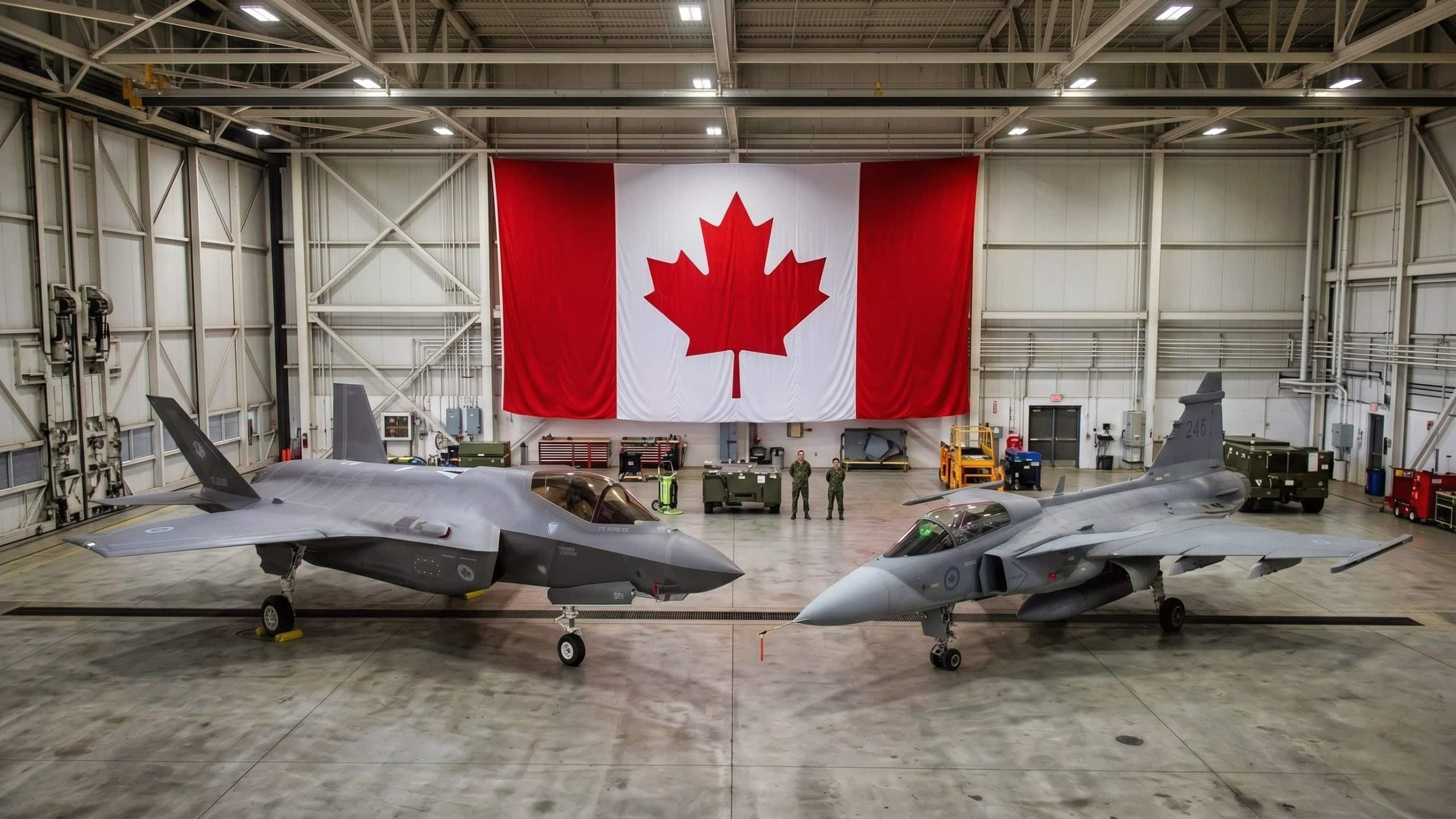
Lockheed Martin and MAS, the Canadian arm of L3Harris, have revealed proposals to establish an F-35 jet depot in Quebec. If established, this Mirabel-based center would bolster Ottawa’s strategic case for completing its F-35 purchase amid the ongoing government review.
Lockheed’s Huge Hub Offer for F-35 Canada Deal
On April 21, the firms said their new framework would establish a joint steering committee to outline depot capabilities, employee training, and sustainment plans for the Royal Canadian Air Force’s potentially forthcoming CF-35 fleet.
The firms have presented the arrangement as a major step toward giving Canada greater control over how its aircraft are serviced and supported at home. In an official statement, the companies explained that depot-level maintenance would tie the project to a domestic supplier network and place more of the required work in Canadian hands.
This is key because sustainment has become one of the most sensitive parts of Canada’s broader fighter conversation. The F-35 is the better option for interoperability with the United States, NORAD, and other NATO partners.
Lockheed Martin’s Canada-focused online information sheet homes in on just that point, positioning the aircraft as the backbone of allied air power. It also stresses Canada’s long-running participation in the Joint Strike Fighter program since 2002.
Over 110 Canadian companies have already pitched into the F-35 supply chain, with Canadian content worth some C$3.2 million per jet.
Ottawa’s Review: No End in Sight
Still, the Mirabel story comes at a time when Canada has yet to make a firm decision on its fighter jet plans. Back in 2023, it committed to purchasing 88 F-35As; the inaugural 16 jets are set to arrive later this year.
Ottawa has also set aside production slots for additional jets through long-lead payments.
However, since launching its review into the full purchase last March, there has also been talk of ditching the rest of the purchase and pushing ahead with a mixed fleet that would also use other jets.
Much of this has been based on a deterioration in relations with the U.S. since President Donald Trump threatened a major trade war – though Ottawa would dispute this assessment.
Swedish Jet’s Seductive Pitch
That uncertainty is exactly where Saab has tried to open a flank.
The Swedish company has pitched its Gripen jet not simply as an alternative fighter, but as a more sovereign one. Saab has even offered to bundle a secure data center in Montreal into any deal.
The center would mean sensitive mission systems and technical data required for the jets would be kept on Canadian soil. The F-35’s systems would require critical data to be routed via American-linked infrastructure.
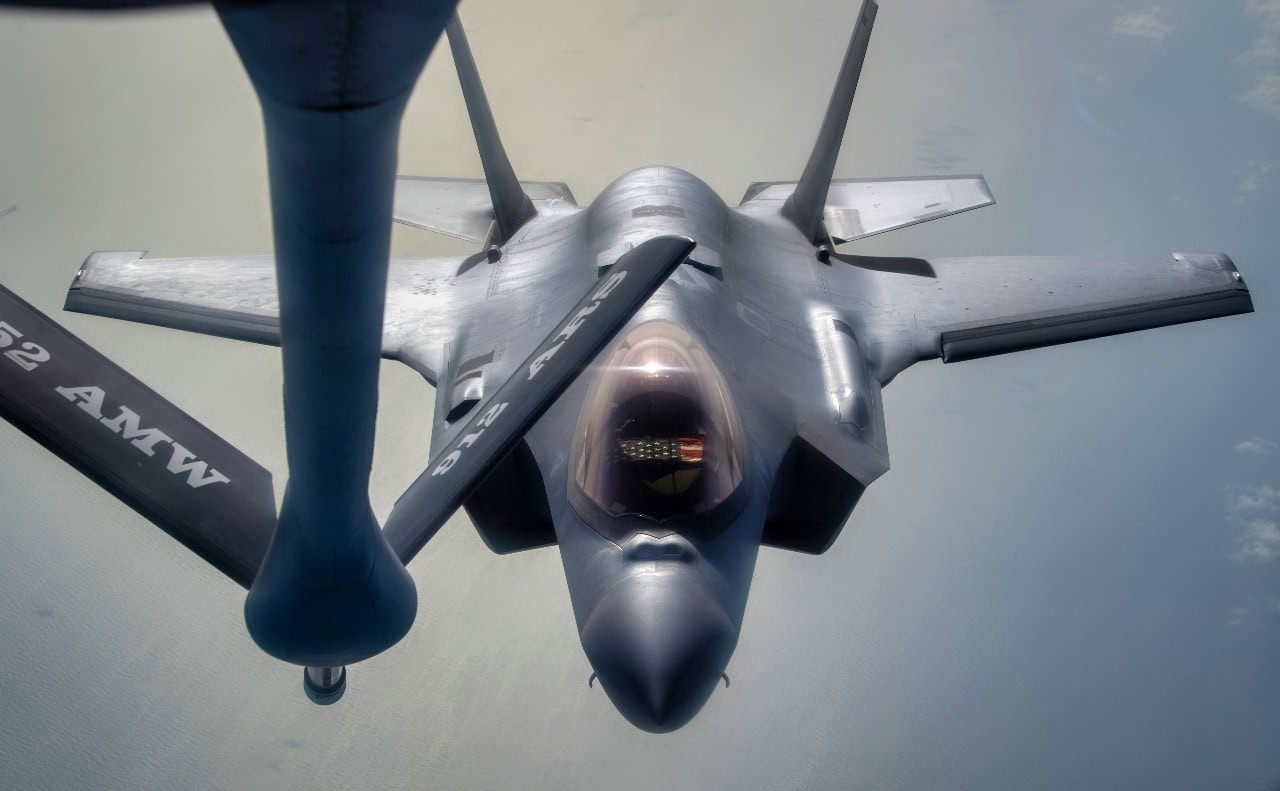
A U.S. Air Force F-35 Lightning II approaches a U.S. Air Force KC-135 Stratotanker over the U.S. Central Command area of responsibility, July 22, 2020. The F-35 Lightning II is an agile, versatile, high-performance, multirole fighter that combines stealth, sensor fusion and unprecedented situational awareness. (U.S. Air Force photo by Airman 1st Class Duncan C. Bevan)
The firm also claims it could deliver its jets to Canada within five short years, using largely local assembly, technology transfer, and industrial participation to boost employment more than the F-35s might.
To compete with the Swedish offer, Lockheed Martin is now also emphasizing how sustainment, jobs, and industry in Canada could all benefit from an exclusive F-35 fleet. Saab, by contrast, is pushing a more upstream argument: asking whether sovereignty is just about maintenance or about software, data, and decision-making combined.
The reality is that the F-35 is by far the sleeker and more interoperable jet, but Canada could easily be persuaded to opt for a less capable aircraft as part of a broader effort to create political distance from the current U.S. administration.

SAAB JAS 39 Gripen Fighter. Image Credit: Creative Commons.
In an era of sophisticated and growing cyber warfare, states are naturally becoming more anxious about digital dependence. Such issues are therefore no longer a back-office concern but a major pitch to both the public and the military establishment.
Canada Could Build Regional F-35 Hub
A hypothetical Quebec depot also offers major domestic labor advantages that Ottawa could more easily pitch to the public. MAS has supported Canada’s CF-18 fleet for decades, and the move to F-35 sustainment offers a way to keep skilled aerospace jobs as the Hornets are phased out.
The Mirabel site may also serve as more than a mere support hub for Canadian jets, functioning as a regional maintenance hub with access to work for other F-35 users.
Still, the bigger issue is not going away anytime soon. Canada’s new fighter program was not just about phasing out its elderly CF-18s.
The surprise reversal of Canada’s F-35 procurement decision has brought to the fore generational dilemmas about how cozy Canada wants to be with its closest neighbor, especially militarily.
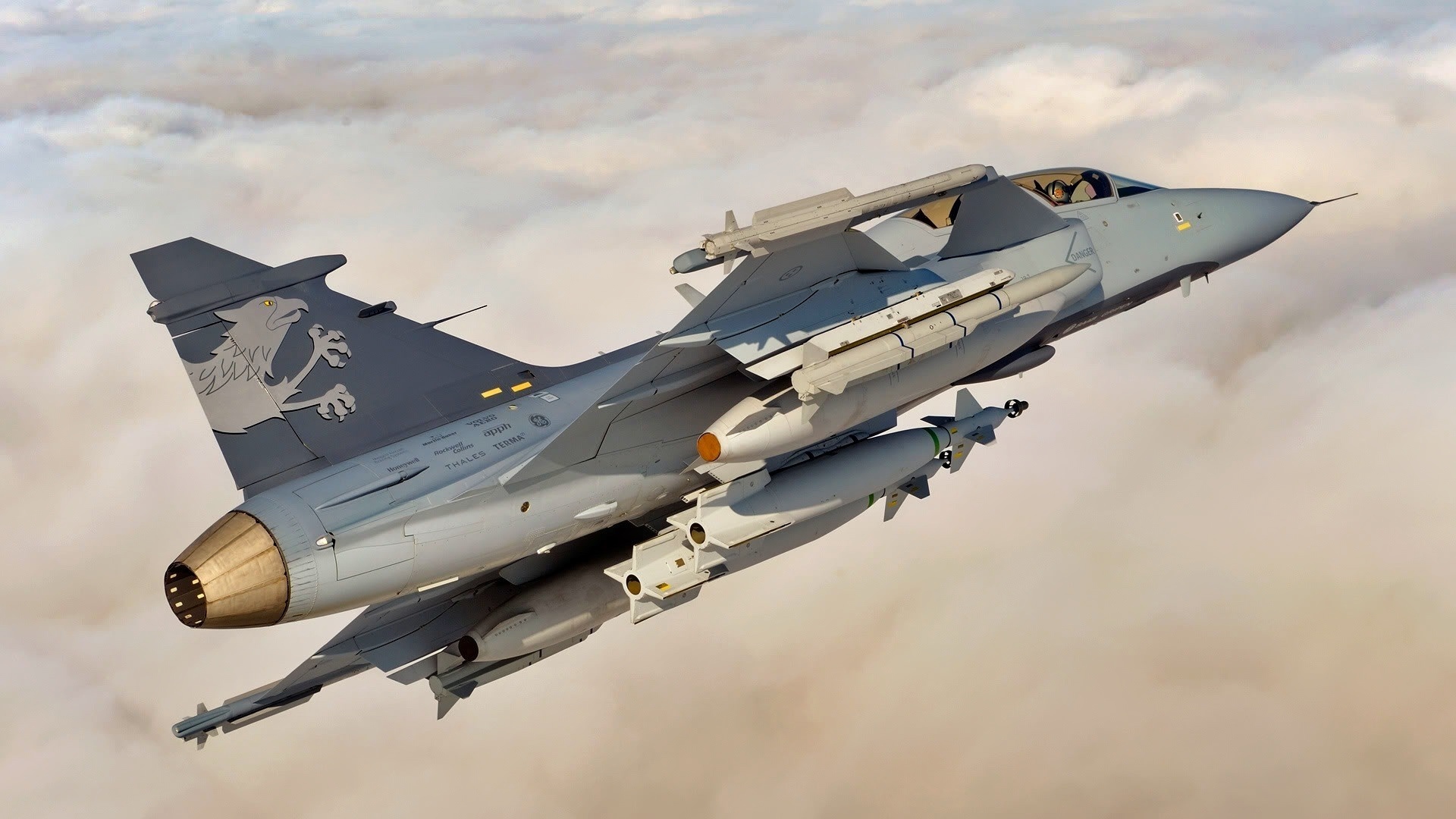
JAS 39. Image Credit: Creative Commons.
The U.S. is by far the superior partner, but that hardly obliges Canada to buy its jets indefinitely.
The Mirabel depot could ease some concerns that this deal will mainly benefit the USA. Still, even if Canada has chosen the F-35 on paper, the tough work will be to continue convincing skeptical voters that it makes sense.
About the Author: Georgia Gilholy
Georgia Gilholy is a journalist based in the United Kingdom who has been published in Newsweek, The Times of Israel, and the Spectator. Gilholy writes about international politics, culture, and education. You can follow her on X: @llggeorgia.