
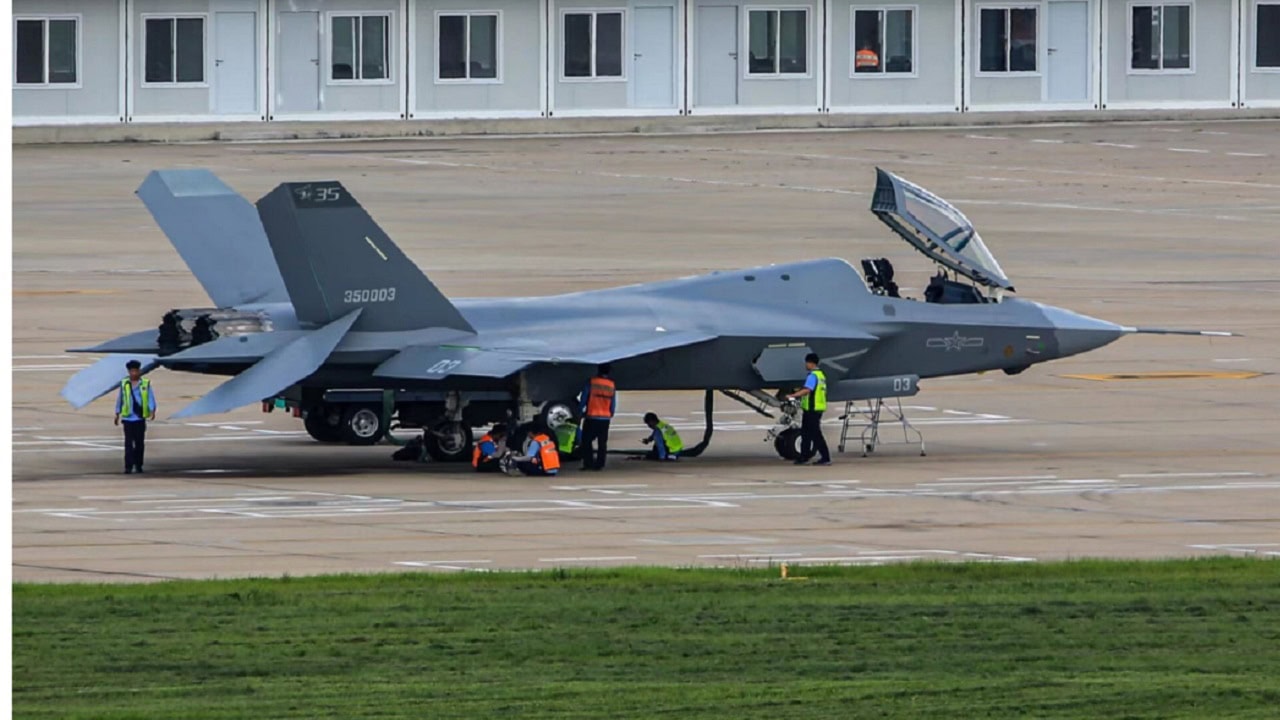
The Bottomline: The Shenyang Aircraft Corporation FC-31 stealth fighter — first flown in 2012 and marketed to international military customers under the export designation “Gyrfalcon” — failed to secure a single foreign buyer during its first decade on the global arms market. Redesigned with strengthened landing gear, carrier arrestor hook systems, reinforced airframe structure, and corrosion protection for maritime operations, the aircraft has re-emerged as the People’s Liberation Army Navy’s J-35 carrier-based stealth fighter and the People’s Liberation Army Air Force’s J-35A land-based variant, with full operational deployment expected aboard the Type 003 Fujian aircraft carrier within 2026.
The J-35 Could Be a Powerful Stealth Fighter for China
According to Chinese state media, the country’s newest and most advanced aircraft carrier, the Type 003 Fujian, could achieve full operational readiness this year. If it does, it would mark another major milestone in Beijing’s rapid naval expansion and move the People’s Liberation Army Navy closer to operating a true blue-water carrier force. Fujian is China’s third aircraft carrier, but it is the first to be built with electromagnetic catapults rather than the ski-jump ramps used on earlier ships.
Those catapults are essential for the next stage of China’s military modernization, because they allow heavier aircraft to launch with more fuel and more weapons. It means Fujian was built for a different class of carrier aviation than Liaoning or Shandong – the J-35.
Alongside the land-based J-35A, the J-35 is China’s newest stealth fighter family, intended to broaden China’s reach as it looks to expand on its existing anti-access/area-denial strategy.
From Export Hopeful to PLA Program
The J-35’s roots can be traced back to the FC-31, also known as the Gyrfalcon, developed by the Shenyang Aircraft Corporation. The aircraft first flew in 2012 and was initially marketed as an export fighter rather than a domestic procurement program.
At the time, China already had the larger J-20 in development – its premier fifth-generation aircraft.
The FC-31, meanwhile, was smaller, lighter, and more flexible than the J-20 – but it didn’t have a clear domestic customer. Over time, however, China’s military requirements began to change.
Its carrier fleet expanded, and it also began seeking a stealth aircraft that could be produced in larger numbers than the more specialized J-20.
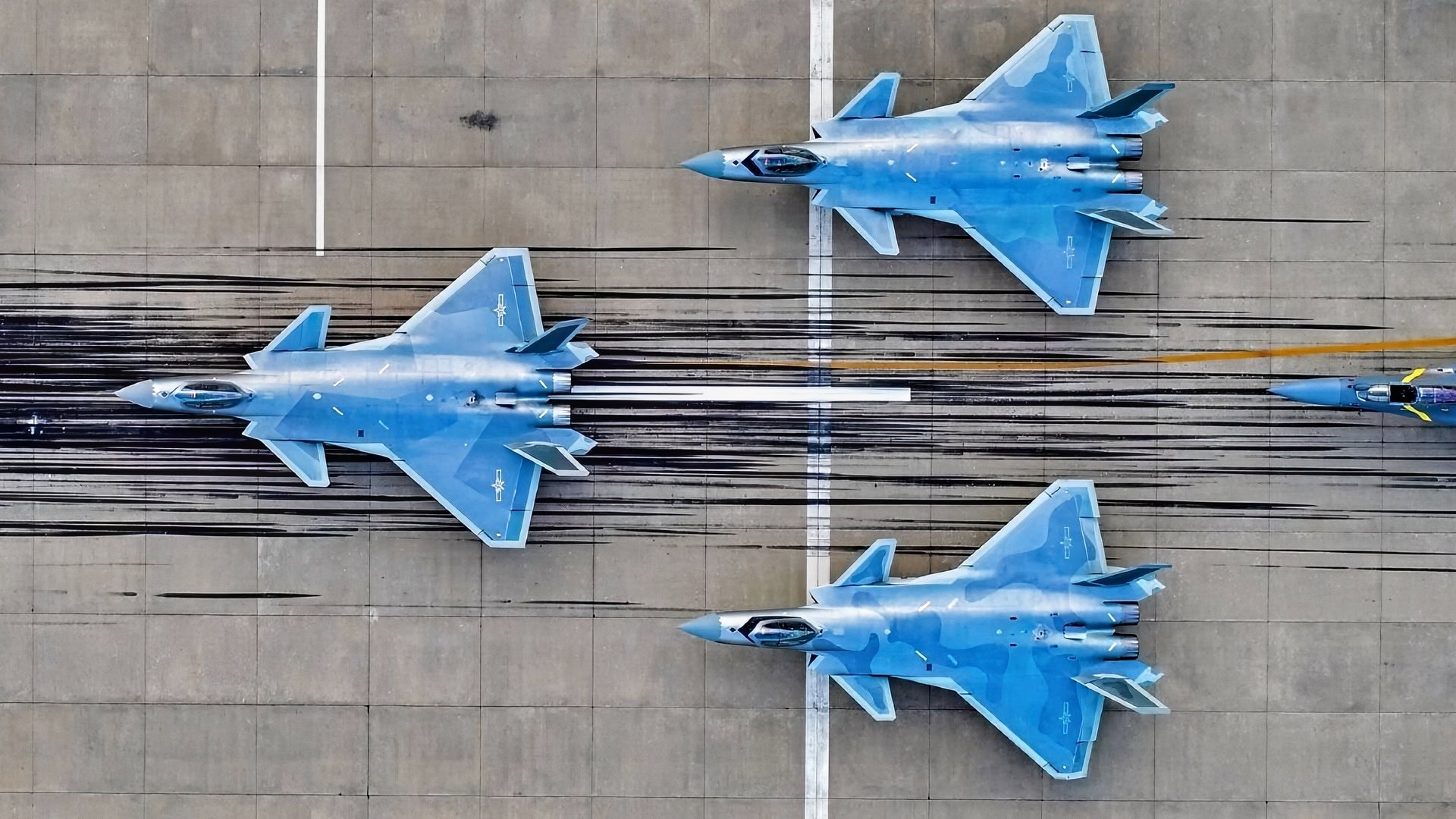
J-20S. Image Credit: Creative Commons.
That’s when the FC-31 concept found new life. Rather than remaining a proposed export model seen only at trade shows, it evolved into what is now understood as the J-35 family. The redesign included strengthened landing gear and arrestor hook systems, a reinforced airframe, corrosion protection to ensure continued functionality at sea, and new handling characteristics that made it suitable for deck operations. The J-35 became something much more serious than the original FC-31 concept.
Why There Are Two Versions
Two versions of the aircraft have been spotted over the years – the naval J-35 and the land-based J-35A. The former is designed for carrier use, meaning its mission set likely includes fleet air defense, maritime strike, escort, and suppression of enemy air defenses.
It is also a stealth aircraft, meaning it will be used for low-observable operations launched from future carriers like Fujian.
The J-35A appears to be intended for the People’s Liberation Army Air Force as a conventional runway-based fighter. It gives China a lower-cost stealth complement to the J-20, and it is potentially better suited for regional airpower missions over the Taiwan Strait or the South China Sea.
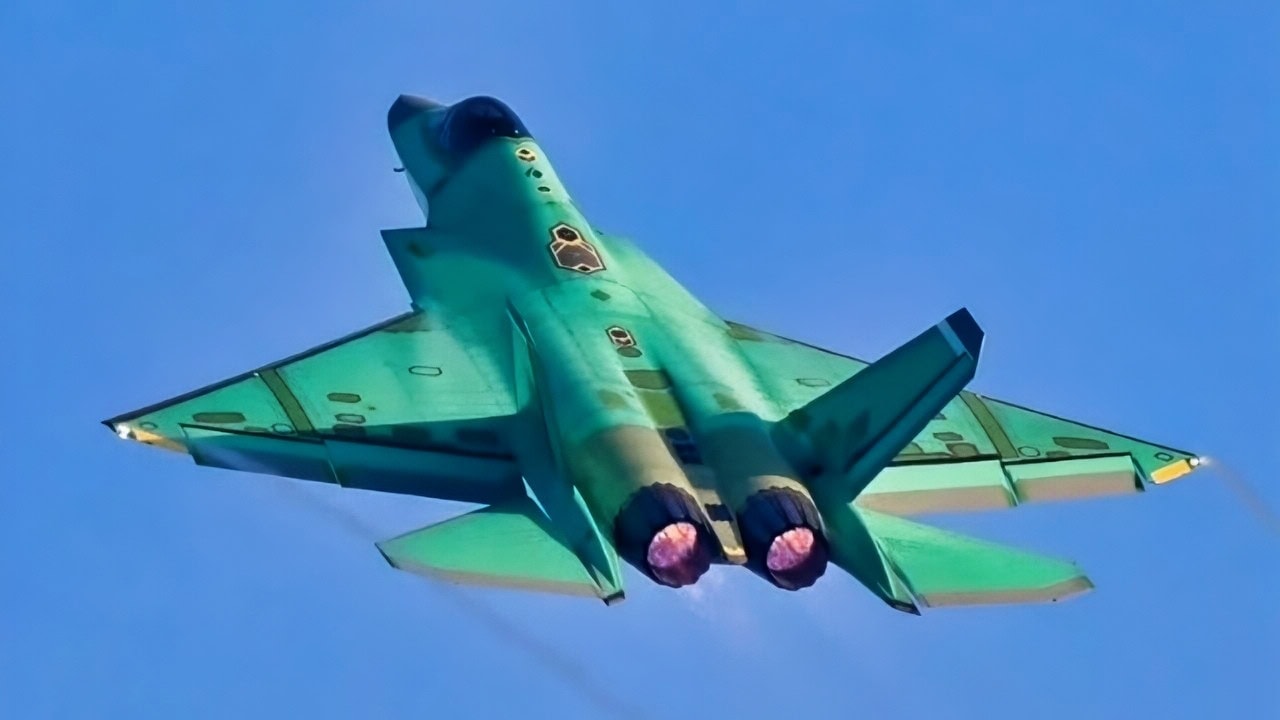
J-35A Stealth Fighter. Image Credit: Social Media Screenshot.
These assumptions have been made repeatedly by Western analysts because the strategy would mirror the American approach with the F-35 family – with the F-35C optimized for carrier operations and the F-35A for the air force.
Where the Program Stands Today
Exactly how many J-35 and J-35A fighters have been built to date remains unknown because China does not publicize production totals or acquisition contracts as the Pentagon does. And while there is no official figure for aircraft delivered or accepted into service, it can be said that the program has moved beyond the single-prototype stage and appears to be entering early serial production.
That conclusion is based on repeated instances of images shared online showing multiple airframes in different paint schemes, including test aircraft painted gray, and some of which carry PLA markings. Chinese state broadcaster CCTV and state-linked outlets have also shown footage of J-35 variants in factory settings and during flight testing, suggesting that there are more than just a handful of the fifth-generation stealth fighters in existence.
The aircraft is produced by state-owned Shenyang Aircraft Corporation, a subsidiary of the Aviation Industry Corporation of China (AVIC), one of Beijing’s largest defense conglomerates.
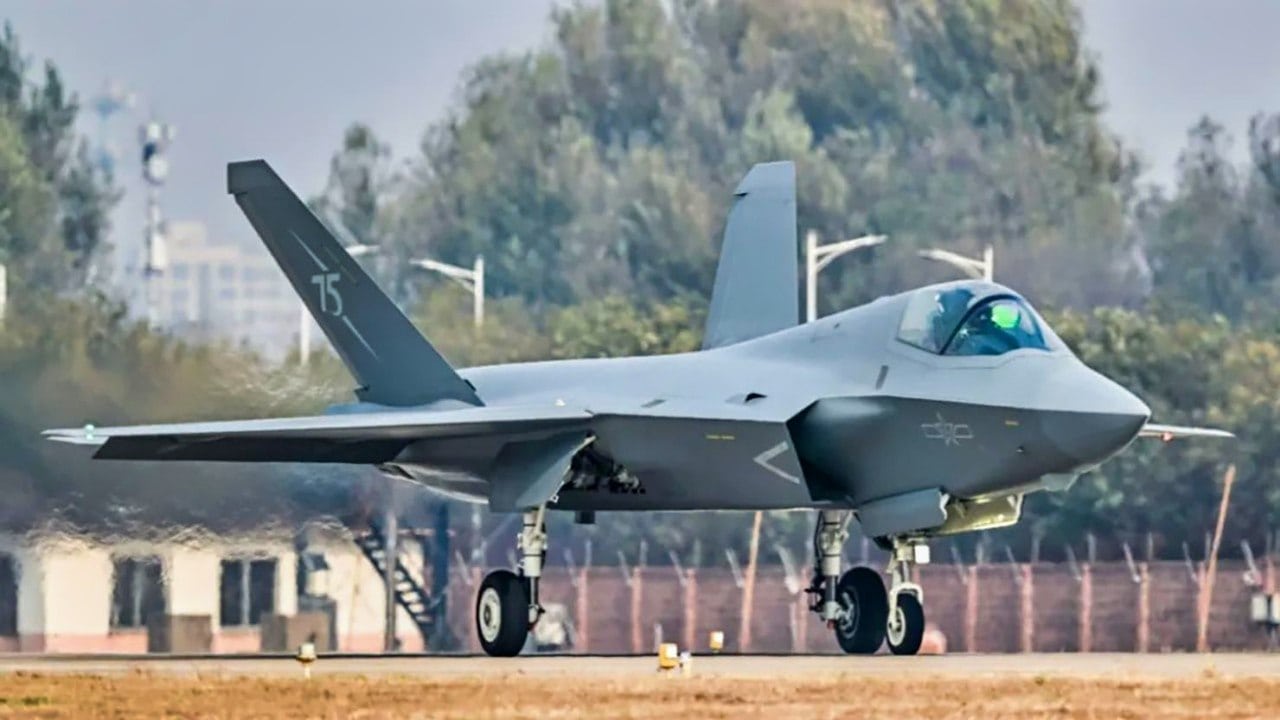
J-35A Fighter from China. Image Credit: Chinese Military
Shenyang has long built carrier aircraft for the PLA Navy, including variants of the J-15, making it the logical production center for the J-35 family.
In terms of armament, the J-35 is expected to use internal weapons bays for low-observable missions – like the F-35 – and external hardpoints when stealth is less critical. It is also expected to be compatible with the PL-15 beyond-visual-range air-to-air missile, the shorter-range PL-10 dogfighting missile, and precision-guided strike munitions already in widespread use on newer Chinese combat aircraft.
But again, this is all speculative and based on our understanding of stealth aircraft and Beijing’s operational requirements.
Future production numbers are likely to be substantial. Fujian alone could require dozens of carrier aircraft once its air wing matures, while additional carriers would further raise demand.
If the J-35A is widely adopted by the PLA Air Force, total production could eventually reach into the hundreds, though no official target has been released.
About the Author: Jack Buckby
Jack Buckby is a British researcher and analyst specializing in defense and national security, based in New York. His work focuses on military capability, procurement, and strategic competition, producing and editing analysis for policy and defense audiences. He brings extensive editorial experience, with a career output spanning over 1,000 articles at 19FortyFive and National Security Journal, and has previously authored books and papers on extremism and deradicalization.