
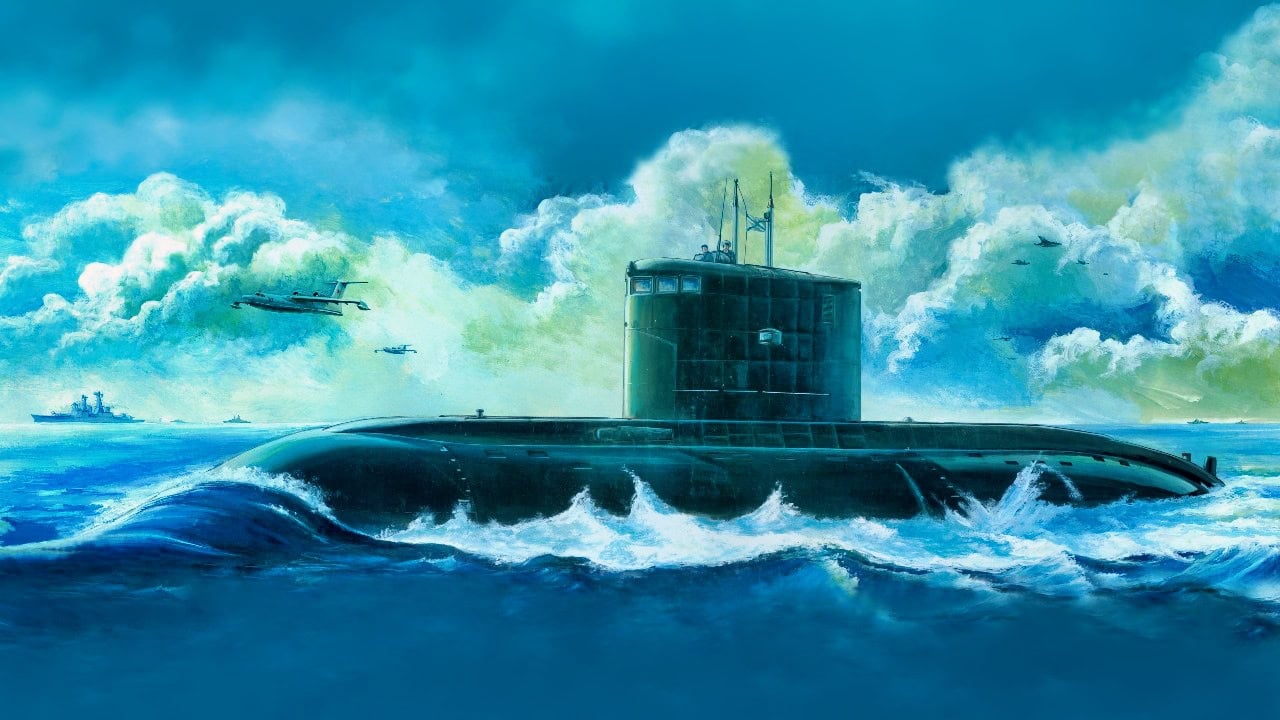
During the opening days of the current conflict with Iran, U.S. and Israeli strikes targeted the most valuable naval and missile assets operated by the Islamic Republic. On March 2, reports described how Iranian naval forces – and submarines in particular – were a “major target” in Operation Epic Fury as U.S. forces sought to degrade Iranian power and establish air superiority. That focus on undersea assets was important because, for more than three decades, the most formidable conventional submarine in Iranian service has been the Russian-built Kilo-class diesel-electric attack submarine.
Iran acquired three of them in the 1990s, giving Tehran an undersea capability that could threaten shipping, lay mines, and force superior navies to devote major resources to anti-submarine warfare.
And while the Kilo is not a nuclear submarine and cannot match a U.S. supercarrier in capability, it was built to operate in confined waters, such as those around the Strait of Hormuz.
A Kilo-class submarine can create uncertainty, with even a single vessel operating in the waters potentially raising insurance costs for passing commercial vessels and complicating adversary military planning.
By early April, the White House said that U.S. operations had eliminated Iran’s submarine fleet, suggesting that its Kilo-class submarines were no longer in service. But with decades of service under its belt, the submarine is a useful case study of how a heavily sanctioned state builds its naval power.
Kilo-Class: A Submarine Born in the Cold War
The Kilo-class was developed by the Soviet Union during the late Cold War as Project 877 Paltus, a diesel-electric attack submarine intended to replace older Soviet conventional boats. NATO assigned it the reporting name “Kilo-class.”
The submarine was designed for anti-submarine warfare, anti-surface warfare, patrol duties, mine-laying, and coastal defense.
The submarine’s appeal comes from its combination of stealth and affordability.
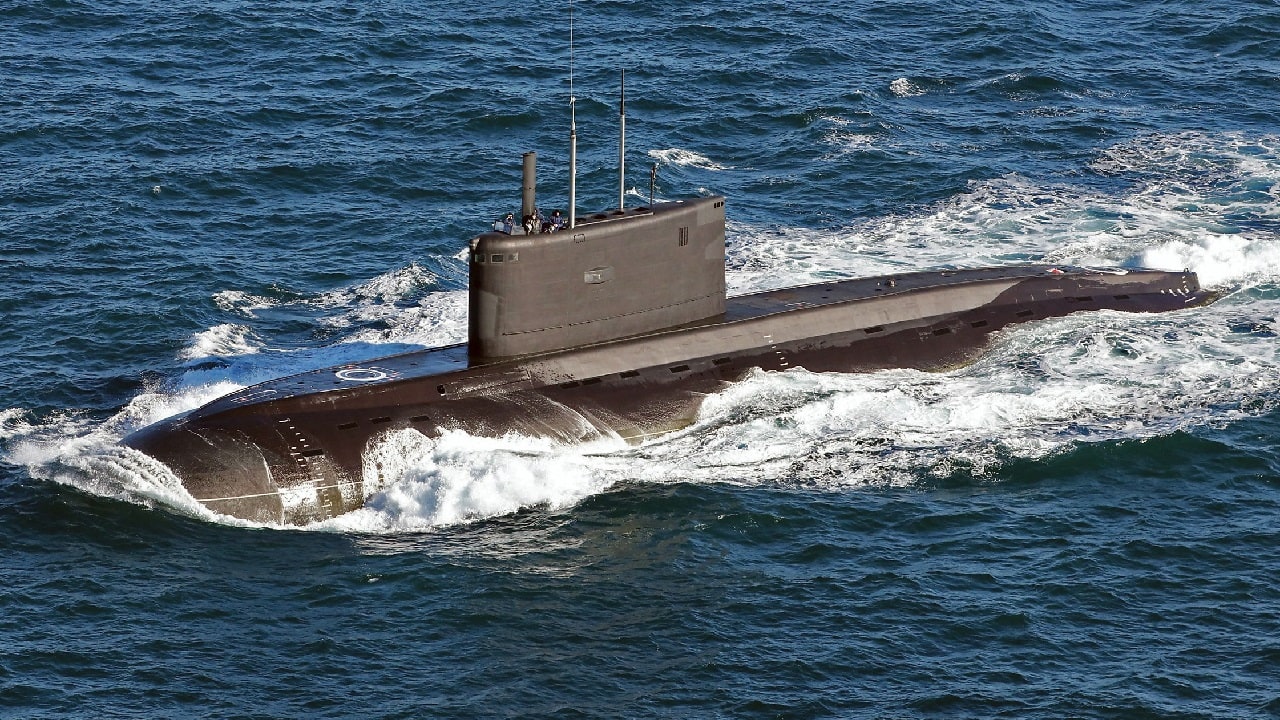
Pictured is a Kilo-Class Russian Submarine in the English Channel. The image was taken from Royal Navy Wildcat HMA2 Helicopter of 815 Naval Air Squadron. Kilo class is the NATO reporting name for the diesel-electric attack submarine.
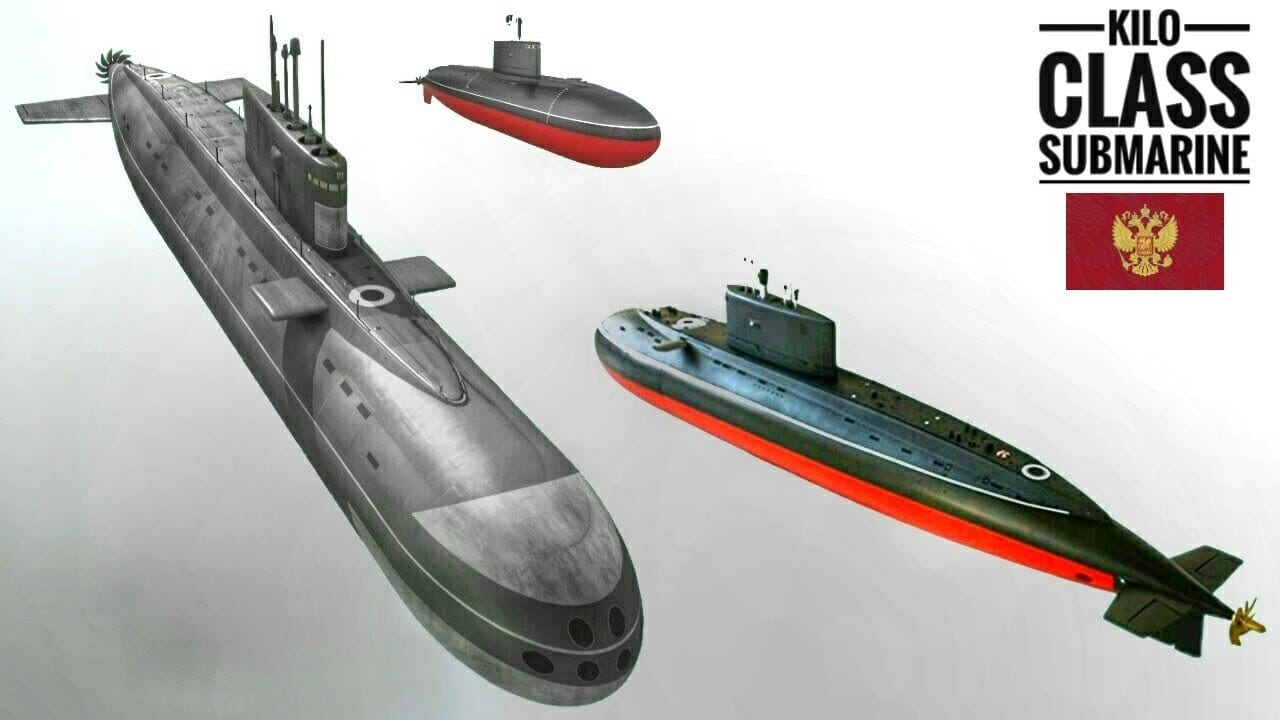
Kilo-class Submarine. Image Credit: Creative Commons.
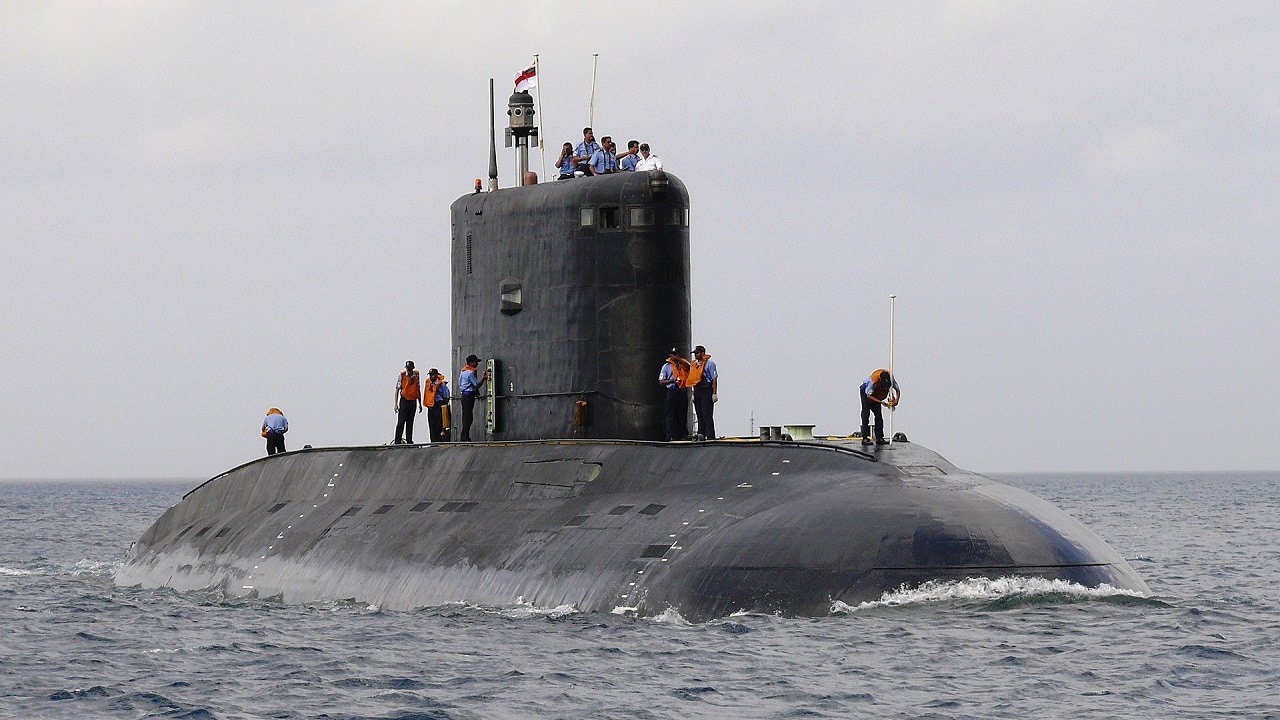
Kilo-Class Submarine.
It is a lethal sub-surface naval vessel that, unlike nuclear submarines, can run quietly on battery power for limited periods, making it difficult to detect in certain environments. Later Kilo variants even gained a reputation in naval circles for being exceptionally quiet, resulting in the informal nickname “Black Hole” – though that label is more commonly associated with the improved later models.
The original Project 877 boats were roughly 72 to 74 meters long, carried six 533mm torpedo tubes, and could launch torpedoes or deploy naval mines. Later export and improved variants, including the Project 636 family, were sold widely abroad.
The model was later adopted by many countries, including India, China, Vietnam, and Algeria.
For Moscow, the submarine became one of the Soviet and later Russian defense industry’s most successful exports.
It offered serious capability without the cost or complexity of nuclear propulsion, enabling it to be adopted by smaller naval forces worldwide.
How Iran Got Three Kilos
Following the Iran-Iraq War in the 1980s, Iran was battered but determined to modernize its military and prepare for the future.
The conflict, including the so-called Tanker War in the Persian Gulf, exposed Tehran’s general vulnerability at sea. Iraqi attacks and U.S. intervention, combined with the limitations of Iran’s aging pre-revolution fleet, all demonstrated that the Islamic Republic needed new deterrent tools.
Then, with the collapse of the Soviet Union, Russia needed cash.
That resulted in a series of defense deals in the early 1990s that helped the Islamic Republic rebuild its damaged capabilities. Between 1992 and 1996, Iran acquired three Project 877EKM export-model Kilo submarines, identified in open-source intelligence as Taregh (Tareq), Nooh (or Noor), and Yunes. The submarines were known as the Tareq-class.
The submarine was an incredible leap in capability for Iran, which had operated smaller undersea craft before.
The Kilos, however, were ocean-going submarines with endurance and weapons capacity, functioning not just as a deterrent but as war-fighting machines.
They were based primarily in Bandar Abbas, Iran’s principal naval hub near the Strait of Hormuz.
At a time when Tehran was facing sanctions and diplomatic isolation, buying Russian submarines also sent a political message to the West: that Iran could still acquire serious military hardware from major powers.
What Iran Wanted Them to Do
While the Kilo-class submarines were formidable, they were still no match for the U.S. Navy or a Western coalition in open conventional battle, as we have just seen in the ongoing conflict in the region.
So, instead of operating submarines to counter Western forces through traditional means, Tehran developed an asymmetric maritime doctrine centered on denial and attrition. And the Kilo-class was perfect for it.
In wartime, a Kilo could theoretically lay mines in shipping lanes, ambush naval vessels with torpedoes, conduct patrols in the Gulf of Oman, and threaten merchant traffic supporting coalition operations.
Even without firing a shot, its mere presence could compel enemy fleets to deploy maritime patrol aircraft and escorts. In the Strait of Hormuz, that’s a problem. The strait has long facilitated the movement of a substantial share of globally traded oil, and even a minor disruption can send oil prices skyrocketing and disrupt global supply – again, as we have seen in recent weeks.
The strait’s narrow lanes and dense commercial traffic made the area ideal for sea-denial tactics.
But Iran’s Kilos were not perfect fits for every Gulf mission.
The warm, highly saline waters in parts of the Gulf can complicate submarine operations, and smaller Iranian submarines such as the Ghadir-class were often considered better suited for shallow coastal ambush missions, while the larger Kilos were more useful for deeper approaches and the Gulf of Oman.
The Kilos certainly served their purpose for several decades, but Iran notoriously struggled with a chronic readiness issue. As noted by the Nuclear Threat Initiative, even after refitting all three submarines in 2012, it “struggled to maintain them in operation since.”
Where Are They Now?
Recent assessments have indicated that at least some of Iran’s Kilo-class submarines were not at sea when hostilities began.
In a March 1 update, the Institute for the Study of War’s Critical Threats Project noted that two of the submarines were “undergoing repairs” and that the third appeared to be “idle,” according to commercially available satellite imagery.
When submarines are caught in port, they are not utilizing their greatest strength: stealth.

Kilo-Class Submarine Fleet. Image Credit: Creative Commons.
A Kilo tied to a pier or sitting in dry dock quickly becomes a fixed target vulnerable to cruise missiles and air strikes.
That appears to be exactly what followed. On April 8, reports described how White House Press Secretary Karoline Leavitt said the U.S. had set back Iran’s ability to build and store ballistic missiles by “years.” Leavitt also reportedly said that Iran’s submarine fleet and 150 navy vessels were destroyed, indicating that the three Kilo-class submarines are no longer operational and potentially sunk.
If accurate, the destruction of all three Kilo-class boats would mark the end of Iran’s only true blue-water submarine capability – even though the ships appear to have been largely out of action.
The destruction of 150 Iranian naval vessels and 5,000 naval mines means that everything from fast-attack craft and patrol boats to missile boats has been destroyed, leaving a small force of what likely consists of small IRGC swarm boats – a network of small, high-speed attack boats designed for disrupting or overwhelming larger ships.
About the Author: Jack Buckby
Jack Buckby is a British researcher and analyst specializing in defense and national security, based in New York. His work focuses on military capability, procurement, and strategic competition, producing and editing analysis for policy and defense audiences. He brings extensive editorial experience, with a career output spanning over 1,000 articles at 19FortyFive and National Security Journal, and has previously authored books and papers on extremism and deradicalization.