
With Operation Epic Fury (hopefully) on pause for two weeks in Iran, we need to step back and evaluate what we have witnessed from the U.S. over the past week. This conflict has been the clearest and most high-scale display of U.S. capabilities arguably since the invasion of Iraq in 2003.
Epic Fury has demonstrated the strengths of American air power and the technological superiority of the U.S. Armed Forces, but it has also shown some of its vulnerabilities. China and Russia are likely studying the conflict as we speak and coming to their own conclusions.

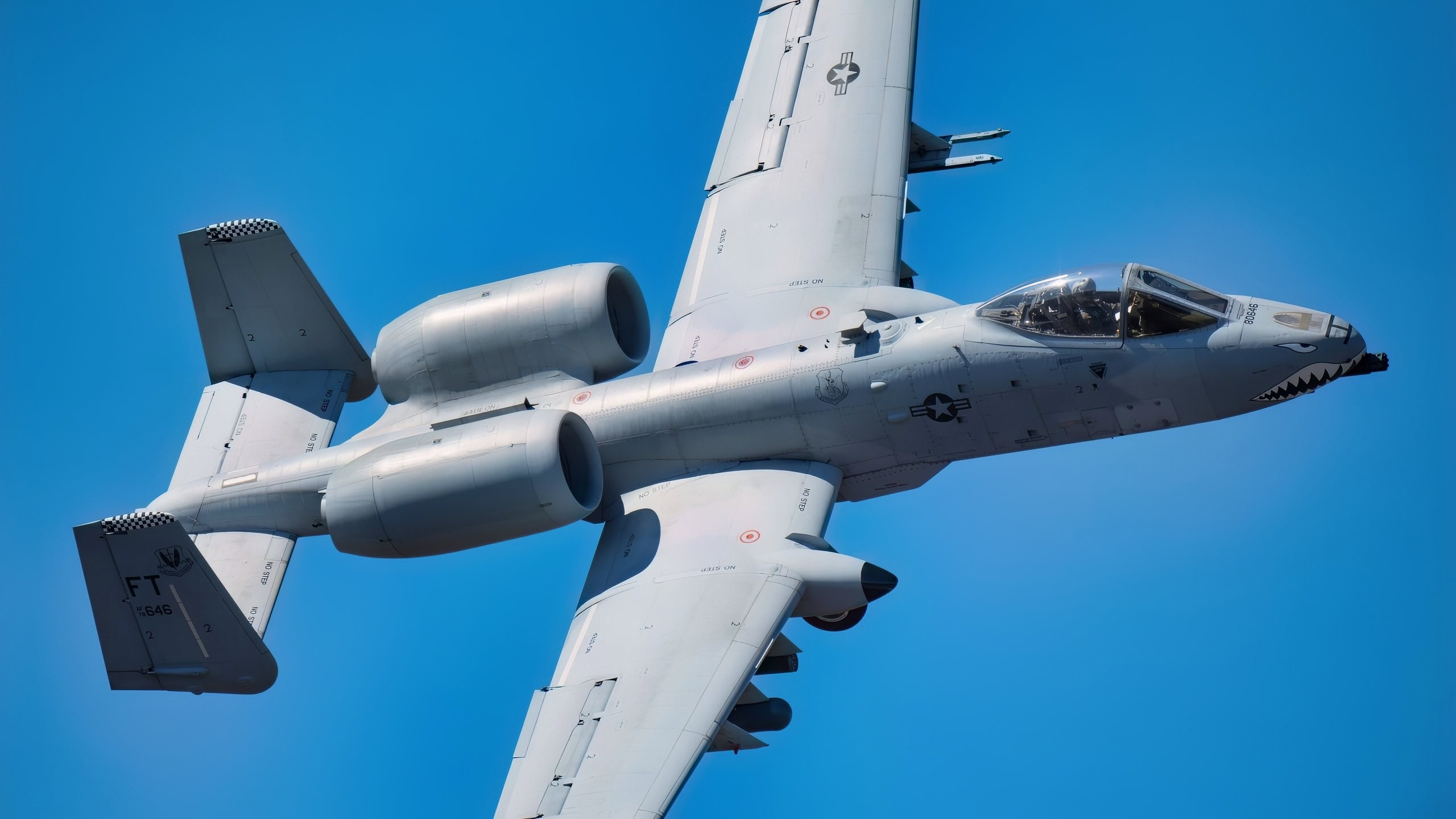
A U.S. Air Force A-10 Warthog from the Air National Guard Air Force Reserve Test Center flies during exercise Sentry Aloha 24-2 June 6, 2024, above the island of Hawaii. This iteration of the exercise involves approximately 1,060 participants and more than 40 aircraft from nine states, which operated out of Joint Base Pearl Harbor-Hickam, Marine Corps Base Hawaii, and Onizuka Kona International Airport, Keāhole. The Hawaii Air National Guard’s 154th Wing has hosted the exercise for more than 20 years to provide tailored, cost-effective and realistic combat training for total-force Airmen and other Department of Defense services. (U.S. Air National Guard photo by Tech. Sgt. John Linzmeier)
While the U.S. military is still unquestionably the strongest in the world, it has shown itself vulnerable in several areas, which should be cause for concern in the event of a full-scale war with China.
Operation Epic Fury Proves America’s Military Is Dominant
Epic Fury showcases some of the greatest strengths of the U.S. Armed Forces. With its intelligence apparatus, the U.S. knew where key personnel were, where sensitive sites were, and where its air defenses were located, and how to hit them.
In the first hours of the operation, stealth platforms flew over Iran and delivered devastating precision strikes against IRGC headquarters, missile launchers, air defense radars, and so on. Once those targets were cleared, heavy bombers like the B-52 and B-1B were able to fly in and deliver heavy ordnance against hardened bunkers and missile assembly sites to devastating effect.
The United States Navy has also played a key part in this operation. American submarines were able to sink multiple naval vessels associated with the Iranian Navy. Furthermore, aircraft launched from the USS Abraham Lincoln and USS Gerald R. Ford (before the fire broke out) also participated in airstrikes against Iranian infrastructure and military installations. On an operational level, Epic Fury was objectively well coordinated and executed.
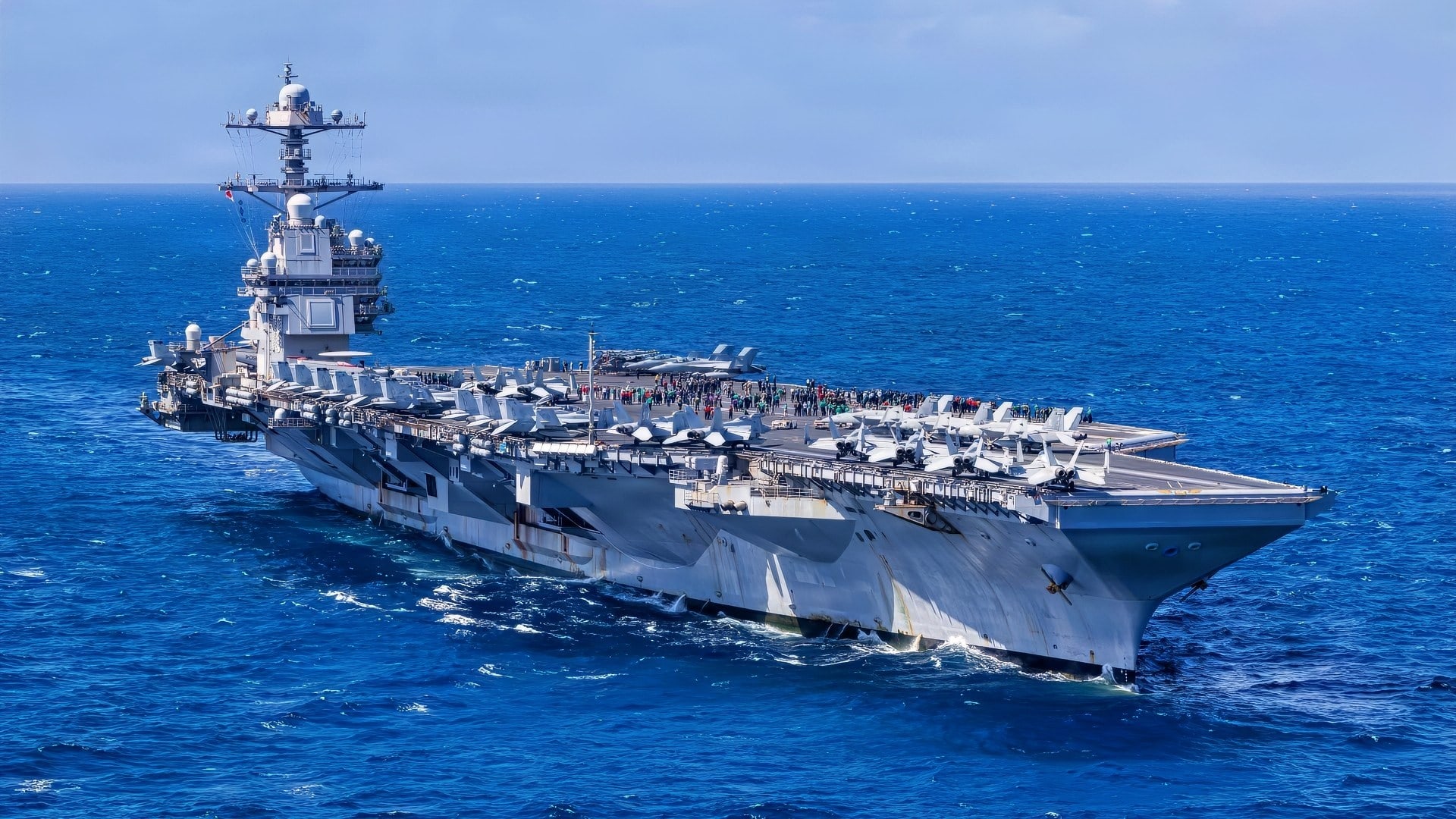
The world’s largest aircraft carrier, Ford-class aircraft carrier USS Gerald R. Ford (CVN 78), transits the Caribbean Sea during Carrier Air Wing 8’s aerial change of command ceremony, Jan. 19, 2026. U.S. military forces are deployed to the Caribbean in support of the U.S. Southern Command mission, Department of War-directed operations, and the president’s priorities to disrupt illicit drug trafficking and protect the homeland. (U.S. Navy photo)
Airstrikes hit their marks, and the Army, Navy, and Air Force coordinated with each other almost perfectly. It was a beautiful demonstration of why the U.S. is the world’s best military.
A Good Iran Operation with Some Bad Assumptions
Despite all that, the American faction made several mistakes, mostly near the top of the chain of command, which should raise concerns about the Military’s readiness to face stronger adversaries like China or even Russia.
First off, the U.S. entered the conflict with an improper understanding of its enemy. Likely riding high from the success of Venezuela, the Trump administration likely thought that a decapitation strike against the Ayatollah and the IRGC’s top leadership would lead to the collapse of the regime and the military.
This was not the case. The IRGC is a fully functional institution with a clear chain of command.
As one leader was eliminated, each role was seamlessly filled, and decisions were made to decentralize the IRGC’s command structure to ensure local units could still fight even without orders from on high.
After the first weeks of hostilities, the U.S. also erroneously assumed that Iranian air defenses had been completely degraded and destroyed. As a result, American fourth-generation aircraft operated closer to Iranian airspace and sometimes within it. The Iranians, either biding their time or getting exceptionally lucky, saw their chance to punish overextended American pilots. The first hit was against an F-35 stealth fighter operating over Iranian airspace.
The aircraft was able to make an emergency landing, with the pilot suffering minor shrapnel wounds and the aircraft sustaining significant damage. The next loss was an F-15E Strike Eagle also operating in Iranian airspace.
The resulting search for the aircraft’s weapons officer resulted in the loss of an A-10 Warthog, two UH-60 Helicopters, and one MH-6 helicopter, along with a KC-135 and an F-16, which transmitted emergency signals before returning to base. The crew of the F-15 was found and returned, but it was one of the darkest days for the U.S. Air Force in recent history.
The U.S. Military is Not Invincible: The Iran War Proves That
Not all of the U.S. air losses have occurred at the hands of Iranian air defenses. An Iranian missile strike on Prince Sultan Airbase damaged or destroyed five KC-135 Stratotankers, which were sitting outside uncovered.
This was after another KC-1356 crashed during a refueling incident in Western Iraq (if that is indeed what happened). More crucially, another missile attack on Prince Sultan Air Base destroyed a Boeing E-3 Sentry AWACS aircraft, with another suffering damage to an unknown extent. Additionally, a UH-60 Blackhawk and a CH-47 Chinook were damaged on the ground by Iranian drone attacks.
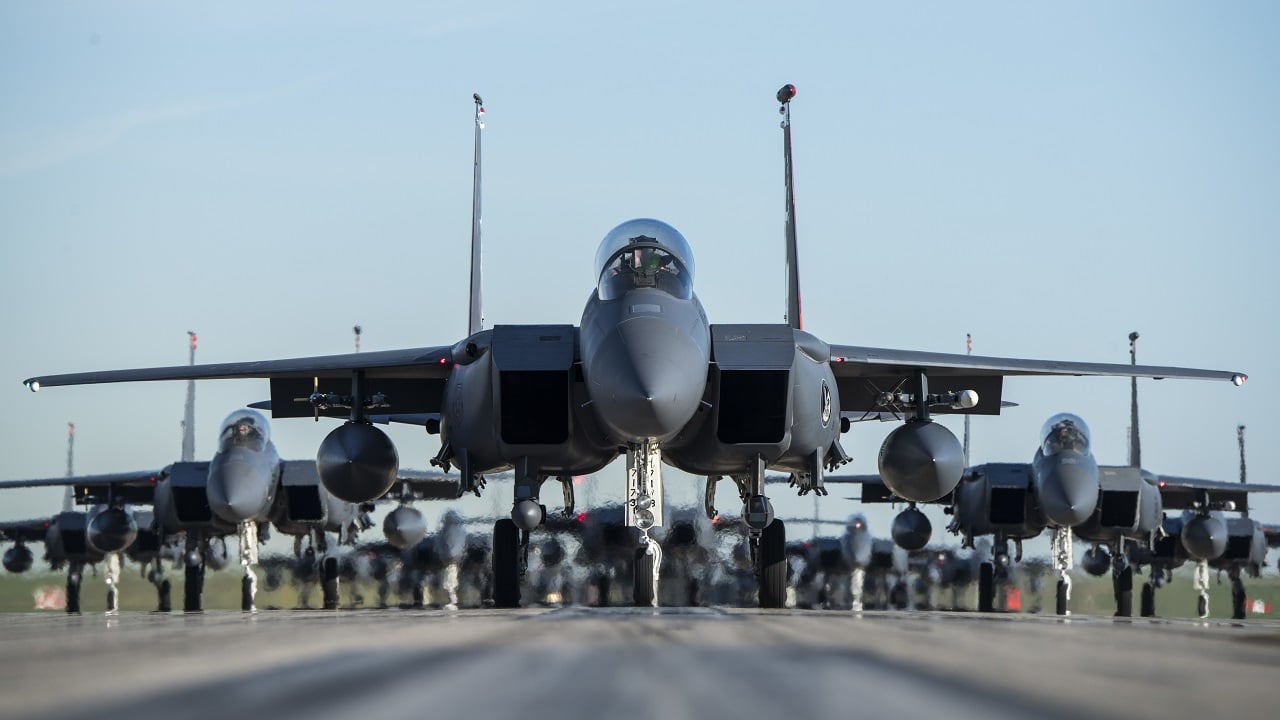
F-15E Strike Eagles taxi into formation June 12, 2019, at Mountain Home Air Force Base, Idaho. This was a rare opportunity to capture the Gunfighter family, including the 391st, 389th and 428th Fighter Squadrons, before a morning flight. (U.S. Air Force photo by Staff Sergeant Jeremy L. Mosier)
Most strangely of all, three F-15Es were destroyed in the air by Kuwaiti air defenses in a bizarre case of friendly fire; all three aircrews thankfully survived.
It is important to hammer home these points, not to despair over America’s perceived weakness, but rather to make sure these mistakes don’t happen again. The U.S. Air Force has long maintained a perceived aura of invincibility.
While Epic Fury has demonstrated the USAF’s strengths, it has also shown that the Air Force is far from invincible. Many rightfully criticized Russia for leaving its strategic aviation unprotected on its airfields, where they were vulnerable to Ukrainian drones.
Unfortunately, the Air Force has been slow to learn from Russia’s mistakes and, as a result, has lost around 40 confirmed aircraft since the start of Epic Fury, including MQ-9 Reaper drones.
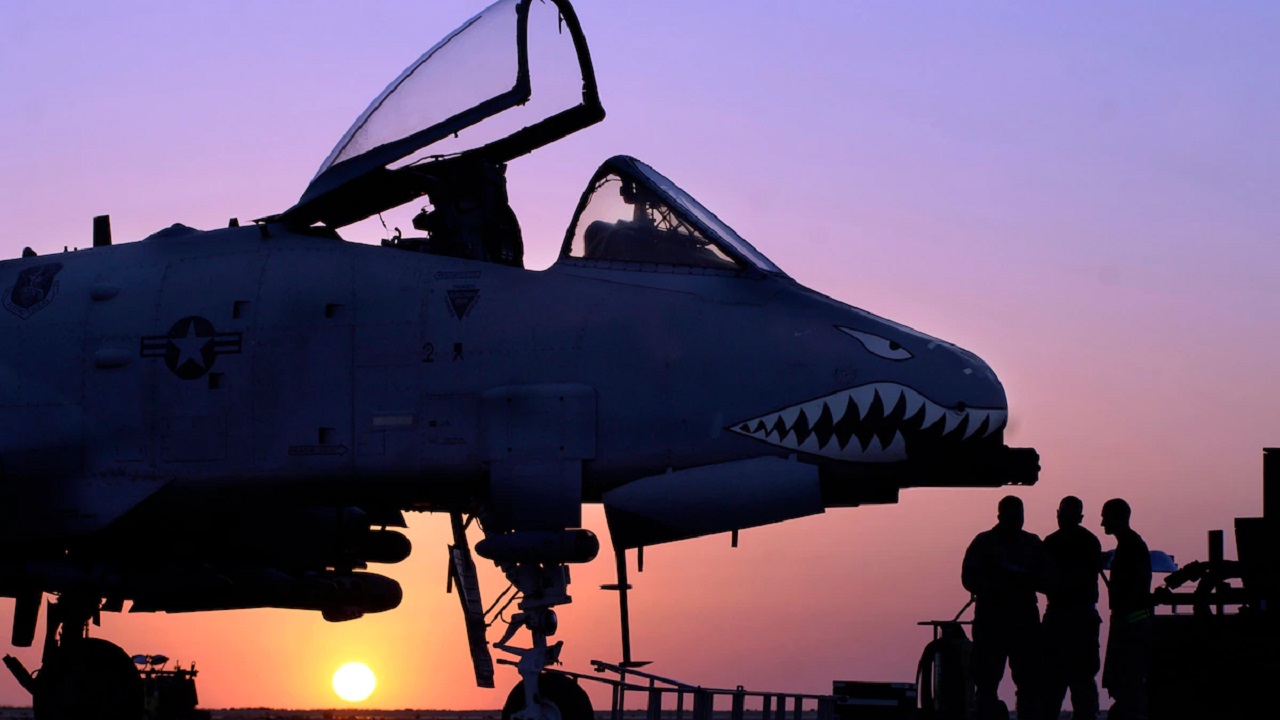
A-10 Warthog Sunset. Image Credit: Creative Commons.
China, meanwhile, has spent the last several decades perfecting its A2/AD strategy. If Iran can inflict these kinds of losses against the U.S., then expect a war with China to be an absolute disaster.
China produces more missiles than Iran does, and its airspace is much larger and more heavily saturated with advanced air defenses. Again, it is dishonest to say that Epic Fury has been a complete disaster for the U.S., but the American Armed Forces are not nearly as ready for near-peer conflict as many assume.
About the Author: Isaac Seitz
Isaac Seitz, a Defense Columnist, graduated from Patrick Henry College’s Strategic Intelligence and National Security program. He has also studied Russian at Middlebury Language Schools and has worked as an intelligence Analyst in the private sector.