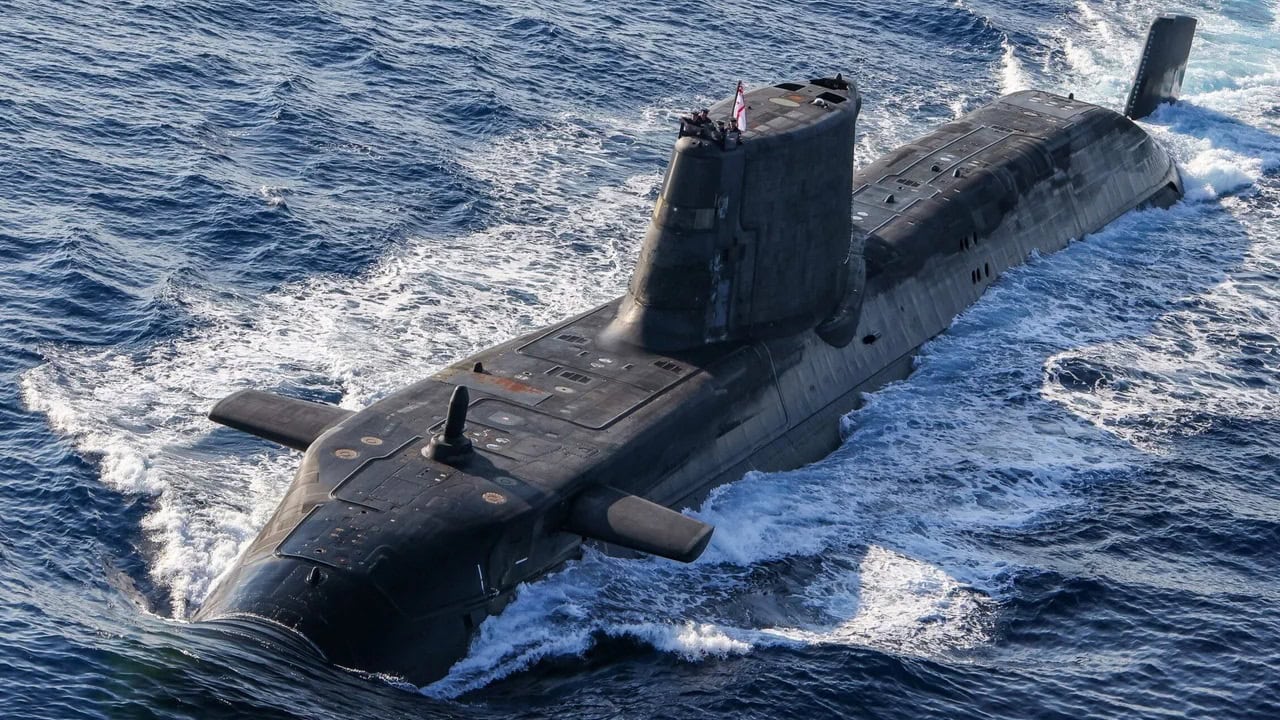
Britain’s Astute-class nuclear-powered attack submarine is so quiet that sonar operators have mistaken its acoustic signature for a baby dolphin or ambient ocean background noise. Engineered around raft-mounted machinery, anechoic tiles, and a pump-jet propulsion system, the boat runs on a Rolls-Royce PWR2 reactor that lasts the submarine’s entire operational life and reaches 30+ knots submerged.
Astute-Class: The Best Submarine on Earth?
In keeping with its reputation as a silent undersea killer, the British Royal Navy’s Astute-class has quietly become one of the most respected–and feared–attack submarines on Earth. The problem facing the Astute-class is the same problem that most Western submarine forces face: they lack the numbers. Lack of proper force size for Britain’s Astute-class means a severe strategic gap has formed in their submarine force.
Why the Astute-Class Matters
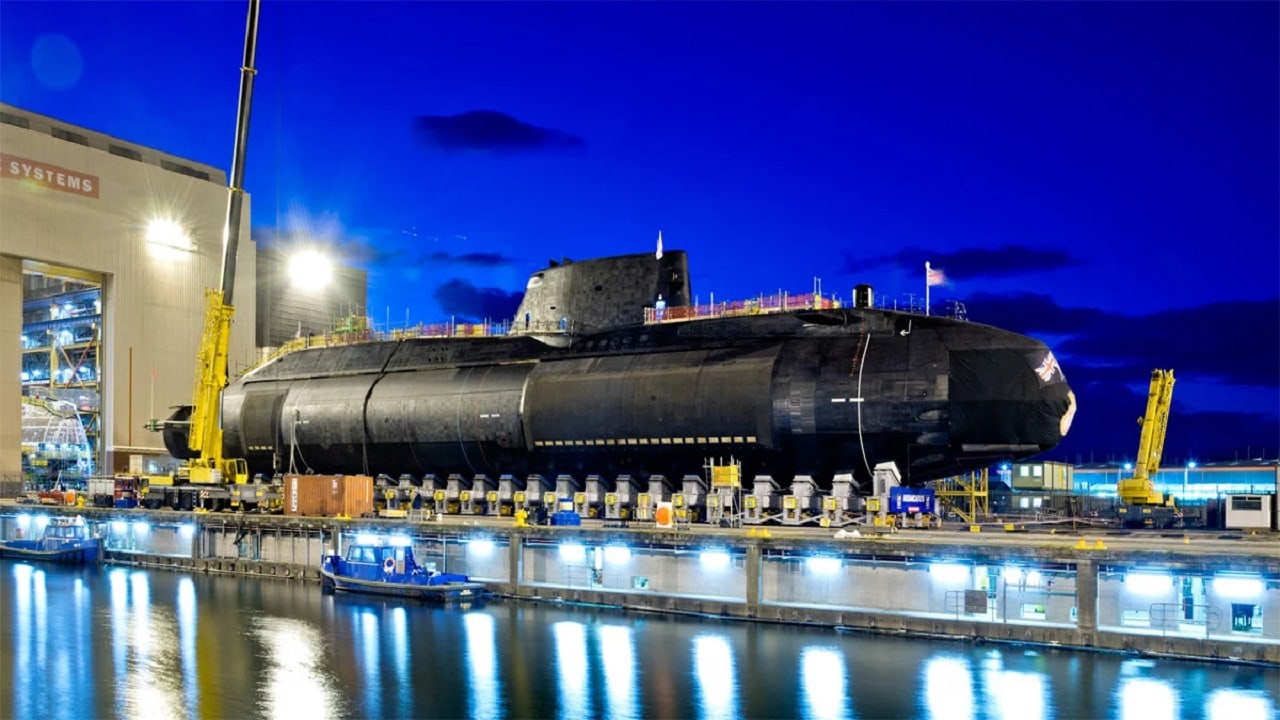
Astute-class Submarine. Image Credit: BAE Systems.
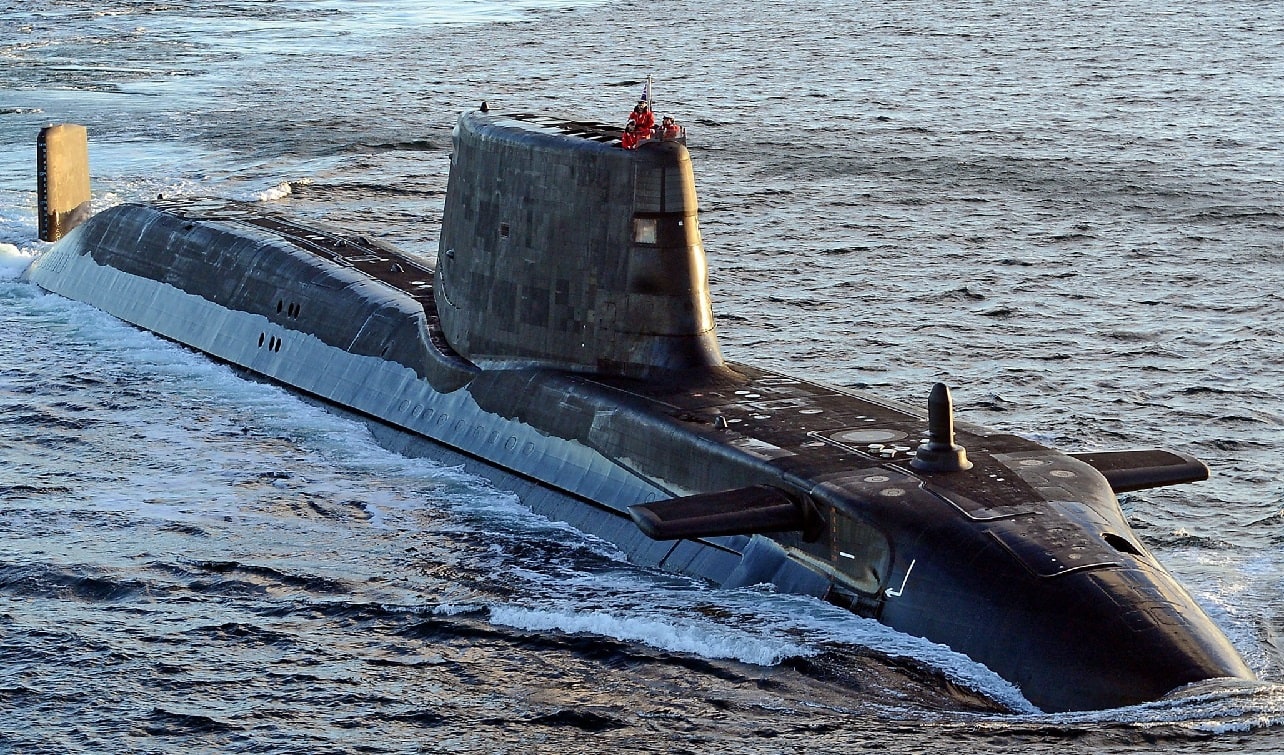
Astute class submarine HMS Ambush is pictured during sea trials near Scotland. Ambush, second of the nuclear powered attack submarines, was named in Barrow on 16 December 2010 and launched on 5 January 2011.
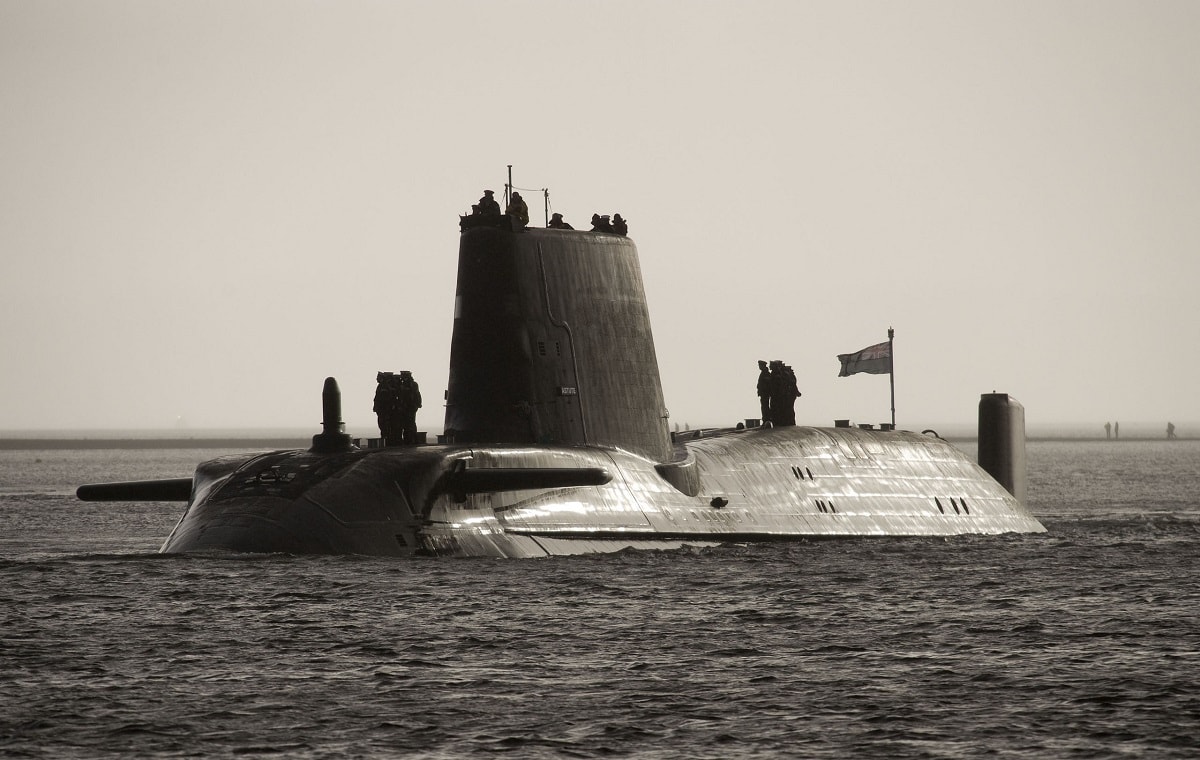
Image of Astute-class Submarine. Image Credit: Creative Commons.
The Astute-class replaced Britain’s aging Trafalgar-class nuclear attack submarines and restored the Royal Navy’s ability to operate independently against peer adversaries such as Russia and, increasingly, China (set aside the absurdity of a medium-sized European-facing power, like Britain, viewing China as any kind of direct military threat).
BAE Systems at Barrow-in-Furness built this impressive submersible. A Rolls-Royce PWR2 reactor that lasts the submarine’s operational timeline (without refueling) powers the Astute-class. That reactor propels the ship forward at speeds reportedly above 30 knots.
She’s large for an attack submarine, too. Your average Astute-class has around 7,400 tons submerged displacement.
The “Baby Dolphin” Reputation
These boats are among the quietest submarines ever constructed. Some analysts claim its acoustic signature matches ocean background noise levels. Indeed, experts claim that the Astute-class is so quiet that, if it is ever detected, it is mistaken for a baby dolphin or other background maritime noise, giving the Astute-class real lethality against its foes.
Engineers designed the Astute-class around raft-mounted machinery to isolate vibration, anechoic tiles to absorb sonar pulses, and advanced pump-jet propulsion to ensure both speed and silence. Other sophisticated noise suppression systems maintain this submarine’s silent running.
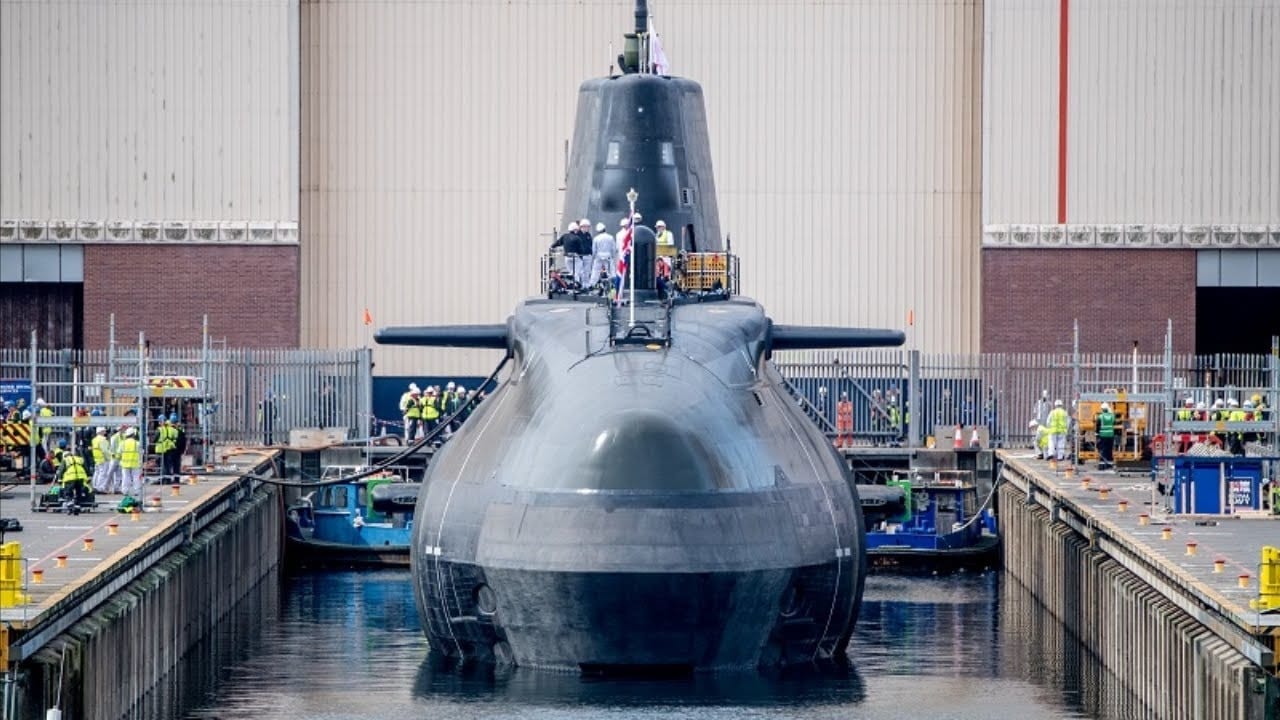
Astute-class. Image Credit: Creative Commons.
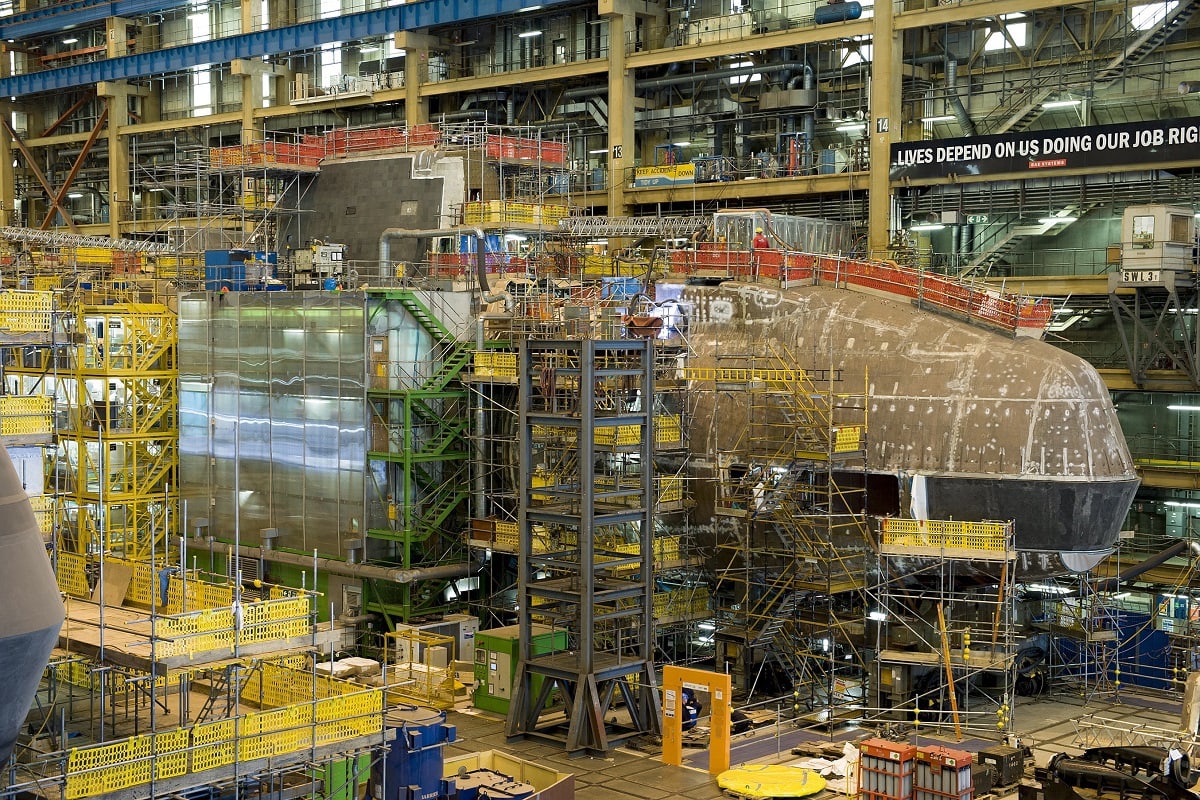
Astute Class submarine Audacious under construction at Barrow in Furness shipyard in Cumbria. Audacious is the fourth of the seven Astute Class submarines being built for the Royal Navy. The first two boats, HMS Astute and Ambush, are currently undergoing sea trials. The third boat, Artful, is reaching the final stages of her construction at Barrow shipyard. All three are to be based at Faslane on the Clyde.
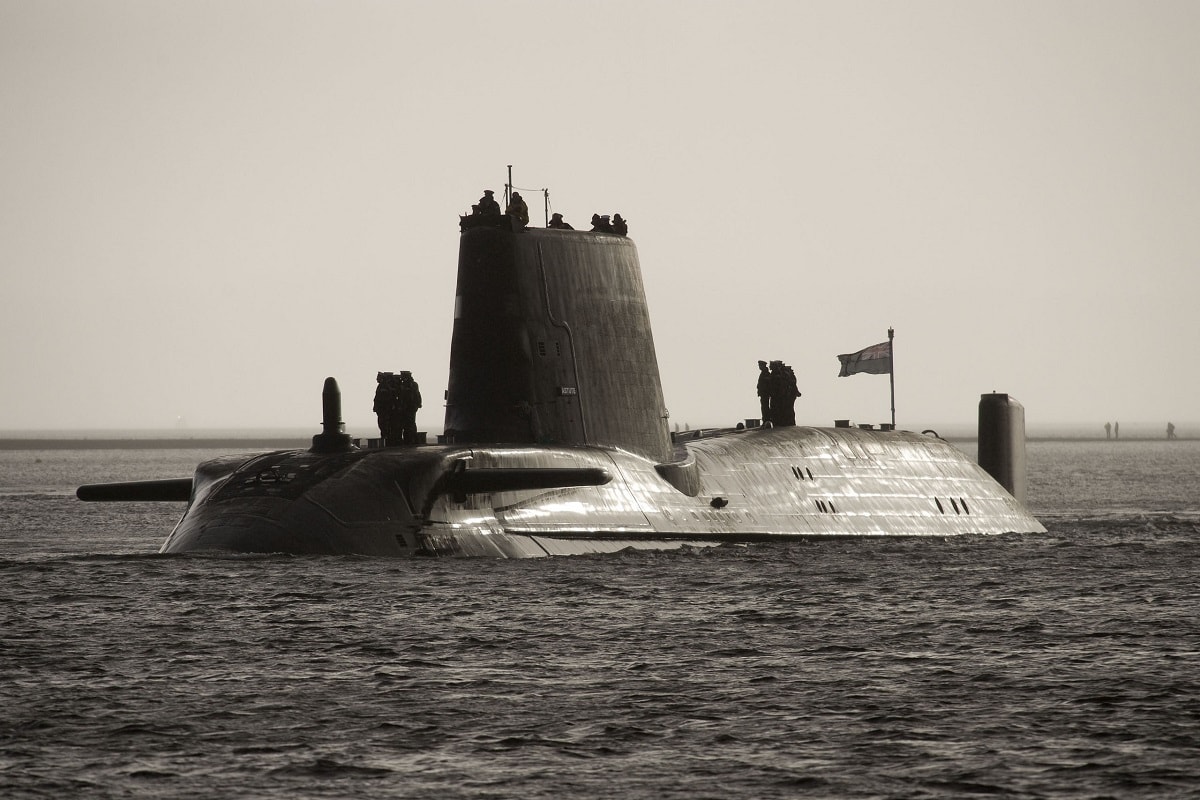
HMS Astute.
Sonar and Detection Superiority
One of the Astute-class submarine’s most important capabilities is the Thales Sonar 2076 suite. The global submariner community has deemed it simply the best sonar system in the world. Steve Balestrieri, a senior national security columnist at 19FortyFive.com, recounted that one British Astute-class submarine skipper claimed his crew tracked a US Virginia-class submarine at unexpectedly long range during war games, thanks to the Thales Sonar 2076 suite.
Now, we have evidence that not only is the Astute-class nearly impossible to detect by enemies. But it can track enemy submarines at farther distances than its enemies can track it.
That’s a deadly combination in a nuclear-powered attack submarine.
Weapons and Strike Capability
The British made the Astute-class submarine with long-range strike capabilities, as well. These boats carry Tomahawk and land-attack cruise missiles. Spearfish heavyweight torpedoes protect this submarine and allow it to hunt other submarines. Astute-class subs can also deploy naval mines along with special operations forces.
Some estimates place the strike range of the Astute-class at roughly 1,000 kilometers from shore using Tomahawk cruise missiles.
Here’s Why the Astute-Class Might Be the Best Attack Sub in the World
Compared with older submarines, the Astute-class boats reportedly require fewer sailors due to extensive automation.
In fact, if you look at the overall capabilities of the Astute-class, everything from its extraordinary stealth, its world-class sonar, and the long endurance thanks to the nuclear reactor of this submarine, along with the aforementioned powerful strike capability and the automation, it is likely the best attack submarine in the world.
Interestingly, the British Royal Navy, which has been in a severe crisis for years, was able to develop and maintain this submarine–enhancing its underwater warfare capability–as the larger, more powerful US Navy became obsessed with building expensive (and unnecessary) surface fleet systems. Those exquisite surface fleet platforms, mind you, were linked to very troubled procurement systems.
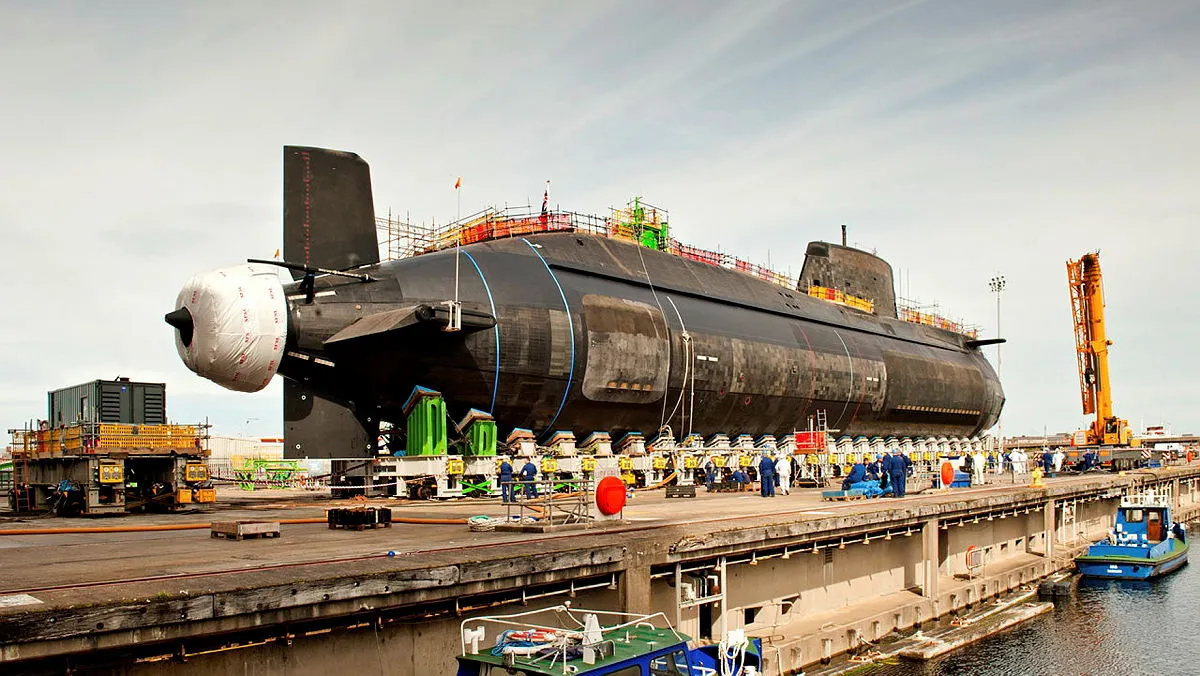
Royal Navy’s Astute-Class Submarines. BAE Systems.
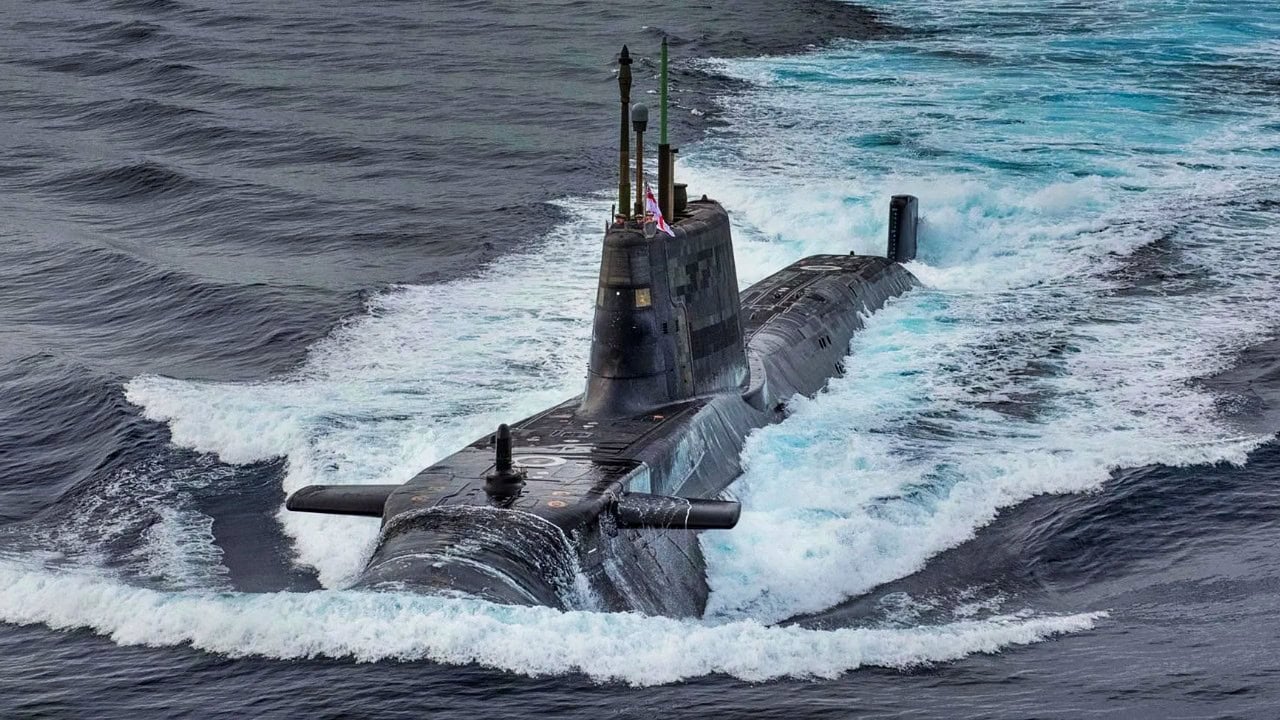
Astute-Class Submarine. Image Credit: Creative Commons.
Complications
While impressive, the Astute-class is imperfect.
Britain has struggled badly with its overall submarine industrial capacity. Those struggles include maintenance backlogs and construction delays. Recent reporting suggests Royal Navy submarine availability has become dangerously strained, with those maintenance bottlenecks reducing overall operational readiness.
Having elite submarines, such as the Astute-class, is irrelevant for a Royal Navy that has too few on hand to make any strategic difference. It’s almost too bad the Americans and the British couldn’t pull together their struggling naval shipyard capacities and focus on maintaining and expanding the superior Astute-class submarines.
The Bigger Strategic Story
The Astute-class matters beyond Britain itself because it forms the foundation for the future submarine-building effort involving the United Kingdom, Australia, and the United States (AUKUS).
But AUKUS is increasingly falling apart, thanks to the industrial failures of the three Anglosphere countries involved. The Americans want to sell Virginia-class submarines to the Australians, and the British want to sell Astute-class submarines.
Neither England nor America can provide their submarines under current conditions. Perhaps a better use of resources would be for Australia to simply pick one of those two submarine classes to buy, and then have all three industrial bases work to build that system to sell to the Australians, who will use these attack submarines to deter Chinese aggression in the Indo-Pacific.
Still, the Astute-class tells us something important at the strategic level. The undersea domain is increasingly viewed as the decisive arena in any future war against China (and possibly even against Russia). Whereas satellites track surface warships, submarines remain among the few platforms capable of operating deep within contested maritime zones (such as the South China Sea or the Taiwan Strait).
That is why the Astute-class has attracted so much attention. It represents one of the clearest examples of how modern naval warfare is shifting back toward stealth, endurance, and undersea dominance. But if the British (and their Anglosphere allies) can’t get their industrial capacities together to build enough of these subs, then they will never be worth the cost.
About the Author: Brandon J. Weichert
Brandon J. Weichert is the Senior National Security Editor at 19FortyFive.com. Recently, Weichert became the editor of the “NatSec Guy” section at Emerald. TV. He was previously the senior national security editor at The National Interest. Weichert hosts The National Security Hour on iHeartRadio, where he discusses national security policy every Wednesday at 8 p.m. Eastern. He hosts a companion show on Rumble entitled “National Security Talk.” Weichert consults regularly with various government institutions and private organizations on geopolitical issues. His writings have appeared in numerous publications, among them Popular Mechanics, National Review, MSN, and The American Spectator. And his books include Winning Space: How America Remains a Superpower, Biohacked: China’s Race to Control Life, and The Shadow War: Iran’s Quest for Supremacy. Weichert’s newest book, A Disaster of Our Own Making: How the West Lost Ukraine, is available for purchase at any bookstore. Follow him via Twitter/X @WeTheBrandon.