
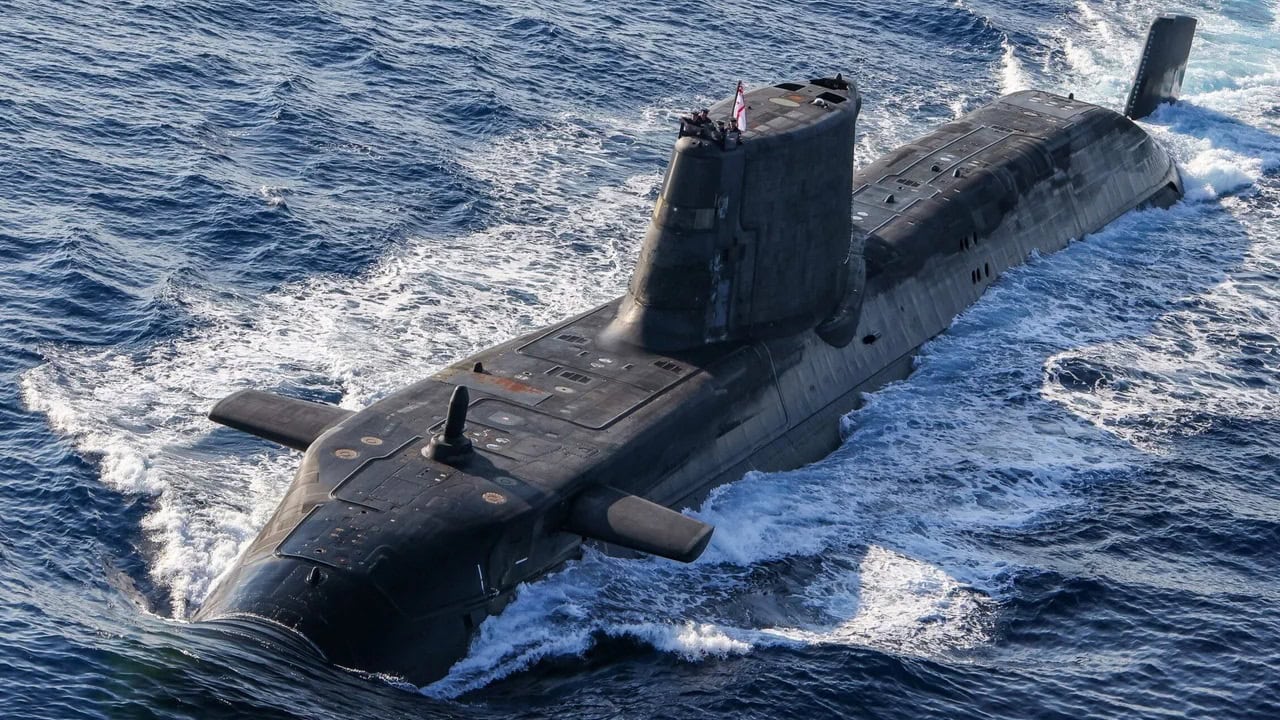
Summary and Key Points: Defense analyst Jack Buckby evaluates the Royal Navy’s strategic gamble as HMS Anson, its only fully operational Astute-class nuclear attack submarine (SSN), arrives at HMAS Stirling.
-This deployment, a cornerstone of the AUKUS partnership, aims to prepare Australia for its own nuclear-powered fleet.
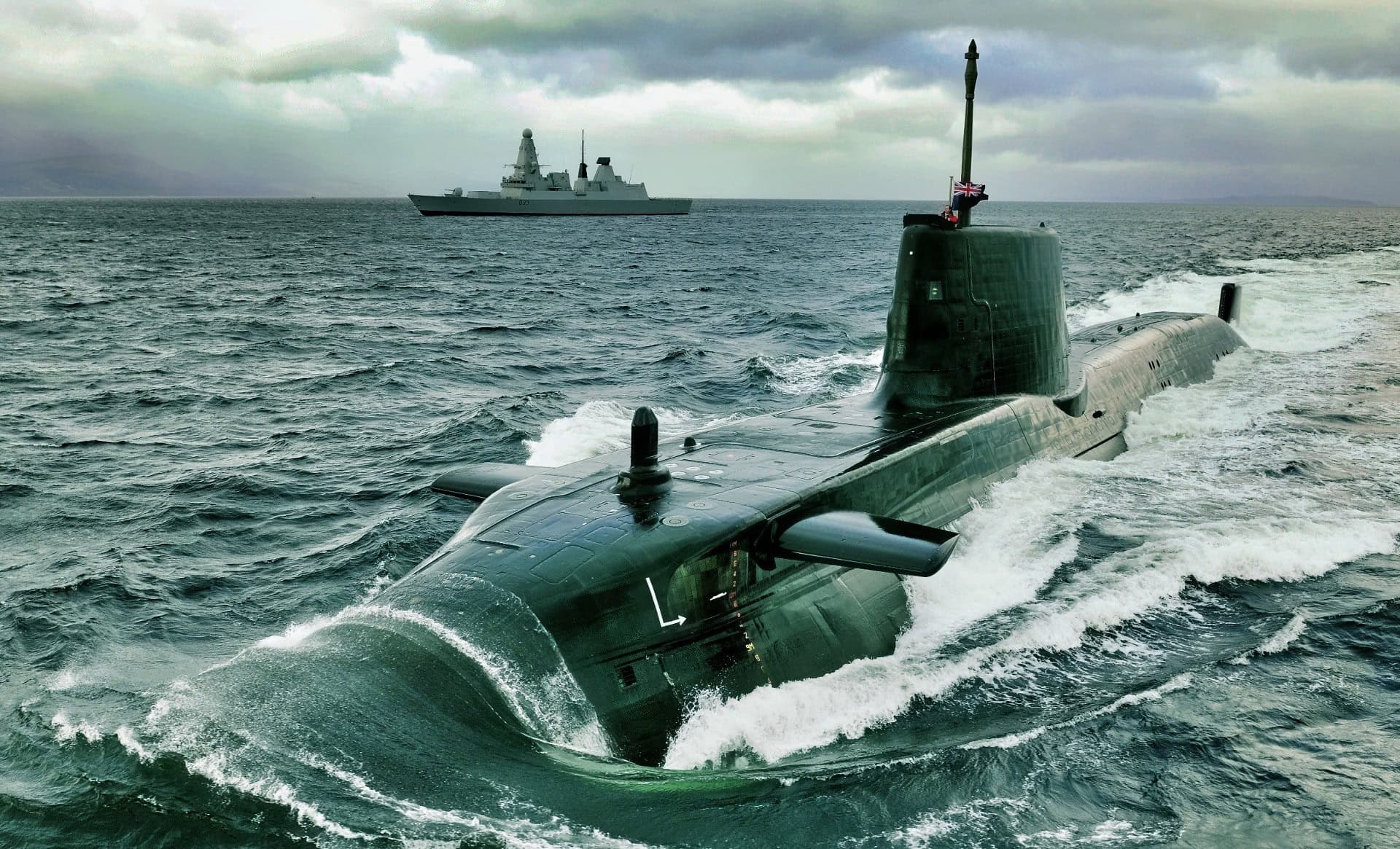
Astute-Class. Image Credit: Creative Commons.
Royal Navy’s Astute-Class Submarines. BAE Systems.
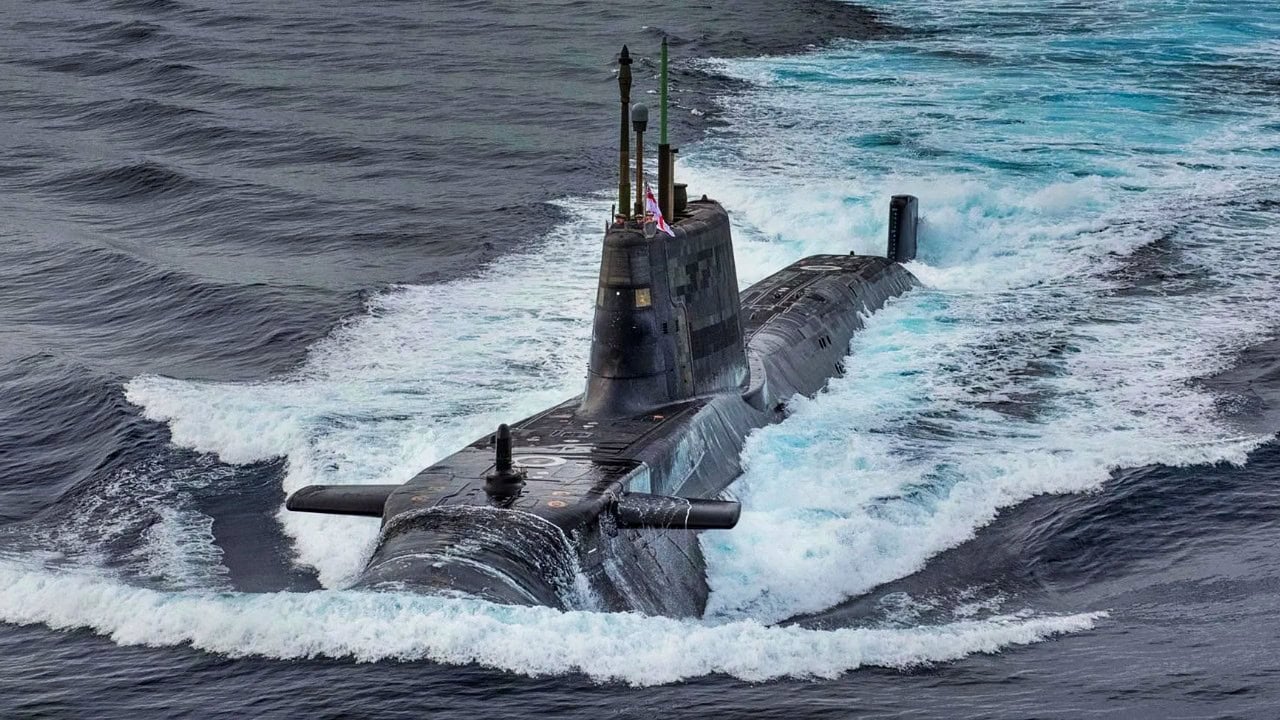
Astute-Class Submarine. Image Credit: Creative Commons.
-However, with the rest of the UK attack fleet unavailable, Britain loses its immediate Tomahawk cruise missile strike capability and covert surveillance options.
-Amidst the ongoing Iran conflict and Russian activity in the North Atlantic, the UK has prioritized long-term Indo-Pacific integration over short-term home-water redundancy.
The AUKUS Trade-Off: Why Britain’s Only Ready Astute-Class Attack Sub is in Western Australia
HMS Anson, one of the Royal Navy’s Astute-class nuclear attack submarines, arrived at HMAS Stirling in Western Australia in February 2026 after departing HMNB Clyde on January 10 and transiting via Gibraltar, as part of the AUKUS partnership.
The deployment, directed by the British government and coordinated with the United States and Australia, marks the first time a British nuclear-powered submarine will undergo maintenance on Australian soil. It is being presented as a key milestone in allied cooperation, intended to help Australia develop the workforce and industrial infrastructure required to operate its own nuclear-powered submarines in the coming years.
But the timing is interesting – not because it suggests something is afoot, but because it’s inconvenient. HMS Anson is currently the only fully operational Astute-class submarine in the British Royal Navy, with the rest of the fleet either in maintenance, not yet operational, or otherwise unavailable.
That means the UK has temporarily lost its only ready attack submarine at a time of rising global uncertainties – from the ongoing Iran conflict to persistent Russian naval activity in the North Atlantic and growing strategic competition in the Indo-Pacific. That issue isn’t the deployment itself, but what Britain can no longer do because of it.
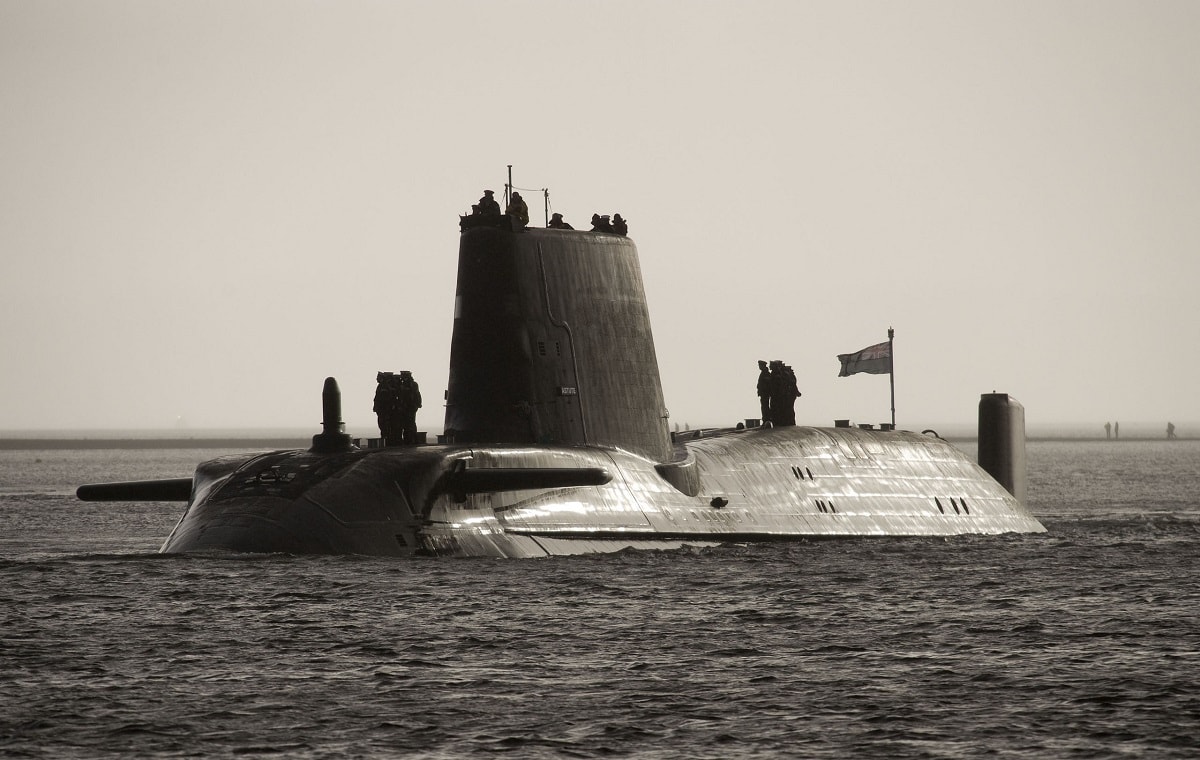
Image of Astute-class Submarine. Image Credit: Creative Commons.
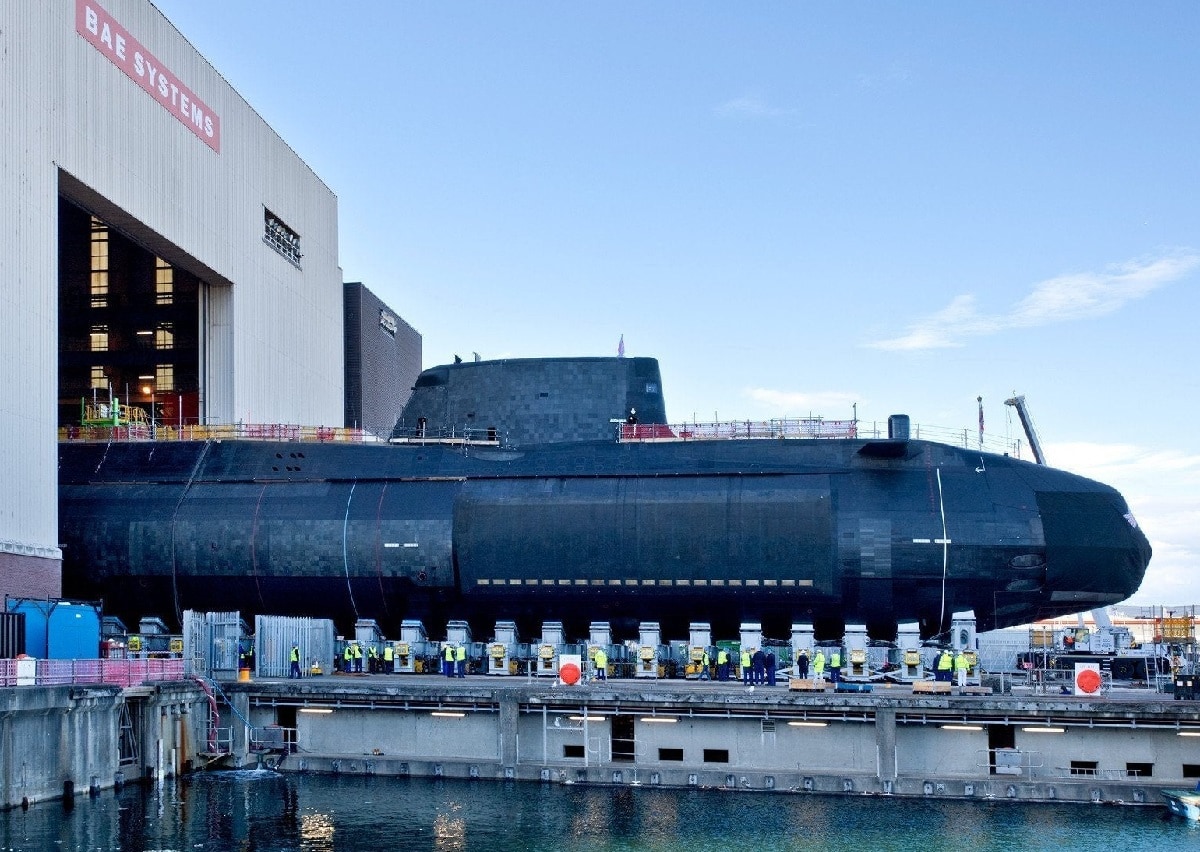
Astute-class Submarine. Image: Creative Commons.
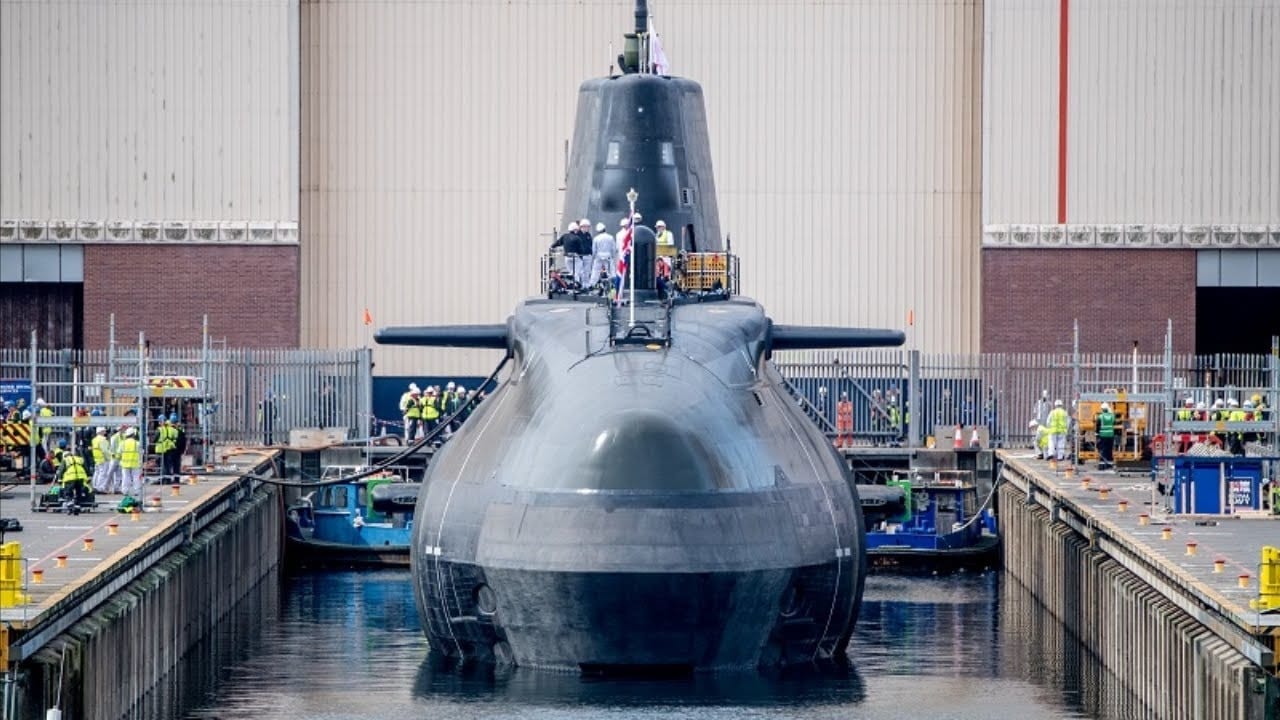
Astute-class. Image Credit: Creative Commons.
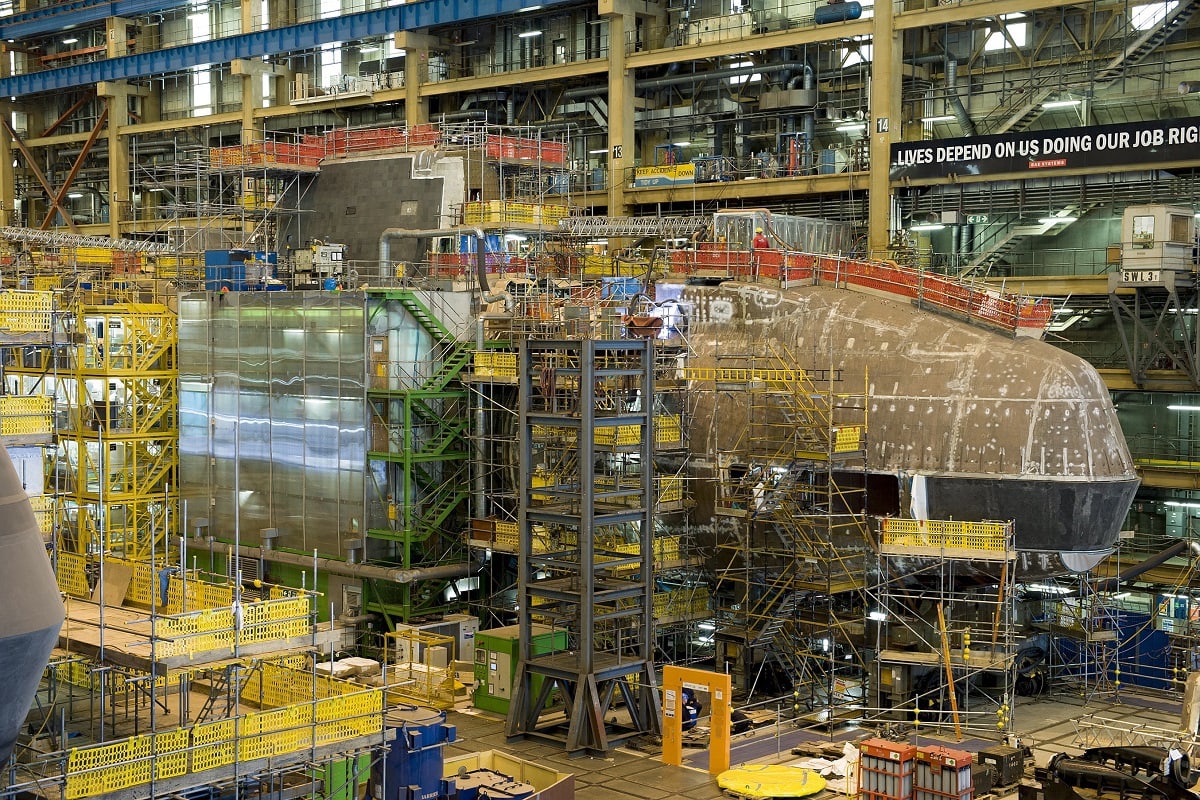
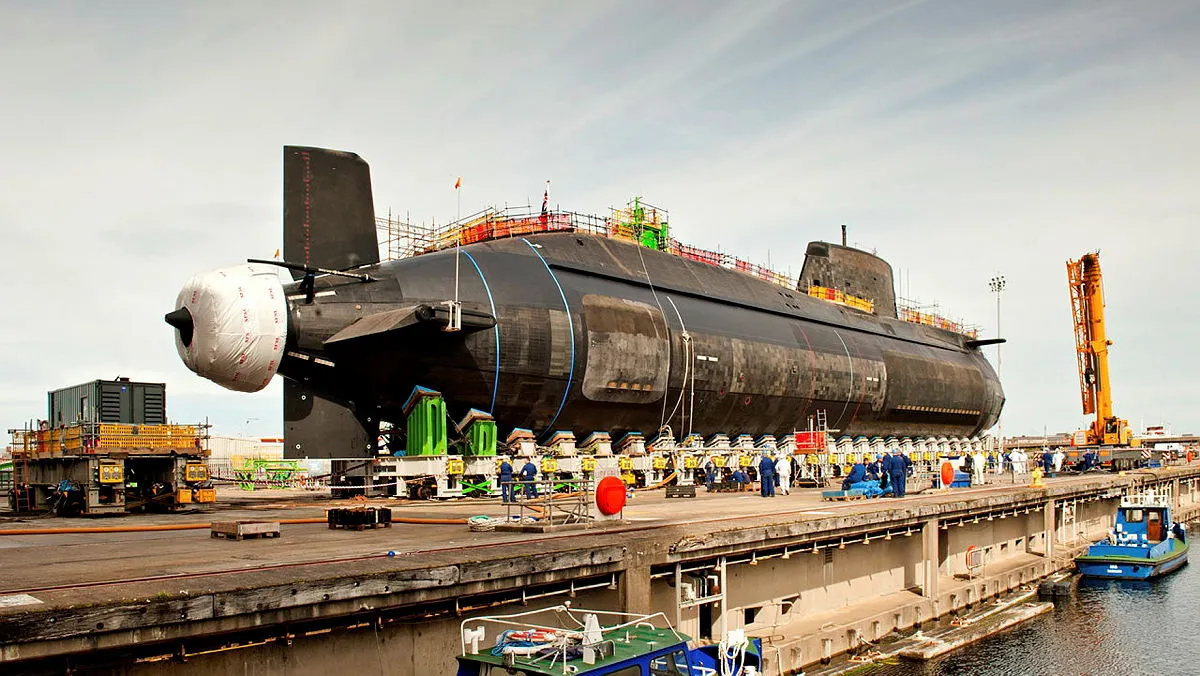
Astute-Class submarine Audacious under construction at Barrow in Furness shipyard in Cumbria. Image Credit: Royal Navy.
Why the UK Sent a Submarine to Australia
The logic behind the deployment of HMS Anson to Australia is this: AUKUS is an effort to build a functioning, integrated submarine capability that serves the United States, the United Kingdom, and Australia.
To make this possible, there must be training for Australian personnel, the construction of maintenance infrastructure, the construction of the future submarines, and the development of a shared industrial base.
The submarine’s arrival at HMAS Stirling is the first time a British nuclear-powered submarine has undergone maintenance in Australia – a big step towards preparing Canberra to operate its own fleet later this decade.
The deployment also feeds into the planned Submarine Rotational Force-West, a program under AUKUS that will see U.S. and British nuclear-powered attack submarines deployed on a rotating basis to HMAS Stirling from 2027, establishing a persistent allied submarine presence in Western Australia without permanently basing foreign vessels there.
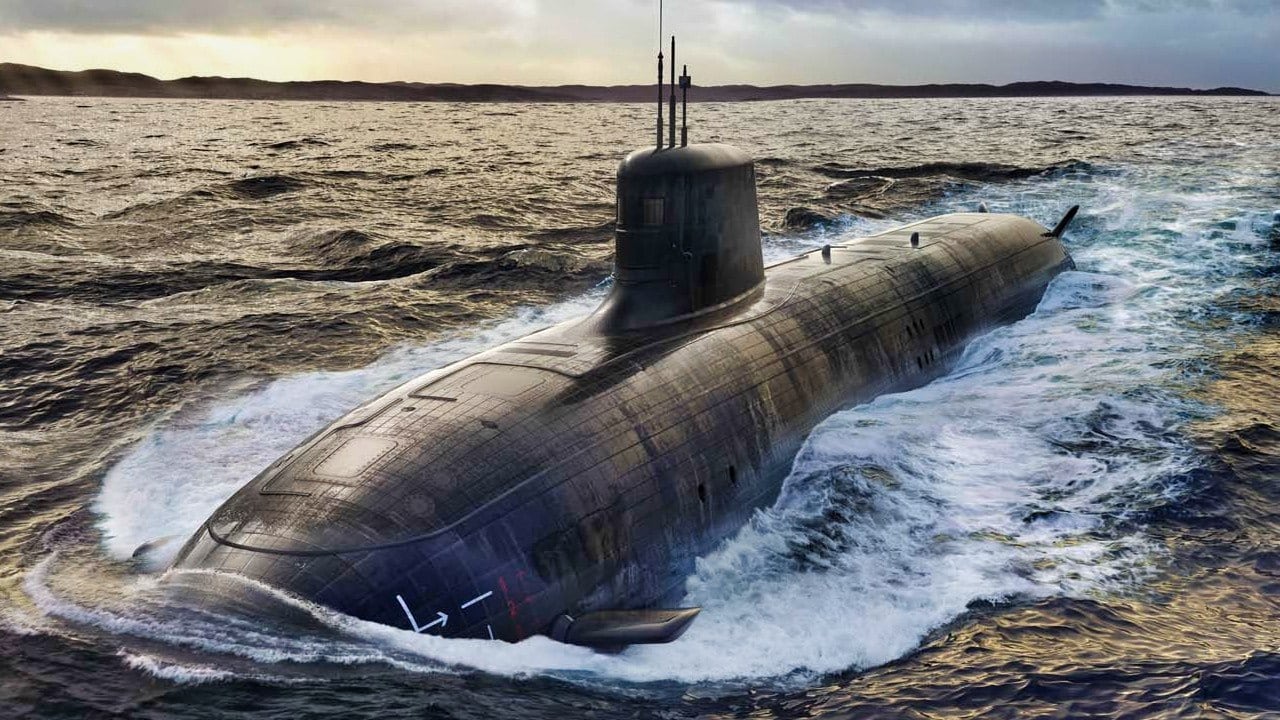
SSN-AUKUS Submarine. Image is Creative Commons Artist Rendering.
The deployment, then, is a necessary step in building long-term allied capability in the Indo-Pacific. It is a long-term bet that the U.S., Australia, and Britain are stronger when they operate together – but that long-term investment also comes with a short-term cost.
What Britain Has Lost (For Now)
The Royal Navy operates a total of nine submarines, including five Astute-class attack submarines and four Vanguard-class ballistic missile submarines dedicated to nuclear deterrence.
In theory, the UK has a balanced and capable underwater force – but in practice, availability is far more limited. HMS Anson is currently the only Astute-class submarine that’s fully ready for deployment, with others tied up in maintenance or not yet operational.
So by deploying that single available boat to Australia and placing it into scheduled maintenance, the UK has effectively removed its only flexible, high-end attack submarine from immediate availability.
That translates into a number of concrete capability losses – by necessity.
These include the loss of an immediate covert-strike option with submarine-launched cruise missiles and a reduced ability to track adversary submarines in real time. It also means there is no surge capacity in the event of a crisis and limited flexibility to redirect forces quickly without disrupting AUKUS missions.
Astute-class submarines are designed for precisely these roles – stealthy intelligence collection and precision strike. Operating with only one is, obviously, a less-than-perfect scenario while tensions are rising in multiple theaters.
Will the UK Need It?
When it comes to current conflicts – Iran, specifically – it’s worth noting that Britain is not officially engaged in conflict alongside the United States and Israel.
It has not participated in offensive strikes and has avoided direct escalation – to the displeasure of U.S. President Donald Trump.
But it is not operating in a neutral environment, either. British forces are already engaged in defensive and support roles, and U.K.-linked assets in the region face major threats. That matters because attack submarines are rapid-response assets that are ideal for use in exactly these kinds of uncertain, escalating situations.
If the conflict were to expand, the United Kingdom could be required to monitor Iranian naval activity in the Gulf, protect maritime traffic (especially with the uncertainty in the Strait of Hormuz), and conduct covert surveillance or strike operations. The submarine would also be a good candidate for supporting allied forces more generally. And right now, Britain has limited capacity to do all of this at short notice.
The problem is not that HMS Anson is in Australia – it’s a necessary move that supports a valuable long-term objective.
However, the deployment does leave Britain with a gap while attempting to manage demands in the Middle East, the North Atlantic, and the Indo-Pacific with no meaningful redundancy in its submarine force. AUKUS may justify the long-term investment, but in the short term, Britain has traded some immediate flexibility for future capability.
About the Author: Jack Buckby
Jack Buckby is a British researcher and analyst specialising in defence and national security, based in New York. His work focuses on military capability, procurement, and strategic competition, producing and editing analysis for policy and defence audiences. He brings extensive editorial experience, with a career output spanning over 1,000 articles at 19FortyFive and National Security Journal, and has previously authored books and papers on extremism and deradicalisation.