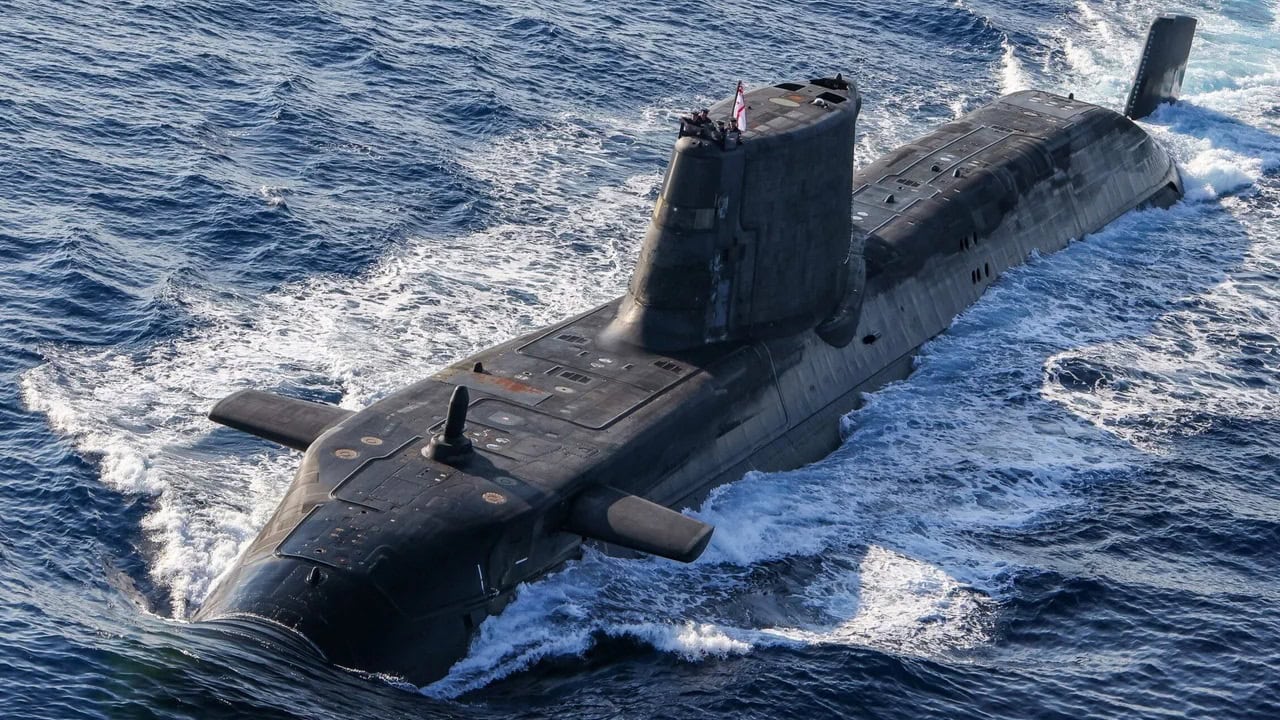
Summary and Key Points: Astute-Class HMS Anson’s stop in Gibraltar on its way to Australia highlights both the promise and the strain behind AUKUS.
-The Royal Navy is helping build Australian nuclear-submarine expertise, but the deployment also raises questions about force availability as Britain faces growing pressure from Russia closer to home.
-The bigger issue is industrial: the United States and its partners need far more submarine production capacity to deliver Virginia-class boats and later support the future AUKUS-class fleet.
-Australia is investing heavily in its own shipyard and in U.S. shipbuilding, but senior officials still warn that only a major production surge can keep the pact on track.
Astute-Class Submarine Shortage: Why HMS Anson’s Deployment Matters for AUKUS and the Virginia-Class Plan
The Royal Navy submarine HMS Anson made a stop at Gibraltar late last month, part of a longer journey to Australia. That submarine, part of the nuclear-powered Astute-class, will join Submarine Rotational Force–West in Western Australia sometime today, one of the initial steps of the AUKUS agreement.
That tripartite agreement brings the British, Australian, and United States Navies together and provides the framework for eventually equipping the Royal Australian Navy with nuclear-powered — though crucially, conventionally-armed — submarines.
A Perplexing Decision
But the timing of the Royal Navy submarine’s deployment to Australia is perplexing. Compared to some of the American submarine classes, the size of the Astute-class is rather small.
Though the Astutes will eventually number seven in total, the HMS Anson is currently the only active boat of the class, with most of the others either at port for maintenance or one currently being built.
While the Royal Navy certainly does have AUKUS obligations — both the Royal and United States Navies have promised to build Australian expertise in nuclear submarine operations — the United Kingdom arguably faces much more pressing challenges in its near abroad.
Late last month, British Defence Secretary John Healey said “Russia remains the most pressing and immediate threat to Britain,” in an address to the British Parliament. He went on to promise “the House and the British people that any threat will be met with strength and resolve.”
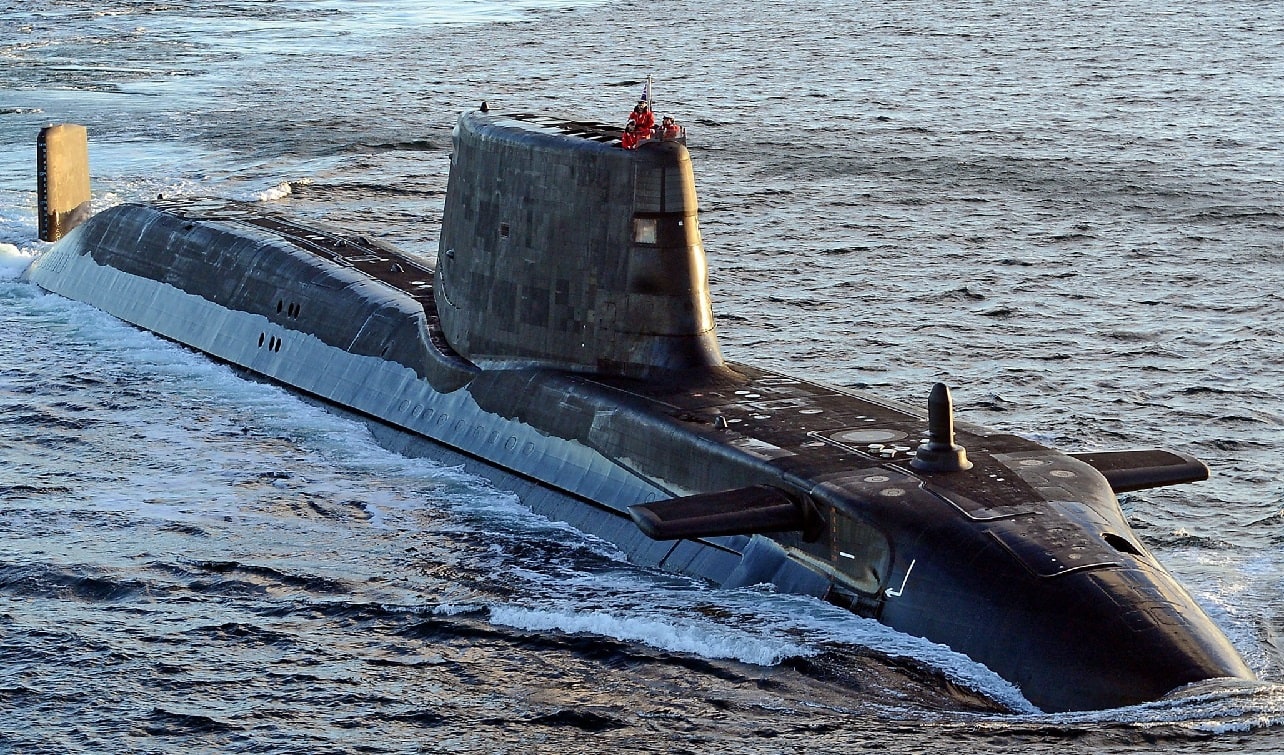
Astute class submarine HMS Ambush is pictured during sea trials near Scotland. Ambush, second of the nuclear powered attack submarines, was named in Barrow on 16 December 2010 and launched on 5 January 2011.
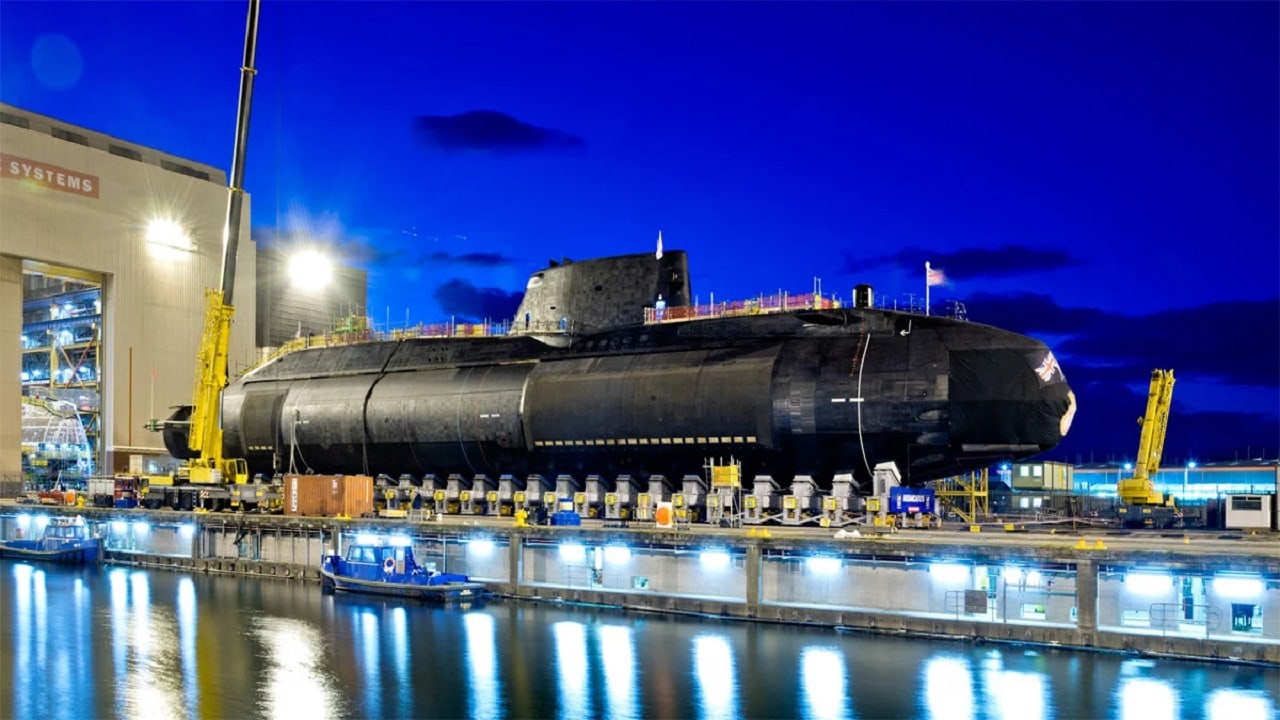
Astute-class Submarine. Image Credit: BAE Systems.
But sending the Royal Navy’s only currently operational attack submarine to the opposite side of the globe is seemingly at odds with Secretary Healey’s statement.
Shoals Ahead
Despite assurances from American officials and Navy personnel, the Pentagon’s planning tsar and Under Secretary of War for Policy, Elbridge Colby, has repeatedly questioned the wisdom of supplying Australia with new-build submarines if American shipyards are unable to meet those tenders and build submarines for the U.S. Navy on time.
Eventually, Australia is to receive ex-U.S. Navy Virginia-class submarines, boats that will familiarize Australian sailors with the particulars of operations with nuclear-powered submarines.
Later, both the Royal and Royal Australian Navies will accept the AUKUS-class into service, a yet-to-be-developed class of nuclear-powered submarines built for both countries.
But Elbridge Colby has in the past taken issue with sending Virginia-class submarines to Australia, arguing that doing so could hamstring the United States Navy’s ability to respond to or deter events in the Indo-Pacific. During one event in 2024, Colby voiced his uncertainty about the AUKUS agreement, maintaining that the U.S. Navy’s nuclear-powered submarines are “the single most important conventional military asset we have for a Taiwan fight.” Still, he also argued that he would not like to see the U.S. Navy’s ability crimped by a lack of boats.
“But the bigger problem is that our submarine industrial base is not in a position to actually produce enough attack submarines” to address the defense needs of the United States,” Colby added.
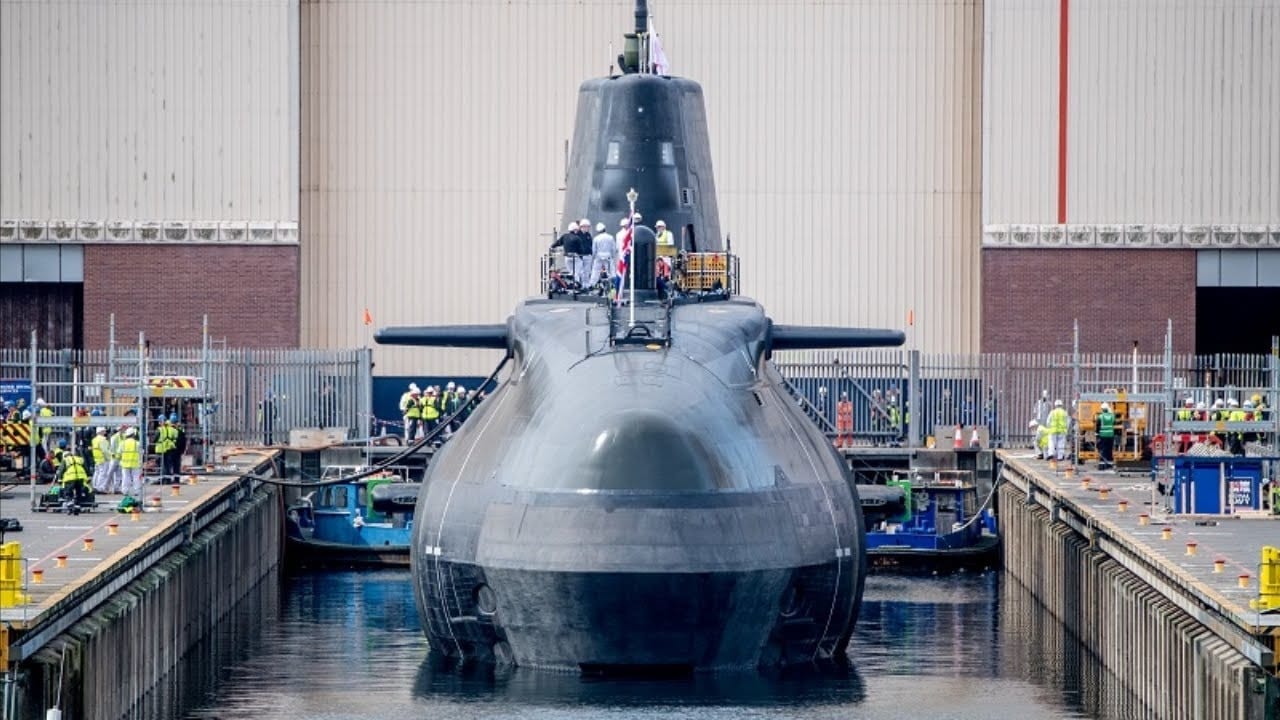
Astute-class. Image Credit: Creative Commons.
The Defense Industrial Base
Australia won’t be getting the technology for free, however. Last week, Australian Prime Minister Anthony Albanese announced that his government would invest the equivalent of 2.75 billion dollars in a submarine construction yard at Osborne, Australia. The money would be part of a broader, 30 billion dollar investment in Australian submarine building and shore up their own capabilities ahead of receiving the first of the promised American nuclear-powered submarines.
“The total floor area of the new Submarine Construction Yard is expected to be 10 times larger than the existing Osborne South Development project,” the Prime Minister’s office stated. “Construction is expected to use 66 million man-hours – 44 times more than Osborne South.”
Australia has also invested a large amount of cash in expanding American shipbuilding over several payments, with total payments totaling around $4.6 billion. The hope is that the money will help alleviate any of the production bottlenecks raised by Colby and allow American shipbuilders to build boats on time.
Uncertain Future for More Submarines
But can America’s submarine builders build more submarines on time and on budget — not only for the United States Navy, but for the Royal Australian Navy and Royal Navies too? It will be a tough target to meet.
As a part of his confirmation hearing before the Senate Armed Services Committee last year, the now Chief of Naval Operations, Admiral Daryl Caudle, acknowledged the production difficulties ahead, but also maintained that the United States has an obligation to Australia. “We need a transformational improvement and the ability to deliver twice the capacity that we’re currently delivering,” Admiral Caudle said to the committee.
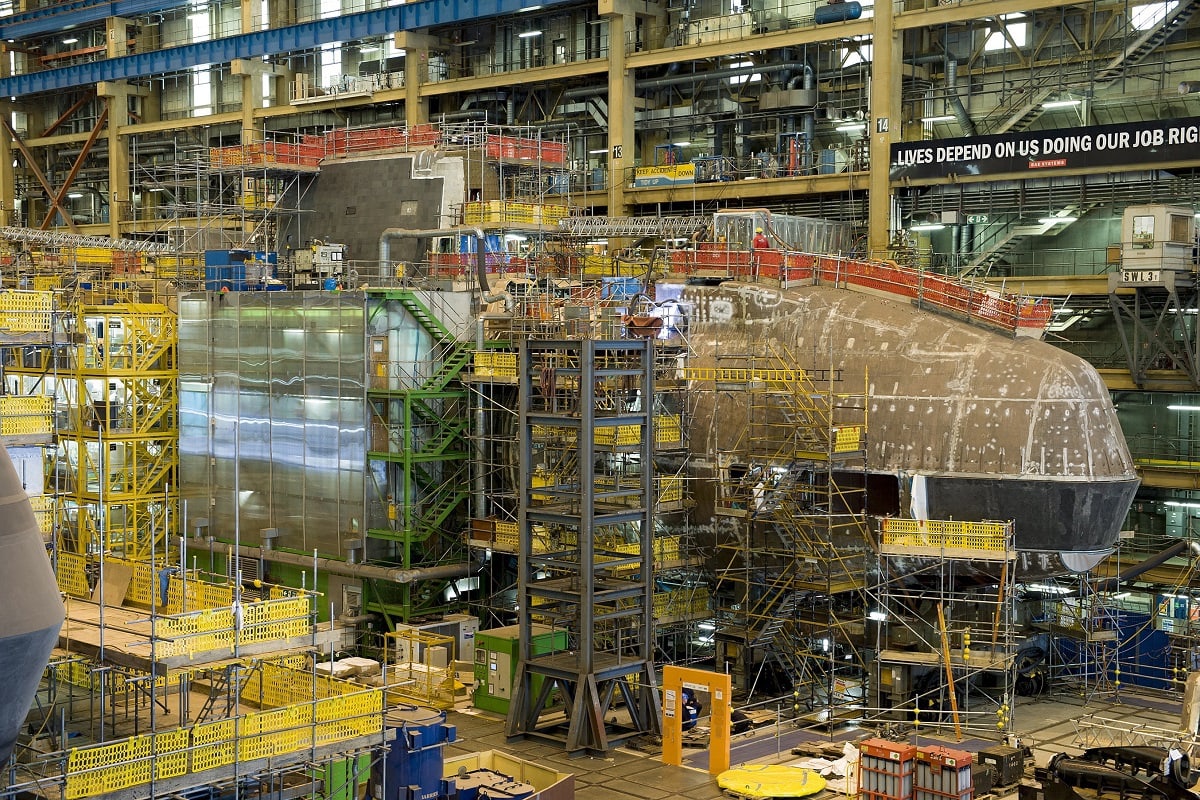
Astute-class submarine Audacious under construction at Barrow in Furness shipyard in Cumbria. Audacious is the fourth of the seven Astute Class submarines being built for the Royal Navy. The first two boats, HMS Astute and Ambush, are currently undergoing sea trials. The third boat, Artful, is reaching the final stages of her construction at Barrow shipyard. All three are to be based at Faslane on the Clyde.
“The delivery pace is not where it needs to be to make good on the [pillar] one of the AUKUS agreement, which is currently under review by our Defense Department… I think rightly so,” Admiral Caudle said. “We do have to understand whether or not the industrial base can produce the submarines required so that we can make good on the actual pact that we’ve made with the U.K. and Australia, which is around 2.2 to 2.3 Virginia-class submarines per year. That’s going to require a transformational improvement, not a 10 percent improvement, not a 20 percent—a 100 percent improvement.”
About the Author: Caleb Larson
Caleb Larson is an American multiformat journalist based in Berlin, Germany. His work covers the intersection of conflict and society, focusing on American foreign policy and European security. He has reported from Germany, Russia, and the United States. Most recently, he covered the war in Ukraine, reporting extensively on the war’s shifting battle lines from Donbas and writing on the war’s civilian and humanitarian toll. Previously, he worked as a Defense Reporter for POLITICO Europe. You can follow his latest work on X.