
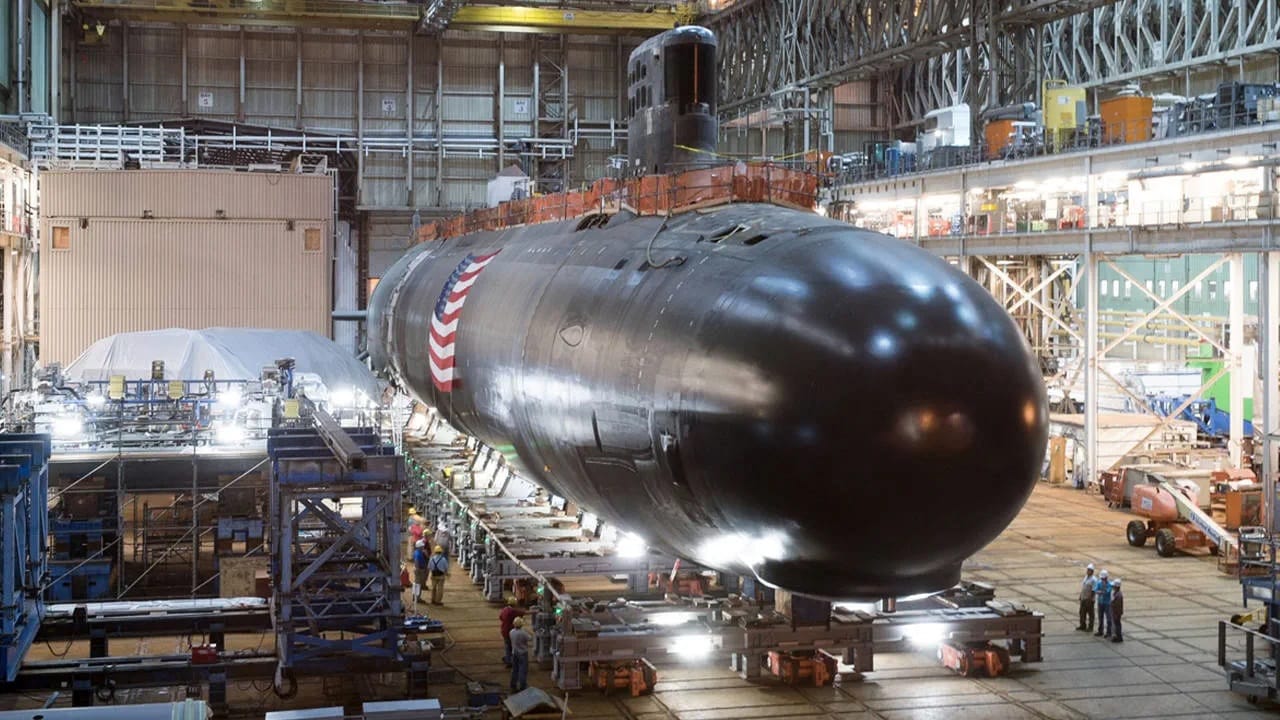
Key Points and Summary – The Virginia-class submarine program is supposed to be the backbone of the U.S. undersea fleet, but it is badly behind schedule and billions over budget.
-Yards are delivering barely 1.2–1.3 boats a year against a two-per-year target, even as the Navy must arm AUKUS partners and close a glaring attack-sub shortfall.
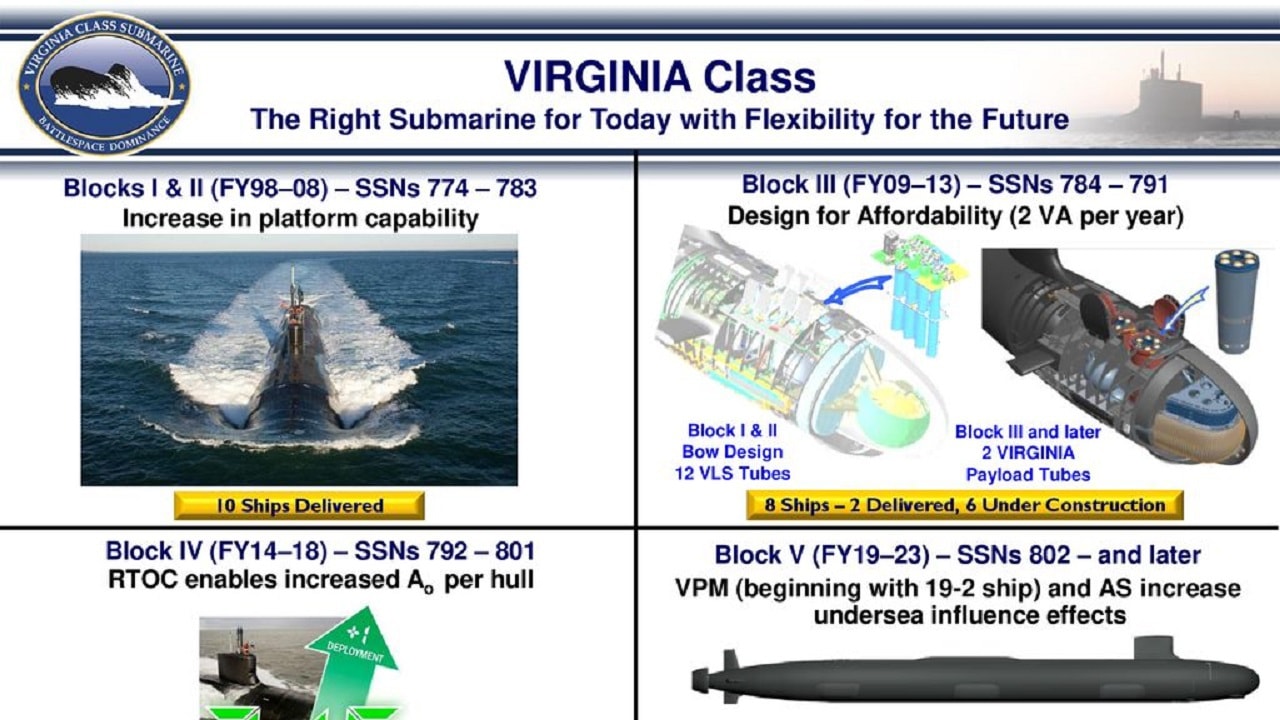
(FY98–08) – SSNs 774 – 783. Block III (FY09–13) – SSNs 784 – 791. Increase in platform capability. Design for Affordability (2 VA per year) Block I & II Bow Design. 12 VLS Tubes. Block III and later 2 VIRGINIA Payload Tubes. 10 Ships Delivered. 8 Ships – 2 Delivered, 6 Under Construction. Block IV (FY14–18) – SSNs 792 – 801. Block V (FY19–23) – SSNs 802 – and later. RTOC enables increased Ao per hull. VPM (beginning with 19-2 ship) and AS increase undersea influence effects. 10 Ships – 5 Under Construction, 5 Under Contract. In Design Phase, FY19 Construction Start. 16.
-Congressional critics like Rep. Ken Calvert accuse the Navy of sugarcoating delays, while leaders from Defense Secretary Pete Hegseth to new CNO Adm. Daryl Caudle promise a “transformational” fix.
-Whether workforce, yard upgrades, and new cost controls can rescue the program remains an open question.
Why the Virginia-Class Submarine Delays Are a Real Crisis for the US Navy
The U.S. Navy’s Virginia-class submarine program is behind schedule by almost 417 months.
The submarines are usually said to be experiencing only a two to three year delay, but no matter how you slice it, the Virginia-class is tardy as a mischievous school boy.
This constitutes a crisis for the Navy. These submarines are supposed to be the backbone of the Silent Service, but there are many gaps in the program, which is also $17 billion over budget over the next five years. The Navy is supposed to build two Virginia-class subs per year, but that is proving to be an unsustainable goal.
In Three Numbers: 417 (As in 417 Months Behind?)
One Capitol Hill lawmaker is especially irritated with the Navy’s seeming reticence to share information about the slow buildout of the Virginia-class. Representative Ken Calvert said last year that the Navy had “withheld information on costs and delays” and that its “plans to address” its shipbuilding crises “are primarily aspirational.”
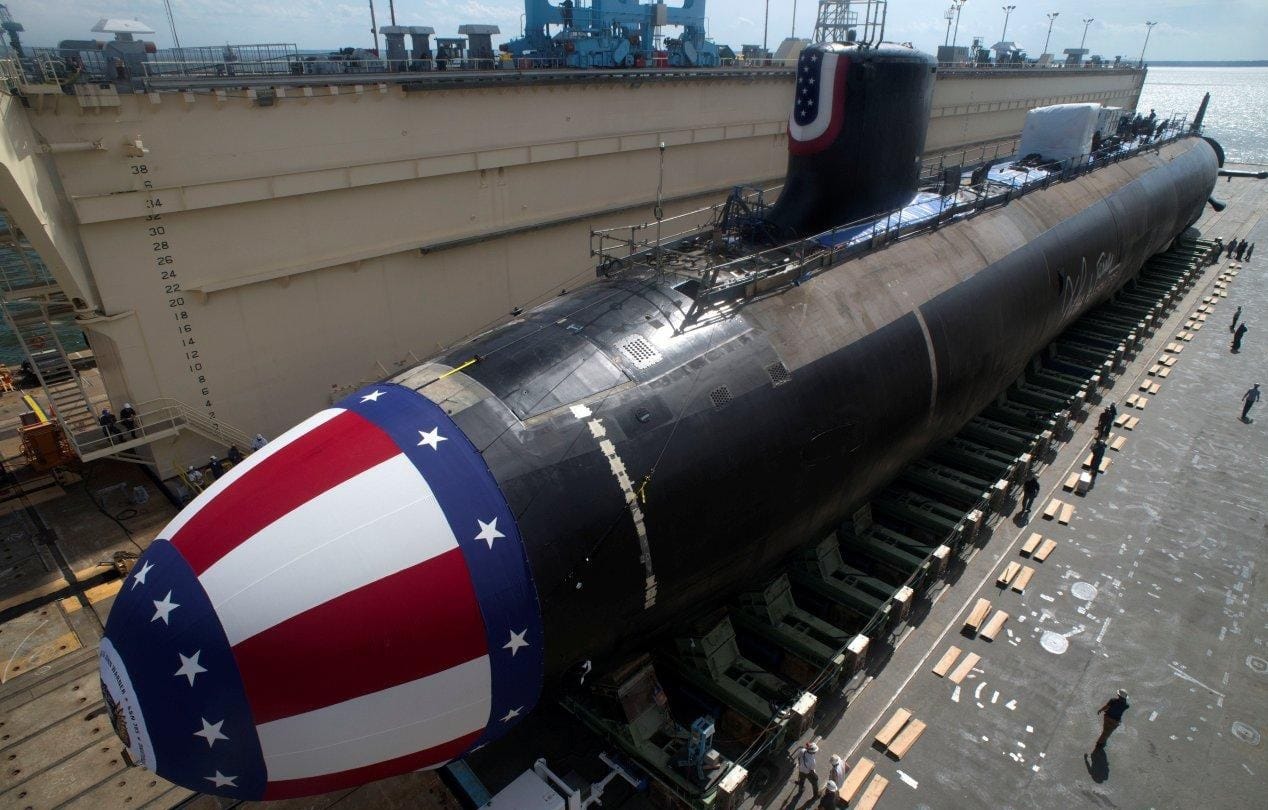
Image of Virginia-class Submarine. Image Credit: Creative Commons.
Can We Push Forward?
The Navy attributes the pandemic’s effects on the workforce and supply chain. But those days are over, and the service branch needs to forthrightly confront the delays to the Virginia-class.
HII and General Dynamics are only building 1.3 Virginia-class subs per year and that number is not near good enough to meet defense acquisition goals.
SECDEF Hegseth Has Taken an Interest
The Virginia-class is one of Secretary of Defense Pete Hegseth’s priorities. One would think that would spur production, and in some way it has given it a boost. Two Virginia-class fast attack boats, the future USS Idaho (SSN-799) and USS Massachusetts (SSN-798) are both undergoing sea trials simultaneously. It appears the Navy is getting the message. The USS Iowa (SSN-797) was undergoing tests at the end of 2024 and was commissioned in April this year.
The Massachusetts and Idaho are Virginia-class Block IV submarines. They have a reconfigured bow and updated sonar. The Block IV has two bigger vertical launch system tubes with six cells each for better firing Tomahawk cruise missiles. There are now a total of 10 Block IV Virginia boats.
Secretary of the Navy Is Aware of the Difficulties
On May 14, Secretary of the Navy John Phelan testified on Capitol Hill and said that “righting” the submarine program is “my number one priority.”
Calvert again delivered a blistering rebuke.
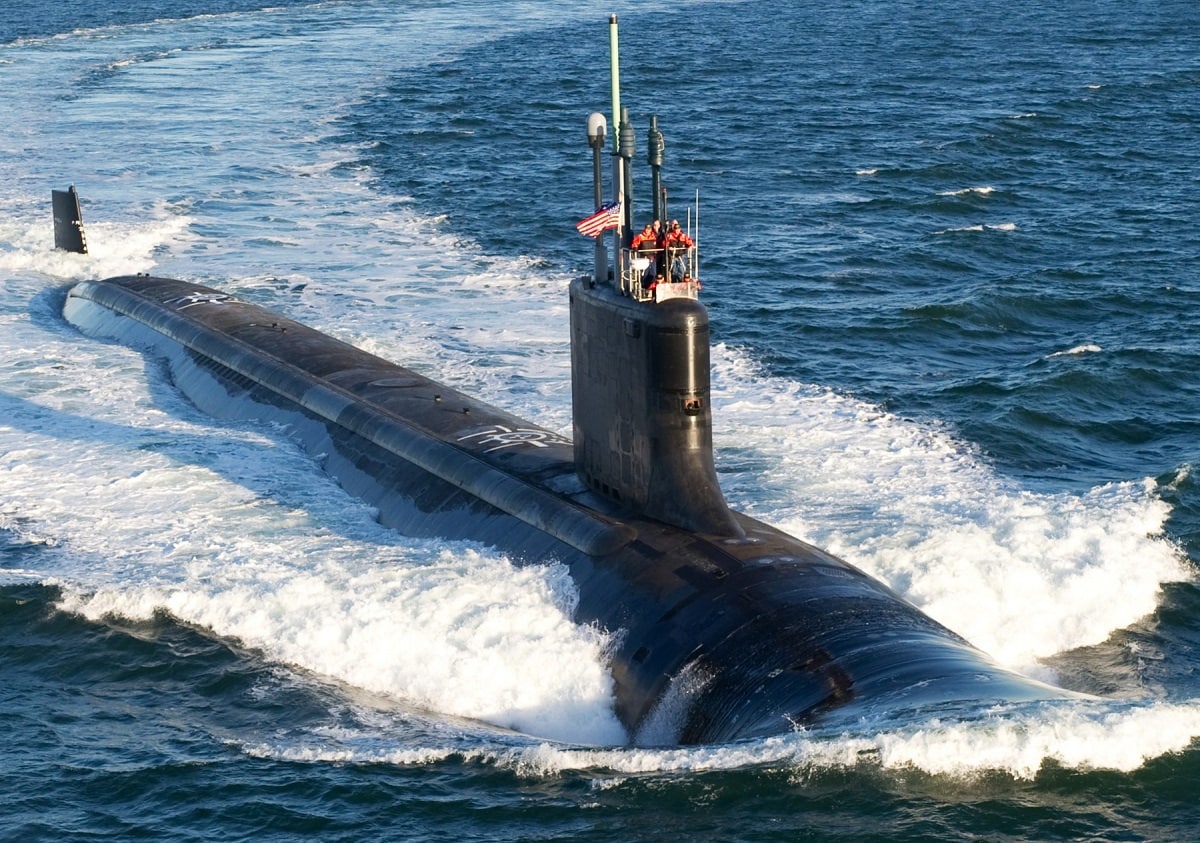
Virginia-Class. Image: US Navy.
“The Columbia program is now looking at an 18–24-month delay in delivering the lead ship. How does this happen to the Navy’s priority program? Further, I fear that delays in the Virginia-class program will only be compounded by delays in Columbia-class submarine construction. The Virginia-class program continues to hover at a construction cadence of 1.2 submarines a year versus the necessary cadence of two per year,” Calvert said.
The Navy must also deliver the Virginia-class to Australia as part of the AUKUS pact. This will only heighten the struggle.
Issues concerning workforce and infrastructure are a problem throughout the naval shipbuilding industry. The workers are inexperienced, and many open positions are unfilled. Facilities also need to be modernized.
“The Navy has an undersea warfighting requirement for 66 attack submarines,” Admiral James Kilby, then the acting Chief of Naval Operations, noted in written testimony to Congress. “We are well below our requirement, with 47 currently in inventory. As of April 2025, 24 Virginia-class submarines have been delivered, and 14 are under contract,”
The Silent Service must also maintain existing submarines, which requires a large workforce on its own. With the Virginia-class running over budget in prior years, there will need to be more funding set aside to meet submarine acquisition efforts.
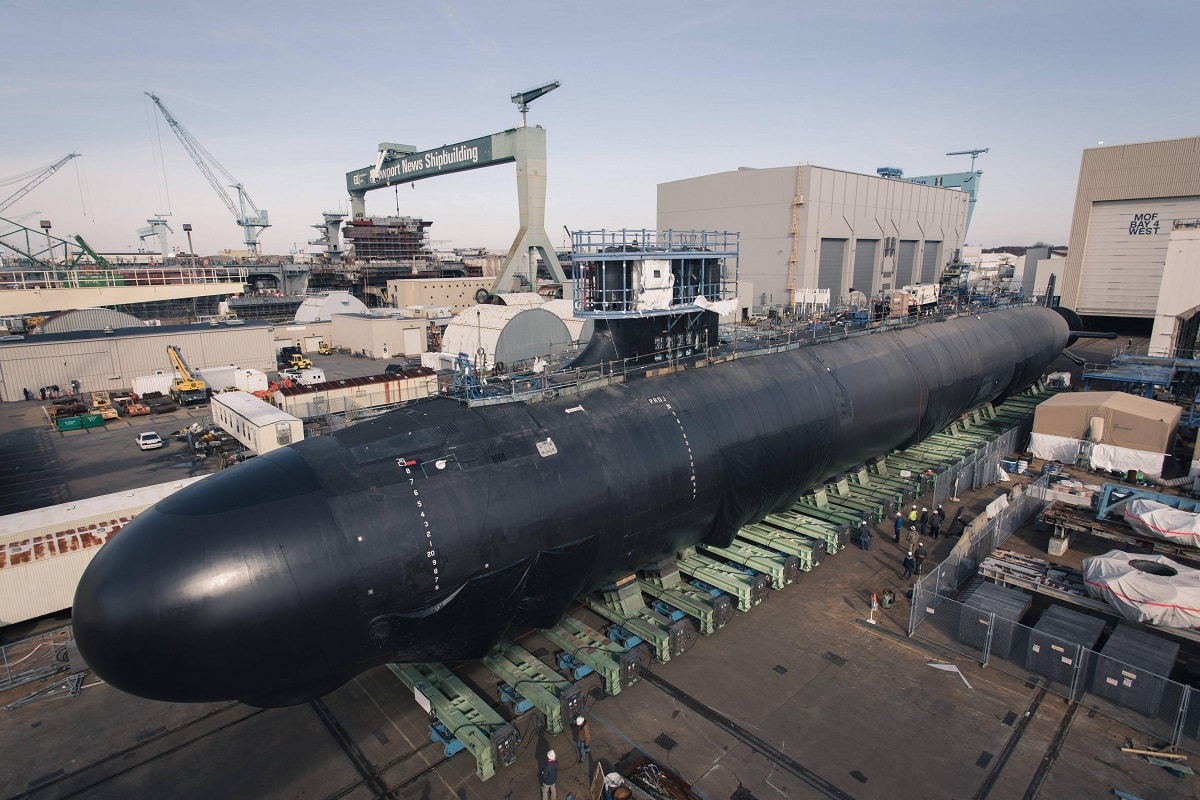
U.S. Navy Virginia-class Submarine.
One gambit the Navy is trying is to bring in a civilian cost agency to make sure the Virginia-class remains on time and on-budget by streamlining processes and making work more efficient at shipyards.
New CNO Makes Big Promises
It remains to be seen whether this will work. During his confirmation hearing in front of the Senate Armed Services Committee, Chief of Naval Operations Admiral Daryl Caudle lamented the state of shipbuilding.
“We do have to understand whether or not the industrial base can produce the submarines required so that we can make good on the actual pact that we made with the U.K. and Australia, which is around 2.2., 2.3 Virginia-class submarines per year,” Caudle told senators. “That’s going to require a transformational improvement, not a 10 percent improvement, not a 20 percent, a 100 percent improvement,” USNI News noted.
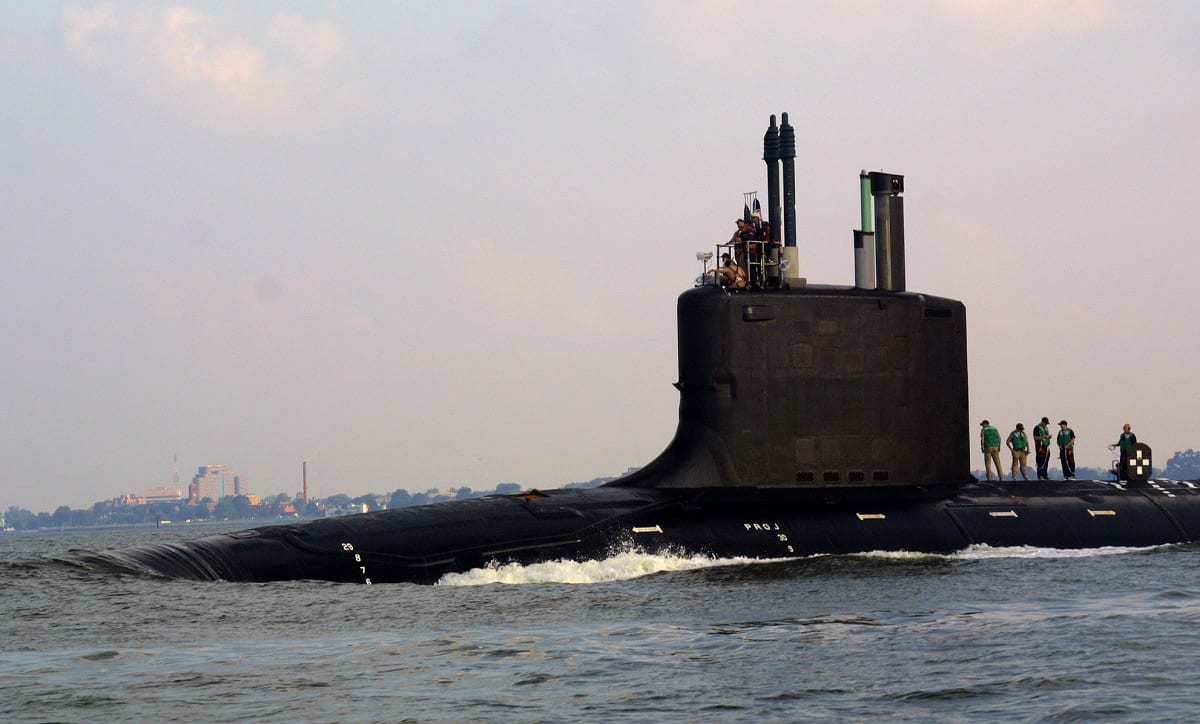
U.S. Navy Virginia-class Submarine.
Admiral Caudle should be given credit for lofty goals. He knows the Virginia-class is behind. What is frustrating is that the Navy is either reluctant to honestly address the Virginia-class’ problems.
There are constant threats from China, Russia, North Korea, and terrorists in the Middle East. There is nothing like the possibility of a Tomahawk strike from Virginia-class subs to keep these potential threats at bay. Let’s see if the new CNO can deliver on his promises. It’s time to move past rhetoric and meet the problem head on.
About the Author: Brent M. Eastwood
Author of now over 3,000 articles on defense issues, Brent M. Eastwood, PhD is the author of Don’t Turn Your Back On the World: a Conservative Foreign Policy and Humans, Machines, and Data: Future Trends in Warfare plus two other books. Brent was the founder and CEO of a tech firm that predicted world events using artificial intelligence. He served as a legislative fellow for US Senator Tim Scott and advised the senator on defense and foreign policy issues. He has taught at American University, George Washington University, and George Mason University. Brent is a former US Army Infantry officer. He can be followed on X @BMEastwood.