
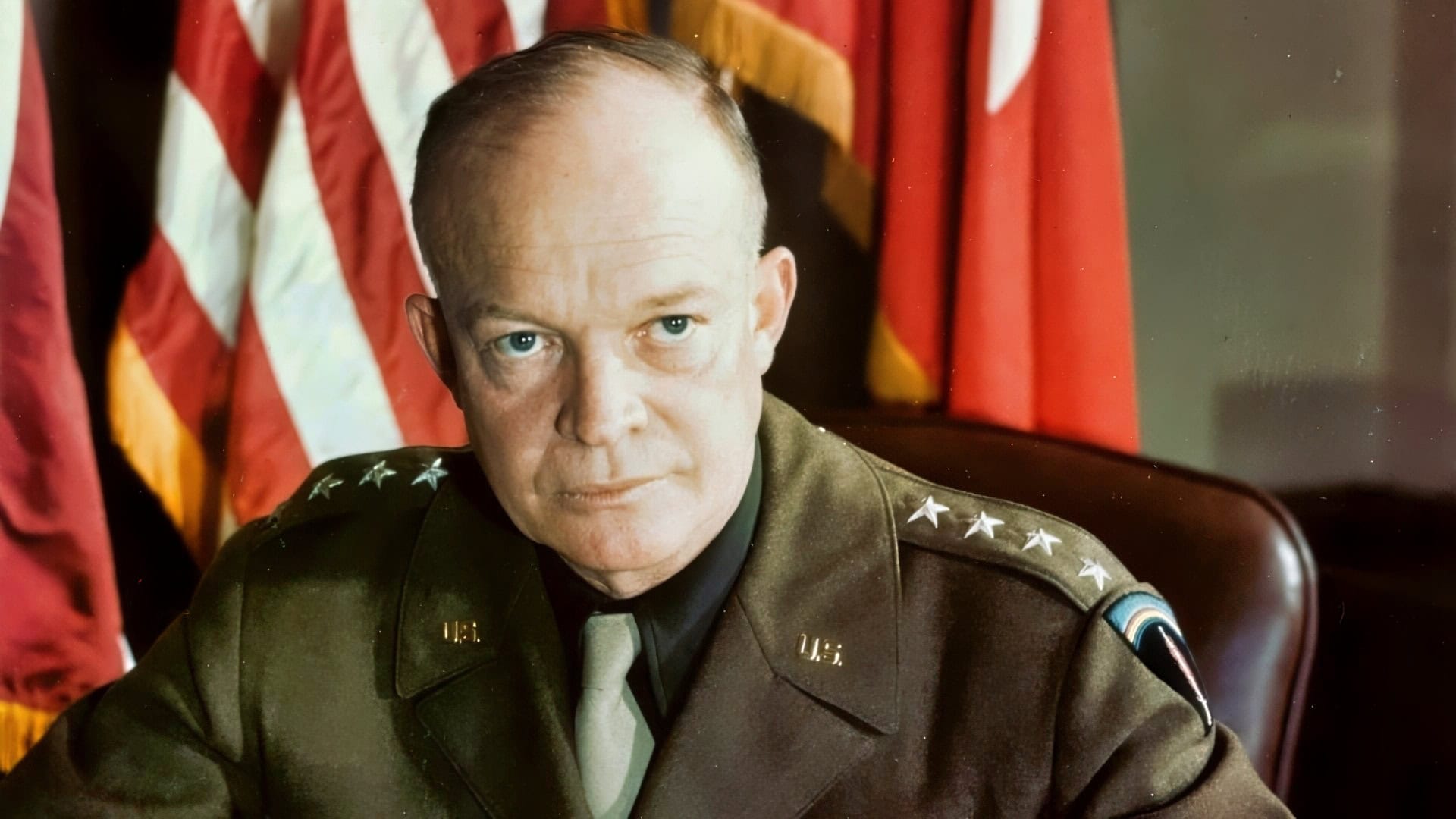
Dwight D. Eisenhower famously said it best: “What counts is not necessarily the size of the dog in the fight—it’s the size of the fight in the dog.” Spoken during a 1958 Republican National Committee speech, the words capture the philosophy of a general who had no combat experience yet went on to mastermind the largest amphibious invasion in human history—D-Day.
Saturday Quote of the Day by Dwight Eisenhower: The Man Behind D-Day
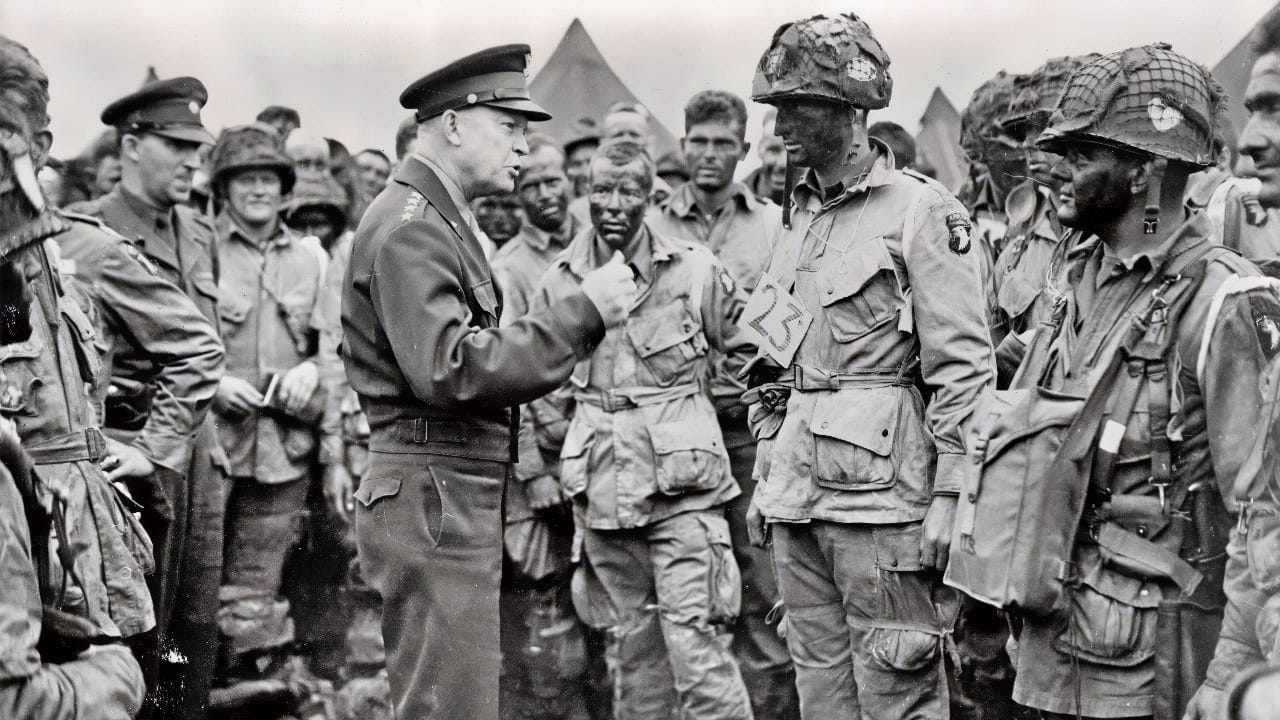
Dwight D. Eisenhower D-Day 1944. Image Credit: Creative Commons.
That quote, though sometimes apocryphally attributed to Mark Twain, actually belongs to Dwight David “Ike” Eisenhower (October 14, 1890 – March 28, 1969); then-President Eisenhower uttered those words during a January 31, 1958, speech to the Republican National Committee (RNC).
Going back to Ike’s soldiering days, happenstance meant he never got to serve in actual combat (though he had certainly been quite pugilistic in his childhood). Nonetheless, thanks to his superb planning and organizational skills, then-Gen. Eisenhower ensured there were plenty of proverbial dogs of all shapes & sizes, and plenty of fight, to participate in the single biggest day of the Western European Theatre of World War II: D-Day.
Overcoming Bureaucratic Obstacles: Getting Ike to D-Day
That lack of combat experience almost prevented Ike from ever becoming a 4-star (and later 5-star) general, let alone becoming the mastermind of D-Day.
However, ironically enough, and with the benefit of 20/20 hindsight, many historians assess his lack of combat experience during World War I as actually being an advantage to Gen. Eisenhower because his strategic and tactical mindset was not trapped in the horrors of mindless meatgrinder trench warfare.
In any event, Ike was a Brigadier General (1-star) on the General Staff in Washington, DC, when World War II began, and that lack of combat experience made Army Chief of Staff Gen. George C. Marshall reluctant to give Eisenhower a combat command.

George C. Marshall Smithsonian Portrait. Creative Commons Image.
Nonetheless, Marshall demonstrated his confidence in Eisenhower’s administrative skills by appointing him as the War Planner for the Philippines and the Far East, which marked the beginning of Eisenhower’s meteoric rise. Thus, it came to pass that President Franklin Delano Roosevelt appointed Ike as Supreme Commander of the Allied Expeditionary Force and tasked him with executing Operation Overlord.
Ike Takes Charge
The buildup to D-Day involved much training, trials, and tribulations, particularly repeated delays due to nasty weather. There was also the head game of fooling Adolf Hitler into thinking that the invasion would commence at the Pas-de-Calais rather than Normandy; that head game was made possible by Operation Fortitude, a grand deception campaign that included a large, utterly fake Army group in England.
Utter secrecy was an absolute must, but that secrecy was nearly blown at a London dinner party by U.S. Army Air Forces Maj. Gen. Henry J.F. Miller. Ike acted decisively to nip that crisis in the bud; instead of subjecting Miller to a drawn-out court-martial or sweeping the incident under the rug, he ordered that Miller be stripped of his temporary rank as a major general with a demotion to lieutenant colonel, relieving Miller of command and ordering him to return to the U.S. in disgrace.
As luck would have it, both the Allies and the Axis had left behind some painful, blood-soaked lessons for Eisenhower to draw upon when prepping for the D-Day invasion. Regarding the amphibious assault aspect, there was Operation Jubilee, the Allied amphibious attack—primarily Canadian, but with some Americans, Brits, Free French, Polish, and Czechoslovakian troops involved as well—on the German-occupied port of Dieppe in northern France on 19 August 1942. Long story short, Operation Jubilee turned out to be an utterly joyless disaster for the invaders.
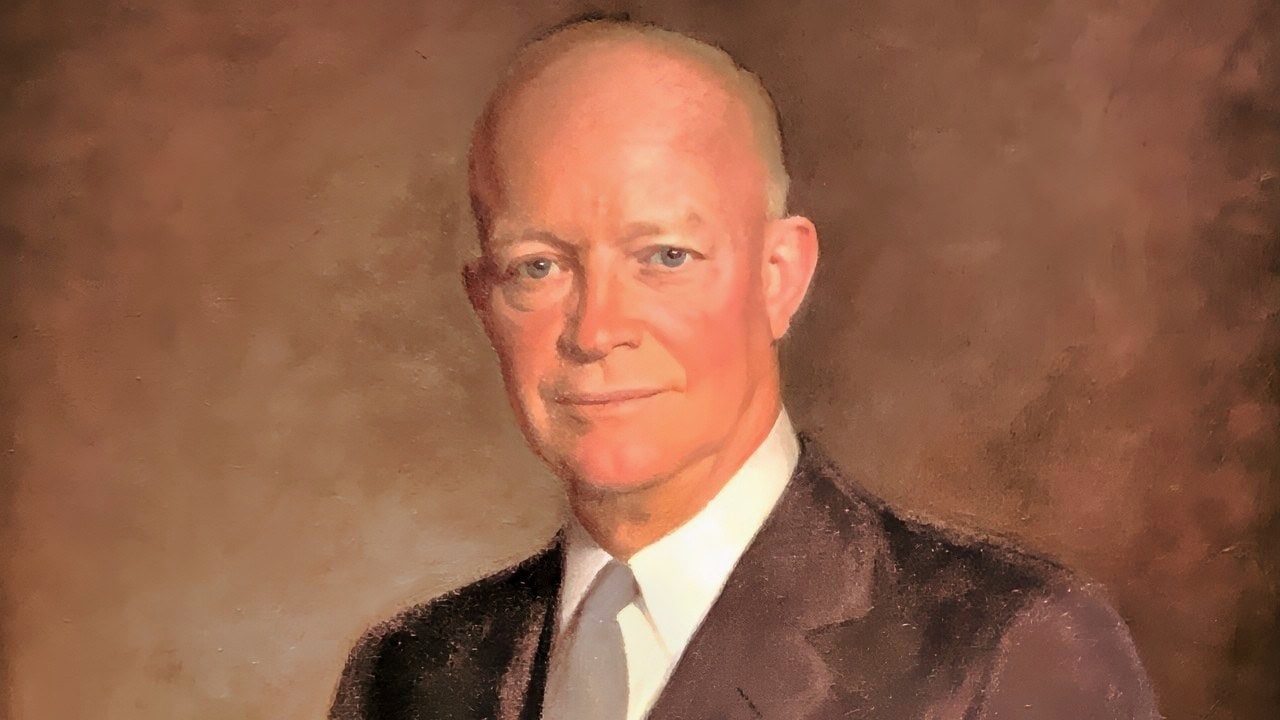
Dwight D. Eisenhower President. Image Credit: Creative Commons.
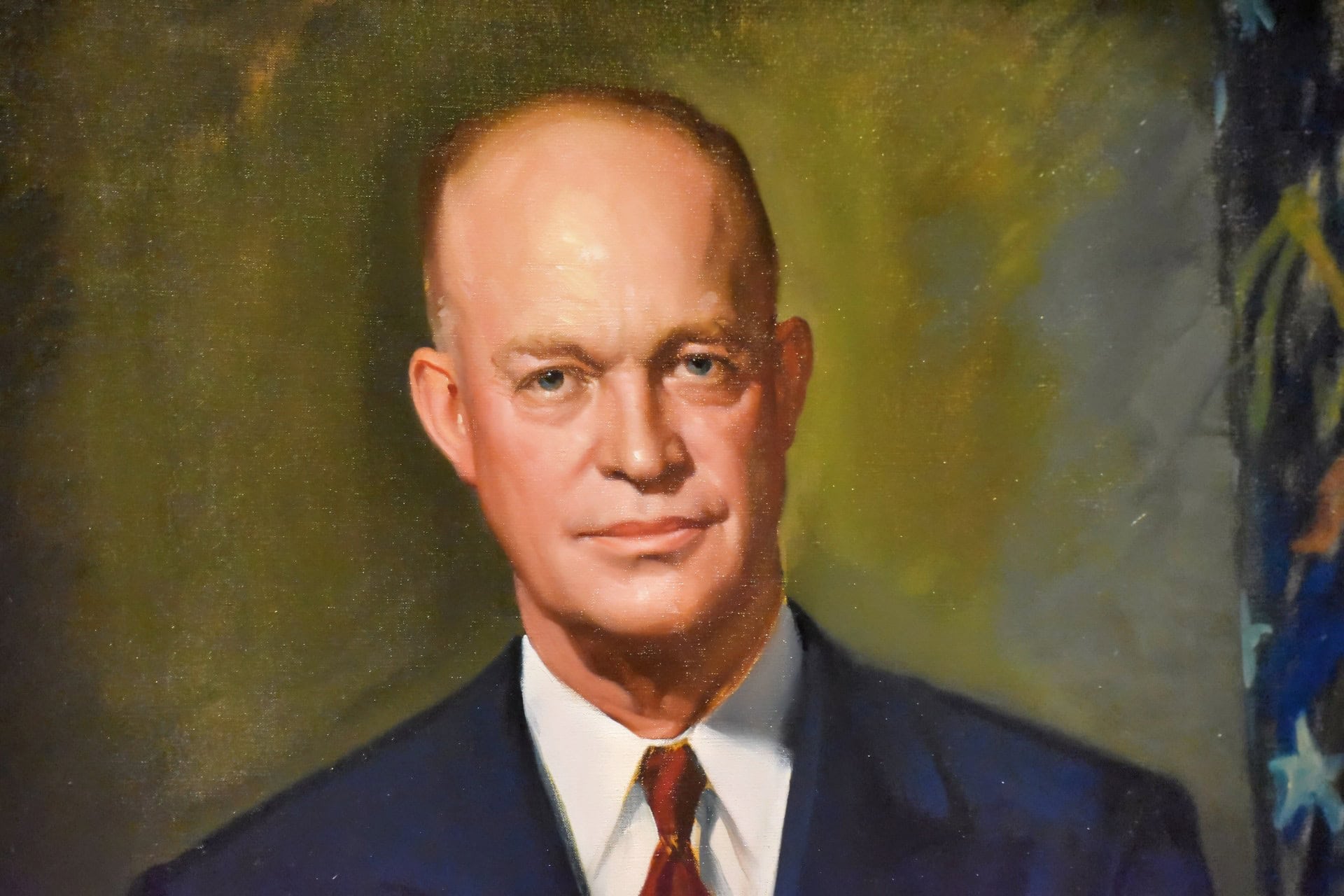
Dwight D. Eisenhower 19FortyFive.com Image. Taken on 1/23/2026 at the National Portrait Gallery in Washington, DC By Dr. Brent M. Eastwood.
As far as the airborne component of D-Day, Ike could look at Operation Mercury (Unternehmen Merkur), Nazi Germany’s 20 May – 1 June 1941 invasion of Crete, which made heavy use of the elite Fallschirmjäger paratroopers. The Germans eventually did capture the island, but suffered horrific casualties in the process, particularly by die Fallschirmjäger.
Regarding the weather delays, Gen. Eisenhower rolled the proverbial dice on the accuracy of RAF Group-Captain James Martin Stagg’s prediction of a weather ‘window’ on the 6th.
As noted by historian Max Hastings in the 1985 book “Victory in Europe: D-Day to VE Day In Full Color” by Max Hastings (with incredible color photographs by famed filmmaker George Stevens), ‘I’m quite positive we must give the order,’ he said at the meeting at 9.45 am on 4 June. ‘I don’t like it, but there it is…I don’t see how we can possibly do anything else.’”
The general’s famous meeting with the paratroopers of the 101st Airborne Division in Newbury, England on the eve of the D-Day invasion—wherein he eschewed stuffy formalities and instead literally joked & smoked with the troops—is movingly depicted in the 2004 made-for-television movie “Ike: Countdown to D-Day,” starring Tom Selleck in the titular role (fans of the curly-haired, mustachioed “Magnum, P.I.” will have a hard time recognizing him as the bald-domed, clean-shaven general).
Needless to say, the D-Day gamble succeeded, and V-E Day happened ten months later. The opening shots of Operation Overlord were fired by the Royal Navy light cruiser HMS Belfast (Pennant No. C35), a vessel that is now preserved for posterity as a floating museum (a tour that this writer can personally vouch for).
In 1948, Ike described his D-Day experiences in the memoir “Crusade in Europe.”
Epilogue: Ike’s Literal Dogs
Methinks it appropriate to conclude this article with some human interest stories examining the quote at the beginning of this article from a literal standpoint.
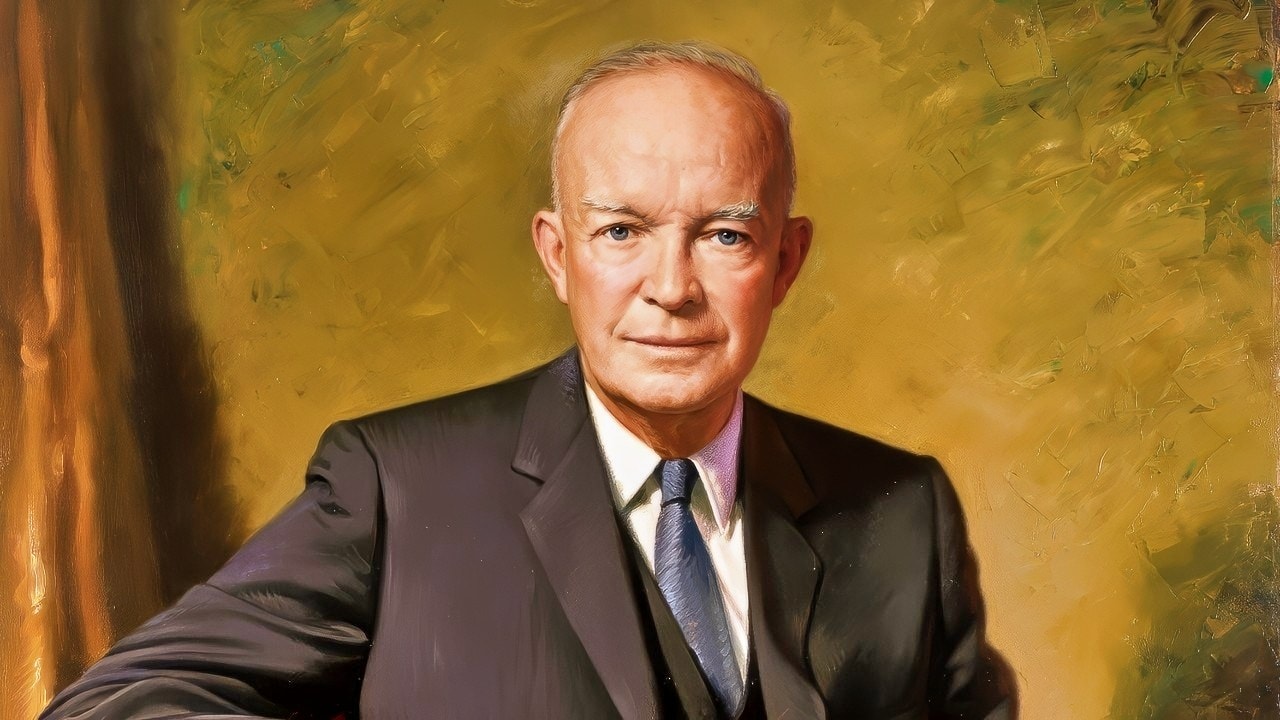
Former General Dwight D. Eisenhower. Image Credit: Creative Commons.
During the war, Ike had a beloved Scottish Terrier named Telek, a mischievous but beloved pooch whose story is described in detail by Kathleen Kinsolving in her 2012 book “Dogs of War: The Stories of FDR’s Fala, Patton’s Willie, and Ike’s Telek.”
Fast-forward to Eisenhower’s Presidency and the time that he uttered the canine metaphor, he had a Weimaraner named Heidi; as noted by the Presidential Pet Museum, “True to her breed, Heidi was protective of her owners.
She was especially wary of White House photographers and would often try to prevent Mamie Eisenhower from having her picture taken by jumping between the First Lady and the camera. Or Heidi would just jump up on people!”
About the Author: Christian D. Orr
Christian D. Orr is a Senior Defense Editor. He is a former Air Force Security Forces officer, Federal law enforcement officer, and private military contractor (with assignments worked in Iraq, the United Arab Emirates, Kosovo, Japan, Germany, and the Pentagon). Chris holds a B.A. in International Relations from the University of Southern California (USC) and an M.A. in Intelligence Studies (with a concentration in Terrorism Studies) from American Military University (AMU). He is also the author of the book “Five Decades of a Fabulous Firearm: Celebrating the 50th Anniversary of the Beretta 92 Pistol Series,” the second edition of which was recently published.