

The B-52 Stratofortress pilots perfected low-level flying during the Cold War to operate under Soviet radar systems after the Soviets made significant enhancements to their air defenses in the 1980s.
Flying these low-level missions was very tiring, as the pilots had to maneuver a massive 8-engine aircraft with significant wing flex, often navigating a complex, antiquated, and cramped cockpit for over 10 hours, making it both physically and mentally taxing.

A B-52 Stratofortress with the 307th Bomb Wing, Louisiana, flies toward the boom of a KC-135 Stratotanker, with the 914th Air Refueling Wing, New York, July 9, 2022 over Southern United States. The KC-135 had spouses of the 307th Maintenance Group on board that were able to watch the refueling. (U.S. Air Force photo by Staff Sgt. Tiffany A. Emery)

A B-52 Stratofortress with the 93rd Bomb Squadron out of Barksdale Air Force Base pulls close behind a KC-135 Stratotanker from the 914th Air Refueling Wing to be refueled over Missouri, USA, 15 Aug, 2022. Air Refueling offers rapid mobility to the joint forces around the globe. (U.S. Air Force Photo by Airman Kylar Vermeulen)

Multiple B-52H Stratofortresses sit parked at the flight line on Minot Air Force Base, North Dakota, Aug. 8, 2022. The B-52 bomber can carry approximately 70,000 pounds of bombs, mines and missiles. (U.S. Air Force photo by Airman Alysa Knott)
Dario Leone wrote an intriguing article on his website about what went into planning and conducting those low-level missions with the B-52.
But what about a massive B-52 bomber buzzing a US supercarrier, akin to what Maverick did in Top Gun?
Did A B-52 Really Buzz an Aircraft Carrier At Near Sea Level?
Yes, this really happened in the spring of 1990. Two B-52s were practicing their low-level flights in the Persian Gulf, in the area where the USS Ranger (CVN-61) was operating.
Dario Leone posted another article with some outstanding photographs of the day. The B-52s raised the Ranger on the radio and asked if they could do a fly-by of the carrier. The Ranger’s air controller (Air Boss) said yes (unlike what he did for Maverick).
The conversation went like this…
B-52 Pilot: “Ranger, we’re 5 miles out.”
USS Ranger: “We do not have visual…”
B-52 Pilot: “Look down.”
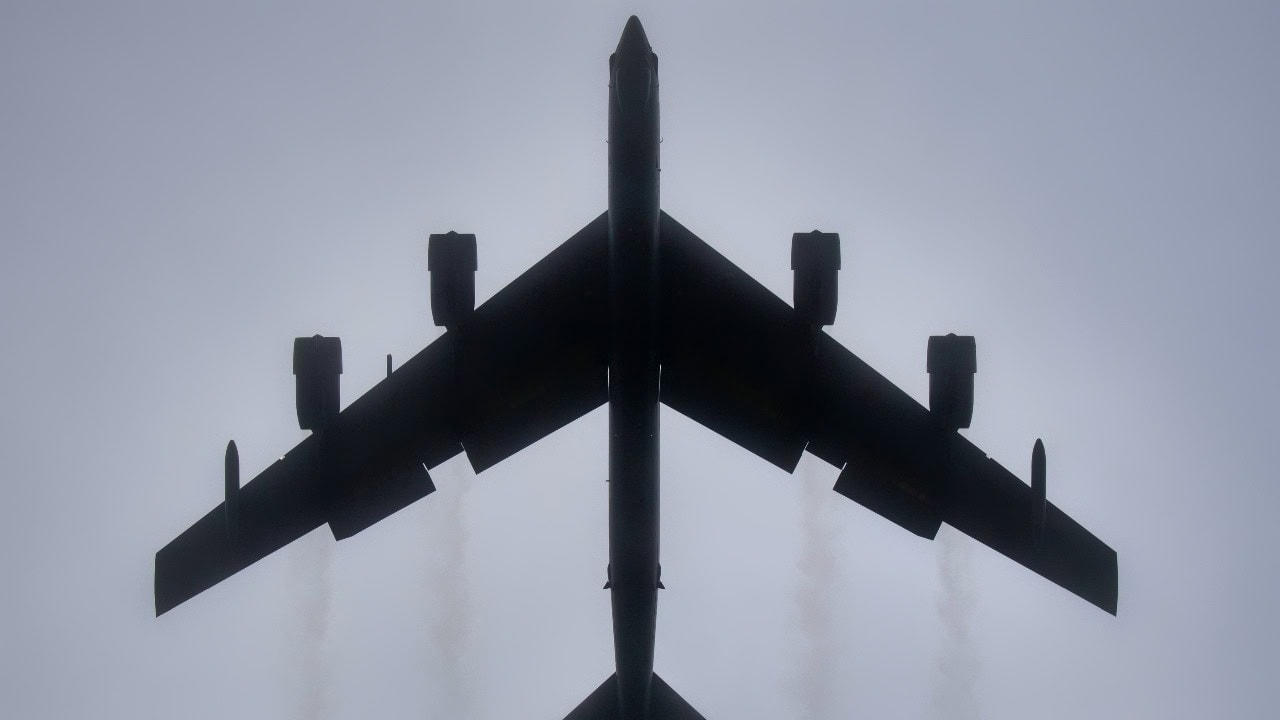
Yes, the B-52s were actually below the level of the aircraft carrier’s flight deck. The big bomber’s paint scheme made it hard to see from above, but they were flying so low that the massive eight engines were spraying seawater in rooster tails behind them.
After they made an incredible low-level fly-by, the “BUFF” pilots asked the Air Boss if they’d like another fly-by. The Ranger agreed to it, and on the second pass, sailors from all over the carrier and her assigned strike group lined the sides of the ships with their cameras.
Muscling a 488,000-pound aircraft that low, beneath the flight deck of an aircraft carrier, is some impressive flying.
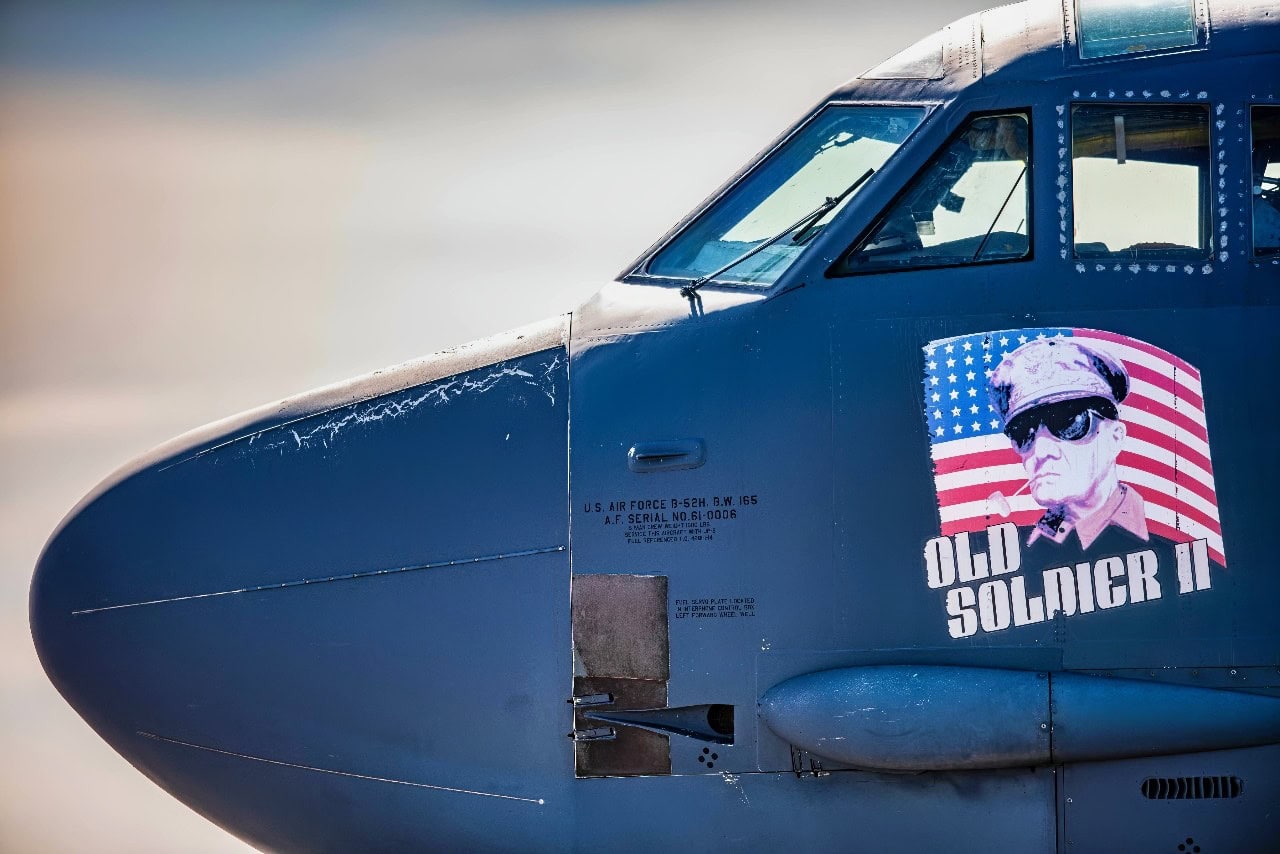
A U.S. Air Force B-52H Stratofortress assigned to the 96th Bomb Squadron, Barksdale Air Force Base, Louisiana, sits on the flightline during exercise Prairie Vigilance 25-1 at Minot Air Force Base, North Dakota, April 12, 2025. For more than 60 years, the B-52 has been the backbone of the strategic bomber force of the United States. As a routine training mission, PV 25-1 enhances the safety, security, and reliability of the bomber leg of the U.S. nuclear triad. (U.S. Air Force photo by Senior Airman Kyle Wilson)
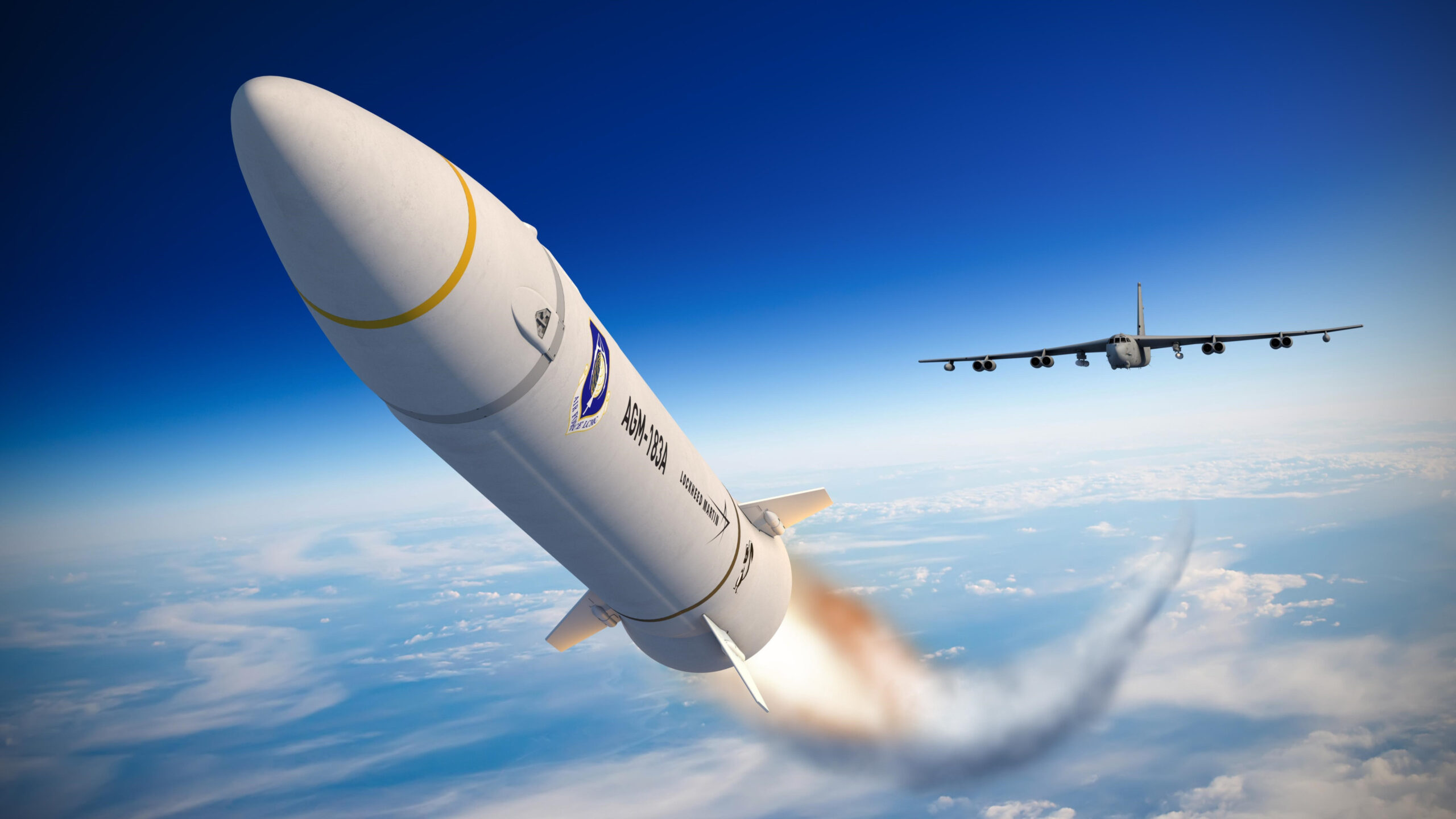
Hypersonic Missiles fired from B-52. Image Credit: Creative Commons.
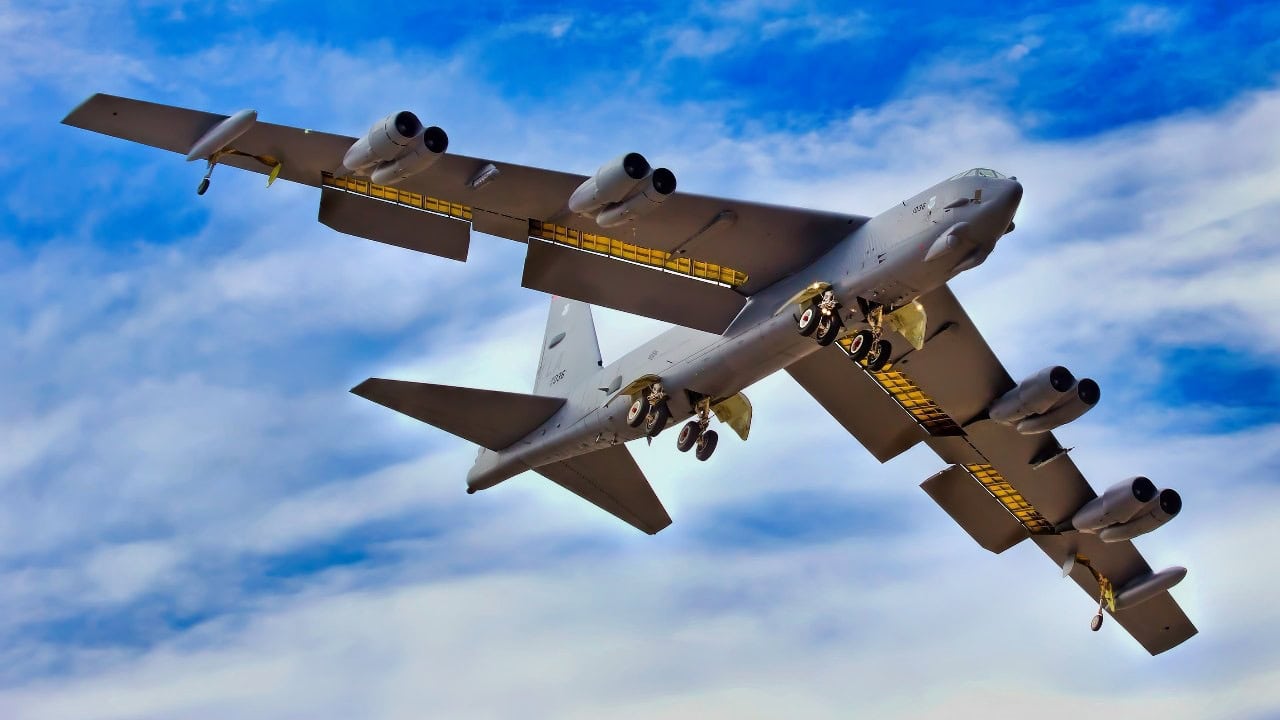
B-52 Bomber. Image Credit: Creative Commons.
But it wasn’t the first time B-52s buzzed a carrier. David O’Malley quoted a B-52 pilot, who told the story of a pair of BUFFs that buzzed the USS Midway during the Iran Hostage Crisis off the coast of Guam.
“We were tasked by the JCS to fly a mission deep into the Indian Ocean/Persian Gulf to surveil the Soviet Fleet. At this time, the US 7th Fleet was in the area, being shadowed by the Soviets, and their Bear bombers, launching from Afghanistan, were harassing our carriers.
“The JCS evidently wanted to show the Soviets AND the Iranians that our strategic airpower could reach them that far out,” former B-52 pilot Doug Aitken said.
“The crews made contact with the US Navy and were vectored to the Soviet fleet. On their first pass, the Soviet crew was on deck, waving, initially assuming the aircraft were their BEAR bombers. On the second pass, not one member of the Soviet navy was to be seen.
The BUFFS then went over and did a flyby for the US Navy and returned to Guam.”
The Air Force Is Modernizing The B-52 with Rolls-Royce Engines
The U.S. Air Force is upgrading the B-52H Stratofortress to the B-52J to modernize the aging fleet and ensure the platform remains viable until the 2050s.
Key upgrades include new Rolls-Royce-Hill F130 engines for better fuel efficiency/reliability, a new radar system, and enhanced weapons capacity to carry advanced hypersonic and standoff missiles.
The B-52J acts as a cost-effective, reliable “bomb truck” that supports the nuclear triad while bridging the gap in bomber numbers as the new B-21 Raider is fielded.
Aviation historians will recall that the legendary P-51 Mustang of World War II fame reached the zenith of its effectiveness once it was paired with a Rolls-Royce Merlin engine. The sound that the engine had was unmistakable
Will The USAF Field A 100-Year-Old Bomber? It Is Possible
The Air Force has had one constant in the past 70+ years: the B-52 bomber. The B-52J is a proposed upgrade to the B-52 Stratofortress, aiming to extend its service life well into the 2050s with new engines, advanced radar, and updated avionics. That would put the iconic bomber’s age at the century mark.
The B-52J bomber remains the subject of ongoing debate, with some advocating for its continued service and modernization, while others question its long-term value and strategic relevance. It is costly, and with the modern B-21 Raider set to enter service, they argue that the funds would be better spent on the Raider.
The Air Force Wants The B-52J Model
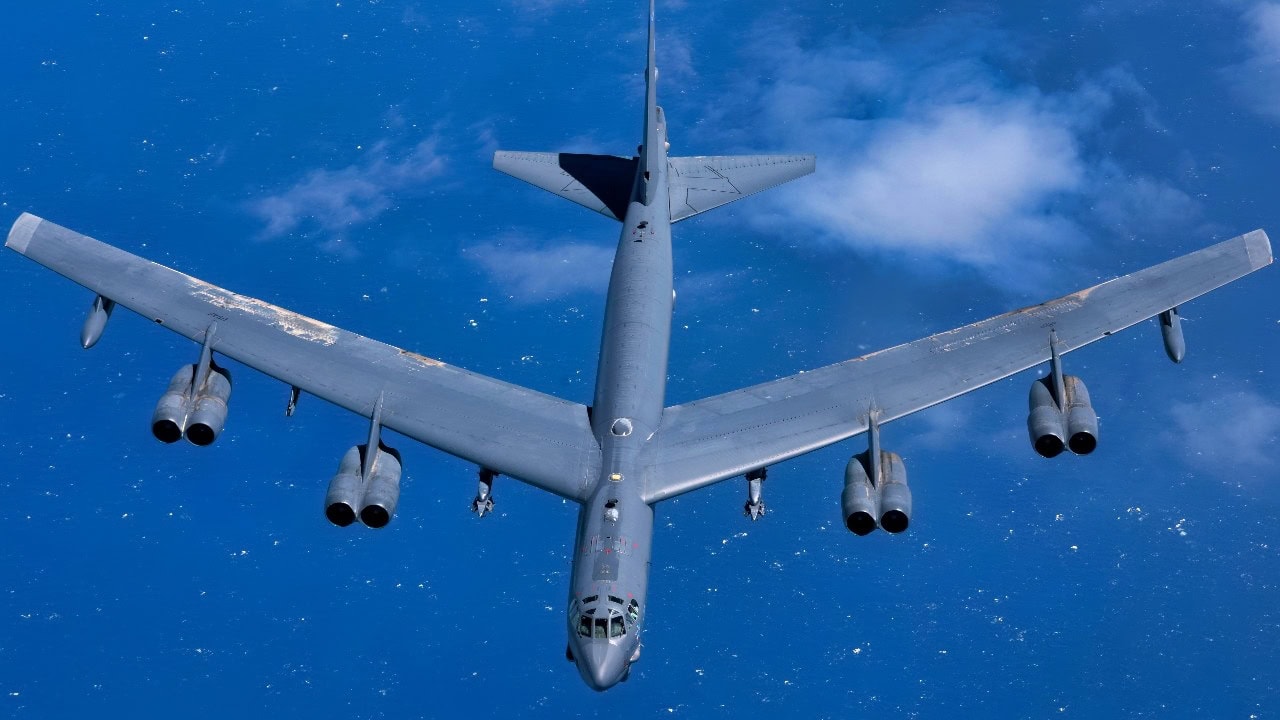
A U.S. Air Force B-52 Stratofortress, from the 5th Bomb Wing at Minot Air Force Base, N.D., breaks away after receiving fuel from a U.S. Air Force KC-135 Stratotanker from RAF Mildenhall, England, over the Mediterranean Sea April, 9, 2018. A formation of four KC-135s refueled two B-52s. Each KC-135 offloaded more than 80,000 pounds of fuel. (U.S. Air Force photo by Airman 1st Class Benjamin Cooper)
A B-52 Stratofortress takes off during Global Thunder 2019 at Barksdale Air Force Base, La., Nov. 5, 2018. Global Thunder is an annual U.S. Strategic Command (USSTRATCOM) exercise designed to provide training opportunities to test and validate command, control and operational procedures. The training is based on a notional scenario developed to drive execution of USSTRATCOM and component forces’ ability to support the geographic combatant commands, deter adversaries and, if necessary, employ forces as directed by the President of the United States. (U.S. Air Force photo by Airman 1st Class Lillian Miller)
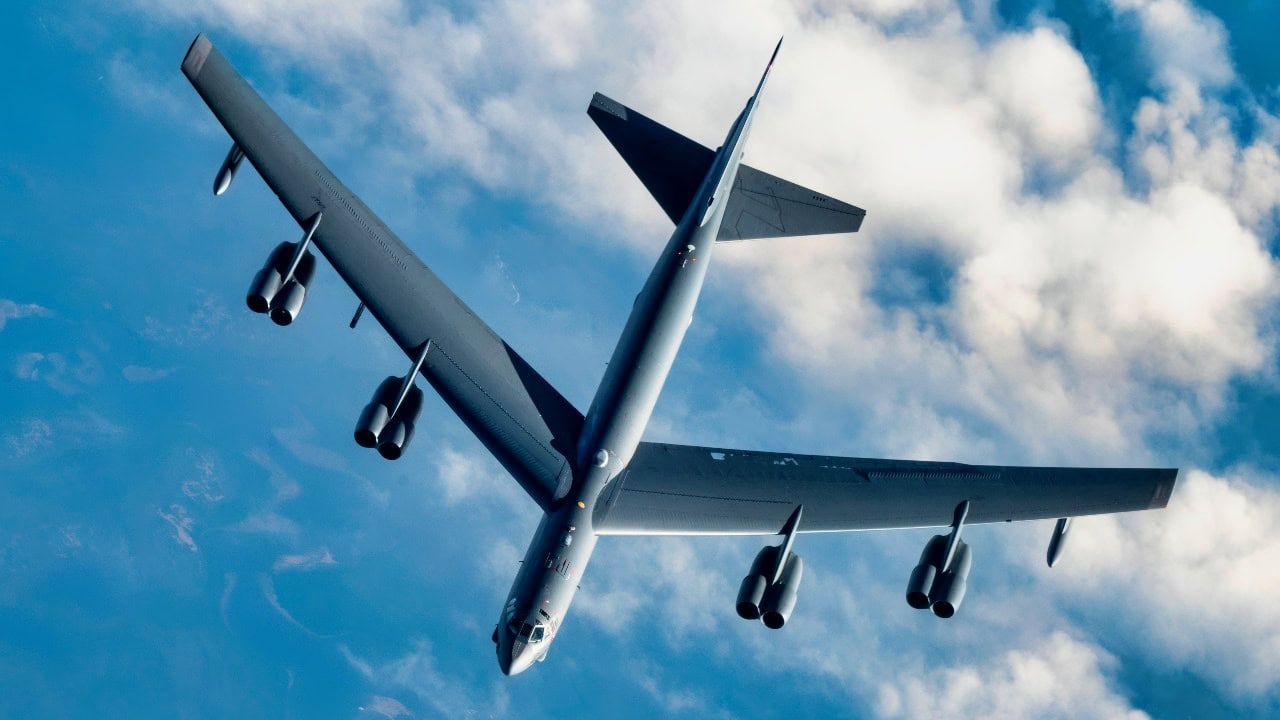
A U.S. Air Force B-52 Stratofortress departs after being refueled by KC-135 Stratotanker over the Pacific Northwest July 18, 2024. The 92nd Air Refueling Wing and 141st ARW’s ability to rapidly generate airpower at a moment’s notice was put to the test when Air Mobility Command’s Inspector General team conducted a no-notice Nuclear Operational Readiness Inspection, July 16–18, 2024. During the NORI, Airmen demonstrated how various capabilities at Fairchild AFB enable units to generate and provide, when directed, specially trained and equipped KC-135 Stratotanker aircrews to conduct critical air refueling of U.S. Strategic Command-assigned strategic bomber and command and control aircraft. (U.S. Air Force photo by Staff Sgt. Lawrence Sena)
The Air Force is considering combining the B-21 Raider and the B-52J into a package that will deliver massive firepower, long range, and the ability to penetrate enemy defenses to deliver precision weapons.
The B-52J won’t penetrate an enemy’s anti-access, aerial denial (A2/D2) umbrella; it would be highly vulnerable against modern air defenses. That is for the B-21 Raider to do.
Weapons integration has also been improved; the J-variant was designed to carry the JASSM-ER, LRASM, hypersonic weapons, and the LRSO nuclear cruise missile.
The B-52J becomes a stand-off missile arsenal, launching long-range cruise missiles, such as the Long Range Stand-Off (LRSO) weapon, and hypersonic missiles without entering contested, heavily defended airspace.
The Bomber Force, Both Old And New
Once the B-21 Raider and B-52J are in full production, the US bomber fleet will number approximately 200, with more than 100 B-21s and the remainder B-52Js, thereby enlarging the force.
According to Gen. Thomas Bussiere, commander of the Air Force Global Strike Command (AFGSC), the bomber force currently stands at approximately 141.
However, one intriguing possibility for the B-52J is its deployment with the Air Force’s newest aircraft, the Collaborative Combat Aircraft (CCA).
“It is the ability of the B-52 to carry such a large payload that can put these unmanned systems into the middle of the fight that makes a difference and will provide more justification for the cost of the upgrade,” said a US air power specialist who was quoted by Reuben Johnson.
“It will make the ‘long arm’ of the B-52 even longer.”
The B-52 isn’t the most comfortable aircraft to fly, and isn’t meant for the faint of heart, but it has been a steady, reliable aircraft for the past 70+ years.
And the Air Force has no plans to retire it any time soon. It may even buzz a few more aircraft carriers before it is done.
About the Author: Steve Balestrieri
Steve Balestrieri is a National Security Columnist. He served as a US Army Special Forces NCO and Warrant Officer. In addition to writing on defense, he covers the NFL for PatsFans.com and is a member of the Pro Football Writers of America (PFWA). His work has been regularly featured in many military publications.