
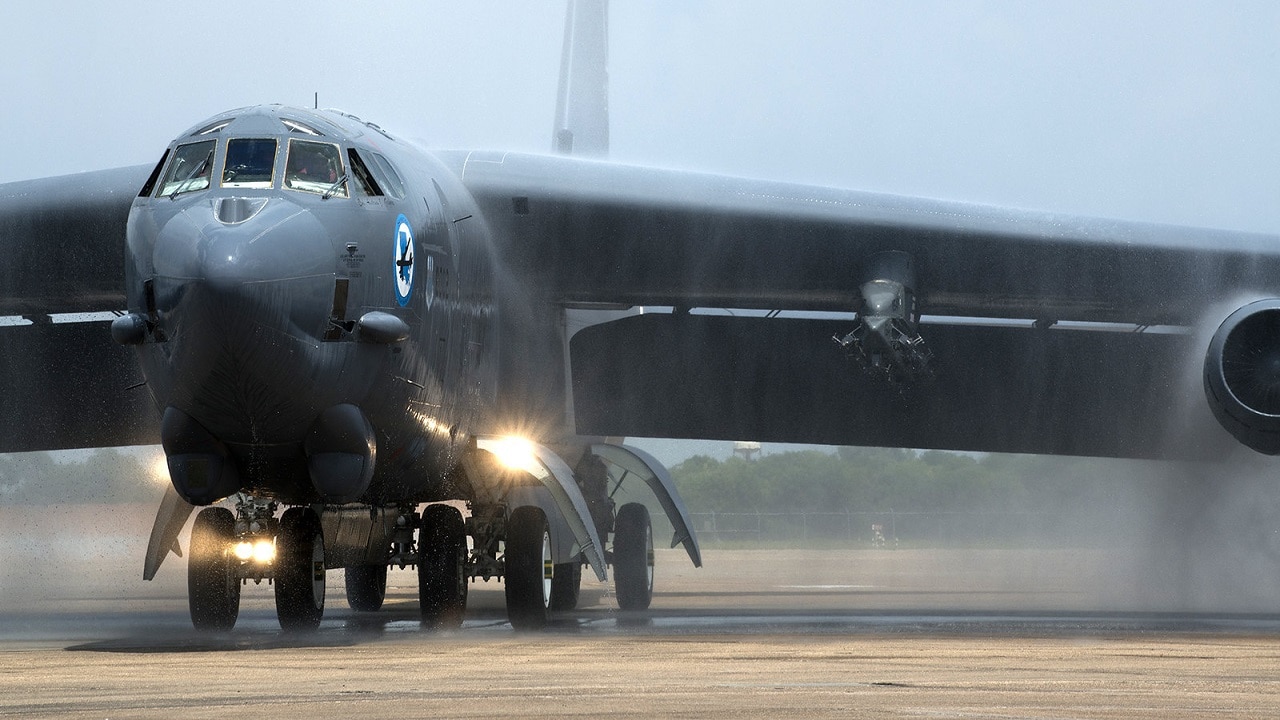
Rolls-Royce announced in February that it had successfully completed altitude and operability testing for its F130 engine, indicating that the effort to modernize the B-52 Stratofortress into its future B-52J configuration is well underway. The testing took place at the Arnold Engineering Development Complex (AEDC) in Tullahoma, Tennessee, inching the program closer toward flight testing and modification.
The milestone is part of the Air Force’s Commercial Engine Replacement Program (CERP), which aims to replace the B-52’s aging TF33 engines – some of which date back to the early 1960s – with modern and more efficient powerplants. The B-52 itself is expected to remain in service into at least the 2050s, making the program’s success an essential part of long-range U.S. strike planning.
“Rolls-Royce (LSE: RR., ADR: RYCEY) today announced the successful completion of altitude and operability testing for the F130 engine in another step towards delivering for the United States Air Force B-52J Stratofortress,” an official statement reads.
“Rolls-Royce conducted the testing at the U.S. Air Force Arnold Engineering Development Complex (AEDC) in Tullahoma, Tennessee, where Rolls-Royce engineering teams worked side-by-side with the Air Force to validate performance in demanding mission conditions.”
What Rolls-Royce Just Completed
The latest testing focused on validating the F130 engine’s performance across a wide range of conditions, particularly for high-altitude and long-endurance bomber missions.
“At AEDC, Rolls-Royce conducted altitude tests to demonstrate sustained performance for long-duration, high-altitude strategic missions; operability testing with distortion screens to replicate turbulent, real-world airflow and confirm engine stability under stress; and Integrated Drive Generator (IDG) testing with Boeing to ensure stable and reliable electrical power during all mission scenarios,” the statement explained.
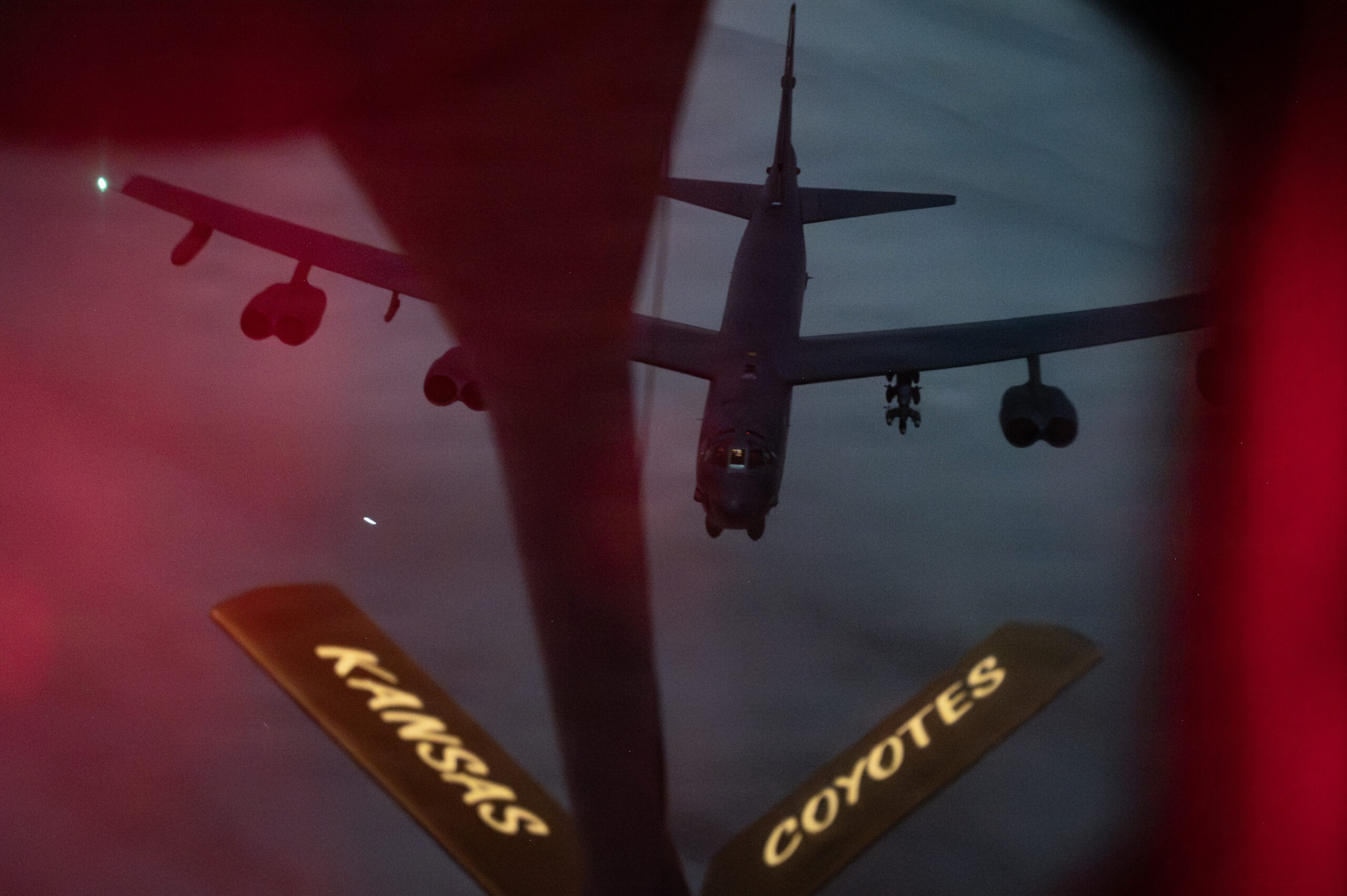
A U.S. Air Force B-52 Stratofortress aircraft flies over the U.S. Central Command area of responsibility during Operation Epic Fury, March 26, 2026. (U.S. Air Force photo)
Operability testing was conducted using distortion screens to simulate turbulent airflow conditions. That method of testing is intended to stress the engine under realistic and degraded intake conditions, ensuring stability even when airflow is disrupted – something that can occur during aggressive maneuvering or in adverse atmospheric conditions.
The company’s reference to IDG testing, conducted in conjunction with Boeing, refers to experiments that verify the engine’s ability to deliver consistent, reliable electrical power across all mission scenarios. That requirement is essential given the increasing reliance these aircraft have on mission systems and onboard electronics. A reliable energy source ensures the aircraft can maintain its core features during flight.
Lt. Col. Timothy Cleaver, the U.S. Air Force program manager for the B-52 Commercial Engine Replacement Programs, stressed the scope of the testing effort:
“Throughout this F130 engine test campaign, we gathered essential data about how this engine operates across the full spectrum of flight conditions. Completing the series of tests at AEDC’s world-class facility gives us confidence in the engine and associated systems as we proceed into test aircraft modification and flight testing.”
This phase of testing effectively confirms that the engine meets baseline performance expectations before being integrated onto a flight test aircraft, reducing risk ahead of the next stage of the program.
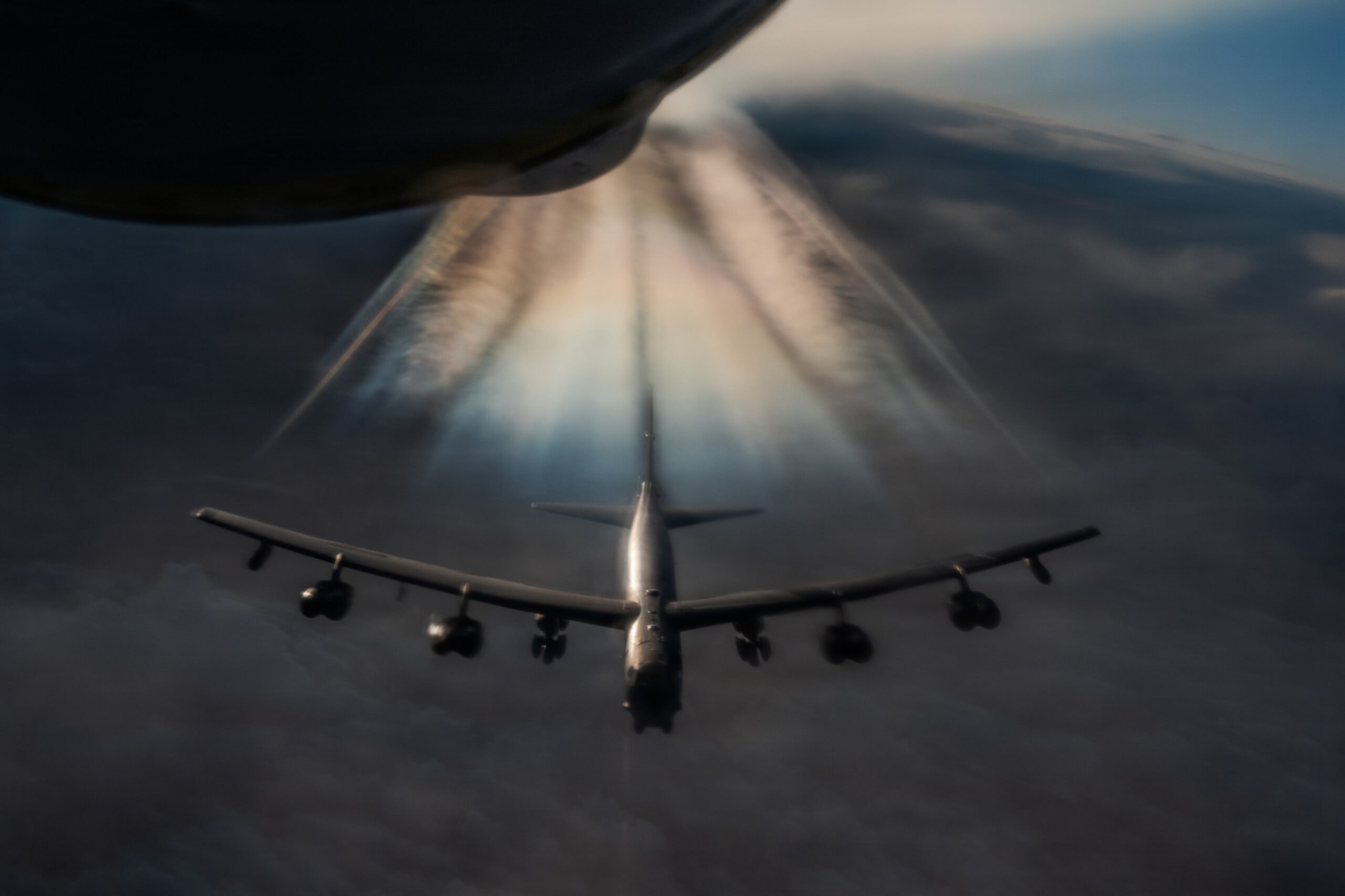
A U.S. Air Force KC-135 Stratotanker aircraft prepares to refuel a B-52H Stratofortress aircraft during Operation Epic Fury over the U.S. Central Command area of responsibility, March 20, 2026. (U.S. Air Force photo)
Why the F130 Matters
The F130 engine is central to the Air Force’s plan to extend the operational life of the B-52, which first entered service in 1955. The current TF33 engines have become increasingly difficult and expensive to maintain, and sustainment challenges are growing as parts become harder to obtain. Between the age of the engines and the logistics of maintaining them, there remain few good reasons to continue trying.
The replacement engine is derived from the Rolls-Royce BR725, a commercial turbofan currently used on business jets. The engine is now well suited to the job, with a strong reliability track record, making it particularly useful for long-range bombers.
According to Rolls-Royce, the family of engines has accumulated more than 30 million flight hours, with over 1,000 engines in service and more than a decade of production history. That lineage not only ensures the engine is reliable for military purposes, but it also reduces the maintenance burden and improves long-term support options – even for an aircraft that will be approaching 100 years old by the time it is eventually retired.
Fitting a new engine into an old frame, however, comes with challenges – and one of the most significant ones introduced by the F130 is the move to a dual-pod configuration in which the engines are designed to be interchangeable.
Unlike the legacy setup, where engines are configured for left- or right-hand positions, this new method simplifies logistics and reduces spare part requirements.
Jennifer Schwerin, Director of Early Life Cycle & Naval Programs (Defense) at Rolls-Royce, described the achievement as an indication that the engine is suitable for the project.
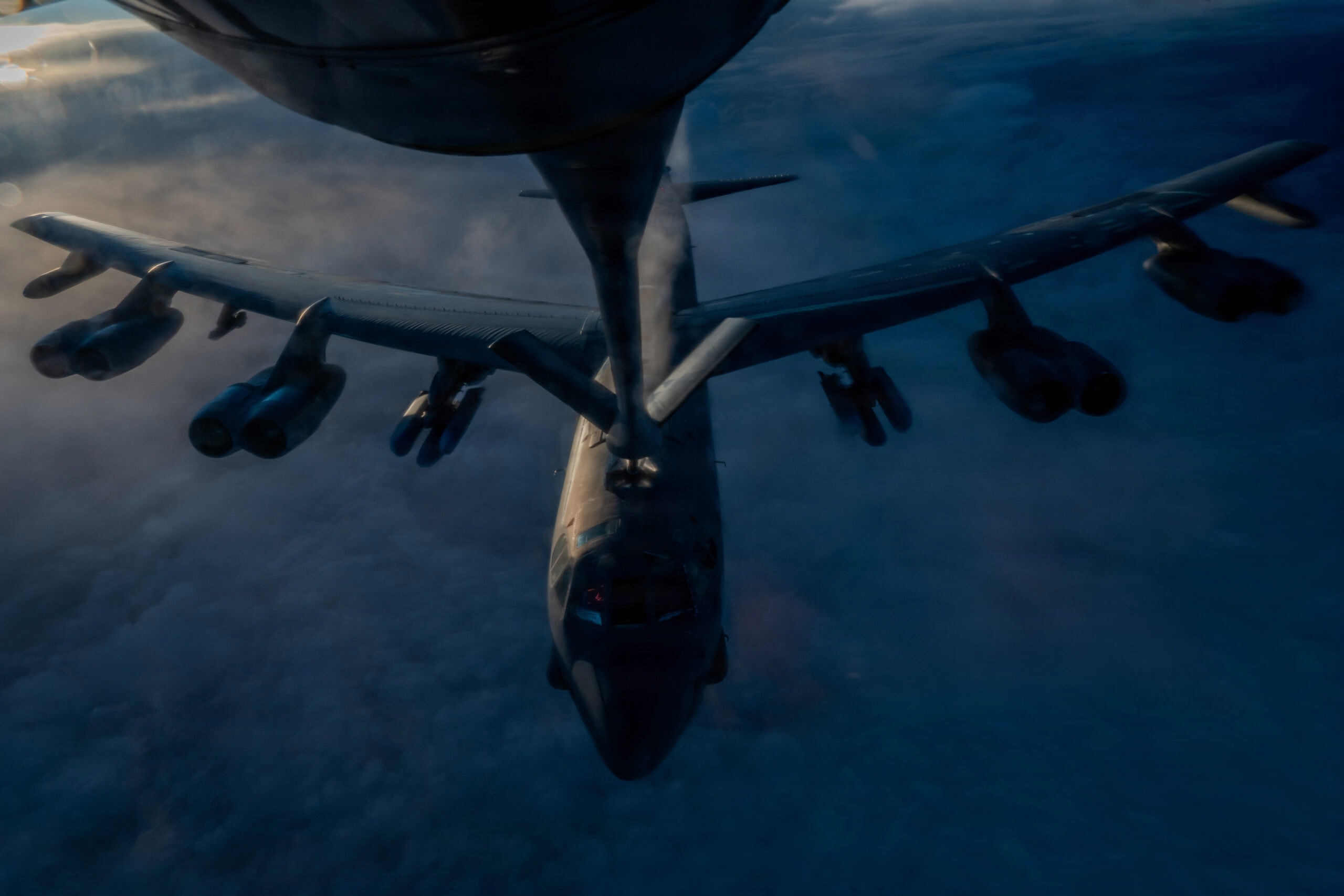
A U.S. Air Force KC-135 Stratotanker aircraft refuels a B-52H Stratofortress aircraft during Operation Epic Fury over the U.S. Central Command area of responsibility, March 20, 2026. (U.S. Air Force photo)
“We are proud to deliver another milestone for our F130 engine testing program, on time and on budget, for the Air Force. Working closely with our partners at Boeing and the Air Force, our team has demonstrated the F130’s ability to meet mission requirements and further strengthened confidence that this engine is the right choice for the B-52J,” Schwerin said.
“On-time and on-budget” is a phrase that isn’t heard very often these days, with defense procurement and major programs typically enduring long delays and schedule slippages caused by all manner of problems, from labor shortages to supply chain disruptions.
How We Got Here on the B-52 Bomber
The completion of altitude and operability testing follows a series of earlier milestones designed to progressively validate the F130 engine and reduce integration risk.
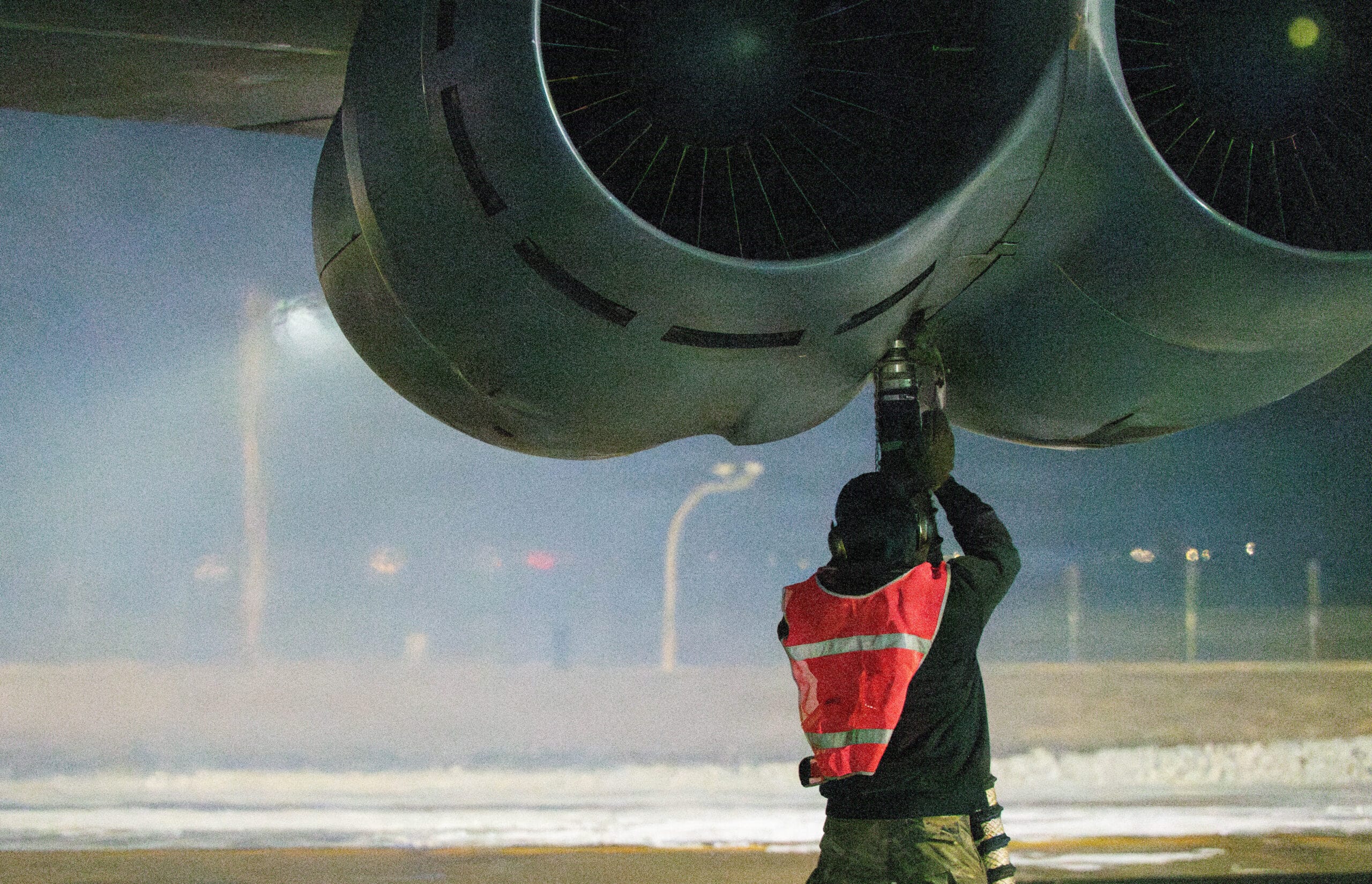
U.S. Air Force maintainers, assigned to the 5th Maintenance Group, conduct preflight maintenance at Minot Air Force Base, North Dakota, Dec. 3, 2025. Bomber Attack Demonstrations contributed to the collective defense of the Western Hemisphere and demonstrated the U.S. commitment to the safety and security of the region. (U.S. Air Force photo by Airman 1st Class Wesley Davies)
In late 2024, the program completed its Critical Design Review (CDR), a key step that confirmed the maturity of the engine design and cleared the way for the production of flight test units. Before the AEDC testing, Rolls-Royce conducted Rapid Twin Pod Tests at NASA’s Stennis Space Center.
Those tests marked the first time the F130 engines were evaluated in the dual-pod configuration specific to the B-52, providing an early indication of how the engines would perform when paired with the aircraft.
The company also conducted sea-level testing at its Indianapolis facility, using a newly upgraded test cell to evaluate the engine’s initial software release and to gather baseline performance data. Those phases of testing provided critical inputs for subsequent testing and helped shape the engine’s control systems.
The U.S. Needs the B-52J Upgrade
The milestone comes as U.S. military strategy increasingly focuses on long-range strike capabilities in anticipation of future conflicts in the Indo-Pacific and similarly challenging environments.
The B-52 is expected to remain a core component of the U.S. bomber force alongside the B-21 Raider – the upcoming successor to the B-2 Spirit, which is currently in development and early production.
While the B-21 is designed as a stealth platform for penetrating advanced air defenses, the B-52 will continue to play a complementary role, carrying large payloads of stand-off weapons, including cruise missiles.
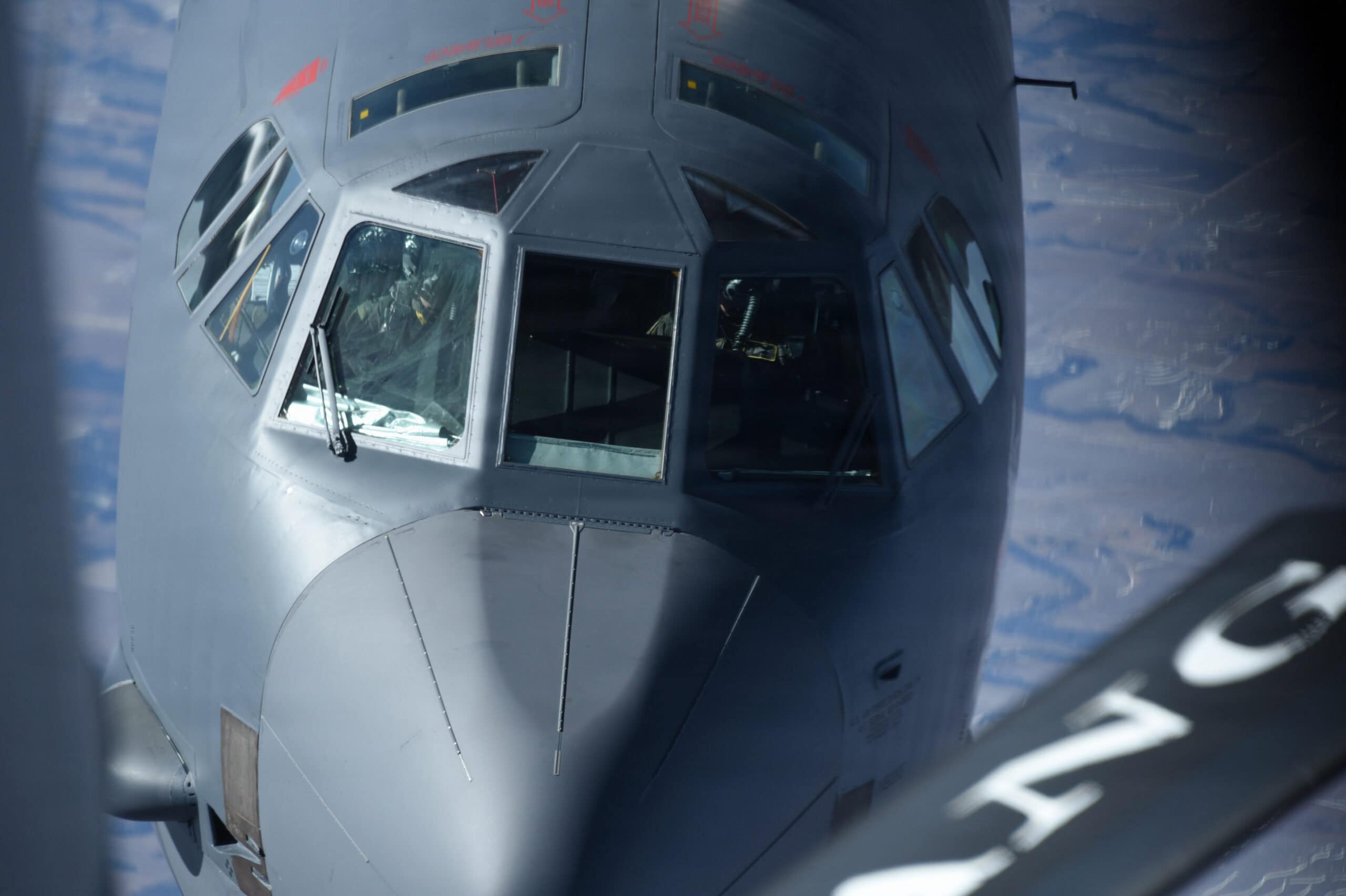
A U.S. Air Force B-52H Stratofortress assigned to the 5th Bomb Wing of Minot Air Force Base flies behind a U.S. Air Force KC-135 Stratotanker assigned to the 185th Air Refueling Wing of the Iowa Air National Guard over Kansas, Feb 5, 2026. Aerial refueling operations are routinely conducted to support training and mission requirements. (U.S. Air National Guard photo by 1st Lt. Daniel Ter Haar)
The role of this aging bomber is becoming increasingly important as modern air warfare places greater pressure on range and survivability. Aircraft must survive in a potential conflict with a near-peer adversary like China by operating from bases located thousands of miles from contested areas, making long-range bombers a critical tool.
Despite its age, the B-52 fits the bill because it can remain airborne for extended periods and deliver large volumes of precision munitions. It can only sustain that capability, however, with an engine that is both reliable and easy to maintain.
Industrially, the program is also important. Rolls-Royce’s U.S. operations span 34 locations across 26 states and employ more than 5,000 people, with the company reporting a $6.2 billion contribution to the U.S. economy in 2024. The F130 engines will be manufactured and assembled in Indianapolis, where Rolls-Royce has invested heavily in modernizing its facilities.
About the Author: Jack Buckby
Jack Buckby is a British researcher and analyst specializing in defense and national security, based in New York. His work focuses on military capability, procurement, and strategic competition, producing and editing analysis for policy and defense audiences. He brings extensive editorial experience, with a career output spanning over 1,000 articles at 19FortyFive and National Security Journal, and has previously authored books and papers on extremism and deradicalization.