
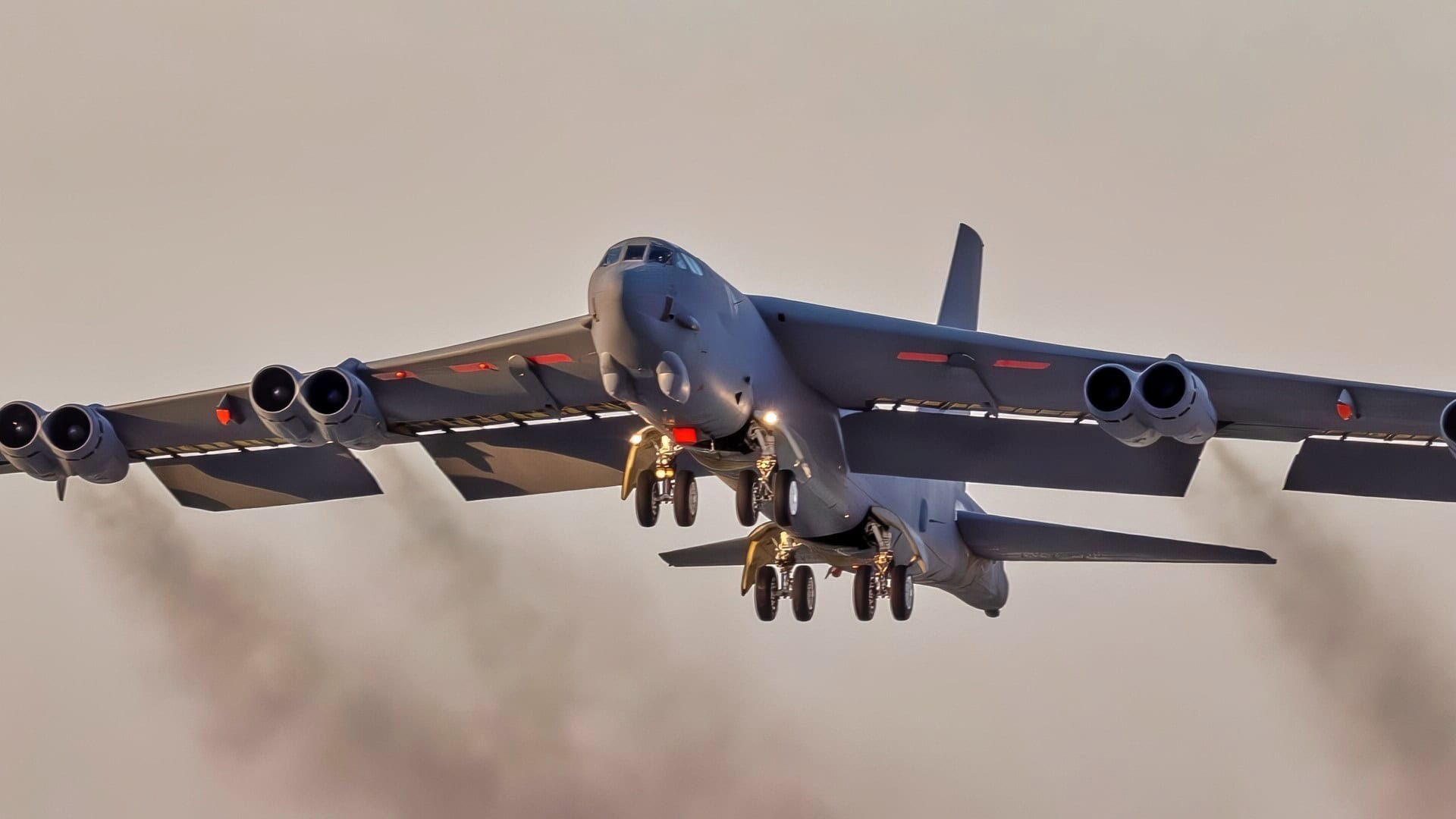
Summary and Key Points: Christian D. Orr — former Air Force Security Forces officer, Pentagon contractor, USC International Relations graduate, and American Military University intelligence studies master’s — delivers a comprehensive technical history of the Boeing B-52H Stratofortress, the sole surviving variant of America’s most battle-proven strategic bomber.
-Orr traces the H model’s evolution from its July 1960 maiden flight at Wurtsmith Air Force Base through the 1994 Conventional Enhancement Modification enabling precision-guided JDAMs and Conventional Air-Launched Cruise Missiles.
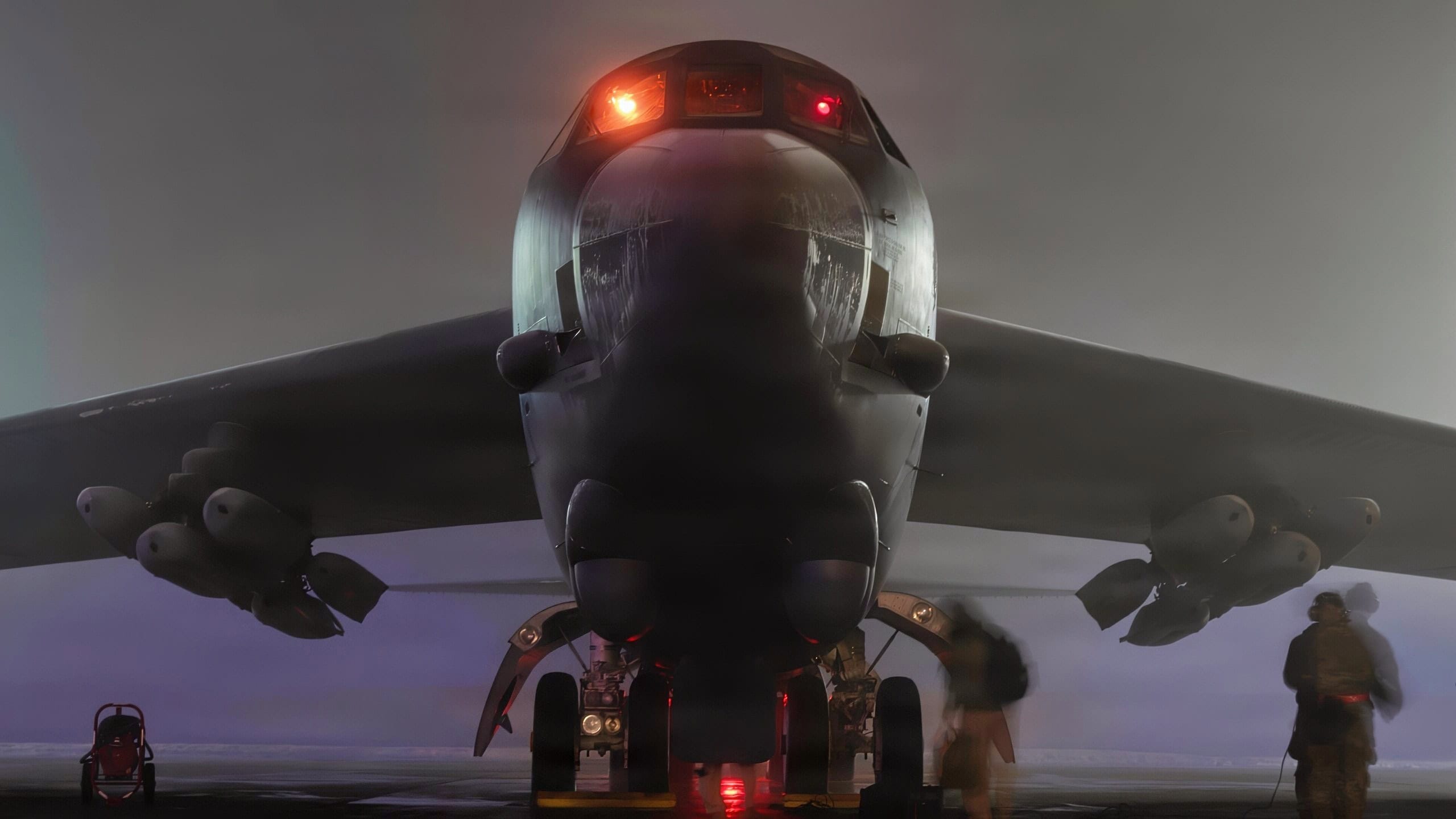
Aircrew members board a B-52H Stratofortress prior to taking off in support of Operation Epic Fury, March 4, 2026. (U.S. Air Force photo)

A U.S. Air Force B-52H Stratofortress strategic bomber assigned to the 69th Expeditionary Bomb Squadron flies within the U.S. Central Command area of responsibility, Nov. 15, 2024. The B-52H provides strategic options and flexibility to U.S. and coalition senior leaders with the aircraft’s ability to employ a wide range of weapons with precision and deliver a decisive response to adversaries who threaten peace and security across the region. (U.S. Air Force photo)
-He examines the Desert Storm friendly-fire incident involving an F-4G Wild Weasel AGM-88 HARM missile that destroyed a B-52’s tail section and triggered removal of the iconic tail gun.
-Looking forward, Orr details the B-52J upgrade package — featuring Rolls-Royce F130 engines, Raytheon AN/APQ-188 active electronically scanned array radar, and new crew workstations — alongside Air Force Global Strike Command’s declaration of readiness to restore nuclear weapons capability across the entire B-52 fleet.
The B-52 Is Getting Rolls-Royce Engines and a Brand New Radar — and It Could Go Nuclear Again
I’ve said it a bazillion-and-one-times before, I’ll gladly say it a bazillion-and-times more: The Boeing B-52 Stratofortress AKA the “BUFF” (“Big Ugly Fat F****r” in the unplugged, unedited world, or “Big Ugly Fat Fellow” if you’re in polite company) is one of my Top 2 personal favorite warplanes of all time (the other being the Douglas SBD Dauntless dive bomber of World War II), and (2) nothing says “Don’t Mess With The US of A” quite like a B-52 carpet-bombing raid does.
The “BUFF,” a septuagenarian warbird with a mind-boggling 74 years of faithful service under its belt—hence the recent additional nickname of “Stratosaurus”—is the most battle-proven member of the United States Air Force’s strategic bomber triumvirate. Not surprisingly, it has undergone multiple variants over those 7+ decades. The only currently serving model is the B-52H, so accordingly, we shall discuss what sets the H model apart from earlier versions of the venerable, mighty warbird.
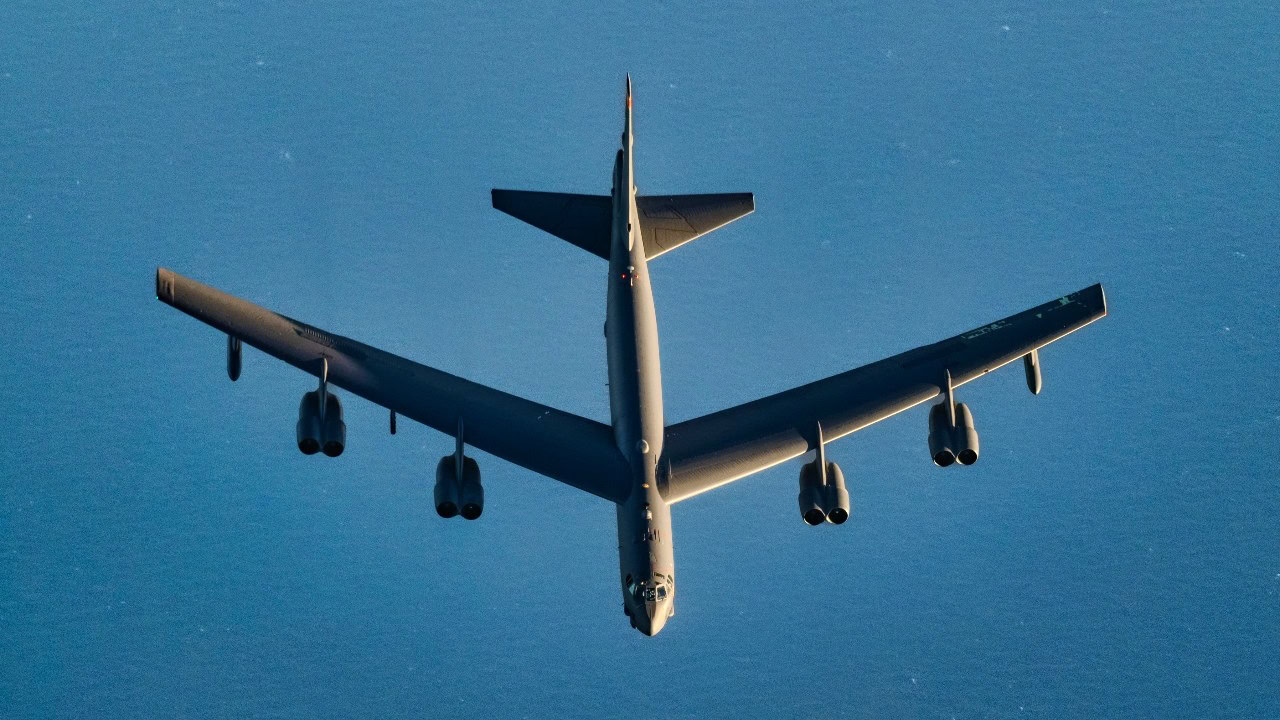
A U.S. Air Force B-52H Stratofortress flies a show of presence mission over the U.S. Central Command area of responsibility, Feb. 20, 2025. Strategic bombers contribute to stability in the CENTCOM theater by demonstrating the credibility, capability, and readiness of the U.S. bomber force, which is critical to deterring attacks against the U.S. and its allies and partners. (U.S. Air Force photo by Staff Sgt. Jackson Manske)
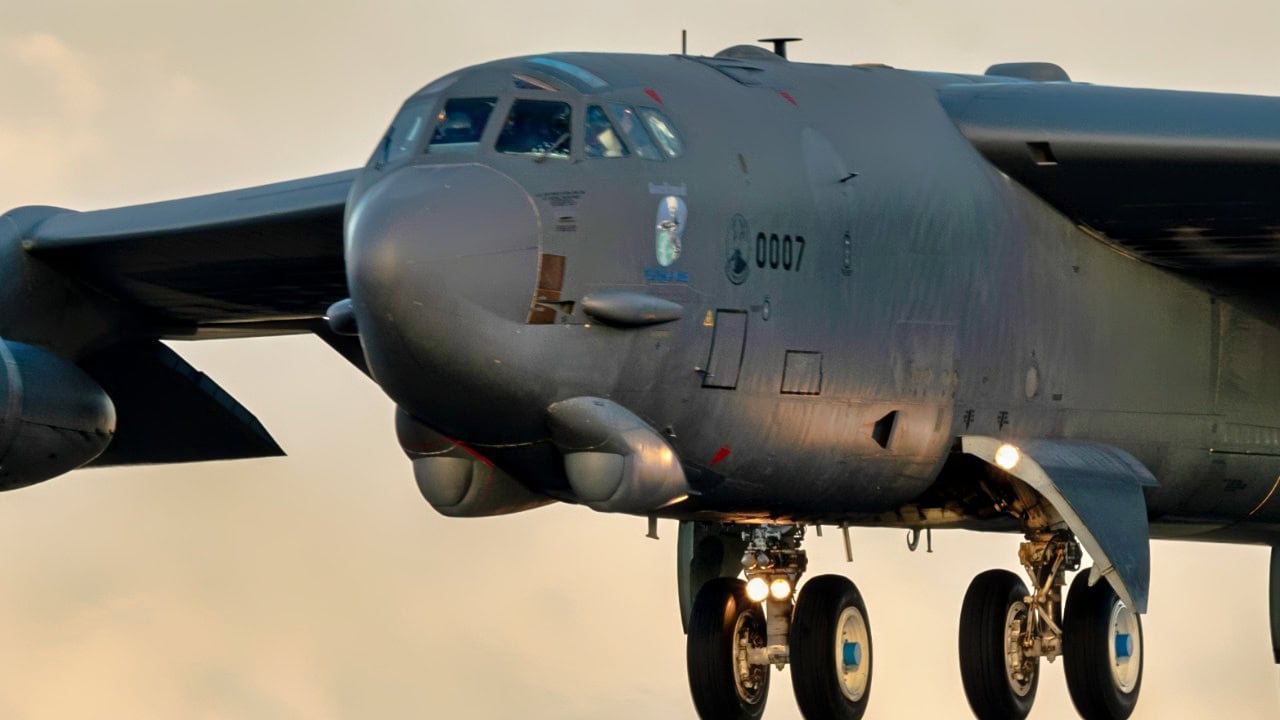
U.S. Air Force B-52H Stratofortress lands at RAF Fairford, England, following a sortie in support of Bomber Task Force 25-2, Feb. 27, 2025. The U.S. maintains a strong, credible strategic bomber force that enhances the security and stability of Allies and partners. (U.S. Air Force photo by Airman 1st Class Luis Gomez)
Howdy and Hello to the “H”
The B-52H made her maiden flight in July 1960 and began undergoing deliveries in May 1961, starting with the 379th Bombardment Wing at the now-defunct Wurtsmith Air Force Base, Michigan. The ever-savvy Thomas Newdick of The WarZone (TWZ) provides a detailed description of the B-52H’s changes in an April 16, 2022, article titled “A Look Back At All The B-52 Variants As The Iconic Bomber Hits 70”:
-Replacing the quad-mounted Browning “Ma Deuce” .50 caliber machine guns on the tail with a new tail turret packing a single M61A1 Vulcan 20mm rotary cannon
-Advanced Capability Radar (ACR) with terrain-following function
Fast-forward to 1994, and the H model also underwent the Conventional Enhancement Modification, enabling it to carry precision-guided munitions (PGMs), including Conventional Air-Launched Cruise Missiles (CALCMs) and Joint Direct Attack Munitions (JDAMs).
Bye-Bye Tail Gun, But Why?
Sadly (from a sentimental gun enthusiast’s perspective, that is), ’twas the B-52H that marked the end of an era, i.e., the removal of the tail gun. Surely a gun is better to have and not need than need and not have in case enemy interceptors get past a bomber’s own friendly fighter escort, right?
This was dramatically demonstrated during the Vietnam War in December 1972, when two B-52 tail gunners, Staff Sergeant Samuel O. Turner and Airman 1st Class Albert Moore, each of whom shot down a North Vietnamese MiG-21 “Fishbed” during Operation Linebacker II.
Well, the anonymous “Team Mighty” editorial staff of the We Are The Mighty website sheds some light on the subject in an April 15, 2024, article:
“At first, the Air Force announced the tail gunner’s position aboard the aircraft would be eliminated and the tail gun deactivated as a cost-saving measure, but it was actually an incident during Operation Desert Storm that caused the decision – saving money was just a nice side effect.”
That incident in Desert Storm (the 1991 Persian Gulf) involved an Iraqi jet fighter tracking a BUFF tail gunner who reported his plane, when it was actually an American F-4G Wild Weasel hot on its tail.
The Wild Weasel’s crew also ran afoul of mistaken identity, believing the friendly bomber’s AN/ASG fire control system was actually an enemy air defense system, and fired an AGM-88 HARM (High-speed Anti-Radiation Missile) at the B-52.
Team Mighty resumes the story from there: “It turns out the bomber’s fire control system had locked onto the weasel at the same time as the weasel [sic] managed to fire off its AGM-88 HARM missile. The missile completely blew off the aft six to eight feet of the B-52 bomber’s fuselage, while the F-4G managed to make its escape from the bomber’s defenses. The B-52 was forced to land at an airfield near the Saudi Arabian city of Jeddah, where ground crews were able to inspect the damage…The B-52 was out of action for the rest of the Persian Gulf War, but received a new nickname, “In HARM’s Way,” and some spiffy nose art out of it.
Egad.
The Way Forward for the B-52H
Dinosaur jokes like “Stratosaurus” aside, the B-52H isn’t remaining frozen in time.
For one thing, Air Force Global Strike Command [AFGSC] recently declared that it is prepared to restore nuclear weapons capability to the entire B-52 bomber fleet. As an anonymous AFGSC spokesperson stated: “‘ Although we will not comment on the posturing of our forces, Air Force Global Strike Command both maintains the capability and training to MIRV the Minuteman III ICBM force and convert its entire B-52 fleet into dual capable long range strike platforms if directed by the President.'”
And then, of course, there’s the pending B-52J upgrades. For whatever reason, they’re skipping the “B-52I” alphanumeric designation; perhaps that’s to ensure it’s not mistakenly assumed to be an Israeli Air Force version, a la the F-15I “Ra’am (Thunder),” -16I “Sufa (Storm),” and F-35I “Adir (Mighty One)” variants of the Eagle, Fighting Falcon (AKA “Viper”), and Lighting II fighter jets respectively. In any event, the B-52J will offer the following Gucci-esque upgrades over the H model:
-The B-52 Radar Modernization Program, which is to be fulfilled by the AN/APQ-188, an active electronically scanned array radar, built by Raytheon, which is already used aboard the F-15 Eagle and F/A-18 Super Hornet. It replaces the H’s model’s AN/APQ-166, which uses mechanical scanning.
-New workstations for the crew
-The B-52 Commercial Engine Replacement Program, as manifested in the Rolls-Royce F130 engines
About the Author: Christian D. Orr, Defense Expert
Christian D. Orr is a Senior Defense Editor. He is a former Air Force Security Forces officer, Federal law enforcement officer, and private military contractor (with assignments worked in Iraq, the United Arab Emirates, Kosovo, Japan, Germany, and the Pentagon). Chris holds a B.A. in International Relations from the University of Southern California (USC) and an M.A. in Intelligence Studies (concentration in Terrorism Studies) from American Military University (AMU). He is also the author of the newly published book “Five Decades of a Fabulous Firearm: Celebrating the 50th Anniversary of the Beretta 92 Pistol Series.”