
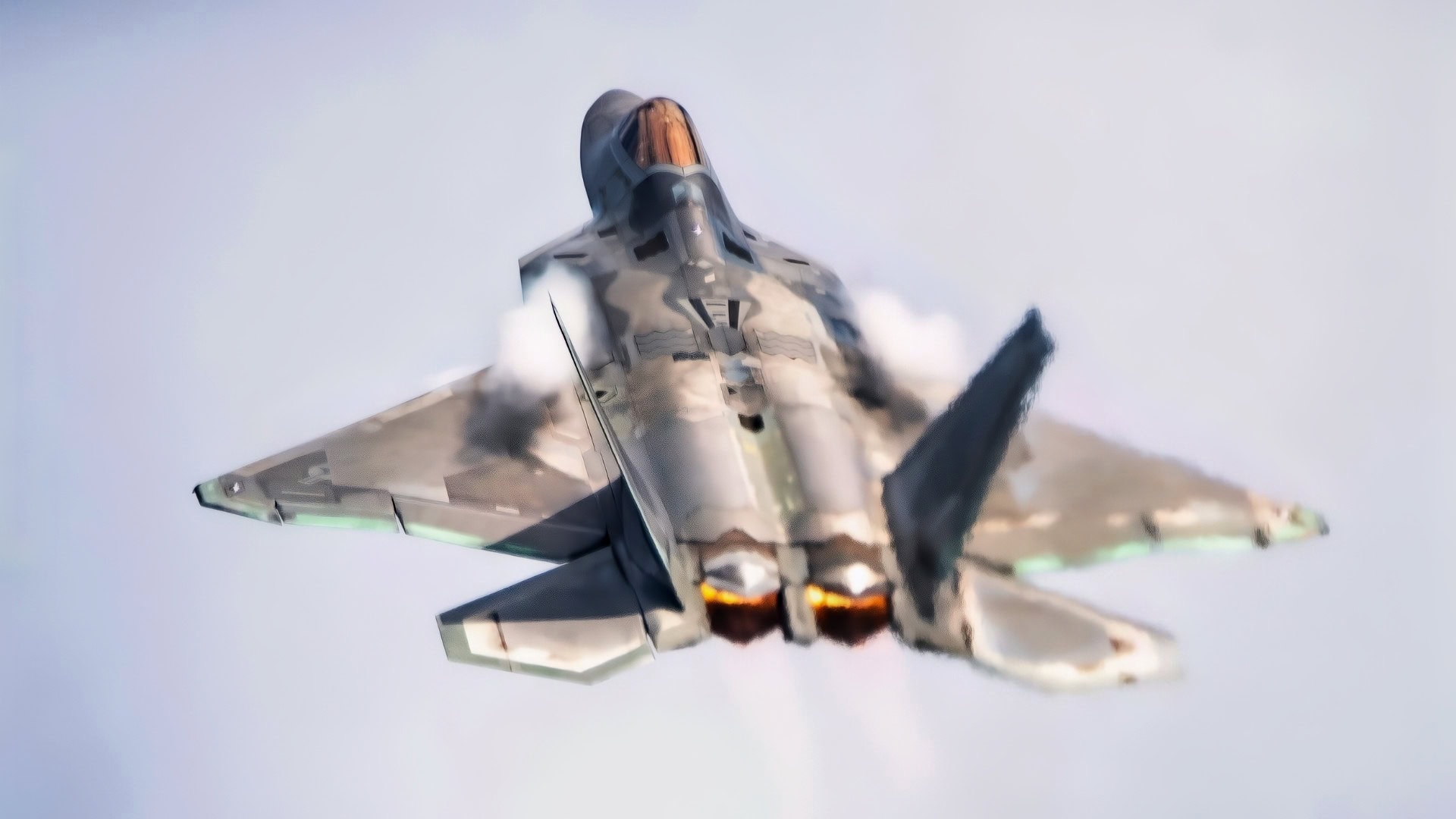
The F-22 Raptor is considered by many to be one of the most advanced aircraft currently in service. Despite being built in the 1980s and 90s, it retains unmatched stealth systems, and its advanced avionics allow it to take down practically any adversary before being seen. However, the Raptor is not invincible. Its stealth qualities are formidable, but they are not absolute. In some circumstances, skilled pilots have been able to close the distance between the F-22 and engage the stealth craft on their terms. In one such case, an EA-18G Growler beat the Raptor in a simulated battle in 2009.
The F-22 Loses to an Electronic Warfare Aircraft
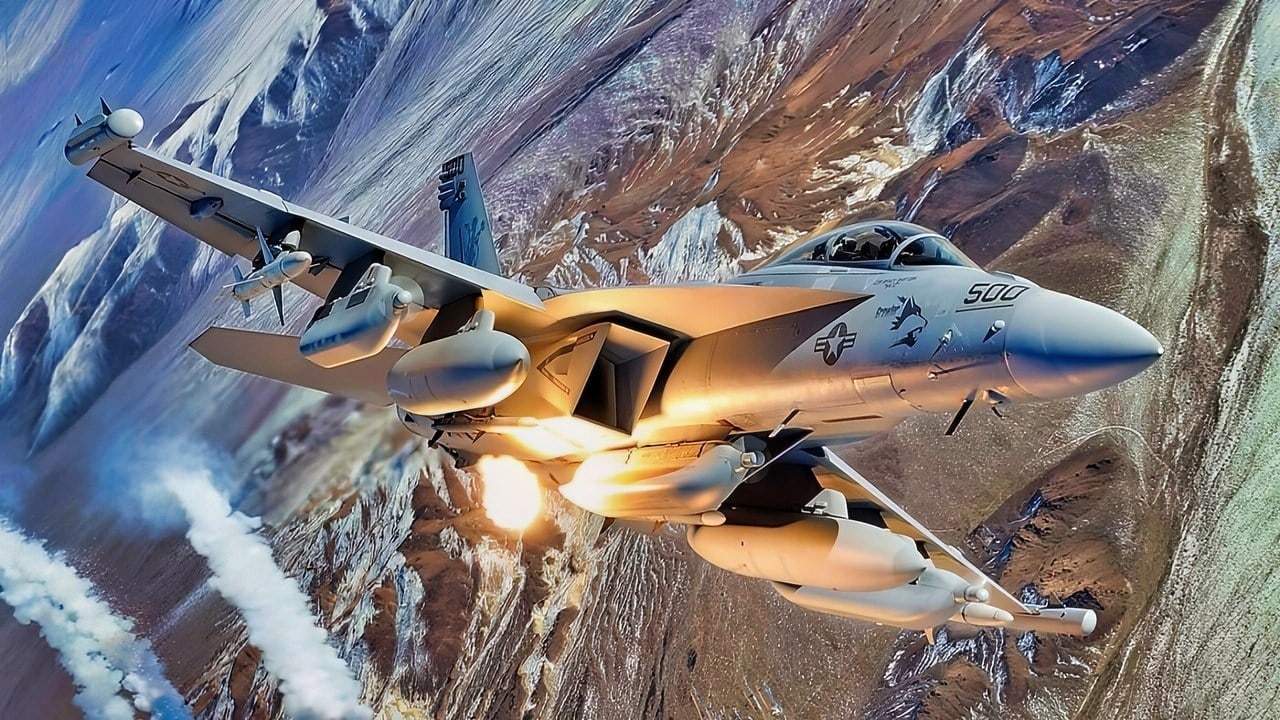
EA-18G Growler Firing Weapons. Image Credit: Creative Commons.
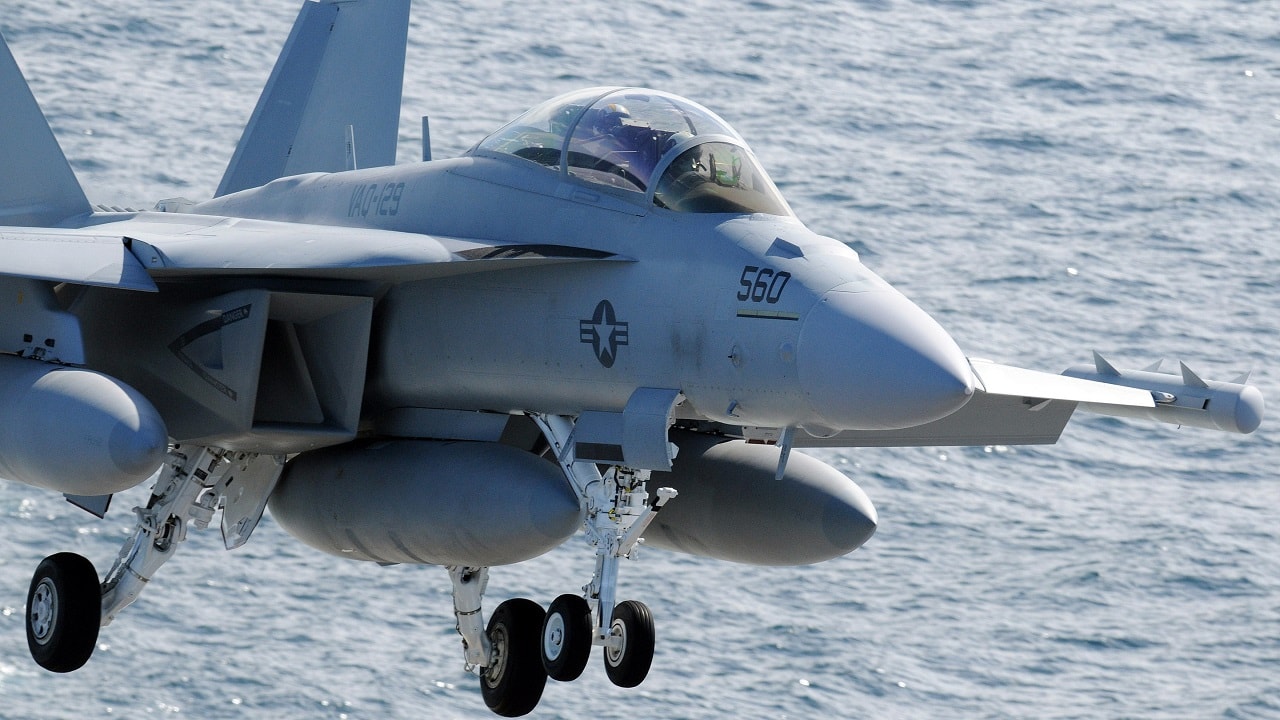
(Feb. 17, 2009) An EA-18G Growler assigned to the “Vikings” of Tactical Electronic Warfare Squadron (VAQ) 129 aligns itself for an at sea landing aboard the Nimitz-class aircraft carrier USS Ronald Reagan (CVN 76). The Growler is the replacement for the EA-6B Prowler, which will be replaced in the 2010 timeframe. Ronald Reagan is underway performing Fleet Replacement Squadron Carrier Qualifications in the Pacific. (U.S. Navy photo by Mass Communication Specialist 3rd Class Torrey W. Lee/Released).
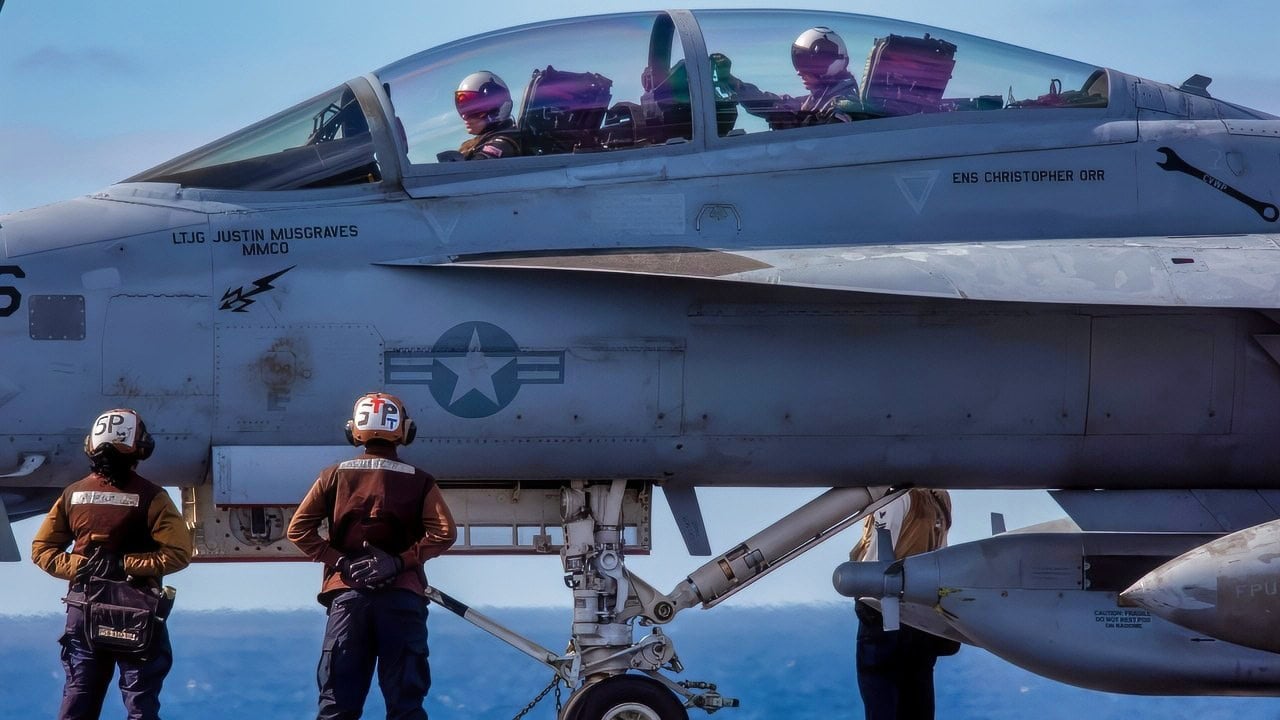
U.S. Navy Sailors prepare to taxi an EA-18G Growler, attached to Electronic Attack Squadron (VAQ) 133, on the flight deck of Nimitz-class aircraft carrier USS Abraham Lincoln (CVN 72) on Nov. 24, 2025. USS Abraham Lincoln (CVN 72), flagship of the Abraham Lincoln Carrier Strike Group, is underway conducting routine operations in the U.S. 3rd Fleet area of operations, demonstrating the U.S. Navy’s long-term commitment to a free and open Indo-Pacific. (U.S. Navy photo by Mass Communication Specialist Seaman Daniel Kimmelman)
The exact details of the confrontation are classified. We do know, however, that the exercise took place at Nellis Air Force Base in Nevada, near the outskirts of Las Vegas.
The two aircraft were apparently conducting training exercises to simulate real-world combat conditions. The EA-18G is not designed for air superiority, and it is certainly not designed to take on a fighter as advanced as the F-22 Raptor. Derived from the F/A-18E Super Hornet, the Growler is designed for electronic warfare missions.
Its systems, including the ALQ‑218 receiver and ALQ‑99 jamming pods, allow it to interfere with enemy radars, communications, and targeting networks. While the Growler can carry air-to-air missiles such as the AIM‑120 AMRAAM or AIM‑9 Sidewinder, these are generally intended for self-defense rather than for taking on top-tier fighters like the F‑22 in conventional combat.
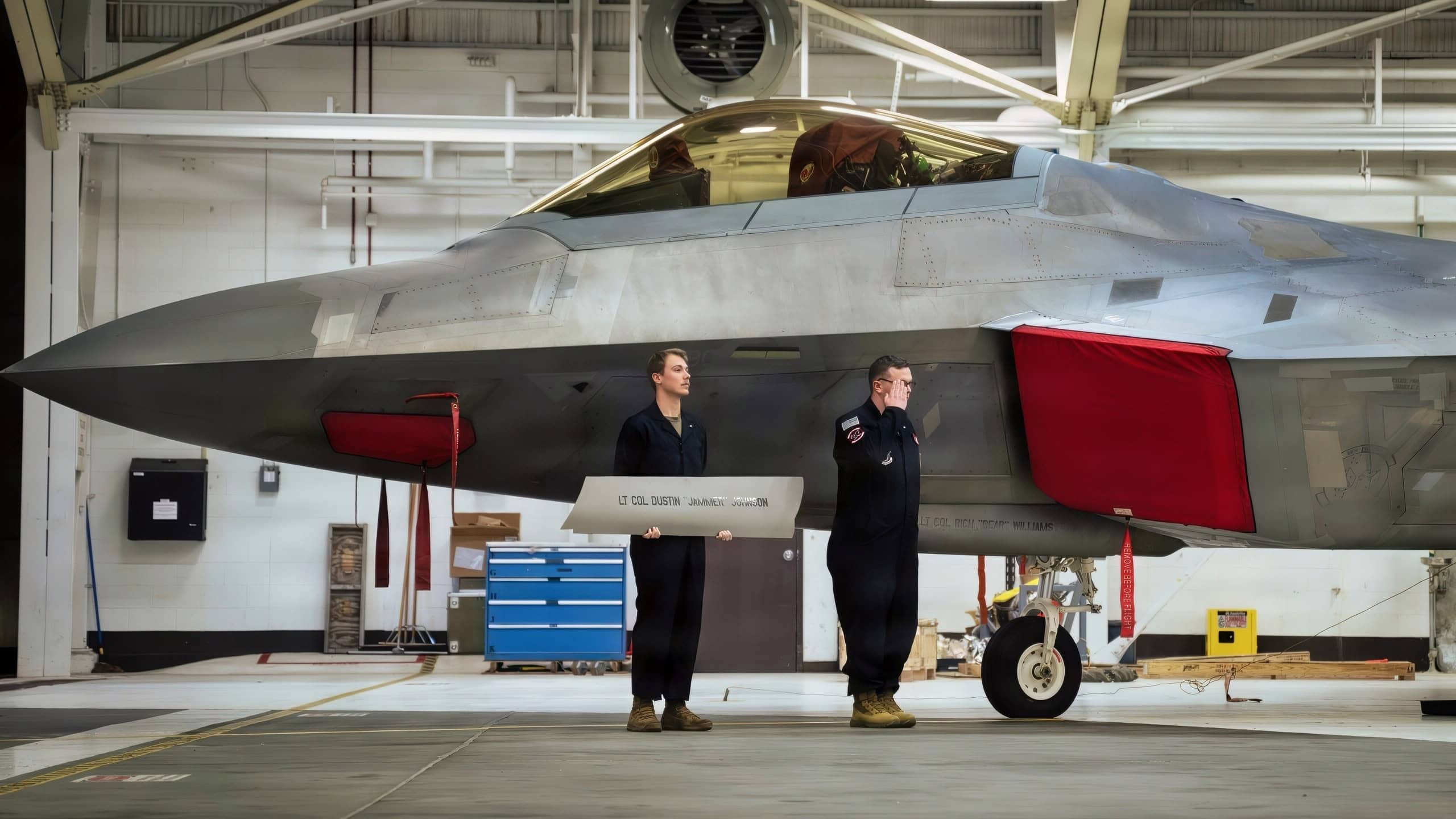
U.S. Air Force Airmen reveal the name of Lt. Col. Richard Williams, commander of the 90th Fighter Squadron, on an F-22 Raptor following the 90th FS change-of-command ceremony on Joint Base Elmendorf-Richardson, Alaska, March 16, 2026. (U.S. Air Force photo by Airman Keola Vischi)
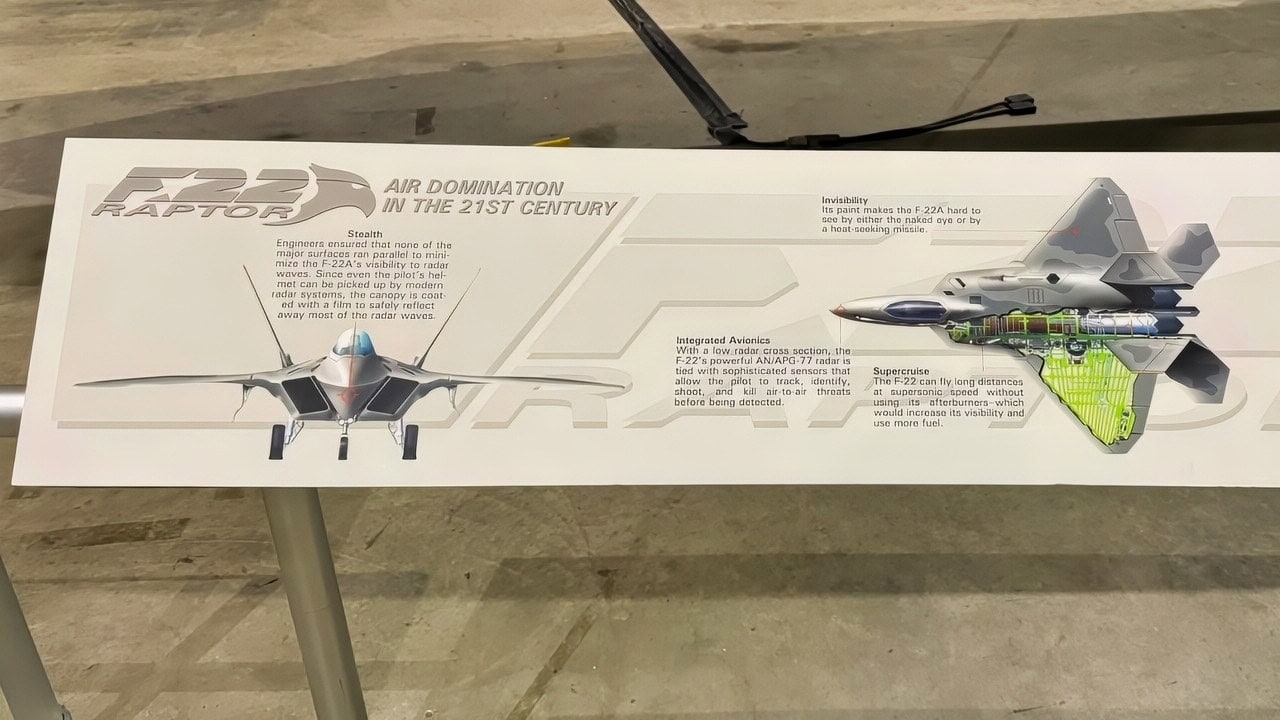
F-22 Raptor Diagram from National Museum of the U.S. Air Force. Image Credit: Harry J. Kazianis.
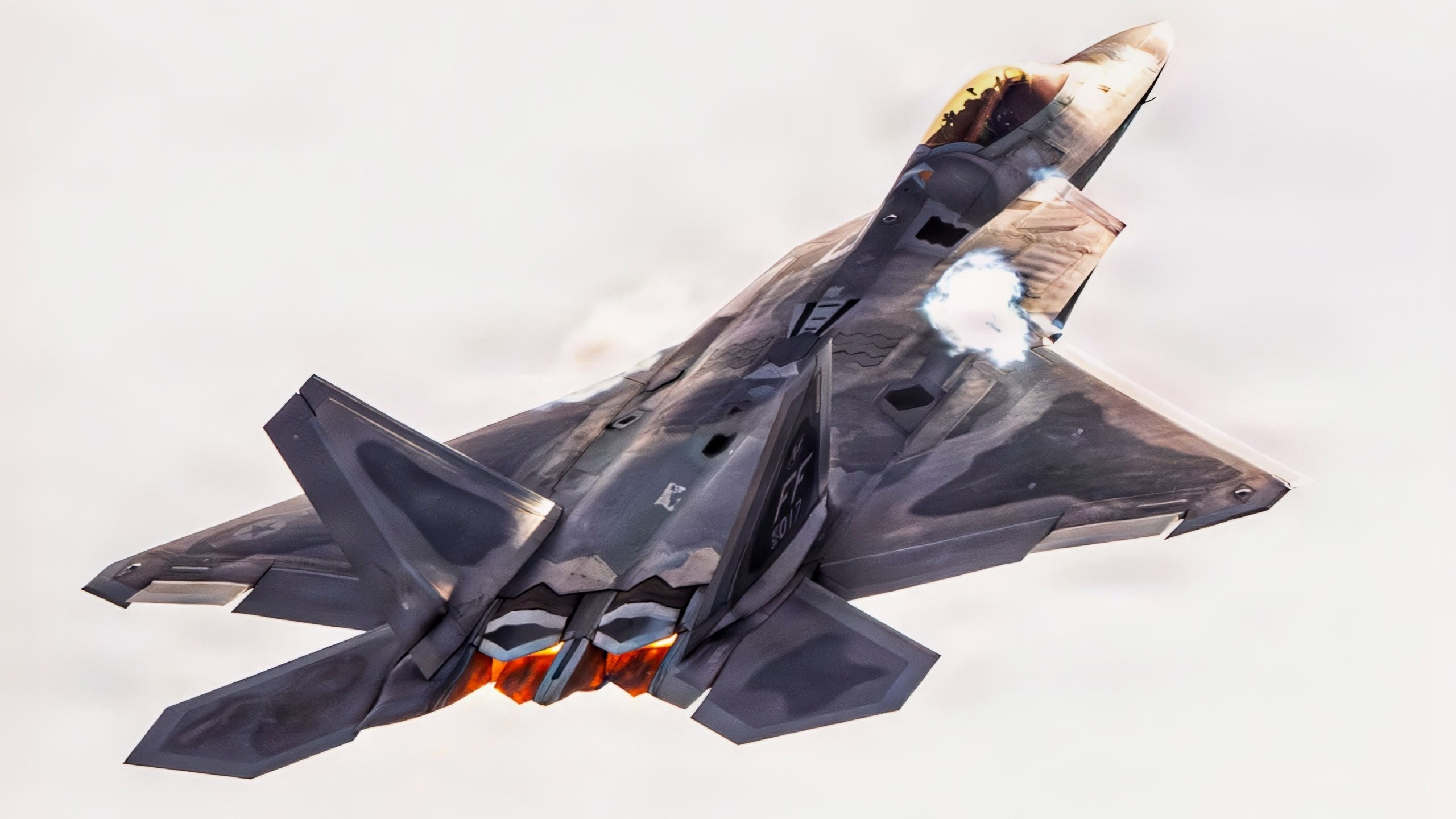
U.S. Air Force Capt. Nick “Laz” Le Tourneau, pilot and commander of the F-22 Raptor Aerial Demonstration Team, performs a practice demonstration for the 2026 Heritage Flight Training and Certification Course at Davis-Mothan Air Force Base, Arizona, March 1, 2026. The Heritage Flight Training and Certification Course is an annual event where military and civilian pilots train together to fly in formations, showcasing both modern and vintage military aircraft. These flights are performed at airshows across the country to honor the service and contributions of every U.S. Airmen, past and present, while educating the general public on the importance of the U.S. Air Force and its mission. (U.S. Air Force photo by Staff Sgt Mary Bowers)
Despite this, the Growler achieved a valid missile lock on the Raptor, which counted as a simulated kill under the rules of engagement.
This moment became an inside joke among pilots and crews, with at least one EA-18G Growler later displaying a small F‑22 kill marking as a humorous badge of accomplishment. It is not known whether the Growler was flying solo or whether it was part of a squadron of other friendly aircraft against the Raptor.
Nevertheless, the fourth-generation aircraft managed to score a kill against the highly advanced F-22?
How Could the Raptor Lose an Air Battle?
So, how did a fourth-generation fighter manage to beat one of the most advanced aircraft in the world? One of the most important was the use of electronic warfare. The Growler’s ability to jam or degrade radar signals can interfere with an opposing aircraft’s situational awareness.
Modern fighters rely heavily on sensors and data links to build a picture of the battlefield. If those systems are disrupted, even an advanced platform like the F‑22 can temporarily lose its informational advantage.
By exploiting this vulnerability, the Growler could create confusion or uncertainty, opening a narrow window of opportunity.
It is also possible that the EA-18G simply got lucky. Even a superior aircraft can be put at a disadvantage if it enters an unfavorable position or fails to detect a threat from a particular angle.
Even the F-22, despite its capabilities, can find itself at a disadvantage if its enemy manages to find the right spot.
Some commentators have suggested that the EA-18G Growler crew effectively maneuvered to exploit a gap in the Raptor’s awareness, allowing them to close to a range where a missile shot became possible.
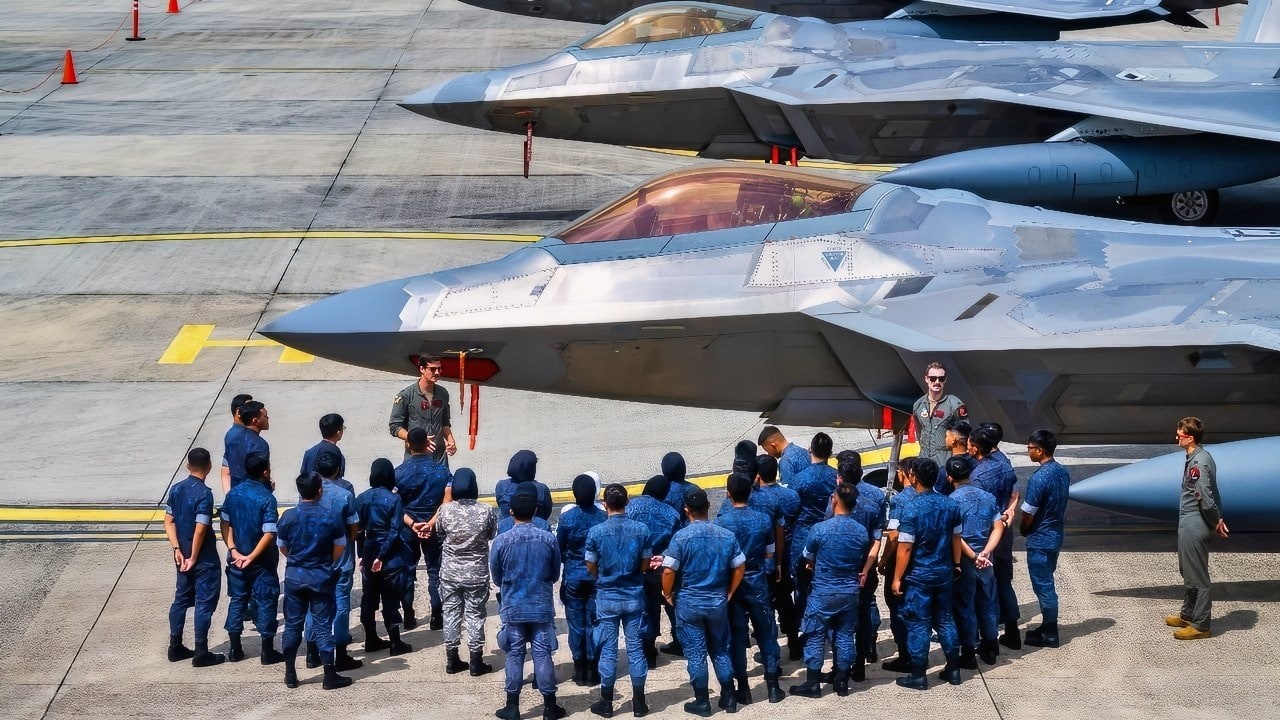
U.S. Air Force F-22 Raptor pilots assigned to 27th Expeditionary Fighter Squadron, Joint Base Langley-Eustis, Virginia, conduct a capabilities brief at Rimba Air Force Base, Brunei Darussalam, on Aug. 7, 2024. This year marks the 40th anniversary since the United States established diplomatic relations with Brunei Darussalam. (U.S. Air Force photo by Senior Airman Mitchell Corley)
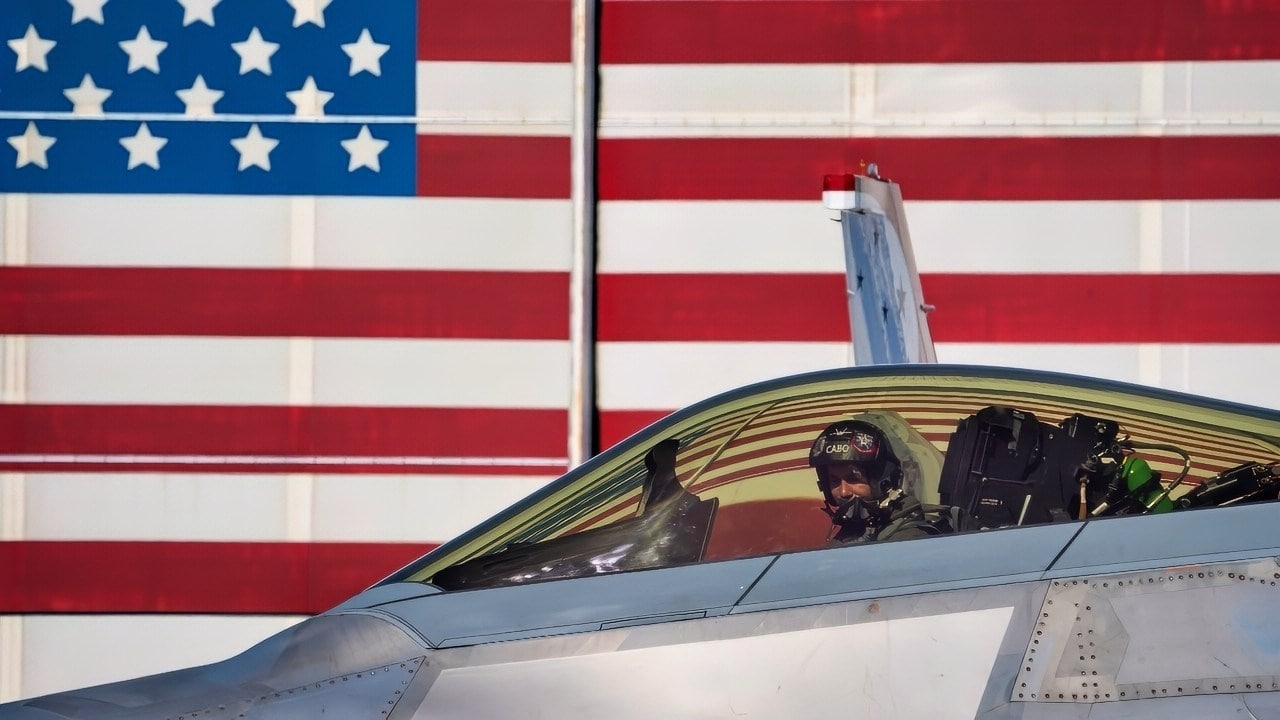
U.S. Air Force Maj. Josh Gunderson, F-22 Demo Team commander, taxis by the Wallops Island Flight Facility NASA hanger June 17, 2021, at Wallops Island, Va. The primary function of the F-22A Raptor is an air dominance and multi-role stealth fighter, and can carry a combination of air-to-air missiles and air-to-ground bombs. (U.S. Air Force photo by Staff Sgt. Don Hudson)
The F-22 Has Lost Before
Another critical element involves the rules and constraints of the training exercise itself. Oftentimes, these simulations are designed with specific objectives and limitations in mind. Certain capabilities may be reduced or restricted to test particular scenarios or tactics.
For instance, the F‑22’s greatest strength lies in BVR engagements, where its stealth and sensors allow it to strike without being seen.
If an exercise limits that advantage by forcing closer engagements or restricting certain sensor uses, the balance can shift in unexpected ways. We don’t know the rules of this particular exercise, but under such conditions, the Growler’s electronic warfare systems could have been much more decisive.
This is not the first time that an F-22 has been defeated by a fourth-generation aircraft. In 2012, during a joint exercise with Germany, the Raptor lost a fight to a Eurofighter Typhoon, operated by the German Luftwaffe.
As Major Marc Gruene, the pilot of the Eurofighter, explained, once any aircraft manages to close the gap between it and the F-22, the fifth-generation stealth fighter, “the Typhoon doesn’t necessarily have to fear the F-22.” In an earlier case, a French Mirage 2000 managed to beat an F-22 in a fight at Al Dhafra Air Base, near Abu Dhabi.
What to Learn From This Encounter
With all of that in mind, let us take a step back and look at this event from a more holistic perspective. The simulated kill does not suggest that the EA‑18G Growler is superior to the F‑22 Raptor in air combat.

F-22 Raptor Fighter. Image Credit: Creative Commons.
In a real-world scenario, the Raptor would still hold extensive advantages in stealth, speed, altitude, and overall combat design.
The Growler is not intended to operate alone against advanced fighters but rather to support a larger force by disrupting enemy defenses and enhancing the effectiveness of allied aircraft.
Today, air combat is no longer determined solely by traditional factors such as speed or maneuverability.
Control of information, who can see, who can communicate, and who can deny those capabilities, has become just as important.
The Growler excels at EW, using electronic attack to shape the battlefield before a missile is ever launched. The devil, however, is in the details. We do not know the details or the rules of engagement of this particular battle.
It is possible that the F-22 was fighting with two hands preverbially tied behind its back. Hence, it is unwise to draw definitive conclusions from training events like these, especially when the most important details are heavily classified.
About the Author: Isaac Seitz
Isaac Seitz, a Defense Columnist, graduated from Patrick Henry College’s Strategic Intelligence and National Security program. He has also studied Russian at Middlebury Language Schools and has worked as an intelligence Analyst in the private sector.