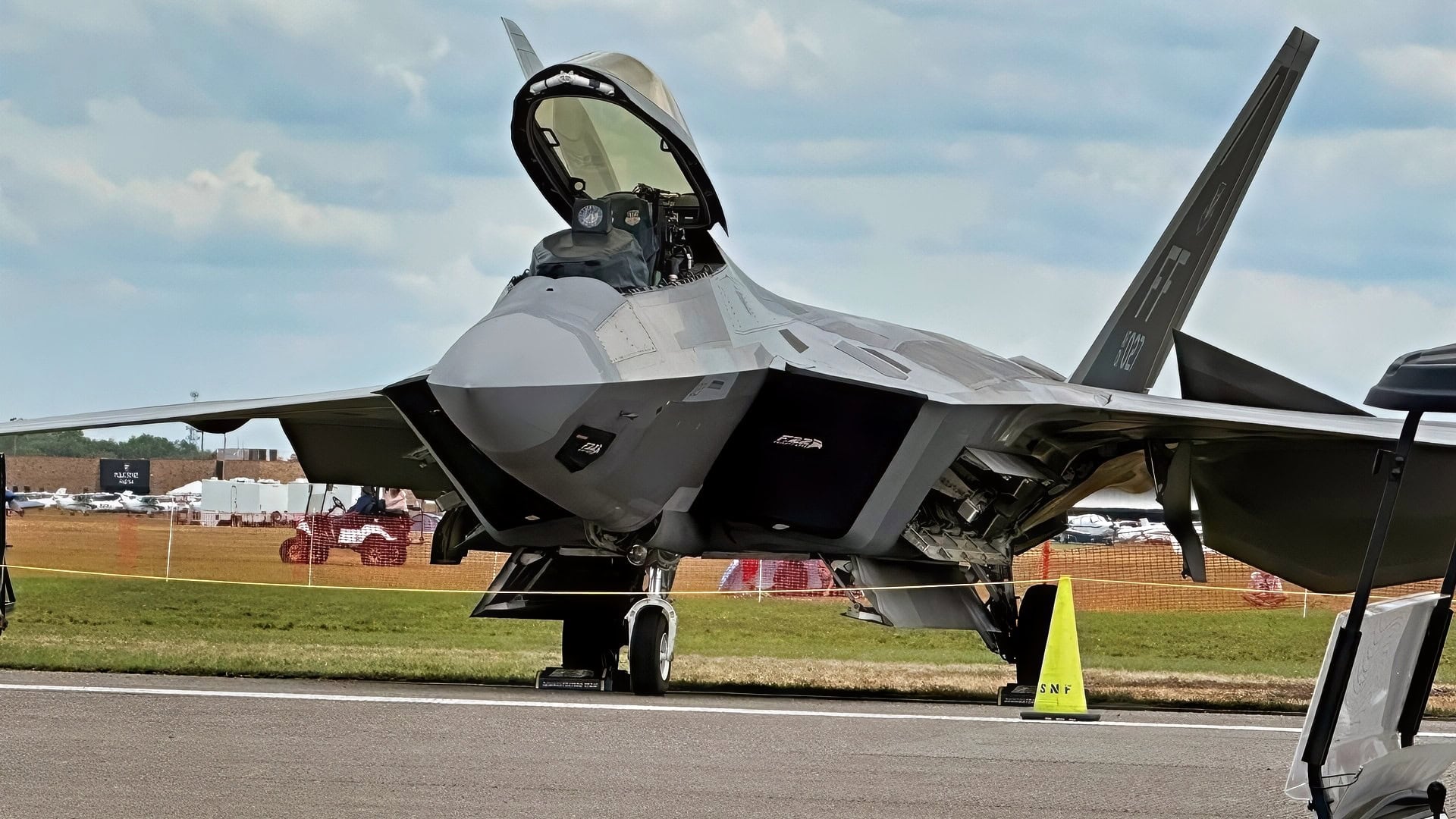
We Got Up Close to the F-22 Raptor Stealth Fighter: The F-22 Raptor first took to the skies on September 7, 1997, and formally achieved initial operational capability on December 15, 2005. For years, Air Force personnel who’ve had the privilege–and that’s how they describe it–of piloting these fifth-generation air superiority warplanes have described their experience of flying the F-22 as less like piloting a plane and more like “wearing the jet.”
F-22 Raptor: A Warplane That Feels Like Science Fiction
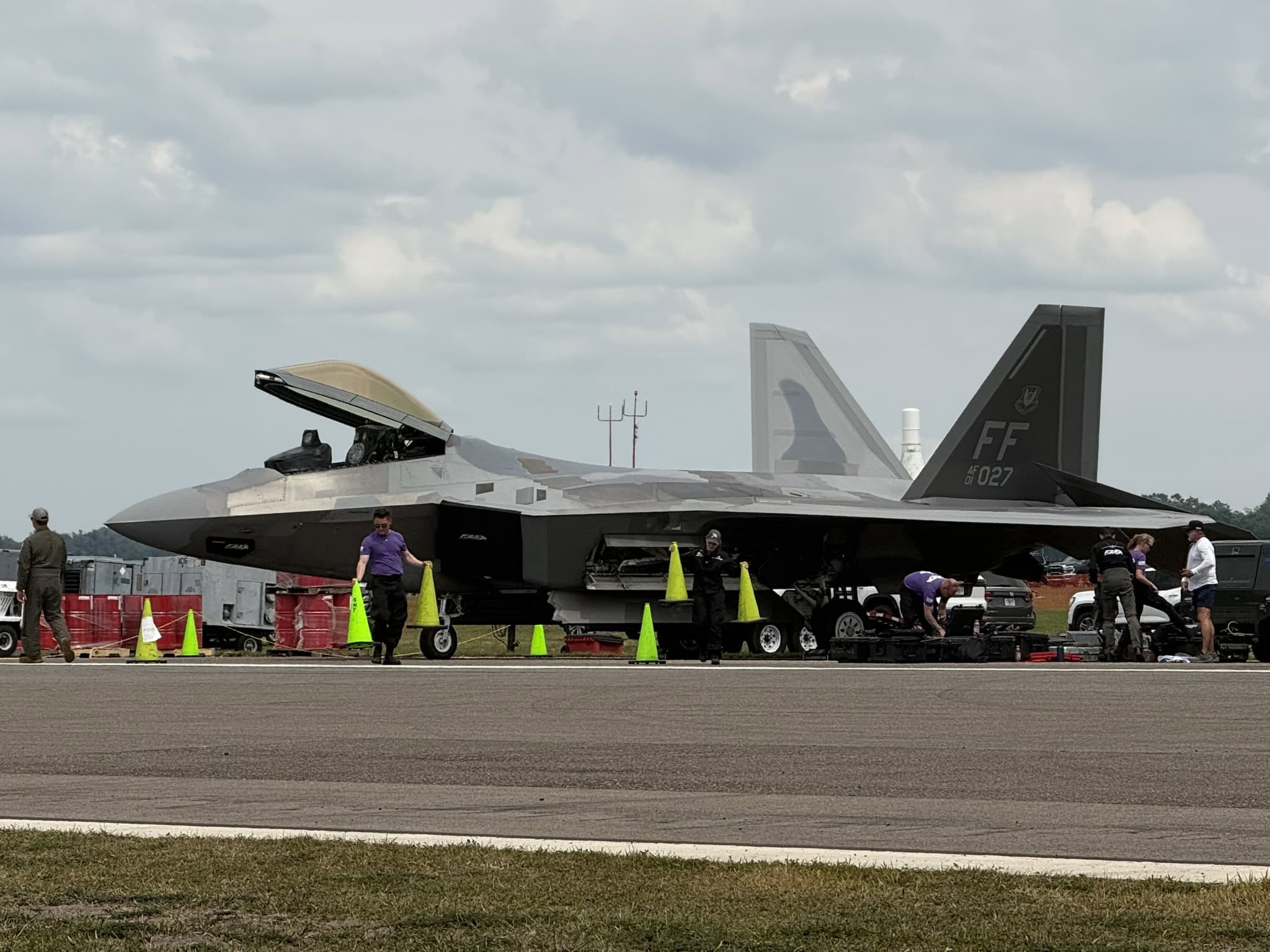
F-22 Raptor Lakeland Florida Airshow. Image Credit: 19FortyFive.com
19FortyFive was at the Sun ‘n Fun Airshow and got some incredible pictures of this most dynamic warplane.
As our very own Editor-In-Chief, Harry J. Kazianis, explained it: “The F-22 Raptor above you sounded like a bomb going off over and over. The power of that plane is something you never forget.”
Just by looking at the plane’s unique design, one cannot be sure whether it is a warplane or a starfighter. Its sleek, aerodynamic design, high-technology cockpit, nimble controls, and stealth make it less successor to the F-16 and more like an X-Wing from Star Wars.
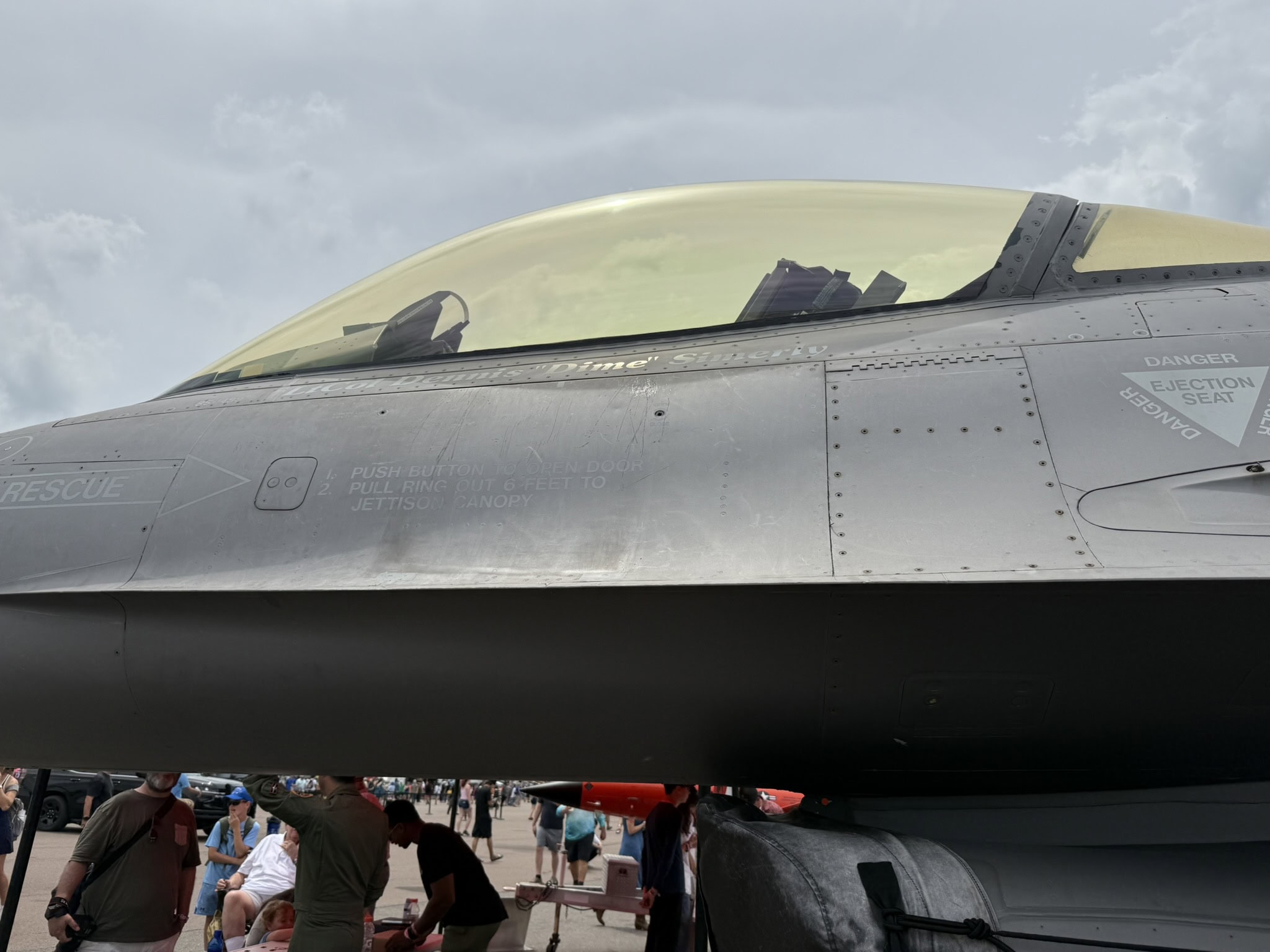
F-16. Image Credit: 19FortyFive.com Taken on 4/19/2026.
An F-22 is known for its sensor fusion that merges radar, electronic warfare, and targeting data into a single picture, dramatically reducing the pilot’s workload. Pilots are not judging systems as they fly this complex machine into battle. They’re making decisions based on the advanced data points they’re receiving from that complex sensor fusion. That’s why F-22 pilots describe their experience flying the plane as being akin to wearing it.
Among other advanced accouterments, the F-22 sports a digital (glass) cockpit. There are no older, manual gauges of the kind you’ll find in previous Air Force birds. Data-rich displays and a wide Heads-Up Display (HUD) dominate the pilot’s field of view. Side-stick plus throttle lets pilots control everything without looking down. The jet was essentially designed to compress decision time, which is everything in air combat.
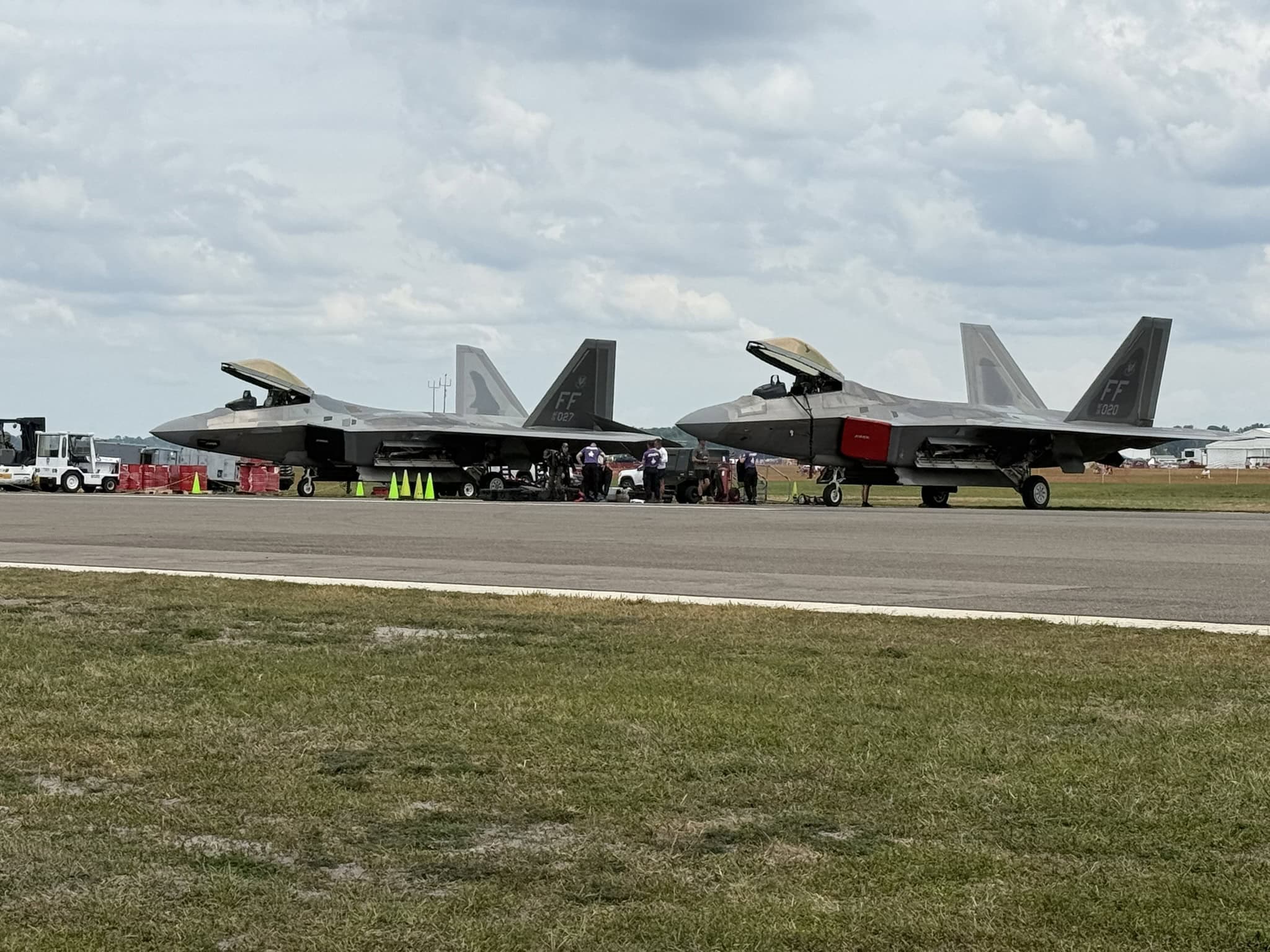
F-22 Raptor Lakeland, Florida Airshow. Taken on 4/19/2026.
From Physical Strain to Cognitive Warfare
Plus, automation removes much of the physical strain pilots feel when flying advanced warplanes. Because pilot workload is lower (despite greater technical complexity), pilots have time to focus solely on their missions. In some respects, the pilot is only a central data point in a long chain of data nodes that make the F-22 such a lethal flying machine. Older jets required great physical strength for pilots. F-22s are cognitively demanding in ways older systems are not.
The War Zone reports that the F-22 has a supercruise function that takes this impressive plane to speeds between Mach 1.6-1.7 without afterburner. Supersonic flight feels surprisingly smooth compared to older fighters.
More importantly, the plane can exceed Mach 2 when the pilot pushes it. Indeed, the F-22 excels where most other planes fail: rapid acceleration even at high altitudes. This essentially means faster intercept timelines, longer missile ranges (due to higher launch energy), and a lower infrared signature compared to other afterburning jets.
F-22s come with energy dominance. They arrive faster, hit harder, and leave before you know it.
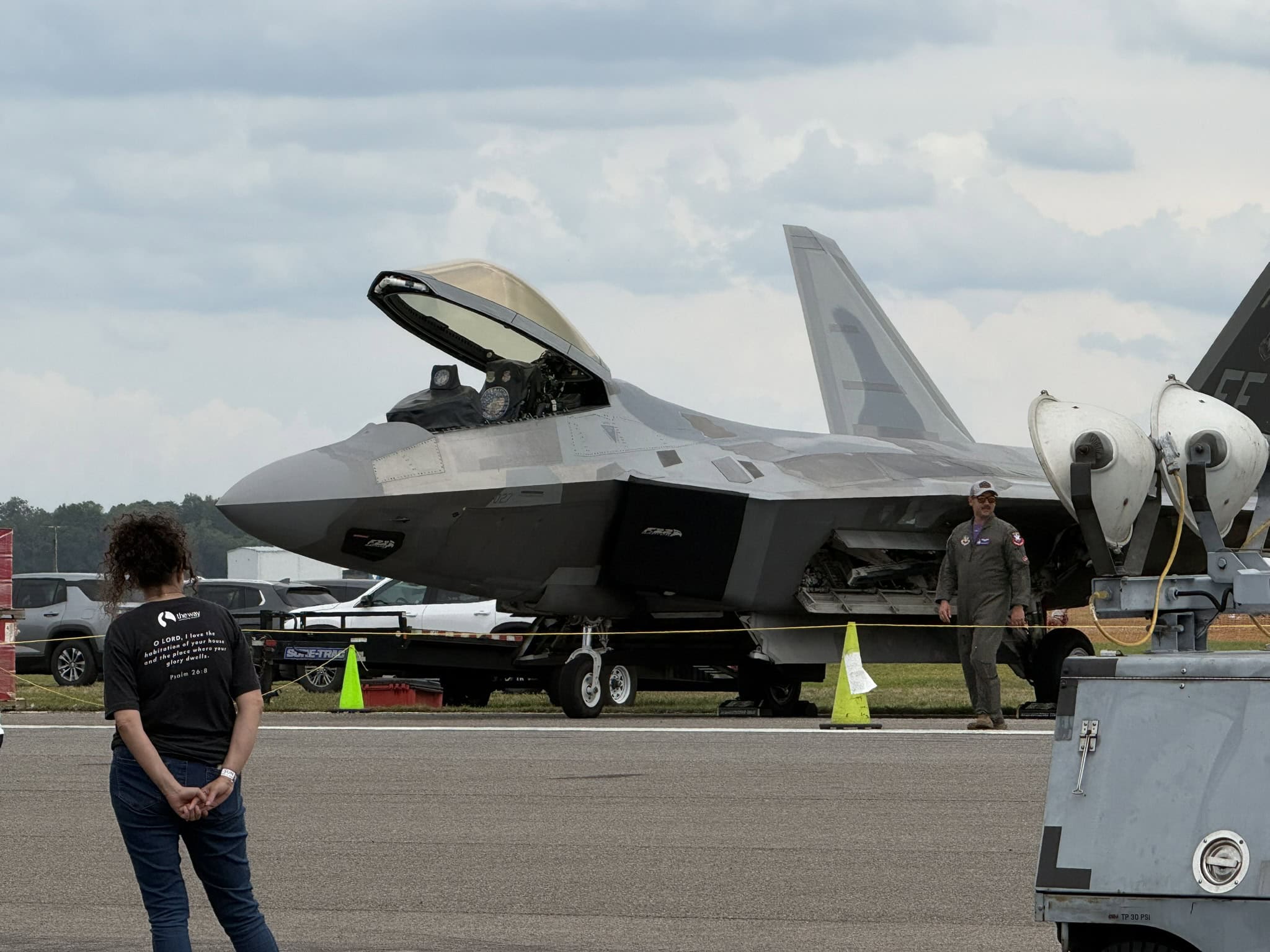
F-22 Raptor Lakeland, Florida Airshow. Taken on 4/19/2026.
The Best Air Superiority Fighter Ever Built?
Most experts believe the F-22 remains the best air superiority fighter ever built. The F-22 possesses stealth and first-shot capability. They can track and engage enemies before being detected. These birds carry AMRAAM plus Sidewinder missiles internally, meaning they don’t suffer through drag or radar exposure.
Oh, and the plane’s unique thrust-vectoring gives the plane extreme maneuverability as well as high-angle-of-attack control. After all this time, the F-22 remains the most advanced fighter in the world–so much so that most opponents do not realize they’ve been targeted.
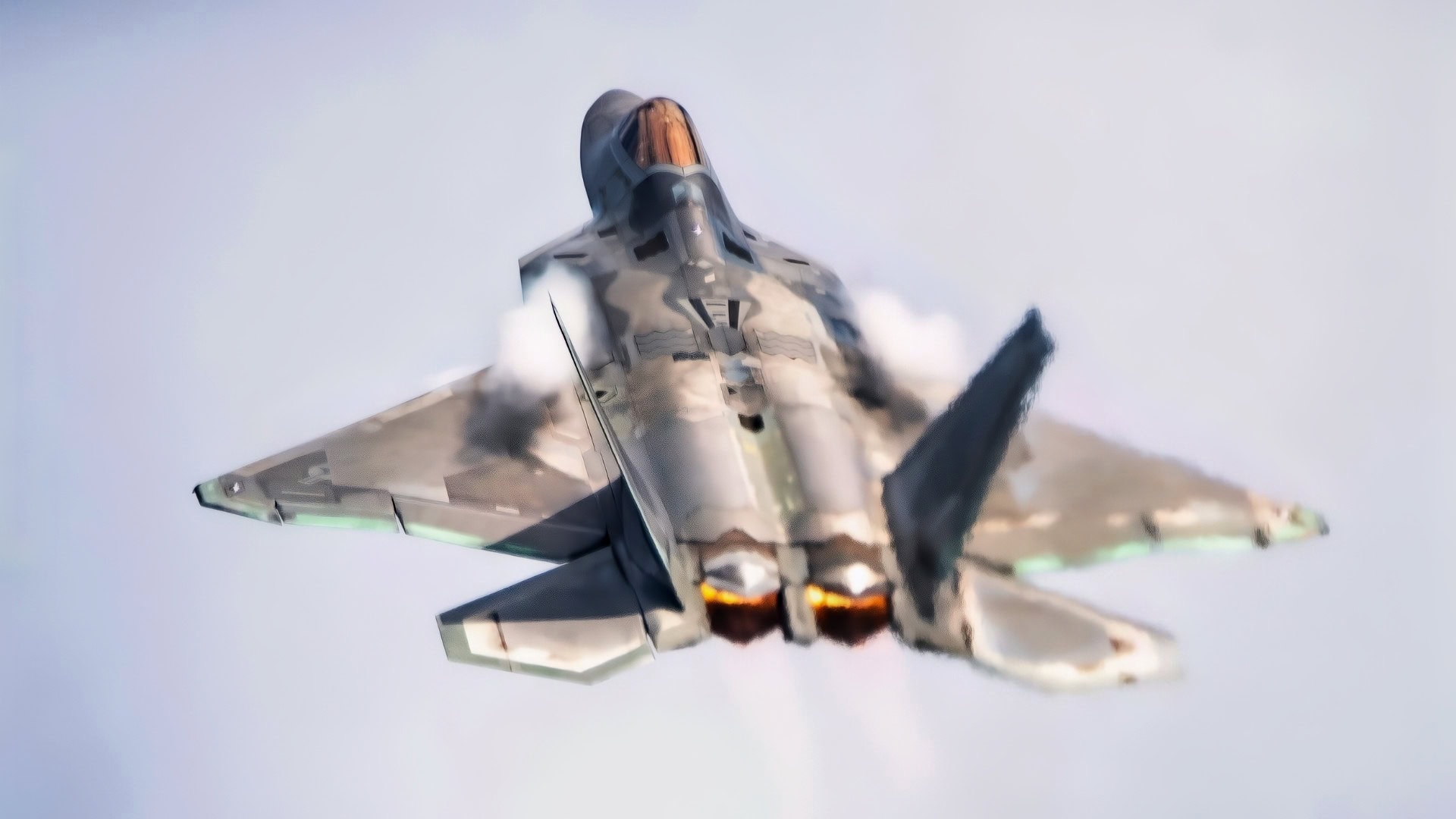
U.S. Air Force Maj. Paul Lopez, F-22 Demo Team commander, performs an aerial demonstration during the Thunder over Georgia Air Show at Robins Air Force Base, Sept. 28, 2019. Founded in 2007, the F-22 Raptor Demo Team showcases the unique capabilities of the world’s premier 5th-generation fighter aircraft. (U.S. Air Force photo by 2nd Lt. Sam Eckholm)
The Dark Side: Hypoxia and the “Raptor Cough”
Over the years, though, the F-22 has not been without its downsides. Back in 2012, CBS News reported a crisis among F-22 pilots who reported experiencing hypoxia-like symptoms. These horrible symptoms were linked to the onboard oxygen generation system (OBOGS). Symptoms included dizziness, disorientation, and breathing difficulty.
Pilots nicknamed what they experienced as the “Raptor Cough.” The problem was severe enough to temporarily ground parts of the fleet and trigger investigations that ultimately led to significant system redesigns.
The problems with the F-22 came a couple of years after the Obama administration decided to shut down the plane’s production line during the Great Recession in 2008, Obama’s defense policy team favored the F-35 Lightning II multirole fifth-generation warplane over the F-22, believing it was more interoperable and widely accessible than was the F-22 (which Congress will not allow to be exported to any ally, even Israel and Britain).
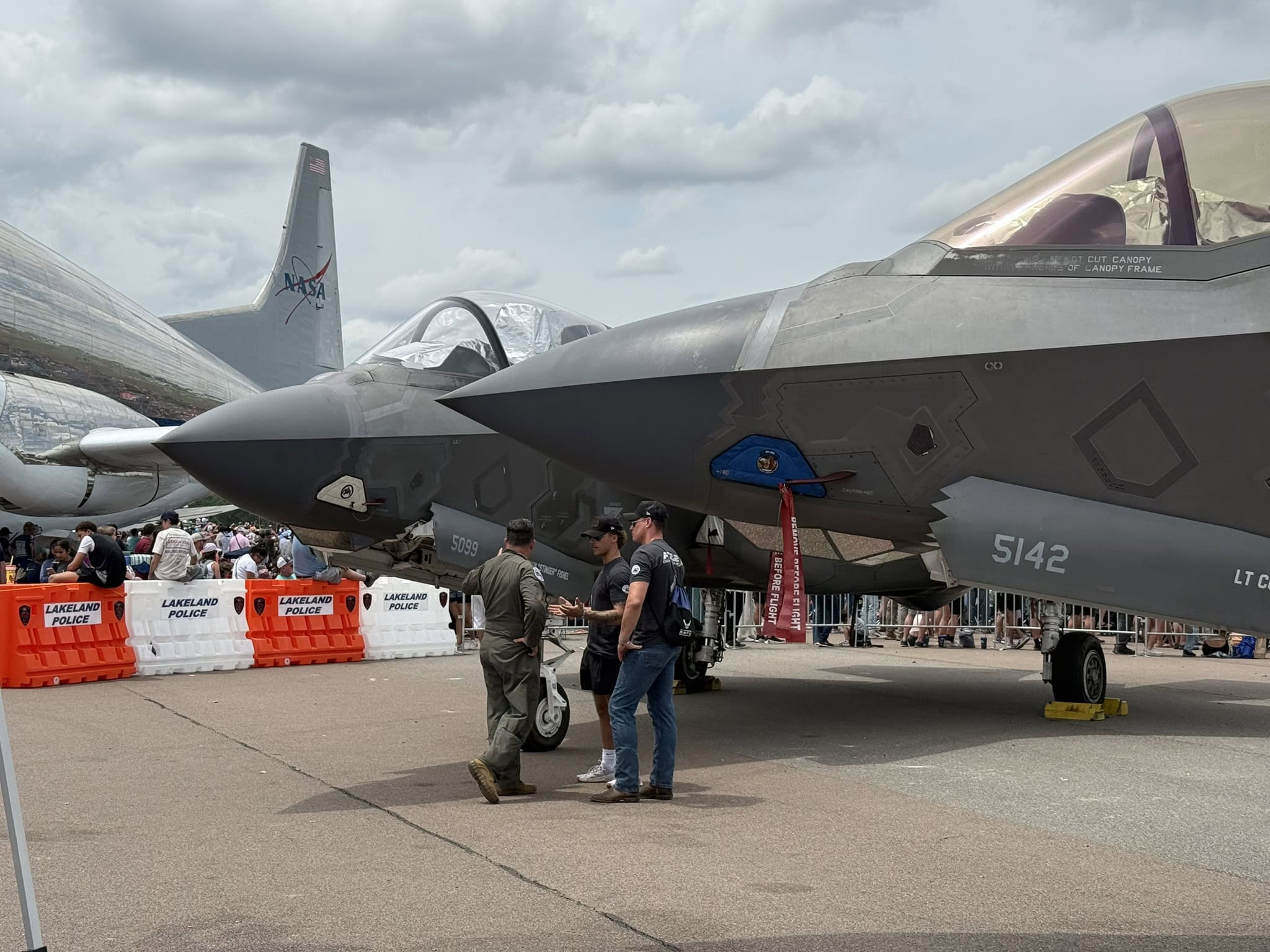
F-35C. Image Credit: 19FortyFive.com taken on 4/19/2026.
Still the Apex Predator of the Skies
Despite these setbacks, the F-22 remains a decisive weapon in America’s arsenal. It is considered a cognitive weapon because of the aforementioned sensor fusion, which turns the pilot into a battlefield manager.
Its speed, altitude, and stealth make this an energy-dominant fighter that lets the pilot shoot and kill first. Some have claimed the F-22 is outdated, especially as the sixth-generation warplane, the F-47, comes into view.
That couldn’t be more incorrect, though.
The F-22 redefines what a fighter pilot does.
It shifts that pilot role from a “stick-and-rudder operator” to a real-time combat decision-maker inside a flying sensor node.
That is why decades after its debut, even as the F-47 is being made into a reality, nothing–not even the F-35–has truly ever replaced the plane.
About the Author: Brandon J. Weichert
Brandon J. Weichert is the Senior National Security Editor at 19FortyFive.com. Recently, Weichert became the editor of the “NatSec Guy” section at Emerald.TV. He was previously the senior national security editor at The National Interest. Weichert is the host of The National Security Hour on iHeartRadio, where he discusses national security policy every Wednesday at 8pm Eastern. He hosts a companion show on Rumble entitled “National Security Talk.” Weichert consults regularly with various government institutions and private organizations on geopolitical issues. His writings have appeared in numerous publications, among them Popular Mechanics, National Review, MSN, and The American Spectator. And his books include Winning Space: How America Remains a Superpower, Biohacked: China’s Race to Control Life, and The Shadow War: Iran’s Quest for Supremacy. Weichert’s newest book, A Disaster of Our Own Making: How the West Lost Ukraine, is available for purchase wherever books are sold. He can be followed via Twitter/X @WeTheBrandon.