
The Strait of Hormuz remains a hot topic as the conflict with Iran persists – despite the delicate ceasefire. And for good reason. The narrow waterway handles roughly 20 million barrels of oil per day, accounting for about one-fifth of global consumption and close to a quarter of all seaborne oil trade. That volume has been broadly consistent in recent years, even if much of it is bound for China, and that is why the strait continues to dominate any discussion of global energy security.
Iran has both threatened to close the Strait and to have actually done so in recent weeks, knowing very well that it is its strongest leverage in negotiations with the United States. It only needs to disrupt traffic slightly to affect the global economy, put inflationary pressure on faraway countries, send insurance costs skyrocketing, and force shipping companies to reroute or delay cargoes.
And throughout the more-than-month-long saga so far, the White House has worked to secure the strait, then claimed to have no interest in securing it, and, most recently, initiated a blockade that prevents ships from leaving Iranian ports.
President Donald Trump is working to constrain Iran economically and militarily, and the U.S. military is doing so without directly controlling the entire waterway. But what might happen in the long term?
Who will control the Strait of Hormuz when the conflict comes to an end – if, indeed, it comes to an end any time soon? Is Iranian control over the Strait, which is the ultimate goal for the regime, even tolerable for the United States?
What Iranian “Control” of the Strait Looks Like
The Strait of Hormuz is a chokepoint by all definitions of the term. At its narrowest point, it is roughly 21 miles wide, with shipping lanes only two miles wide in each direction. Iran controls the northern side, while Oman controls the southern side.
At least, it did before the recent U.S.-Israeli campaign. That geography allows Iran to exert pressure even without fully closing the Strait, and its methods of doing so are well documented at this point. They include the use of fast attack craft operated by the Islamic Revolutionary Guard Corps Navy, coastal anti-ship missile systems, naval mines, and surveillance drones and targeting systems.
Naval mines have become a particular problem in the current conflict, even after the United States wiped out most of Iran’s naval capability. Even a single mine laid in the waters, or just the threat of laying them, is enough to cause significant disruption. And, Iran has repeatedly demonstrated its willingness to interfere with commercial shipping – even before Operation Epic Fury.
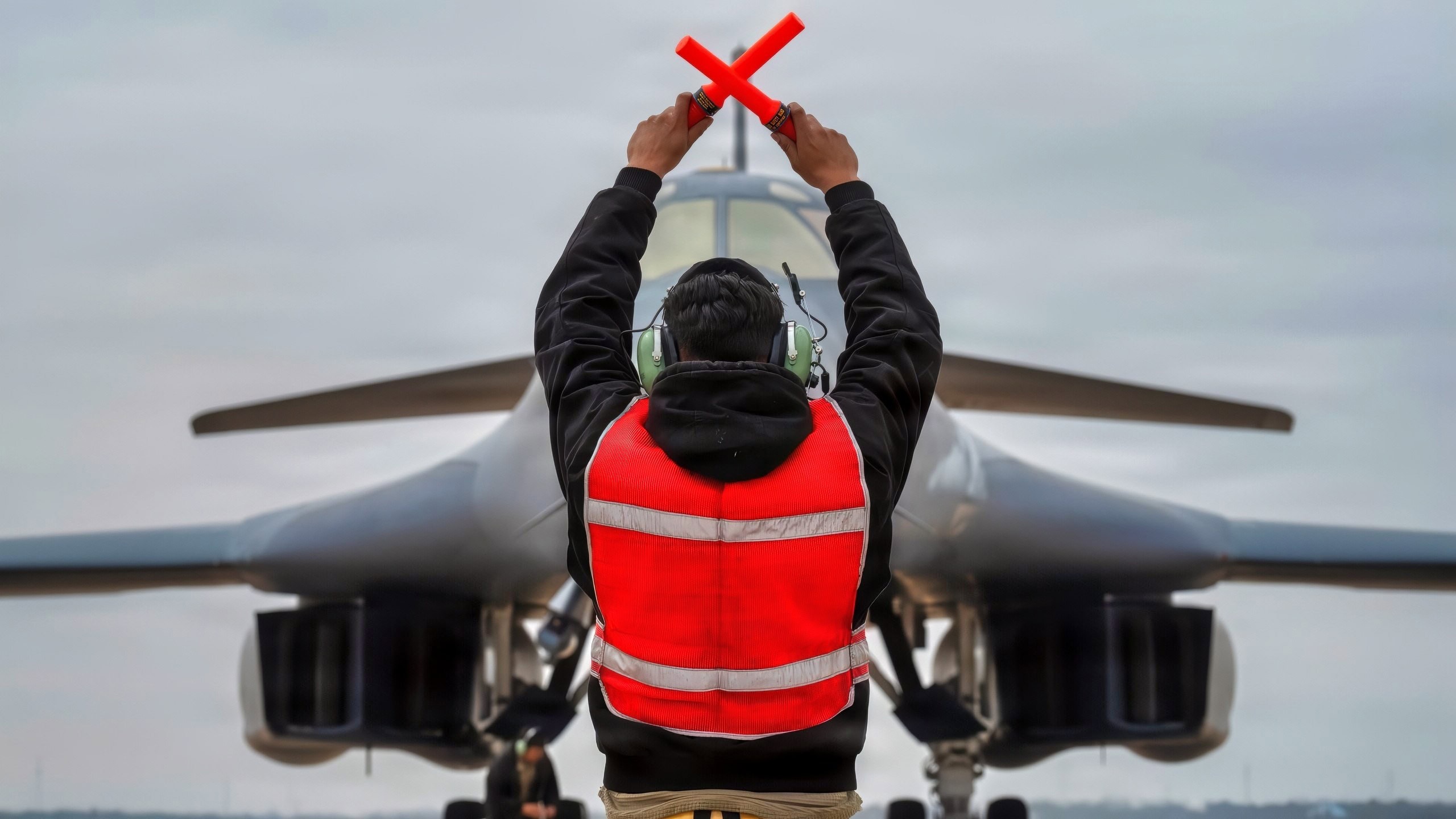
A U.S. Air Force B-1B Lancer crew chief marshals a B-1 after returning from a CONUS-to-CONUS mission in support of Operation Epic Fury, March 4, 2026. The B-1B is a long-range, multi-role bomber that carries the largest payload of precision guided and unguided munitions in the Air Force inventory. (U.S. Air Force photo)
In 2019, for example, it seized the British-flagged tanker Stena Impero and has since harassed multiple vessels transiting the Gulf.
Now, instead of isolated incidents, Iran is attempting to shape traffic patterns by denying or delaying entry to the strait for some tankers, sending insurance premiums skyrocketing, and forcing some vessels to operate under additional security constraints.
Reports have also described how Iran has accepted payments in cryptocurrency for the safe passage of some commercial vessels in recent weeks.
But how long can this really last?
Strait of Hormuz: What Sustained Control Would Require
Maintaining this posture over time requires continuous effort, and the assumption that the United States will not ultimately end it, whether through regime change or pressure.
Iran must sustain a persistent naval presence in the Gulf, which is especially difficult now that many of its naval assets are gone. It must maintain the courage to conduct surveillance and track vessel movements, and it must also pose a credible threat of escalation. That may be achievable in the short term, but it looks unlikely in the long term.
The United States maintains a substantial military presence in the region, including multiple carrier strike groups, mine countermeasure vessels, long-range strike capabilities, and potential support from allied militaries.
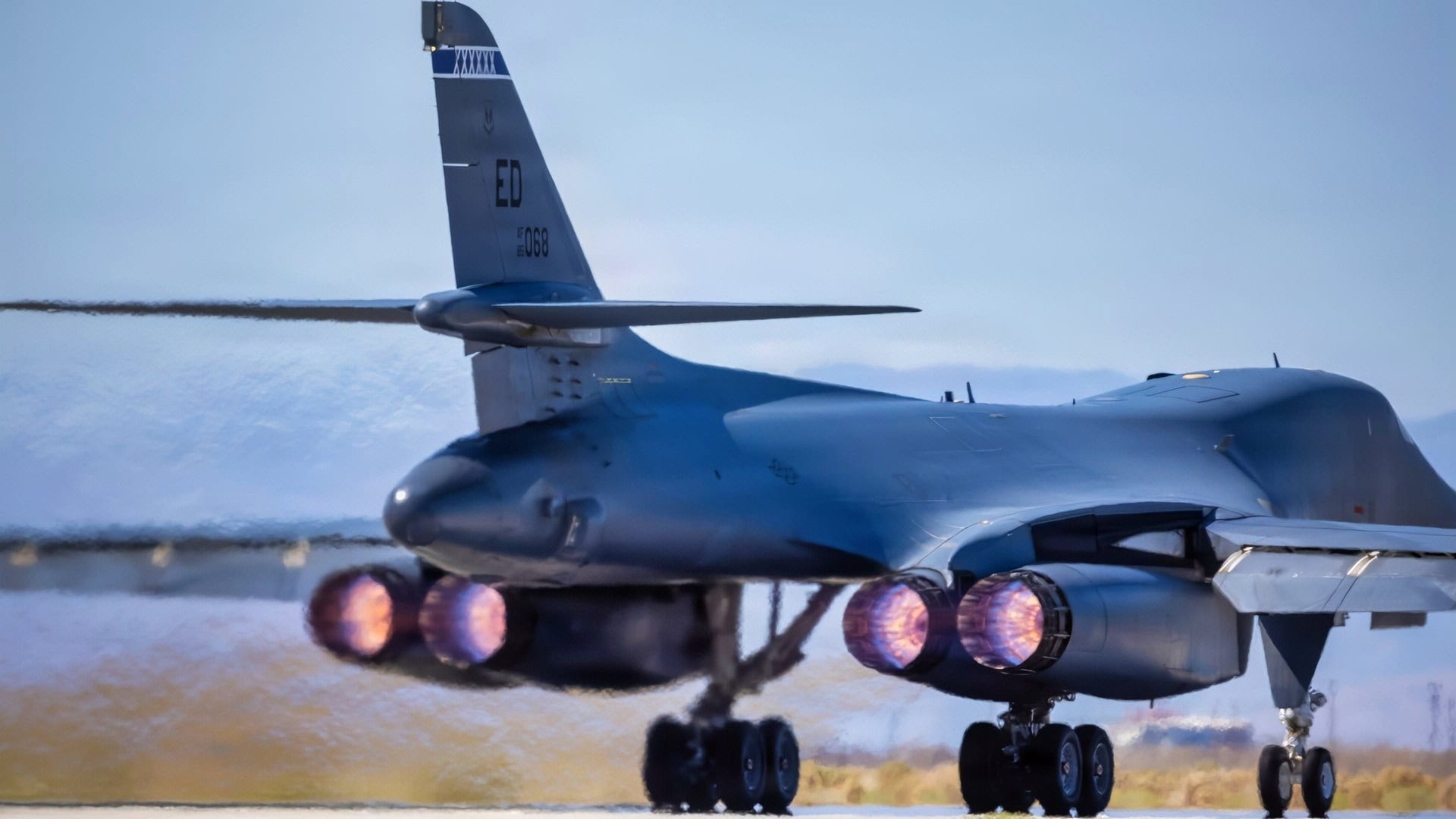
A B-1B Lancer departs for a test mission at Edwards Air Force Base, California on September 11, 2025. The supersonic multi-mission heavy bomber continues developmental testing with the 419th Flight Test Squadron to increase lethality across several domains. The aircraft is helping bridge advanced capability for Global Strike Command ahead of the B-21 Raider’s arrival. The 412th Test Wing at Edwards is the only installation to host all four USAF bomber aircraft. (U.S. Air Force photo by Todd Schannuth)
U.S. Fifth Fleet operations are specifically designed to keep the Gulf and surrounding waterways open, and that role is unlikely to change. Iran could not establish full uncontested control of the strait before the current campaign, and it cannot do so in a sustainable fashion now – at least if it expects its regime to survive.
What it can do, though, is continue to raise transit costs to a level that changes behavior. The problem, though, is that Iran depends on maritime trade – and that’s precisely what Trump’s current blockade is intended to exploit.
Even under sanctions, Iran continued to export oil and import goods through regional routes, and sustained disruption to these routes reduces its export capacity and increases pressure from key buyers, particularly in Asia.
The result could be that Iran’s buyers begin to look elsewhere as opportunities arise. Continued disruption also risks a broader coalition response, including from Europe, if global markets are severely affected.
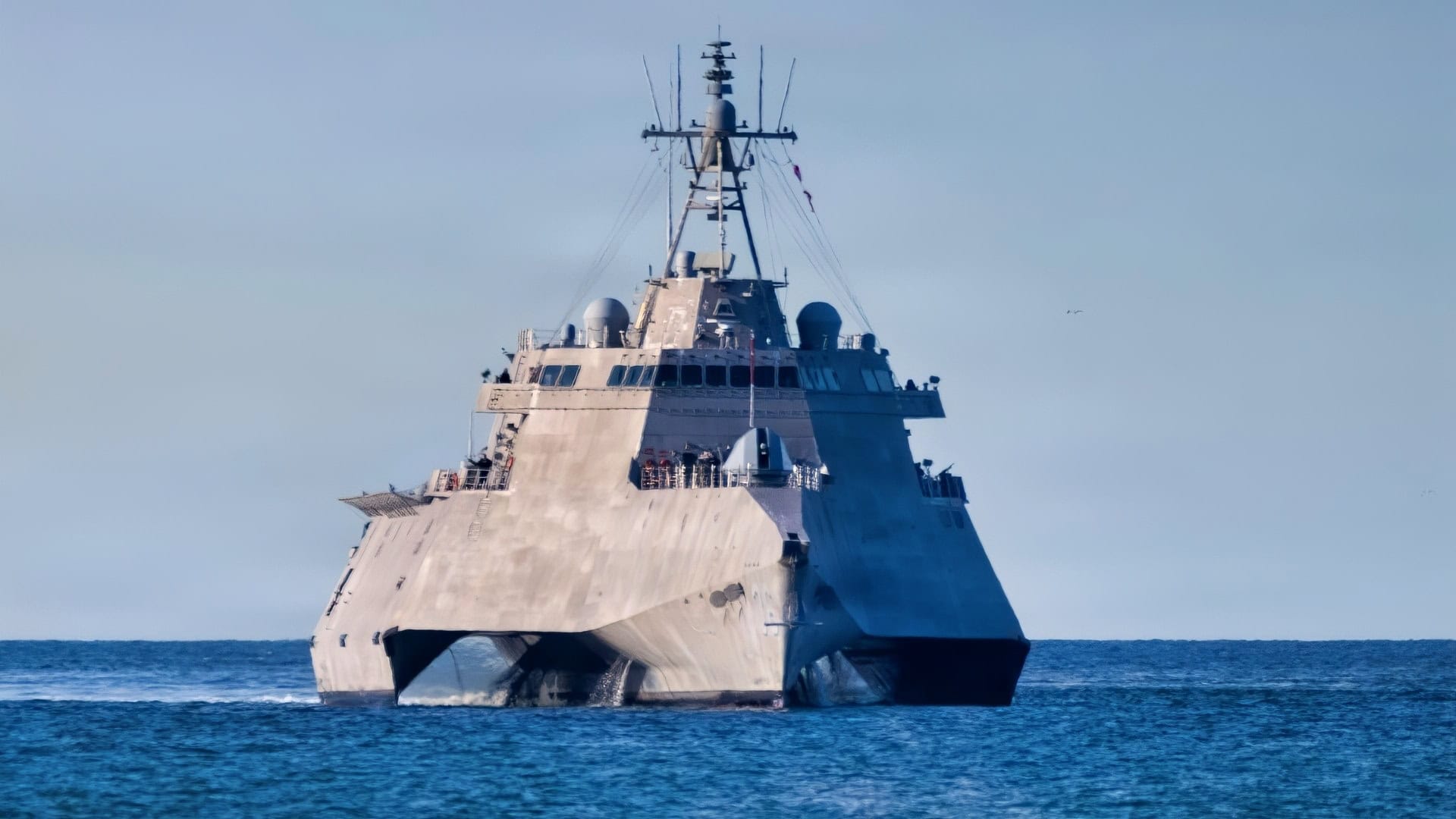
USS Kingsville (LCS 36) sails toward Naval Surface Warfare Center, Port Hueneme Division (NSWC PHD) in California on a recent morning as a flock of brown pelicans flies low over the Pacific Ocean. Homeported in San Diego, LCS 36 is an Independence-variant littoral combat ship that was commissioned in 2024. The arrival marked the ship’s first visit to NSWC PHD, where it underwent a Combat Systems Assessment Team event to ensure combat readiness. Designed to operate closer to shore than guided-missile destroyers and cruisers, USS Kingsville is outfitted for mine countermeasures missions. (U.S. Navy photo by Eric Parsons)
Strait of Hormuz: What Happens if the U.S. and Allies Tolerate It
If the United States chooses not to fully secure unrestricted passage, Iranian control could, in theory, become a persistent feature. Arguably, that was already the case before the recent conflict, and Trump’s recent measures are designed to prevent it from continuing.
But if U.S. forces simply withdraw and allow Iran to maintain control of the state, it would allow the regime to extract value in multiple ways.
Beyond the obvious problem of Iran collecting tolls to pay for the damage done by U.S. and Israeli strikes, higher insurance premiums will also increase overall shipping costs for global economies. Delays and rerouting will reduce supply efficiency, and the buyers will pay a premium for Gulf-origin crude.
Assuming the buyers remain, Iran can increase its per-barrel revenue and strategic leverage over buyers such as China, India, Japan, and South Korea.
Around 84% of crude oil and condensate moving through Hormuz goes to Asia, with those four countries accounting for the majority. That gives Iran indirect influence over some of the world’s largest economies, even if it cannot fully control flows.
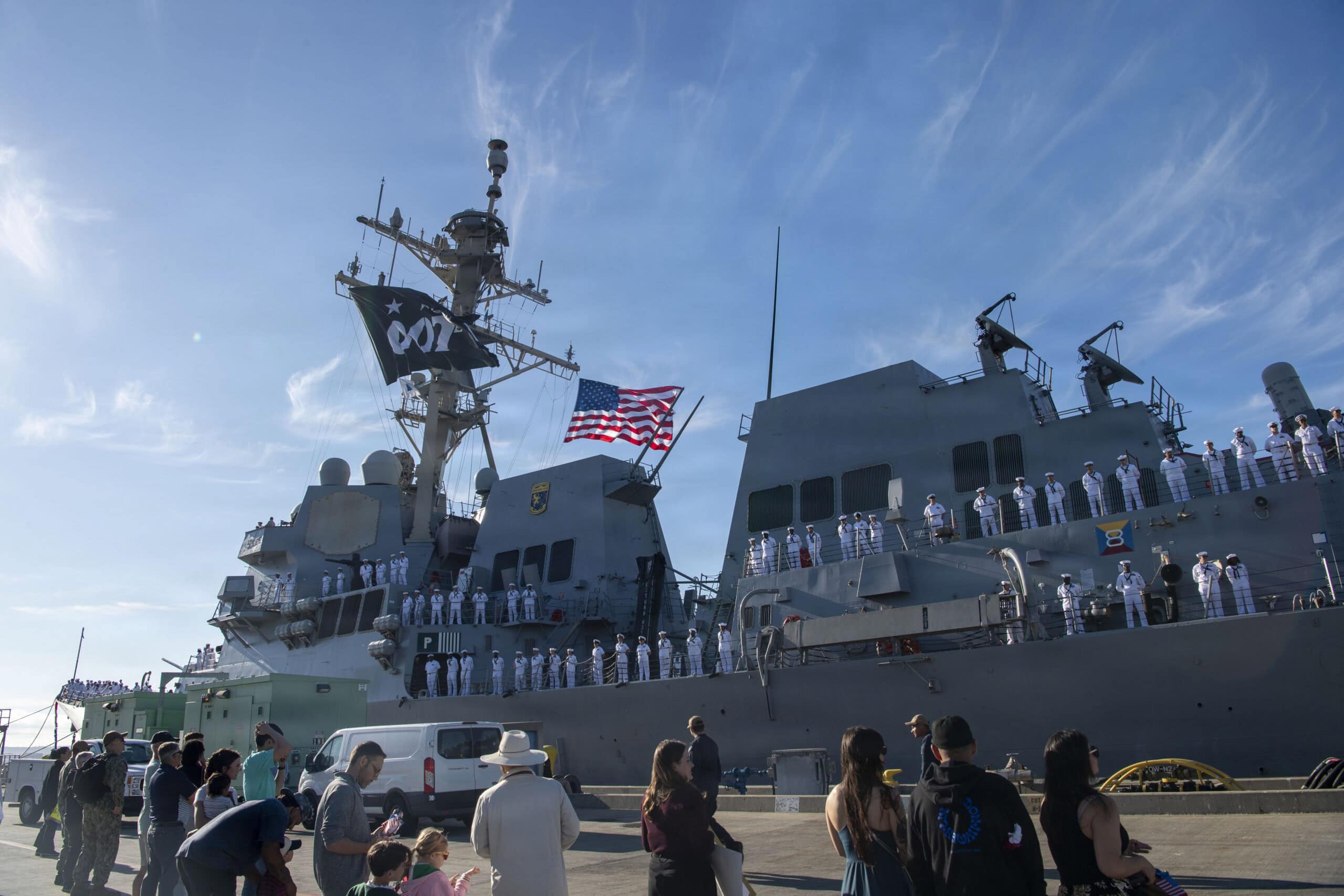
SAN DIEGO, Ca. (April 10, 2026) – Friends and family greet Arleigh Burke-class guided-missile destroyer USS Stockdale (DDG 106) from the pier, as the ship returns to its homeport of Naval Base San Diego following a seven-month underway to the U.S. 4th Fleet area of operations, April 10. Stockdale returns safely home having successfully carried out sustained operations at sea, maintaining peace through strength and sustaining credible deterrence alongside our allies and partners. (U.S. Navy Photo by Mass Communication Specialist 1st Class Sara Eshleman)
The third impact is political.
European governments have already explored maritime security missions in the Gulf. The European Maritime Awareness in the Strait of Hormuz (EMASOH) initiative, launched in 2020, was designed to monitor and protect shipping without escalating into direct confrontation. This month, reports revealed European plans to secure the strait after the war, excluding the United States.
But if Europe were to act militarily, as President Trump has urged, its capacity is limited. It has smaller naval fleets, is heavily dependent on U.S. coordination, and, precisely because of those limitations, its leaders are reluctant to escalate militarily.
Oman, which controls the southern side of the strait, has historically maintained neutrality and is unlikely to take unilateral military action against Iran. With that in mind, it’s clear that tolerating Iranian control would not stabilize the situation – especially after the recent strikes.
It would instead embed instability into the entire system in a far more pronounced way than before, likely causing periodic disruptions that become a normal operating condition in the future.
Can the U.S. tolerate it? Perhaps if Gulf oil buyers could quickly turn to American oil, but that’s not likely any time soon.
About the Author: Jack Buckby
Jack Buckby is a British researcher and analyst specializing in defense and national security, based in New York. His work focuses on military capability, procurement, and strategic competition, producing and editing analysis for policy and defense audiences. He brings extensive editorial experience, with a career output spanning over 1,000 articles at 19FortyFive and National Security Journal, and has previously authored books and papers on extremism and deradicalization.