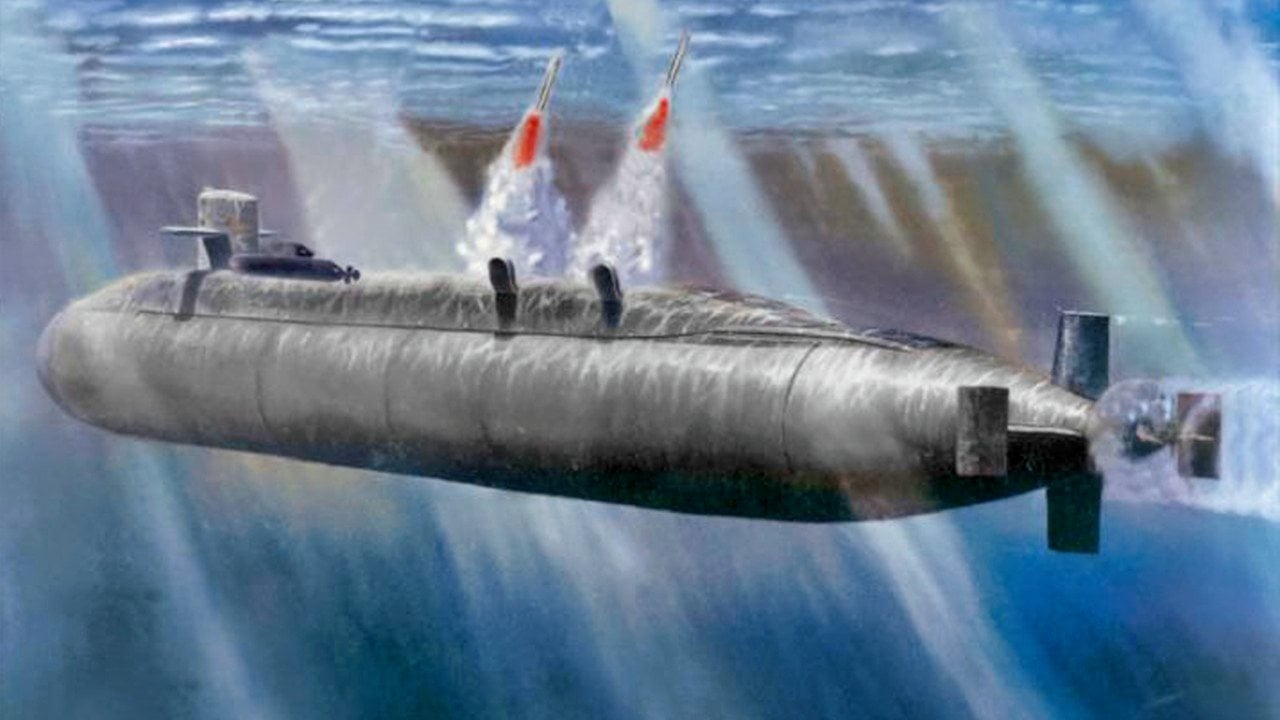
Is the United States about to run out of munitions? The answer is a bit more complicated than it sounds. A recent report from the Center for Strategic and International Studies (CSIS) offers an answer that is both a “no” and a “yes.” That’s because the concern is less whether or not the US will run out of critical munitions in its current conflict with Iran and more about how long it will take to replenish those key weapons as war with China becomes more likely with each day.
The Weakness Is Clear – A War of Depletion: Iran is Burning Through US Stockpiles
Interestingly, this CSIS report comes on the heels of similar reports from other think tanks and defense reporters, including the Foreign Policy Research Institute (FPRI), which determined that there were approximately 14 key systems that the United States military was depleting, due to a combination of the high-tempo of the Iran War as well as the strain that was already placed on those systems over the years in the Ukraine and previous rounds of Mideast warfare.
What’s more, the US defense industrial base (DIB) cannot reliably replenish these expensive, complex systems in a timely way, thereby compounding shortages–and leading many in the defense policy community to fret about what might happen if those systems are depleted fighting Iran and the DIB cannot replenish them before China opens another front.
The Defense Industrial Base Can’t Keep Up
But, it isn’t only China. Since the United States moved the Terminal High Altitude Area Defense (THAAD) system out of South Korea last month to augment the defensive capabilities of the Middle East, North Korea began firing cruise missiles with regularity, sending Seoul’s leadership into spasms.
So, it might be China that attacks next while America’s critical stockpiles are drained. But it could also be North Korea that initiates the next geopolitical crisis to further break America’s already depleted key stockpile.
Consider this: in just 39 days of the Iran War, up to 50 percent of America’s most important missiles and interceptors have been used up. These include Tomahawk Land Attack Missiles, JASSMs, along with Patriot and THAAD missile interceptors.
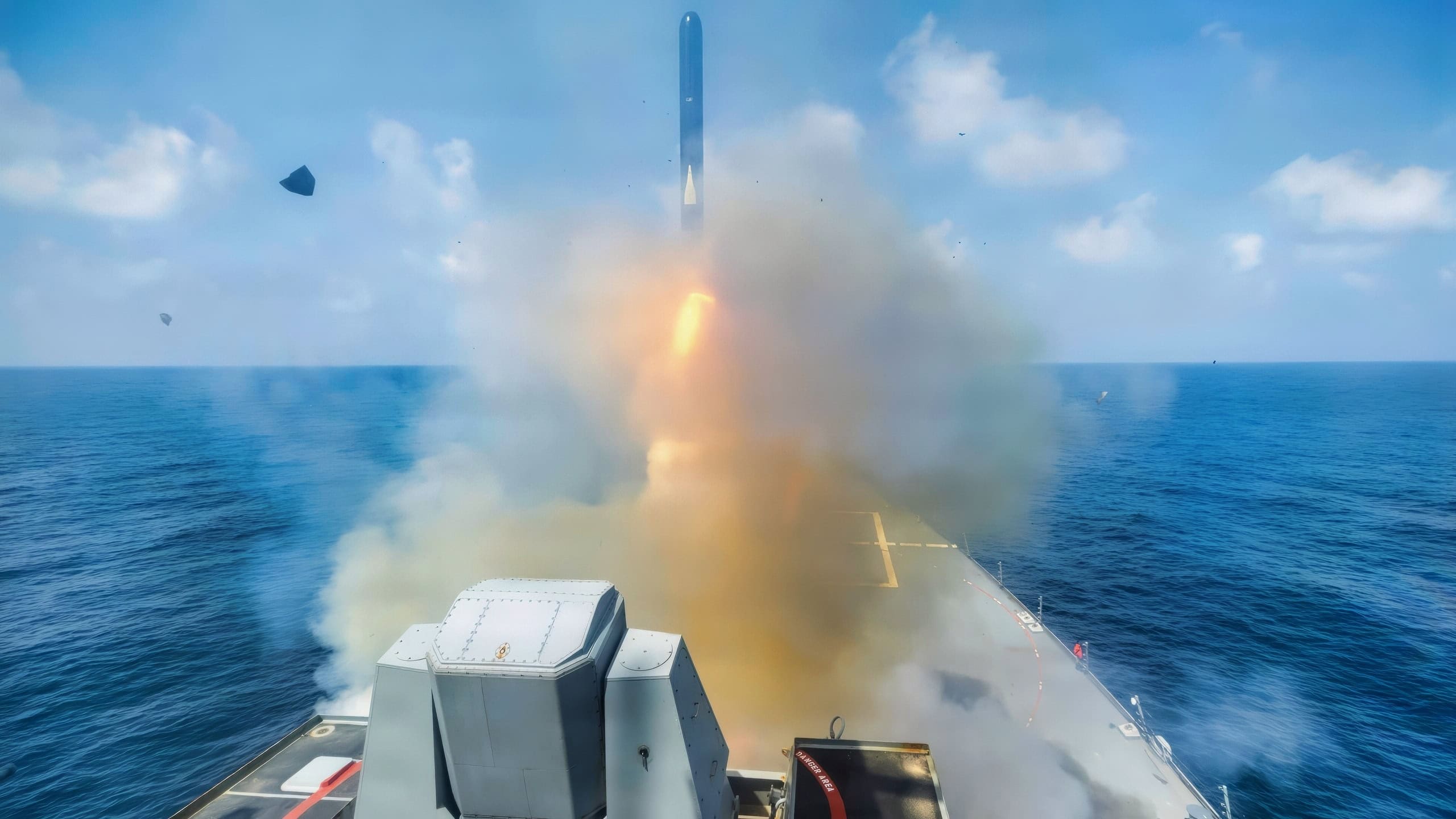
Arleigh Burke-class guided-missile destroyer USS Spruance (DDG 111) fires a Tomahawk Land Attack Missile (TLAM) in support of Operation Epic Fury, Feb. 28, 2026. (U.S. Navy photo)
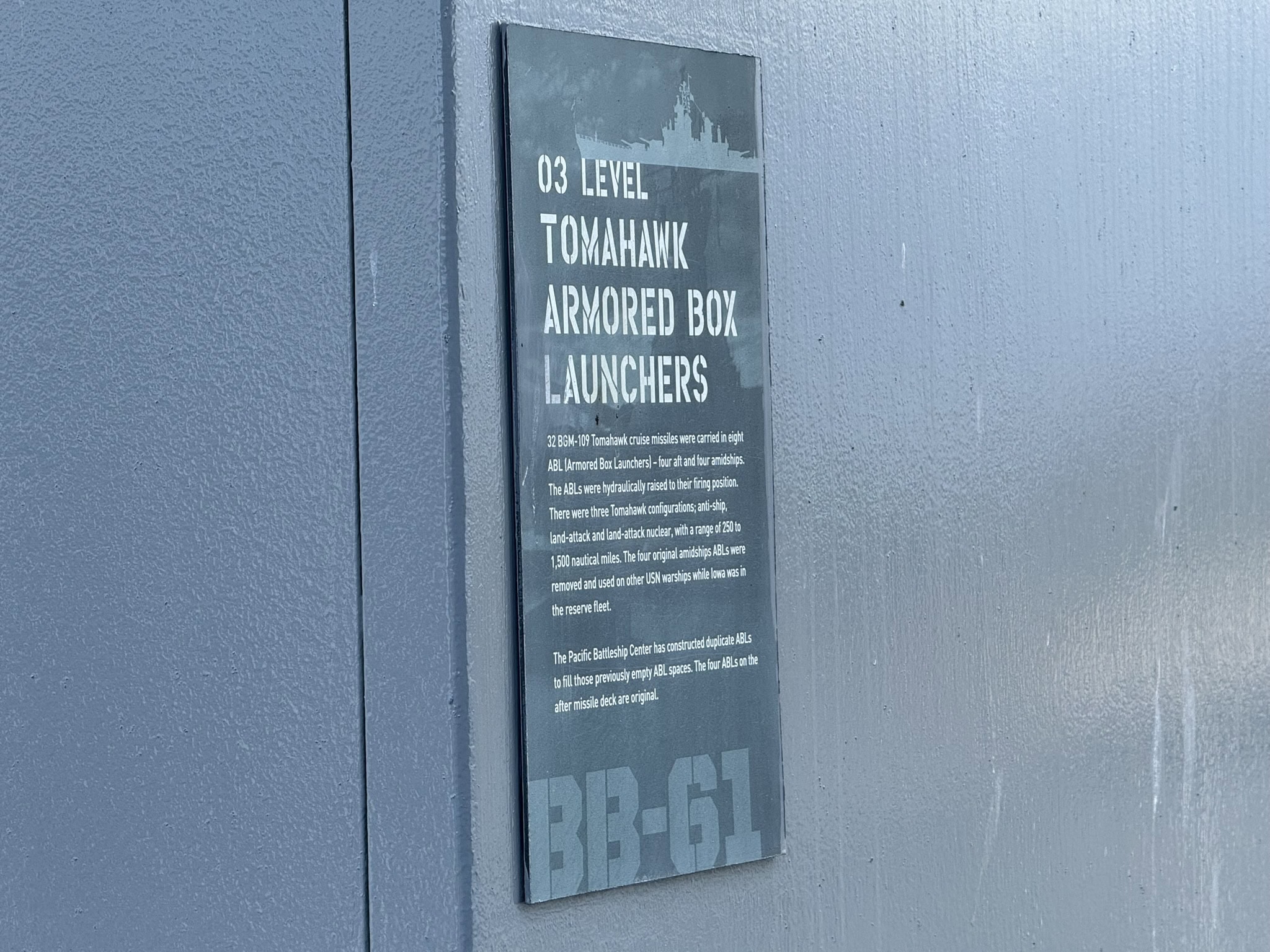
Tomahawk Box on USS Iowa. 19FortyFive.com Image.
Around 850 Tomahawks have been fired, more than 1,000 JASSMs have been used, and it is possible that the entire inventory of Precision-Strike Missiles (PrSM) has been used in the Iran War.
With those numbers having been utilized in such a short time, it is likely that America’s DIB will only be able to replace a small fraction of the missiles thus far expended…in more than four years.
Let us hope that the United States military doesn’t need those systems soon, or that another conflict doesn’t erupt, requiring even more of these essential systems.
At the start of the war, the United States used expensive, exquisite systems to attack Iran.
Later in the war, however, as the Pentagon realized how badly depleted their stockpiles of these key systems were getting, the US was forced to switch to cheap bombs at shorter range.
From Exquisite to Cheap: Why the US Changed Tactics Mid-War
The cost alone of the more exquisite systems makes them irreplaceable under current conditions. For instance, Joint Directed Attack Munitions (JDAMs) cost around $66,000 per shot, whereas the aforementioned JASSM costs more than $2.6 million per shot.
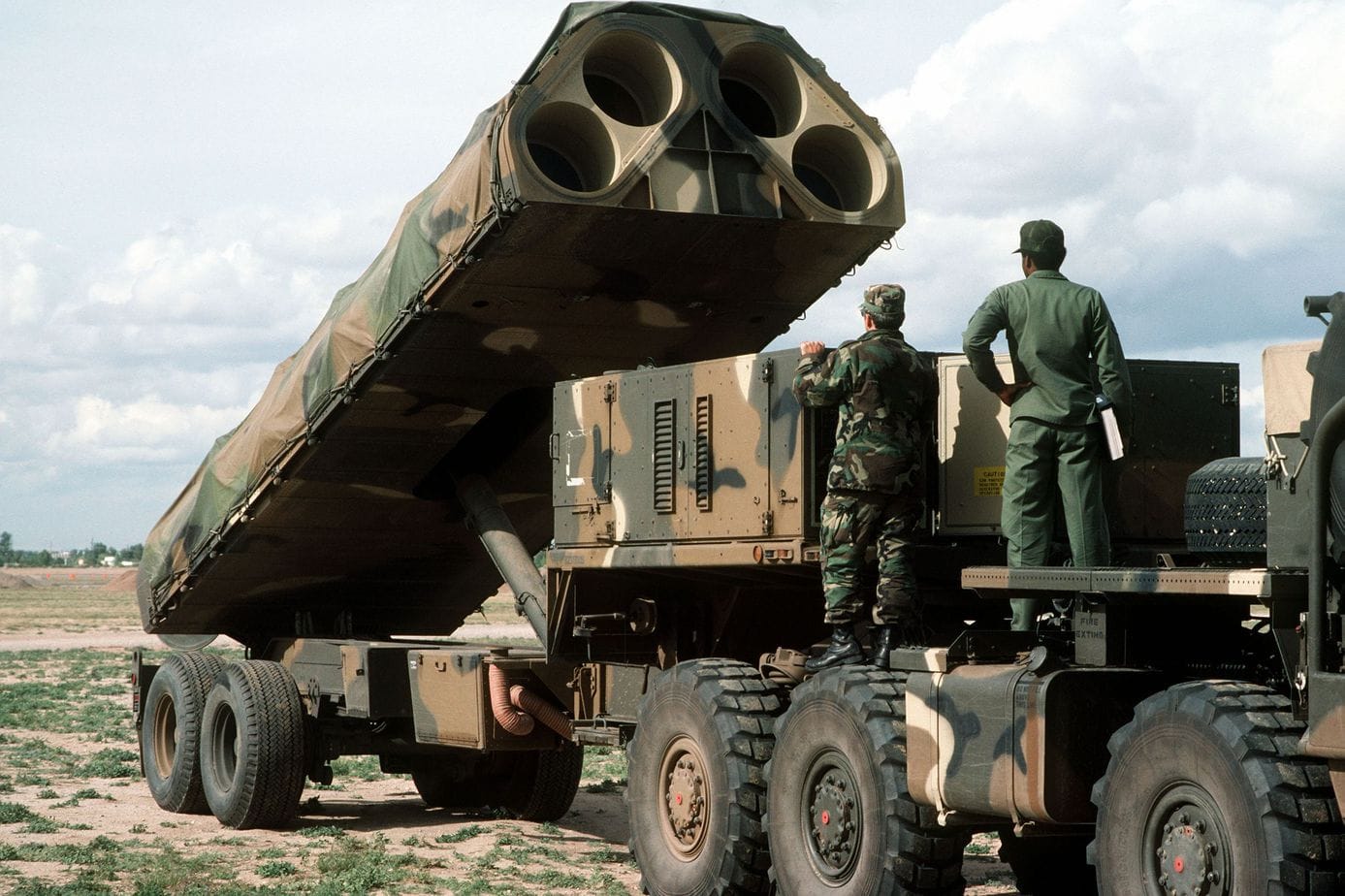
Image of land-based Tomahawk missile from the 1980s.
So, the military switched to less advanced systems, like the JDAM, to both conserve what they had of the more advanced weapons (and to cut down on the cost). Ultimately, however, the US military was saving its inventory by putting its pilots and warplanes at greater risk.
Many of those defensive systems, like the Patriot, THAAD, and SM-3 or SM-6, are irreplaceable.
You cannot swap them out for cheaper alternatives. And missile defense in today’s conflict zones is a priority. Yet, it’s fragile, expensive, and very limited.
There simply isn’t enough production of these systems, partly because they are too expensive and partly because the DIB cannot build them at the required rates.
One of the biggest problems facing the US DIB is the fact that it is not only supplying US forces around the world.
The DIB augments the defensive stockpiles belonging to America’s numerous allies. Ukraine requires Patriots. Japan needs Tomahawks. The Gulf States in the Mideast want THAAD.
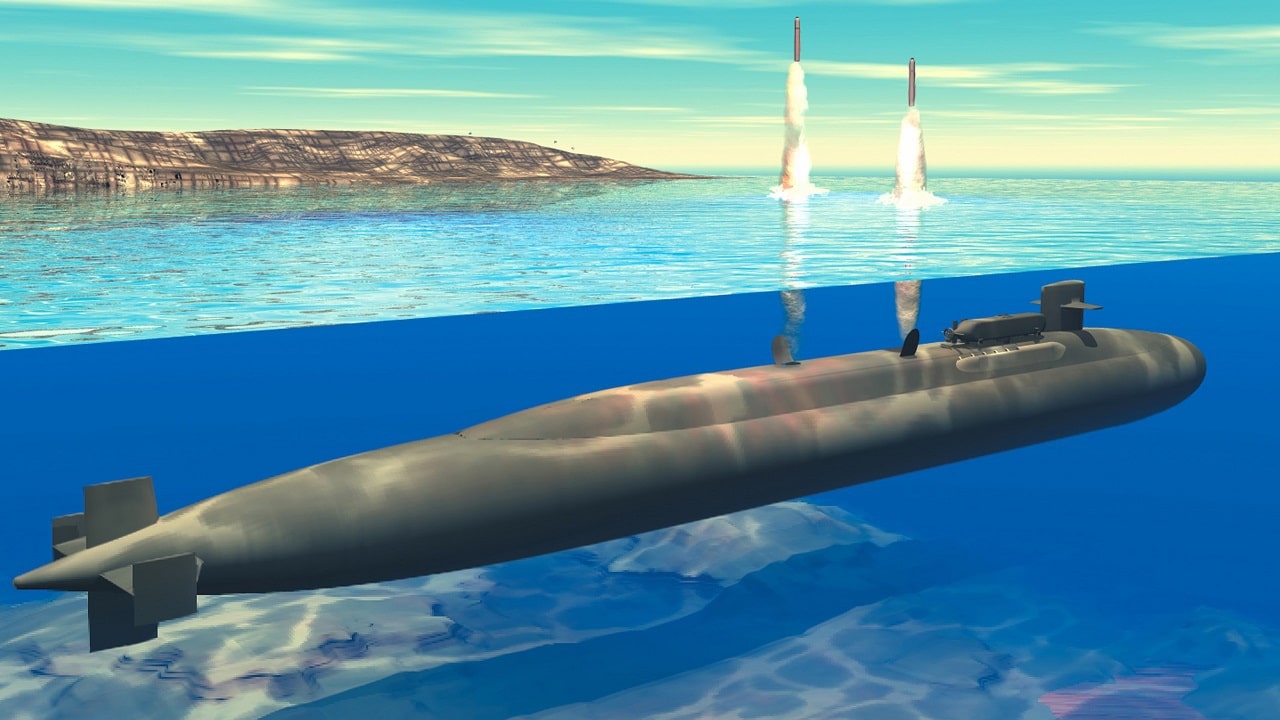
Artist’s concept of an Ohio-class SSGN launching Tomahawk Land Attack Missiles.
All these groups are drawing from the same finite stockpiles and the same limited production base in America.
The result under these strained conditions is chronic delays for new systems, increased political friction, and massive strategic tradeoffs that only weaken the overall US defensive posture.
China and North Korea are Watching–and Waiting
What’s more, the same systems that are being burned through in Iran would be needed in any contingency involving the People’s Republic of China and/or North Korea. China is essentially a missile arsenal chock full of advanced defensive systems.
Any conflict with either them or even North Korea would require a US missile capability that simply will not be available, especially if the Iran War continues.
Then there’s the added complication of the drone threat.
You see, countries like Iran, North Korea, and China all have relatively cheap, advanced drones in abundance. One of Iran’s Shahed-style drones costs around $50,000 per unit, whereas an American interceptor launched to shoot it down costs between $1 million and $5 million per shot. China can do that to the United States only on a grander, faster scale.
Thus, the US military position becomes unsustainable in short order during any near-future conflict with either China or North Korea.
Where the Americans had advantages in Iran, such as limited air superiority, they cannot guarantee they will enjoy air superiority over either the North Koreans or, certainly, the Chinese.
Without that air superiority, the Americans will be unable to shift their attacks from these hard-to-replace, exquisite long-range systems to shorter-range, cheaper systems.
By switching to cheaper systems in the middle of the Iran War, the Americans were able to conserve their key stockpiles of long-range, high-end systems. But any war with China or even North Korea will not be so forgiving.
Final Warning: The Longer This War Lasts, the Weaker America Becomes
Whether the US can “finish” the Iran War is a political decision.
What is clear is that the Americans will have a much lower readiness rating for the next war, which will likely come well before those critical stockpiles are replenished in any serious way.
And that reduced readiness only encourages China and North Korea to be more aggressive before the stockpiles are replenished.
In effect, the United States is running out of time to rebuild its key missiles and interceptors before the next big war.
That’s the real problem with the Iran War. It just won’t end. The longer it lasts, the more damage the United States will suffer in the next war. America’s rivals in the Indo-Pacific are banking on this reality.
About the Author: Brandon J. Weichert
Brandon J. Weichert is the Senior National Security Editor at 19FortyFive.com. Recently, Weichert became the editor of the “NatSec Guy” section at Emerald.TV. He was previously the senior national security editor at The National Interest. Weichert is the host of The National Security Hour on iHeartRadio, where he discusses national security policy every Wednesday at 8pm Eastern. He hosts a companion show on Rumble entitled “National Security Talk.” Weichert consults regularly with various government institutions and private organizations on geopolitical issues. His writings have appeared in numerous publications, among them Popular Mechanics, National Review, MSN, and The American Spectator. And his books include Winning Space: How America Remains a Superpower, Biohacked: China’s Race to Control Life, and The Shadow War: Iran’s Quest for Supremacy. Weichert’s newest book, A Disaster of Our Own Making: How the West Lost Ukraine, is available for purchase wherever books are sold. He can be followed via Twitter/X @WeTheBrandon.