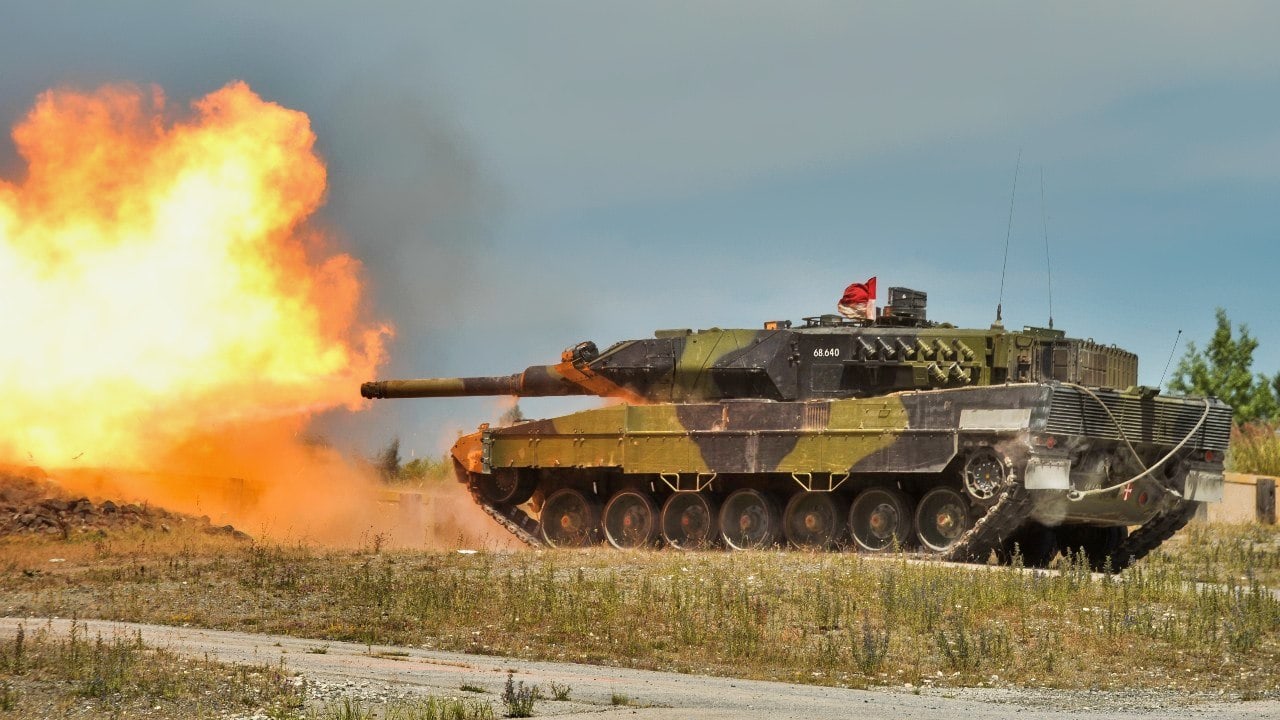
Leopard 2 Was Built to Dominate—the Ukraine War Turned It into a Target
Germany’s Leopard 2 Main Battle Tank (MBT) is an excellent tank.
In fact, it’s a Cold War masterpiece.
However, this Cold War masterpiece was tested in a major drone war in Ukraine, and the Leopard-2 MBT significantly underperformed for Ukraine due to the new warfare paradigm today.
And it’s not just the MBT being phased out because of the new drone warfare paradigm on today’s battlefields.
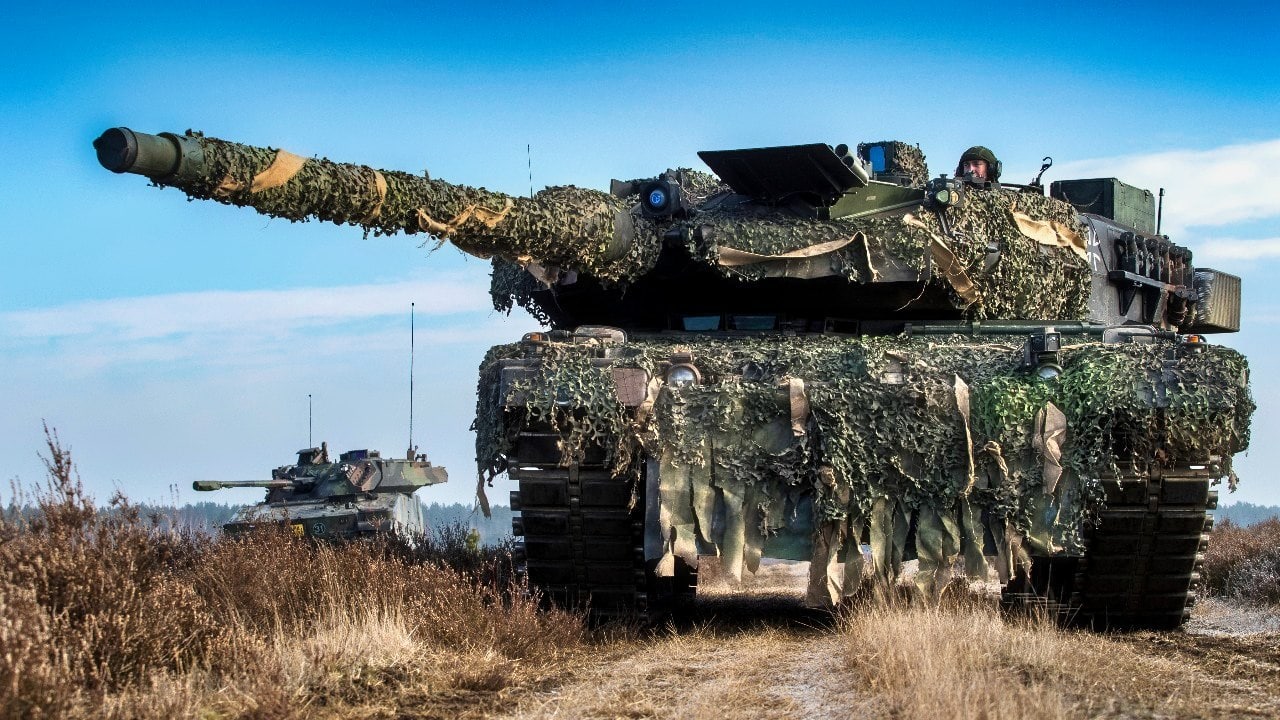
Germany Military Leopard 2 Tank.
A Wasting Asset
The underperformance of the Leopard 2 in Ukraine is just one example of many Cold War-era legacy systems being phased out in real combat situations. More importantly, these unexpected losses of Cold War legacy systems are happening faster than modern militaries can adapt.
When the German Bundeswehr needed a new main battle tank (MBT), its requirements were shaped by West Germany’s late Cold War needs and NATO’s. At that time, the main strategic concern for the Bundeswehr was preventing a possible Soviet Red Army armored assault through the Fulda Gap if the Cold War escalated into conflict.
Therefore, high-speed armored warfare—reminiscent of a modernized version of World War II, with maneuver warfare as the core strategy for Germany and NATO—was essential.
That’s why the Leopard 2 focused on mobility with a 1,500-horsepower engine. Germany then boosted its firepower by adding a 120mm smoothbore main gun. They finalized its design with heavy frontal armor. Additionally, more than 20 countries have imported the Leopard-2 over the past several decades.
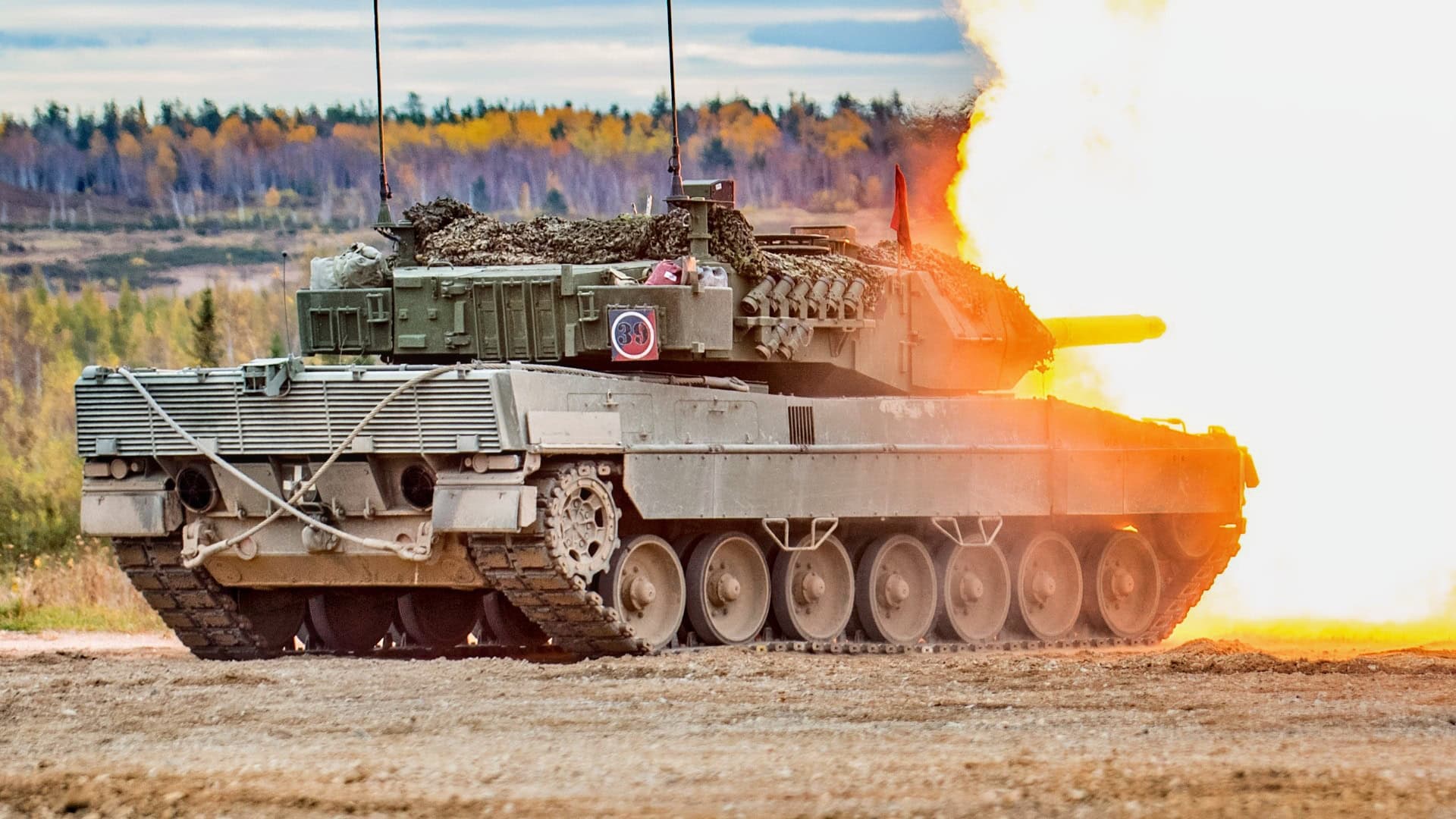
The Royal Canadian Dragoons, C Squadron, conducts a Leopard 2A4 tank shoot during an exercise at 5 Canadian Forces Support Base (5 CDSB) Gagetown, New Brunswick, October 23, 2020.
Although a powerful weapon, it was primarily designed to win a battle for control of the Fulda Gap, as mentioned earlier. With the fall of the Soviet Union and the end of the Cold War in 1991, that battle will never happen. Instead, the Leopard 2 has been used in muddy, blood-soaked, drone-infested battlefields like Zaporizhzhia, Ukraine, where it was ill-suited.
A Massive Gap
The ongoing Ukraine War has revealed a gap between platform excellence and battlefield effectiveness.
The Leopard 2s sent to Ukraine over the years have suffered significant losses and damage across all variants provided to the Ukrainian Armed Forces.
Confirmed destruction and damage have resulted from Russian artillery, anti-tank guided munitions (ATGMs), and, of course, drones.
Due to these unexpected threats—and their seriousness—Leopard-2s have been forced to operate farther from the battlefield and have achieved only limited success as mobile artillery, not as breakthrough weapons.
In fact, if the Ukraine War indicates where future warfare is headed, expensive MBTs will be pushed to the edges of the battlefield. Unless these MBTs are designed with the understanding that they will primarily—and probably only—be used as mobile artillery along the battlefield’s periphery, the modern MBT will not justify the costs in time and resources to develop.
What the world has witnessed in both Ukraine and the ongoing War of the Greater Middle East is that the modern battlefield has evolved faster than tank design could keep up.
Cheap first-person view (FPV) drones are destroying multi-million-dollar platforms.
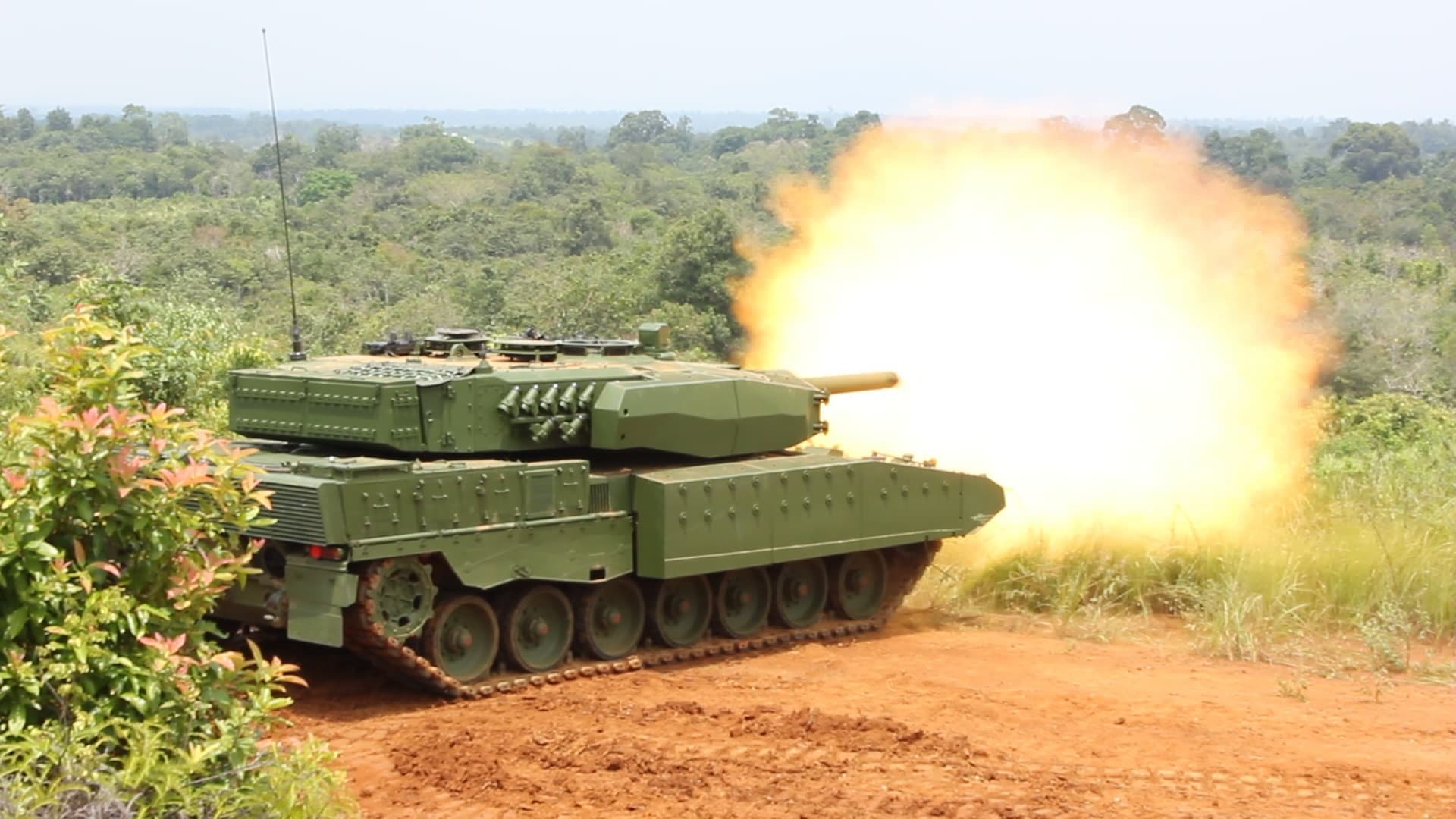
Leopard 2 Tank
Additionally, these drones have revealed a consistent flaw in most MBTs built for a Cold War that was expected to turn hot in the last century: their armor protection. Specifically, most MBTs were never truly designed to defend themselves against vertical threats.
Add in the constant threats of drone swarms and the intelligence, surveillance, and reconnaissance (ISR) capabilities these drones bring to the modern battlefield, and the MBT becomes less of a tactical asset and more of a true liability. Consider this: MBTs now face persistent surveillance, must deal with constant, real-time targeting, and must defend against hard-to-detect, precision-guided loitering munitions.
In today’s battlefield, a $500 drone can easily destroy a $5 million tank. How can any modern military still relying on Cold War-era platforms and weapons possibly expect to dominate the twenty-first-century battlespace?
Not Relevant to the Twenty-First Century Battlefield
It isn’t just Germany’s Leopard 2s that are struggling with the power imbalance that now disadvantages the West’s advanced militaries. As mentioned earlier, it’s essentially every legacy system we rely on today.
These tanks, like many other legacy systems, now face challenges such as maintenance complexity, shortages of spare parts, and bottlenecks in training pipelines for these sophisticated, costly, manned systems.
To be fair to the Leopard 2s in Ukraine, there have been times when these MBTs have successfully destroyed enemy Russian armor, but only when battlefield conditions (which are rare) allowed the Leopard-2s to be used as they were originally designed for combat. Those moments on the modern battlefield are now decreasing rapidly.
Interestingly, the Germans are responding to the rapid changes on the new battlefield in Ukraine.
The latest version of the Leopard 2 MBT, the Leopard-2A8, includes significant upgrades such as Trophy Active Protection System (APS), improved top-armor protection, and new sensor fusion and digital battlefield networking capabilities that reportedly make early drone detection much more reliable than previous versions of the Leopard 2 MBT.
Of course, the question remains whether these modifications are sufficient to justify the massive expenditure on the MBT in general or if that concept should be set aside in favor of smaller, decentralized, unmanned systems that are harder to destroy with drones, ATGMs, and artillery (and if they are lost, that loss is far less damaging to the force employing such systems than losing an MBT in combat).
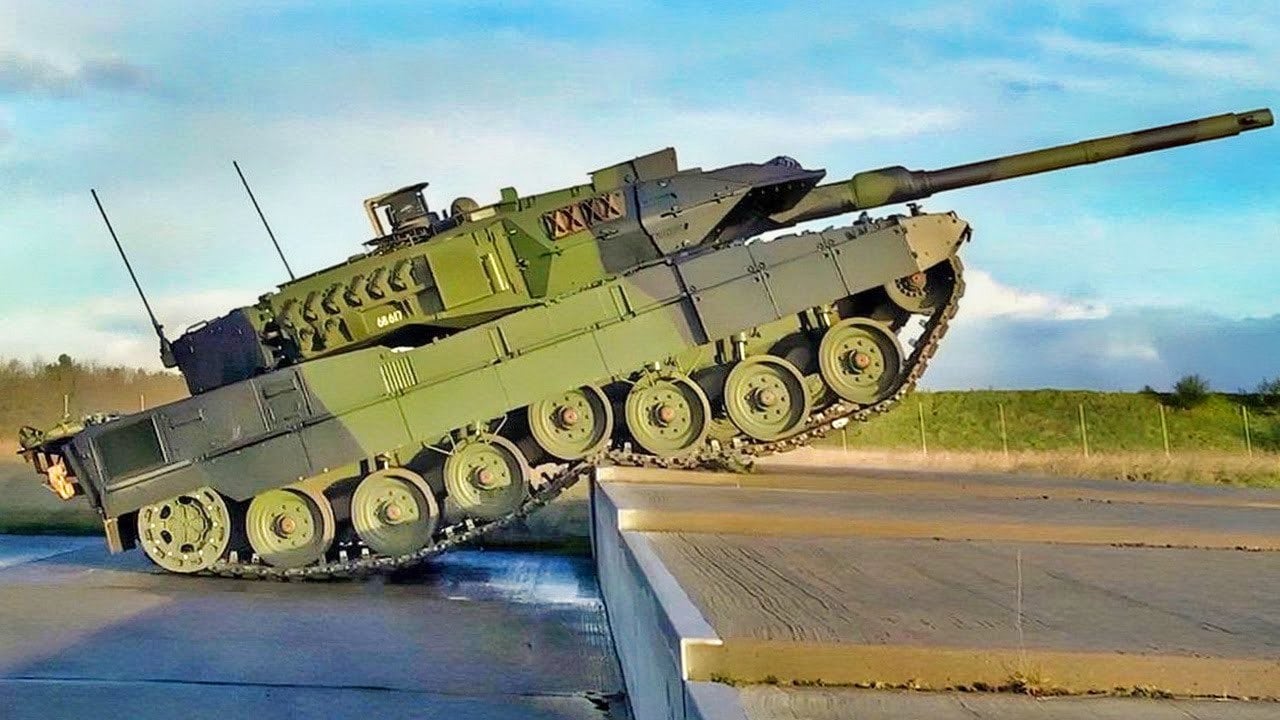
NATO Leopard 2 Tank. Image Credit: Creative Commons.
What we’ve learned from the Ukraine War is that MBTs only work when they’re integrated into a complete, modern system. That ecosystem must include comprehensive air defenses, advanced electronic warfare (EW) capabilities, effective counter-drone systems, and sustained infantry support. In the Ukraine War and the ongoing Greater Mideast War, there is a lack of reliable air defense systems and ISR dominance.
Toward a System of Systems Approach?
So, tanks without a reliable battlefield ecosystem are no longer the armored hunters they were. They become the prey. Worst of all, they turn into sitting ducks regardless of their level of armor and weapons. However, MBTs that are part of a broader, relevant ecosystem remain a crucial component—though different from their original purpose—in a military’s offensive capabilities.
What’s needed, therefore, is to see tanks (or whatever system replaces them) as a plug-and-play model rather than as a standalone platform. This is because modern warfare is shifting toward a decentralized, networked approach that resists attrition. Essentially, the era of the decisive platform is over. Instead, the era of the integrated system of systems has begun.
The Leopard 2 didn’t lose in Ukraine. It revealed a harsh truth that Western defense industrial planners have avoided for decades. War isn’t about which side builds the most impressive machine. It’s about who adapts fastest to a battlefield filled with sensors, drones, and constant transparency.
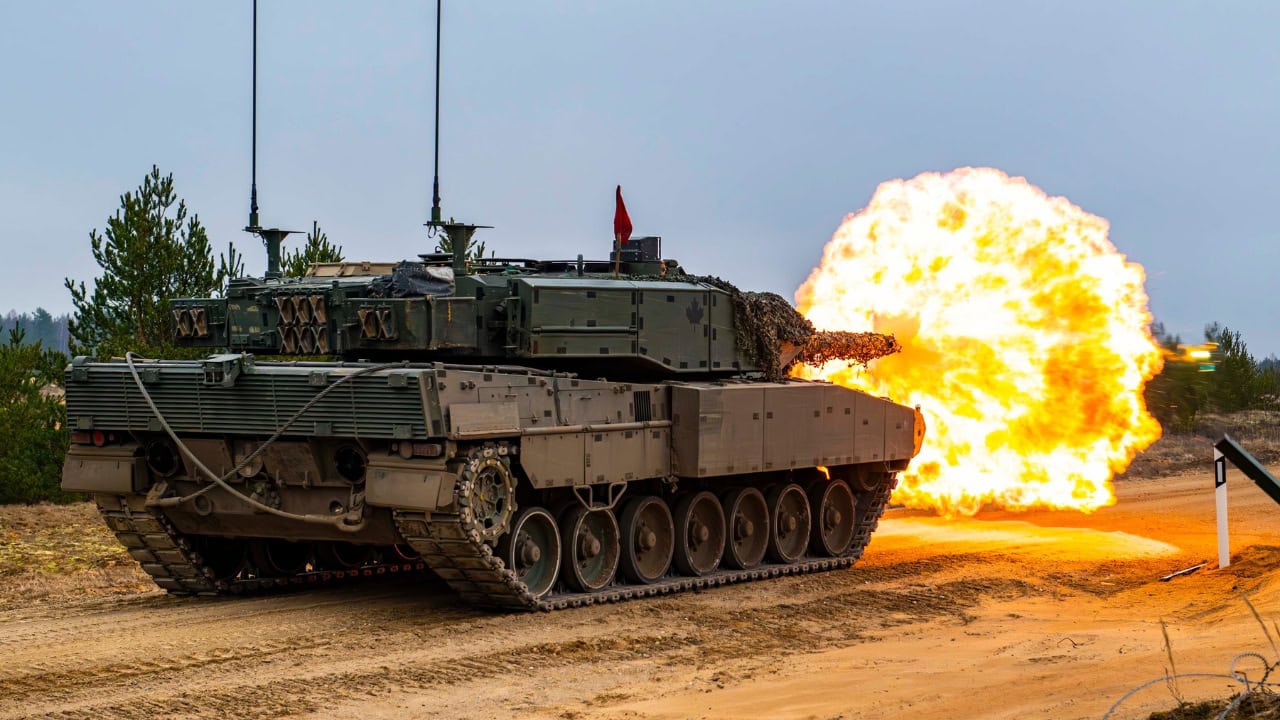
Canadian Armed Forces members with the Royal Canadian Dragoons, currently deployed on Operation REASSURANCE, take part in a live fire range for the Leopard 2 Main battle tank, with High Explosive ammunition, at Camp Adazi, in Adazi, Latvia, on 24 March, 2024.
Photo Credit: Corporal Bryan Bodo, Canadian Armed Forces Imagery Technician
The tank still matters. Heavy armor still plays a role.
But only as part of something much larger. Because in modern war, anything that fights alone is destined to fail—and the Leopard-2 learned that lesson the hard way.
About the Author: Brandon J. Weichert
Brandon J. Weichert is the Senior National Security Editor at 19FortyFive.com. Recently, Weichert became the editor of the “NatSec Guy” section at Emerald.TV. He was previously the senior national security editor at The National Interest. Weichert is the host of The National Security Hour on iHeartRadio, where he discusses national security policy every Wednesday at 8 pm Eastern. He hosts a companion show on Rumble entitled “National Security Talk.” Weichert consults regularly with various government institutions and private organizations on geopolitical issues. His writings have appeared in numerous publications, among them Popular Mechanics, National Review, MSN, and The American Spectator. And his books include Winning Space: How America Remains a Superpower, Biohacked: China’s Race to Control Life, and The Shadow War: Iran’s Quest for Supremacy. Weichert’s newest book, A Disaster of Our Own Making: How the West Lost Ukraine, is available for purchase wherever books are sold. He can be followed via Twitter/X @WeTheBrandon.