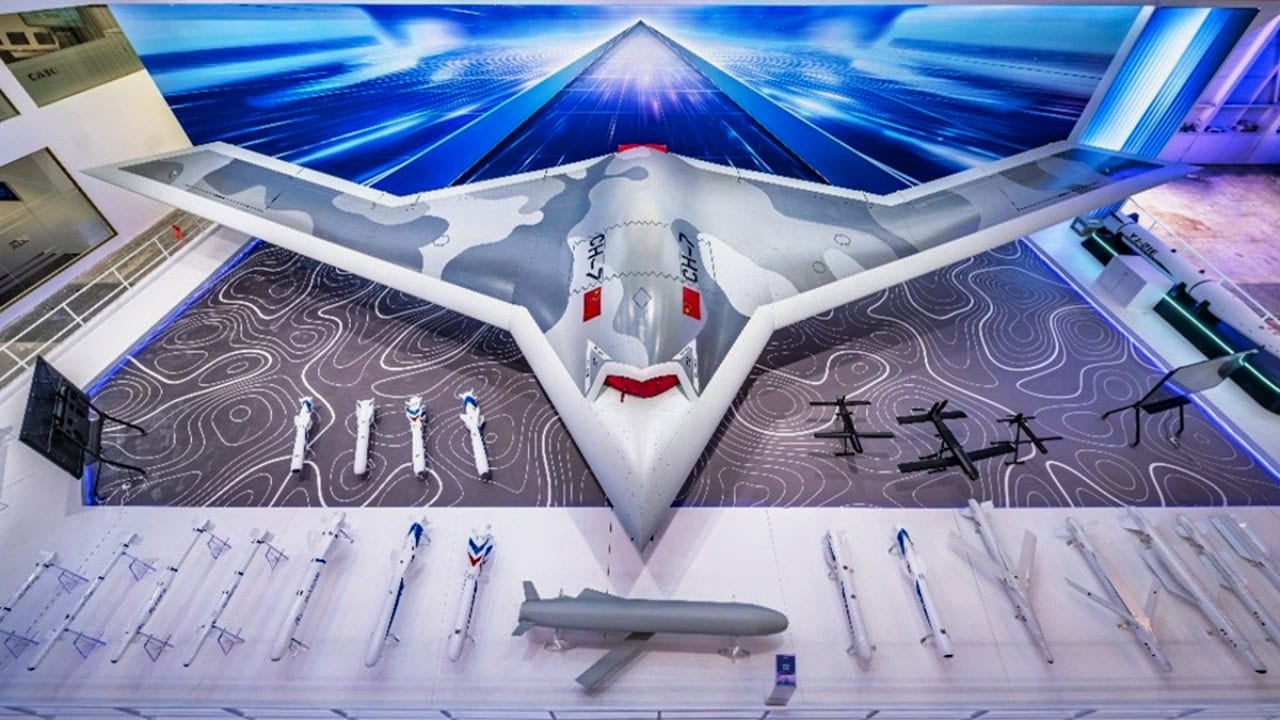
The Future of War Belongs to Drone Swarms—and China Knows It
Among many troubling global developments that run counter to the strength and efficacy of the United States military is China’s mass production capability.
Specifically, China’s ability to design, develop, and deploy highly advanced, affordable drones that could potentially upend U.S. military defenses (and the defenses of American allies) in the Indo-Pacific.
The Rise of Mass Drone Warfare
In fact, you are already witnessing such trends in other parts of the world, such as Ukraine and the Middle East.
These battlefields are showcasing how advanced, cheap drone swarms will be used to stymie the conventional power projection of militaries engaged in combat.
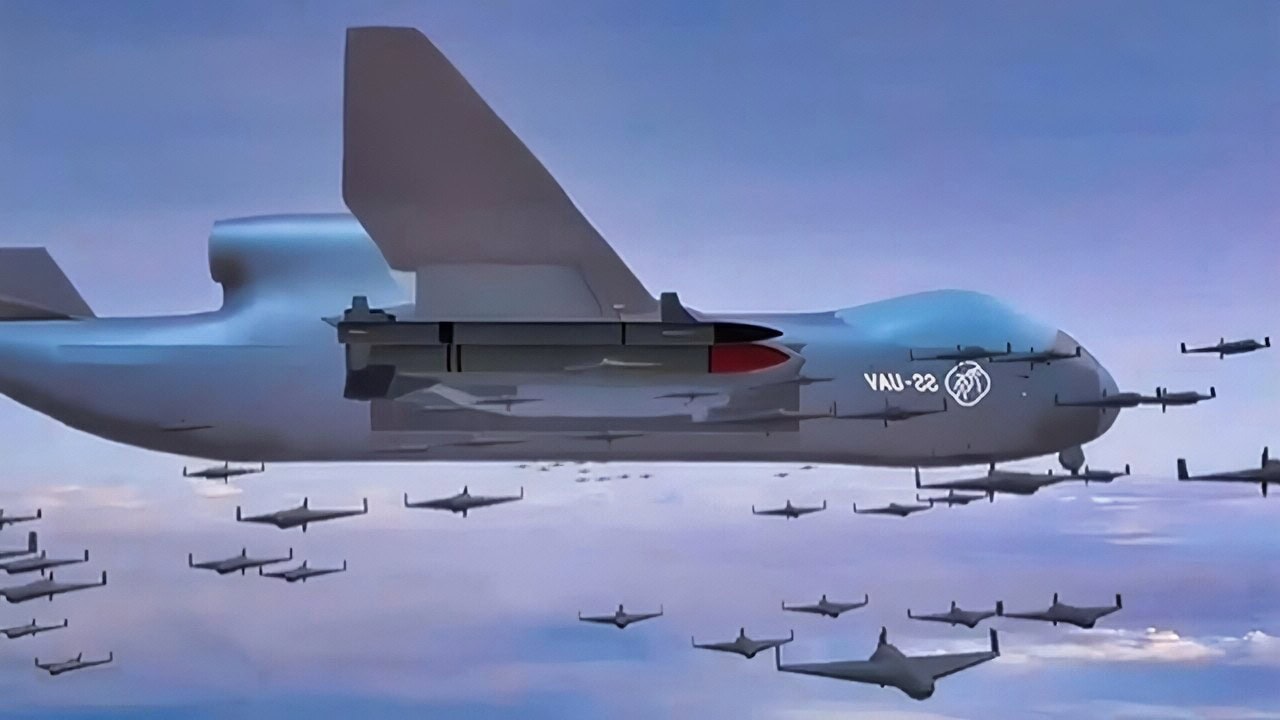
China Drone Aircraft Carrier. Image Credit: X Screenshot.
China has been studying these trends and adapting its doctrine accordingly. The Americans, on the other hand, appear completely unfazed by the advent of the drone swarm. What’s more, the Chinese possess the world’s greatest advanced industrial capacity.
China can marry that capability with the need for seemingly endless amounts of lethal drones to overmatch whatever the Americans and their allies ultimately decide to do.
China’s Industrial Edge: Scale Meets AI
China can churn out tens of thousands of lethal drones per year without missing a beat. China’s defense industry also enjoys access to one of the world’s most advanced electronic and computer sectors, along with advanced sensors and now artificial intelligence-enhanced operating systems.
These capabilities have combined to create long-range autonomous drones that are competitive with anything the Americans and their allies can field today—and likely in far greater numbers than the West can deploy in a crunch.
Beidou and the Digital Battlespace
Plus, the Chinese have spent the last several decades creating their alternative digital infrastructure.
For example, China created an alternative to the United States’ Global Positioning System (GPS). That system is known as the Beidou navigation network. But it does so much more than help users of Huawei products in Asia navigate. It can help military drones precisely navigate.
While the United States can disable Beidou, doing so would represent a significant escalation in any potential conflict with China—an escalation that could likely draw in many other countries that rely on Beidou for important civilian functions.

Image: Creative Commons.
In many respects, then, the Chinese manufacturing ability for advanced drone swarms is significantly greater both in scale and complexity than that of the Islamic Republic of Iran. Yet the Iranian capabilities in this critical domain are impressive as well. Indeed, the Iranian capability is so advanced that the Americans had to capture an Iranian drone and reverse-engineer it.
Iran’s Proof of Concept
The reason that Iran has worked so hard to build its advanced kamikaze drone fleet into what it is today—there are as many as 88,000 Shahed-type kamikaze drones in Iran’s impressive arsenal—is because Iran doesn’t have the same available resources that the Chinese do.
But Iran is proving with its advanced drone systems that it doesn’t need to match the conventional military prowess of the Americans or the Israelis. All Tehran needs is a reliable capacity to build scores of advanced drones in underground missile cities, deploy them strategically throughout the country, and launch them as needed.
And these drones are much cheaper than the systems the Americans and Israelis are using to shoot them down. For instance, the Arash-2 and Shahed-107 cost anywhere between $20,000-$50,000. Compare that to the $4 million Patriot PAC-3 missile or the nearly $2 million per missile AIM-120 AMRAAM missile that the Americans are using to down the Iranian Shahed-style kamikaze drones.
Not only does the asymmetry even the odds for Iran. It rebalances the entire equation of the conflict in Iran’s favor. If a war ever erupted between China and the United States, a similar imbalance favoring China’s forces would occur, too.
What’s more, the Chinese and Iranian militaries are linked in an alliance that is still not fully understood by Western intelligence agencies. There is a very interesting difference between Chinese drone capabilities and those of their partners in Iran. As noted above, the Chinese fixate on scale.
The Cost of an Asymmetry Crisis
The Iranians, on the other hand, focus mainly on high-volume, low-cost loitering munitions. This is why Iran has not only created a true threat to the West with its drones, but those drones have become ubiquitous in other conflict areas, like Ukraine, with Iran supplying massive amounts of their drones to Russia.
Interestingly, Al Jazeera has speculated that the Iranians may be integrating China’s Beidou navigation system on their drones. If that is the case, it explains why the Iranian drones have become so lethal to the forces they’ve battled against thus far.
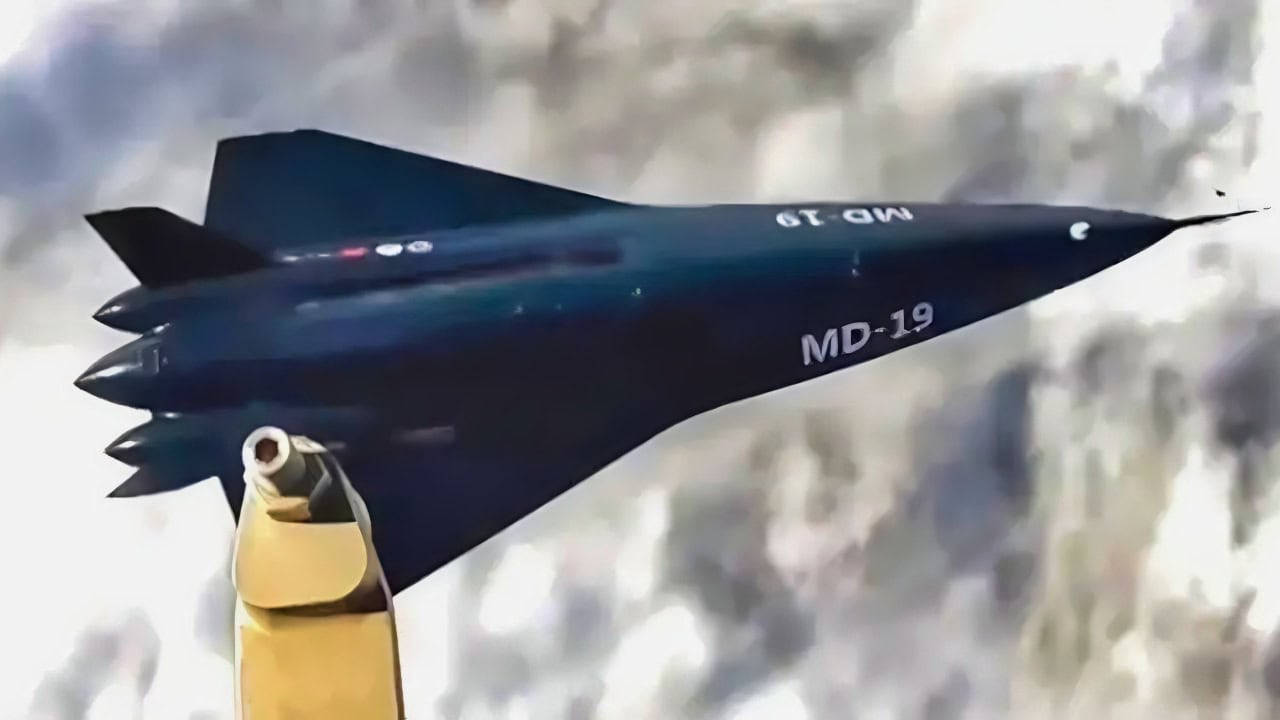
MD-19 Drone from China. Image Credit: Creative Commons.
The drone revolution is not on its way. That revolution has already come. The Americans and their allies have been on the wrong side of the drone warfare revolution sweeping the world.
America’s Dangerous Complacency
The United States remains deeply committed to a model of warfare built around exquisite, scarce, and staggeringly expensive systems. On the other hand, American rivals are perfecting a model defined by scale, speed, simplicity, and affordability.
China, in particular, is poised to fuse its unmatched industrial base with autonomous warfare in a way that could overwhelm even the most sophisticated Western defenses through sheer volume alone.
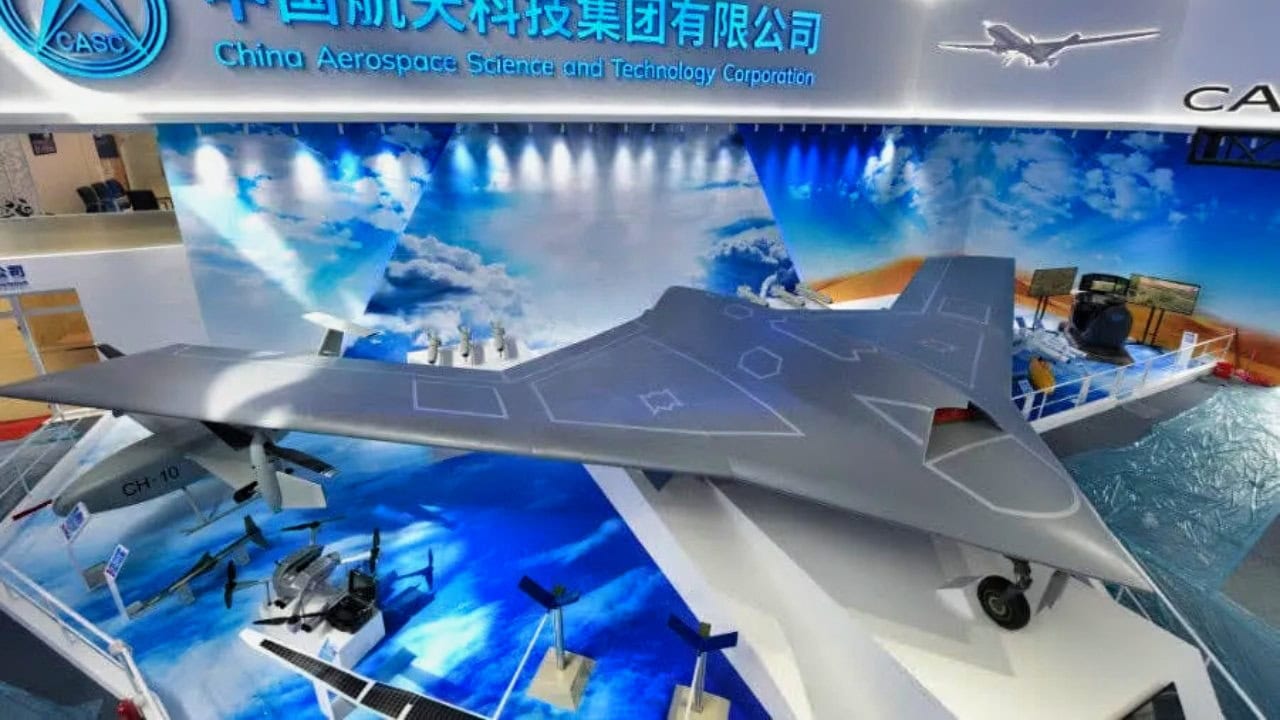
CH-7 Drone from China. Image Credit: X Screenshot.
If Washington does not rapidly adapt—by rethinking procurement, embracing mass, and preparing for attritional drone warfare—it risks entering the next great conflict at a decisive disadvantage.
And in a fight where quantity has a quality all its own, that is a gamble the United States simply cannot afford to lose.
About the Author: Brandon J. Weichert
Brandon J. Weichert is the Senior National Security Editor at 19FortyFive.com. Recently, Weichert became the editor of the “NatSec Guy” section at Emerald.TV. He was previously the senior national security editor at The National Interest. Weichert is the host of The National Security Hour on iHeartRadio, where he discusses national security policy every Wednesday at 8pm Eastern. He hosts a companion show on Rumble entitled “National Security Talk.” Weichert consults regularly with various government institutions and private organizations on geopolitical issues. His writings have appeared in numerous publications, among them Popular Mechanics, National Review, MSN, and The American Spectator. And his books include Winning Space: How America Remains a Superpower, Biohacked: China’s Race to Control Life, and The Shadow War: Iran’s Quest for Supremacy. Weichert’s newest book, A Disaster of Our Own Making: How the West Lost Ukraine, is available for purchase wherever books are sold. He can be followed via Twitter/X @WeTheBrandon.